Category Archives: song writers

Weekend read: Songs as poems: Ned Balbo, ‘Shirts of the Distant Past’

I remember you some mornings in the midst of getting dressed
Surprised that I recall exactly when I wore you last

The paisley patterns spilling over sleeves
The Nehru collars nobody believes
… were popular
The turtlenecks no turtle ever wore
Those V-neck disco shirts that dance no more
… Spectacular!

Are you lurking in the closet among other clothes I own?
I gently touch your shoulder—a brief flash, then you’re gone

The concert souvenir shirts we outgrew
The obligation gifts we always knew
… were wrapped in haste
Thick cotton plaids lost lumberjacks would covet
That college T tossed out, but how we loved it
… still, such a waste

You promised transformation, but what else did you require
The full ensemble led us toward transcendence or desire
(Attire of another age, accessories all the rage)

Bell-bottom flares that took flight as we walked
Embroidered jeans so tight that people talked
… of nothing else
Those bomber jackets earthbound boomers froze in
Those leather wristlets grunge guitar gods posed in
… with death’s head belts

You folded in your fabric everyone I used to be
Now that you’re gone, I realize I’m left with only me
But if I run across you in some thrift shop bargain rack
Or rummaging recycling bins, what else would you bring back?
Who else will you bring back?

Some nights I see you in my dreams of places far away
I’m wearing you as if I haven’t aged a single day
Shirts of the distant past, shirts of the distant past

*****

Ned Balbo writes in Rattle #85, Fall 2024 (where you can hear the song performed): “I’ve played guitar since I was 5, keyboards since I was 13, and ukulele since I was 42, but my time as a ‘professional’ musician—someone paid to play—is scattershot and humble. Ice rinks, a Knights of Columbus Hall, a campers’ convention in Yaphank, a crowd of disco-loving retirees at Montauk’s Atlantic Terrace Motel, company picnics, school dances, private parties, and more—these were where I played guitar, sang, and devised versions of the Beatles, Bowie, et al. in two Long Island cover bands. The Crows’ Nest or Tiffany’s Wine-and-Cheese Café hosted noise-filled solo acoustic gigs, with more receptive listeners for original songs and covers of Elvis Costello or Eno at my undergrad college’s coffeehouse. More recently, I’ve written lyrics to Mark Osteen’s preexisting jazz scores (look for the Cold Spring Jazz Quartet on Spotify, Amazon, CDBaby, and elsewhere) and returned to solo songwriting and recording with ‘ned’s demos’ at Bandcamp. As a relic from the age when lyrics were sometimes scrutinized with poetry’s intensity, I listen closely to the sonics of language, whether sung or spoken, and look up to lyricists whose words come alive both aloud and on the page.”

Balbo: Robin, thanks for posting ‘Shirts from the Distant Past’, my little song-poem hybrid. I’ll be happy to answer any questions you have. 

Editor: For myself, I see a continuum from womb heartbeat to dance to music to song to formal verse.  I would love to have any additional comments on the subject in general, or on the creation of this poem in particular, related to these elements.

Balbo: I love what you’re saying about womb, heartbeat, and dance. A formative text for me is Donald Hall’s essay on poetic form’s psychic origins, ‘Goatfoot, Milktongue, Twinbird‘. You probably know it. Hall proposes three metaphors for poetry’s deepest sources: Goatfoot, the impulse toward dance, rhythm, movement; Milktongue, the pure pleasure of language, the texture of words when spoken; and Twinbird, our desire for form, symmetry, wholeness, which is complicated and energized by the contradictions it contains and reconciles. To me, Hall’s terms just sound like different ways of envisioning exactly what you’re talking about. They apply as much to song as they do to verse. The meter varies by stanza or section: iambic heptameter (seven iambs) in the couplet verses—not so different, after all, from the tetrameter to trimeter shifts we find in many ballads. The “shirts” title refrain, which doesn’t appear in print till the last line, are two trimeter phrases. It was fun to find surprising rhymes to hold the whole song together. 

Editor:  Regarding ‘Shirts’, quite apart from the charming idea, I like the work that has gone into the metre, rhyme, idiosyncratic structure.

Balbo: Thank you. I wrote and sung ‘Shirts’ as a poetic song lyric—one that could be read and enjoyed but, ideally, would be heard. I view its structure as that of a call-and-response song in traditional format.  (In rock, for example, I think of George Harrison’s ‘Taxman’ with John and Paul harmonizing “Taxman, Mr. Wilson, Taxman, Mr. Heath” in answer George’s lead vocal.) In ‘Shirts’, the call-and-response comes from using the title as a refrain: it explains who the “you” is in each verse (when you hear it, anyway—I cut it from the visual text for fear it would seem repetitious without the music). Sometimes the title refrain answers a statement in the verse: “I gently touch your shoulder—a brief flash, then you’re gone” sounds like I might be talking (or singing) about a person, but it turns out to be those long-lost shirts—a playful fake-out.

Then there are the brief call-and-responses of the bridge sections which comment on the previous line or complete an unfinished thought: “Those V-neck disco shirts that dance no more…spectacular!” or “Embroidered jeans so tight that people talked…of nothing else.” They’re in iambic pentameter, with the second and fourth changing to heptameter if we count the two extra beats (set off on their own line) answering them.

The so-called “middle 8” (usually eight bars used to break up the verse-chorus/verse-chorus model) is delayed till just before the end: “You folded in your fabric everyone I used to be, etc.”  That’s meant to set up the payoff: it’s not the shirts but our lost selves— along with loved ones, lost ones, everyone—we’re missing or mourning. But writing or singing about shirts—clothing that shapes and defines us—makes the lyric less depressing, leavens it with wit (I hope) so that what’s more poignant comes at the very end where more dramatic music can counterbalance the mood—the contradictions reconciled, as Donald Hall might have put it.  

Of course, the very end is quieter – wistful again.

As I mentioned in Rattle (thanks again to Tim Green for giving both words and music a home), I grew up in the era when lyrics were often analyzed as seriously as poetry (and not just by undergraduates in long-ago dorm rooms under black light posters). Whether I’m writing poetry or songs, I listen closely to the different ways words sound—what works when sung doesn’t always work as well when spoken or encountered on the page—so when I do write lyrics, I try to make them both readable and singable. 

Poems and song lyrics operate differently, but there’s lots of overlap between them. I wanted ‘Shirts’ to operate on both levels, even if it tilts more toward song lyric than poem. 

*****

Ned Balbo’s six books include The Cylburn Touch-Me-Nots (New Criterion Prize), 3 Nights of the Perseids (Richard Wilbur Award), Lives of the Sleepers (Ernest Sandeen Prize), and The Trials of Edgar Poe and Other Poems (Donald Justice Prize and the Poets’ Prize). He’s received grants or fellowships from the National Endowment for the Arts (translation), the Maryland Arts Council, and the Mid Atlantic Arts Foundation. Balbo has taught at Iowa State University’s MFA program in creative writing and environment and, recently, the Frost Farm and West Chester University poetry conferences. His work appears in Contemporary Catholic Poetry (Paraclete Press), with new poems out or forthcoming in Able Muse, The Common, Interim, Notre Dame Review, and elsewhere. He is married to poet and essayist Jane Satterfield.

Literary: https://nedbalbo.com
Music: https://nedsdemos.bandcamp.com
‘Fluent Phrases in a Silver Chain: on finding poetry in song and song in poetry’ (essay in Literary Matters): https://www.literarymatters.org/14-2-fluent-phrases-in-a-silver-chain-on-finding-poetry-in-song-and-song-in-poetry/

Latest book: The Cylburn Touch-Me-Nots (Criterion Books): https://www.amazon.com/exec/obidos/ASIN/1641770821/thenewcriterio

Photo: “December 22-31, 2009” by osseous is licensed under CC BY 2.0.
Weekend read: Essay: Victoria Moul, ‘On rugby and metre’ (excerpt)

Victoria Moul writes: When I hear or read people — often though not only American “formalists” — discussing “correct” metre in English, and the supposed dominance of accentual-syllabic forms in general and the iambic pentameter in particular, I often think rather impatiently of poets like Arnold and Yeats. Arnold’s verse is musical, highly memorable and — to my ears at least — mostly very straightforward to speak correctly. But it’s often not very iambic at all and he typically uses lines of very varying syllable length. ‘Rugby Chapel’ is a good example of this — its pattern is, technically speaking, more trochaic (rugby) than iambic (endured), the trochaic pattern is established very clearly at the outset (‘Coldly, sadly descends’) and the lines have between six and nine syllables each. If you (inexplicably) wanted to spend an hour “scanning” it you’d find a complex variety of combinations of stressed and unstressed syllables. But its music is easy to hear and read, and very easy to remember, because regardless of the number of the syllables all the lines have three stresses.

Repeated three-stress lines are relatively unusual in English, especially in longer poems, but the four-stress line is very common, perhaps in fact the most natural English line of all, and indeed a lot of so-called iambic pentameter has a tendency to drift towards four rather than five stresses. ‘The Wild Swans at Coole’ establishes an iambic pattern at the outset (‘The trees are in their autumn beauty / The woodland paths are dry’) but is in stanzas of 4/3/4/3/5/3 stresses, with quite varied syllable length and relatively few perfectly iambic lines. Day-Lewis’ poem, by contrast, looks to the eye like it might be iambic pentameter, since the line-length hovers around 10 syllables (ranging from 9 to 12). But most of the lines are spoken naturally with four stresses, not five (‘A sunny day, with leaves just turning’; ‘Wrenched from its orbit, go drifting away’), and only a handful of lines certainly have five.

As far as I know — do comment if you can think of any counter-examples — there are no really good poems about rugby itself, so the poems I discussed today were just those which came into my mind as I watched the practices. None of these English poems are obscure — all are by poets who were considered major in their own lifetime, and all three have been very well-known at some point even if they are not now — and not one of them is in iambic pentameter. In fact, not one of them is obviously in a ‘syllabic’ metre, strictly speaking, at all (as in the familiar statement that traditional English verse is ‘accentual-syllabic’, i.e. where both the number of stresses and the number of syllables are set by the metrical pattern). These poems, like a great deal of English poetry, establish and follow an accentual pattern — of a certain number of stresses in a line, though this too is open to variation — but not, or only very loosely, a syllabic one. Verse of this kind is very common in the English tradition, and the hundred years of poetry between the mid-19th and mid-20th century, even if you set aside the full-blown “modernists” completely, is particularly rich in metrical variety. It is puzzling that this is not better reflected in most discussions of English metre and form. But the best way to get a feel for the actual — rather than imagined — conventions of a literary tradition is, of course, by reading it.

*****

Editor: The passage above is excerpted with permission from a recent Substack post by Victoria Moul in her ‘Horace & friends’ – the full thing is at https://vamoul.substack.com/p/on-rugby-and-metre. In it, with thoughts inspired by watching her nine-year-old son playing rugby, she discusses Cecil Day-Lewis’ ‘Walking Away’, Yeats’ ‘The Wild Swans at Coole’ and Arnold’s ‘Rugby Chapel’. The piece is engaging in several ways, but the point that stands out the most for me is this:
“These poems, like a great deal of English poetry, establish and follow an accentual pattern — of a certain number of stresses in a line, though this too is open to variation — but not, or only very loosely, a syllabic one.”

This is much on my mind when I consider the forms that create formal verse. From my school days on, I have felt that analysing English grammar with Latin rules was wrong, just as straightjacketing English verse into syllabic requirements was not always useful, beautiful or appropriate. English is a Germanic language, and plays effectively by looser accentual rules: perhaps harder to define and analyse, but truer to the work of poetry which is to be word-for-word memorisable. Rhythm is one of the essential tricks of memorisation, along with rhyme, alliteration, assonance and a host of rhetorical tricks; and rhythm plays a variety of casual games. Also, accentual pattern corresponds to the continuum that I see at the root of poetry: from womb heartbeat, to dance, to music, to song, to formal verse. Formal verse is at its best when it is rhythmic and rich in musicality as well as in ideas and images and wordplay. Without the music, without the rhythm, it is prose… no matter how well expressed.

So rap and spoken word are inherently more poetic because more memorisable than 99% of what has been published as ‘poetry’ in the past 50 or 60 years. All songwriters are of course genuine poets – not all are good ones, but Bob Dylan certainly deserves his Nobel Prize (and I wish it could have been shared with Leonard Cohen).

Another point is that French too, and other Romance languages, are more accentual than professors often claim. When Françoise Hardy sang
Tous les garçons et les filles de mon âge
Se promènent dans la rue deux par deux
she was following the accentual beat, not giving every syllable equal weight, and completely skipping a couple of unstressed syllables. (Are French professors still teaching that all syllables have equal weight in French verse? Surely not! I hope that died out some time last century…)

Not all poetry is singable – but at its best it has a musicality that both creates enjoyment and enhances its ease of memorisation.

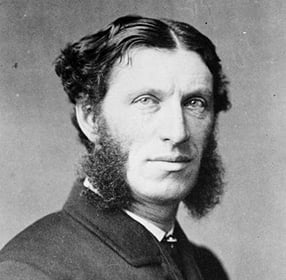
Photo: Matthew Arnold

Marcus Bales, ‘Sailing to Margaritaville’

That is the country we go to, all of us
Made young again by music, smooth with oil
And lust, all generations generous
With youth and laughter. Couples coil
And uncoil, casually amorous,
With booze in the blender and shrimp beginning to boil.
Everybody dreams they have the chance
To chase the charms and challenge of romance.

A laughing bard is the essential thing.
A patterned shirt, an old six-string guitar,
Who urges us to sing and louder sing
And clap and dance and order from the bar,
And thank hard-working servers as they bring
The stuff that lubricates this whole bazaar.
And though the bard is covering the bill,
Tip well when you’re in Margaritaville.

Oh, parrotheads — imagination’s fire
Illuminates the marvel of it all,
And conjures every sorcery we require,
The call to the response, response to call,
A consummation fevered with desire,
Beatified by the local alcohol.
The song creates the dream. The dream creates
Another song the dreamer celebrates.

And once reality is far away,
Our youth returned, our stamina restored,
We eat and drink and sing and dance and play
And manifest ourselves within each chord
As if we might entrance ourselves to stay
Within this reverie we’ve found aboard
The magic vessel Margaritaville,
Distilling what distillers can’t distill.

*****

Marcus Bales writes: “Someone immediately floated a raft of shit my way over this poem, claiming, in a local Cleveland group generally given to local music, that I’m normalizing alcoholism. I know — it’s an astonishing misinterpretation, but there it is. And in spite of my protestations, he insisted on shouting that I was a lush, a drunk, and an idiot for promoting and approving a disease. Well, it’s not as if poets aren’t used to being misunderstood.

The odd thing to me about this is that I work hard to trigger people through poetry. That’s what art does, in my view, confront us with our frauds and foibles, and makes us look at them in detail. If, of course, we read poetry at all. There must be some corollary to Murphy’s Law that states that when a poem can be misinterpreted it will be misinterpreted. Normally I’m delighted by responses to my poems that are outraged and offended, because normally those responses are from the people I’m trying to outrage and offend. But this blindsided me. The entire Jimmy Buffett phenomenon was built on the fantasy of sun and sand and sea, which is only tangentially alcohol-fueled. No doubt alcohol plays a role in lubricating the enchantment, but it’s the enchantment people go for, not alcoholism.

And that enchantment is powerful. It makes people wear loud clothes and play loud music. But the central lure is that we can think of ourselves as all multi-talented and tanned, slim and young and horny. It’s not the lure of tales of drunkenness and cruelty on a summer afternoon, but rather the opposite: tales of slightly disreputable fun, but tales of the lure of the freedoms from regimentation for the freedoms of a more relaxed like-minded culture where everyone is youthfully attractive and eagerly lascivious.

And what a lure! Even those of us whose only encounter with youthfully attractive and eagerly lascivious were our own dreams had those dreams. And with Jimmy Buffett the price of admission was a seducing tune and a clever lyric. You didn’t need a white sportcoat, much less a pink crustacean. All you needed was a sense of lockstepness of the modern bourgeoisie and a desire to escape it. The whole thing is all in your mind. You create your own sensitive young poet self in a lubricious setting among the young and eager to love you. It’s thrilling, it’s fulfilling, it’s art.”

*****

(Editor’s note: From the title, to the ottava rima form, to the themes, ‘Sailing to Margaritaville’ pays homage to Jimmy Buffett by riffing on W.B. Yeats’ ‘Sailing to Byzantium‘. Beginning with Yeats’ opening words, “That is no country for old men” and all the way through, Bales echoes and plays with Yeats’ words, bringing everything to Buffett’s Margaritaville.)

Not much is known about Marcus Bales except that he lives and works in Cleveland, Ohio, and that his work has not been published in Poetry or The New Yorker. However his ‘51 Poems‘ is available from Amazon. He has been published in several of the Potcake Chapbooks (‘Form in Formless Times’).

Photo: “Wasting away again in Margaritaville……..” by efleming is licensed under CC BY 2.0.

Marcus Bales, ‘Labor Day 2023 – RIP Jimmy Buffett’

He died on Labor Day, the end of summer,
And left us going back to work or school.
The days are shorter, now, the parties glummer,
Less heat and light, less beat and life, less cool.
We fall back on our favorite expressions
Of what it means to be young, tan, and free,
And weigh the anchors of adult discretions
Imagining we sail a sapphire sea.
The songs he sang, those figurative vacations,
Have turned our water into stronger stuff.
We toast each other, changing our frustrations
With dailiness to fantasizing fluff,
And drink the happy liquor we distil
From metaphoric Margaritaville.

*****

Marcus Bales writes: “My favorite Jimmy Buffett songs are ‘A Pirate Looks At Forty‘ and ‘Tin Cup Chalice‘, but I think his best song is ‘Margaritaville.’ I’m not as fond of ‘He Went To Paris‘ or ‘Death of an Unpopular Poet‘ as other celebrants of his work, and ‘Why Don’t We Get Drunk and Screw‘ is certainly the best of the more raucous end of his oeuvre.

Like many other singer-songwriters Buffett seemed to me to work without an editor, possibly because the music business is such that even when you find a peer-group that you trust to say this or that just ain’t right, it’s hard to get the group together often enough, and for long enough, for the trust to re-blossom so that real reflection and re-working of lyrics can happen.

Those circumstances lead a lot of singer-songwriters, I think, to something that is not exactly laziness, and not quite smugness, but rather perhaps more like a sense that they’re the only ones whose taste they trust to judge their own work. Then they slide into a state where they are not themselves as critical of their own work as they once were. They get a good idea and a good line or two in the chorus, and the rest of it gets sort of clamped and glued together without a final planing, sanding, and paint job. The music is well-arranged and well-performed because you can’t fool musicians about music, but the lyrics tend to seem a little hasty, a little down-at-heels, a little scratch-and-dent. It’s too bad because their early work is almost always lyrically inventive and musically simple, while their later work is musically slick and lyrically spotty.

When I first heard A1A in 1978 I was entranced. No one else that I knew of was trying to sketch people and places from the point of view of a sort of scruffily aimless charmer. Oh, there was Tom Waits, but that was more noir and Bukowski than charming. Buffett’s work was entrancing, a refreshing way to write songs and perform them. A lot gets forgiven in the enchantment of the charm, but eventually the clanker lines and the narratives that don’t quite hold together accumulated, and I started to notice the tarnish more than the shine.

So the later work did not grip me as the early work had, and for most of the last 40 years, as the work drifted into crowd-pleasing medium-tempo rockers with a cheery tale told by a richer, more self-congratulatory narrator offering a smoother sail in a bigger boat crewed by professionals, I became less and less interested in what I had come to view as a pervasive sloppiness in the contemporary singer-songwriter tradition. It seemed to affect them all as they worked longer in the business, except perhaps for Paul Simon. But Buffett, Diamond, Prine, Browne, just to name a few, seemed all to become more facile than artful And Buffett in particular seemed to have decided to pursue sing-along music for the car instead of headphone music for the chair, and it started him on the path to wealth. And good for him.

But what I celebrate overall, and I hope in this poem, is the work that tried to be more than a pop song, that was striving, even if slyly and beneath the listener’s first perceptions, to be art. That’s what entranced me at the beginning, and that’s what I want to remember most fondly.”

Editor’s note: Jimmy Buffett died on the night of September 1st, and the news came out over the Labor Day weekend.

Not much is known about Marcus Bales except that he lives and works in Cleveland, Ohio, and that his work has not been published in Poetry or The New Yorker. However his ‘51 Poems‘ is available from Amazon. He has been published in several of the Potcake Chapbooks (‘Form in Formless Times’).

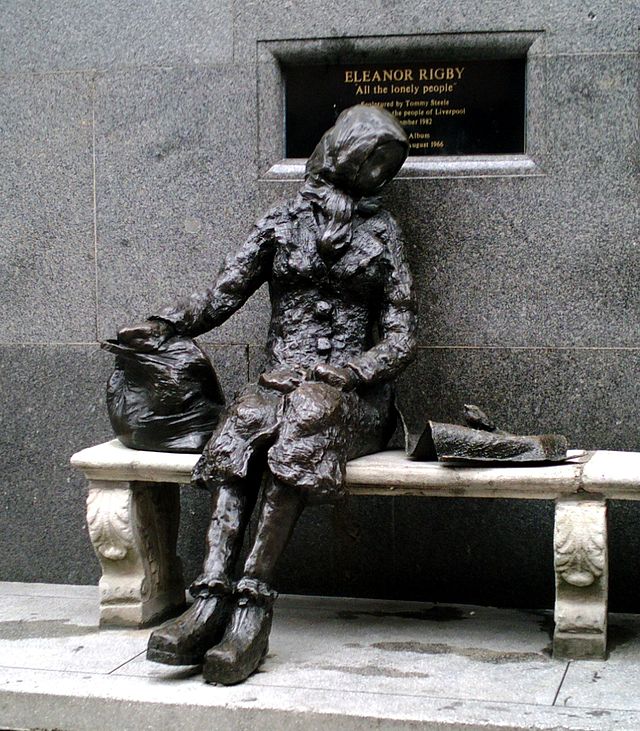
Songs as poems: Lennon-McCartney, ‘Eleanor Rigby’

Eleanor Rigby picks up the rice in the church where a wedding has been,
Lives in a dream.
Waits at the window, wearing the face that she keeps in a jar by the door,
Who is it for?

All the lonely people,
Where do they all come from?
All the lonely people,
Where do they all belong?

Father McKenzie writing the words of a sermon that no one will hear,
No one comes near.
Look at him working, darning his socks in the night when there’s nobody there,
What does he care?

All the lonely people, (etc)

Ah, look at all the lonely people!

Eleanor Rigby, died in the church and was buried along with her name,
Nobody came.
Father McKenzie, wiping the dirt from his hands as he walks from the grave,
No one was saved.

All the lonely people, (etc)

Written and released in 1966 on the Revolver lp and also as a double-A-side single with Yellow Submarine, ‘Eleanor Rigby’ was part of the Beatles’ dramatic move away from simple pop love songs into a vastly larger realm of portraits and social concerns and musical experimentation. Here, in a few lines, we have the protagonist’s lonely day-to-day life and unattended funeral, weaving back and forth with the empty church and its equally lonely priest. If Paul Simon’s ‘I Know What I Know’ is like a condensed Alice Munro short story, ‘Eleanor Rigby’ could be a full-length novel by Knut Hamsun or Kazuo Ishiguro… reduced to three 4-line verses and a refrain or two. The ideas are expressed as simple visual events, without speech. The words are straightforward, the rhymes uncomplicated–and some are slant rhymes, almost unnoticeable in song: been/dream, from/belong, grave/saved. But the impact is very powerful.

So who is the poet behind the song? Its article in Wikiwand states:

McCartney wrote the first verse by himself, and the Beatles finished the song in the music room of John Lennon’s home at Kenwood. John Lennon, George Harrison, Ringo Starr and Lennon’s childhood friend Pete Shotton all listened to McCartney play his song through and contributed ideas. Harrison came up with the “Ah, look at all the lonely people” hook. Starr contributed the line “writing the words of a sermon that no one will hear” and suggested making “Father McCartney” darn his socks, which McCartney liked. It was then that Shotton suggested that McCartney change the name of the priest, in case listeners mistook the fictional character in the song for McCartney’s own father.

McCartney could not decide how to end the song, and Shotton finally suggested that the two lonely people come together too late as Father McKenzie conducts Eleanor Rigby’s funeral. At the time, Lennon rejected the idea out of hand, but McCartney said nothing and used the idea to finish off the song, later acknowledging Shotton’s help.

Lennon was quoted in 1971 as having said that he “wrote a good half of the lyrics or more” and in 1980 claimed that he wrote all but the first verse, but Shotton remembered Lennon’s contribution as being “absolutely nil”. McCartney said that “John helped me on a few words but I’d put it down 80–20 to me, something like that.” Historiographer Erin Torkelson Weber has studied all available historical treatments of the issue and has concluded that McCartney was the principal author of the song, while speculating that Lennon’s assertions to the contrary were the result of lingering unresolved anger and the influence of manager Allen Klein.

John Lennon may have the stronger reputation as a poet, but this gem appears to be Macca’s. (Sorry; Sir Paul’s.)

Wikiwand credit: CC BY-SA 4.0 license

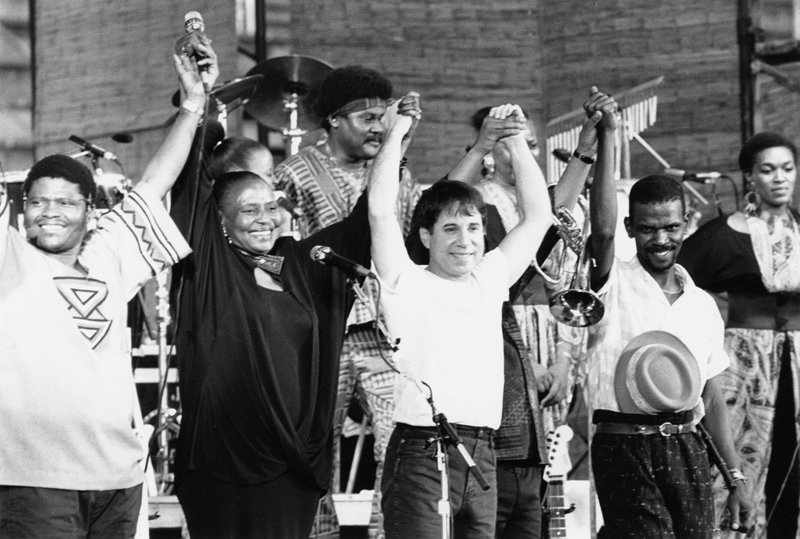
Songs as poems: Paul Simon, ‘I Know What I Know’

She looked me over and I guess she thought I was all right–
All right in a sort of a limited way for an off-night–
She said, “Don’t I know you from the cinematographer’s party?”
I said, “Who am I to blow against the wind?”

I know what I know
I’ll sing what I said
We come and we go
That’s a thing that I keep in the back of my head

She said, “There’s something about you that really reminds me of money,”
She is the kind of girl who could say things that weren’t that funny
I said, “What does that mean I really remind you of money?”
She said, “Who am I to blow against the wind?”

I know what I know, etc

She moved so easily all I could think of was sunlight
I said, “Aren’t you the woman who was recently given a Fulbright?”
She said, “Don’t I know you from the cinematographer’s party?”
I said, “Who am I to blow against the wind?”

I know what I know, etc

Paul Simon’s 1986 ‘Graceland‘ album is packed full of these little character sketches and snippets of conversation – and all done with rhythm, part-rhyme, and structured repetition in both verse and chorus. The song gives him the right to a repetitive chorus (as well as memorable tune), but he moves away from a traditional song’s full narrative into fragmented images that give a complete impression – here, an upscale event with two people assessing each other’s social and economic status and relationship possibility, as they talk of Fulbright Scholarships and a previous “cinematographer’s party”. It all sounds very New York.

It is a very extensive picture in a few words, leaving the sort of impression you get from an Alice Munro short story. And it is backed by the chorus that appears to verify that the conversation was real, as well as to state Simon’s recognition of how his mind and creativity work. So the song’s structure allows him to enrich the verses’ pictured conversation by stepping back to be more reflective and philosophical in the chorus.

And as it’s a song, he is carried by melody and instrumentation and can be a little free with metre without it being in any way jarring.

I view songs as a branch of formal verse. But in many ways, as shown here, song can easily flex into areas that are less natural for pure verse.

Photo by Luise Gub

Various updates

I am shifting the focus of this blog to give more coverage to the wide range of formal poets currently writing (especially those who have contributed to the Potcake Chapbooks) and to songwriters who, at their best, are superb poets with tricks up their sleeves not accessible to regular versifiers.

The Potcake Chapbooks continue to be produced on an occasional basis: the tenth in the series, ‘Travels and Travails’, came out recently and the 11th, ‘Lost Love’, has been assembled to be illustrated by Alban Low. Future titles may (or may not) include chapbooks on cities, on teachers, on the seasons, on pets… it all depends on my finding or being sent enough strong and diverse poems on an interesting theme.

I had hoped to have a Christmas-season-themed chapbook out this year, but I am having difficulty finding the diversity I want. Not only diversity of style, but also of content: I would like to acknowledge not just Christmas and Christmas trees and Christmas parties, but also Hanukkah, Kwanzaa, Festivus… everything around the solstice that has given birth to celebrations of the change in the year. (And with some recognition that this looks very different in the southern hemisphere.) Perhaps I will find enough to pull this chapbook together for the end of 2022.

In the meantime I welcome submissions of formal poems on any theme to robinhelweglarsen@gmail.com, but I prefer poems previously published: I don’t have an “accept or reject” procedure, I simply hang onto poems I like until, one of these years, I may have a use for some of them. So, as I don’t want anyone getting antsy about a poem not being available for use elsewhere, the Potcake Chapbooks should not normally be your first place publishing any given poem.

“Temple of British Worthies” by foshie is licensed under CC BY 2.0