Tag Archives: Claudia Gary

Claudia Gary, ‘Mountain Fire’

“Sunday, November the 5th, 1961, was hot and windy in Los Angeles…. As dawn approached on Monday the 6th… Fire Station 92 [received] a teletype from headquarters, noting the day would be considered a ‘high hazard’ day in the Santa Monica mountains….” –Los Angeles Fire Department Historical Society

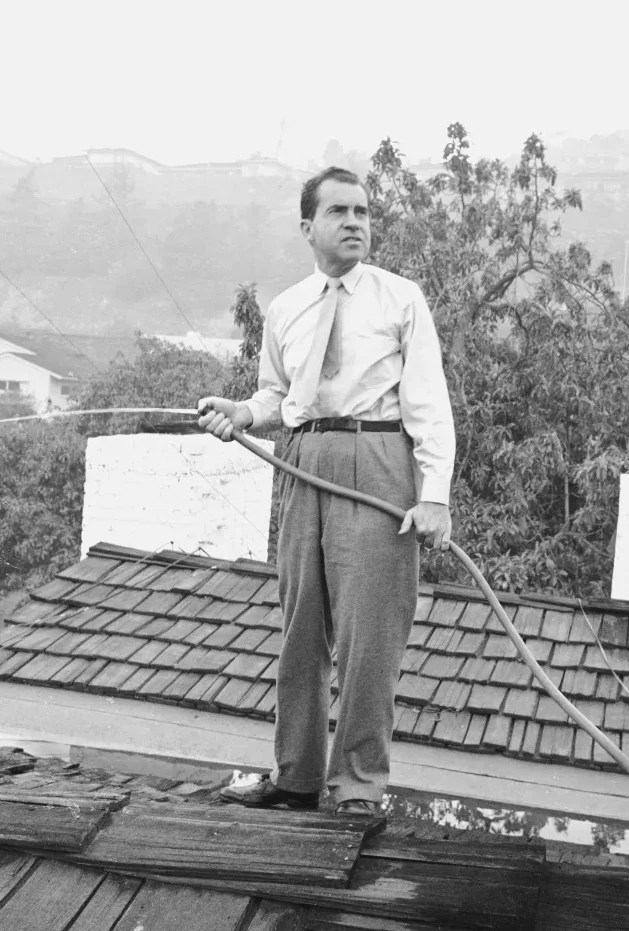
Who is this with a garden hose
on a gravel roof, watering wind,
ignoring pleas from firemen?
Oh yes, he knows,

but can’t stop. Neighbors’ houses broil
to concrete slabs with chimneys,
melted-down pipes, dead brush and trees,
eroded soil.

Wild Santa Ana wind has tossed
burning wood shingles, leveling
castles, condos. Leave everything
or you’ll be lost.

Later in the newsreel,
a mother steers her family’s car
down Roscomare, and there we are,
too scared to feel.

An offer on the radio
says “Stay for free at Disneyland!”
Mother and daughter drive and plan,
deciding No.

Allowed back, they are lucky: See?
Fire has spared their modest home.
The child’s toy bin contains a poem.
Unscathed — or isn’t she?

*****

(First published in Mezzo Cammin)

Claudia Gary writes: “Thinking of today’s residents of Los Angeles, with firsthand knowledge that even if a home is not lost, fire (and evacuation) can be traumatic.”

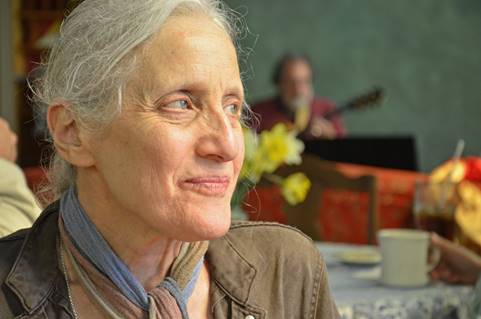
Claudia lives near Washington DC and teaches workshops on Villanelle, Sonnet, Meter, Poetry vs. Trauma, etc., at The Writer’s Center (writer.org) and privately, currently via Zoom. Author of Humor Me (2006) and chapbooks including Genetic Revisionism (2019), she is also a health/science writer, visual artist, composer of tonal songs and chamber music, and an advisory editor of New Verse Review. Her 2022 article on setting poems to music is online at https://straightlabyrinth.info/conference.html. For more information, see pw.org/content/claudia_gary
@claudiagary

Photo: During the 1961 BelAir-Brentwood fire in Los Angeles, Richard Nixon was among those who tried to save their homes (in Nixon’s case, a rental house) with garden hoses. Finding this photo for this blog post was coincidental; Claudia Gary did not have Nixon in mind when she wrote the poem. – RHL

Potcake Poet’s Choice: Claudia Gary, ‘Phonograph’

Remember, dear, when this was the one way
to make a disk sing? Full-size, not compact—
and both the disk and player would obey
only if you possessed your share of tact:
You’d lift the tone arm, puff a bit of air
across its fragile needle to remove
new dust, or use a brush of sable hair
to coax it out. After each vinyl groove
was polished with the softest chamois cloth,
you’d spin a record on its table, place
the needle over it, light as a moth—
you must remember! For the way you trace
the path of every melody I store
shows gentleness I’ve never known before.

Claudia Gary writes: “In case anyone still thinks art and science belong in different categories, it may help to remember that long before there were computer nerds, there were music nerds (audiophiles). Back then, enjoying high fidelity sound at home required paying close attention to detail and taking good care of fussy, sensitive machines. They may not have been as cavalier as today’s machines that demand upgrades at their own convenience; but yesterday’s machines did need a lot of TLC in exchange for beautiful music. And so does love.”

Claudia Gary lives near Washington, D.C., in Northern Virginia, and teaches workshops on Villanelle, Sonnet, Natural Meter, Poetry vs. Trauma, Poetry for Musicians, etc., at The Writer’s Center (writer.org) and elsewhere, currently via Zoom teleconference. Author of Humor Me (David Robert Books, 2006, in which Phonograph was published), and of chapbooks including Genetic Revisionism (2019) and Bikini Buyer’s Remorse (2015), she is also a health science writer, visual artist, and composer of tonal chamber music and art songs. See pw.org/content/claudia_gary; follow her on Twitter at @claudiagary.

Photo credits:
“1968 … all in one portable stereo phonograph!” by x-ray delta one is licensed under CC BY-SA 2.0
Claudia Gary photo by John Flannery

Poem: “The Silence”

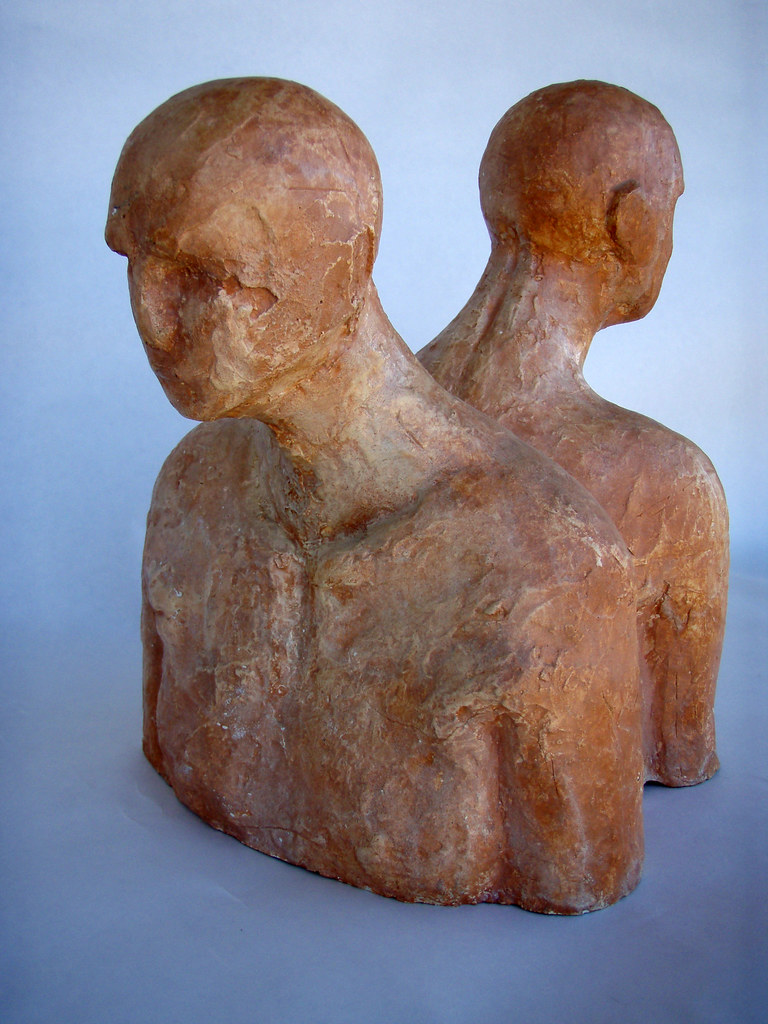
“Pareja (Couple)” by Daquella manera 

On those days when, because you felt attacked,
you just won’t speak, it’s like a dress rehearsal
for one of us being dead. (So, a prehearsal?)
Can’t speak for you, how you’d react,
but for myself, if you die, I know only:
I’d be lonely.

After the slow dispersal
of the acquisitions of the years
from yard sales, impulses, unfinished plans–
after the children’s and grandchildren’s tears,
(their own mortality foretold in Gran’s)
there’d be an emptiness.

Routine unravels:
I’d need an act of will to even shave–
the dogs don’t care how I behave.
All I need’s here in cupboards, shelves, on line.
I’d be just fine…
apart from growing restlessness.

I guess I’d restart travels.
Meanwhile I’ve learned how it will be
to live without you, just your memory,
a silent apparition in this room and that,
the ghost of one who used to laugh and chat.

Think of this as a melancholy love poem, written in a temporary (thank goodness) state of being that can occur in any relationship.

This poem was published this month in Snakeskin No. (or #) 276. I feel proud to be in the issue, as I rate it as one of the best ever in the 20+ years that George Simmers has been putting the magazine out. Though much of the poetry is formless (but still worth reading!), there is some truly impressive work by Tom Vaughan and Scott Woodland, with well-structured work by Robert West, Nick Browne and Jerome Betts, and with interesting innovations in form by Marjorie Sadin, Claudia Gary and George himself–in this last, the character of the verse becomes more lively as the character in the verse becomes more alive.

Technically the form of the poem–uneven lengths of iambics, all lines rhyming but not in a structured way–is one that allows the line breaks to echo your intact chunks of thought as well as the rhythms of speech. It is the form of Eliot’s Prufrock and, earlier, of Arnold’s A Summer Night:

And the rest, a few,
Escape their prison and depart
On the wide ocean of life anew.
There the freed prisoner, where’er his heart
Listeth will sail;

It is a casual form, but it retains enough of the hooks of more formal verse to make it easy to memorise and recite.

Potcake Poet’s Choice: Claudia Gary, “Blues Manqué”

Claudia Gary

Claudia Gary

I’ve suffered, but I can’t quite sing the blues.
My troubles are occasional, not chronic.
My angst is true, but not the kind you’d use

against the everyday, to find or lose
your heart. My chords are major and harmonic.
I’ve suffered, but I don’t dare sing the blues.

Any attempt would probably amuse,
but not in ways your songs have made iconic.
Your angst is true, while mine’s nothing to use

in threatening to blow a major fuse
or skip to Paris on the supersonic.
I’ve not suffered enough to sing the blues.

Saying I have is asking for a bruise.
You’ll throw tomatoes. They’ll be hydroponic.
This angst is true, but nothing I can use

to make you say mine is the pain you’d choose.
The plates I spin are porcelain, not tectonic.
I suffer from a need to sing the blues
with insufficient angst, too kind to use.

Claudia Gary writes: “I chose this poem because people have seemed to enjoy it at various readings, as did the wonderful editors who chose to include it in “Love Affairs at the Villa Nelle.” Also, villanelle is one of the forms I love to teach at writer.org—currently online, so people can “Zoom” from anywhere in the world and wear their pajamas to class.”

Claudia Gary teaches villanelle, sonnet, and meter “crash courses” at The Writer’s Center (writer.org). A three-time finalist for the Howard Nemerov Sonnet Award and semifinalist for the Anthony Hecht prize (Waywiser books), she is author of Humor Me (David Robert Books, 2006), chapbooks including Genetic Revisionism (2019), and poems appearing in journals and anthologies internationally. She also writes chamber music, art songs, and health/science articles. See also pw.org/content/claudia_gary, @claudiagary (twitter), and claudiagarypoet (instagram).

Poem: “Time”

Time takes the young child by the hand
and leads it through a golden land
so timeless it will never note
Time’s other hand is at its throat.

This little poem was just published in Snakeskin, in one of its richest issues ever. I’m glad to have been included, along with several others–Claudia Gary, Tom Vaughan, George Simmers, Marcus Bales–of the formalist poets who appear in the Potcake Chapbooks. And a shout-out to Nikolai Usack, who made me clear up clumsy pronouns in the original draft.