Tag Archives: David Galef

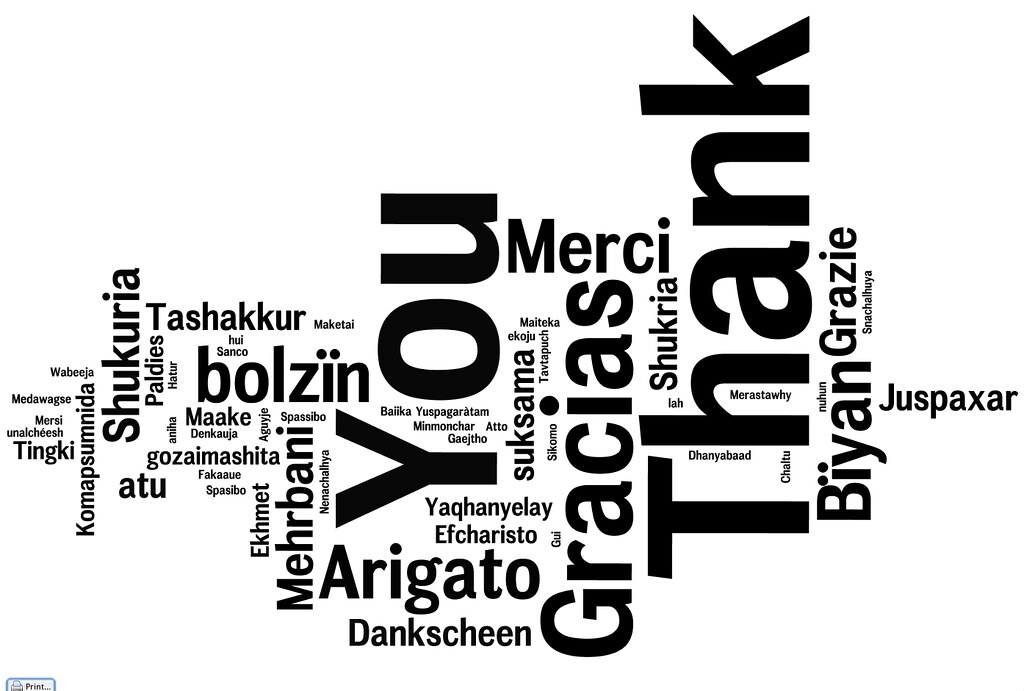
David Galef, ‘How to Say “Thank You” Abroad’

Donkey, mercy, grassy ass,
Effin’ Christ, something with God?
Spacey bow and airy ghetto,
Tic-tac-toe—or smile and nod.

Glossary: danke, merci, gracias, efcharisto, deo gratias, spasibo, arigatō, tak.

*****

David Galef comments: “The idea for this short (previously unpublished) poem came to me years ago when I was learning Japanese, and the mnemonic for the phrase “you’re welcome” (dō itashimashite) was explained to me as “don’t touch my mustache.” From there, it was a short step to “airy ghetto” for arigatō or “thank you.” A recent bout of Spanish language instruction yielded “grassy ass,” not that gracias is hard to remember, and the rest, as they say, is hiss Tory. As you can see in the poem, I’ve got eight or so examples, and I’d welcome more.”

David Galef has published over two hundred poems in magazines ranging from Light and Measure to The Yale Review. He’s also published two poetry volumes, Flaws and Kanji Poems, as well as two chapbooks, Lists and Apocalypses. His latest book is the novel Where I Went Wrong. In real life, he directs the creative writing program at Montclair State University.

Photo: “universal thank you note” by woodleywonderworks is licensed under CC BY 2.0.

Weekend read: David Galef, ‘A Question of Emphasis’ or ‘Wanna Make Something of It?’

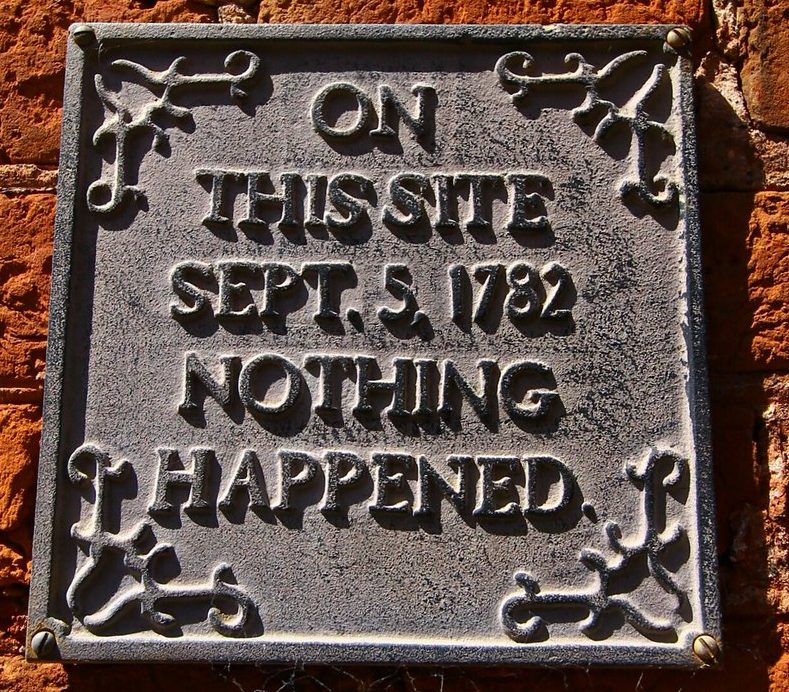
“poetry makes nothing happen . . . .”
—W. H. Auden, “In Memory of W. B. Yeats”

Poetry makes nothing happen.
Song lyrics, on the other hand,
Wedge into people’s hearts
When sung by a heartthrob band.

Poetry makes nothing happen.
It doesn’t enforce a cause.
That’s the way of propaganda,
With all its fixed applause.

Poetry makes nothing happen.
But I’ve seen something sublime
In the eyes of a student reading
Eliot’s Prufrock the first time.

Poetry makes nothing happen.
But must events take place
For poems to be eventful—
To make a normal pulse race?

*****

David Galef writes: “This poem was inspired by the memory of a graduate seminar taught by Edward Mendelson, a professor at Columbia University and the executor of the Auden estate. What Mendelson doesn’t know about Auden probably isn’t worth knowing, and what he brought to the study of Auden’s poetry was a deep knowledge of technique, context, and Auden’s modus cogitandi. Tired of those who quoted Auden’s famous line from “In Memory of W. B. Yeats” to indicate the inutility of poetry, Mendelson pointed out that the significance of “For poetry makes nothing happen” is more a point about art versus propaganda. The emphasis shouldn’t be on “nothing” but on “makes.” The aim of agitprop is to make all minds bend in one direction. True art, on the other hand, doesn’t force one meaning on the audience, though it may be powerfully suggestive. As Auden continues (and people who quote often omit surrounding words),
“it survives
In the valley of its making where executives
Would never want to tamper, flows on south
From ranches of isolation and the busy griefs,
Raw towns that we believe and die in; it survives,
A way of happening, a mouth.

Poetry does indeed enjoy a special, immortal status, but those who want it to be a crowd-controlling megaphone will probably be disappointed.
What I wanted to accomplish in ‘A Question of Emphasis’ is just what stressing the right
word can do, and how poetry can change lives, in its own way.”

David Galef has published over two hundred poems in magazines ranging from Light and Measure to The Yale Review. He’s also published two poetry volumes, Flaws and Kanji Poems, as well as two chapbooks, Lists and Apocalypses. In real life, he directs the creative writing program at Montclair State University.
www.davidgalef.com

Editor: I can’t help adding this 6-minute exposition of emphasis from Hamlet: https://vk.com/video17165_456239062 with its star-studded cast… Enjoy!

Photo: “Nothing happened” by Graham Ó Síodhacháin is licensed under CC BY-SA 2.0.
Epigram: ‘The Gods Compete’

The gods compete; some harvest verse, some tears,
Some deaths in battle, some vague hopes and fears.

This epigram is nondenominational–in the sense that I don’t have any preference for how people view, or are attracted to, some particular god.

More challenging is the punctuation. Good punctuation definitely helps guide the reader through the meanings of the passage, but what is ‘good’ varies by culture. Many Americans loathe the semicolon beloved by writers of convoluted passages. Many people argue for or against comma placements. In this piece, a 17-word sentence, the first line seems clearer than the second. “Some deaths in battle” might in this case be better written as “Some, deaths in battle” but that would suggest following it with “some, vague hopes and fears.” Then it might be preferable to separate those two parts of the line with a semicolon… but then perhaps the previous line should end in a semicolon too… but then what about the semicolon after “The gods compete”? Replace it with a colon.

I can’t help thinking of the remark often attributed to Oscar Wilde, or, as David Galef pointed out in the New York Times, Gustave Flaubert: “I spent the morning putting in a comma. In the afternoon I removed it.”

The poem was originally published in The Asses of Parnassus–thanks, Brooke Clark!

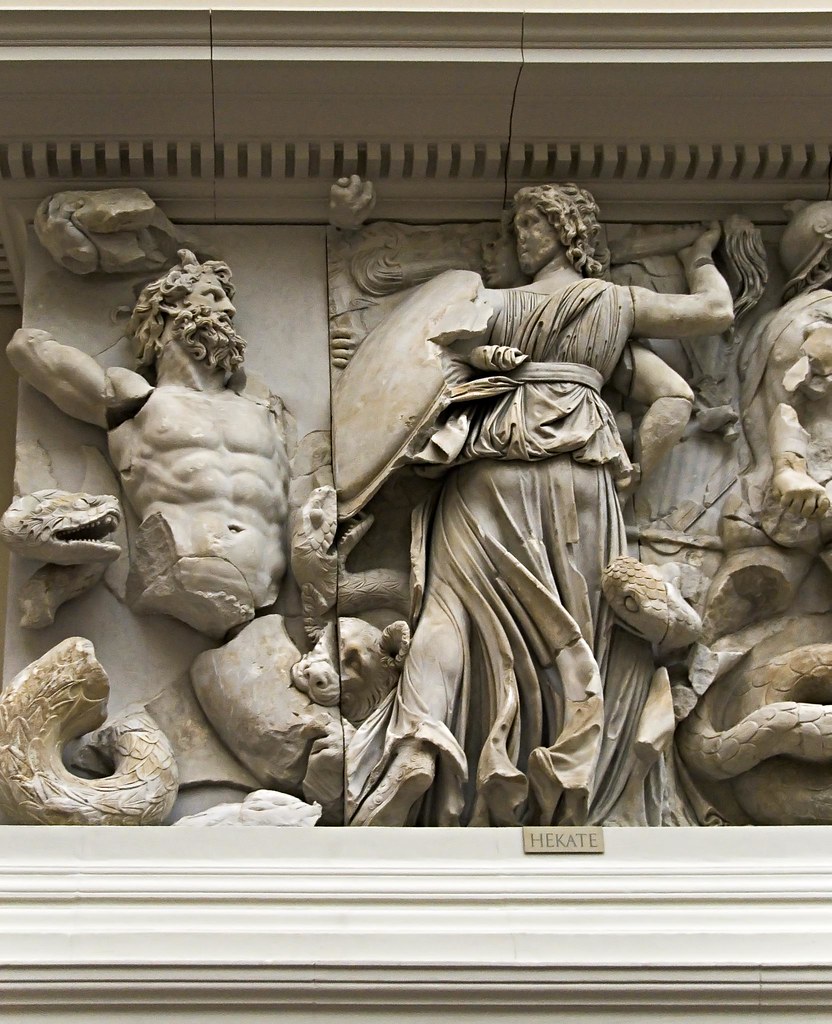
Photo: “Pergamon Museum _DSC17798” by youngrobv is marked with CC BY-NC 2.0.

Potcake Poet’s Choice: David Galef, ‘Nohow’

I do what I don’t
If I can’t and then could.
I wouldn’t say won’t
When I mustn’t but should.

Do I never need not
Any time that’s all now?
Should I get what I’ve got
Nowhere here but not how?

When the whos turn to whom
As I do till I die,
I will rumor the room
And stop asking why.

David Galef writes: “Nohow, besides being a homage to Cummings, is the kind of celebration of sound and sense that people always seem to enjoy. First published in Blue Unicorn.”

David Galef has published over two hundred poems in magazines ranging from Light and Measure to The Yale Review. He’s also published two poetry volumes, Flaws and Kanji Poems, as well as two chapbooks, Lists and Apocalypses. In real life, he directs the creative writing program at Montclair State University.
www.davidgalef.com

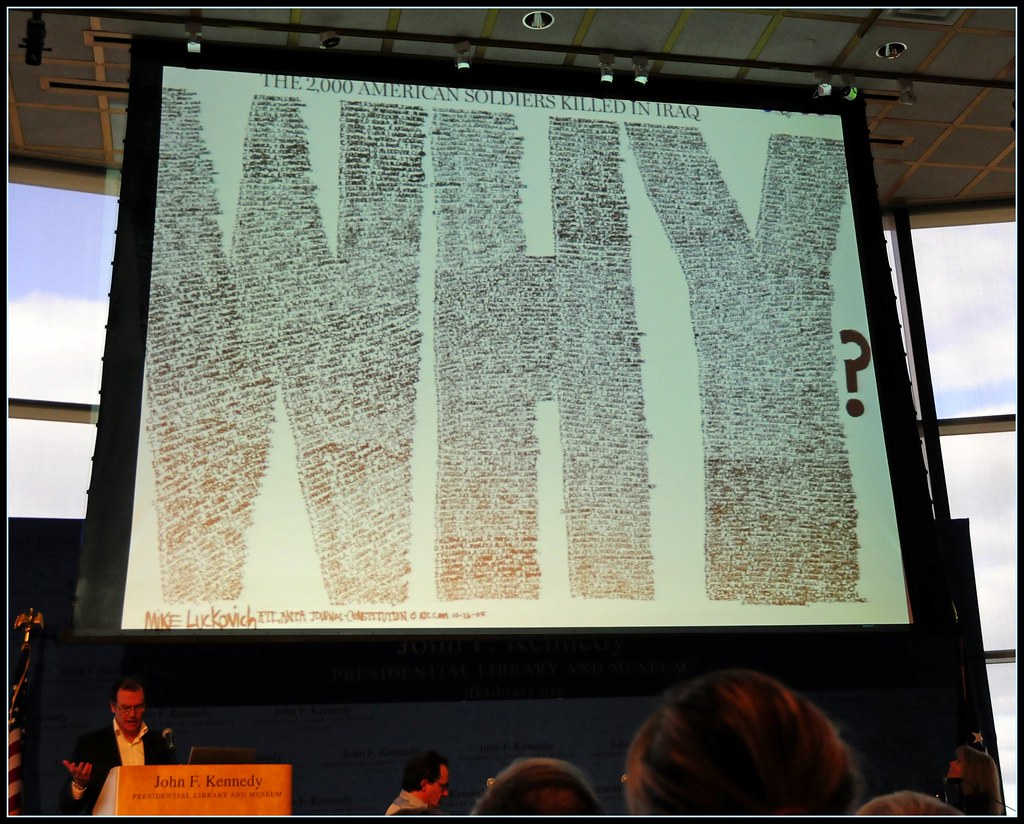
“‘Why?’, Mike Luckovich, Pulitzer-Winning Political Cartoonist (1 of 4)” by Tony Fischer Photography is licensed under CC BY-NC-SA 2.0

Potcake Poet’s Choice: David Galef, ‘Justification’

And malt does more than Milton can
To justify God’s ways to man.
—A. E. Housman

When I am beaten down by work and love,
And others head for local dives to drink,
I clench my soul and strive to rise above,
For stimulating words to make me think.
O show me Milton’s paradisial route,
Far airier than the foamiest of stout.
Of man’s first disobedience and the fruit
Are all I need and all I care about.
A bottled brew’s sufficient for the poor
In spirits, not for spirituality.
How can a tankard filled with beer quench more
Than slaking drafts of a theodicy?
I’d bring it to the bar, but I get looks
When I enact the fall from all twelve books.

David Galef writes: “Justification is both an appreciation and dig at Milton, an attitude older than Samuel Johnson’s comment about Paradise Lost, ‘None ever wished it longer than it is.’ It came out in Light.”

David Galef has published over two hundred poems in magazines ranging from Light and Measure to The Yale Review. He’s also published two poetry volumes, Flaws and Kanji Poems, as well as two chapbooks, Lists and Apocalypses. In real life, he directs the creative writing program at Montclair State University.
www.davidgalef.com

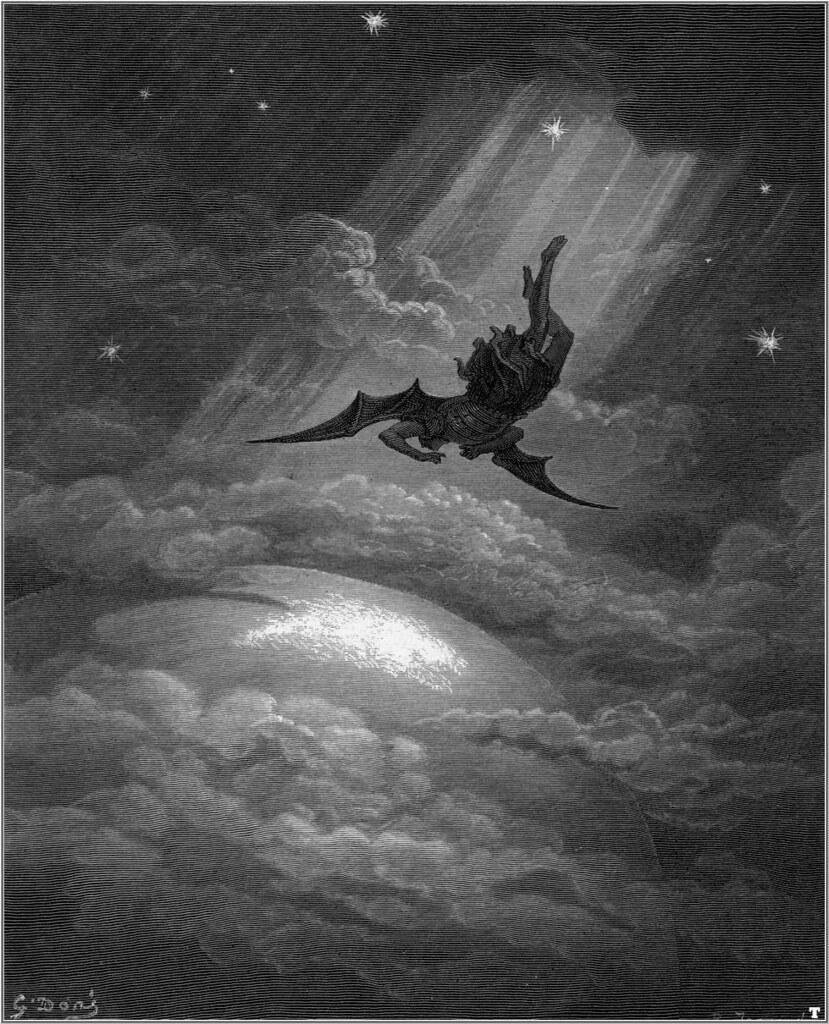
“DORÉ, Gustave Illustration for John Milton’s Paradise Lost 1866” by carulmare is licensed under CC BY 2.0

Potcake Poet’s Choice: David Galef, ‘The State of the Art’

Literature, that romantic old bastard,
Is sick again, aslant on his chair
Like a spread-eagled book, already plastered
By noon and mumbling life’s unfair.

He speaks these days, ventriloquizing
In a voice long ruined by social disease,
His brilliant spasms slowed to writhing
And minute gestures that nobody sees.

What can we do for the drunken degenerate?
Tear up his license, make sure he’s not read,
Submit him to lectures, make him aware that
We don’t want him living, we don’t want him dead.

David Galef writes: “The State of the Art reflects our era’s attitude toward literature. It was published in Pivot way back when.”

David Galef has published over two hundred poems in magazines ranging from Light and Measure to The Yale Review. He’s also published two poetry volumes, Flaws and Kanji Poems, as well as two chapbooks, Lists and Apocalypses. In real life, he directs the creative writing program at Montclair State University.
www.davidgalef.com

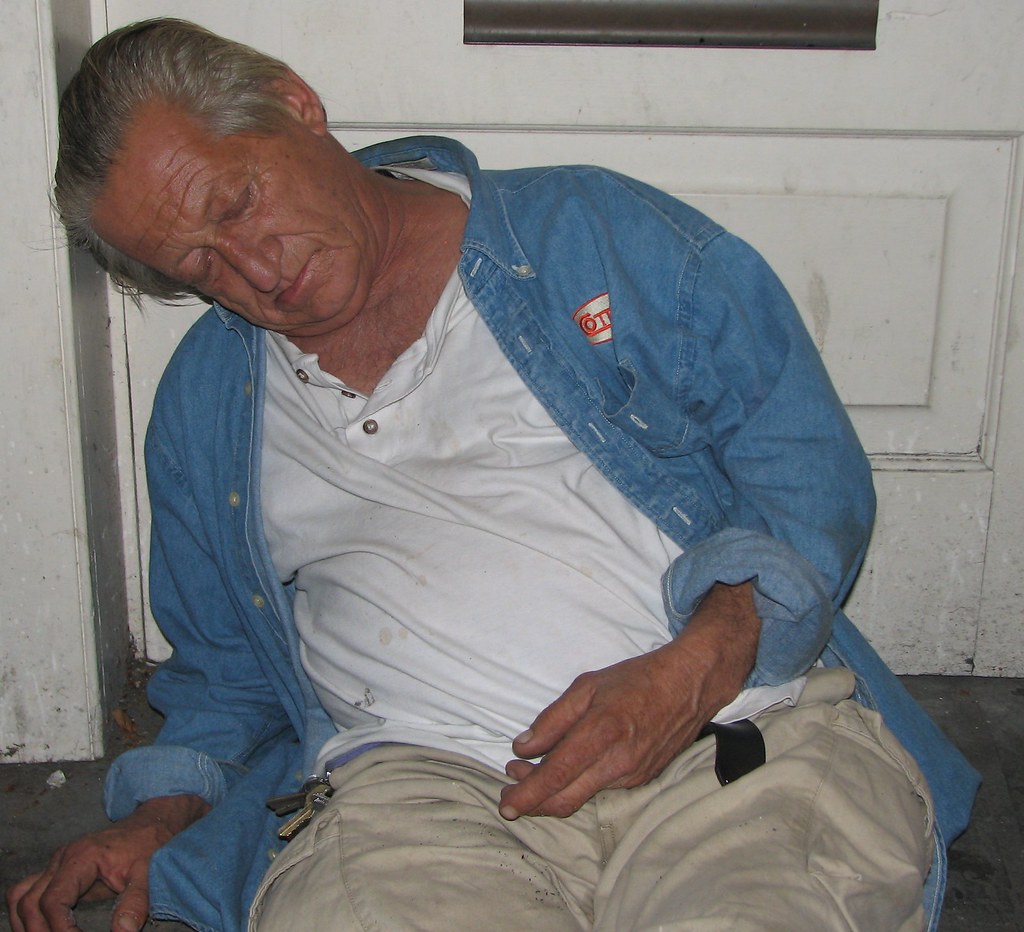
Photo: “Old Drunk Man” by mocheeks is licensed under CC BY-NC-ND 2.0

Potcake Poet’s Choice: David Galef, “Entropy”

David Galef

All I said I unsay now,
Speaking backwardly,
Raveling webs of words,
Reversing entropy.

But that is not what I meant at all
In order to mean something new,
Trying to re-verb sunrise,
Trying to undo the dew.

Or stirring the coffee slowly.
As if retracing a rune,
Hoping the sugar will undissolve,
Emerging pristine on the spoon.

I’ve always been fascinated by the notion of reversal, from turning back time to building order out of ever-encroaching disorder. On a universal scale, this act is impossible, but on the local level, one can make little inroads: writing a poem, for instance. I started out with just the line “All I say I unsay now.” The rest is fanciful, I admit, but I had fun. The poem appeared originally in Light, when it was edited by its founder, John Mella. He’d rejected a few other poems, but this one he took at once.

David Galef has published over two hundred poems in magazines ranging from Light and Measure to The Yale Review. He’s also published two poetry volumes, Flaws and Kanji Poems, as well as two chapbooks, Lists and Apocalypses. In real life, he directs the creative writing program at Montclair State University.
You can see more of his work at www.davidgalef.com