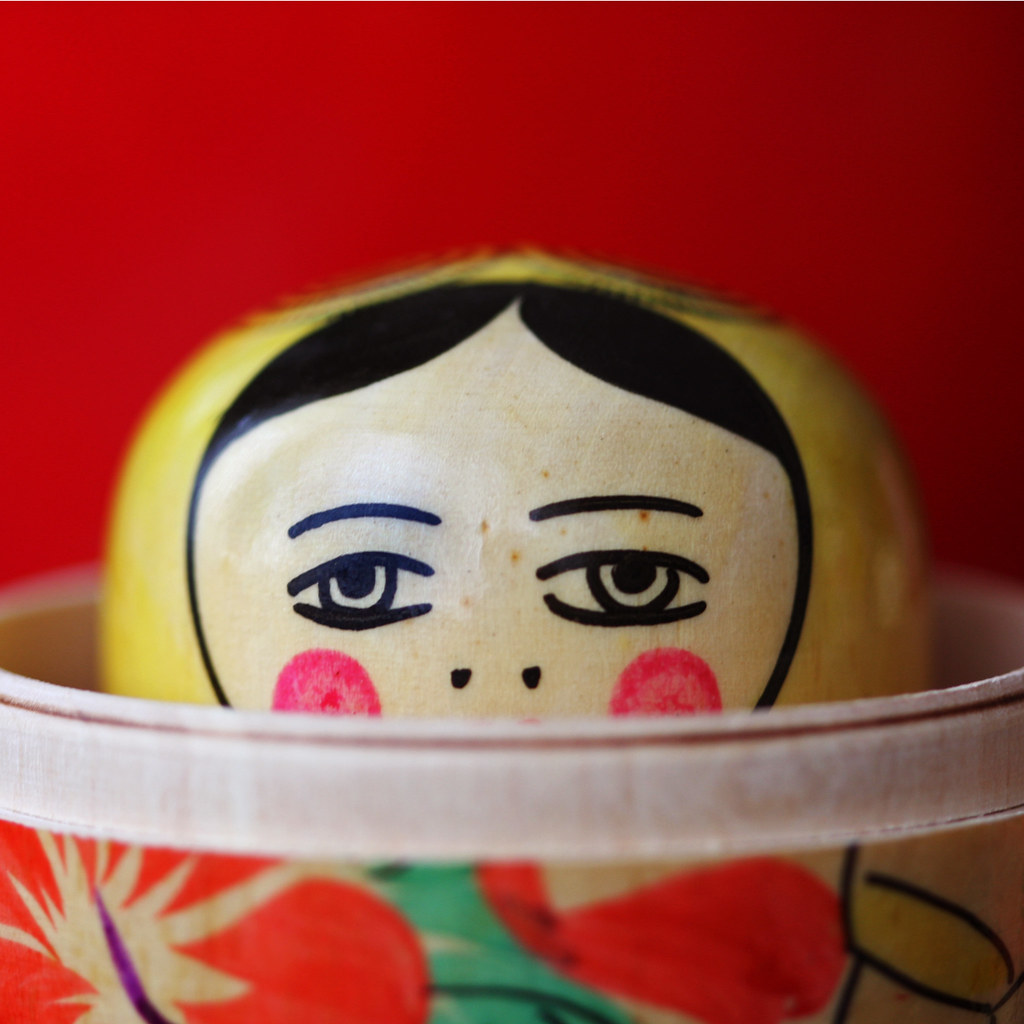
Mother, I am your only child. I breathe inside your painted walls, I am your only child. A daughter. I nest inside your wooden halls.
I breathe inside your painted walls, I have never touched your face. I nest inside your wooden halls, We share an inside out embrace.
I have never touched your face. In retrospect, I understand, We share an inside out embrace. I have never clutched your hand.
In retrospect, I understand. I have never seen your eyes, I have never clutched your hand. We are stacked, a quaint disguise.
I have never seen your eyes. I am your only child. A daughter. We are stacked, a quaint disguise. Mother, I am your only child.
*****
Susan Delaney Spear writes: “Several years ago, I realized that the Russian nesting doll could be a metaphor for the complex relationship I had with my mother. Still, I was unable to put it into verse. But then, when my poetry group was writing pantoums (the poetic version of nesting), I wrote “Matryoshka.” Sometimes the Muse waves her magic wand and offers a form which perfectly aligns with the content.”
Susan Delaney Spear is a retired professor and poet. Her two collections of poetry are Beyond All Bearing and On Earth….(Resource Publications, 2018 and 2022). She is the co-author, with David J. Rothman, of Learning the Secrets of English Verse (Springer, 2022). She and her husband live in Tampa, Florida, where she writes and serves as the interim music director and organist at the First Presbyterian Church of Dunedin. You can find her at www.susandelaneyspear.com.
Notes left behind by strangers long since dead entranced my mother—not the squiggles, dots and lines themselves, but what musicians read from them on radio, the sounds ink spots had spelled. In quartets and in Claire de lune, her young ears heard what many can’t discern: enchanting, complex things—beyond the tune— about which she had little chance to learn. When she grew up, her voice was warm and rich as those of many singers who’d been schooled in breath control and quarter notes and pitch. She was as musical as some who’ve ruled the concert stage—but she sang in the car and kitchen; we heard her wide repertoire.
We heard her car and kitchen repertoire of opera arias, concerto themes, and deep regret she never got as far as piano lessons. Her childhood daydreams were seeded by the sagging upright housed at her Aunt Margaret’s—maybe she’d learn there?— and fed by radio: Puccini roused her love of opera, Brahms made her aware of string-sung drama. She pursued her chances to learn and listen—and also to plead for lessons, though her parents’ circumstances made that impossible. But she’d succeed in giving her kids what she’d never had— assisted in that effort by my dad.
It took substantial effort. Mom and Dad lacked wealth, but not love or imagination. Wrong turns became adventures, plans gone bad would show up later in a wry narration. Fun for us kids was low-cost, even free: a paper crown on birthdays, or a game made out of raking leaves, or a decree that it was Ice Cream Tuesday. We became as skilled as they were at composing joy: we heard another music in our days of sibling harmony, learned to deploy exuberance and laughter as one plays an instrument. And then catastrophe and cleverness brought opportunity.
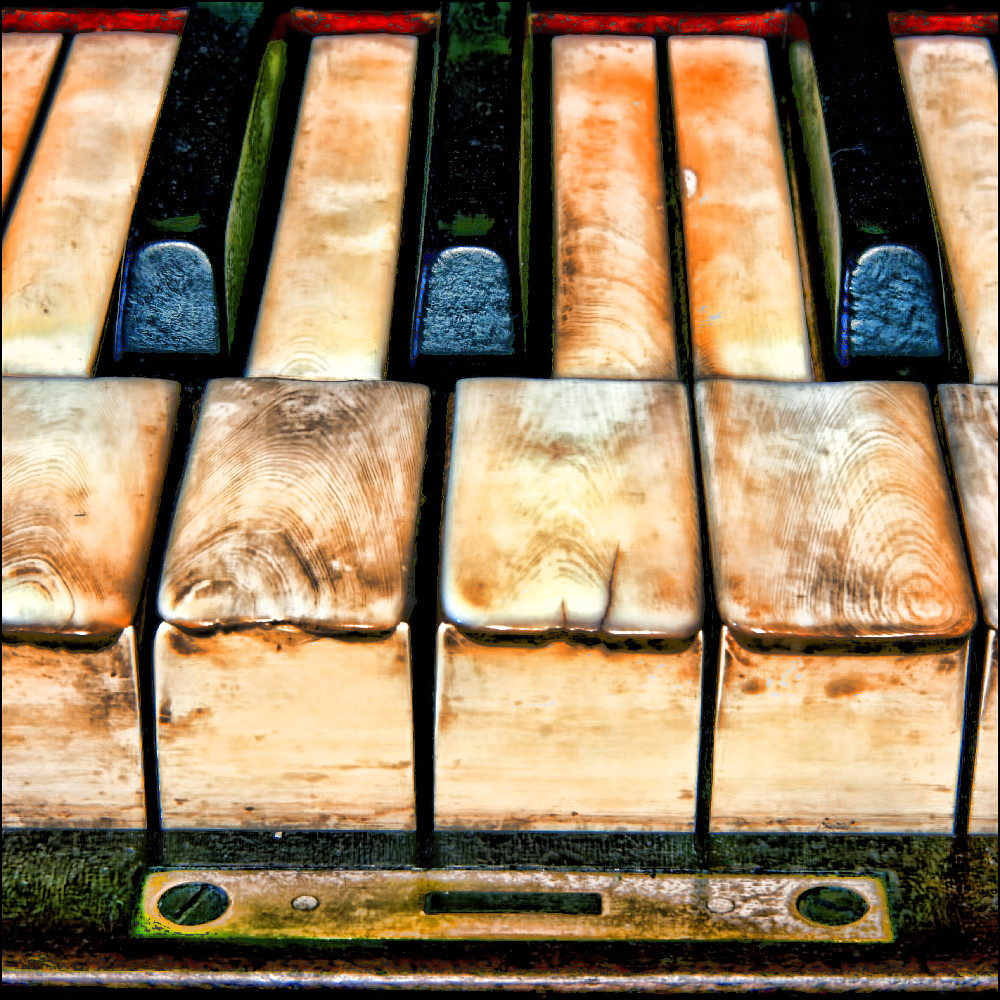
Our clever dad saw opportunity when fire destroyed a nearby school, with all its contents lost—including, doubtlessly, the old piano. But Dad made a call and had the badly damaged upright brought to our garage. It was a rescue mission: the smoky wreck could be revived, he thought. He’d never played, and he had no ambition to do so, but he always had been good at fixing things. And so he scrubbed the keys, patched felts and hammers, and restored the wood of the disfigured case. And by degrees, the sooty hulk became something we prized. Untrained, unmusical, he’d improvised.
With talents of his own, he’d improvised, so we could, too. And he and Mom had planned and saved so we’d have lessons. Though advised to start us at age seven, Mom had grand ambitions for my younger hands. At six, I got to know the keys and clefs with smart, no-nonsense Mrs. Steffen, who would mix high standards and commitment to the art of making music with kid-friendly stuff. I played a little Mozart (simplified), a piece called “Crunchy Flakes” and other fluff, some basic boogie-woogie, drills that tried my patience. And my two sisters and I all played—too loudly—Brahms’s lullaby.
We all played Brahms’s famous lullaby, and argued over which of us would get to practice next; I knew the time would fly when it was my hour. Paired in a duet, two sisters often bickered just as much as we made music, but we learned to work together, synchronize tempo and touch, forget the other could be such a jerk. Years later I made music my profession, and it became both job and joy, a route to self-sufficiency and self-expression— a gift whose worth I never could compute, from parents who would never read a score, but who would give us music and much more.
They gave us music, but a great deal more than just the audible variety. Their well-tuned lives—examples set before us kids—were also music. They taught me to practice patience in both work and play; to face discord and my mistakes with poise; to transpose trouble to keys far away; to find and share the song within the noise. My mother’s dreams, my father’s diligence, and love composed a priceless education. And those gifts all enrich the resonance I hear in Bach and Brahms—in my translation of small black symbols in the scores I’ve read: notes left behind by strangers long since dead.
*****
Jean L. Kreiling writes: “I often find myself reminding readers that poems are not always autobiographical—but ‘Another Music’ is thoroughly autobiographical, and it’s meant to honor my devoted and fun-loving parents. My mother’s love of music and my father’s brilliance did shape much of my life, and my parents gave me (and my siblings) a richly happy and secure childhood. My parents’ legacy has lived on in the lives of all of their children: music has been important in all our lives, and family has been a top priority and a joy for all of us. Mom and Dad supported my work as a poet just as enthusiastically as they supported my musical endeavors, and I’m grateful that they both lived to see my first book of poems published.”
Jean L. Kreiling is the author of four collections of poetry; her work has been awarded the Able Muse Book Award, the Frost Farm Prize, the Rhina Espaillat Poetry Prize, and the Kim Bridgford Memorial Sonnet Prize, among other honors. A Professor Emeritus of Music at Bridgewater State University, she has published articles on the intersections between music and literature in numerous academic journals.
I remember the cold, high-ceilinged room where they had laid him, the smell of incense, brass coffin handles shining in the gloom, an aspidistra, dusty and immense.
To this small boy dressed in a mourning suit, he seemed reduced, much less than he once was: his scalp, without his cap, bald as a coot, his fingers criss-crossed on his chest like claws.
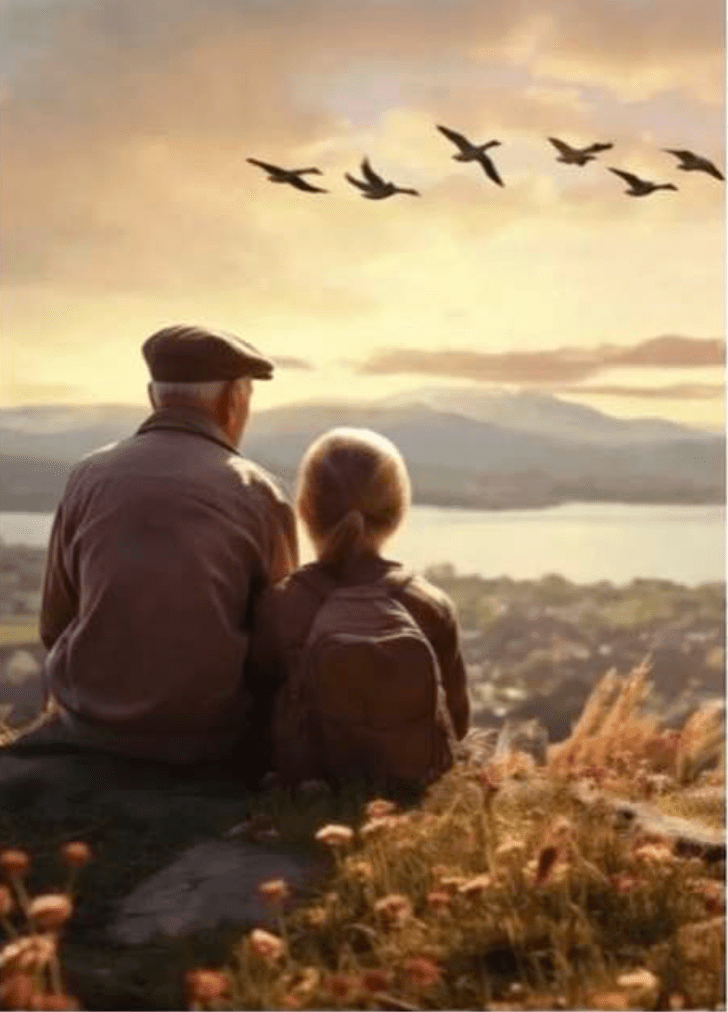
I thought back to the day we watched geese rise high over wetlands blurred with morning haze, the laughter always dancing in his eyes, his warm, familiar smell, his turn of phrase.
Life is so short while memories are long. We the bereaved are left with words unsaid. At the day’s end, he’d sing a lulling song as I rode his strong shoulders home to bed.
A prayer unbidden reached me on a whim: Preserve in me the things I loved in him.
*****
Richard Fleming writes: “This is a shortened, rhyming version of a lengthy free verse poem that I wrote over thirty years ago when I relocated to Guernsey from Northern Ireland. Like many love poems, the original version, The Hidden Traveller, has stood the test of time. This version stands as a homage to its source.”
Richard Fleming is an Irish-born poet and humorist based in Guernsey, a Channel Island between Britain and France. Widely regarded as one of the island’s foremost literary voices, his versatile work blends lyricism, sharp wit, emotional depth, and a strong sense of place. Drawing from his Northern Irish roots and adopted home, his poetry and prose explore love, loss, nostalgia, identity, and modern life. Collections include Strange Journey (2012), held in the National Poetry Library, and Stone Witness (Blue Ormer) featuring the BBC-commissioned title poem. His work can be found on Facebook https://www.facebook.com/richard.fleming.92102564/ or Bard at Bay www.redhandwriter.blogspot.com
My parents stacked the best years of their youth as Bricks to build me. Taught me words I taught Myself to shout them down with when we fought. My parents loved me, though I could be ruthless Hurting myself with things I poured or burned And those who loved me with the things I said. My parents never gloated once I learned, Just held me through my sobs, and kissed my head.
Now, in the living room I stormed out of, They tell me I can stay the month, or year, Because my room will never not be here No matter where I go, or who I love. I am their blood, they tell me. I depart From them as blood does from a beating heart.
*****
Amit Majmudar writes: “A homing pigeon knows where its home is by training, as the falcon knows the falconer’s arm. But there are deeper instincts at work in nature that science still struggles to explain fully, like the way birds know how to migrate by looking at the stars, and the way monarch butterflies find their way to the same vast swath of oyamel trees in Mexico every year. Human beings have something of that in them. Not just for the neighborhoods where we grew up, but for the people, the family, who were there with us. This poem is about that. I distinctly recall its writing; I woke up at the “witching hour,” as I often do, while visiting my sister-in-law’s house in Texas over Christmas break. Ten family members were asleep in the same house, and, unable to fall back asleep, I picked up my phone and found an invitation to submit to a new sonnet journal in my inbox. Immediately, still in the awoken, excited, “witching hour” state (which the Indian tradition calls the Hour of Brahma, the time of peak creativity), I wrote this poem about the bond between the far-afield child and the fixed star of family, first line to last.”
‘Homing’ was just published in The Sonneteer which can be accessed at thesonneteer@substack.com. It offers a free, partial service as well as an upgraded paid subscription.
Amit Majmudar’s recent books include Twin A: A Memoir (Slant Books, 2023), The Great Game: Essays on Poetics (Acre Books, 2024), and the hybrid work Three Metamorphoses (Orison Books, 2025). More information about his novels and poetry collections can be found at www.amitmajmudar.com.
Dear Mother come softly across your grey veil and onto the path in the dark where the snail is crossing obliquely and nightjars sing sweetly and put down your toilet bag quietly, discreetly on the rim of the cemetery fountain. Now wash your hair free of this mud and these worms, and squash those white maggots that gleam in your ears, then smile as you used to. We’ll have no more tears.
*****
Andrew Sclater writes: “I think everyone who loses a parent probably wants to resurrect them somehow. But memory is a false friend. We can’t see them clearly enough: we know, with vagueness, what they were like, but not who they were. We’d like to go back but we can’t, though this poems attempts to. Then, the realisation that we stand alone, orphaned, comes slowly, painfully and (awkward as it is) angrily as we grieve. This poem was delivered almost complete to me. It simply flowed out of the first line in a rare and rather magical way. I still like it more than almost everything I’ve written, placing my discomfort so tidily into its formal box.”
‘Dear Mother’ first appeared in Poetry Review.
Andrew Sclater is a Scottish poet currently living in Paris. He has published poems in Ambit, Best Scottish Poems, The Dark Horse, Magma, New Writing Scotland, Poetry Review, Shearsman and elsewhere. He co-founded Butcher’s Dog poetry magazine and the National Botanic Garden of Wales. He has been an editor of Charles Darwin’s correspondence and his Dinner at the Blaws-Baxters’ was published in 2016 by HappenStance Press. His newest pamphlet Quite Joyful is from Mariscat Press.
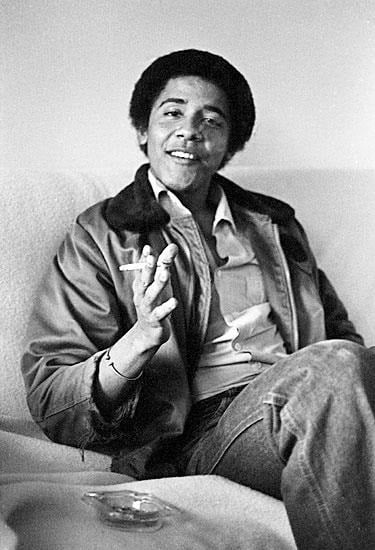
Sitting in his seat, a seat broad and broken In, sprinkled with ashes, Pop switches channels, takes another Shot of Seagrams, neat, and asks What to do with me, a green young man Who fails to consider the Flim and flam of the world, since Things have been easy for me; I stare hard at his face, a stare That deflects off his brow; I’m sure he’s unaware of his Dark, watery eyes, that Glance in different directions, And his slow, unwelcome twitches, Fail to pass. I listen, nod, Listen, open, till I cling to his pale, Beige T-shirt, yelling, Yelling in his ears, that hang With heavy lobes, but he’s still telling His joke, so I ask why He’s so unhappy, to which he replies… But I don’t care anymore, cause He took too damn long, and from Under my seat, I pull out the Mirror I’ve been saving; I’m laughing, Laughing loud, the blood rushing from his face To mine, as he grows small, A spot in my brain, something That may be squeezed out, like a Watermelon seed between Two fingers. Pop takes another shot, neat, Points out the same amber Stain on his shorts that I’ve got on mine, and Makes me smell his smell, coming From me; he switches channels, recites an old poem He wrote before his mother died, Stands, shouts, and asks For a hug, as I shrink, my Arms barely reaching around His thick, oily neck, and his broad back; ‘cause I see my face, framed within Pop’s black-framed glasses And know he’s laughing too.
Featuring it in 2007 (alongside another Obama poem, “Underground”), The New Yorker noted that it “appears to be a loving if slightly jaded portrait of Obama’s maternal grandfather, with whom he spent a large part of his childhood.”
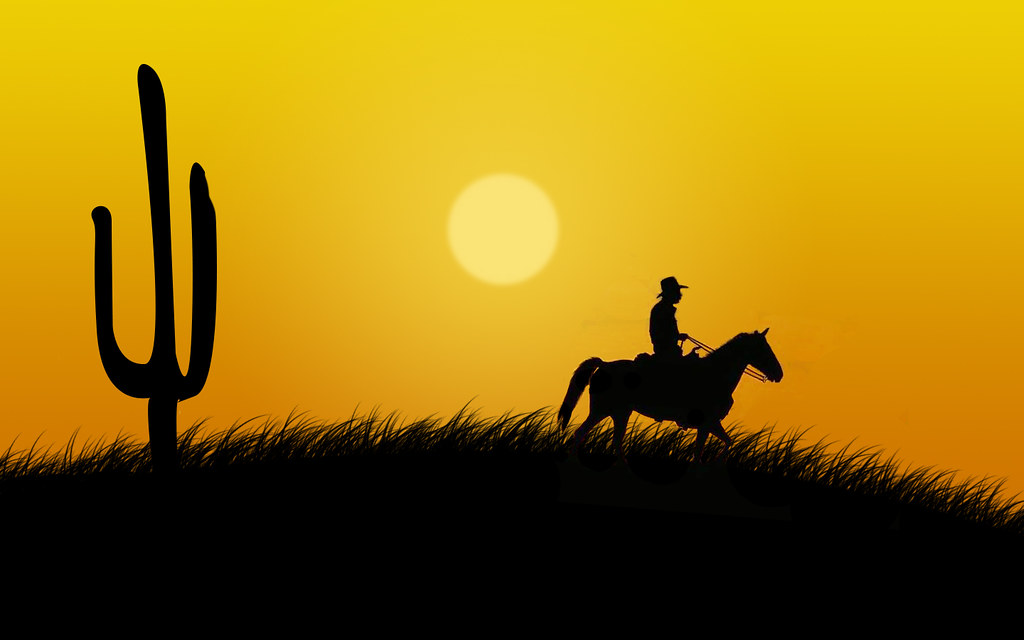
Clip clop clip clop steady up yon stuntgrass rise, boy, long as low and stony-brown, slow like weeks with nothing in them: saddle-tick, dirt-crump, poker-face.
Clip clop clip clop privy-top and anchor-wires, church-cross, store-spike, steady boy, up yon one-street, just more-trodden dust: saddle-tick, dirt-crump, poker-face.
Clip clop clip clop steady, boy, through sad wood civics, rippled in yon saloon-glass store-side, road-end, horses maybe leaving: saddle-tick, dirt-crump, poker-face.
Clip clop clip clop rise, boy, steady, way ahead, purple-white mountains, nothing in them maybe, like weeks maybe: saddle-tick, dirt-crump, poker-face.
2.
My brother’s name was Crazy Sean. They shot him in the head. He rattled through the summer corn and turned the green shucks red.
I laid him in the willowbrake. I couldn’t stand to pray. I kissed his cheek for pity’s sake, and then I rode away.
The plains are full of buffalo. The woods are red and gold. The mountaintops are white with snow. His memory keeps me cold.
I’ve rode through Hope and Whisky Creek. I’ve rode through Faith and Love. I’ve laid in Hate and Hide-and-Seek, and run from God-Above.
The prairie shines, the buckdeer cry. The hawks hang in the heat. Clipclop clipclop, the world rolls by. They say revenge is sweet.
3.
Somewhere still, stark as an afternoon; Ached in long planks of sunshine; Like a gambler’s card dropped on an empty land; Vauntsquare, the nailed-up main street creaks Against the air. Clipclop – hotel, laundry, saddles, Telegraph, clap-houses, guns. The horse stops. Into this hollow spine of fellowship blows a slow O of wind. Three men clatter at a boardwalk: Nacarat boots, sharktooth mojos – oh my brother.
4.
I shot one on the shithouse board. His head smashed like a squash and sprayed the backboards red. He pissed his boots and died. The stinking hole spit up a fat, black fly, which was his soul. I shot one in the barbershop. The chair caught fire, and ate his o-colonied hair. He fell out like a slice of spitroast meat. The duster wrapped him in its winding-sheet. I shot one in the cornfield. Larks of blood flew off his skull and twittered in the mud. He rattled through the stalks. His mashy head threw up its brain and turned the green shucks red. I took a bath and threw away my gun. I rode away wherever. I was done.
5.
drizzle pops on his hatbrim, cord and wool and steam-sodden, saddleticks like an empty stomach.
windpump wires and tin-dump, like horizon-drowning, horse, then man, hat, gone, clipclop, dusk drips in.
paraffin lamplight pricks the town, glo-worms, night hunched above, coyotes carry their eyes like stars.
6.
reckoning done how will he ever be warm
purpose gone how will he outrun the storm
bearings none how will he find another
riding alone how will he tell his brother
*****
John Gallas writes: “‘Western Man’ is a weird one: I have a quite spooky love of Westerns, jogging as they do some very deep links with Old En Zed, remnants (many remnants!) of which I grew up with and in. Those old wooden towns, the dim General Stores, the slightly grim and mostly silent (mostly) men, the cheek-by-jowlness of town and bush. It means quite a lot to me. I find the end of most Clint Eastwood films, and especially ‘Once Upon A Time in the West’, as the hero says ‘I gotta go now’, and rides away into lonliness after some bloody vengeance or other, inexpressibly moving.”
John Gallas, Aotearoa/NZ poet, published mostly by Carcanet. Saxonship Poet (see http://www.saxonship.org), Fellow of the English Association, St Magnus Festival Orkney Poet, librettist, translator and biker. Presently living in Markfield, Leicestershire. Website is www.johngallaspoetry.co.uk which has a featured Poem of the Month, complete book list, links and news.
So far the nights feel lonelier than the days. In light, the living keep me company, and memories of voices through the years.
Each summer threads a green familiar maze. Emerging sun-struck, you can barely spy the slow kaleidoscope of clouds and hours.
Those flannel nightshirts chilly sleepers wear as summer wanes: I’m giving them away. Pass it on: you keep at the same time.
A bough has broken from the Duchess tree. Rain swelled the apples. Too much lightness weighs heavy: the heft of the idea of home tempered with the detachment of a dream, or tidal pulls, like ocean, like moonrise.
*****
Rachel Hadas writes: “Summer Nights and Days, from perhaps 2009-2011, is one of a number of pieces written in and about Vermont which I recently tightened into short prose texts and collected in my latest book, Pastorals (2025); as it appears here, it’s still in its poem format. This piece may or may not have been written after my late husband’s death in 2011, but is certainly refers to a time when I was essentially living alone. My son and his visiting friends were the recipients of old nightshirts (more recycling).”
Rachel Hadas’s recent books include Love and Dread, Pandemic Almanac, and Ghost Guest. Her translations include Euripides’s Iphigenia plays and a portion of Nonnus’s Tales of Dionysus. Professor Emerita at Rutgers-Newark, where she taught for many years, she now teaches at 92Y in New York City and serves as poetry editor of Classical Outlook. Her honors include a Guggenheim fellowship and an award from the American Academy-Institute of Arts and Letters.
“Evgeny and Evgeniia faced an excruciating choice. Immigration and Customs Enforcement officers told the couple they could leave the United States with their child and return to their native Russia, which they had fled seeking political asylum. Or they could remain in immigration detention in the United States — but their 8-year-old son, Maksim, would be taken away and sent to a shelter for unaccompanied children. In the end, they chose the agony of limbo in the United States over a return to a place where they saw no prospect for freedom or any future for their family… The last time Evgeny and Evgeniia saw Maksim was on May 15” —The New York Times, August 5, 2025. New York Times photo of Evgeny, Evgeniia, and Maksim.
Sophie’s Choice seemed light-years from our time, a fading tragedy that made us weep for Streep.
But now with tactics changing on a dime in brutal ways we thought could not repeat, sick heat
pervades my belly and begins to climb: how can we keep denying what it means when scenes
unspool of parents, guilty of no crime, compelled to choose the thing that they most fear, right here?
*****
Melissa Balmain writes: “As the poet Barbara Loots recently put it, what we need right now is a tsunami of truth. I contribute a few drops when I can.”
‘Evgeny and Evgeniia’s Choice‘ first appeared in New Verse News.
Melissa Balmain’s third poetry collection, Satan Talks to His Therapist, is available from Paul Dry Books (and from all the usual retail empires). Balmain is the editor-in-chief of Light, America’s longest-running journal of comic verse, and has been a member of the University of Rochester’s English Department since 2010.
Photo: New York Times photo of Evgeny, Evgeniia, and Maksim.
The doctor raised an eyebrow. He’d pronounced the sentence (death) And expected her to die now; yet the patient still drew breath. The woman was a smoker, and the cancer had a hold That was strong enough to choke her. She was ninety-three years old. Her lungs must be a sump, awash with nicotine and tar, And with a clogged-up pump like that she wasn’t going far.
Well, any trouble breathing? Not at all, I just can’t walk! (I see her, thick smoke wreathing, still unpausing in her talk.) A cough, perhaps? Not really – nothing wrong that I’m aware. The doctor starts to feel she must be using different air. There’s nothing more to say, his grim prognosis is complete; The science of today must now acknowledge its defeat.
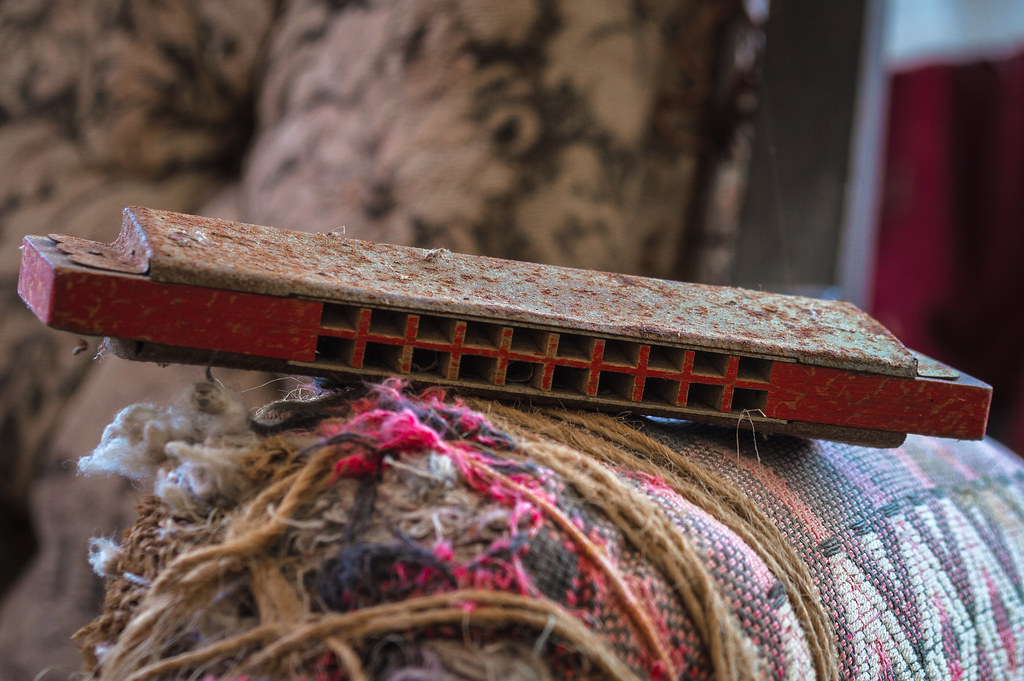
Back home, I watch my mother as she settles in her chair, Sips coffee, lights another and inhales without a care. I pass her the harmonica, she takes it, has a blow, And jaunty and euphonic her recital starts to flow. The angels have their harps but death’s a word they never knew; Down here it’s flats and sharps and death’s a song on air turned blue.
*****
Simon MacCulloch writes: “A largely true account of the somewhat surreal day on which my uncomprehending late mother was diagnosed with terminal lung cancer. I’m still quite proud of having rhymed “harmonica” without anyone called Veronica to help out.”
Simon MacCulloch lives in London and contributes poetry to a variety of print and online publications, including Reach Poetry, View from Atlantis, Pulsebeat Poetry Journal, Spectral Realms, Black Petals and others.
 Form in Formless Times