Tag Archives: formal verse

Calling the Poem: 10. ‘Inspiration 1’

When the god’s in you, you’re not blessed nor raped;
it’s not Zeus in whatever guise he wears,
nor Yahweh taking Mary unawares,
nor anything which could be fought, escaped;
nor is it there where your complete orgasm–
from curling toes to skull-top tingling hair–
meets voodoo god who rides you as nightmare,
meets “therapy” of ECG’s dead spasm.

But winkled from your shell by muse or god
you’re in unmoving time, in time that seems
to Rip Van Winkle ordinary, not odd,
there where True Thomas by fay queen is smitten…
and when you wake from momentary dreams
two hours have gone by, and the first draft’s written.

*****

Even if, as some artists relate, they have been taken over by a god, muse, or supernatural force of inspiration, the feeling is not one of fear or terror as you might expect from being possessed. The process of inspired creation typically gives a feeling of calm, concentration and controlled excitement. The aftereffects can be completely different: exhaustion, exuberance, depression… The connection has been broken, the mind returns to a different state.

This version of the sonnet has been cleaned up from what was originally published as an e-chapbook by Snakeskin in issue 236 (unfortunately Archives are still down at time of writing). I have removed the four-letter words from the first four lines and generally reduced the probable offensiveness to my Christian and Muslim friends. However I think there are two points to be made that are more important than sacrilegious language:

Why is it acceptable to portray the coarseness of other people’s gods to schoolchildren, while it is forbidden to discuss the immorality of one’s own group’s preferred deity, even among adults?

And more importantly, why is it considered acceptable for a god (Yahweh) to impregnate a young female (Mary) without her consent? Isn’t this a Handmaid’s Tale level of thinking about the rights of the male and the insignificance of the female? Isn’t this a dangerously inappropriate story to be telling our children?

Of course the “Immaculate Conception” is just an unscientific fairytale. It is far more likely that, as contemporary Jewish rumour had it, Mary got pregnant by a Roman soldier called Pantera, and that Joseph (through love or pity) took her away to have the child in his home town of Bethlehem rather than have her stoned to death as would have been likely for having sex before marriage, especially with one of the idolatrous, beard-shaving, pig-eating Western soldiers of the Occupation

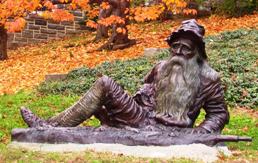
Photo: Life size bronze of Rip Van Winkle sculpted by Richard Masloski, copyright 2000; Photograph by Daryl Samuel


Potcake Poet’s Choice: David Whippman, ‘Who Were You?’

I never really found out who you are.
I only saw what I preferred to see.
I realise now it wasn’t meant to be.
I thought you were my one true shining star.
My cordon bleu, champagne and caviar
But really you’re a lukewarm cup of tea.
I thought you cared: you soon enlightened me.
I should have just admired you from afar.

It really was a silly thing to do,
Dropping my guard to let you in my head.
You left such an emotional mess behind.
And now you’re gone, I look around and find
An empty wallet and an empty bed.
And still there is the question: who are you?

*****

David Whippman writes: “As someone who is by aptitude a prose writer (much as I love poetry, both reading and writing it) I gravitate to a structured form of verse because I don’t have that  instinct necessary for writing good free verse. The sonnet form gives a ready-made structure and discipline, but allows some fluidity as well.

David Whippman is British, in his 70s, long retired after a career in healthcare. He writes stories and articles as well as poems. Outside of writing, his hobbies are music, chess and visual art. (And reading, of course.)

Image: “question mark” by WingedWolf is licensed under CC BY-NC-ND 2.0.

Calls for Submission: formal verse

Of the various publication opportunities specifically for formal/traditional poets, three are taking submissions until July 15, and four other formal-friendly publications have submission deadlines of July 31. There is no submission fee for any of them. Here they are – the links are to the submission requirements:

Able Muse (magazine) Deadline, July 15.
Submit one to five metrical poems (or one long poem), rhymed or unrhymed. (A poem of more than 40 lines is considered a “long” poem.)
All types of formal poetry are welcome, from traditional to boundary-pushing. We want well-crafted poems that use meter skillfully and imaginatively (with rhyme or not), in a contemporary idiom that reads as naturally as free verse.

Able Muse Press (book-length manuscript) Deadline, July 15.
At least 50 pages of poems – same preferences as for the magazine.
There’s NO reading fee.
“We respond within 9 months or so.”

Helen Schaible International Sonnet Contest Deadline, July 15.
Categories:
1 Traditional Sonnet – Shakespearean or Petrarchan
2 Modern Sonnet
Open to All. Free. Enter only one poem in either Category #1 or #2, or one poem in each.
Prizes for both categories: First Prize: $50. Second Prize: $30. Third Prize: $20.

Formal-friendly magazines, themed and with July 31 cut-offs:

Snakeskin (short poem issue, nothing over 10 lines). At the link, read the tabs on the left side for submission details. Submit earlier than the very end of July, as publication is scheduled for August 1st. Editor: George Simmers.

Allegro (theme: Freedom) Four poems max. Editor: Sally Long.

Amsterdam Quarterly (theme: City and/or Country) Two poems max. Editor: Bryan R. Monte.

Rat’s Ass Review (unthemed – the editor publishes whatever he damn well feels like publishing, as you might have guessed.) Five poems max. Editor: Roderick Bates.

In addition:

Rhizome Press (not to be confused with Rhizome Books) publishes anthologies of formal verse. Editor Beth Houston is taking submissions of up to 10 sonnets for Extreme Sonnets III, and up to 10 “extreme formal poems of at least twelve lines” for Extreme Formal Poems II. The submission deadlines are not given on the website, but will presumably follow on the publication of Extreme Sonnets II which is currently in the works.

UPDATE from Beth Houston, 11 July 2022: “At long last Extreme Sonnets II is published and available on Amazon! Will there be an Extreme Sonnets III? Likely, but not for awhile. In the meantime I’ll be putting together an anthology of love sonnets—extreme sonnets, of course. I’ll post submission details on the Rhizome Press website soon. All sonnets included in Extreme Sonnets, Extreme Sonnets II, and Extreme Formal Poems will automatically be considered. Stay tuned for more details.”

Calling the Poem: 5. ‘Of Muses’

When thoughts, fantastic dreams, bright images,
invade you from inside without relief –
thoughts that aren’t yours, nor come from the outside –
then, heedless of the real world’s scrimmages,
you can’t ignore, forget, refute, refuse.
Forces not you, that ride you and bestride,
when viewed with self-delusion, self-belief,
must therefore be some spirit, god, or muse.

*****

This is the fifth of the 15 poems in the ‘Calling the Poem’ series, published as a Snakeskin e-chapbook. From the awareness of the creative mood to the valuing of an idea, to the attempt at expression, to the crafting and polishing of the item, there are several stages in the creation of a piece of art. I am trying to lay out my sense of this process, and of how any individual can choose to develop it, and produce more and better art.

It’s my belief that many, many people could be the most amazing poets or other creators, but they don’t go down that path because they choose not to pay attention to the stray thoughts and images that come their way. For those of us who try to follow and develop the images, there is always the question of where they come from: from within us, or from the outside? I think humanity’s self-understanding is very primitive so far, and that there are layers under layers still to be peeled back. All our answers are best guesses, working hypotheses, delusions… but they are all we have, and valid and valuable when seen in that light.

Most of the poems in this series are semi-formal – they have enough rhythm and rhyme to facilitate their recitation, but lack the formal structures, the appropriate patterns, that can be aspired to. To me the recitation is key, because poetry is auditory in nature, in its origin, at its heart. It is almost as old as singing, which is in turn almost as old as rhythmic babbling and drumming. The poem printed on the page is not the poem itself, it needs to be read (aloud, or in your mind’s voice) in order to become the poem.

So I don’t have strong opinions on whether to capitalise the first letter of each line of a poem: it doesn’t impact the sound. But if it can help with the reading and comprehension – by not capitalising and thereby showing the flow of the sentence, or by capitalising in order to differentiate from spillover part-lines and thereby retaining the metre or rhythm – then an appropriate choice should be made. The version of this work that I am using is all first-letter capitalised. I’ve modified that today because I felt the poem was more comprehensible when the individual sentences were more clearly marked; the issue isn’t otherwise important.

And, no, I’m not impressed with concrete poems or shape poems as verse, although they can be excellent as jokes and witticisms.

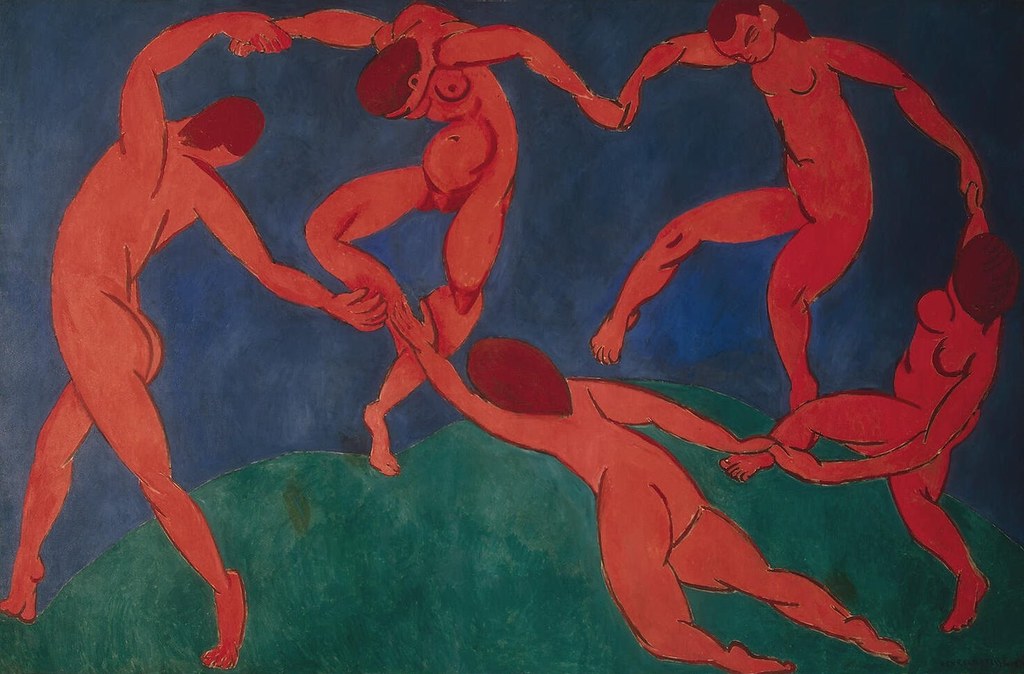
Photo of “Henri Matisse – Dance [1910]” by Gandalf’s Gallery is licensed under CC BY-SA 2.0.

Potcake Poet’s Choice: Richard Fleming, ‘His Room’

It took five minutes, more or less,
to fill, with what he left behind,
a cardboard box and to compress
into its space, his life, unsigned
in much the way some paintings are,
then stash it in the waiting car.

In those five minutes, I remained
there in the small, vacated room,
while the red-faced landlord explained
a small arrears. Would I assume
responsibility and pay?
My conscience made me easy prey.

*****

Richard Fleming writes: “Growing old, I find myself preoccupied with life’s endings: a balancing of accounts, so to speak, and the inevitable feelings of regret and remorse for things done badly or left undone. Deliberations of that sort inspired this piece of verse, as did the lonely, final years of renowned Guernsey-born novelist, G B Edwards, the demise of an old friend in similar straitened circumstances and, of course, Larkin’s famous poem, Mr Bleaney. I think ‘His Room’ manages, despite its brevity, to encapsulate the ‘whimper’ with which some lives end. A simple rhyme scheme seems best suited to the poem’s mundane subject matter.”

Richard Fleming is an Irish-born poet currently living in Guernsey, a small island midway between Britain and France. His work has appeared in various magazines, most recently Snakeskin, Bewildering Stories, Lighten Up Online, the Taj Mahal Review and the latest Potcake Chapbook ‘Lost Love’, and has been broadcast on BBC radio. He has performed at several literary festivals and his latest collection of verse, Stone Witness, features the titular poem commissioned by the BBC for National Poetry Day. He writes in various genres and can be found at www.redhandwriter.blogspot.com or Facebook https://www.facebook.com/richard.fleming.92102564/

Photo: “Emptied cardboard box” by Creativity103 is licensed under CC BY 2.0.

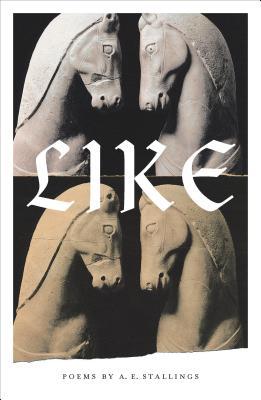
Review: A.E. Stallings, ‘Like’

‘Like’ is the fourth volume of poetry from A.E. Stallings, the best poet that I know of who is writing in English today. The themes in ‘Like’ are the same as in her earlier collections: American childhood, Greek adulthood, children, memory, local wildlife, Greek mythology… and concern for the abused, whether women in the patriarchy or refugees in the Mediterranean. There is a difference of organization, though: instead of four or five different sections, ‘Like’ lumps all the poems together and arranges them alphabetically by title; the result is a smooth, wide-ranging read.

Stallings has a superb mastery of form, and plays endless tricks with it. Start on ‘Battle of Plataea: Aftermath’ and the apparent prose in 11 lines when read alertly turns out to be a rhymed sonnet in iambic pentameter. Or take the eponymous ‘Like, the Sestina’ which uses the word “like” as the rhyme for every one of the requisite 39 lines plus 3 mid-line rhymes (with such variations as “unlike”, “dislike”, “look-alike”). See how the most substantial poem, ‘Lost and Found’, carries its rambling dream-and-memory dissertation on for 36 stanzas of ottava rima in iambic pentameter, whereas the shorter and more time-sensitive ‘Swallows’ uses 6 stanzas in iambic tetrameter. Her ‘Refugee Fugue’ attacks the unmanageable and unimaginable horrors of the desperate and drowned through a blues poem, a host of epigrams, a found poem – an appropriately confused assemblage of forms for a situation not amenable to coherent resolution.

But forget the technicalities! The beauty is in the easy music of her verse, the casual wordplay as with the doorbell that
Portended importunity from Porlock,
the throwaway etymological observations as of nighttime thoughts:
To consider means to contemplate the stars,
the poem on a ‘Pencil’ that ends
And Time the other implement
That sharpens and grows shorter,
the playfulness of ‘Night Thoughts’ that begins
Night thoughts are not like bats
and then goes on to describe the flight of bats in extended lyrical detail, before finally ending with how night thoughts are different…
And always the underlying awareness of thousands of years of history, showing through in the description of sky, contemporary but ancient, as
the contrailed palimpsest of blue.

And that leads me to my only regrets about Stallings’ verse: too much Greek literature with which I’m barely familiar. I’m not saying it’s a failing on her part, it’s merely a regret on my part that I can’t keep up. Although I would love to come across work by her with Norse themes…

But I will settle for what she offers: a very wide range. She can be very succinct as with ‘Paradox’:
Of the ones that happened to die, the little ones and the old,
Of hypothermia, or drowning, all died of cold.

Equally, she can be extensive and thorough in her exploration of a theme as with ‘Lost and Found’, where she is wandering through a dream of mountainous moonscapes, landfill landscapes, of things lost – toys, gloves, loves, baby teeth, time, opportunities, keys, coins – led by Mnemosyne, Memory herself, the mother of all the muses. The smooth formal stanzas of ottava rima, maintained steadily for 288 lines, provide the same meditative state as the 250 lines of Matthew Arnold’s ‘Scholar Gypsy’ or Edward FitzGerald’s even longer ‘Rubaiyyat of Omar Khayyam’.

My personal favorite in ‘Like‘ is her semi-formal ‘Crow, Gentleman’ (whose title I am guessing was changed from the original ‘Gentleman Crow’ to prevent it from coming between two poems in ‘Like’ addressed to her daughter). It begins:
Pacing to and fro
Along the autumn shore
Among the wrack and reek

With your arms clasped behind your back
And sporting your grey frock coat
Trimmed in black

And your black hat and your lean long-legged stride,
Up and down the strand perusing
The headlines of the tide:

and ends:
Life is a joke you crack,
Wry and amusing,
And death a dainty snack.

I find Stallings’ work altogether delightful: by turns sardonic, detached, passionate, compassionate, always observing carefully, always expressing wittily, always in masterful control of rhythm and rhyme. I repeat: I don’t know of a better poet writing in English today.

Potcake Poet’s Choice: Mindy Watson, ‘On Johnson’s Creek’

Mid 80’s, late Wisconsin summer day.
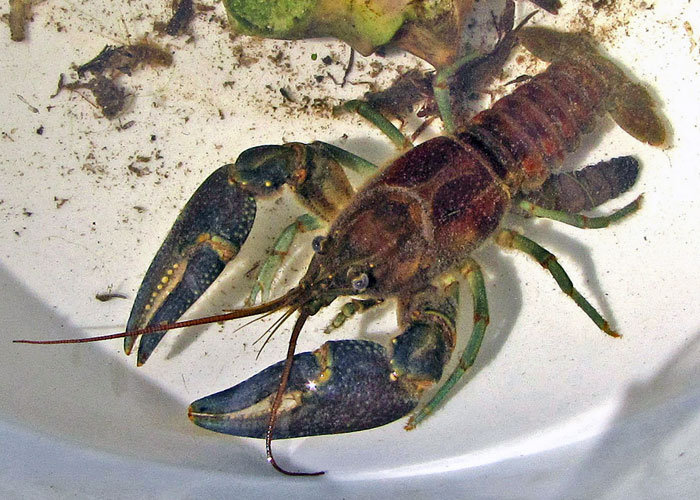
You’re male; just one of many crayfish lured
Innately to this shallow, turbid creek.
July’s sweet warmth assures you that you’ll not
Find only sanctuary, but a mate.
And at a human hand-span’s length from tail

To telson, you’re a splendid prospect: tail
Aloft and eyestalks staunch, you greet the day.
With fierce claws brandished, you await your mate
In burrow’s dark. And nothing could have lured
You from your would-be breeding quarters – not
Until a stealthy stick from o’er the creek

Despoils your warren’s sanctity. The creek,
In tacit bounty, spurs your nerve. Your tail
Aflutter, claws outstretched, you’re not
Alarmed – you clamp the twig and seize the day.
But then the surreptitious branch that lured
You wrests you from the stream, reveals its mate

Above – a boy who thwarts your quest for mate.
His form obstructs the sun and dwarfs the creek
Below the wooden pier. It seems he’s lured
You here for idle sport; he grips your tail
And flings you hard against the planks. While day
Retreats, light’s sudden ebb arises not

From cosmic cause. The sneering boy (who’s not
Alone – a girl shrinks near her preening mate)
Uplifts his foot and renders blissful day
Brutality. Impassively, the creek
Laps on. Your once resplendent olive tail
Is tattered, shattered by the boy who lured

You, crushed your stately carapace. Though lured
From neural ruination’s throes, you’re not
Yet blind; you see his female friend turn tail.
And I, the girl that boy deems doting mate,
For whom you’re executed by the creek –
I know what cruel conceit is that day.

From where once lured, you sink, potential mate
Undone. Not waiting, brethren flee the creek,
Tails undulating. Silence veils the day.

*****

Mindy Watson writes: “‘On Johnson’s Creek’ represents not only one of my earliest published poems, but also my first-ever sestina attempt. Even three decades later, the poem’s instigating tragedy—an ill-starred crustacean’s senseless slaughter—so profoundly disturbed me, that I chose the most convoluted, challenging form I’d known (at that point) to narrate from the dwindling victim’s (second person) point of view. Although my own human projections—predicated upon the Northern Wisconsin climate, incident’s time of year, and region’s most statistically plentiful crayfish species—dictated the crayfish’s depicted age, gender, and objectives; the poem’s auxiliary characters’ (the boy=my older step-cousin; the girl=10-year-old me) motivations and ensuing impressions were pointedly accurate. While I’ve since drafted/published two subsequent sestinas, I still believe the form’s almost fanatical repetition, intricate transpositions, and final unifying envoi best suit this tale-in-verse; which aimed to equate a single creature’s unwitting suffering with humanity’s often capricious cruelty. Two end notes: 1) this sestina preceded/inspired ‘The Maligned Majority,’ a pro-arthropod, non-fiction essay that appeared in Willows Wept Review’s Summer 2020 issue; and 2) while I’m told my childhood step-cousin later married (twice) and still resides/works near Johnson Creek…I haven’t directly spoken to him since that fateful day.”

Mindy Watson is a Washington DC-based formal verse poet who holds an MA in Nonfiction Writing from the John Hopkins University. Her poems have appeared in venues including Autumn Sky Poetry, Eastern Structures, the Poetry Porch, the Potcake Chapbooks, the Quarterday Review, Snakeskin, Star*Line, Think Journal, and many others. Read her work at: https://mindywatson.wixsite.com/poetryprosesite

‘On Johnson’s Creek’ originally appeared in Autumn Sky Poetry Daily, Jan. 30, 2017

Potcake Poet’s Choice: Vadim Kagan, ‘You Are Changing’

You are changing from day to day
And from night to night
You are changing before I say
Let there be light
You are changing your smile, your hair
And even your eyes
You are changing what isn’t there
Making truth of lies

You are changing the coins you bet
And the games you win
You are changing what has been set
Outside and in
You are changing from old to new
And again to old
You are changing all that we knew
But were never told

You are changing along the way
And across the sea
You are changing the things that may
Be the last we see
You are changing your blood to sweat
And yourself to me
So keep changing but don’t forget
How it used to be

Vadim Kagan writes: “Life is all about changes. People change, countries change, the world changes. Are we walking in circles or are we ascending (or descending) some universal helix? Opinions differ but as I got older I realized that to me it matters less where we are going than where we came from. This poem was written during a tumultuous time in my life, when I realized that, no matter how well I try to plan,  tomorrow will be different from what I imagined. The poem was, in a way, a kind of therapy – and is probably even more relevant than several years ago. It is also more musical than many of my poems, and made a great (if little known) song.”

Vadim Kagan writes poetry and prose in English, Russian and, occasionally, a combination of both languages. He runs an AI company in Bethesda, MD and is a member of the DC Poetry Collective. His poems have been published in The Lyric, The Road Not Taken, Founder’s Favorites, DC Poetry Collective Inkblots anthologies and the latest Potcake Chapbook, ‘Lost Love’. He often posts on Facebook (@vadimkagan) and Instagram (@wines_and_rhymes.)

Launch: Potcake Chapbook 11, ‘Lost Love’

‘Lost Love – poems of what never happened, and of the end of things that did’… how bittersweet; but what a collection of poets, and what a diversity of stories and observations!

Seventeen poets are packed into this chapbook. Seven have appeared before: Marcus Bales, Melissa Balmain, Michael R. Burch, Vera Ignatowitsch, Martin Parker, Gail White and myself. Ten are new to the series, with wicked little pieces from Brooke Clark, Cody Walker and three from Wendy Cope, and with longer poems from N.S. Thompson, James B. Nicola, Mary Meriam, Helena Nelson, David Whippman, Richard Fleming and Vadim Kagan. Bios, photos and links to read more of their work can all be found on the Sampson Low site’s Potcake Poets page, while all the chapbooks in the series, showing which poets are in which, are here. Each of the 11 chapbooks is profusely illustrated (of course) by Alban Low, and can be yours (or sent to an ex) for the price of a coffee.

Heartbreak has never had a happier manifestation!

Potcake Poet’s Choice: N.S. Thompson, ‘The Women in Delft’

Johannes Van Der Meer, (Vermeer), 17th Century

We look at them expectantly: a room
With balance held, a string of pearls, a hand
Placed on the virginal, or there a letter
Clutched to the breast; these women keep
The gentle art of looking artfully
Revealed, yet hidden in the art of space.

They seem absorbed in it and yet leave space
For eyes to linger on them in that room
And wonder what the painter artfully
Kept in or out, things under hand
Or underhand? The surfaces still keep
Us guessing. What could be in that one’s letter

Or that one’s balance? And why does he let her
Appear to weigh up in that pregnant space
Such a wealth of meaning only to keep
It from us in that sunlit room?
Are we – the viewers – meant to have a hand
In them and come to see what artfully

Has been concealed? That View of Delft is artfully
Conceived yet not depicted to the letter
But deftly rearranged, the painter’s hand
Adding the unknown of space,
A brooding sky providing all the room
To rise above the secrets buildings keep…

Or take elsewhere that crenellated keep
Of brick (its outside walls so artfully
Salt-leached) allowing us again the room
To wonder if they hold that letter
Or else the string of pearls in all that space
Held in The Little Street. Whose was the hand

That let the children out of doors or hand
That pressed the collars, urging them to keep
The clothes clean, as she hurriedly made space
To meet the lover artfully
Returned from sea or merchant whose last letter
Had news that left her trembling in that room?

How artfully he let us have a hand
In them and keep us guessing in the space
Between a letter and a sunlit room.

N.S. Thompson writes: “I have always admired the sestina and for years thought about writing one before I finally did. What intrigued me was the way the six words at the ends of lines could be worked into a sensible whole; indeed, made into a resonant whole while yet showing the variety of meanings those words could take. It seemed the perfect vehicle for exhibiting, as it were, a gallery of pictures as we see in Vermeer’s several depictions of women going about their everyday activities, each different but forming a whole. A view of life that was both evident to the observer and yet at the same time hidden. What were those women thinking as they went about their business? What was fascinating was the mystery he created in the representation of everyday life.
The nearest analogy I can think of in visual terms to reading a sestina is the way a kaleidoscope works, even if there the succession of patterns there is endless, but the variation is surprising and pleasurable. It is also playful. There are little touches in the poem of such playfulness, as in “deftly” in the fourth stanza which is an anagram of Vermeer’s home town of Delft “adding the unknown”, which is the “y” (as in algebra).
And it took a long time to get right. I first produced a version after watching a television programme about Vermeer. I jotted down my six end words and quickly filled out the six stanzas, then the three last lines incorporating the six words again, hopefully with yet another semantic turn on them. I felt very pleased with myself until I read the result the next day. It then took several years of careful homing, plus several changes of end words until it finally seemed to be a natural expression that did not call attention to itself as a deliberate construct. This seems to me the necessary requirement of a sestina. Other repetitive forms can flaunt their patterns overtly, but for me the sestina has to be more subtle and almost disguise itself until the reader finally notices the form.”

N.S. Thompson lives near Oxford, UK. A poet, critic and translator, he is also the non-fiction editor for Able Muse. Two recent pamphlets are After War (New Walk Editions) and Ghost Hands (Melos Press), and he has a poem in the imminently available latest Potcake Chapbook, ‘Lost Love’. ‘The Women in Delft’ is published in the poet’s collection Mr Larkin on Photography and Other Poems (Red Squirrel Press, 2016).

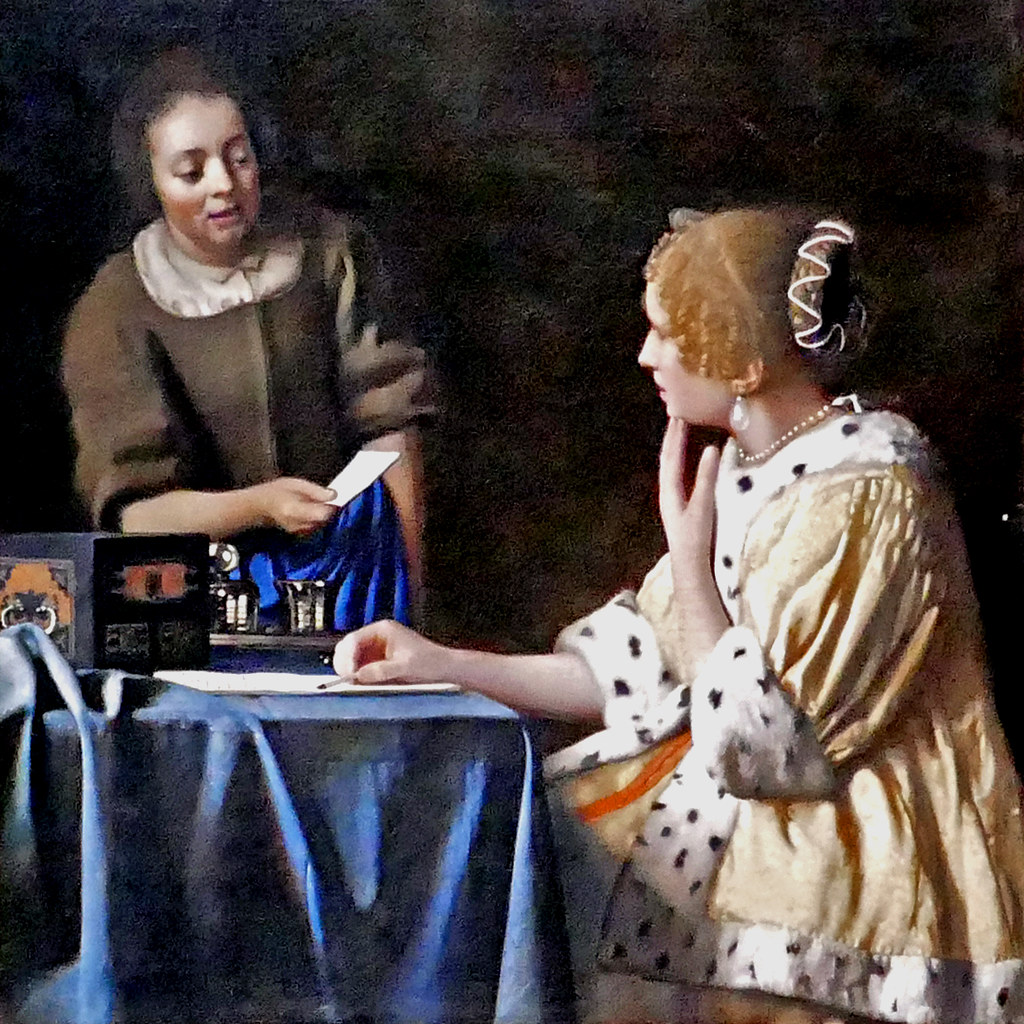
Photo: “Vermeer” by pom’. is marked with CC BY-SA 2.0.