Year after year the very best in golf head to Augusta. Fans come, too, and those who live and work here either take time off to travel or adopt a Masters’ pose. One local woman hosts a party for alumni of our alma mater. I attended with my husband once. The hors d’oeuvres were delicious, drinks well worth a try. Invitees wandered through the house into the garden, where the talk had lots of fizz. One liquored man when asked “What do you do?” replied: “I fly for Delta—soon to Rome.” My husband looked my way as I looked his; we both were more than glad to stay at home.
*****
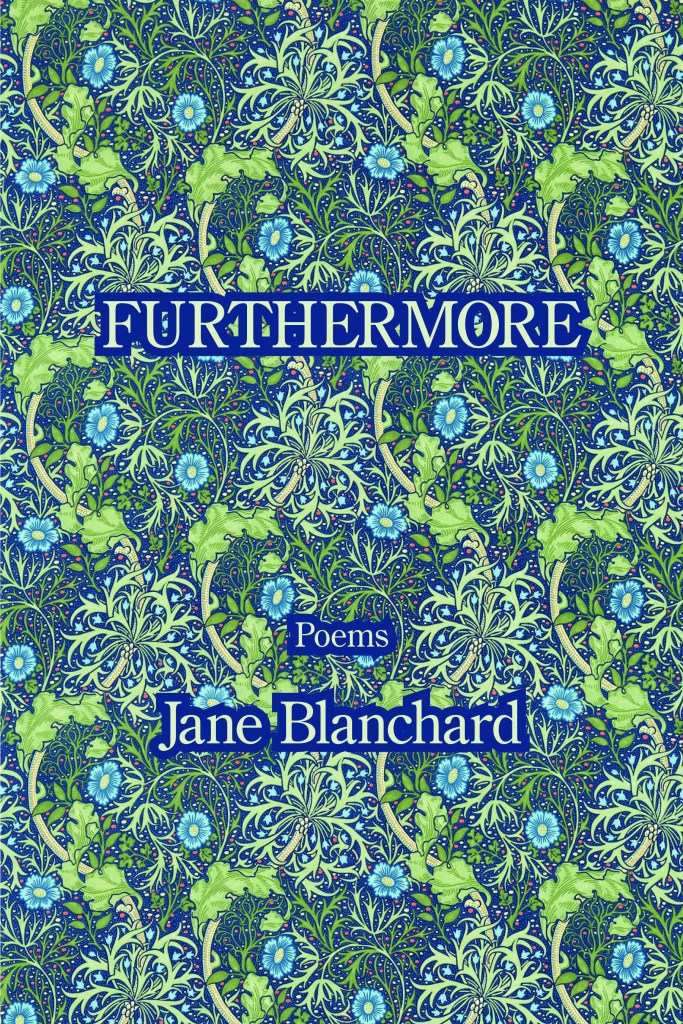
Congratulations to Jane Blanchard, who has just had her collection ‘Furthermore’ published by Kelsay Books. (Blurbs by Steve Knepper among others can be found at her Amazon listing.) I asked her for a favourite poem to represent the book, and she sent me ‘Between Rounds’, originally published in Valley Voices: A Literary Review.
A native Virginian, Jane Blanchard lives and writes in Georgia. Her collections with Kelsay Books include Metes and Bounds (2023) and Furthermore (2025).
Two friends diverged in a yelling mood And sorry I could not keep them both And still maintain one attitude, I scrolled down through one’s page, and viewed Some green and gold of writing growth.
Then saw the other was just as good, With maybe even a better claim Because so well misunderstood Within the writing neighborhood, Though as for that they’re much the same.
And each that morning equally laid The blame upon the other’s back. I had no way to tell who’d made The first or worst move; I’m afraid I have no feel for clique or claque.
Online I have too many friends To keep good track, so, nothing loath To making enemies or ends Where there are no real dividends, I shook my head – and blocked them both.
*****
Marcus Bales writes: “Most of the fraught relationships online are due to people not being able to write very well on one end, or read very well on the other. Stuff that in in-person conversation would go completely unnoticed is taken up as deliberate slighting. Mostly its merely awkward phrasing, or one interlocutor is already two comments past when the reply to the third interaction scrolls by and it’s misinterpreted as an instant response to the most recent reply when it was really intended to answer something two or three comments back.
“Now in the case of political disagreements where the polarized sides are already firmly established and one side or the other or both are determined to fight that’s a whole other thing. There it’s got nothing to do with how well or ill something is read or written and everything to do with the sport of online woofing.
“It’s one of those things where over the years people block and get blocked and complain to their friends about either end of it and then it all goes away pretty fast as the opportunity to be triggered — again at either end — fades with the blocking.”
(The original poem on which this parody is based, for those not familiar with it, is Robert Frost’s ‘The Road Not Taken‘. – RHL)
Not much is known about Marcus Bales except that he lives and works in Cleveland, Ohio, and that his work has not been published in Poetry or The New Yorker. However his ‘51 Poems‘ is available from Amazon. He has been published in several of the Potcake Chapbooks (‘Form in Formless Times’).
The present is arcane and strange and any recollection left of what has happened in the past is vague and liable to change. Of future plans, he is bereft, for nothing now is hard and fast.
They give him multicoloured pens and paper, as one might a child. Familiar voices interweave. He sees, through a distorting lens, people who wept, people who smiled, that, one by one, stood up to leave.
He is content. He lives in grace. What matter if the moments blur, if his nocturnal thoughts are grim? He has escaped himself: his face, a kind of absence in the mirror, comforts and somehow pleases him.
*****
Richard Fleming writes: “Getting old is like exploring new territory without a map: nothing prepares you for the subtle changes in body and mind. Is a moment of forgetfulness just that, or an early indication of approching dementia? We cannot know what strange highways a decaying brain takes us down but I like to think that they might lead to a place of contentment, where the burdens of age are laid down and replaced by some measure of contentment. That’s what I’ve tried to capture in this poem.”
Richard Fleming is an Irish-born poet (and humorist) currently living in Guernsey, a small island midway between Britain and France. His work has appeared in various magazines, most recently Snakeskin, Bewildering Stories, Lighten Up Online, the Taj Mahal Review and the Potcake Chapbook ‘Lost Love’, and has been broadcast on BBC radio. He has performed at several literary festivals and his latest collection of verse, Stone Witness, features the titular poem commissioned by the BBC for National Poetry Day. He writes in various genres and can be found at www.redhandwriter.blogspot.com or Facebook https://www.facebook.com/richard.fleming.92102564/
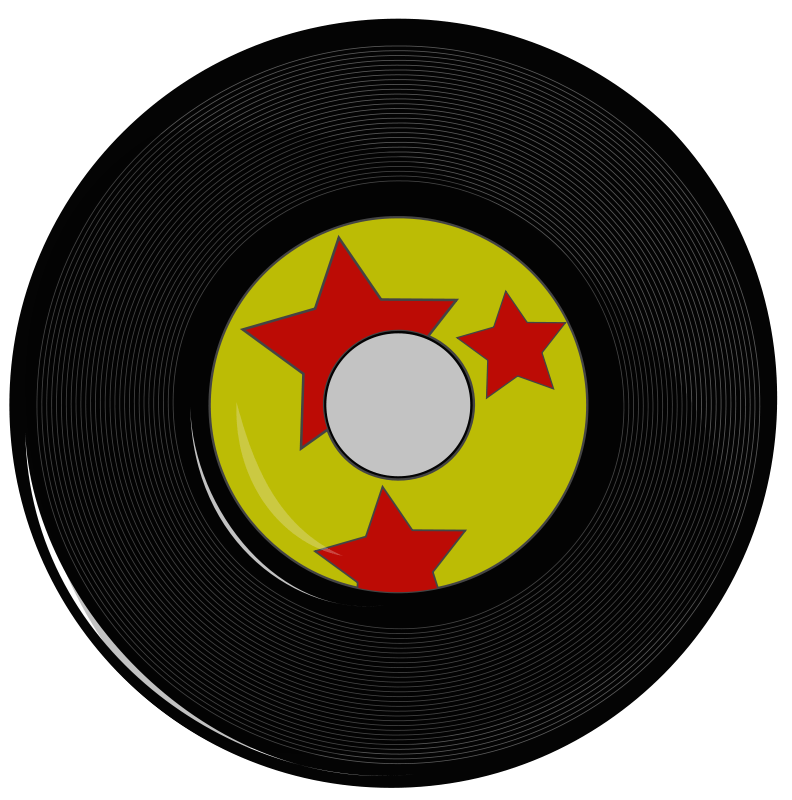
One month from when you met me, when you brought the first of many gifts, a 45 of plaintive praise and longing, who’d have thought that forty-five years later we’d survive on weekends, holidays, and summer breaks, a foretaste of the end in every start, anticipation ballasted with aches as we put love on hold and live apart?
You are a holiday. The working week unspools like toilet paper from a roll. My attitude goes airborne when we speak, and when we meet, my heart swoops like a shoal of fish. Would we have lost this giddy glow, living together? Better not to know.
*****
Susan McLean writes: “It makes me feel ancient to realize that for younger readers I will have to explain that a 45 was a record with one song on each side, which played on a record player at 45 revolutions per minute. Love poems themselves tend to feel old-fashioned these days, though this one is about a relatively modern problem, the long-term, long-distance relationship in which both people are employed full time at jobs far apart from one another. The form, a Shakespearean sonnet, mirrors the content, in that the rhymes are separated from one another until the end, when they are reunited. The poem was originally published in the online journal of female formalist poets Mezzo Cammin, and it later appeared in my second book of poetry, The Whetstone Misses the Knife.
Your hours of tears won’t let you follow Those who’ve left you alone. Tonight your head lies on a pillow, Not beneath earth and stone.
The dead won’t be returning, Not for all of your pleas, Not for all your candles burning. Get up off your knees.
The deceased, removed from their rest Can take up all your hours Until your mind, denied a fair rest, Is deprived of its powers.
The road set before you is rocky and steep, So seize the night’s respite and drift off to sleep.
*****
J.D. Smith writes: “Though I do not sing, play an instrument or read music, I had Brahms’ Lullaby in the back of my mind while attempting to deal with various losses, and the poem roughly follows its tune. In adjusting to a new reality (I hesitate to say “move on” or “get over,” phrases that smack of empathic failure), sometimes all one can do is rest.”
J.D. Smith has published six books of poetry, most recently the light verse collection Catalogs for Food Lovers, and he has received a Fellowship in Poetry from the United States National Endowment for the Arts. This poem is from The Killing Tree (Finishing Line Press, 2016). Smith’s first fiction collection, Transit, was published in December 2022. His other books include the essay collection Dowsing and Science, and his seventh collection, The Place That Is Coming to Us, will be published by Broadstone Books in 2025. Smith works in Washington, DC, where he lives with his wife Paula Van Lare and their rescue animals. X: @Smitroverse
The sun is always setting, always setting on your day; you sense the dark approaching, wish that it would stay away. Do you want a life unchanging? Wish to still be a newborn? Don’t you know life’s not a rosebud, but has root and leaf and thorn?
The sun is always setting and the black drapes are unfurled; but notice that the sun sets on your world, not on the world: it’s rolling into brightness in another’s happy land, and the dark is evanescent and the brightening is grand.
The sun is always setting on the dinosaurs, but birds are flocking into being, as are Serengeti herds; and the sun that lights humanity? Of course it’s going to set, and elsewhere light new tales of which we’ll just be a vignette.
The sun is always setting, but that view is just your choice; I say the world is turning and evolving; I rejoice.
*****
The winter solstice and the turning of the calendar drive a feeling of sunset that I can’t shake. I may be fit, still climbing trees and running on beaches, but at 74 there is both an awareness of gradual decline and a recognition that you can only hope for another 20 years with a fair amount of luck. “And of my three score years and ten, / None of them will come again…” as it were. That’s the personal bit.
Add to that the strongest country in (and quondam leader of) the world, breaking everything into pieces and throwing them all up in the air with no idea of how anything will land and what will be broken; taking all branches of the federal government (including unfortunately the Supreme Court) and those of half the states and just piling them up for a bonfire.
Add the possibility of runaway AI (such as concerns Harari) being jumpstarted by the Luciferic billionaire firestarter… and it feels like the End of the World.
But let’s be reasonable: it always feels like the end of the world, at least to those no longer in their youth. Because it is, for them. (For us. For me.) Jesus saying the end of the world would come within that generation… Last Days prophecies bubbling up in all religions… Preppers expecting nuclear war, ethnic uprising, climate catastrophe overnight… Doomsday is always imminent, and yet things keep going; just not as before… This is the End of the World as we know it, but will not be as we expected it. (And always the unfortunate eternal evils, regardless of era: Israelis committing genocide on Palestinians since the days of Deuteronomy, and so on.)
I swear there is a highly ambivalent poem in there somewhere, but I haven’t dug it out yet. But hey… Happy 2025!
Always to long for someone else’s gift— To blow that blistering alto sax, to lift Into the flash-bulbed air
For a reverse slam dunk while stunned guards gawk, To have a punster’s cheek or porn star’s cock, To capture, share by share,
Gold-plated Wall Street fame, to meditate Beyond nirvanic depths or radiate Beatitudes of prayer
Like any frescoed saint, even to make A perfect triple-decker dark-fudge cake Or master the éclair—
Means answering a roguish shout we follow Down some smashed-bottle alley to a hollow Recess, a doorway, where
If luck has tailed us on that lonely walk, When we knock, because we have to knock, No one will be there.
*****
‘Someone Else’s Gift’ was first published in Literary Matters, and then in Best American Poetry 2024. As I was unable to capture the original indentation, I have taken the liberty of introducing line spaces as an alternative way of clarifying the structure; it will sound the same when read aloud… – RHL
Stephen Kampa has three books of poems: Cracks in the Invisible (Ohio University Press, 2011), Bachelor Pad (Waywiser Press, 2014), Articulate as Rain (Waywiser Press, 2018), and World Too Loud to Hear (Able Muse Press, 2023). He teaches at Flagler College in St. Augustine, FL and works as a musician.
Time was, we spent our muscle and our nous propping an aging house against the pummeling of its hundred years. Clean paint, neat gardens, upkeep rarely in arrears, sober as Donne. Yet now each year afresh burdens us with new failings of the flesh:
Legs that once mounted ladders without qualm tremble. Nor are we calm confronting pipework; torsos will not shrink, backs bend, or shoulders fold to grope below a sink. Hands shake; eyeballs glaze over. What appalls is that our bodies buckle like our walls:
plaque in arteries, soot in chimney stacks, stubborn and troublous cracks in teeth, in plaster. House! Ought we to call ourselves—and you—new poster children for the Fall, for that hard doctrine grumbling down the ages that Sin’s to blame, with Death and Rot its wages?
Entropy as theology—would Donne jape at it? Wink and pun as in his randy youth? Or solemnly robed in his winding sheet, sing Mutability, spinning into the praise of God in Art the fact that all things earthly fall apart?
Or pull from air some bit of modern science, yoking (even by violence) thermodynamics, shortened telomeres, transplants, genetics, sex, the music of the spheres? Strange physics and wild metaphors—all grand, but Rot and Death, plain woes we understand,
are better fought with checkbooks than with verse. We’ll sit, these days. We’ll nurse our beers, while able bodies stir their dust. A distant siren whines—we sigh; it whines for us. Let plumbers, painters, carpenters begin this season’s round of battling Death and Sin.
*****
Maryann Corbett writes: “Last summer, Clarence Caddell was just beginning work on a new magazine, The Borough, and was planning a second issue while the first came together. He had in mind an issue centered on Donne, and he commissioned me to contribute a poem. I’d read the wonderful biography Super-Infinite: The Transformations of John Donne by Katherine Rundell not many months before, so a lot of the life was fresh in my mind–but it was also the season of endless repair that is the eternal truth of owning a house that’s 113 years old. It wasn’t hard to pull together a poem about the woes of home ownership with tidbits that “everyone knows” about Donne–his worldly-to-holy conversion, the familiar line about his yoked-by-violence metaphors–under an allusive title, and in a stanza form a bit like one of his. (Alas, this blog can’t show you the indents that would best imitate Donne’s way of laying out a poem. You’ll have to imagine all the trimeter second lines indented and the hexameter fourth lines hanging out farther left.) In the end, Clarence had to use the poem to fill out his first issue, so it sat alone, unassisted by an issue theme.”
Maryann Corbett earned a doctorate in English from the University of Minnesota in 1981 and expected to be teaching Beowulf and Chaucer and the history of the English language. Instead, she spent almost thirty-five years working for the Office of the Revisor of Statutes of the Minnesota Legislature, helping attorneys to write in plain English and coordinating the creation of finding aids for the law. She returned to writing poetry after thirty years away from the craft in 2005 and is now the author of two chapbooks and six full-length collections, most recently The O in the Air (Franciscan U. Press, 2023). Her work has won the Willis Barnstone Translation Prize and the Richard Wilbur Award, has appeared in many journals on both sides of the Atlantic, and is included in anthologies like Measure for Measure: An Anthology of Poetic Meters and The Best American Poetry.
Like other teenage girls in ‘65, I learned to knit, embroider, and crochet, so if I’m teleported back in time a century or two, I’ll do okay.
I learned the way to wrap a package neatly, to tie a range of plain and froufrou bows, to minimize my body flaws discreetly, using the cut and pattern of my clothes.
I also learned to iron, hem, and baste, to sew on zippers, trim, and appliqué, to choose a hairdo that would suit my face— and nothing that I ever use today.
*****
Susan McLean writes: “In the mid-Sixties, the times were changing, but the education of teenage girls was not. In junior high school home economics classes, which girls were required to take, the girls were trained in sewing and cooking skills as preparation for their future roles as wives and mothers. The ideas that men might need to know any of those skills or that women might have full-time careers were not considered. In addition to teaching girls domestic skills, the classes served to reinforce the gender roles and expectations of the time (which had not changed significantly from those of the previous few centuries).
“I slightly overstate my case when I say that I never use anything now that I learned in the two years of sewing classes I took. I still wrap a package and sew on a button occasionally, but I had learned both of those skills well before I took the classes. And even when I was taking the classes, I was already determined to have a career of my own. I petitioned successfully to be allowed to skip the cooking classes so that I could take art classes in their place (though, ironically or not, I am now an enthusiastic home cook). I didn’t mind learning various sewing skills, which had an artistic side, but I had no interest in spending a lot of time using them afterwards, and the view of my options that the classes conveyed was quite dispiriting. No one foresaw how radically the roles of many women would be changing soon afterwards. But I am very glad that they changed.
“The rhymed quatrains that the poem is written in are a standard poetic form, though the mix of slant rhymes with true rhymes suggests an underlying dissonance that ties in with the poem’s themes. The poem originally appeared in the online journal Umbrellaand was later published in my second poetry book, The Whetstone Misses the Knife.”
Susan McLean has two books of poetry, The Best Disguise and The Whetstone Misses the Knife, and one book of translations of Martial, Selected Epigrams. Her poems have appeared in Light, Lighten Up Online, Measure, Able Muse, and elsewhere. She lives in Iowa City, Iowa. https://www.pw.org/content/susan_mclean
The boy he’s always been still takes delight In testing scabs on elbows, knees, To see if fingernails can assert their right To lift with satisfying ease The lid from off the mystery healing box And see the flesh beneath the skin Where the wise body-mind slowly unlocks Corpuscles and white pus within. The hint of pain, like some itch that you scratch, Is fun alongside look-and-see. What does the boy do with that useless patch, The scab? Easy: autophagy.
*****
Curiosity is a useful aspect of intelligence. This poem first published in Lighten Up Online (aka LUPO). Thanks, Jerome Betts!