Tag Archives: generations

Quincy R. Lehr, ‘Lines for my father’

I think I owe some kind of explanation
As I grow tired and listless fingers writhe
Above the unpecked keyboard pad. I’m not
Quite out to blame you or your generation
For where I’m at tonight. You paid the tithe
That life exacts. It’s sanctimonious rot
If we deny the pain of paying it–
And our denials never help one bit.

Unlike you, I found myself involved
In protest politics when I was young.
I spouted crap about the working class
While searching for a problem to be solved.
I mocked you then, since stirring tunes are sung
In brayed crescendos, with a blaze of brass
Booming triumphs won against the odds–
Unjust societies and jealous Gods.

You seemed so cautious–tastefully attired
With modest ties and polished wing-tipped shoes,
A cautious, kindly smile that reached your eyes.
A man to be respected, not admired,
Neither adulated nor abused.
Ambitions of an ordinary size
Were often past your reach. A nagging doubt
Set in, and now I know what that’s about.

Tonight, I type these words as it gets late,
And no one calls to beckon me to bed.
I scoffed at what you’d craved–the tenure track,
The slow-accruing pension from the state,
The wife (who left you). Though you’re good and dead
(And at this hour, my eyes are going slack)
And though you cannot answer, I’ll report
–While having to imagine your retort–

That we’re no happier than you, and can’t
Quite seem to sit for tests that you had failed.
Our phones are packed with numbers we won’t call.
The televisions blast a constant rant
That we ignore like letters still unmailed–
Or unconceived. Clichés about a ball
That’s dropped don’t work–or maybe don’t apply.
We never picked it up. I wonder why.

This recognition’s only dawning now
As streetlights speckle glimmers on your urn
Beside my unmade bed, and as I write
These words to you in lieu of sleep. Somehow,
The brays of drunks outside my window turn
Almost comforting, as if the night
Is full of us–insomniac, astray,
And muttering defiance at the day.

*****

Quincy R. Lehr writes: “As for that poem, my father died in 2003, when I was twenty-seven. The content pretty much speaks for itself, I think. I was young, lonely, and frequently drunk when I wrote it.”

Editor’s comment: I admire the technical skill of the poem: the steady iambic pentameter; the abcabcdd rhyme scheme with the final couplet providing a punch; the integrity of the individual stanzas, each patiently laying out a mood, a thought, a situation. And I relate to the young man’s restless, unquiet, unsettled life, and the comparison to his father’s existence, his dismissal of his father’s achievements, his simultaneous recognition of the inevitable connections. It is a satisfying telling of an individual’s unique early life, in the context of the universal discord between generations.

Born in Oklahoma, Quincy R. Lehr is the author of several books of poetry, and his poems and criticism appear widely in venues in North America, Europe, and Australia. His book-length poem ‘Heimat‘ was published in 2014. His most recent books are ‘The Dark Lord of the Tiki Bar‘ (2015) and ‘Near Hits and Lost Classics‘ (2021), a selection of early poems. He lives in Los Angeles.
https://www.amazon.com/Quincy-R.-Lehr/e/B003VMY9AG

Poem: ‘Poetic Themes’

You wake and see dew on the grass in spring
But I see futures present changes bring:
Global warming replacing dew with drought,
Nanotech replacing grass with grout,
A.I. replacing people’s minds and thought,
Genetic mods replacing us—with what?
In other words, our world’s about to pass.
Poetry must be more than dew on grass.

I was honestly a little surprised when Light Poetry Magazine told me they would publish this poem. I mostly associate them with their snippy, jokey little poems that appear weekly on topical subjects, Poems Of The Week. Maybe this is unfair, as their full twice-yearly magazine profiles individual poets and has useful book reviews as well as poetry from a couple of dozen formal poets. Be that as it may, I felt this poem might be a little more Dark than Light.

Not that I’m pessimistic about the future. I’m intrigued, and resigned. Just as in William Golding’s ‘The Inheritors’ in which a tribe of early humans finds modern humans moving in and displacing them, so modern humans look like being displaced by something we can’t yet identify. We are like Native Americans when the Europeans started arriving, like White America as the demographic shifts to a more globally representative population, or like every generation that finds the children and grandchildren listening to unrecognisable music and using incomprehensible technology. Is any of this bad? It can be handled well or badly, but it is a natural and unending process.

And now we’re facing a variety of technologies that together can completely remake the human: genetic engineering, A.I., robotics, infinite data-crunching, nanotechnology… Will we casually and irresponsibly start remaking humans? Of course. It’s inevitable. If one country clamps down on it, it will simply happen elsewhere. And what is the likely outcome? I haven’t a clue, but I’m intrigued.

Photo: “morning dew” by haglundc is licensed under CC BY-NC 2.0

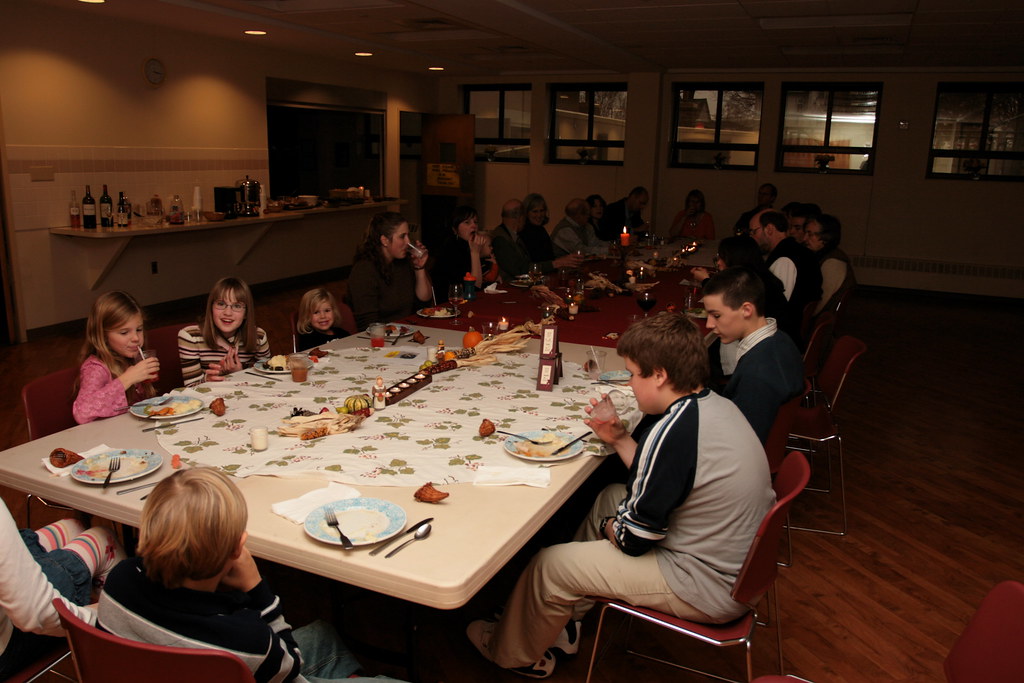
Poem: “Head of the Table”

Your grandparents die
And your children are born;
Then your parents die
Then grandchildren are born;
And you move one more seat
Round the mad table
To the head of the table,
At which point you’re expected to go.

As when the crow came
Wild, not tame – all the same
It cawed you the news
That confirmed death and time;
So when your time comes
And you feel in your bones
That the body is over
Where will you, the guest, go?

Then bring food and drink!
Glasses clink! Glance and wink
As you move to the brink
Of eternity.
Who knows what follows next?
“Afterlife” is absurd –
But then all life’s absurd –
We just know, when it’s time, that we go.

This is about as religious as I’ve found myself in the past 30 or 40 years – in other words, I waver between mild atheism (“None of this God stuff makes sense”) and militant agnosticism (“I don’t know, and neither do you.”) But at least you have a seat at the table! Enjoy the party while you can (preferably while being pleasant to others).

Originally published in Snakeskin No. 232 (or #232).