Tag Archives: Kipling

Parody: Brian Allgar, ‘If you can …’

If you can make her laugh, that’s half the battle,
Especially if she’s married to a bore;
If you can make her glad to be your chattel,
Yet treat her like a lady, not a whore;
If you can undo bra-straps single-handed
While murmuring enticements in her ear;
If you can make her think you’re being candid
When telling her just what she wants to hear;
If you, my friend, can easily persuade her
To sample things she’s never tried before,
Or if she sighs with pleasure when you’ve laid her,
And smiles as you sneak out by the back door;
If you can tolerate her endless prattle,
(And never tell her “Darling, get a life”),
Her gossip and her foolish tittle-tattle—
Then you’re the bastard who seduced my wife!

*****

Brian Allgar writes: “Written with a particularly amoral friend of mine in mind, although I am glad to say that the narrator is not me.”

Brian Allgar was born a mere 22 months before Adolf Hitler committed suicide, although no causal connection between the two events has ever been firmly established. Despite having lived in Paris since 1982, he remains immutably English. He started entering humorous competitions in 1967, but took a 35-year break, finally re-emerging in 2011 as a kind of Rip Van Winkle of the literary competition world. He also drinks malt whisky and writes music, which may explain his fondness for Mendelssohn’s Scottish Symphony.
He is the author of “The Ayterzedd: A Bestiary of (mostly) Alien Beings” and “An Answer from the Past, being the story of Rasselas and Figaro”, both available from Kelsay Books and Amazon.

Photo: “Making Her Laugh II” by kahala is licensed under CC BY-NC-ND 2.0.

The Kipling Boom, 1890

“Rudyard Kipling, gifted stripling”… a lot of his work is superb: the voices caught in his poems and short stories, the endlessly rereadable Just So Stories with his own lush illustrations and catchy peripheral poems, his novels. It’s more than just the verse that has lasting strength.

George Simmers's avatarGreat War Fiction

Researching (i.e. idly Googling) Kipling, I came across this rather good bit of verse printed in the San Francisco Examiner of 1890. It’s a reaction to the sudden and seemingly unstoppable vogue for the works of Kipling. The Examiner credits it to the Saturday Review, but since the references are mostly American, I don’t think this would be the London Saturday.

View original post 90 more words

Poems on Poets: George Simmers, ‘Poets in Residence’

The Head was ambitious and nobody’s fool,
A big man, efficient, and proud of his school.

At the start of the term, as he sorted his post,
The item of mail that intrigued him the most

Was a piece puffing National Poetry Day,
Including a list of the poets who’d stay

And workshop and somehow persuade the whole school
That poets were ‘groovy’ and poems were ‘cool’.

‘Here’s status,’ the Head thought. ‘It’s not to be missed.’
The one problem, though, was the names on the list;

Though doubtless they wrote quite respectable stuff,
Not one of them, frankly, was famous enough.

His school deserved more; his ambition took wing,
And so he decided to do his own thing.

With his usual flair, and with chutzpah exquisite,
He invited the whole English canon to visit.

Geoffrey Chaucer came first, on an equable horse,
And Spenser, and Marlowe, and Shakespeare, of course

(Who was grabbed by the teachers of English, imploring
‘Do come and persuade the Year Nines you’re not boring.’)

Keats arrived coughing, Kipling marched vigorously;
Matthew Arnold began to inspect the school rigorously –

Which delighted the Head, who with pride and elation
Showed the bards of the ages today’s education.

Vaughan was ecstatic, though Clough was more sceptical.
Ernest Dowson puked up in a litter receptacle.

Coleridge sneaked off to discover the rates
Of an unshaven person outside the school gates;

Soon he’d sunk in a private and picturesque dream,
While Auden was ogling the basketball team.

Plath lectured the girls: ‘Get ahead! Go insane!’
Algernon Swinburne cried: ‘Bring back the cane!’

Dylan Thomas soon found the head’s cupboard of booze,
And Swift was disdainfully sniffing the loos.

And then the Head twigged, with a horrified jolt,
That something had sparked a Romantic revolt.

Shelley’d gathered the students out in the main quad,
And roused them to rise against school, Head, and God.

Byron soon joined him, and started to speak.
(He showed his best profile, and spouted in Greek.)

The bards of the thirties were equally Red,
And Milton explained how to chop off a head.

Decadents undermined all the foundations.
Surrealists threw lobsters and rancid carnations.

Pre-Raphaelites trashed the technology room
And the First World War poets trudged off to their doom.

Sidney with gallantry led a great charge in
(Tennyson cheering them on from the margin).

The Deputy Head, who was rather a dope,
Got precisely impaled on a couplet by Pope

(Who, while not so Romantic, was never the chap
To run from a fight or keep out of a scrap).

Then the whole solid edifice started to shake
As it was prophetically blasted by Blake. 

Soon the School was destroyed. Eliot paced through the waste,
And reflected with sorrow and learning and taste,

Which he fused in a poem, an excellent thing,
Though rather obscure and a little right-wing.

He gave this to the Head, who just threw it aside
As he knelt by the wreck of his school, and he cried

Salty tears that went fizz as they hit the school’s ashes.
He said words that I’d better imply by mere dashes:

‘——– Poets! ——– Poetry – rhyme and free verse!
Let them wilt in the face of a Headmaster’s curse!

‘Let poetry wither! How sweet it would be
If all of the world were prosaic as me!’

*****

George Simmers writes: “Poets in Residence was written as a celebration of National Poetry Day many years ago. Several people had been mouthing blandly off about how lovely poetry was in contrast to that horrible pop music young people listen to. Schools were being encouraged to give children a lot of poetry because it was nice and beautiful, and would make them nice. ‘Do these people have no idea of how incendiary the English canon is?’ I wondered. I really enjoyed demolishing the school around the ears of the pompous and pretentious head. I was a teacher at the time.”

George Simmers used to be a teacher; now he spends much of his time researching literature written during and after the First World War. He has edited Snakeskin since 1995. It is probably the oldest-established poetry zine on the Internet. His work appears in several Potcake Chapbooks, and his recent diverse collection is ‘Old and Bookish’.

Photo: “Ndélé highschool student in front of destroyed school” by hdptcar is licensed under CC BY 2.0.

Poem: ‘Sandcastles’

We’re only children, making castles in the sand.
Enjoy the day.
Night comes, and tides wash all away.

The northern summer is over. Snowy places have snow. Even in the Bahamas and Florida the water temperature is dropping below what locals will swim in (though it doesn’t bother tourists). The day ages towards dark. The year ages towards winter. And we age too. But we know this when we sign up for morning, for spring, for life–and we sign up for everything because there is so much joy, beauty, discovery and love to be experienced.

In Kipling’s ‘Just So Stories‘ one of my favourite passages is the beginning of the story, ‘The Crab That Played With The Sea’:

Before the High and Far-Off Times, O my Best Beloved, came the Time of the Very Beginnings; and that was in the days when the Eldest Magician was getting Things ready. First he got the Earth ready; then he got the Sea ready; and then he told all the Animals that they could come out and play. And the Animals said, ‘O Eldest Magician, what shall we play at?’ and he said, ‘I will show you.’ He took the Elephant—All-the-Elephant-there-was—and said, ‘Play at being an Elephant,’ and All-the-Elephant-there-was played. He took the Beaver—All-the-Beaver-there-was and said, ‘Play at being a Beaver,’ and All-the Beaver-there-was played. He took the Cow—All-the Cow-there-was—and said, ‘Play at being a Cow,’ and All-the-Cow-there-was played. He took the Turtle—All-the-Turtle there-was and said, ‘Play at being a Turtle,’ and All-the-Turtle-there-was played. One by one he took all the beasts and birds and fishes and told them what to play at.

To me this is one of the great secrets of happiness: Play! Play at being who you are, what you are. That includes all your dreams and aspirations, because they are part of who you are. So play at them, as part of playing at what is to be done today. Just play. Play at being yourself.

‘Sandcastles’ was originally published in The Asses of Parnassus, a Tumblr site of “short, witty, formal poems”. This poem isn’t particularly formal, but it has iambics and a rhyme… and it’s short.

Photo: “Sandcastles” by RobW_ is licensed under CC BY-NC-ND 2.0

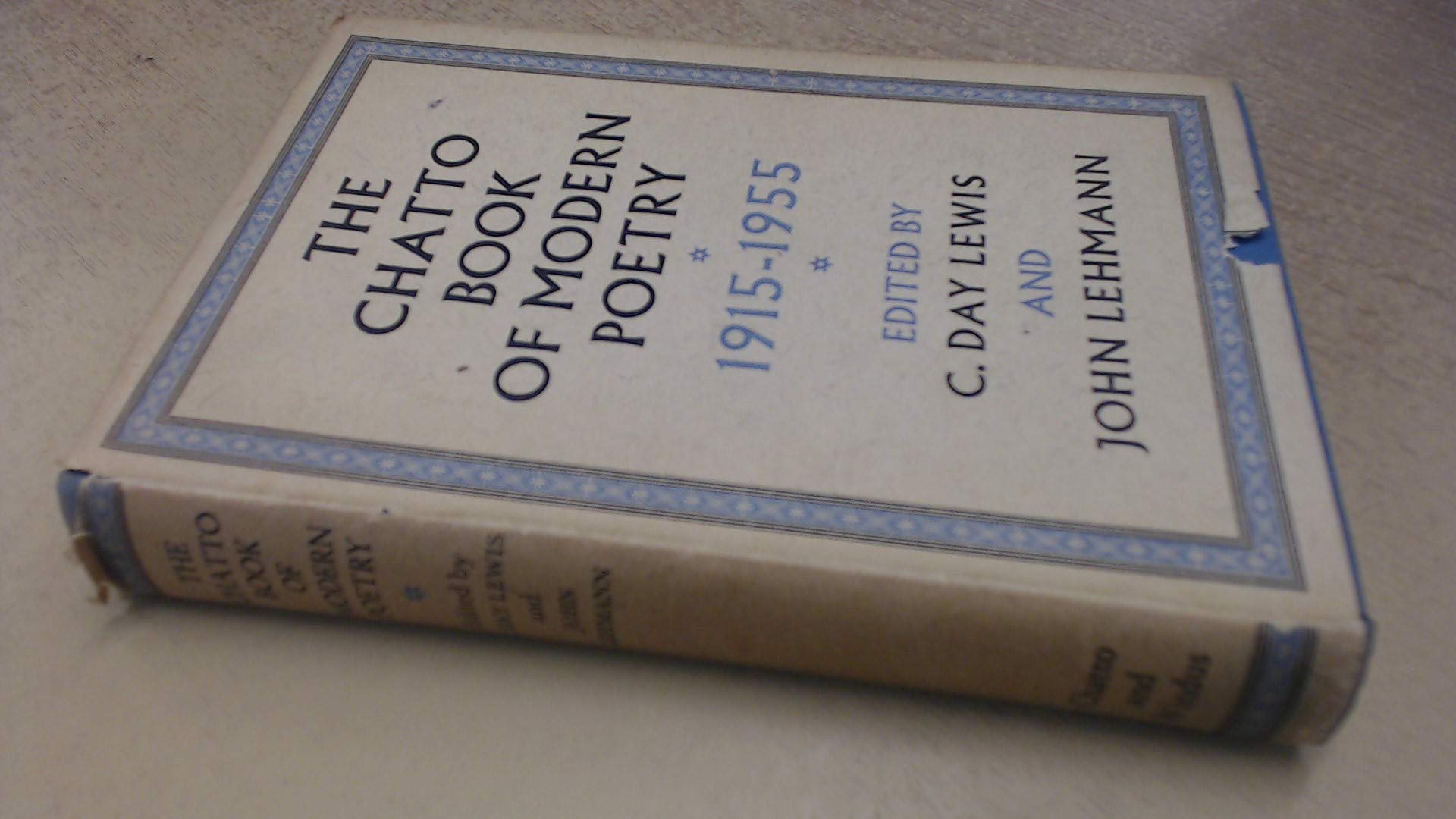
Review: “The Chatto Book of Modern Poetry, 1915-1955”

Chatto Modern Poetry

1915 to 1955 provides quite a range of poetry! From Hardy, Housman, Kipling, Yeats, through two world wars, to Dylan Thomas and twenty poets younger than him. Editors C. Day Lewis and John Lehmann confined themselves to (loosely defined) British poets, and to those aged at least 30 by their final selection. Among the 260 poems are many standards–Hardy’s ‘Afterwards’, Yeats’ ‘Sailing to Byzantium’, Eliot’s ‘East Coker’, Auden’s ‘Lay Your Sleeping Head’, Dylan Thomas’ ‘Fern Hill’–but the real joy is in discovering good work by less well known poets. I give a few excerpts as examples: pastoral, autobiographical, of mortality, a war poem, wistfulness:

Andrew Young, ‘Wiltshire Downs’

The cuckoo’s double note
Loosened like bubbles from a drowning throat
Floats through the air
In mockery of pipit, land and stare.

And one tree-crowned long barrow
Stretched like a sow that has brought forth her farrow
Hides a king’s bones
Lying like broken sticks among the stones.

Laurie Lee, ‘First Love’

Then it was she put up her hair,
inscribed her eyes with a look of grief,
while her limbs grew as curious as coral branches,
her breast full of secrets.

But the boy, confused in his day’s desire,
was searching for herons, his fingers bathed
in the green of walnuts, or watching at night
the Great Bear spin from the maypole star.

Alun Lewis, ‘Water Music’

Cold is the lake water
And dark as history.
Hurry not and fear not
This oldest mystery.

This strange voice singing,
This slow deep drag of the lake,
The yearning, yearning, this ending
Of the heart and its ache.

Keith Douglas, ‘How to Kill’

Now in my dial of glass appears
the soldier who is going to die.
He smiles, and moves about in ways
his mother knows, habits of his.
The wires touch his face: I cry
NOW. Death, like a familiar, hears

and look, has made a man of dust
of a man of flesh. This sorcery
I do. Being damned, I am amused
to see the centre of love diffused
and the waves of love travel into vacancy.
How easy it is to make a ghost.

Sidney Keyes, ‘The Gardener’

Do you resemble the silent pale-eyed angels
That follow children? Is your face a flower?
The lovers and the beggars leave the park–
And still you will not come. The gates are closing.
O it is terrible to dream of angels.

As a collection the poetry is overwhelmingly formal, rural and male. It is titled ‘The Chatto Book of Modern Poetry’, but it predates the formless chaos of what we now call “modern poetry”, the unstructured confessional outpourings of the past half century. The anthology isn’t perfect, but very rewarding for lovers of traditional poetry. (Not hard to find. Used hardcovers are available from $0.99 on Amazon.)

Poem: “Eight Legs”

Eight Legs

Odin had a spider
In a web above his throne.
“Out!” he said; it came to him.
“And up!” he said; it grew.
“Legs go this way, legs go that!”
The wind began to moan.
Odin touched a spur to Sleipnir,
Through the storm they flew.

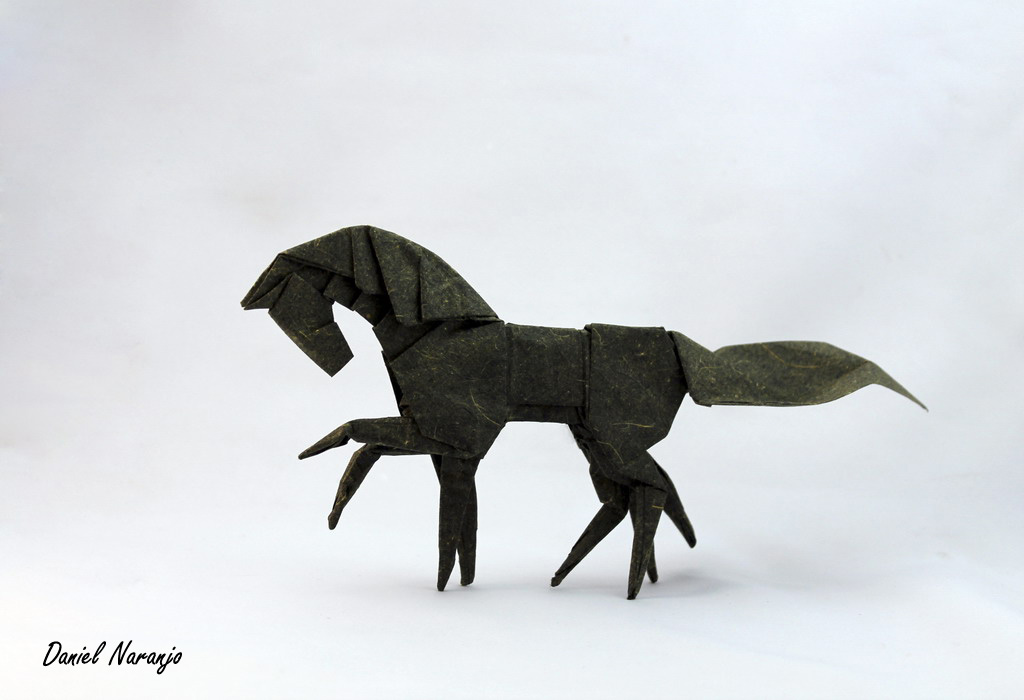
This little poem was published in Anima, a magazine of “Poems of Soul and Spirit” which is now, as they say, quiescent (though it continues to publish books). Odin is very much a god of magic, transformation, journeys, knowledge and poetry – as well as of war and death.

To get hold of the Mead of Poetry, which was in three vats guarded in a mountain cave by a giant’s daughter, Odin changed into a snake to get inside the cave; changed into a handsome young man to persuade the giantess to give him three sips in exchange for sleeping with her for three nights; drank each vat in a single sip; and changed into an eagle to fly back to Asgard where the other gods had prepared a big cauldron for the mead. Chased by the angry giant (also in the form of an eagle) and slowed down by all the mead inside him, Odin was so scared that he shitted some of it out as he flew – but he made it to Asgard, and disgorged the bulk of the mead into the cauldron. This is the gift that the gods give when they want to make someone a good poet. And  bad poetry? That’s when you’ve been consuming the stuff Odin shitted out.

Technically, you could discuss whether “Eight Legs” is in flawed trochaics, and whether the line break between the first two lines is in the right place, and so on… But if you read it aloud, I think you’ll find it has strong stresses, weak stresses, and unstressed syllables – or else consider it as quadrisyllabics (one stressed and three unstressed syllables). I would read it as:

Odin had a spider in a web above his throne. (pause)
“Out!” he said; it came to him. “And up!” he said; it grew. (pause)
Legs go this way, legs go that!” The wind began to moan. (pause)
Odin touched a spur to Sleipnir, through the storm they flew.

Not too different from

I had a duck-billed platypus when I was up at Trinity
With whom I soon discovered a remarkable affinity
– Patrick Barrington, The Diplomatic Platypus

or

I am the very model of a modern major-general
– W.S. Gilbert, The Pirates of Penzance

or

Not always was the kangaroo as now we do behold him
– Rudyard Kipling, The Sing-Song of Old Man Kangaroo, in The Just So Stories

Poetry is very close to song; or, song is the bridge between poetry and music. Reading poetry aloud is very important for its appreciation, to bring out its rhythm (and sometimes even musical notes that flow into it naturally). That’s why poetry can be set to music, and why songs are invariably printed out in poem format.

In that context, even the line of spondees in Samuel Coleridge’s “Metrical Feet” has, like all the other lines, four stresses:

Trochee trips from long to short.
From long to long in solemn sort
Slow spondee stalks; strong foot yet ill able
Ever to run with the dactyl trisyllable.
Iambics march from short to long.
With a leap and a bound the swift anapests throng.

… because poetry in its origins (in the preliterate times of both the tribal fire and modern nursery) is designed to be memorised, so it can be chanted or sung or otherwise recited.