Tag Archives: memorisation

Weekend read: Essay: Victoria Moul, ‘On rugby and metre’ (excerpt)

Victoria Moul writes: When I hear or read people — often though not only American “formalists” — discussing “correct” metre in English, and the supposed dominance of accentual-syllabic forms in general and the iambic pentameter in particular, I often think rather impatiently of poets like Arnold and Yeats. Arnold’s verse is musical, highly memorable and — to my ears at least — mostly very straightforward to speak correctly. But it’s often not very iambic at all and he typically uses lines of very varying syllable length. ‘Rugby Chapel’ is a good example of this — its pattern is, technically speaking, more trochaic (rugby) than iambic (endured), the trochaic pattern is established very clearly at the outset (‘Coldly, sadly descends’) and the lines have between six and nine syllables each. If you (inexplicably) wanted to spend an hour “scanning” it you’d find a complex variety of combinations of stressed and unstressed syllables. But its music is easy to hear and read, and very easy to remember, because regardless of the number of the syllables all the lines have three stresses.

Repeated three-stress lines are relatively unusual in English, especially in longer poems, but the four-stress line is very common, perhaps in fact the most natural English line of all, and indeed a lot of so-called iambic pentameter has a tendency to drift towards four rather than five stresses. ‘The Wild Swans at Coole’ establishes an iambic pattern at the outset (‘The trees are in their autumn beauty / The woodland paths are dry’) but is in stanzas of 4/3/4/3/5/3 stresses, with quite varied syllable length and relatively few perfectly iambic lines. Day-Lewis’ poem, by contrast, looks to the eye like it might be iambic pentameter, since the line-length hovers around 10 syllables (ranging from 9 to 12). But most of the lines are spoken naturally with four stresses, not five (‘A sunny day, with leaves just turning’; ‘Wrenched from its orbit, go drifting away’), and only a handful of lines certainly have five.

As far as I know — do comment if you can think of any counter-examples — there are no really good poems about rugby itself, so the poems I discussed today were just those which came into my mind as I watched the practices. None of these English poems are obscure — all are by poets who were considered major in their own lifetime, and all three have been very well-known at some point even if they are not now — and not one of them is in iambic pentameter. In fact, not one of them is obviously in a ‘syllabic’ metre, strictly speaking, at all (as in the familiar statement that traditional English verse is ‘accentual-syllabic’, i.e. where both the number of stresses and the number of syllables are set by the metrical pattern). These poems, like a great deal of English poetry, establish and follow an accentual pattern — of a certain number of stresses in a line, though this too is open to variation — but not, or only very loosely, a syllabic one. Verse of this kind is very common in the English tradition, and the hundred years of poetry between the mid-19th and mid-20th century, even if you set aside the full-blown “modernists” completely, is particularly rich in metrical variety. It is puzzling that this is not better reflected in most discussions of English metre and form. But the best way to get a feel for the actual — rather than imagined — conventions of a literary tradition is, of course, by reading it.

*****

Editor: The passage above is excerpted with permission from a recent Substack post by Victoria Moul in her ‘Horace & friends’ – the full thing is at https://vamoul.substack.com/p/on-rugby-and-metre. In it, with thoughts inspired by watching her nine-year-old son playing rugby, she discusses Cecil Day-Lewis’ ‘Walking Away’, Yeats’ ‘The Wild Swans at Coole’ and Arnold’s ‘Rugby Chapel’. The piece is engaging in several ways, but the point that stands out the most for me is this:
“These poems, like a great deal of English poetry, establish and follow an accentual pattern — of a certain number of stresses in a line, though this too is open to variation — but not, or only very loosely, a syllabic one.”

This is much on my mind when I consider the forms that create formal verse. From my school days on, I have felt that analysing English grammar with Latin rules was wrong, just as straightjacketing English verse into syllabic requirements was not always useful, beautiful or appropriate. English is a Germanic language, and plays effectively by looser accentual rules: perhaps harder to define and analyse, but truer to the work of poetry which is to be word-for-word memorisable. Rhythm is one of the essential tricks of memorisation, along with rhyme, alliteration, assonance and a host of rhetorical tricks; and rhythm plays a variety of casual games. Also, accentual pattern corresponds to the continuum that I see at the root of poetry: from womb heartbeat, to dance, to music, to song, to formal verse. Formal verse is at its best when it is rhythmic and rich in musicality as well as in ideas and images and wordplay. Without the music, without the rhythm, it is prose… no matter how well expressed.

So rap and spoken word are inherently more poetic because more memorisable than 99% of what has been published as ‘poetry’ in the past 50 or 60 years. All songwriters are of course genuine poets – not all are good ones, but Bob Dylan certainly deserves his Nobel Prize (and I wish it could have been shared with Leonard Cohen).

Another point is that French too, and other Romance languages, are more accentual than professors often claim. When Françoise Hardy sang
Tous les garçons et les filles de mon âge
Se promènent dans la rue deux par deux
she was following the accentual beat, not giving every syllable equal weight, and completely skipping a couple of unstressed syllables. (Are French professors still teaching that all syllables have equal weight in French verse? Surely not! I hope that died out some time last century…)

Not all poetry is singable – but at its best it has a musicality that both creates enjoyment and enhances its ease of memorisation.

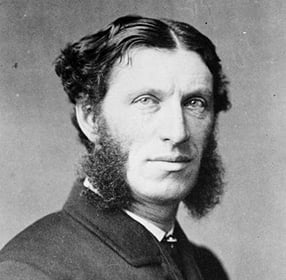
Photo: Matthew Arnold
Short NSFW poem: RHL, ‘The Fig Tree’

The fig leaf symbol’s one of History’s greats
As, inter alia,
It hides, discloses and exaggerates
Male genitalia.
The fruit itself suggests the female form —
Dripping with honey
The little hole breaks open, pink and warm…
The Bible’s funny.

First published in The Asses of Parnassus, this poem was republished in Better Than Starbucks, which earned a “Kudos on your brilliant ‘The Fig Tree'” from Melissa Balmain, editor of Light. And it has now been added by Michael R. Burch to my page in The HyperTexts. That’s a wonderful set of editorial acceptances – it makes me proud, and I have to erase my lingering suspicion that the poem would be thought too rude for publication. Now I rate the poem more highly, as being not just a personal favourite but also acceptable to a wider audience.

It sometimes feels that all I write is iambic pentameter. It is always reassuring when a poem presents itself with half the lines being something else, and the result is a lighter, less sonorous verse. The rhymes are good; the poem’s succinct and easy to memorise. I’m happy with it.

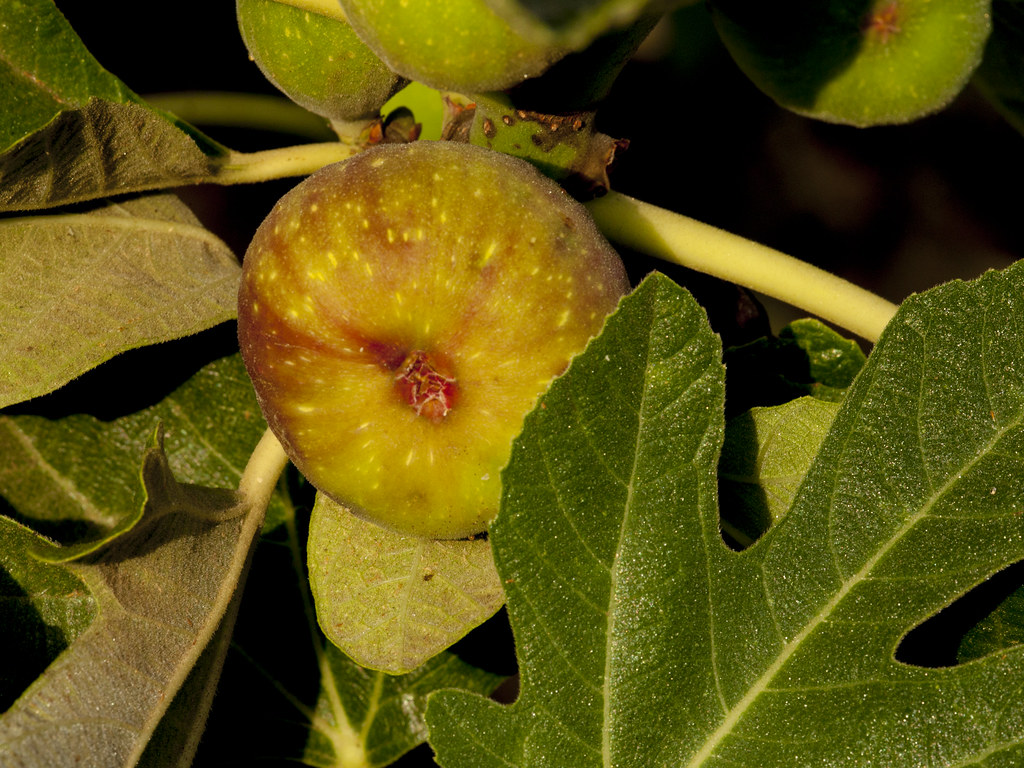
Photo: “Ripe Fig at Dawn” by zeevveez is licensed under CC BY 2.0.

Short poem: RHL, ‘I Started Out Alone’

I started out alone,
No numbers and no words.
The people gave me food and clothes.
I loved the sun and birds.

And when I reach the end
Numbers and words all done,
Have to be fed and dressed again,
I’ll love the birds and sun.

*****

This is one of my favourite poems, for several reasons:
First, it extols the combination of curiosity, enjoyment and acceptance that I believe is appropriate for this thing called life.
Second, it is simple in expression: simple words, simple rhythm, in iambics with simple full and slant rhymes.
And third (and perhaps most importantly) it is easy to memorise: it has lodged itself in my brain without any effort or even intent on my part and, as this blog frequently claims, that is the essence of poetry.

‘I Started Out Alone’ was originally published in Bewildering Stories in 2019. More recently it was included in a batch of my poems that Michael R. Burch spotlighted in The Hypertexts for August 2024.

Photo: “Baby face” by matsuyuki is licensed under CC BY-SA 2.0.

Weekend read: Tom Vaughan, ‘Rhyme-Crime’

Does rhyme matter –
    however occasional?

It used to be
    considered vocational

a must for verse’s
    inspirational

impact, even
    educational –

but these days, it’s a
    generational

sign your stuff’s just
    recreational.

*****

Tom Vaughan writes: “For me, rhyme is not just a technical trick to help make poetry memorable. I think the world rhymes in odd ways. I also believe time rhymes, across the centuries but also in our short individual lives, sometimes in irony, but more often – if we listen hard enough to hear it – to point the way to a deeper level of challenge and reflection.”

Editor: I had been planning a rant on the essence of poetry being all the tricks that make it memorisable word-for-word: rhyme, rhythm, alliteration, assonance, etc; and on the fact that the bits of poems an adult remembers are invariably rhymed; and on poetry’s links to dance and song and the prenatal heartbeat. But Tom Vaughan introduces a whole new layer of value of rhyme, obliquely in his poem, incompletely in his comment. There are things to meditate on here.

Tom Vaughan is not the real name of a poet whose previous publications include a novel and three poetry pamphlets (A Sampler, 2010, and Envoy, 2013, both published by HappenStance; and Just a Minute, 2024, from Cyberwit). His poems have been published in a range of poetry magazines, including several of the Potcake Chapbooks and frequently in Snakeskin.
He currently lives in Brittany.
https://tomvaughan.website

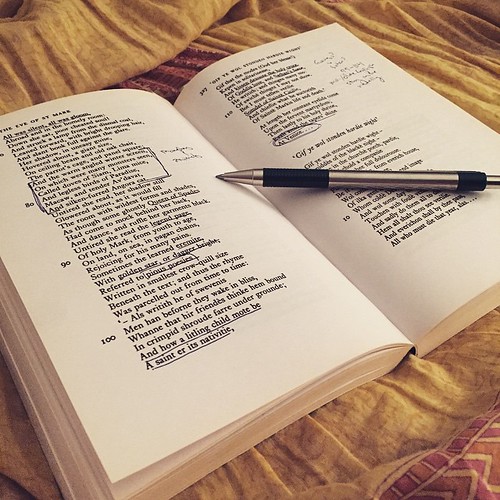
Photo: “Sometimes, I like going back into #poetry and pretending like I am still in college. #johnkeats #bookstagram #annotations #reading #books” by alis.smith is licensed under CC BY-NC 2.0.

Poem on Poetry: ‘Poets Do Tricks With Words’

Poets do tricks with words,
play games, weld rhyme,
but we don’t do this nicely all the time–
we’ve also anger at unfairness, anger hot-white
at wasteful power, at greed and spite,
where fear meets selfishness, drives right and left
to persecution, torture, war and theft.

Each trick sticks bricks, fixed and unfixed,
into an apartheid verbal wall
that warbles claims to separate
sense from nonsense–though we appreciate
all’s one, all’s all the same,
word walls are just a Jenga game,
and all bricks fall.

We can play games with words,
thread and unthread them in a silly tangle,
loom and illuminate light warp, dark weft,
wrong them and wring them ringing through a mangle
as sometimes the only way
to find a new way to say
things said ten thousand times before:
how brightness has a rightness,
whether in the sky, the sea, a face or an idea.

So cook with words, mix, bake,
packing in raisins, nuts, half cherries for a cake
with flour just enough for a pretence
that it’ll hold together and make sense.

*****

Formal? Free? The arguments about the appropriate structure for poetry in English never seem to end. The semi-formal compromise has been around for a long time: take the rhythmic, rhyme-rich ramblings of Arnold’s ‘A Summer Night’ from 170 years ago, or Eliot’s ‘Prufrock’, written in 1911. To me, the test of good verse is that it is easy to memorise and recite: the ideas and imagery have to be memorable, but so does the expression, word for word. The tricks may vary by language and culture, but whatever tricks the poet can manage to achieve memorableness are legitimate.

‘A Summer Night’ was in my English A Level curriculum <cough> years ago, and the middle section which I still know by heart encouraged me to run away from school. (I was found trying to sleep in a phone booth while waiting for a morning train, and brought back to school at 2 in the morning.) The poem’s semi-formal structure has always appealed to me with its rhetorical power, and over the years I’ve often used that freedom when writing about poetry, as in ‘Some Who Would Teach‘ and ‘Inspiration 2‘ and ‘Memorableness‘.

‘Poets Do Tricks With Words’ has just been published in Orbis, edited by Carole Baldock.

Photo: “National Fruitcake Day” by outdoorPDK is licensed under CC BY-NC-SA 2.0.

Calling the Poem: 12. ‘Memorableness’

That* for an idea, for an idea’s transmission.
But that isn’t poetry. Poetry’s mission
is memory – every quick trick of the tongue
to give ear-to-mouth memory,
words sung and strung
from an ear to an ear,
bearing clear repetition,
not just the idea,
but the idea’s expression,
silk wrapping the emery –
rhythm and rhyme,
form, pattern, compression,
feet, movements, beat, time,
iter-, reiter- and alliteration,
sense, nonsense and assonance, insinuation,
barbs and allusions,
hooks, jokes and confusions,
directions, inflections, creating connections…
So memory favours your chanting, reciting,
enchanting beyond all mere reading and writing –
and magicking into the mind of forever.
You’ve taken control of poetic endeavour.

*****

*The first word, “That”, is referring back to the previous poem in the e-chapbook’s sequence, dealing with the process of obtaining the thoughts and ideas for a poem. This poem shifts the focus to the wordsmithing that makes a poem word-for-word memorable, memorisable, repeatable, recitable.

Consider the pieces of verse that are easiest for you, personally, to recite… nursery rhymes, passages of Shakespeare, bits of Tennyson’s ‘Charge of the Light Brigade’, quatrains from FitzGerald’s ‘Rubaiyat of Omar Khayyam’, an Emily Dickinson or Edward Lear poem?

Then consider how many prose passages of similar length you can recite – perhaps a Bible passage or part of Lincoln’s ‘Gettysburg Address‘? There will be some, prose passages you have heard many, many times. But poetry is going to win out over prose by number of pieces, length of pieces, and accuracy, because poetry is deliberately uses a variety of tricks that make memorisation as easy as possible.

Poetry is not just the idea but also, essentially, the idea’s expression.

Photo: “Maori Chant” by pietroizzo is licensed under CC BY-NC-SA 2.0.

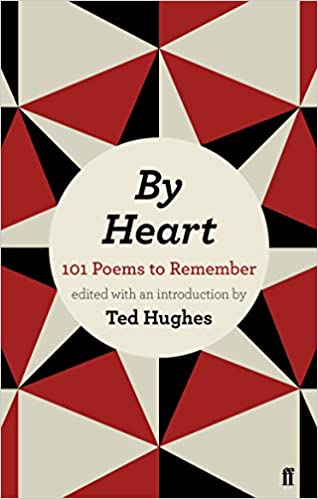
Review: ‘By Heart – 101 poems to remember’, ed. Ted Hughes

This book’s theme is the memorisation of poems, and there are things I like and things I don’t like about both Ted Hughes’ introduction to the subject and the 101 poems that he has chosen.

First, the introduction. I like that it encourages people to learn poems by heart. But although the book’s title is ‘By Heart‘, Hughes instead teaches ‘by head’. His method is extremely cerebral, using the kind of image-association-chain taught by neuro-linguisitic program consultants to help you remember the names of business associates and clients. Hughes would have you construct a Cumberbatch-Sherlock Holmes ‘mind palace’. Taking Hopkins’ poem ‘Inversnaid’ as an example, Hughes explains that the opening lines
This darksome burn, horseback brown,
His rollrock highroad roaring down,
can be dealt with as follows:
For ‘peaty burn’ it might be enough simply to imagine, like a frame in a colour film, a dark torrential mountain stream coming down among boulders. But to make sure it is ‘burn’ and not ‘stream’ that you remember, it might be better to imagine the stream actually burning, sending up flames and smoke: a cascade of dark fire, scorching the banks. The next item, ‘brown horse’, now has to be connected to the burning stream. The most obvious short-cut is to put the horse in the torrent of fire, trying to scramble out – possibly with its mane in flames.
He then goes on to connect it to the horse causing an avalanche (rollrock highroad) which comes down on a lion (roaring down), and so on.

My difficulty with all this is that the images he is creating are simply not what the poem is about. When Hopkins writes ‘burn’ meaning stream, it’s not appropriate to set it on fire. Of course the poem summons up images, and they are useful for memorizing… but for godssake, why not think of it as a Scottish stream rather than setting it on fire? The burn is brown and in spate, and rocks are rolling down it and it makes a roaring noise – and that is the picture you can hold in your head as you recite Hopkins’ lovely rich words, without having to involve fires, animals and avalanches.

It seems to me that Hughes is in danger of losing the beauty of the actual poem by going through his ‘mind palace’ activities. He appears to be reducing the memorisation of poetry to a party trick, performed at the expense of the poem itself. If he didn’t love the poem for its actual imagery, what did he love it for? When he memorised a poem, did he check it off and then forget it? Wouldn’t all the peripheral imagery have gotten in the way when he tried to recite the poem a few decades later? Better and safer to my mind to stay with the essential images and the richness of the language, rather than setting fire to a stream because the poet uses the word ‘burn’.

And this leads in to my thoughts about the selection of the 101 poems to be learnt by heart. Auden, Blake, Dickinson, Eliot, Frost, Wordsworth and Yeats each get at least five poems, and Shakespeare over a dozen. The less-represented poets are a wider mix, from John Betjeman to Elizabeth Bishop, Elizabeth Barrett Browning, Lewis Carroll… The poems themselves are interesting, and many of them are perfect for memorising, so it is a worthwhile read.

But I don’t think it appropriate to waste five or six pages on the 130 or 170 lines of Blake’s ‘Auguries of Innocence’ or Wordsworth’s ‘Tintern Abbey’. Perhaps Ted Hughes learnt those two along with Blake’s ‘The Tyger’ and Wordsworth’s ‘Upon Westminster Bridge’, but the latter two are far more suitable than the former for a book that is meant to encourage others to achieve memorisation.

Again, most of the poems are good for learning by heart, but too many of them have none of the qualities that make it easy to learn poetry in English: rhyme, metre, alliteration, wordplay. William Empson’s translation of the Japanese poem ‘From the Small Bird to the Big’ is interesting, but inappropriate for this book. The same goes for Pound’s ‘The Return’ and Eliot’s ‘Marina’ – inappropriate because they are missing the music, the song-like qualities, that make memorisation easy. Easy, that is, if you are learning by heart, as the book’s title requires.