Tag Archives: Robin Helweg-Larsen

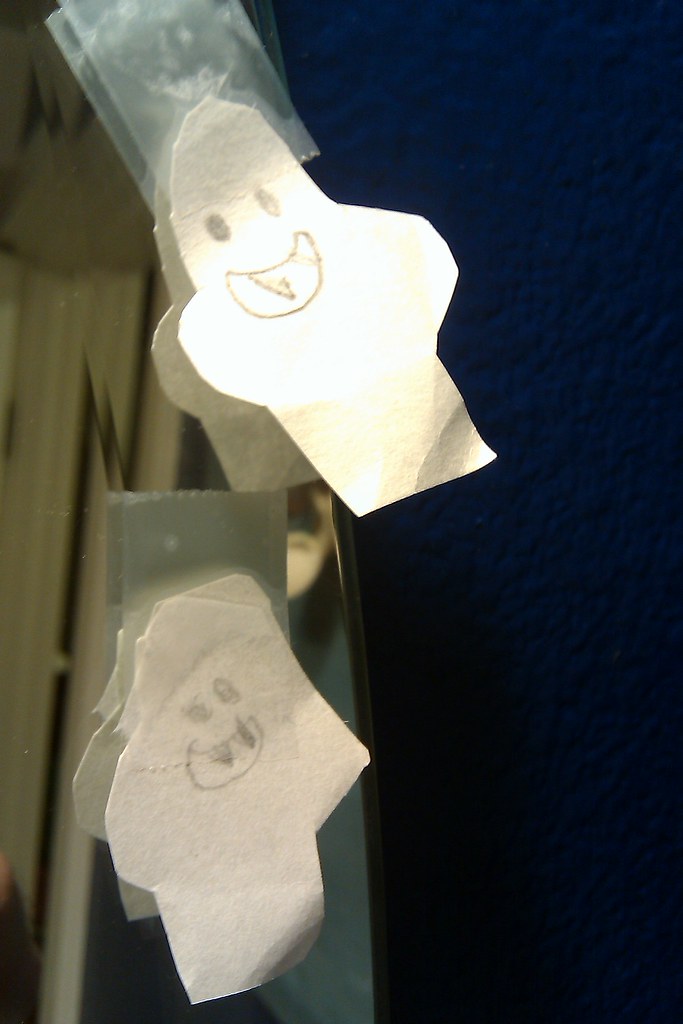
Short poem: ‘Ghost Tales’

Discounting tales of ghosts kids say appeared,
We teach them to be rational instead.

Jesus was scourged, then crucified, then speared…
You really think he came back from the dead?

*****

This poem was originally accepted for November 2016 publication in Quarterday, a Scottish quarterly that appeared in print and online for a few issues. There were some discrepancies with publication, and I never determined whether this poem made it into either format. The ambiguity is quite in keeping with all reports of ghosts, so I’m not complaining.

(But perhaps I should have blogged this at Easter.)

Photo: Ghosts by goldberg from Openverse

My own favourites: ‘No No Nse Nse’

No
No
Nse
Nse
And things like that
May look like nonsense
But there is
No
No
Nse
Nse

*****

I know, I know… it’s not formal verse, but it’s one of my favourite pieces.

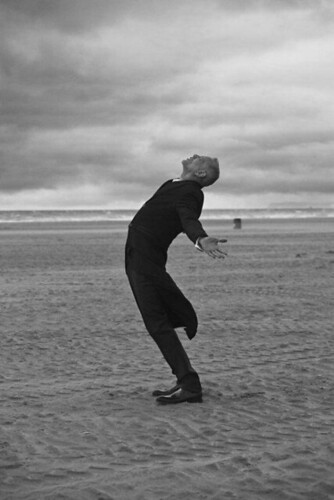
Ecstatic Posture” by Dreaming in the deep south is licensed under CC BY 2.0.

Short poem: ‘Loss’

Which is the worst –
Is it the loss, or memory of loss,
Or loss of memory? Who gives a toss
When the brain’s banks have burst
And all we valued yesterday
Is washed away?

*****

The above is a short poem, semi-formal (i.e. it’s in iambics, it rhymes, but it lacks formal structure) published in this month’s Snakeskin No. 298. I like semi-formal because it allows natural expression in a way that formal structure often prevents. Contrast these examples from Matthew Arnold of the formal (from The Scholar-Gipsy) and semi-formal (from A Summer Night):

Thee at the ferry Oxford riders blithe,
Returning home on summer-nights, have met
Crossing the stripling Thames at Bab-lock-hithe,
Trailing in the cool stream thy fingers wet…

The inversions of adjectives and phrases were used to fit rhyme and metre to line length. Drop the line length requirements and, even retaining the “thee”s and “thou”s, the expression is more naturally conversational:

And the rest, a few,
Escape their prison and depart
On the wide ocean of life anew.
There the freed prisoner, where’er his heart
Listeth will sail…

Poor Matthew Arnold! With his father a famous Headmaster and himself an Inspector of Schools, there is a sad irony in so much of his poetry being about escaping the tedium of regimented Victorian life.

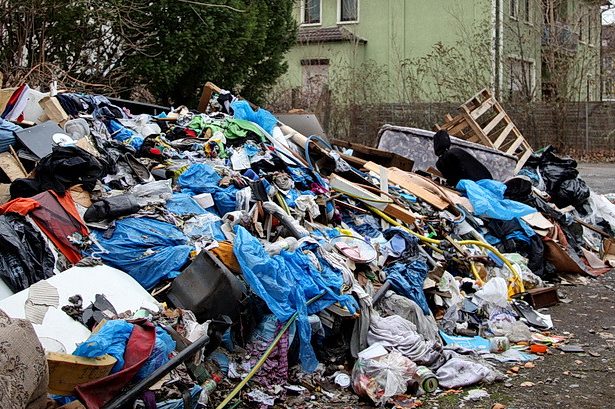
Photo: “Müllhaufen Villa V R s 1000 s” by rosalux-stiftung is licensed under CC BY 2.0.

Epigram: ‘Many Why’s’

Many “Why?”s
Make one wise.

*****

This epigram was recently published in The Asses of Parnassus. Thanks, Brooke Clark, for hosting “lots of poems for people with short attention spans.”

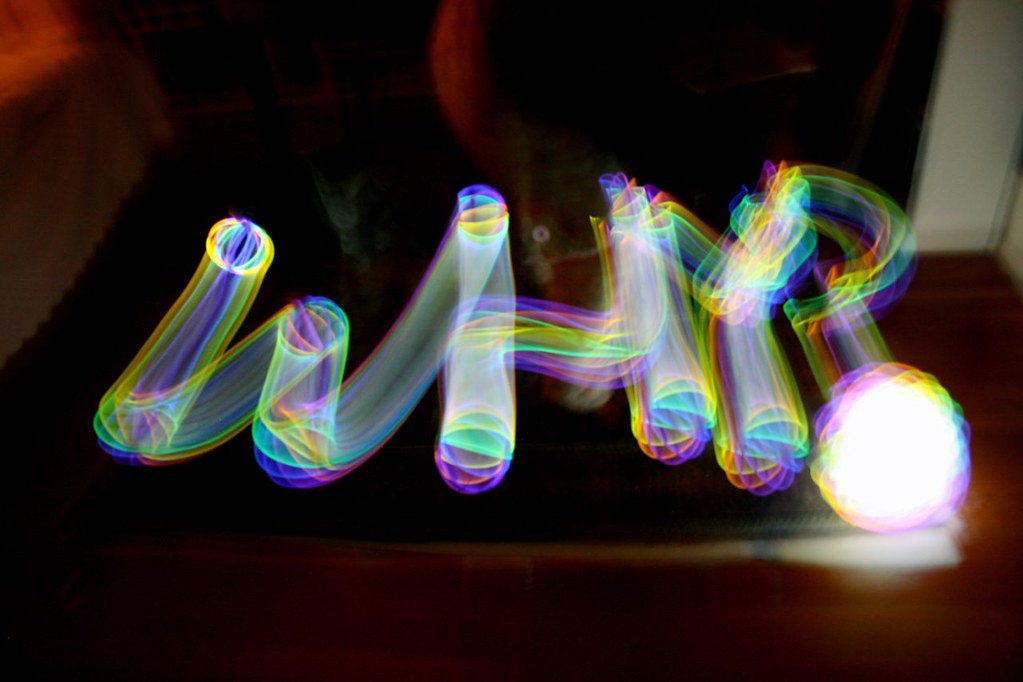
Photo: “WHY?” by annnna_ is licensed under CC BY-ND 2.0.

Calling the Poem: 14. ‘What About Failure?’

But what if the poem’s not there?
Is just an idea?
A vague vapor?
What if there were only a few words, heard freshly?
Then write them down even (or rather, especially)
if you must get out of bed, find pen and paper.

By getting up and writing out
the poem letter by blind letter
you are showing by your doing
your devotion to your gods.
Writing verse invokes the Muses,
turns up fresh thoughts, more and better…
not for certain, but just writing
will of course increase the odds.

The hidden gods now bidden,
gods willing, by gods you’ll be ridden.

*****

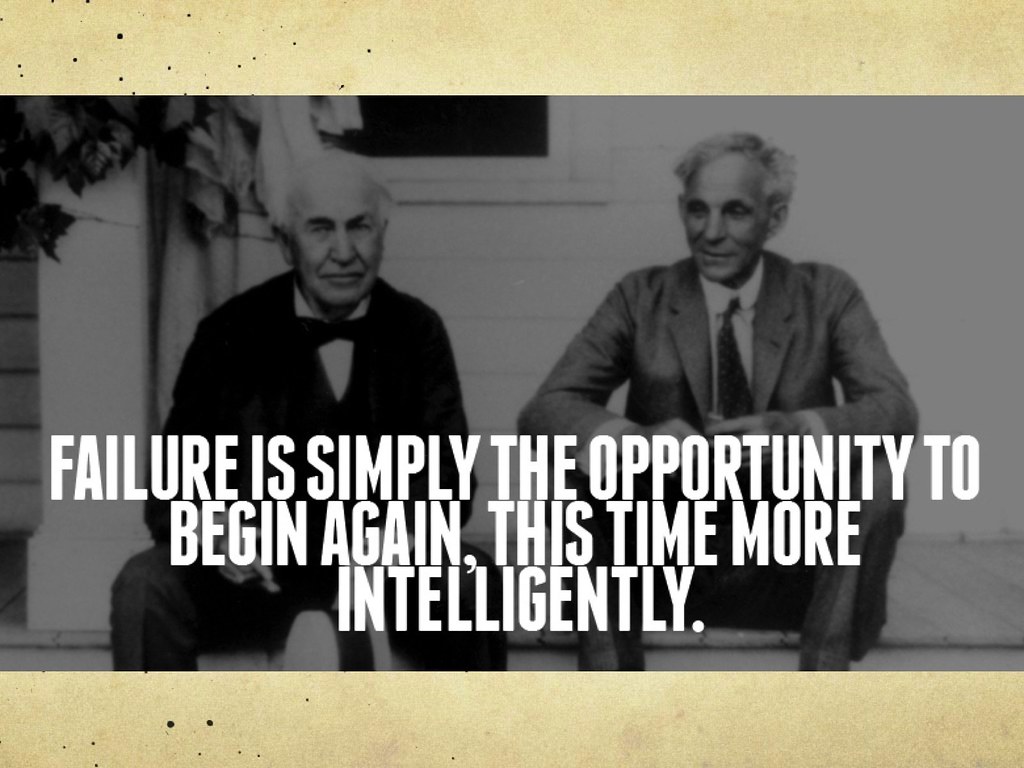
It’s not possible for everything to succeed every time. So what? As they say, Wisdom comes from learning; learning comes from experience; experience comes from mistakes. Failure is an inherent part of life and learning and achievement – but of course it is essential to learn from failures, not to simply repeat them. So even failures are a gift – be grateful!

Photo: “Failure – Try again” by Tatiana12, CC from OpenPress

Calling the Poem: 13. ‘Crafting the Verse’

We stand on two banks of the river that’s flowing between us.
I’ll bridge my new thoughts out to you with a verse.
First I form key ideas – they need clarity, cleanness –
The bridge forms an outline, takes shape in my head.
Now that bridge must be built,
Built regardless of canyons, or mud flats and silt.

The pillars are images placed first for more of the bridge to traverse,
With my strongest words buttressing them so they’re not washed away.
Their positions are set by the distance and shores,
While the force of the water, the shape of the bed,
And the landscape and soil on my side and yours,
The allowance for possible earthquake or storm,
The demands of the load that the bridge will convey…
These determine the structure, materials, form:
For the best bridge will meet site demands
With both strength and matched style.
So the poet needs meter and rhyme, every trick he commands,
Or the verses won’t carry their burden, will fail to beguile.

Though you see stone or steel in the bridge, for the most part it’s air,
Rhythmic arches of unspoken airy allusion, illusion,
Outlined in hard words and designed to be elegant, spare.
So this poem’s a book, that’s reduced to an essay, reduced more compactly
To two hundred lines, sacrificing precision
To memory’s need for concision, elision.
Two hundred exactly?
No, not exactly. (Exactly!)

From the sweep, pattern, length,
To its delicate strength,
Whether old Roman aqueduct, young Golden Gate,
Whether flowing with water or people and freight,
Its clean shape was constrained by the structural needs and efficiencies,
Driving its strength and position and duty.
All unstructured words in the river are wasted deficiencies.
Poems will last quite as long as an old Roman aqueduct,
Bridging the banks, bearing brightly in rhythms of beauty,
If all ostentation and ornamentation
Support the key functions in what you construct.
Raise your sights to the Space Elevator, that cable,
That modern-day Tower of Babel,
To not just bridge over
A strait or the Severn
But up! to bridge up! at the same time, to heaven.

Cloaked gods were invoked,
And the tiger broke cover,
Your poem connects river banks.
Now give thanks.

*****

When I moved to Denmark in my early 20s I was intrigued to hear that engineering students at a local university began their studies, not with lectures on a variety of key subjects, but by being placed in teams and told to design a bridge that would meet the demands for specific use at a specified site. Materials, geology, weather, load, cost, elegance and everything else that goes into bridge design all had to be researched and included in the project. When students had completed a whole series of projects, they had earned their degree. It was a very different approach from the lecture-based university courses that I had dropped out of in the UK.

How does this relate to writing poetry? Well, it brings to mind Heinlein’s ‘first law of writing’: “You must write.” Also the old story of the would-be concert-goer lost in New York City, asking a man with a violin case how to get to Carnegie Hall and being told “Practice, practice, practice.” There are a lot of factors involved in writing verse – some are common across all cultures and languages while others are language-specific. They all involve ideas (and their mysterious origin), images and their expression in words; but making those words so effective that they evoke an appropriate response in the reader or listener, so effective that they can be remembered and recited, requires the use of a whole range of language-specific factors that are mastered by doing.

By the way, the “two hundred lines” mentioned above refers to the length of the entire ‘Calling the Poem’ e-chapbook that this is part of. This chapbook is a single work, though constructed of various formal and semi-formal pieces.

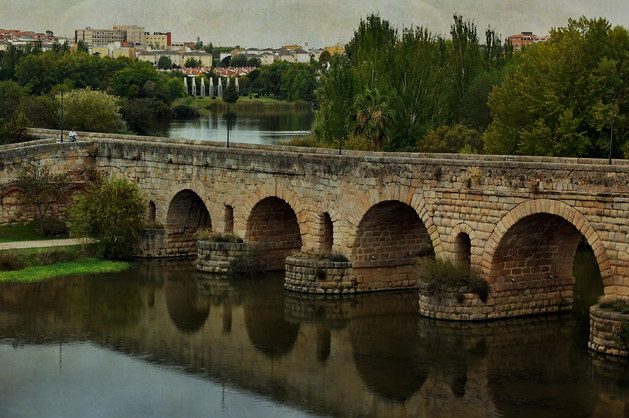
Photo: “Roman Bridge, Merida” by Jocelyn777 Love Europe is licensed under CC BY-SA 2.0.

Calling the Poem: 12. ‘Memorableness’

That* for an idea, for an idea’s transmission.
But that isn’t poetry. Poetry’s mission
is memory – every quick trick of the tongue
to give ear-to-mouth memory,
words sung and strung
from an ear to an ear,
bearing clear repetition,
not just the idea,
but the idea’s expression,
silk wrapping the emery –
rhythm and rhyme,
form, pattern, compression,
feet, movements, beat, time,
iter-, reiter- and alliteration,
sense, nonsense and assonance, insinuation,
barbs and allusions,
hooks, jokes and confusions,
directions, inflections, creating connections…
So memory favours your chanting, reciting,
enchanting beyond all mere reading and writing –
and magicking into the mind of forever.
You’ve taken control of poetic endeavour.

*****

*The first word, “That”, is referring back to the previous poem in the e-chapbook’s sequence, dealing with the process of obtaining the thoughts and ideas for a poem. This poem shifts the focus to the wordsmithing that makes a poem word-for-word memorable, memorisable, repeatable, recitable.

Consider the pieces of verse that are easiest for you, personally, to recite… nursery rhymes, passages of Shakespeare, bits of Tennyson’s ‘Charge of the Light Brigade’, quatrains from FitzGerald’s ‘Rubaiyat of Omar Khayyam’, an Emily Dickinson or Edward Lear poem?

Then consider how many prose passages of similar length you can recite – perhaps a Bible passage or part of Lincoln’s ‘Gettysburg Address‘? There will be some, prose passages you have heard many, many times. But poetry is going to win out over prose by number of pieces, length of pieces, and accuracy, because poetry is deliberately uses a variety of tricks that make memorisation as easy as possible.

Poetry is not just the idea but also, essentially, the idea’s expression.

Photo: “Maori Chant” by pietroizzo is licensed under CC BY-NC-SA 2.0.

Calling the Poem: 9. ‘The Poem Comes’

Do you see the tigerish poem, or is it seeing you?
Sensing you, sizing up your form…
(You know that lovely feeling, warm,
When you’re stared at by somebody you like…
How creepy though, if someone you dislike…)
Perhaps it will ring true,
Perhaps the lines
Will just ring hollow…
But having offered yourself up like some bonbon,
Prayed at the shrines
Of lares and penates, Mercury, Apollo,
Ganesh and Odin, Legbas Atibon,
Liminal gods of paths and gates,
And stories, lies, poetry and fates,
You have no right, nor no ability,
To choose between rough trade or some civility;
Stared at by god or demon, grand or scum,
You’ve whored yourself to gods. Take what may come.

*****

This is the ninth in the 15-poem series of the ‘Calling the Poem’ e-chapbook that Snakeskin published a couple of years ago. (Unfortunately the Snakeskin Archives are currently down.) It reflects my sense that you can evoke artistry by invoking those unconscious inner forces that can only communicate with your conscious self through dreams and images, hints and melodies, words that well up but are not quite random…

The invocation requires two things to be successful: alertness to your changing moods, and showing respect for whatever “inspiration” you receive by writing it down, sketching it out, formalising it as appropriate – and thereby encouraging further communication.

I’m aware that all this sounds pretentious. But I think that the unconscious mind knows different things, in some ways truer things, than the conscious mind, especially about physical health, mental balance and the process of changes in life. Finding a way to tap into this – through prayer, meditation or the arts – is life-affirming for most people… but perhaps dangerous for a few.

The next poems in this series deal with things going right, going wrong, needing work…

Photo: “Streetart at the state of art #art #streetart #dublin #graffiti #montana #street #woman #beautiful #poetic #inspiring #graffiti #artistic #gorgeous #wall #graff” by Romana Correale is licensed under CC BY-ND 2.0.

NSFW poem: ‘The Zeus Credit Card Company’

Homeless and eyes cast down, young Danae found
the credit card just lying on the ground.
‘Zeus Credit’… with her name on it… and it said
it had no limit. So she thought
‘Why not just try it?’ and she bought
sandals, silk underwear, a dress;
it worked… so then, why not,
a light lunch in the choicest, chicest spot.
It worked again. Its back was odd:
no legalese, just logos, ads…
‘Insert in slot for all dreams to come true.’
Tearful, she checked into Hotel Princess,
went up and had the best bath in some years,
Reading again with happy tears
‘Insert in slot for all dreams to come true’
and thought again ‘Why not?’
and put it in her slot…
in sudden stir
Zeus filled the room and her.

*****

This poem, semi-formal at best, was published in this month’s Snakeskin (thanks, George Simmers!) with the accompanying Gustav Klimt ‘Danae’. I wrote the poem earlier this year but I have very little memory of doing so, and no sense of what triggered it. I put it down to the mysterious workings of the subconscious or whatever else the Muse may be.

This is an appropriate poem to post before I head into the next set of poems from the e-chapbook ‘Calling the Muse’. Is it always correct to offer up art (of any kind) that is edgy? What if the expression is sexist, even obscene? What if the work is irreligious, even blasphemous in the eyes of a believer? Is it enough to say “If you don’t like it, don’t look at it”? Is it enough to post a warning, “NSFW”?

And the Greek gods often tend toward the sexist and the licentious. Zeus is not a clean-living figure. But no one seems to object to his being depicted and popularised, even if he is a rapist. Because “that was then, this is now”? And if the Muse offers you a fresh take on an ancient rape legend, just use it because after all, the Muse must be listened to?

More on this shortly.

Calling the Poem: 7. ‘The Tiger’

That wild white wind that whips the world away –
The darkness deep and dread in dazzling day –
The light and dark that fuse with furious force –
The leaping tiger that gives no recourse –
Acknowledge, fear, that lurking tiger’s rage,
The terrifying sense of spring-taut powers,
Menacing, tail-tip twitching while it glowers,
Lethal both to ignore or to engage.
Acknowledge it, succumb: you’ve been rewarded.
And now produce – because the debt’s recorded.

*****

This is the 7th of the 15 poems of the Snakeskin e-chapbook ‘Calling the Poem’. ‘The Tiger’ and the next few poems deal with the difficulties of first begging your Muse for inspiration and then finding that the inspiration is uncomfortable – personally, socially, politically, whatever. Perhaps the inspiration isn’t what you were hoping for… but what are your obligations once you have in effect contracted to receive something unknown?

The Muse, the gods, the unconscious or however you like to think of your source of inspiration is not to be trifled with. It is to be respected if you want to stay on good terms with it and benefit from it.

The word ‘music’, by the way, means Muse-ish, ‘of the Muses’. The following is blended from passages in Wikipedia: According to Pausanias in the later 2nd century AD, there were three original Muses, three original Boeotian muses before the Nine Olympian Muses were founded: Aoidē (“song” or “voice”), Meletē (“thought” or “contemplation”), and Mnēmē (“memory”). Together, these three form the complete picture of the preconditions of poetic art in cult practice.

So song, contemplation and memory are the Muses that together drive poetry. Poetry is totally Muse-ish. Therefore poetry is inherently musical. Its music is essential.

(And it was only after writing this blog that I found that the current Oglaf comic features a tiger…)

Photo: ‘Tiger’ by Captain Chickenpants is licensed under WordPress Openverse.