Tag Archives: Robin Helweg-Larsen

NSFW Sonnet: ‘Restaveks’

Illegals, both of us; married last year,
now she cleans houses, I cut grass, sweep decks,
for superrich who see us as mere specks
while their big spaceship exit they prepare.
Earth will be fishless, treeless, plastic, bare.
They’ve offered us both jobs as restaveks,
but I said No, they just want us for sex.
She said Then suck them off, why should you care?
I said, We’ll stay. She said, I said I’d go.
I said, You’d leave me? She said, Stay, be dead.
I said, That makes you nothing but a whore.
She said, I fucked him for your job, you know;
I go to space, I’ll live, have food, have bed,
and, if I’m good, oh maybe so much more…

*****

“Restavek” is normally a term for a child of an impoverished Haitian family, sent to live as a domestic servant for a wealthier (or less poor) family. There are an estimated 300,000 in Haiti, mostly girls; and an unknown number in the Haitian communities in the US.

This sonnet (Petrarchan, rhyming ABBA ABBA CDE CDE) was recently published in the frequently NSFW Rat’s Ass Review – thanks, Roderick Bates!

Illustration: “Tiny Empires 3000” by Daniel Voyager is licensed under CC BY 2.0.

Excerpt: ‘You, Yes You’

You, yes you, contain multitudes, conflicted mobs-–
the adroit who holds two jobs,
the maladroit who fails and sobs,
the shortcut thug, dacoit, who simply robs-–
you’ve urges to protect and to exploit:
be just! (but help yourself when you’ve the chance
and no one’s there to look at you askance.)
Priests educate, instruct and rape their flock
as farmers care for, milk and eat their herd
and statesmen love the country they extort.

*****

This is (apparently) the most interesting excerpt from a longer rant that was more than the Rat’s Ass Review wanted. Thanks Roderick Bates for selecting this piece!

Disagreement” by Petri Damstén is licensed under CC BY-NC-ND 2.0.

Poem on Poetry: ‘Poets Do Tricks With Words’

Poets do tricks with words,
play games, weld rhyme,
but we don’t do this nicely all the time–
we’ve also anger at unfairness, anger hot-white
at wasteful power, at greed and spite,
where fear meets selfishness, drives right and left
to persecution, torture, war and theft.

Each trick sticks bricks, fixed and unfixed,
into an apartheid verbal wall
that warbles claims to separate
sense from nonsense–though we appreciate
all’s one, all’s all the same,
word walls are just a Jenga game,
and all bricks fall.

We can play games with words,
thread and unthread them in a silly tangle,
loom and illuminate light warp, dark weft,
wrong them and wring them ringing through a mangle
as sometimes the only way
to find a new way to say
things said ten thousand times before:
how brightness has a rightness,
whether in the sky, the sea, a face or an idea.

So cook with words, mix, bake,
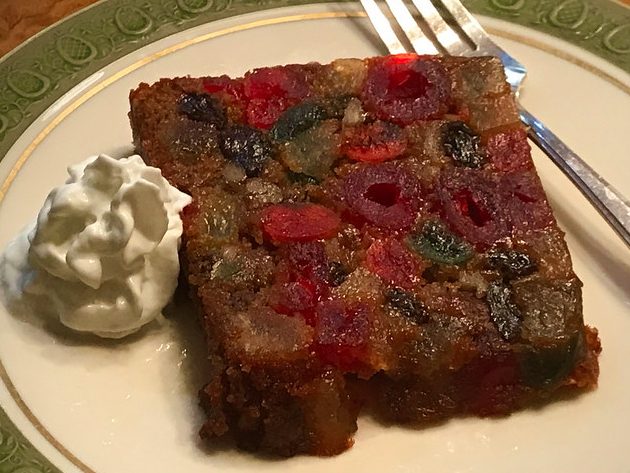
packing in raisins, nuts, half cherries for a cake
with flour just enough for a pretence
that it’ll hold together and make sense.

*****

Formal? Free? The arguments about the appropriate structure for poetry in English never seem to end. The semi-formal compromise has been around for a long time: take the rhythmic, rhyme-rich ramblings of Arnold’s ‘A Summer Night’ from 170 years ago, or Eliot’s ‘Prufrock’, written in 1911. To me, the test of good verse is that it is easy to memorise and recite: the ideas and imagery have to be memorable, but so does the expression, word for word. The tricks may vary by language and culture, but whatever tricks the poet can manage to achieve memorableness are legitimate.

‘A Summer Night’ was in my English A Level curriculum <cough> years ago, and the middle section which I still know by heart encouraged me to run away from school. (I was found trying to sleep in a phone booth while waiting for a morning train, and brought back to school at 2 in the morning.) The poem’s semi-formal structure has always appealed to me with its rhetorical power, and over the years I’ve often used that freedom when writing about poetry, as in ‘Some Who Would Teach‘ and ‘Inspiration 2‘ and ‘Memorableness‘.

‘Poets Do Tricks With Words’ has just been published in Orbis, edited by Carole Baldock.

Photo: “National Fruitcake Day” by outdoorPDK is licensed under CC BY-NC-SA 2.0.

Short poem, ‘Vetch in the Spring’

Love comes back like vetch in the Spring:
You knew it was there, but it’s still a surprise –
The flower is lovely, but wildly unwise.
Love comes back like vetch in the Spring,
You keep pulling it out but you’re never free;
You think it’s gone, but it won’t ever be.
It just comes back like vetch in the Spring.
Love’s just a thing.

*****

With a bit more attention, this poem might have made a satisfactory rondelet (like the previous post by Susan McLean)… but it’s in the form that it occurred to me and, like vetch, it’s just there in its undisciplined fashion. Published this month in Allegro Poetry Magazine, edited by Sally Long.

Photo: “vetch flower and tendril, with ant” by Martin LaBar is licensed under CC BY-NC 2.0.

Sonnet: ‘Parking Lot’

Although not of their class, I went to church
with Bryce and Nicky in the congregation.
In a shop’s parking lot and in the lurch
I asked Bryce for a job, loan, or donation.
Then Nicky’s car came up and Bryce got in,
the bastards swerved to hit me, ran me down;
when I got up, they ran me down again,
hit the wall with their car, left with a frown.
They don’t apologise, don’t feel the need –
“You caused it all ill-manneredly,” they say.
“Our car was damaged too.” (But did they bleed?)
I bothered them; they wanted me away.
The congregation says “Forgive, forget.”
Decades have passed. Forget? Forgive? Not yet.

*****

This Shakespearean sonnet (iambic pentameter, rhyming ABAB CDCD EFEF GG) has just been published in this month’s Snakeskin. Editor George Simmers expressed concern that it might be a true story… let me reassure everyone, I neither attend church nor get hit by cars. The poem is at most a parable, a parabolic approach to events.

Photo: from Snakeskin.

Sonnet: ‘Wanderer, or Odin/Merlin in the 21st Century’

It isn’t money, power, or (really) sex;
it’s wisdom, knowledge, understanding, truth,
the motivation from my earliest youth.
So now I watch as all our dreams turn wrecks,
as statesmen bluster, muscles bulge and flex,
economists forecast but can’t say sooth,
and life extension folks are thought uncouth–
they hoard possessions, but can’t save their necks.
I wandered, ragged, with a missing eye,
patched so none knew my implant’s extra sight,
seeking her who’d save from oblivion
the things I’ve found; for I see I must die,
and I’m now summoning the acolyte
who’ll carry knowledge on. Come, Vivien.

*****

The child wandering, the youth hitchhiking, the middle-aged tramp, the old hobo… in my view, they all have the spirit of Odin, Merlin, Hermes, Papa Legba, searching for knowledge, intermediary between the human and the divine/posthuman.

This sonnet was recently published in The Road Not Taken – a Journal of Formal Poetry. Thanks, Dr. Kathryn Jacobs!

Illustration: DALL-E

Short poem: ‘On a Magazine Editor’

He puts on his apron every day
and dusts, arranges, bests;
but the more finicky his entryway,
the fewer, it seems, the guests.

*****

This little poem was sparked by the difficulties I have in trying to submit to some magazines and in trying to contribute to some discussions. Eventually I give up. And then make snarky comments.

It was recently published in The Asses of Parnassus – thanks, Brooke Clark (who makes the contribution process very simple!)

Illustration: “Man holding an envelope with a feather duster. [front]” by Boston Public Library is licensed under CC BY 2.0.

Short poem: ‘Raven’

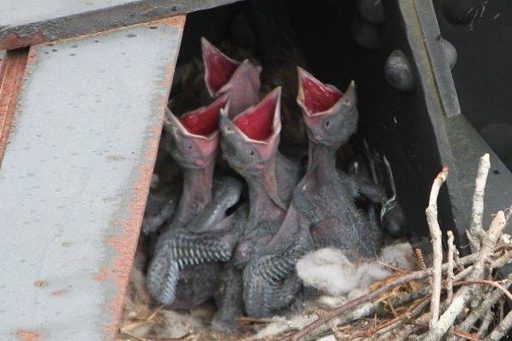
Every raven started as a naked nestling,
every fox was a blind nursing pup,
helpless… then looking, reaching, wrestling
into the wilderness of growing up.

*****

Written for my grandson Raven (born in October last year, and dressed by his parents in a fox outfit for Halloween). The poem was published recently in The Asses of Parnassus – thanks, Brooke Clark!

Photo: “HBT Raven Chicks” by vastateparksstaff is licensed under CC BY 2.0.

Poem, ‘Honesty’

Honesty’s doing nothing you’re ashamed
to talk of; otherwise you’re being gamed
by a smooth angel with a cloven shoe.
Man, know thyself; to thine own self be true;
accept you’re not some other one’s ideal
from their religion or philosophy;
accept your thoughts are yours, impure and real
with lust, greed, envy, anger, vanity–
normal in that we’re powered by an ape’s drive
that needed those traits to survive and thrive.
Whether you act on them’s different again.
Do nothing that, if done, would make you lie–
but don’t be shamed you’ve had the thoughts within.
Don’t stifle, don’t suppress, and don’t deny.
Acknowledge, but don’t act. In that’s no sin.

*****

Published in Snakeskin, January 2018

Photo: “Here is contained ‘Self-Liberation through Seeing with Naked Awareness,’ this being a Direct Introduction to the State of Intrinsic Awareness, From ‘The Profound Teaching of Self-Liberation in the Primordial State of the Peaceful and Wrathful Deities.’” by Wonderlane is marked with CC0 1.0.

Poem: ‘Milking the Stars’

My Milky Way muse
Is spread through the skies.
I’ll tickle and tweak
Those nipples the stars,
Till, teased and engorged,
They fill out and stretch;
I milk them to books
To leather-bound books,
To leather-bound buckets of books.
A two-handed milking,
Steady and rhythmic,
As generations
Before me have milked them.
Then when the pail’s full,
Star needs being met,
Stars twinkle and glow.
The Milky Way muse
Thrives on such use.
I drink and give thanks,
Bound to give thanks,
Leather-bound star-shining thanks.

*****

Published in this month’s Snakeskin (No. 307, June 2023). Thanks, George Simmers!

Photo: “Milky Way” by be creator is licensed under CC BY 2.0.