Gwendolyn Brooks was one of the greatest 20th century American poets: stylistically creative, with haunting imagery and themes, emotionally engaging, socially engaged. She wrote formal verse, free verse and loosely structured ballads – sometimes all in the same sequence, as in The Womanhood.
Appropriately, ‘We Real Cool’ is her best-known poem: simple, poignant, striking at the heart of America’s structural inequality and moral failures, and presented on the page with a bizarre twist that is both unnecessary and essential: unnecessary because the three-word lines rhyme correctly without having ‘We’ at the end… essential because the reader is forced to emphasize the ‘We’, so that the last line seems (like the youths’ lives) unnaturally shortened, prematurely ended.
A simple poem. Maybe not her greatest, but iconic.
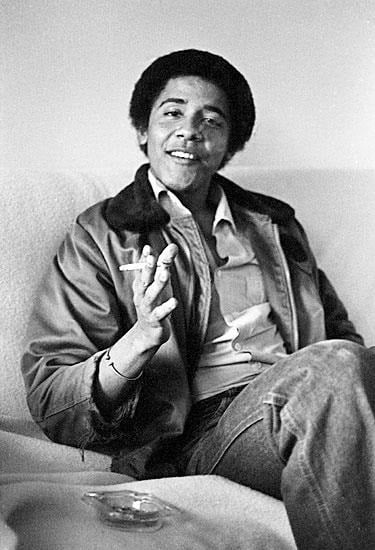
Sitting in his seat, a seat broad and broken In, sprinkled with ashes, Pop switches channels, takes another Shot of Seagrams, neat, and asks What to do with me, a green young man Who fails to consider the Flim and flam of the world, since Things have been easy for me; I stare hard at his face, a stare That deflects off his brow; I’m sure he’s unaware of his Dark, watery eyes, that Glance in different directions, And his slow, unwelcome twitches, Fail to pass. I listen, nod, Listen, open, till I cling to his pale, Beige T-shirt, yelling, Yelling in his ears, that hang With heavy lobes, but he’s still telling His joke, so I ask why He’s so unhappy, to which he replies… But I don’t care anymore, cause He took too damn long, and from Under my seat, I pull out the Mirror I’ve been saving; I’m laughing, Laughing loud, the blood rushing from his face To mine, as he grows small, A spot in my brain, something That may be squeezed out, like a Watermelon seed between Two fingers. Pop takes another shot, neat, Points out the same amber Stain on his shorts that I’ve got on mine, and Makes me smell his smell, coming From me; he switches channels, recites an old poem He wrote before his mother died, Stands, shouts, and asks For a hug, as I shrink, my Arms barely reaching around His thick, oily neck, and his broad back; ‘cause I see my face, framed within Pop’s black-framed glasses And know he’s laughing too.
Featuring it in 2007 (alongside another Obama poem, “Underground”), The New Yorker noted that it “appears to be a loving if slightly jaded portrait of Obama’s maternal grandfather, with whom he spent a large part of his childhood.”
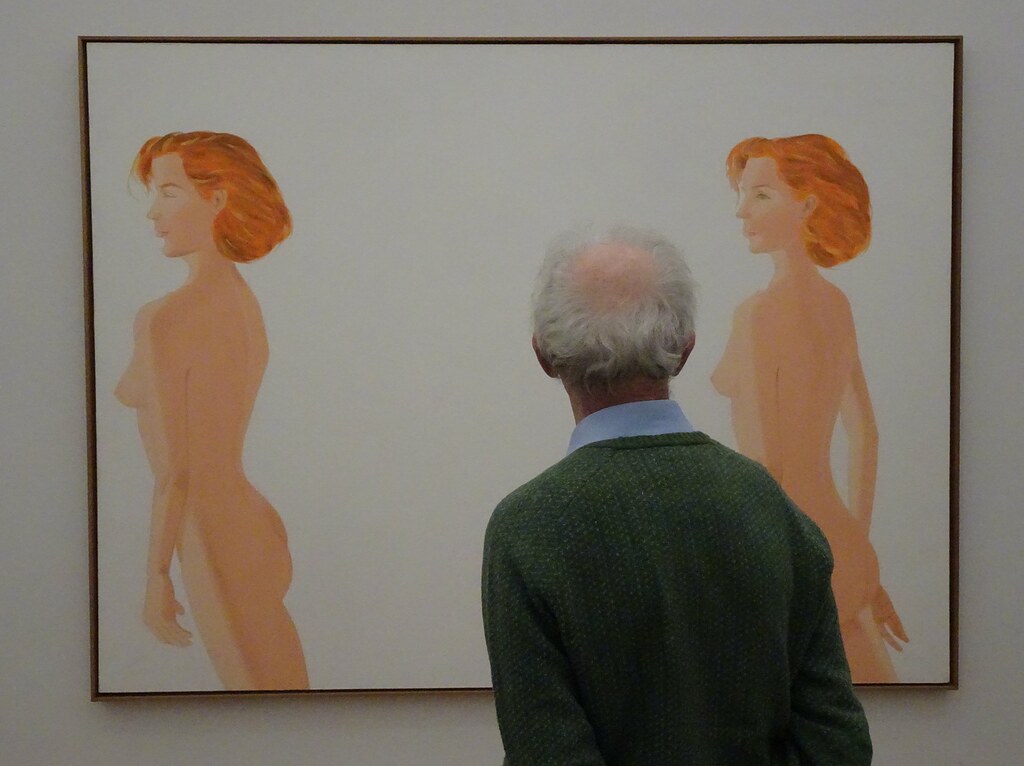
In the spring, an old man’s fancy ruefully reviews his youth; thinks of girls both past and present, wonders can he hide time’s truth.
His always googly gardening eyes all ever which ways scan and glower at the bud-bursting blossoming girls exploding in their flower of power.
What is this green and noisy growth that’s flourishing, fresh and unkempt? Old’s good, so’s young… could one be both? O Fates! from fate make me exempt!
*****
‘In the Spring’ was published in Bewildering Stories, an online weekly of Speculative Fiction, Poetry, Art, etc. Thanks, Don Webb!
Book discarded, like excess baggage shed by someone who has rapidly pushed on into uncharted regions far ahead, he sleeps in an old deck chair on the lawn. Gulls circle, skaters on an ice-blue lake, while he dreams on, oblivious, his face unshaded by a hat which, when awake, he wears with equanimity and grace. What does he dream? Is the unreal more real than those pale gulls that spiral high above? In sleep, has youth returned? No longer frail, does he relive time when impatient love was everything and all his heart desired, before life tricked him, left him old and tired?
*****
Richard Fleming writes: “I suppose Sunny Afternoon reflects my own station in life, that is, drifting steadily towards the end, with the usual collection of regrets that most of us have.”
Richard Fleming is an Irish-born poet (and humorist) currently living in Guernsey, a small island midway between Britain and France. His work has appeared in various magazines, most recently Snakeskin, Bewildering Stories, Lighten Up Online, the Taj Mahal Review and the Potcake Chapbook ‘Lost Love’, and has been broadcast on BBC radio. He has performed at several literary festivals and his latest collection of verse, Stone Witness, features the titular poem commissioned by the BBC for National Poetry Day. He writes in various genres and can be found at www.redhandwriter.blogspot.com or Facebook https://www.facebook.com/richard.fleming.92102564/
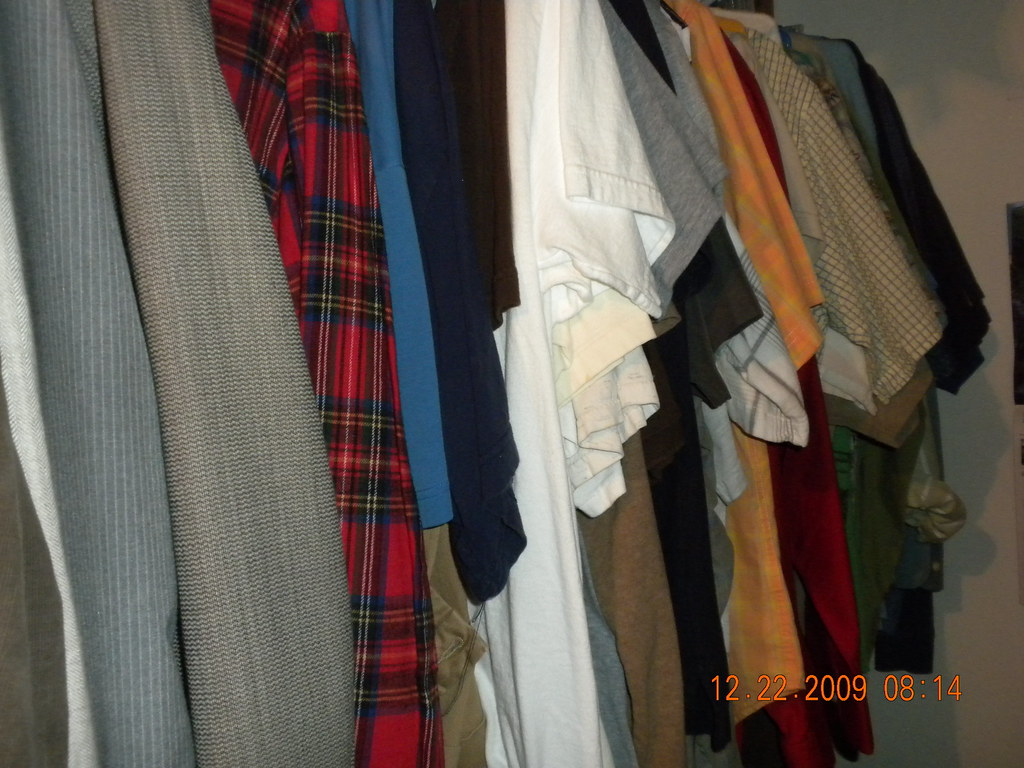
I remember you some mornings in the midst of getting dressed Surprised that I recall exactly when I wore you last
The paisley patterns spilling over sleeves The Nehru collars nobody believes … were popular The turtlenecks no turtle ever wore Those V-neck disco shirts that dance no more … Spectacular!
Are you lurking in the closet among other clothes I own? I gently touch your shoulder—a brief flash, then you’re gone
The concert souvenir shirts we outgrew The obligation gifts we always knew … were wrapped in haste Thick cotton plaids lost lumberjacks would covet That college T tossed out, but how we loved it … still, such a waste
You promised transformation, but what else did you require The full ensemble led us toward transcendence or desire (Attire of another age, accessories all the rage)
Bell-bottom flares that took flight as we walked Embroidered jeans so tight that people talked … of nothing else Those bomber jackets earthbound boomers froze in Those leather wristlets grunge guitar gods posed in … with death’s head belts
You folded in your fabric everyone I used to be Now that you’re gone, I realize I’m left with only me But if I run across you in some thrift shop bargain rack Or rummaging recycling bins, what else would you bring back? Who else will you bring back?
Some nights I see you in my dreams of places far away I’m wearing you as if I haven’t aged a single day Shirts of the distant past, shirts of the distant past
*****
Ned Balbo writes in Rattle #85, Fall 2024 (where you can hear the song performed): “I’ve played guitar since I was 5, keyboards since I was 13, and ukulele since I was 42, but my time as a ‘professional’ musician—someone paid to play—is scattershot and humble. Ice rinks, a Knights of Columbus Hall, a campers’ convention in Yaphank, a crowd of disco-loving retirees at Montauk’s Atlantic Terrace Motel, company picnics, school dances, private parties, and more—these were where I played guitar, sang, and devised versions of the Beatles, Bowie, et al. in two Long Island cover bands. The Crows’ Nest or Tiffany’s Wine-and-Cheese Café hosted noise-filled solo acoustic gigs, with more receptive listeners for original songs and covers of Elvis Costello or Eno at my undergrad college’s coffeehouse. More recently, I’ve written lyrics to Mark Osteen’s preexisting jazz scores (look for the Cold Spring Jazz Quartet on Spotify, Amazon, CDBaby, and elsewhere) and returned to solo songwriting and recording with ‘ned’s demos’ at Bandcamp. As a relic from the age when lyrics were sometimes scrutinized with poetry’s intensity, I listen closely to the sonics of language, whether sung or spoken, and look up to lyricists whose words come alive both aloud and on the page.”
Balbo: Robin, thanks for posting ‘Shirts from the Distant Past’, my little song-poem hybrid. I’ll be happy to answer any questions you have.
Editor: For myself, I see a continuum from womb heartbeat to dance to music to song to formal verse. I would love to have any additional comments on the subject in general, or on the creation of this poem in particular, related to these elements.
Balbo: I love what you’re saying about womb, heartbeat, and dance. A formative text for me is Donald Hall’s essay on poetic form’s psychic origins, ‘Goatfoot, Milktongue, Twinbird‘. You probably know it. Hall proposes three metaphors for poetry’s deepest sources: Goatfoot, the impulse toward dance, rhythm, movement; Milktongue, the pure pleasure of language, the texture of words when spoken; and Twinbird, our desire for form, symmetry, wholeness, which is complicated and energized by the contradictions it contains and reconciles. To me, Hall’s terms just sound like different ways of envisioning exactly what you’re talking about. They apply as much to song as they do to verse. The meter varies by stanza or section: iambic heptameter (seven iambs) in the couplet verses—not so different, after all, from the tetrameter to trimeter shifts we find in many ballads. The “shirts” title refrain, which doesn’t appear in print till the last line, are two trimeter phrases. It was fun to find surprising rhymes to hold the whole song together.
Editor: Regarding ‘Shirts’, quite apart from the charming idea, I like the work that has gone into the metre, rhyme, idiosyncratic structure.
Balbo: Thank you. I wrote and sung ‘Shirts’ as a poetic song lyric—one that could be read and enjoyed but, ideally, would be heard. I view its structure as that of a call-and-response song in traditional format. (In rock, for example, I think of George Harrison’s ‘Taxman’ with John and Paul harmonizing “Taxman, Mr. Wilson, Taxman, Mr. Heath” in answer George’s lead vocal.) In ‘Shirts’, the call-and-response comes from using the title as a refrain: it explains who the “you” is in each verse (when you hear it, anyway—I cut it from the visual text for fear it would seem repetitious without the music). Sometimes the title refrain answers a statement in the verse: “I gently touch your shoulder—a brief flash, then you’re gone” sounds like I might be talking (or singing) about a person, but it turns out to be those long-lost shirts—a playful fake-out.
Then there are the brief call-and-responses of the bridge sections which comment on the previous line or complete an unfinished thought: “Those V-neck disco shirts that dance no more…spectacular!” or “Embroidered jeans so tight that people talked…of nothing else.” They’re in iambic pentameter, with the second and fourth changing to heptameter if we count the two extra beats (set off on their own line) answering them.
The so-called “middle 8” (usually eight bars used to break up the verse-chorus/verse-chorus model) is delayed till just before the end: “You folded in your fabric everyone I used to be, etc.” That’s meant to set up the payoff: it’s not the shirts but our lost selves— along with loved ones, lost ones, everyone—we’re missing or mourning. But writing or singing about shirts—clothing that shapes and defines us—makes the lyric less depressing, leavens it with wit (I hope) so that what’s more poignant comes at the very end where more dramatic music can counterbalance the mood—the contradictions reconciled, as Donald Hall might have put it.
Of course, the very end is quieter – wistful again.
As I mentioned in Rattle (thanks again to Tim Green for giving both words and music a home), I grew up in the era when lyrics were often analyzed as seriously as poetry (and not just by undergraduates in long-ago dorm rooms under black light posters). Whether I’m writing poetry or songs, I listen closely to the different ways words sound—what works when sung doesn’t always work as well when spoken or encountered on the page—so when I do write lyrics, I try to make them both readable and singable.
Poems and song lyrics operate differently, but there’s lots of overlap between them. I wanted ‘Shirts’ to operate on both levels, even if it tilts more toward song lyric than poem.
*****
Ned Balbo’s six books include The Cylburn Touch-Me-Nots (New Criterion Prize), 3 Nights of the Perseids (Richard Wilbur Award), Lives of the Sleepers (Ernest Sandeen Prize), and The Trials of Edgar Poe and Other Poems (Donald Justice Prize and the Poets’ Prize). He’s received grants or fellowships from the National Endowment for the Arts (translation), the Maryland Arts Council, and the Mid Atlantic Arts Foundation. Balbo has taught at Iowa State University’s MFA program in creative writing and environment and, recently, the Frost Farm and West Chester University poetry conferences. His work appears in Contemporary Catholic Poetry (Paraclete Press), with new poems out or forthcoming in Able Muse, The Common, Interim, Notre Dame Review, and elsewhere. He is married to poet and essayist Jane Satterfield.
I miss believing that I’ll never die, Or is it that there won’t be a tomorrow? Both lines work out about the same: deny The day you’ll have to pay back what you borrow. It used to be I never went to bed A second night with any girl I found. No breakfast in those days–a smoke instead, Then out the door before she came around. Last night I passed a toppled garbage bin, Its liner sagging with a rat’s remains. He sank a little when I squinted in And seemed embarrassed by his greedy pains. And so much like a man, the way he sat Still in his death, and so much like a rat.
*****
Matthew Buckley Smith writes: “I wrote most of Dirge” (his first book of verse, winner of the 2011 Able Muse Book Award. – Ed.) “in a summer. I was wading through a bad depression, and having written almost nothing but free verse to that point, I set myself the challenge of writing one sonnet a day for the rest of the summer. ‘Youth’ is a survivor of that experiment, written while walking late at night through the campus of Johns Hopkins on the way to the apartment of the woman who is now my wife.”
Matthew Buckley Smith is the author of Midlife (Measure, 2024) and Dirge for an Imaginary World (Able Muse, 2012). He hosts the poetry podcast SLEERICKETS and serves as Poetry Editor of Literary Matters. https://www.matthewbuckleysmith.com/
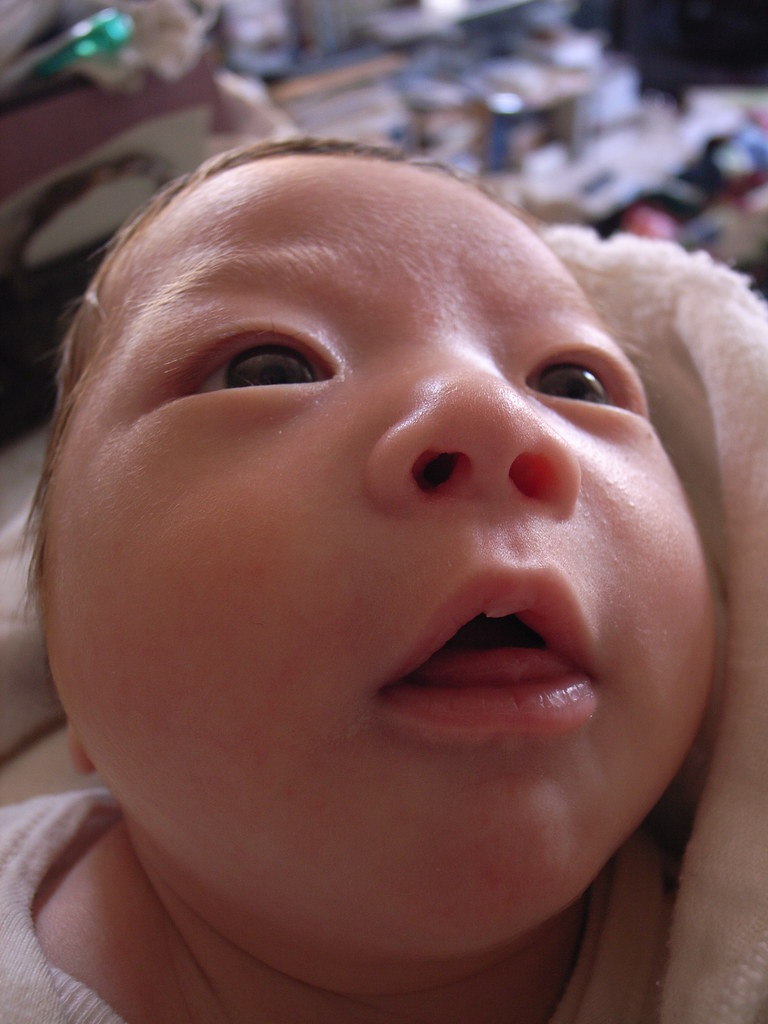
I started out alone, No numbers and no words. The people gave me food and clothes. I loved the sun and birds.
And when I reach the end Numbers and words all done, Have to be fed and dressed again, I’ll love the birds and sun.
*****
This is one of my favourite poems, for several reasons: First, it extols the combination of curiosity, enjoyment and acceptance that I believe is appropriate for this thing called life. Second, it is simple in expression: simple words, simple rhythm, in iambics with simple full and slant rhymes. And third (and perhaps most importantly) it is easy to memorise: it has lodged itself in my brain without any effort or even intent on my part and, as this blog frequently claims, that is the essence of poetry.
‘I Started Out Alone’ was originally published in Bewildering Stories in 2019. More recently it was included in a batch of my poems that Michael R. Burch spotlighted in The Hypertexts for August 2024.
So time went by and they were middle-aged, which seemed a cruel joke that time had played on two young lovers. They were newly caged canary birds – amused, not yet afraid. A golden anniversary came around where jokes were made and laughing stories told. The lovers joined the laugh, although they found the joke – though not themselves – was growing old. She started losing and forgetting things. Where had she left her keys, put down her comb? Her thoughts were like balloons with broken strings. Daily he visited the nursing home to make her smile and keep her in their game. Death came at last. But old age never came.
*****
Gail White writes: “Time is the strangest of the conditions we live in. Scientists, essayists, and poets can ring endless changes on this theme. Time has devastated the lives of the couple in this sonnet, but as Solomon told us long ago, love is as strong as death.”
Gail White is the resident poet and cat lady of Breaux Bridge, Louisiana. Her books ASPERITY STREET and CATECHISM are available on Amazon. She is a contributing editor to Light Poetry Magazine. “Tourist in India” won the Howard Nemerov Sonnet Award for 2013. Her poems have appeared in the Potcake Chapbooks ‘Tourists and Cannibals’, ‘Rogues and Roses’, ‘Families and Other Fiascoes’, ‘Strip Down’ and ‘Lost Love’. ‘The Way It Ended’ was first published in 14 by 14 (which has also ended…) and is collected in her chapbook, ‘Sonnets in a Hostile World‘, also available on Amazon.
Those were the days we had amazing hair. And bodies. And ambitions. Chutzpah, too. “Look on our manes, ye mighty, and despair!”
we cry, smirking disdain like Baudelaire from yearbook-picture ranks and files. We grew it lush, that long-ago amazing hair,
while choruses wailed Gimme down to there hair! Though in our hippie hearts we knew we’d have to tame it someday soon, despair
spared us. In shoulder pads, Dynasty flair, the Farrah Fawcett shag, the Rachel do, we offered up our still-abundant hair
to workdays. To quotidian wear and tear, crimpers and curling irons, styling goo. And then one day the mirror sighed: Despair.
Are these our offspring, whose inventions blare from TikTok posts in floof and curlicue, strange new explosions of amazing hair
half-shaved, half rainbow striped? (Try not to stare, though they return your gawk, peering straight through your brow lines, fashion failures, gray despair …)
Who were we? Do we remember? Do we care, you with your naked pate, I with my two- toned thatch? Is time the low road to despair? Look at us, though: we had amazing hair.
*****
Maryann Corbett writes: “Every week, the magazine Rattle publishes a ‘Poets Respond’ feature, a poem that reacts to one of the previous week’s news items. For several days at the start of February, I’d been seeing posts by Facebook friends of photos of themselves at the age of 21; it was clearly “something happening” even though it didn’t seem to be a news item. I decided I’d try a poem rather than a picture and I’d aim it at Poets Respond. Over and over, I’d see replies to the posts that exclaimed about the hair, its style or its sheer abundance, so a refrain suggested itself. I went for a villanelle (on the model of Bishop’s ‘One Art’) but found I needed extra space to fit in all the allusions I wanted to the pop culture of the past several decades. We can call it a stretch villanelle, a term Susan McLean gave me. I found out after the fact that there had been a news story about the meme, but the poem prevailed at Poets Respond even without one.”
Maryann Corbett earned a doctorate in English from the University of Minnesota in 1981 and expected to be teaching Beowulf and Chaucer and the history of the English language. Instead, she spent almost thirty-five years working for the Office of the Revisor of Statutes of the Minnesota Legislature, helping attorneys to write in plain English and coordinating the creation of finding aids for the law. She returned to writing poetry after thirty years away from the craft in 2005 and is now the author of two chapbooks and six full-length collections, most recently The O in the Air (Franciscan U. Press, 2023). Her work has won the Willis Barnstone Translation Prize and the Richard Wilbur Award, has appeared in many journals on both sides of the Atlantic, and is included in anthologies like Measure for Measure: An Anthology of Poetic Meters and The Best American Poetry.
We walked together side by side, at dusk along the disused line, restless and glad to be outside. I had Woodbines, you brought cheap wine. Fifteen, unthinkingly alive, truants from our suburban drive, we talked excitedly of life how we had cracked it, knew the score. We worked the cork out with your knife then drank sweet wine and wanted more. We smoked our fags, ignored the cold, could not imagine being old.
*****
Richard Fleming writes: “The Railway Line is an old poem, rescued from the archives, that remains dear to me. In it, I’ve attempted to recapture the heady recklessness of my early teenage years when the world seemed full mysteries, and friendships were more intense than those I later formed in adulthood. John didn’t make it past his early twenties so he remains, in my memories of him, forever rebellious and young.”
Richard Fleming is an Irish-born poet currently living in Guernsey, a small island midway between Britain and France. His work has appeared in various magazines, most recently Snakeskin, Bewildering Stories, Lighten Up Online, the Taj Mahal Review and the Potcake Chapbook ‘Lost Love’, and has been broadcast on BBC radio. He has performed at several literary festivals and his latest collection of verse, Stone Witness, features the titular poem commissioned by the BBC for National Poetry Day. He writes in various genres and can be found at www.redhandwriter.blogspot.com or Facebook https://www.facebook.com/richard.fleming.92102564/




 Form in Formless Times