Monthly Archives: April 2025

SF poem: Don Webb, ‘Mars Draws Near’

Do you know where now or in what lands
Are the voices that sang of vibrant Mars?
Of slender spires on iron-red sands
And canals, night-necklaces with stars?
They sang of visions that once seemed clear.
Who sings of the Mars of yesteryear?

Does sadness tinge new Eden’s rainbows
Or the sin-abrading void of space?
Close now, does Mars now close
Its alien, inviting face?
Today we hear triumphant fear.
Who hears the Mars of yesteryear?

Man, covet not the power of stones
Nor jails, nor ruins. Mars draws near.
It once gave flesh to now-dry bones:
Return to the Mars of yesteryear.

*****

Don Webb writes: “I wrote this poem in 2003. That happened to be a special time in astronomy, when Mars was closest to Earth. The ‘yesteryear’ reference was prompted by fond memories of the literature of Ray Bradbury and C.S. Lewis, among others.  The poem’s relevance to today’s world is explained in Bewildering Stories’ series of review articles: ‘Cassandra’s Voices: Warnings to the Modern Age‘  ( https://www.bewilderingstories.com/includes/toc/cassandra_toc.html). All of the works discussed shine important light on 21st-century civilization and continue to be of immediate interest in U.S. and world politics. The nostalgia of Mars invading Earth seems preferable to Trusk & Mump’s earthly imperialism and dreams of an Invasion of Mars.”

Don Webb is a teacher of French language and literature. B.A., Dartmouth College; Ph. D., University of Wisconsin. Major: French; minor: German. Thesis: Jean Jacques Rousseau’s La Nouvelle Héloïse. Most of his career was spent at California State University, Sacramento. Ten years moonlighting as a professional translator of French and Italian. He is currently retired and has taught an on-line course in French for Reading Comprehension for several years and, occasionally, French for Listening Comprehension at the University of Guelph, in Ontario.

For a more complete (and highly amusing) bio with reflections on the various people he has been mistaken for – and the doppelgänger who has been mistaken for him – visit www.bewilderingstories.com/bios/donbio.html

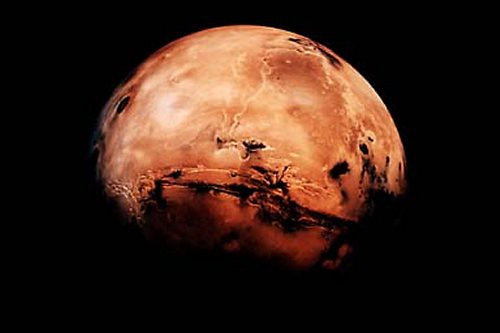
Photo: “Mars the Mysterious (NASA, 1997)” by NASA’s Marshall Space Flight Center is licensed under CC BY-NC-ND 2.0.

Pope Francis: ‘Dear Poets, Help Us Dream’ (excerpts)

Dear poets, I know that you hunger for meaning, and that is why you reflect on how faith questions life. (…) Poetry is open; it throws you into another realm.

In light of this personal experience, today I would like to share some thoughts with you on the importance of your service.

The first thing I want to express is this: you are eyes that see and dream. Not only do you see, but you also dream. A person who has lost the ability to dream lacks poetry, and life without poetry does not work. We humans yearn for a new world that we may never fully see with our own eyes, yet we desire it, seek it, and dream of it. A Latin American writer once said that we have two eyes: one of flesh and the other of glass. With the eye of flesh, we see what is before us; with the eye of glass, we see what we dream. Woe to us if we stop dreaming—woe to us! (…) Indeed, poetry does not speak of reality from abstract principles but rather by listening to reality itself: work, love, death, and all the little and great things that fill life. Yours is — to quote Paul Claudel — an “eye that listens.” (…)

I would also like to say a second thing: you are the voice of human anxieties. Often, these anxieties are buried deep within the heart. You know well that artistic inspiration is not only comforting but also unsettling because it presents both the beautiful realities of life and the tragic ones. Art is the fertile ground where the “polar oppositions” of reality — as Romano Guardini called them — are expressed, always requiring a creative and flexible language capable of conveying powerful messages and visions. For example, consider when Dostoevsky, in The Brothers Karamazov, tells the story of a little boy, the son of a servant, who throws a stone and hits one of his master’s dogs. The master then sets all the dogs on the boy. He runs, trying to escape the fury of the pack, but ultimately, he is torn apart under the satisfied gaze of the general and the desperate eyes of his mother.

This scene has tremendous artistic and political power: it speaks to the reality of yesterday and today, of wars, social conflicts, and our personal selfishness. It is just one poetic passage that challenges us. And I’m not only referring to the social critique in that passage. I speak of the tensions of the soul, the complexity of decisions, the contradictions of existence. There are things in life that, at times, we can’t even understand or find the right words for: this is your fertile ground, your field of action. (…)

That is what I want to ask of you today as well: go beyond the closed and defined borders, be creative, do not domesticate your anxieties or those of humanity. I fear this process of taming because it stifles creativity, it stifles poetry. With the words of poetry, gather the restless desires that inhabit the human heart so they do not grow cold or die out. This work allows the Spirit to act, creating harmony amidst the tensions and contradictions of human life, keeping the fire of good passions alive, and contributing to the growth of beauty in all its forms, beauty that is expressed precisely through the richness of the arts.

This is your work as poets: to give life, to give form, to give words to all that human beings live, feel, dream, and suffer, creating harmony and beauty. It is a work that can also help us better understand God as the great “poet” of humanity. Will you face criticism? That’s okay, bear the weight of criticism while also learning from it. But never stop being original, creative. Never lose the wonder of being alive.

So, eyes that dream, voices of human anxieties; and therefore, you also have a great responsibility. And what is it? It’s the third thing I want to say: you are among those who shape our imagination. Your work has an impact on the spiritual imagination of the people of our time. Today, we need the genius of a new language, powerful stories, and images. (…)

Dear poets, thank you for your service. Continue dreaming, questioning, imagining words and visions that help us understand the mystery of human life and guide our societies toward beauty and universal fraternity.

Help us open our imagination so that it transcends the narrow confines of the self and opens up to the entire reality, with all its facets, thus becoming open to the holy mystery of God. Move forward, without tiring, with creativity and courage!

I bless you.

*****

The above is a substantial excerpt from the letter Pope Francis wrote for the book ‘Verses to God: An Anthology of Religious Poetry‘ (published by Crocetti Editore), curated by Davide Brullo, Fr. Antonio Spadaro, and Nicola Crocetti. The letter is given in full in the Vatican News.

The Economist’s obituary for Pope Francis states he insisted on: “no papal cape or red slippers, just a plain white cassock and his ordinary black shoes. (…) No crest-embellished dinner plates, no new pectoral cross; he kept the iron-plated one he had worn, from 1998, as archbishop of Buenos Aires. No 12-room apartment in the Vatican, but a two-room suite in the guests’ hostel, and meals in the dining room with everyone else. “We’ll see how long it lasts,” said one aide, uncomfortable. It lasted until he died; for in Buenos Aires, after all, he had cooked his own meals and travelled by bus. (…) In Buenos Aires he was called the “Slum Bishop” for insisting that he, and his priests, should go out in the streets and on the margins. (…) He made a point of reaching out, feeding hundreds of homeless with pizza at the Vatican and adopting several families of Syrian refugees.”

So, sympathy for the homeless, and refugees… and poets. There’s a spiritual resonance to that grouping!

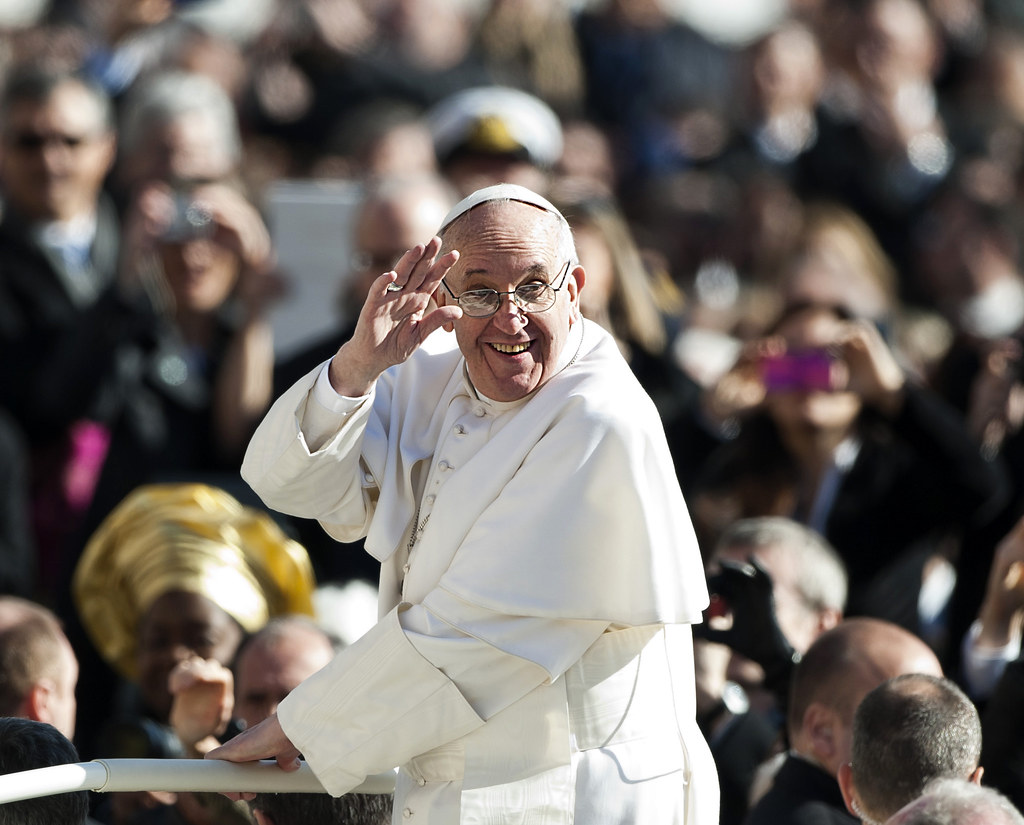
Photo: “The Inauguration Mass For Pope Francis” by Catholic Church (England and Wales) is licensed under CC BY-NC-SA 2.0.
Weekend read: Odd poem: Joseph Stalin, ‘The Outcast’

He knocked on strangers’ doors,
Going from house to house,
With an old oaken panduri
And that simple song of his.

But in his song, his song—
Pure as the sun’s own gleam—
Resounded a truth profound,
Resounded a lofty dream.

Hearts that had turned to stone
Were made to beat once more;
In many, he’d rouse a mind
That slumbered in deepest murk.

But instead of the laurels he’d earned,
The people of his land
Fed the outcast poison,
Placing a cup in his hand.

They told him: “Damned one, you must
Drink it, drain the cup dry…
Your song is foreign to us,
We prefer to live in a lie!”

*****

Ioseb Besarionis dze Jughashvili was a Georgian romantic poet who led a million-dollar heist that killed 40 people and funded the Bolshevik revolution. We know him as Joseph Stalin. His story is fascinating… and he is the model for the anti-hero Cassian Andor (Diego Luna) in the Star Wars spin-off TV series Andor.

The BBC has an excellent background article on him and the Andor connection: https://www.bbc.com/culture/article/20250417-how-a-young-joseph-stalin-inspired-star-wars-series-andor:
Yes, the troubled outlaw beloved by Star Wars fans everywhere is based in part on one of history’s most notorious mass murderers, as the series’ creator, Tony Gilroy, has acknowledged. “If you look at a picture of young Stalin, isn’t he glamorous,” Gilroy said in an interview in Rolling Stone in 2022. “He looks like Diego!”

The above poem and two others, all translated by David Shook, can be found here: https://molossusexperiment.tumblr.com/fall1/stalin. The link also contains Shook’s observations on Stalin’s qualities as a poet, and on his persecution of poets like Osip Mandelstam for the Stalin Epigram:
... the ten thick worms his fingers,
his words like measures of weight,

the huge laughing cockroaches on his top lip,
the glitter of his boot-rims.

Ringed with a scum of chicken-necked bosses
he toys with the tributes of half-men.
..

Not having found a title for Stalin’s poem, in this blog post I titled it ‘The Outcast’, though I considered ‘Panduri’.

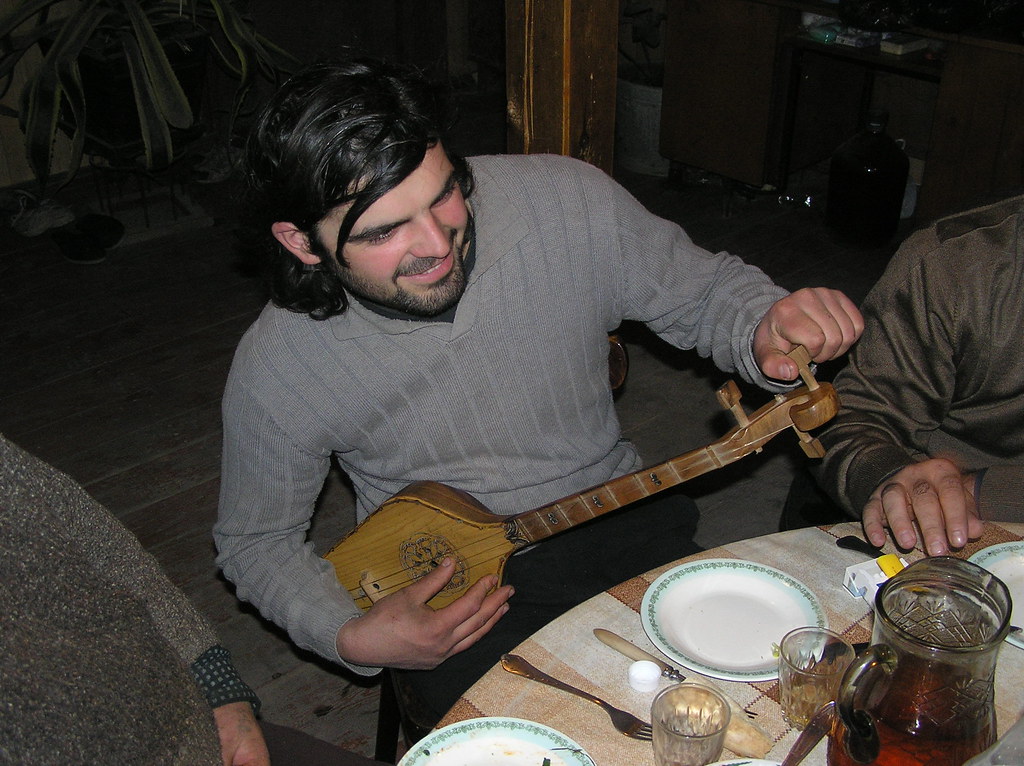
Photo: “David and Panduri” by sarah&patrick is licensed under CC BY-NC-SA 2.0.
Political poem: A.E. Stallings, ‘An American Wakes Up in Athens, Greece After the 2024 Elections’

I wake up in the dark.
In dark I went to sleep.
There is a kind of stark
Accounting of lost sheep.

The day breaks with a dawn
So much like yesterday’s.
I turn the kettle on
And brew a dark malaise.

Things go from bad to worse,
Let’s call it entropy.
The blessing is a curse,
And treachery goes free

Or something. Never mind,
Here in the cradle of
Democracy I find
There’s history enough —

There on the shining rock
The entasis of state,
The subtle curves that lock
The crooked to the straight.

The centuries were slow
Where stood its solid scenes,
It took one night to blow
The roof to smithereens.

It boasts of Marathon,
It boasts of Salamis
Five generations on,
Of hemlock’s bitterness,

Between, the city nations
Of Greeks warred tribe with tribe
Why trouble with invasions?
It’s easier to bribe.

We still read Athens’ versions,
As though the Spartans lost,
As though the prudent Persians
Did not know what they cost.

Pericles died of plague,
And Phidias in prison.
Division’s sown, and vague
Suspicions have arisen.

It took nine years to build
Those columns in the air,
But half its marbles spilled,
Over fifty to repair.

It’s like a foundered ship,
That ruin on the hill.
It makes my heartbeat skip.
I’m afraid it always will.

*****

A.E. Stallings writes: “I [wrote this] poem the day after the elections. It was written on the fly, and has not been revised.”

‘An American Wakes Up in Athens, Greece After the 2024 Elections’ was originally published in Liberties Journal.

A.E. Stallings is the current Oxford Professor of Poetry. This Afterlife: Selected Poems was published in 2022. Her forthcoming book is Frieze Frame: How Poets, Painters, and their Friends Framed the Debate Around Elgin and the Marbles of the Parthenon

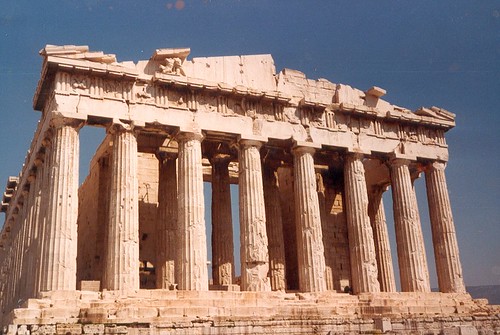
Photo: “Parthenon” by R~P~M is licensed under CC BY-NC-ND 2.0.

Jerome Betts, ‘Lines On A Lady In Bronze’

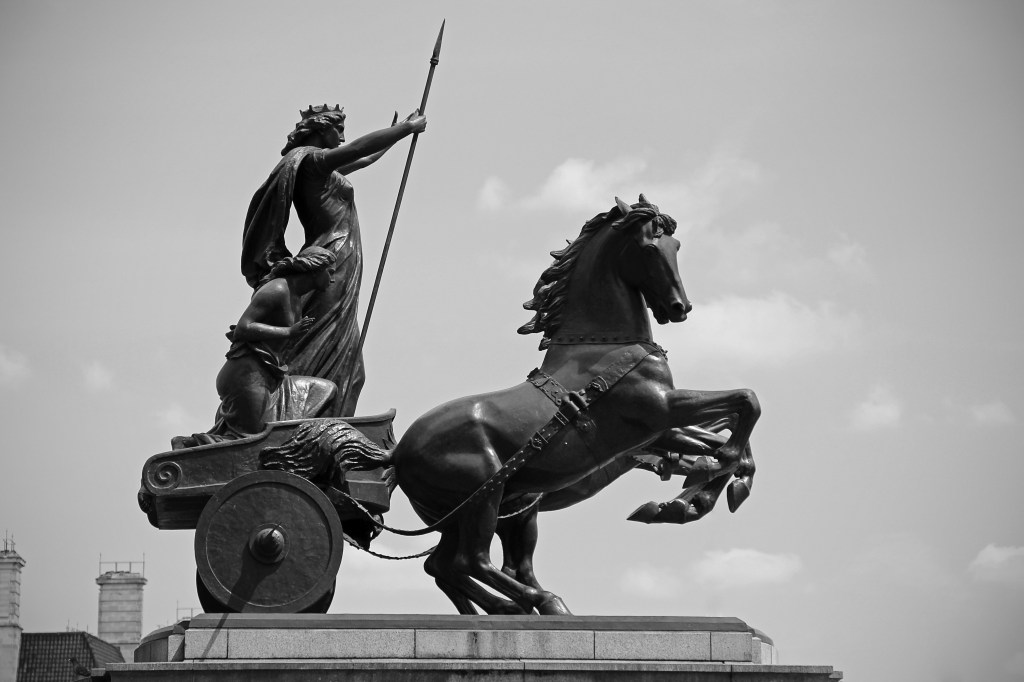
(The statue of Boadicea and her Daughters by Thomas Thornycroft was erected in 1902 near Westminster Bridge London.)

Set up, the civic skyline Shardless,
A proxy late Victoria then,
She charges, rein-free, grim, regardless,
Towards the Gothic giant, Big Ben.

Just what is known about this fiery
And long ago wronged ruler’s life?
Such fields for scholarly enquiry
Are now churned up by toxic strife.

For some, her Roman power rejection
Makes for a memory well kept green,
While others mock as myth-confection
Their proto-Brexit British queen.

Remainers, Leavers, play Have at you!
That chariot and rearing pair
Of  horses make a super statue.
Whoever wins, she’ll still be there.

*****

Jerome Betts writes: “I find statues fascinating with their largely unchanging nature as the people and scenes around them change and they make an obvious target for revolutionaries, rowdies and rhymers. Boadicea, unveiled without ceremony in 1902 because of Edward the 7th’s appendicitis, strikes me as a splendid piece of slightly unhistorical sculpture and useful landmark for visitors. Amusement at her lack of reins and apparent charge towards the Palace of Westminster blended with the Brexit debate when the piece was published in Better Than Starbucks. Whether this dooms the last two stanzas to the archives remains to be seen.”

Jerome Betts lives in Devon, England, where he edits the quarterly Lighten Up Online. Pushcart-nominated twice, his verse has appeared in a wide variety of UK publications and in anthologies such as Love Affairs At The Villa NelleLimerick Nation, The Potcake Chapbooks 1, 2 and 12, and Beth Houston’s three Extreme collections. British, European, and North American web venues include Amsterdam QuarterlyBetter Than StarbucksLightThe Asses of ParnassusThe HypertextsThe New Verse News, and Snakeskin.

Photo: “Boadicea Statuary Group” by Rafesmar is licensed under CC BY-SA 3.0.

Using form: RHL, ‘(on the value of learning languages when) Roughing It In Europe’

One two three four
Is OK, but you need more:

Un deux trois quat’
If you want a welcome mat

En to tre fire
With the krone getting dearer,

Bir iki uç dirt
Selling off your jeans or shirt

Wahid zoozh teleta arba
In a cafe by the harbour

Üks kaks kolm neli
For some food to fill your belly;

Jeden dwa trzy cztery
Language may be shaky, very,

Uno dos tres cuatro
But they’ll love you if you’re up to

Eins zwei drei vier
Trying freely, laughing freer.

*****

This is one of my youthful hitchhiking days poems… It has just been republished in Firewords Campfire, but was originally in Unsplendid (and then in Better Than Starbucks, and Orchards Poetry Journal).

Firewords paired it with a short story, and commented they were “very different adventures, both centred on the art of connection: one through clumsy but charming attempts to bridge language gaps abroad, the other via a game that becomes a quiet battleground for attention, memory, and something close to intimacy. In both, every word counts.” It is always interesting to hear other people’s takes.

Artwork by Jay Carter, an illustrator from Lancashire who enjoys creating bold, colourful images, often finding inspiration in books, films, history, nature and travel. jaycarterillustrator.com

RHL, ‘Raised by Expatriates’

When I was young, best thing I’d seen
was Morgan’s fort gone under green
in jungled Panama.
The only flags in forests there
were what leaf-cutting ants could bear:
for planet’s anima.

I touched skulls resting in plain view
in empty deserts in Peru:
mud walls stood rainlessly.
I sailed on seas beyond all land,
stood with a sloth, yes, hand in hand,
saw men drink sugared sea.

I learned to bodysurf in waves;
I climbed cliffs, and saw bats in caves,
saw beaches of pink sand.
Result? I always loved to roam
but nowhere lets me call it home,
All lands are not my land.

Some places I’m a citizen
but never been a denizen;
with others, the reverse:
the places that I’ve lived in most
ignore me like an unseen ghost,
foreign, vague-skinned, perverse.

The wind has blown me since my birth,
my home is nowhere on the earth,
from place to place I roam.
My parentage determined that
my citizenship’s “Expatriate”…
so… everywhere is home.

*****

Not all my poems are autobiographical, even if first-person. This one is. It was published recently in the Amsterdam Quarterly (thanks, Bryan R. Monte!)

A.E. Stallings, ‘Anosmia’

Without it, what is lemon, what is mint? –
Coffee and chocolate, caffeinated brown.
Ghosted by a sense that takes no hint,
I feel let down.

It’s hardly tragedy that I can’t tell
The milk’s gone off, eggs rotten. It’s no joke
With other things though – no internal bell
That signals smoke

(The toast burned or the house on fire). Sweet
I have, and bitter, I have sour and salt,
But without smell, no flavour is complete.
There’s no … gestalt.

It’s something I’d predict of old, old age,
This weaning from the welter of the world
The better, perhaps, to leave it. I’m no sage,
I’d rather the impearled

Jasmine flowers – fragrance of the stars –
Light up the brain’s grey matter, and the hurt
Of memory, the human musk of ours
In an unwashed shirt.

‘To have a nose for’– isn’t it a skill,
A wry intelligence, a kind of knack?
What thought trails do I lose, untraceable,
What wisdom lack?

I miss the laundry scent they call ‘unscented’.
Like a depression, it makes it hard to write.
What is is less, less there, half uninvented,
And I, not quite.

But there are days I almost have a whiff:
I slice a lemon open for the crisp
Sun-saturated redolence, and sniff
And stand in the eclipse.

*****

A.E. Stallings writes: “My sense of smell is coming back gradually, but it was completely wiped out for about six months! Unnerving.”

‘Anosmia’ was first published in the London Review of Books.

A.E. Stallings is the current Oxford Professor of Poetry. This Afterlife: Selected Poems was published in 2022. Her forthcoming book is Frieze Frame: How Poets, Painters, and their Friends Framed the Debate Around Elgin and the Marbles of the Parthenon

Smell” by Dennis Wong is licensed under CC BY 2.0.

Political poem: Michael R. Burch, ‘Not Elves, Exactly’

after Robert Frost’s “Mending Wall”

Something there is that likes a wall,
that likes it spiked and likes it tall,

that likes its pikes’ sharp rows of teeth
and doesn’t mind its victims’ grief

(wherever they come from, far or wide)
as long as they fall on the other side.

*****

Michael R. Burch writes: “Many people misunderstand the most famous phrase in Robert Frost’s poem ‘Mending Wall.’ In the poem Frost’s neighbor quotes his father’s adage that “Good fences make good neighbors” as they work together to repair an unnecessary wall on the border of their properties. Talk about a misunderstanding: this phrase has even been used by politicians to justify apartheid walls and similar barriers! But Frost did not share his neighbor’s belief and compared him to a stone-armed savage who moved in primitive darkness and could not go beyond his father’s saying. Frost’s own belief about such walls was expressed in the poem: “Before I built a wall I’d ask to know / What I was walling in or walling out / And to whom I was like to give offense.” At the end of the poem, Frost considers teasing his neighbor with the idea that mischievous elves are responsible for the wall falling down, but decides to hold his peace. My title questions who builds such walls: ‘Not Elves, Exactly’ but something much darker and more ominous.”

Michael R. Burch’s poems have been published by hundreds of literary journals, taught in high schools and colleges, translated into 22 languages, incorporated into three plays and four operas, and set to music, from swamp blues to classical, 61 times by 32 composers. He is also the founder and editor-in-chief of The HyperTexts.

The Wall Has Spikes” by Kevan is licensed under CC BY 2.0.

Max Gutmann: Planet of Love

Venus, our neighbor that lies toward the sun,
    Is a sultry and amorous spot;
The astrologers tell us our passion and fun
   Are engendered right there, where it’s hot.

She’s the brightest of stars yet she’s hidden in cloud,
  So her pull on our psyches is double,
An enticing enigma concealed in her shroud
  And, like all such allurements, big trouble.

To the faithfully married, the word from above
  About passionate partnership stings.
There’s a planet we’re told governs all earthly love,
   And it isn’t the one with the rings.

*****

Max Gutmann writes: “I’m afraid I can’t think of anything interesting to say about ‘Planet of Love,’ which exists to support its punchline. The joke popped into my mind, so I wrote the poem.”

‘Planet of Love’ was published in the March 2025 issue of Lighten Up Online.

Max Gutmann has contributed to New StatesmanAble MuseCricket, and other publications. His plays have appeared throughout the U.S. (see maxgutmann.com). His book There Was a Young Girl from Verona sold several copies.

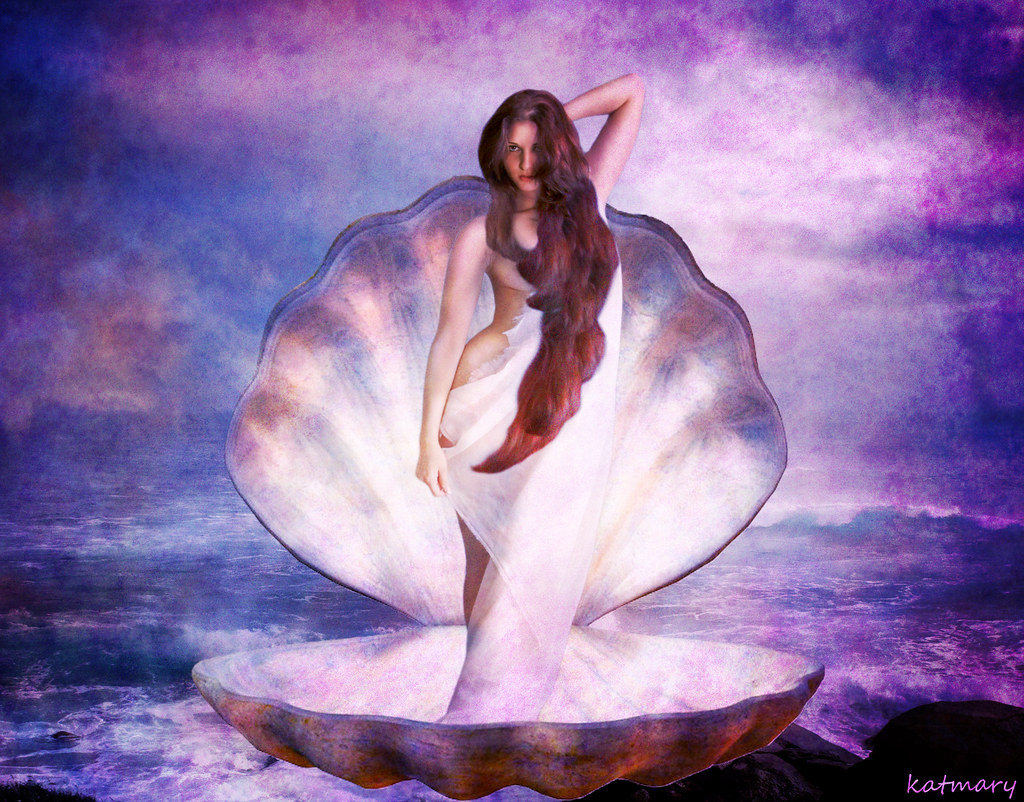
Photo: “Venus” by katmary is licensed under CC BY 2.0.