Author Archives: Robin Helweg-Larsen

Unknown's avatar

About Robin Helweg-Larsen

Director, Andromeda Simulations International, Bahamas: a global education company providing online and in-person workshops in business finance. Series Editor, Sampson Low's 'Potcake Chapbooks'. Formal verse about traveling, family, love, etc...

Poem: “Viking Sails South”

This poem was originally published in Snakeskin in March 2019. I wrote it for a variety Viking, Snakeskin 259reasons. I’ve often thought that when the Norse settlement of Greenland ended around 1450, not all of the settlers would have either died or sailed back toward Scandinavia… why not explore further in North America and look for somewhere pleasant?
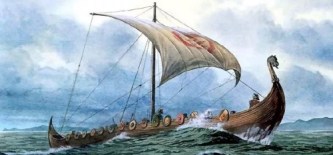
VIKING SAILS SOUTH

Tired of ‘Greenland’ and its icy coast,
a band of us sailed south to Leif’s old place,
discussed old legends (drinking many a toast)
of Norman settlements in Spain and Thrace.
So why not us as well? Let the old stay
in frost-filled farms, friendly, familiar.
Go south! Long nights to lengthening days give way
until it seems like Equinox all year.
Bring our old gods, have garlands round them hung –
wind in soft pines like loneliness of girls –
where just to taste the water makes you young –
pink conch shells on pink sand yield up pink pearls –
we saw Njord, sea god, sleeping from our railings.
Brown women smile. Our children will be skraelings.

My own family history supports this possibility of Vikings being attracted to the Caribbean: my great-great-uncle was a (very reactionary) Governor of the Danish West Indies; my grandfather was a (very liberal) Lutheran minister there; so my father was raised on St. Croix for ten years until it was sold to the US in 1917 – he was sent “home” to Denmark but returned to settle in the Bahamas for the last 22 years of his life; and though I have kept my connection to Denmark, and lived there for five years, the Bahamas is my home. Some Scandinavians are perfectly happy in the islands!

About the use of form in this poem: it is a standard Shakespearean sonnet: 14 lines (sonnet) of iambic pentameter (standard), rhyming abab cdcd efef gg (Shakespearean). However, it doesn’t have a strong volta, or turn in the argument, which is normally considered a requirement for a sonnet – you set the argument up first, and after the volta you demolish and replace it, or give it a good twist. The best that can be said for this sonnet is that the last two lines provide a resolution to the argument. Regardless, the sonnet length and structure allows a full exposition of an idea, while requiring brevity and compression. It can be very satisfying to produce.
Poem: “Religions”

If it’s Sunday, maybe I should post a religious poem… Of course, the trouble is my

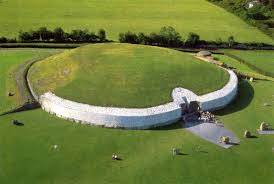
Newgrange

Newgrange – prehistoric Irish site aligned with the winter solstice

ambivalence about religion. I side with US statesman and orator Henry Clay: “All religions united with government are more or less inimical to liberty. All, separated from government, are compatible with liberty.” And if there’s a difference between history and religion, I’ll take history any time.

So this one was originally published in Snakeskin, August 2016…

Religions

Judaism

Genocide in Canaan
Gave God’s land to the Jews;
But genocides in other lands
Are Yahweh’s big taboos.

Buddhism

All life is suffering,
Yes, all our life is pain;
Then I must be a masochist –
I’d love to live again.

Norse religion

The first gods killed a giant,
From his skull to make
The sky, and mountains from his bones –
What lies! No talking snake?!

Christianity

Jesus wasn’t Jewish
And his killers weren’t from Caesar;
At least, so Paul said after
An epileptic seizure.

Islam

There is no God but One,
Perfect in every way;
All creatures do His unknown will –
So there’s no need to pray.

Mormonism

To teenage Joseph Smith
An angel showed gold plates
On which he read ‘Jesus Was Here’ –
It got him lots of dates.

Modern Paganism

Pretentious modern pagans
Confused by mystic spoof
Have got no clue what Stonehenge was
With its old Newgrange roof.

Atheism

I don’t see gods on clouds,
I don’t hear angels sing;
There’s just one question bothers me –
How come there’s anything?

About the use of form here: flippant comments, as in the above poem, are well served by simple quatrains with a bit of bounce to them. Iambics are not in themselves bouncy, but in this pattern of 3 feet, 3 feet, 4 feet, 3 feet they work fine. There’s not a lot of thought in any of the verses, just a set-up and a quick jab. The form works well for its purpose.

New Poem: “Modern Cars”

So, following up on the previous post about Lighten Up Online, I get my own short, light things in there once in a while. Tucked in as one of the Seven Sixes, in the current issue I have “Modern Cars”:

Dealing with the modern automobile
is like a farrier fixing a steering wheel.
Forget your happy thrills
with metal tools, familiar skills.
This is no horse and carriage.
Just take it to a garage.

Yes, my American and Canadian friends, that last word rhymes… at least in the UK… at least to some people. I suspect that’s one of the reasons I wrote the poem (together with expressing the futility of trying to fix modern things oneself). I enjoy hearing all the variations of the word “garage“!

Poetry Resources: Lighten Up Online

Lighten Up Online appears four times a year, in the third month of each quarter. Lighten Up balloonFounded over ten years ago by Martin Parker, it is now edited by Jerome Betts – both of them being accomplished formal poets, of course. They and the magazine are very English (reflected, to the bemusement of Americans, in some of the spelling, rhymes, slang and references) but contributors come from around the globe. Their front page states:

“We believe that light verse is very far from being the poor relation of ‘proper’ poetry. On this site you will find work by light verse specialists as well as by some of the many ‘proper’ poets who enjoy it and write it and agree that light verse deserves a wider audience than it is normally given.” 

The technical standards are very high, and wordplay including puns is always welcome. Here is just such a piece by the editor himself in the current issue:

Stiff Upper Lip

When uncle slipped, near roadside tippings,
As light snow hid the ice beneath,
And fell face down in sharp-edged chippings,
Did foul words further blast the heath?
Ah no, despite the pain’s cruel nippings
He just said ‘Ouch!’, through gritted teeth.

Lighten Up Online is always open to submissions, but of course anyone sending work to it should read a couple of issues first to get a sense of what the magazine is all about. A lot of very short pieces are published, and every issue ends with the results of the previous issue’s competition and the announcement of the new one.

An extremely enjoyable read, and a good way to find new poets you might like.

Poetry Resources: “Best Remembered Poems”

578776Perfectly competent, and with interesting trivia and useful background notes by Martin Gardner, this selection of “Best Remembered Poems” is pedestrian almost by definition: these are the ones that are best remembered by Americans, so there will be very little that is new and exciting–and honestly, a lot of the poems best remembered from high school English lessons on the 19th and early 20th century… are downright boring.

But if you’re looking for a book that contains most poems that most non-poets vaguely remember… that contains both ‘The Charge of the Light Brigade’ and ‘Casey at the Bat’… then this is the one for you!

Poems: “Beach and Mountain”, “Now I Know Death”

This month’s edition of Snakeskin has two of my poems in it – and neither is formal. How Linda Ronstadtembarrassing! All the more so as the issue also contains two very nice sonnets by D.A. Prince and Diane Elayne Dees, and a truly excellent transforming poem by Daniel Galef which can be read as either a loose-rhythm 14-line sonnet or, with identical words broken into shorter lines and different rhymes, as five quatrains in the style of Robert Service.
But having given you the links to those, I return to my own poor contributions:

Beach and Mountain

Oh! I said, Look at that Beach!
What! said the Mountain, So go live down there.
See if I care.
Oh Mountain, I said, don’t be so silly,
I choose to live here,
complex and craggy, rich in forests and streams,
here where you rise up, taller than the clouds,
up where the air itself is rarefied
with views over all the world below.
But still… look at that pretty little beach
with its soft white sand,
its smooth clear water…

Now I Know Death

I know how I will die – sadly, slowly,
Regretting all I leave behind
In the spirit of taking a train to school,
Of seeing the holidays pass without a girl,
Of moving out of a good house, leaving the keys
On the table, carefully locking myself out.
Watching the first leaves fall, warning that
The summer comes to an end.
Going to bed only because I am so tired.
Hearing the wind in the pines, hinting at loss.
Feeling without my children, grown,
Transcontinental, unreachable.
The sadness that comes from depths of happiness
And knowing I’m too frail to hold it.

Sonnets: John Keats’ 64 Sonnets

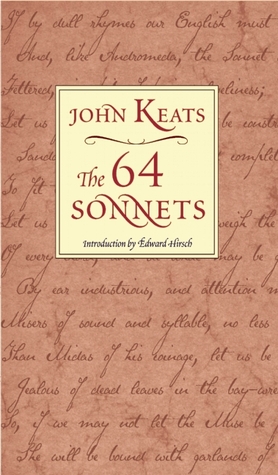
The 64 extant sonnets of John Keats make for a very interesting read for anyone interested in formal verse. Not only do we have the poet developing his skills and The 64 Sonnets by John Keatsexpression in the last five years of his short life (he was 18 when he wrote his first sonnet, and died at 23), but he consciously experimented with the form, outlining in his letters the shortcomings that he saw in the Petrarchan and Shakespearean versions while he looked for a better structure.

This collection has a useful but insufficient introduction by Edward Hirsch and incompetent notes by Gary Hawkins. Hirsch writes of the development of Keats’ themes, but fails to tie the poems into the details of his life. I suggest reading at least the Wikipedia entry on Keats to get a fuller sense of what was going on in his mind, his life, his environment.

The notes by Hawkins appear to have been thrown together without either care or insight. There is a facing page of three or four comments for each poem, and there is a further note on the rhyme scheme in an appendix at the back. The appendix catches four of the lengthened lines (6 or even 7 feet in a line) but misses three of them; and notes one of the shortened lines but misses another. Worse, the analysis of the rhyme scheme for the technically most interesting sonnet (“If by dull rhymes our English must be chain’d”) fails to understand the structure Keats was creating, despite quoting his comments in the letter containing the poem.

Hawkins gives the structure as
abc ad (d) c abc dede (tercets, quatrain)

This is wrong on so many levels… First, the fifth line’s rhyme is b, not d. Second, there is no quatrain at all. Third, Keats has shown how to analyze the sonnet – which is a single sentence – by breaking it into tercets with the use of semicolons to clarify the structure of his thought. Its structure is
abc; abd; cab; cde; de.

That this doesn’t fit into Hawkins’ categories of Petrarchan and Shakespearean sonnets is precisely the point Keats makes in his letter (“I have been endeavouring to discover a better sonnet stanza than we have”) as well as in the sonnet itself (“Let us find out, if we must be constrain’d, / Sandals more interwoven and complete / To fit the naked foot of Poesy;”)

Hawkins also makes errors of fact and interpretation in the notes facing the sonnets themselves. The very first sonnet, written in 1814, references “the triple kingdom” which Hawkins explains as “Great Britain, composed of England, Scotland and Wales.” Wrong. With the Act of Union of 1801 the three kingdoms of England, Scotland and Ireland were united, as represented by the simultaneous creation of the Union Jack with its combination of the crosses of the three flags. Wales was not a kingdom but a principality, and its flag never figured in the larger national flags.

In the sonnet “How many bards gild the lapses of time!”, Keats writes “A few of them have ever been the food / Of my delighted fancy.” Hawkins annotates this as “namely, the epic poets Milton and Spenser.” Oh really? How about Shakespeare, whom Keats addresses directly as “Chief Poet!” in another sonnet. And this is quite apart from sonnets addressed to Byron, Chatterton, Hunt, and Burns.

I have to smile at Hawkins’ interpretation of “artless daughters”:

Happy is England, sweet her artless daughters;
Enough their simple loveliness for me,
Enough their whitest arms in silence clinging:
Yet do I often warmly burn to see
Beauties of deeper glance, and hear their singing,
And float with them about the summer waters.

Hawkins interprets the “artless daughters” as “Scotland and Wales”. Oh come on! Keats could fall in love at a girl’s glance, at a stranger pulling off a glove. I don’t think he meant Scotland and Wales – he meant girls, classic “English rose” girls, and contrasted them with what he might find in the Mediterranean. Where he went, and died.

Few of the sonnets are near as memorable as “On first looking into Chapman’s Homer” or “When I have fears that I may cease to be”, but they are all readable and rereadable, and to have them as this collection is a treat.

Poetry of Gerard Manley Hopkins

Hopkins being difficult to read, this edition with very insightful introduction and notes by 20th century English poet James Reeves is about as good as it gets.

That said, most of Hopkins’ poetry is uninteresting in content except to a religious person, or to a person interested in poetic technique and the elasticity of the English language. His ‘sprung rhythm’ work and his use of alliteration and assonance draw on Anglo-Saxon rather than Norman French roots, though he frequently uses the sonnet and other rigid structures. His phrasing of his thoughts, however, is idiosyncratic and often dense to the point of unreadability.

His best-known poems date mostly to 1877, when he suddenly felt free to express an ecstatic joy in nature – God’s Grandeur, Pied Beauty, and The Windhover. Spring and Fall (“Margaret, are you grieving / Over Goldengrove unleaving?”) dates from 1880, As Kingfishers Catch Fire a year or two later. Living an isolated and unappreciated and religiously constrained life, his health and emotional balance became ever weaker and his poetry ever bleaker. His last two completed poems, Thou art indeed just, Lord, and To R. B. (Robert Bridges), were written in despair shortly before his death in 1889 at age 44.

His output was not extensive, but half a dozen of his poems posthumously charged and changed English verse forever.

The End of Publishing

Reblogged from George Simmers a decade ago… and still true, back and forth, as it was then. Enjoy!

https://youtu.be/Weq_sHxghcg


George Simmers's avatarSnakeskin's Blog

Here, thanks  to Dorling Kindersley, via Pages to Pixels and Bruce Bentzman, is a neat version of publishing’s future.

View original post

New Poem: “My Eliza”

The latest issue of The Lyric is out – although I won’t get my copy for weeks or months yet, depending on the Bahamas Post Office’s mood and inclination – and apparently “My Eliza” has been awarded the Leslie Mellichamp Prize (with $100, no less!). Judge Michael Ferris wrote: “A smart and charming love poem with island images (I learned some new words) that finishes on the striking picture of two sea otters drifting hand in hand.” Of course I’m delighted! So here it is:

My Eliza

As through Canada I wandered,
Winters cold and summers cool,
Companionship precipitated
Out a girl wild, beautiful.

Come, she said, share games and reading,
Come and play and let’s share beds;
Let’s move south for warmth and business,
Raise our children, use our heads.

Eliza with the hair like lightning,
Hair like ragged moonlit clouds,
Like a cloud of wild mosquitoes,
Junkanoo’s drunk noisy crowds.

Sexy, vital, dogged, honest,
Game designer, engineer,
Eliza: genius aphantasic,
A no-see-um who sees clear.

Now like two strays by the roadside,
Like two potcakes on the beach,
She and I will scrap and forage,
Take the treasures in our reach,

Clean up beaches, plant some flowers,
Read all books and plan things grand,
Roam through cities and through seascapes,
Drift like otters hand in hand.

Sea_otters_holding_hands

Sea Otters holding hands