Category Archives: Poems

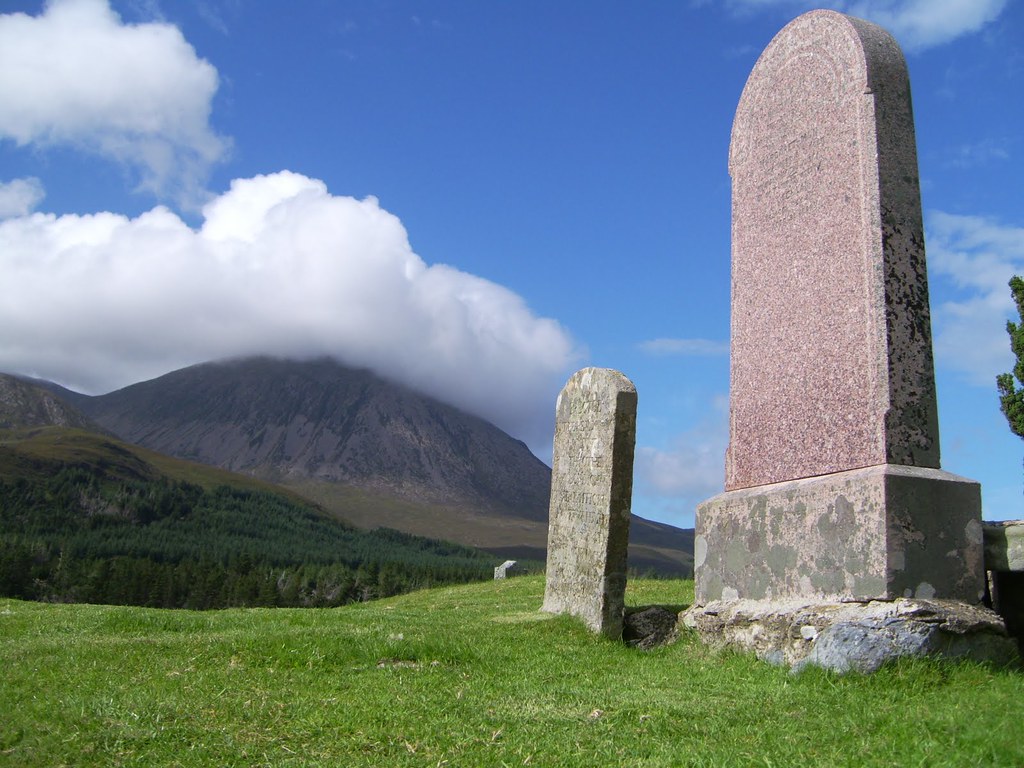
Marcus Bales, ‘Labor Day 2023 – RIP Jimmy Buffett’

He died on Labor Day, the end of summer,
And left us going back to work or school.
The days are shorter, now, the parties glummer,
Less heat and light, less beat and life, less cool.
We fall back on our favorite expressions
Of what it means to be young, tan, and free,
And weigh the anchors of adult discretions
Imagining we sail a sapphire sea.
The songs he sang, those figurative vacations,
Have turned our water into stronger stuff.
We toast each other, changing our frustrations
With dailiness to fantasizing fluff,
And drink the happy liquor we distil
From metaphoric Margaritaville.

*****

Marcus Bales writes: “My favorite Jimmy Buffett songs are ‘A Pirate Looks At Forty‘ and ‘Tin Cup Chalice‘, but I think his best song is ‘Margaritaville.’ I’m not as fond of ‘He Went To Paris‘ or ‘Death of an Unpopular Poet‘ as other celebrants of his work, and ‘Why Don’t We Get Drunk and Screw‘ is certainly the best of the more raucous end of his oeuvre.

Like many other singer-songwriters Buffett seemed to me to work without an editor, possibly because the music business is such that even when you find a peer-group that you trust to say this or that just ain’t right, it’s hard to get the group together often enough, and for long enough, for the trust to re-blossom so that real reflection and re-working of lyrics can happen.

Those circumstances lead a lot of singer-songwriters, I think, to something that is not exactly laziness, and not quite smugness, but rather perhaps more like a sense that they’re the only ones whose taste they trust to judge their own work. Then they slide into a state where they are not themselves as critical of their own work as they once were. They get a good idea and a good line or two in the chorus, and the rest of it gets sort of clamped and glued together without a final planing, sanding, and paint job. The music is well-arranged and well-performed because you can’t fool musicians about music, but the lyrics tend to seem a little hasty, a little down-at-heels, a little scratch-and-dent. It’s too bad because their early work is almost always lyrically inventive and musically simple, while their later work is musically slick and lyrically spotty.

When I first heard A1A in 1978 I was entranced. No one else that I knew of was trying to sketch people and places from the point of view of a sort of scruffily aimless charmer. Oh, there was Tom Waits, but that was more noir and Bukowski than charming. Buffett’s work was entrancing, a refreshing way to write songs and perform them. A lot gets forgiven in the enchantment of the charm, but eventually the clanker lines and the narratives that don’t quite hold together accumulated, and I started to notice the tarnish more than the shine.

So the later work did not grip me as the early work had, and for most of the last 40 years, as the work drifted into crowd-pleasing medium-tempo rockers with a cheery tale told by a richer, more self-congratulatory narrator offering a smoother sail in a bigger boat crewed by professionals, I became less and less interested in what I had come to view as a pervasive sloppiness in the contemporary singer-songwriter tradition. It seemed to affect them all as they worked longer in the business, except perhaps for Paul Simon. But Buffett, Diamond, Prine, Browne, just to name a few, seemed all to become more facile than artful And Buffett in particular seemed to have decided to pursue sing-along music for the car instead of headphone music for the chair, and it started him on the path to wealth. And good for him.

But what I celebrate overall, and I hope in this poem, is the work that tried to be more than a pop song, that was striving, even if slyly and beneath the listener’s first perceptions, to be art. That’s what entranced me at the beginning, and that’s what I want to remember most fondly.”

Editor’s note: Jimmy Buffett died on the night of September 1st, and the news came out over the Labor Day weekend.

Not much is known about Marcus Bales except that he lives and works in Cleveland, Ohio, and that his work has not been published in Poetry or The New Yorker. However his ‘51 Poems‘ is available from Amazon. He has been published in several of the Potcake Chapbooks (‘Form in Formless Times’).

Short poem, ‘Vetch in the Spring’

Love comes back like vetch in the Spring:
You knew it was there, but it’s still a surprise –
The flower is lovely, but wildly unwise.
Love comes back like vetch in the Spring,
You keep pulling it out but you’re never free;
You think it’s gone, but it won’t ever be.
It just comes back like vetch in the Spring.
Love’s just a thing.

*****

With a bit more attention, this poem might have made a satisfactory rondelet (like the previous post by Susan McLean)… but it’s in the form that it occurred to me and, like vetch, it’s just there in its undisciplined fashion. Published this month in Allegro Poetry Magazine, edited by Sally Long.

Photo: “vetch flower and tendril, with ant” by Martin LaBar is licensed under CC BY-NC 2.0.

Using form: Susan McLean, ‘What Goes: A Rondelet’

You were the one
who always told me what to do.
You were the one
who said I ought to buy a gun.
So when you said that we were through,
one of us had to go. I knew
you were the one.

*****

Susan McLean writes: “I have to credit Allison Joseph for introducing me to the rondelet, a French repeating-form poem that has not been in fashion for a very long time. She was teaching a workshop on repeating forms at the West Chester University Poetry Conference, and I was one of the students. The rondelet is a short form with such short lines and so many repetitions of the first line that it doesn’t give the writer much wiggle room for an interesting twist in the meaning of the repeated line. I settled on “you were the one” as my repeated line, because it is associated with the standard swoony romantic line, but it could easily change its meaning depending on the context. Once I chose “gun” as a possible rhyme for “one,” that word suggested to me a scenario in which the controlling partner in a relationship comes to regret influencing his partner to arm herself. The poem’s title is a pun. At first, it looks as though naming the form in the title is just an effort to identify an unfamiliar form, but if you say it aloud, it evokes the common phrase “what goes around comes around,” suggesting that the man’s comeuppance is partly his own fault. In French, “rondelet” means “a little circle.” This poem first appeared in New Trad Journal and was later published in my second poetry book, The Whetstone Misses the Knife.

Susan McLean has two books of poetry, The Best Disguise and The Whetstone Misses the Knife, and one book of translations of Martial, Selected Epigrams. Her poems have appeared in Light, Lighten Up Online, Measure, Able Muse, and elsewhere. She lives in Iowa City, Iowa.
https://www.pw.org/content/susan_mclean

Photo: “#Siena #streetart #guns #woman” by Romana Correale is licensed under CC BY-ND 2.0.

Tom Vaughan, ‘Swot’

It’s time to hunker down and swot
with coffee as my only friend

and each dawn closer to the end
which in the distance I can spot:

the happiness which lies ahead
when I’ll have passed with flying colours

and on a day unlike all others
will saunter through the streets instead.

I won’t be bored, I tell myself:
the world will sparkle, and the hours

will sprinkle down in golden showers.
I won’t need anything – my wealth

will be the knowledge I’ll forget
and which I haven’t learnt as yet.

*****

Tom Vaughan writes: “Swot was inspired by coming across this sonnet form in a collection of poems – This Afterlife – by AE Stallings. It was – at first – simple imitation of her layout. But then I came to like – and to feel – the tension between the couplet form and the cross-couplet rhyming, as if the poem wasn’t sure it was a sonnet. I like things which pull against one another, and most of all I like doubt.
It was subsequently heartening to learn, in June, that she had been elected as the new Oxford Professor of Poetry, given her combination of massive formal skills and deep classical culture, plus her sharp contemporary voice and relevance. So there’s still hope . . . “

Editor’s note: Some non-Brits may only connect the word “swot” with SWOT Analysis (Strengths, Weaknesses, Opportunities, Threats), but Vaughan is using it as the perjorative verb to study hard for an exam or, disapprovingly as a noun, a person who studies hard and avoids other activities. Swot was published in this month’s Snakeskin.

Tom Vaughan is not the real name of a poet whose previous publications include a novel and two poetry pamphlets (A Sampler, 2010, and Envoy, 2013, both published by HappenStance). His poems have been published in a range of poetry magazines, including several of the Potcake Chapbooks:
Careers and Other Catastrophes
Familes and Other Fiascoes
Strip Down
Houses and Homes Forever
Travels and Travails.
He currently lives in Brittany.
https://tomvaughan.website

Photo: “The Studious One” by Szoki Adams is licensed under CC BY-NC-ND 2.0.
Sonnet: ‘Parking Lot’

Although not of their class, I went to church
with Bryce and Nicky in the congregation.
In a shop’s parking lot and in the lurch
I asked Bryce for a job, loan, or donation.
Then Nicky’s car came up and Bryce got in,
the bastards swerved to hit me, ran me down;
when I got up, they ran me down again,
hit the wall with their car, left with a frown.
They don’t apologise, don’t feel the need –
“You caused it all ill-manneredly,” they say.
“Our car was damaged too.” (But did they bleed?)
I bothered them; they wanted me away.
The congregation says “Forgive, forget.”
Decades have passed. Forget? Forgive? Not yet.

*****

This Shakespearean sonnet (iambic pentameter, rhyming ABAB CDCD EFEF GG) has just been published in this month’s Snakeskin. Editor George Simmers expressed concern that it might be a true story… let me reassure everyone, I neither attend church nor get hit by cars. The poem is at most a parable, a parabolic approach to events.

Photo: from Snakeskin.

George Simmers, ‘Earth’

Old Becky’s in her garden, delving among roots,
Cutting away dead wood, caressing shoots.
All this June morning, she has given her garden love
Tough as the fabric of her gardening glove.
She’s a no-nonsense woman; her words are earthy words.
She calls a spade a spade; she calls turds turds.

How old is she? As well ask how old’s that
Ridiculous and ragged old sun hat.
As well ask why the sun is blazing gold;
As well ask why she loves the limping old
Fat spaniel whose idea of summer fun
Is stretching indolent in the summer sun
And watching as she plods around the plot.

Dogs, children, husbands: these are what
Her life has been. Husbands both buried now.
Children all visit when their lives allow,
And relish her gruff love and plenteous food.
The dog’s grown old with her, and now his mood
Is slow contentment. She was at his birth
And soon she’ll bury him beneath this earth.

For in this garden it is understood
That death is natural, and the earth is good.

*****

George Simmers writes: “This is the first of four character sketches, each based on one of the ancient elements – Earth, Air, Fire and Water. The complete sequence can be found in Snakeskin 309 (August 2023).”

George Simmers used to be a teacher; now he spends much of his time researching literature written during and after the First World War. He has edited Snakeskin since 1995. It is probably the oldest-established poetry zine on the Internet. His work appears in several Potcake Chapbooks, and his recent diverse collection is ‘Old and Bookish’.

Dog moving as the shade goes” by Ed.ward is licensed under CC BY-SA 2.0.

Sonnet: ‘Wanderer, or Odin/Merlin in the 21st Century’

It isn’t money, power, or (really) sex;
it’s wisdom, knowledge, understanding, truth,
the motivation from my earliest youth.
So now I watch as all our dreams turn wrecks,
as statesmen bluster, muscles bulge and flex,
economists forecast but can’t say sooth,
and life extension folks are thought uncouth–
they hoard possessions, but can’t save their necks.
I wandered, ragged, with a missing eye,
patched so none knew my implant’s extra sight,
seeking her who’d save from oblivion
the things I’ve found; for I see I must die,
and I’m now summoning the acolyte
who’ll carry knowledge on. Come, Vivien.

*****

The child wandering, the youth hitchhiking, the middle-aged tramp, the old hobo… in my view, they all have the spirit of Odin, Merlin, Hermes, Papa Legba, searching for knowledge, intermediary between the human and the divine/posthuman.

This sonnet was recently published in The Road Not Taken – a Journal of Formal Poetry. Thanks, Dr. Kathryn Jacobs!

Illustration: DALL-E

Susan McLean, ‘Dead Giveaway’

Who’ll take my dead? I’ve carried them so long
my mind is swaybacked from their aching weight.
I can’t just cast them off. It would be wrong
to leave them in some shed, like unclaimed freight.
How could I walk away as Cathy’s smile
collapsed, as Brian gently said “Take care,”
and Grammy begged “Please take me home now” while
I shut them in the dark and left them there?

I’ve jettisoned so much I took to heart—
the afterlife, belief in justice, prayer.
I’ll have to lay my dead down too, I know.
After a party, when my friends depart,
I wash up, stow away what’s left, yet they’re
still here. The dead are always last to go.

*****

Susan McLean writes: “I love the way a cliché can take on new life if the words are interpreted in a nontraditional way. The title of this poem seemed painfully poignant to me when I imagined it applying to the dead we all carry around with us. It would be nice to be able to walk away from that sadness, but of course who among us could bring ourselves to do it? Though I try to keep the voice of the poem sounding natural, I pay attention to the play of sounds in the words, as in the echoes of consonant and vowel sounds in the first two lines: “take,” “swaybacked,” “aching,” and “weight.” In the sestet of the sonnet, the imagined action of the speaker’s leaving her dead behind in the octave is reversed when she is herself left behind by her departing friends, with only her dead to keep her company.
This poem first appeared in the online journal 14 by 14, and later was published in my
second poetry book, The Whetstone Misses the Knife.”

Susan McLean has two books of poetry, The Best Disguise and The Whetstone Misses the Knife, and one book of translations of Martial, Selected Epigrams. Her poems have appeared in Light, Lighten Up Online, Measure, Able Muse, and elsewhere. She lives in Iowa City, Iowa.
https://www.pw.org/content/susan_mclean

Photo: “Ghosts of the old house” by Tree Leaf Clover is licensed under CC BY 2.0.

Short poem: ‘On a Magazine Editor’

He puts on his apron every day
and dusts, arranges, bests;
but the more finicky his entryway,
the fewer, it seems, the guests.

*****

This little poem was sparked by the difficulties I have in trying to submit to some magazines and in trying to contribute to some discussions. Eventually I give up. And then make snarky comments.

It was recently published in The Asses of Parnassus – thanks, Brooke Clark (who makes the contribution process very simple!)

Illustration: “Man holding an envelope with a feather duster. [front]” by Boston Public Library is licensed under CC BY 2.0.

Susan McLean, ‘The Mirror’s Desolation’

Once you adored me. I would bask
in looks you saved for me alone,
giving no hint—if any ask—
of secrets only I have known.
But now you find me hard to face.
I care for you too much to lie,
copying lines you would erase.
You hurry past, head down, and I,
sensing your pained indignity,
return your look of mute distress.
Though you no longer cherish me,
I do not love you any less.

*****

Susan McLean writes: “I took the idea of a talking mirror from Sylvia Plath’s poem ‘Mirror,’ but whereas she presents the mirror as being totally dispassionate, my mirror reflects the emotions as well as the faces of those who look into it. Sometimes, if you see someone beautiful, you may think “the mirror loves her (or him).” But it occurred to me that mirrors love everyone. They just as gladly reflect the old and ugly as the young and beautiful. In this poem, I imagine the mirror’s sorrow that its love is not returned. In French, “I’m sorry” is “je suis désolé” (“I’m desolated”), which always seemed charmingly over-the-top to me. It occurred to me that the phrase “the mirror’s desolation” could refer both to the sorrow the mirror feels and to the devastation it causes. This poem first appeared in Valparaiso Poetry Review, and then in my second poetry book, The Whetstone Misses the Knife.

Susan McLean has two books of poetry, The Best Disguise and The Whetstone Misses the Knife, and one book of translations of Martial, Selected Epigrams. Her poems have appeared in Light, Lighten Up Online, Measure, Able Muse, and elsewhere. She lives in Iowa City, Iowa.
https://www.pw.org/content/susan_mclean

Illustration: DALL-E