Category Archives: Poetry

Using form: Villanelle: Discoveria, ‘October 7’

Your actions have unleashed a living hell.
Each day Israelis, Palestinians die;
Netanyahu, Hamas: go fuck yourselves.

October 7: gunfire and the smell
of death in the kibbutzim testify:
your actions have unleashed a living hell.

The siege of Gaza, ground invasion, tell
the UN of the “risk of genocide”.
Netanyahu, Hamas: go fuck yourselves.

And when the hospitals are bombed as well,
and there’s no water, food, or power supply,
your actions have unleashed a living hell.

Across the world the rage and hatred swell
and everyone feels forced to pick a side.
Netanyahu, Hamas: go fuck yourselves.

This one cannot be silent, for the bells,
they toll for everybody; none shall hide.
Your actions have unleashed a living hell;
Netanyahu, Hamas: go fuck yourselves.

*****

Discoveria writes: “I wrote this piece as a response to what was, at the time, a perception that people were being demanded to pick a side in the conflict between Hamas and the Israeli government, leaving no room for legitimate criticism of both. I wanted to express my anger and frustration at the situation, in which both sides have chosen the path of death and cyclical violence. The repeated refrains in the villanelle form emphasise these emotions. The piece was written overnight and posted in the early hours of Remembrance Day, 11/11/2023, after a little doomscrolling. I cannot pretend that there is much subtlety to the poem; it is what it is.”

Discoveria publishes much of their work at AllPoetry, saying “Due to the politically sensitive topic of the poem I would prefer to be credited under my username.”

Photo: “17 year old boy killed by Israeli army during demonstration in solidarity with Gaza” by ISM Palestine is licensed under CC BY-SA 2.0.
Duncan Lawrence, ‘The Poet is the Luckiest of Artists’

There is no struggling with a wayward cello on the train 
Or carting a large canvas through dank cornfields in the rain.

No need to worry chapter sixteen has somehow been deleted 
Or that the woodwind section remains a long way from completed.

No welding burns to speak of, hammered thumbs or calloused palms,
No temperamental band mates whose bad habits raise alarms.

No fearing, that the next plié will surely split these tights 
Or some acerbic, carping critic has got you in their sights.

Just, fingers crossed the last few lines like miracles unfold 
Before the walk is over or the bath become too cold.

Yes, I concede the poet’s lucky, yet still I do despair 
For all the artful artistry the money isn’t there.

*****

Duncan Lawrence writes: “I do not remember any specific incident as a catalysis for this poem. I did see an interview with John Cooper Clarke on the BBC, he said something to the effect that one might splash out on Tap Dance lessons only to discover that you were not that good but a pencil and a bit of paper are always available. That was either the source of the piece or resonated because I had just written it.
As to the form, I understand that it might be “Iambic heptameter with some anapestic
substitutions” but I don’t really know what that means.
I cannot sit down with a blank piece of paper and decide to write about something. The
poem just forms in my head over a few days. I then write it down and clean it up a bit. After I put it aside and continue to mull it over on a walk or in the bath before looking it
over again and, with luck, if it sounds all right, finishing it off.”

Duncan Lawrence is a retired English Teacher. Originally from the United Kingdom, he is a long-term resident in rural Japan. Here he spends an inordinate amount of time walking dogs for the local Guide Dog Association.
He has had three poems (including this one) published by Jerome Betts on his magazine Lighten Up Online.

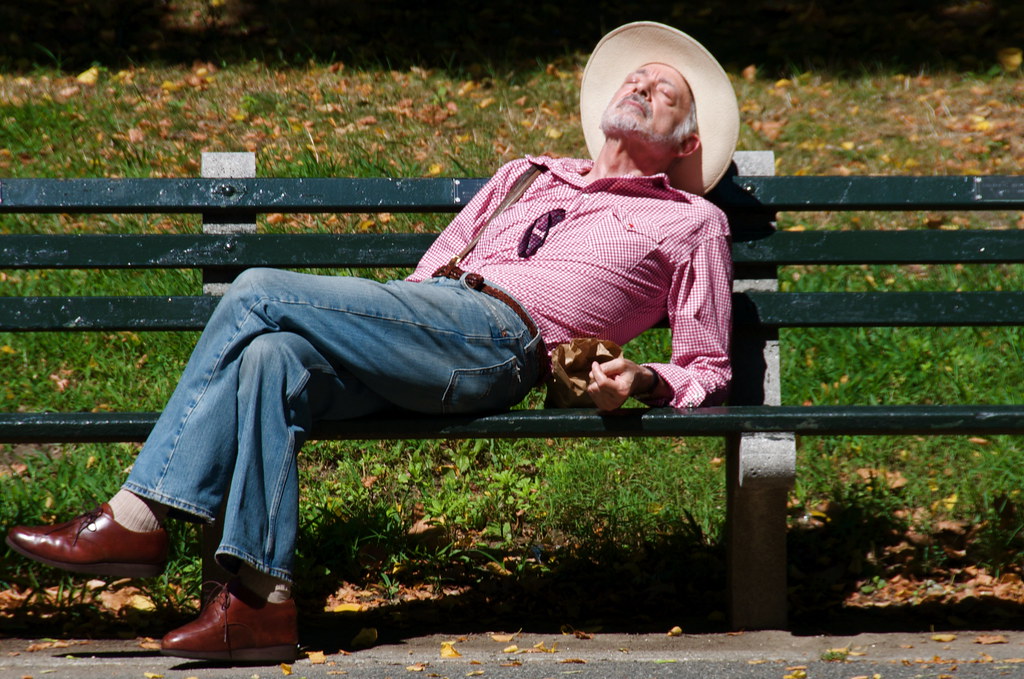
Photo: “Who says I can’t relax?” by Ed Yourdon is licensed under CC BY-NC-SA 2.0.

Using form: Iambic tetrameter: Brooke Clark, ‘Celebrities’

They’re insecure black holes of need
and here they come to clog your feed
with photos and confessionals
shaped by PR professionals—
a pool glows blue in the backyard
next to a pull quote: “It was hard
to fight those demons of self-doubt”—
How brave you are for speaking out!
(“Dinner? Umm…the rainbow trout?”)
Some glossy shots show off the house
where, on a massive sun-splashed couch
the boyfriend lounges with a grin—
familiar…what’s that show he’s in?
“Yes, I’ve found love—I’m over the moon!
My memoir’s coming out in June.”
 
But now hushed tones, dropped eyes reveal
we’re ready for the big reveal—
speaking to us as to a friend
she grabs onto the latest trend
and tries to humanize herself
with references to mental health:
“Depression and anxiety—
none of the meds would work for me
but a friend introduced me to
this yogi, or—more like—guru?
He teaches tantric meditation
to reach this cosmic—like—vibration?—
where all your energies align—
Oh yeah, hey, my new makeup line
is rolling out in every state—
I promise the concealer’s great!”
How nice for you. The problem is
for those without advantages
like wealth and fame, the proper cure
for suffering is not so sure,
and wasn’t there some news report
about—“That settled out of court,
so let’s move on,” smoothly insists
the always-hovering publicist.
 
The only cure for their disease?
Awards, red carpets, galaxies
of flashbulbs dazzling their eyes,
the swarms of fans, their ardent cries—
the roar of being glorified
drowns out the whispering voice inside
that tells them that their fame won’t last
but crumble into dust and ash
leaving them lost and destitute—
quick—schedule a new photo shoot!

*****

Brooke Clarke writes: “Celebrities was triggered by scrolling through the news app on my phone and being bombarded with coverage of famous people, which ranged from the adoring to the outright hagiographic. I resisted writing the poem at first, since celebrities seemed like a bit of an obvious target, but in the end I decided to give in & go with it.
In terms of the form, I went back and forth a bit between tetrameter and pentameter couplets, but in the end I settled on the tetrameter. They always strike me as suited to a “lighter” satirical approach, and a slightly more throwaway, less sculpted feel — more Swift than Pope, if that makes sense — and I thought that worked for the subject matter in this one. 
One other point that might be of interest: the poem as I submitted it ended with one final couplet:
Reality gets hard to take
when everything about you’s fake.

I thought it worked as a way to pull back from the specific content and give a final summary to tie things together. The editor who published it in Rat’s Ass Review felt it was heavy-handed and obvious, and belaboured the same points that had already been made, so we agreed to cut it. It might be interesting to know what readers think.”

Brooke Clark is the author of the poetry collection Urbanities and the editor of the online epigrams journal The Asses of Parnassus. He’s still (occasionally, hesitantly) on Twitter at @thatbrookeclark.

Other writing:
A recent poem about the jazz guitarist Johnny Smith, in the journal Syncopation
Another poem in couplets, freely adapted from Catullus 63: https://the-agonist.github.io/poetry/2019/07/01/poetry-clark.html
A recent epigram, from Light 
An article about narcissism in contemporary poetry: https://thewalrus.ca/the-narcissism-of-contemporary-poetry/
A review of Frederick Seidel and Rachel Hadas in Able Muse
An article about Donna Tartt’s novel The Secret History:  https://lareviewofbooks.org/short-takes/donna-tartts-the-secret-history-as-revenge-fantasy/

Photo: “Tag Game: Red Carpet Ready for the OSCARS” by napudollworld is licensed under CC BY-NC-ND 2.0.

Using form: Sonnet: Josh Geffin, ‘A Guide to Renting in London’

So, when it says delightful take it as
a word for small. Make sure to steer away
from cosy – that just means it likely has
no place to put your things or even pray.

A huge and gorgeous room is medium size
while well-maintained denotes a certain lack
of charm and won’t be winning Best Home prize.
A friendly house is code for watch your back.

And please avoid affordable single room
you’ll have to fall or jump from door to bed
(no space to walk around the side). Assume
your rent will cost no less than half your bread.

For something nice you’ll need a partner to live with.
That or move to Hull – or Aberystwyth.

*****

Josh Geffin writes: “A Guide to Renting in London was inspired by my own experience living in London and my frustration at trying to find reasonable rental accommodation. It was also a response to a writing exercise that was part of a video course by Billy Collins on masterclass.com. The writing exercise was to write a strictly rhyming sonnet with a strong metre! I enjoy working with fixed forms, and with humour.”

Josh Geffin is a folk musician and writer from Dorset, based in London. He works as a guitar teacher, composer and performer and his music has appeared on Netflix, BBC, and Sky. Josh’s often playful poems explore themes of mindfulness, memory and belonging. His poems have been published in The Rialto, Acumen (where this poem was first published), Allegro and The Friday Poem‘Shronedarragh, Co. Kerry’ won second prize in the Jack Clemo Poetry Competition 2023. He has also been commissioned to write poetry for Montcalm Hotels.
Follow or buy his music at his Bandcamp page: https://joshgeffin.bandcamp.com/music
Contact: joshgeffin@gmail.com
Instagram: @joshgeffin

Tiny Room” by Peter Kaminski is licensed under CC BY 2.0.

Using form: Stretch Villanelle: Maryann Corbett, ‘Pictures of Ourselves at 21’

a meditation on the current Facebook meme

Those were the days we had amazing hair.
And bodies. And ambitions. Chutzpah, too.
“Look on our manes, ye mighty, and despair!”

we cry, smirking disdain like Baudelaire
from yearbook-picture ranks and files. We grew
it lush, that long-ago amazing hair,

while choruses wailed Gimme down to there
hair! Though in our hippie hearts we knew
we’d have to tame it someday soon, despair

spared us. In shoulder pads, Dynasty flair,
the Farrah Fawcett shag, the Rachel do,
we offered up our still-abundant hair

to workdays. To quotidian wear and tear,
crimpers and curling irons, styling goo.
And then one day the mirror sighed: Despair.

Are these our offspring, whose inventions blare
from TikTok posts in floof and curlicue,
strange new explosions of amazing hair

half-shaved, half rainbow striped? (Try not to stare,
though they return your gawk, peering straight through
your brow lines, fashion failures, gray despair …)

Who were we? Do we remember? Do we care,
you with your naked pate, I with my two-
toned thatch? Is time the low road to despair?
Look at us, though: we had amazing hair.

*****

Maryann Corbett writes: “Every week, the magazine Rattle publishes a ‘Poets Respond’ feature, a poem that reacts to one of the previous week’s news items. For several days at the start of February, I’d been seeing posts by Facebook friends of photos of themselves at the age of 21; it was clearly “something happening” even though it didn’t seem to be a news item. I decided I’d try a poem rather than a picture and I’d aim it at Poets Respond. Over and over, I’d see replies to the posts that exclaimed about the hair, its style or its sheer abundance, so a refrain suggested itself. I went for a villanelle (on the model of Bishop’s ‘One Art’) but found I needed extra space to fit in all the allusions I wanted to the pop culture of the past several decades. We can call it a stretch villanelle, a term Susan McLean gave me. I found out after the fact that there had been a news story about the meme, but the poem prevailed at Poets Respond even without one.”

Maryann Corbett earned a doctorate in English from the University of Minnesota in 1981 and expected to be teaching Beowulf and Chaucer and the history of the English language. Instead, she spent almost thirty-five years working for the Office of the Revisor of Statutes of the Minnesota Legislature, helping attorneys to write in plain English and coordinating the creation of finding aids for the law. She returned to writing poetry after thirty years away from the craft in 2005 and is now the author of two chapbooks and six full-length collections, most recently The O in the Air (Franciscan U. Press, 2023). Her work has won the Willis Barnstone Translation Prize and the Richard Wilbur Award, has appeared in many journals on both sides of the Atlantic, and is included in anthologies like Measure for Measure: An Anthology of Poetic Meters and The Best American Poetry.

Using form: Villanelle: Barbara Loots, ‘Docent’

The art museum behind the big bronze door.
The yellow buses lining up outside.
The little children eager to explore.

The chirpy docent: Who’s been here before?
Please pay attention. I will be your guide.
At this museum, behind that big bronze door,

there’s nudity, depravity, and gore
to take your little psyches for a ride.
You children will be able to explore

the beauty born of fear, of faith, of war,
of ancient ritual and genocide
that cannot hide behind a brazen door.

Beheadings hardly happen anymore.
Most artists have avoided suicide.
You children are encouraged to explore

the human drama we cannot ignore,
the shape of visions and the forms of pride
collected here behind the big bronze door.

You’ll find despair, anxiety, and more.
Your eyes will bleed. Your skulls crack open wide.
Have fun. Enjoy yourselves as you explore
the art museum behind the big bronze door.

*****

Barbara Loots writes: “I have served fourteen years as a volunteer Docent at the renowned Nelson-Atkins Museum of Art in Kansas City. For our school-age visitors, the methods we use to encourage looking and thinking are prescribed, professional, and age appropriate. However, often on my mind are the dark, unspoken underpinnings of art. The repetitive nature of museum tours suggested a villanelle.”

Barbara Loots resides with her husband, Bill Dickinson, and their boss Bob the Cat
in the historic Hyde Park neighborhood of Kansas City, Missouri. Her poems have
appeared in literary magazines, anthologies, and textbooks since the 1970s. She is a
frequent contributor to lightpoetrymagazine.com. Her three collections are Road Trip
(2014), Windshift (2018), and The Beekeeper and other love poems (2020), at Kelsay
Books or Amazon. More bio and blog at barbaraloots.com

Photo: “Nelson-Atkins Museum of Art, Kansas City, Missouri, USA” by ernie_nh7l is marked with Public Domain Mark 1.0.

D.A. Prince, ‘The Coat’

It should have gone to Oxfam years ago
yet it clings on—through house moves, clearings-out,
declutterings—while fashion’s dictats show
just how unwearable it is. No doubt
of that. It’s heavy: woollen cloth
you’d never find these days, its tailoring
too buttoned-up, too stiff. Even the moth
finds food in something with more flavouring.

I haven’t worn it since the funeral,
that time when death demanded decency
of sober colours, darkness integral
to paying one’s respects. The legacy
hangs here, as though in waiting for some end
I can’t foresee. Then someone else will face
the final clearing, wondering where to send
this coat, and why it takes up so much space.

*****

D.A. Prince writes: “This was my coat and very much as described in the poem. It had followed me around from house to house for over fifty years. It was bought for my father’s funeral, had been worn for a couple of winters afterwards and then consigned to the wardrobe. I imagine most people have some sort of item — not necessarily clothing, just something freighted with the past — that they hesitate to part with.” The poem was published in the February 2024 Snakeskin (issue 314).

D.A. Prince lives in Leicestershire and London. Her first appearances in print were in the weekly competitions in The Spectator and New Statesman (which ceased its competitions in 2016) along with other outlets that hosted light verse. Something closer to ‘proper’ poetry followed (but running in parallel), with three pamphlets, followed by a full-length collection, Nearly the Happy Hour, from HappenStance Press in 2008. A second collection, Common Ground, (from the same publisher) followed in 2014 and this won the East Midlands Book Award in 2015. HappenStance subsequently published her pamphlet Bookmarks in 2018, with a further full-length collection, The Bigger Picture, published in 2022.

Photo: “Rock” is licensed under CC BY 4.0.

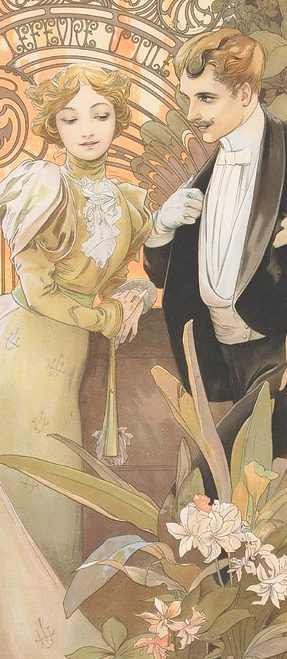
Using form: Hybrid sonnet: Susan McLean, ‘Your Other Women’

Your secretaries, eager to assist you;
your colleagues, protégées, even your dean;
the shopgirls who, you joke, cannot resist you;
my own best friends; the maid who comes to clean;
the women whom you’ve charmed in conversation;
the students who adore you from afar—
how can I resent their admiration,
knowing, better than they, how good you are?

So pick your favorite starlets for your spree,
and rent each film they’ve been in from the start—
I won’t complain. How can I say you’re wrong
to ogle blondes you swear all look like me?
For when our jobs require long weeks apart,
we both know what it takes to get along.

*****

Susan McLean writes: “I was surprised to discover the range of interpretations this poem has received. I had meant to subvert the title with the poem’s content, but I have learned in the past that readers are more likely to twist the content to fit the title than to suspect that the title might be ironically meant. A poem can have many different interpretations, depending on what the reader brings to it, so I have accepted that what a reader sees in it may not be what I intended. This poem was originally written in response to Alfred Nicol’s poem ‘Your Other Men’, a much edgier poem. But mine was intended as a humorous love poem to my partner, a man who likes women and whom women tend to like.
The sonnet is a hybrid, with the first eight lines conforming to the Shakespearean model and the last six lines to the Petrarchan model. That dichotomy felt right for decribing an often-long-distance relationship in which our similarities and differences have learned to work together in harmony.”

‘Your Other Women’ was originally published in Hot Sonnets: An Anthology. Eds. Moira
Egan and Clarinda Harriss. Washington, DC: Entasis, 2011. It later appeared in her second poetry book, The Whetstone Misses the Knife.

Susan McLean has two books of poetry, The Best Disguise and The Whetstone Misses the Knife, and one book of translations of Martial, Selected Epigrams. Her poems have appeared in Light, Lighten Up Online, Measure, Able Muse, and elsewhere. She lives in Iowa City, Iowa.
https://www.pw.org/content/susan_mclean

Photo: “Alphonse Mucha – Flirt Biscuits” by sofi01 is licensed under CC BY-NC 2.0.

Using form: Amphibrachic tetrameter: John Beaton, ‘Regeneration’

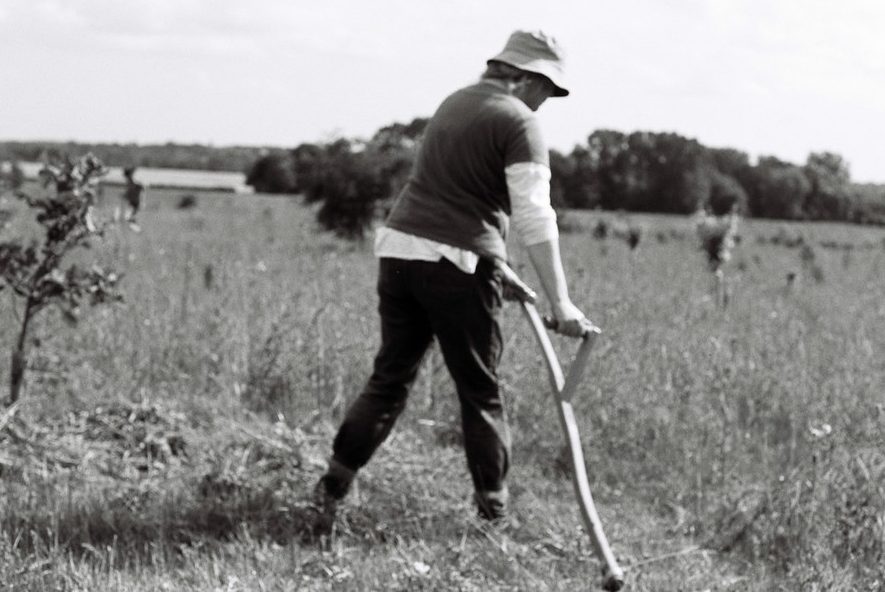
Hay ripens. I sharpen my tapering scythe blade
and chamfer its wafer of paper-thin steel
with stone swoops; it’s hooked like a peregrine’s talon.
The snaking shaft sweeps and the first swathe is side-laid
beside me, clean slain. As I swing I can feel
the gravid field yielding. Sheaves kneel and then fall in
the breeze in formation. Their early seeds dance there
like next April’s rain-showers shining in air.
The cocksfoot and rye-grass and fescue are falling,
the rogue oats, the sedges—I harvest the field where
they shaded the clover; and none do I spare.
The sun sets on stubble where hay-stalks lie sprawling;
my father stood here in the old days like one
of the stalks that made hay as they fell in the sun.

*****

John Beaton writes: “My father grew up in a croft on Skye and he’d scythe hay crops. As a boy, I saw him do it and, as a young man, I did it myself. I never forgot the rhythmic ease of his cutting. He’d been born to it. Anyone can scythe but there’s a skill in being able to do it effortlessly for whole days. It’s all in the rhythm and the precision of the swing.
One day, when I was scything dry hay and watching seeds scatter then fall, reseeding the ground, I thought of how I was succeeding my father. And I wrote this poem.
To capture the rhythm of the scythe, I used amphibrachic tetrameter lines with a mixture of masculine and feminine endings. For instance, the first two lines go:
da DA da da DA da da DA da da DA da
da DA da da DA da da DA da da DA
The other lines follow these patterns in varying order. The rhymes are abcabcdd effegg and the overall pattern is a modified sonnet. Strong internal rhyme and alliteration keep the lines swinging. I hope the reader sweeps and sways through it.”

John Beaton’s metrical poetry has been widely published and has won numerous awards. He recites from memory as a spoken word performer and is author of Leaving Camustianavaig published by Word Galaxy Press. Raised in the Scottish Highlands, John lives in Qualicum Beach on Vancouver Island.
https://www.john-beaton.com/

Scything” by London Permaculture is licensed under CC BY-NC-SA 2.0.

Using form: Quatrains: Stephen Gold, ‘So Pseud Me’

My verse is of the humorous variety,
And does its best to brighten up society.
To spread a little joy’s a noble calling,
A life without a laugh would be appalling.

Yet still, of late, I’ve had a thought that niggles;
What worth is work that just produces giggles?
Should it be judged as slight and ineffectual,
Compared to art we label intellectual?

And so I did what “proper” poets do,
And signed up to The Scrivener’s Review,
“The connoisseur of poesy’s magazine”,
Where scribes will scratch your eyes out to be seen.

I found it was a terrifying place,
Where people were obsessed with lower case,
Allusions veered from cryptic to absurd,
And “meaning” seemed to be a dirty word.

Their poetry was like the peace of God,
That passeth understanding – truly odd.
Some claimed to write for womxn and for mxn,
Though none had come across the verb, “to scxn”.

With open mind, I asked, “Is it my fault
That there is nothing here I can exalt?”
But days of dredging through this awful rot
Confirmed beyond all doubt that it was not.

Each new excrescence served to reinforce
That I had veered disastrously off course.
I wheeled around and fled back to the light
Which shines upon the droll and erudite,

Bring on a world where rhyme and meter matters,
And isn’t full of folk as mad as hatters.
Adieu to “Scrivener’s Review”, I quit.
Do I need what you’re full of? Not one bit.

*****

Stephen Gold writes: “The idea for So Pseud Me came from wading through an august poetry periodical which had better remain nameless, and coming to the following conclusion: WTF?
There was some good, thoughtful work, but much of it was pretentious drivel, written by the deservedly obscure with their heads rammed firmly up that place where the Lord causeth not the sun to shine.
If you were to ask them, I guess most would place high verse on a pedestal, way above light. But on this, I am with Kingsley Amis, who wrote in the New Oxford Book of Light Verse:
“Light verse makes more stringent demands on the writer’s technique. A fault of scansion or rhyme, an awkwardness or obscurity that would damage only the immediate context of a piece of high verse endangers the whole structure of a light-verse poem. The expectations of the audience are different in the two cases, corresponding to the difference in the kind of performance offered. A concert pianist is allowed a wrong note here and there; a juggler is not allowed to drop a plate.”
‘So Pseud Me’ is a light-hearted attempt to speak up for jugglers.”

Stephen Gold was born in Glasgow, Scotland, and practiced law there for almost forty years, robustly challenging the notion that practice makes perfect. He and his wife, Ruth, now live in London, close by their disbelieving children and grandchildren. His special loves (at least, the ones he’s prepared to reveal) are the limerick and the parody. He has over 700 limericks published in OEDILF.com, the project to define by limerick every word in the Oxford English Dictionary, and is a regular contributor to Light and Lighten Up Online (where this poem was first published).

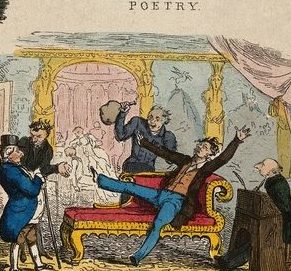
Illustration: “A group of poets carousing and composing verse under the influence of laughing gas. Coloured etching by R. Seymour after himself, 1829.” is licensed under CC BY 4.0.