A man-like god creates the universe? Two hundred billion galaxies? Each holding a hundred billion stars? And each star moulding its planets into life, teeming, diverse! All this from some bearded old angry face who says “Build me a temple, pray, and pay the priests who’ll guide you onto Heaven’s way, erase your sins . . . or you’ll go in disgrace to torment underground — eternally.” No way your life gains from such small belief, passed on by some royal or holy thief who says “God wants your money, send it me — my palace honours Him . . .” The human lurches fearful, confused, through wastes of wasteful churches.
As social animals, we find our place by walling others out, putting them down: these walls, my family; those walls, my town. Even more walls: tribe, country, faith or race. This atavism’s bad for mental health, supports no sense of personal strengths or meaning, allows no purpose, individual leaning, denies achievement to your inner self. Identity’s reduced to football fan, or something uniformed, or some group prayer; without those — alcohol, drugs or despair, not knowing how to move past Nowhere Man. Know yourself, human, to confront the Void: your proper study’s all that’s anthropoid.
You can think of these two sonnets as the result of ten years of Church of England boarding school–five years in Jamaica, five in England–where Scripture lessons and daily church services were complemented by solid science and rigourous literature. And of course the Church of England recognises no Pope except the man who wrote “Know then thyself, presume not God to scan; the proper study of Mankind is Man.” So here you see the fruits of a well-rounded education.
This poem has just been published in Better Than Starbucks, a remarkably extensive poetry journal (and with some fiction too). The bulk of my BTS-published poems are in the Formal Poetry section, but there are many other sections–it’s a 100-page magazine. The online version is free, and well worth exploring.
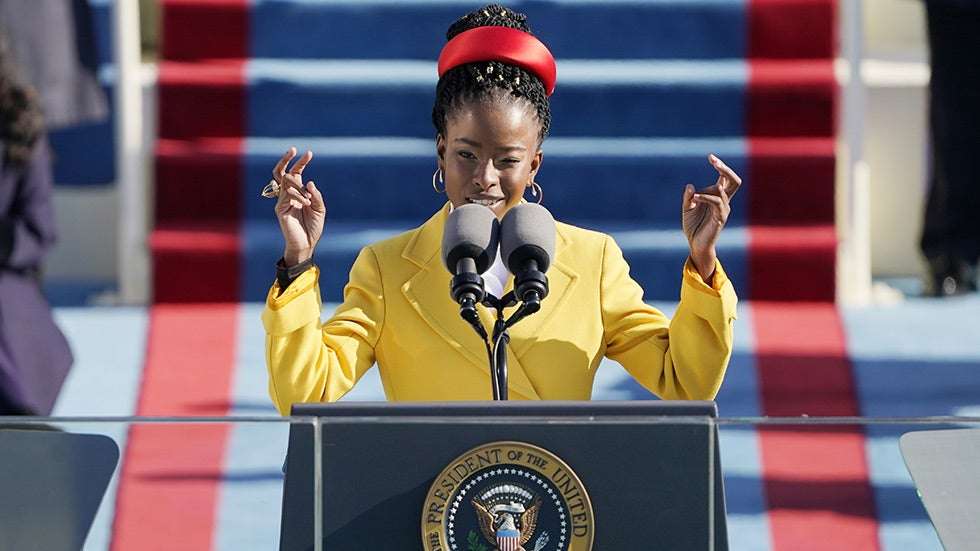
First: a warning: I haven’t seen the printed version, but I have modified a transcription to try to catch the essence of the various types of wordplay that the poet engaged in, with bold for rhyme and italics for alliteration and repetition. These excerpts are from the earlier parts of her poem, skipping some less poetic portions.
When day comes we ask ourselves where can we find light in this never-ending shade? The loss we carry, a sea we must wade. We’ve braved the belly of the beast. We’ve learned that quiet isn’t always peace. In the norms and notions of what just is isn’t always justice. And yet, the dawn is ours before we knew it. Somehow we do it. … And yes, we are far from polished, far frompristine, but that doesn’t mean we are striving to form a union that is perfect. We are striving to forge our union with purpose. To compose a country committed to all cultures, colors, characters, and conditions of man. And so we lift our gazes not to what stands between us, but what stands before us. We close the divide because we know to put our future first, we must first put our differences aside. We lay down our arms so we can reach out our arms to one another. We seek harm to none and harmony for all. Let the globe, if nothing else, say this is true. That even as we grieved, we grew. That even as we hurt, we hoped. That even as we tired, we tried that will forever be tied together victorious. Not because we will never again know defeat, but because we will never again sow division.
Scripture tells us to envision that everyone shall sit under their own vine and fig tree and no one shall make them afraid. If we’re to live up to her own time, then victory won’t lie in the blade, but in all the bridges we’ve made. That is the promise to glade the hill we climb if only we dare. It’s because being American is more than a pride we inherit. It’s the past we step into and how we repair it. We’ve seen a force that would shatter our nation rather than share it. Would destroy our country if it meant delaying democracy. This effort very nearly succeeded.
Amanda Gorman’s poem for President Biden’s inauguration was an extremely well received performance of Spoken Word. As the Wikipedia entry states, Spoken Word focuses on “the aesthetics of recitation and word play, such as the performer’s live intonation and voice inflection.” With its roots in preliterate societies, it searches for all possible tricks for both capturing the audience’s attention, and making it easier to memorise the words. Amanda Gorman did this extremely well in her recitation, with clarity and with effective pacing, pausing and emphasis, carrying the thoughts along in a chant-like flow of rhymes, half-rhymes, puns and alliteration. It was a superb piece of Spoken Word, and left listeners enthused and uplifted. It was perfect for the mood of the inauguration.
But it wasn’t flawless. In places either the transcription is flawed or the poet has sacrificed meaning for the sake of a rhyme. Take “even as we tired, we tried that will forever be tied together victorious”. There is a flow of suggestion that imparts a meaning, but looked at under a bright light the words sound like those of a drunk.
Or take the rhyme sequence “afraid, blade, made, glade”. OK, but I stumbled over “That is the promise to glade”. Perhaps she means “the promise to make an open clearing through the forested hill we are climbing.” My bias is that I think of a glade as a flat clearing in woodland–I didn’t see the meaning of the verb she created, I didn’t think of a hill being climbed as being forested, but that may all be my problem. Similarly, I like the rhyming of “inherit” with “repair it” and “share it”; but what does this mean: “We’ve seen a force that (…) would destroy our country if it meant delaying democracy.” This is clumsy. It’s not clear exactly what is being said. If “would” means “is intended to”, then presumably she should have inverted the phrase: the force wanted to delay democracy, even if it meant destroying the country. Yet it is clearly all part of a political message: the end of Trump’s deliberate White America divisiveness, a return to the modern world’s multiethnic inclusiveness. As she triumphantly ends her piece:
The new dawn blooms as we free it. For there is always light. If only we’re brave enough to see it. If only we’re brave enough to be it.
So we have an inspiring piece of performance art, of spoken word, by a 22-year-old who has a lot of talent and a great stage presence. I’m sure we’ll hear a lot more from her. But I suspect that if her words are to last, she will have to develop a stronger control of meaning. The jagged nature of her lines is not a problem; the lack of structure to her rhyme is not a problem; in some ways she seems close to Old English and other Germanic poetry with their emphasis on a heavy beat (rather than a set number of syllables), and a long way from the “modern poetry” that, without metre or rhyme, tries to get an effect by being laid out provocatively on a page.
It’s coming through a hole in the air From those nights in Tiananmen Square It’s coming from the feel That it ain’t exactly real Or it’s real, but it ain’t exactly there; From the war against disorder From the sirens night and day From the fires of the homeless From the ashes of the gay Democracy is coming to the U.S.A.
It’s coming through a crack in the wall On a visionary flood of alcohol From the staggering account Of the Sermon on the Mount Which I don’t pretend to understand at all; It’s coming from the silence On the dock of the bay From the brave, the bold, the battered Heart of Chevrolet Democracy is coming to the U.S.A
It’s coming from the sorrow in the street The holy places where the races meet From the homicidal bitchin’ That goes down in every kitchen To determine who will serve and who will eat; From the wells of disappointment Where the women kneel to pray For the grace of God in the desert here And the desert far away Democracy is coming to the U.S.A.
Sail on, sail on O mighty ship of state! To the shores of need Past the reefs of greed Through the squalls of hate Sail on, sail on, sail on…
It’s coming to America first The cradle of the best and of the worst It’s here they got the range And the machinery for change And it’s here they got the spiritual thirst; It’s here the family’s broken And it’s here the lonely say That the heart has got to open In a fundamental way Democracy is coming to the U.S.A.
It’s coming from the women and the men Oh baby, we’ll be making love again We’ll be going down so deep The river’s going to weep And the mountain’s going to shout Amen! It’s coming like the tidal flood Beneath the lunar sway Imperial, mysterious In amorous array Democracy is coming to the U.S.A.
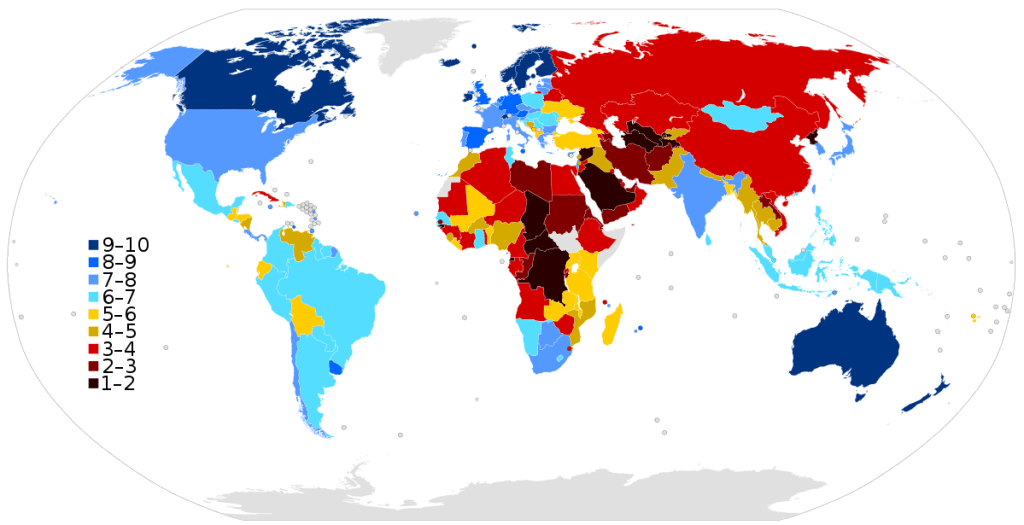
The United States is a “flawed democracy” (as defined by The Economist Intelligence Unit, see below). “Democracy” was written by the Canadian poet/singer/novelist Leonard Cohen over three years in the early 1990s. The song as we have it was boiled down from some 60 verses, scattered through seven or eight notebooks. In his book “Songwriters On Songwriting” he explains, “This was when the Berlin Wall came down and everyone was saying democracy is coming to the east. And I was like that gloomy fellow who always turns up at a party to ruin the orgy or something. And I said, ‘I don’t think it’s going to happen that way. I don’t think this is such a good idea. I think a lot of suffering will be the consequence of this wall coming down.'”
There are so many strong lines in this poem that, although written 30 years ago, resonate today. I particularly like
It’s coming from the sorrow in the street The holy places where the races meet
and the mention of America as
The cradle of the best and of the worst
as well as the timeless, human dynamic of
From the homicidal bitchin’ That goes down in every kitchen To determine who will serve and who will eat;
Photo: A map of the world showing the results of The Economist’s Democracy Index survey for 2016. This file is licensed under the Creative CommonsAttribution-Share Alike 4.0 International license. The USA has been stuck in the third tier for the past few years, scoring below 8 on a 10-point scale. Those in the first tier, scoring above 9, are the five Nordic countries plus New Zealand, Australia, Ireland, Canada, Switzerland and the Netherlands.
Note that almost all of the top tier countries use some form of Proportional Representation (PR) to elect their governments. Several of their parliaments include parties with Trump-style xenophobic parties, because it is important to include representatives of all opinions in a democracy. But with PR the most extreme parties of right and left are unlikely to be included in a government, let alone dominate it. With PR the parliament gets the benefit of hearing all concerns and points of view, and the voters get the opportunity to vote more closely for who they want: a choice of libertarian, fundamentalist, green communist, as well as more mainstream conservative, liberal or social democrat. Voter turnout is naturally higher than in a two-party system which fails to address the interests of a large percentage of the population.
Other points that can be made from looking at the truest democracies: 1) Unicameral structures score best, meaning the US could have just the House, no Senate. 2) There is no need for separation of the Executive and Legislative functions; separating them doesn’t provide any benefit, despite the holy mantra of “checks and balances”, it merely destroys efficiency and obfuscates responsibility and encourages confrontation. 3) The Judiciary should not be appointed by the government, it functions best if it is developed with true independence within its own legal system.
The American system is an interesting historical artifact, but long outdated and highly counterproductive to good government. When Americans have written new constitutions for countries that they have taken over, the results have not been good. They should let the Scandinavians do it.
I recommend watching the Danish TV series ‘Borgen‘ (it has English subtitles) for a practical view of a single-chamber, multiparty system of coalition government.
An old, mad, blind, despised, and dying king,– Princes, the dregs of their dull race, who flow Through public scorn, mud from a muddy spring,– Rulers who neither see, nor feel, nor know, But leech-like to their fainting country cling, Till they drop, blind in blood, without a blow,– A people starved and stabbed in the untilled field,– An army which liberticide and prey Makes as a two-edged sword to all who wield,– Golden and sanguine laws which tempt and slay; Religion Christless, Godless, a book sealed,– A Senate—Time’s worst statute unrepealed,– Are graves from which a glorious Phantom may Burst to illumine our tempestuous day.
Shelley wrote this sonnet in 1819 in response to the Peterloo Massacre: a peaceful crowd of 60,000 had gathered in Manchester to call electoral reform, but were charged into by a local Yeomanry regiment, and then by a cavalry regiment of the King’s Hussars with sabres drawn. Official numbers show 18 people killed, including several women, and 400 to 700 injured: bayoneted, sabred, knocked down, trampled.
Shelley blames the mad King George III and his sons (including of course the Regent, the future George IV), and the ruling class in a time of unemployment and economic recession, and further blames the illiberal army, and harsh laws, and morality-free religion, and a Parliament that was refusing all civil rights to Catholics. They might all be graves of corruption, but Shelley hopes that from their decay will come a glorious new spirit to brighten the world.
Not all of the poem resonates with any particular political situation in the world today; but “an old, mad, blind, despised and dying king”… well, that’s certainly the impression given by the White House in early 2021.
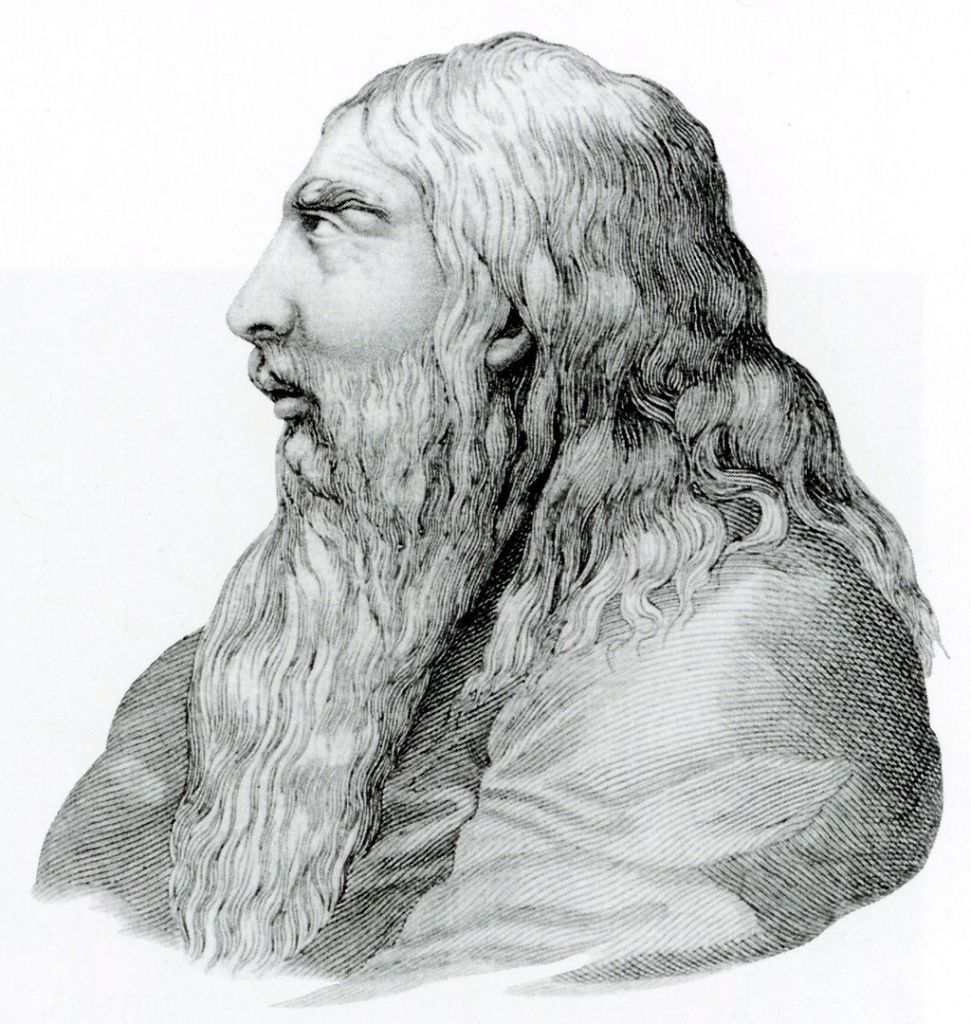
Technically: the sonnet is in iambic pentameter as you would expect, but the rhyme scheme is unconventional: ababab cdcdccdd. The illustration is an engraving of George III in later life, by Henry Meyer.
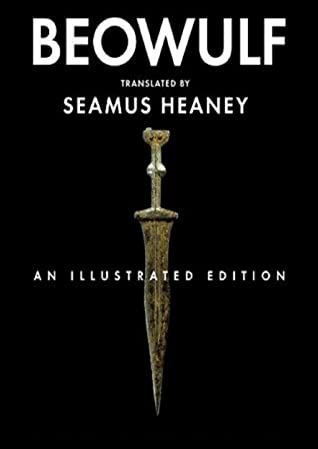
I can’t imagine a better version of Beowulf than this brilliant rendition into appropriately alliterative verse by Nobel prizewinning poet Seamus Heaney, with full colour photographs on alternating pages of the massive 3,000-line poem. It has the rhythm of the original, it is essentially faithful to the original, and the illustrations (even more than the notes) give a sense of landscape, ships, weapons, jewelry, halls, etc that helps bring the entire story to life.
The story itself is in three parts: Beowulf travels from what is now Sweden to help the king of the Danes against a monster, Grendel, that is attacking and devouring his people, and Beowulf defeats Grendel by tearing an arm off. Gifts are given, and everyone relaxes. However Grendel’s mother comes the next night seeking revenge, and Beowulf goes after her the next day, diving into her murky pool and killing her with a sword. More gifts are given, and Beowulf returns home. Fifty years later Beowulf, now himself a king, goes to fight a dragon that has been roused and is pillaging the countryside; he fights the dragon and they kill each other; the dragon’s hoard is buried with Beowulf in the tomb that is built for him.
The historical persons in the tale, and the Danish king’s hall at Lejre, date to the mid-6th century. Then and for the next 500 years Scandinavia was innocent of Christianity, and the warrior society and the constant blood-feuds are a part of the story. But the poem as we have it have it was apparently composed in the 9th century in Christiansed England, and the will of a very Old Testament God is referenced throughout as overruling the abilities of humans. This feels like no more than an unimportant veneer of a modern religion over a Scandinavian sense of weird, wyrd, or destiny.
The poem is important as the beginning of English poetry, and its place and relevance is heightened by Heaney’s long and delightful introduction in which he details how he, as a Northern Ireland Catholic who felt deprived of his Gaelic birthright, came to fuse Gaelic, Old English and modern English into a sense of community and identity.
So because of the Introduction and the photos and illustrations as well as the superbly rhythmic and semi-alliterative translation, this is the Beowulf if you want a Beowulf!
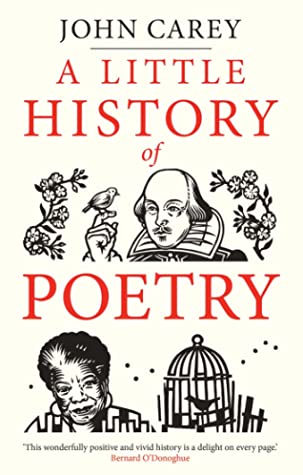
A fascinating overview of the history of world poetry with a decidedly Anglo-American slant, very engaging and informative and yet inevitably irritating for wasting space on some aspects while ignoring other favourite poets–depending on the reader’s bias, of course.
Consisting of 40 seven- or eight-page chapters, the book leads with Gilgamesh and information new to me despite my familiarity with the poem; then the Greek and Latin classics, where I am vaguely interested but uninformed; then Anglo-Saxon poetry where I am incited to read more. And so it goes: a bit of this, a bit of that, with a lot of chatty biographical tidbits, clarifying who I want to read more of (Chaucer, Wordsworth, Hardy, the Thirties Poets, the Movement), confirming who is of no interest to me (Spenser, Milton, American Modernists, American Confessional poets). The chapter on Dickinson and Whitman had a very useful perspective; the one on Marianne Moore and Elizabeth Bishop was a waste of space. There seemed less insight in general as we moved into the 20th century, especially regarding American poets.
One thing that surprised me was to find how the hymns quoted in the chapter ‘Communal Poetry’–‘When I survey the wondrous cross’, ‘Rock of ages, cleft for me’, ‘Amazing grace’, ‘Abide with me’–summoned up my decade of boarding school’s daily religion and made for a long meditation on the role of religious poetry in the forced familiarity with meter and rhyme. It almost justifies daily church attendance. But missing from this History is the similar role in other religions: the hymns of Hinduism, the Hebrew chants, the hypnotic rhythm and rhyme of the Quran… all aspects of verse being used to make a message word-for-word memorable, all building the use of poetry.
The other omissions were of English-language poets outside the Anglo(including Irish)-American sphere: I think McCrae is the only Canadian mentioned (for ‘In Flanders Field’), and Claude McKay (who?) and Derek Walcott the only other Commonwealth poets; also missing are modern ballad-writing poets like Bob Dylan; and, my particular peeve, no mention of either e.e. cummings or Gwendolyn Brooks.
I find Brooks and cummings the greatest American poets of the 20th century with the exception of Auden and Eliot (however you like to classify their nationalities). Their omission may reflect ignorance on the part of author John Carey, or they may have been left out as not fitting into his groupings of Modernists and members of the Harlem Renaissance. Whatever the reason, it’s a major flaw… in what is still a highly readable and rereadable history.
The accursed power which stands on Privilege (And goes with Women, and Champagne, and Bridge) Broke–and Democracy resumed her reign: (Which goes with Bridge, and Women and Champagne).
The precise phrasing of Hilaire Belloc‘s little squib may have been outdated by the likes of Margaret Thatcher, Angela Merkel and Kamala Harris… but the complaint by the common voter (or disillusioned non-voter) is valid, that professional politicians live in a very comfortable club that takes care of all its members regardless of who actually wins an election; and no fundamental change occurs.
A nice little quatrain, iambic pentameter, the simplicity strengthened by the bite of the repetition contradicting the idea of change. Easy to remember and quote because – of course – it rhymes and scans.
Here richly, with ridiculous display, The Politician’s corpse was laid away. While all of his acquaintance sneered and slanged I wept: for I had longed to see him hanged.
The US and UK have been so polarised for the past several years that it seems everyone has a politician they would like to see executed–or jailed at the very least. But this is neither a recent phenomenon nor a merely Anglo-American one. All round the world notorious pillagers of their countries go to the grave with great pomp, while most of their countrymen and -women are simply glad that they are finally going.
This sarcastic little poem by Anglo-French writer Hilaire Belloc suggests two things: that all successful political leaders are loathed by a large percentage of the population; and that to make your sarcastic comment truly memorable if it is more than five or six words long, you do well to put it in verse. The rhyme and meter not only make the words easier to remember, they also lend a magical impression of inevitability and authenticity to the idea expressed. Well-constructed verse provides a fraudulent but powerful proof that the idea expressed is valid. Rhetoric and oratory inhabit this area also. Well-expressed ideas have more credibility than badly expressed ones, regardless of the relative merits of the ideas themselves.
Perhaps we should count ourselves lucky that few politicians exhibit much interest in poetry…
November 2023 update: I’ve been quoting this poem with reference to the death of Henry Kissinger.
For I dipt into the future, far as human eye could see, Saw the Vision of the world, and all the wonder that would be;
Saw the heavens fill with commerce, argosies of magic sails, Pilots of the purple twilight dropping down with costly bales;
Heard the heavens fill with shouting, and there rain’d a ghastly dew From the nations’ airy navies grappling in the central blue;
Far along the world-wide whisper of the south-wind rushing warm, With the standards of the peoples plunging thro’ the thunder-storm;
Till the war-drum throbb’d no longer, and the battle-flags were furl’d In the Parliament of man, the Federation of the world.
There the common sense of most shall hold a fretful realm in awe, And the kindly earth shall slumber, lapt in universal law.
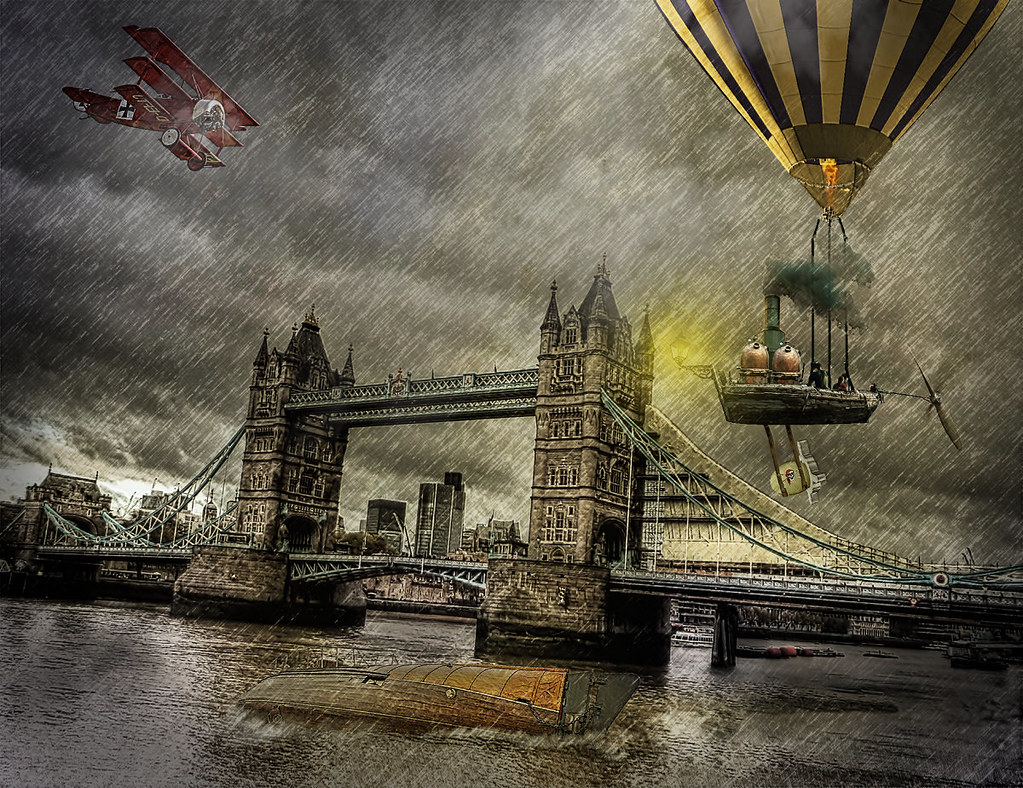
This excerpt from Tennyson’s ‘Locksley Hall’ has a steampunk feel to it–“the nations’ airy navies grappling”–what exactly did he imagine? The hot air balloons that had been developed in the previous century, now using grappling hooks and rifles in their battles? And it ends not with a talking-shop United Nations, but with a World Federal Government… It is quite a vision from the young Tennyson; and this slice of the poem has taken on a life of its own, quite distinct from the general ranting about his failed love affair which is the theme of ‘Locksley Hall’.
The full poem contains well-known lines such as
In the Spring a young man’s fancy lightly turns to thoughts of love;
and the poet foresees his former lover, now married to a man he dislikes, in a poor relationship:
He will hold thee, when his passion shall have spent its novel force, Something better than his dog, a little dearer than his horse.
A situation which he thinks she deserves, and which brings out his (pre-)Victorian misogynism:
Woman is the lesser man, and all thy passions, match’d with mine, Are as moonlight unto sunlight, and as water unto wine—
So we can leave all that alone, and just look at his science fiction passage: the skies filling with commerce and warfare, before the world achieves global peace and quiet. A nice vision of a young man in his mid-20s, writing two years before Victoria became queen. 1835 is quite early. For comparison Jules Verne, often called “the Father of Science Fiction”, was only seven years old when Tennyson wrote ‘Locksley Hall’. But that hardly makes Tennyson unique as a prophet: Mary Shelley had published ‘Frankenstein’ in 1818, and her apocalyptic dystopian ‘The Last Man’ in 1826. And fantastical speculation goes back a lot further, to at least the 2nd century with the bizarre work of Lucian of Samosata, an Assyrian who wrote A True Story. But at least compared with Lucian, Tennyson was on the right track, with a little more science to back his fiction.
FitzGerald’s version of Omar Khayyam’s Rubaiyat is one of the glories of English poetry. It has contributed more phrases and common quotations to the language, relative to its size, than any other piece of literature – including the Bible and Shakespeare. “A flask of wine, a book of verse, and thou”… “The Moving Finger writes; and having writ // Moves on”… and so on.
FitzGerald came out with five editions of the Rubaiyat (the fifth being posthumous), with 75 four-line stanzas in the first edition, then tinkering with it for the rest of his life: adding another 30 stanzas, subtracting again, and constantly modifying words, phrases and punctuation. The first edition has several things in its favour: succinctness, and the fire and integrity of the original effort.
Edward FitzGerald was a strange character. His personal life was a long search for friendship of two types: intellectuals with a passion for literature (Tennyson, Thackeray, Carlyle), and unintellectual men much younger than himself who were noted for their “manly” looks. His life and search were difficult, as Victorian England didn’t make life easy for homosexuals.
On the creative side, this search for friendship showed up as a need to be a co-creator: showed up in art, where he had a lifelong habit of buying paintings and cutting them down to a better composition and touching up the work to improve it; in music, where he arranged the works of others for his friends to sing; and in literature, where he found his genius in the works of others, translating Aeschylus, Calderon and Khayyam from the original Greek, Spanish and Persian, striving to identify with the original author and replicate in English not their exact words but the thrust of their thought and emotion. And with the Rubaiyat he appears to have been successful in every way. The five versions published between 1859 and 1889 constitute the single best-selling book of poetry in English.
Of the hundreds of editions that have been published since FitzGerald’s death, my two favourites are: for the lushness, the one illustrated by Edmund Dulac; and, for the background and insights, the one with an introduction by Dick Davis and published by Penguin in 1989.
In this particular Penguin edition (there have been several others), FitzGerald’s first edition and fifth edition are given in full, together with a complete listing of all the other variations found in the intervening versions. But – FitzGerald’s Rubaiyat only being 300 or 400 lines, depending on the version – all of that barely takes up 50 pages. Dick Davis’ introduction, almost as long, was presumably commissioned to make this a saleable book. And it is his introduction that gives it its full value.
Davis covers the life and what can be known of the personality of Omar Khayyam and – in conjunction with a review of FitzGerald’s life, personality, agnosticism and guarded homosexuality – the attraction, almost identity, that FitzGerald felt for him. He also investigates and approves the depth of FitzGerald’s translation skills, and analyses his use of rhyme scheme and meter. FitzGerald originally started translating Khayyam into paired couplets (aabb) before seeing the benefit of Khayyam’s rubaiyat (aaba) – given the epigrammatic nature of the verses, each quatrain is a stand-alone philosophic proposition and the return in the fourth line to the rhyme of the first two lines tends to heighten the sense of inevitability in each stanza.
Perhaps the most intriguing thought to come from Davis’ Introduction is that the sensual illustrations of half-naked women, so common in our collection of Rubaiyats, are all wrong. From linguistic and cultural clues in both the Persian and the English, it appears that the Saki, the young cup-bearer, the Thou of the flask of wine and book of verse, should be an attractive young male with his first moustache starting to grow in. In other words, and despite my preference for Dulac, FitzGerald’s version of the Rubaiyat of Omar Khayyam would perfectly support lush, ornate, gay illustrations; and that is likely what FitzGerald – and Khayyam himself – would have preferred.



 Form in Formless Times