One afternoon, my father chose to die. He was like, See ya later, guys. I think I understand, since I don’t know if I
can hang, myself. But hang myself? (Don’t try, they whisper, spooked.) Too young to buy a drink, but old enough to snatch one from a guy
who says, “I’m married, but–” His twinkling eye is trained, you know, to tell me with a wink I’ve made the cut. One hand explores my thigh,
the other fingering a Miller. Why are men so callous? Nowadays, I sink beneath the comforter. I’ll never cry
because my lover’s lover’s lovely–Thai, with toned and skinny limbs, her cheekbones pink and angular. Ohio girl, a Buckeye.
I’m from a land where bleach blond angels fly. Beneath the moonlight, friends and I will clink our cups; my wondrous-child eyes defy adulthood, till I sip. It’s bitter, dry.
*****
Editor: The poem was originally prefaced with “There are those who suffer in plain sight. – Randall Mann”
Alexis Sears writes: “I wrote this poem on the eve of my 20th birthday; nearly a decade later, I still hold it dear. ‘On Turning 20’ made me realize that what I had to say may have been more meaningful than I’d thought.”
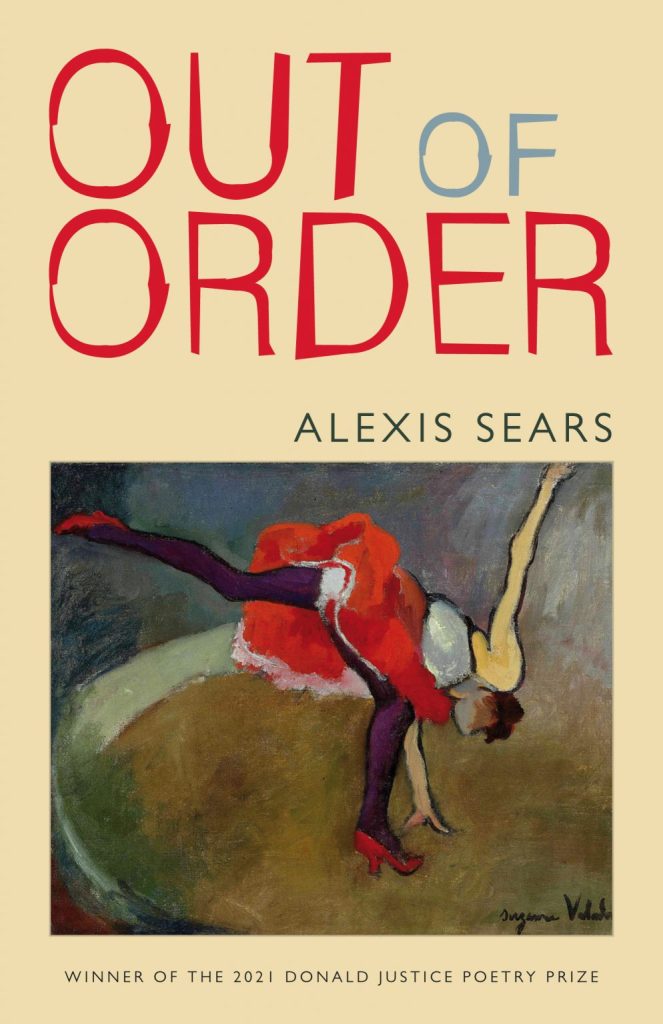
Alexis Sears is the author of Out of Order (in which this poem appears), winner of the 2021 Donald Justice Poetry Prize and the Poetry by the Sea Book Award: Best Book of 2022. Her work appears in Best American Poetry, Poet Lore, Cortland Review, Cimarron Review, Rattle, and elsewhere. She earned her MFA in poetry from the University of Wisconsin-Madison and her BA in Writing Seminars from Johns Hopkins University. Editor-at-Large of the Northwest Review and Contributing Editor of Literary Matters, she lives in Los Angeles. https://www.alexissears.com/
On an asteroid there was an alien artefact. If such it was… a droid… I’ve no idea, in fact. Its metal (leg?) seemed (deployed?) and so I touched it, but responses lacked.
Once there were women; once I was a man (touching a leg then always brought response) before the search for life and light began to change me into this dark renaissance. The teacup storms on which I’ve tossed, when she or I have bitched and bossed till all the loves I’d ever marked were all the women that I’ve lost. They chose the certainty of Dark over the uncertainty of Light.
The joys of life are what’s uncertain: hopes of what’s behind the curtain, knowing the results will grate of things that you anticipate, knowing your life could be wrecked by what you never could expect. And though you think you’re circumspect, you can’t deflect, inspect, collect. Knowing the harvest is unknown with crops that grew from deeds you’d sown, while all your greatest hopes and dreams will be exceeded by the future’s smallest gleams.
Because change never stops, you find what matters is never really known. You may get verbal assurance of your future status, but was it “throne” or “thrown”? The only certainty would be if, offered immortality, you feared what such an altered world would lose, would save, and chose instead to go into the Dark with furnace no less dark than the grave wherein there lies no risk of further blight. Most people choose the Certainty of Dark over the Uncertainty of Light.
But we who strive to stay alive long enough for rejuvenation hope, hope only, we will thrive, post-humans in a re-Creation, unknowing what our ape-based genes will do with power dominance, with war, with sex, Earth mined and undermined, but glad to take the chance. How else can we see scenes of how it all turns out — destroyed? refined? — unless we scrape through, level up with wounds and scars and watch a world we love and leave behind? So at last I am here, between the stars, transiting the darkness of the Void, the empty galaxy’s apparent night, chanting the mantra that keeps spirits buoyed: Let there be Post-Humanity’s own light!
Between the spiral arms in the near-void there’s still thin light of distant galaxy and star, still specks of dust, rarely an asteroid. Earth left (millennia in old Earth years ago), I cross the dark immortally, beyond, afar, through what is darkness only to Earth-eyes which myriad wavelengths up and down can’t know, but which I now apprize. Light here abounds, and boundlessly surrounds, astounds.
Take the smallness from slight, take the bad from the blight, take the fear out of flight and you’re left with the light, the light, the light. We stumble from dark caves of night into day, trying not to tumble; our parents the dark; post-humans the light; ourselves just the stumble.
*****
This poem (published in this week’s Bewildering Stories) is a response to conversations in which people have expressed pessimism about the value of life extension, rejuvenation, cryonic preservation and resuscitation… anything beyond the certainties of a clear end to life after a normal lifespan. “How will you… why would you… what if they… you won’t understand… you won’t have…” Ah, but everyone who has immigrated into a foreign culture has done this: had to learn a new language in order to find a job and start making friends and find out how everything works. Some of us are comfortable doing this; some people aren’t. I’ll take the uncertainty, and enjoy its discomforts… because it’s just so interesting!
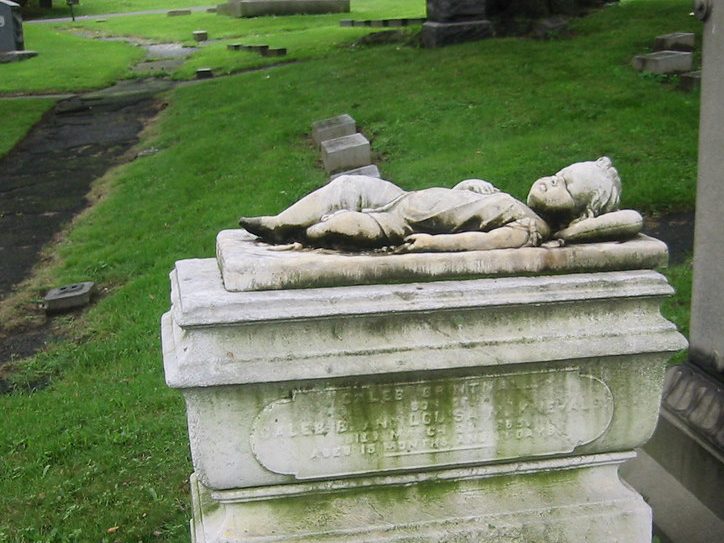
We weren’t allowed the time to contemplate What talents he in time might come to show, What fame or wealth he might accumulate, What love and other passions he might know.
We had, instead, the chance to see him crawl And graduate to solid food, to take Some wobbling steps that ended in a fall, To hand an uncle’s dog a piece of cake.
To say more is to claim a flare’s bright arc Could have reached high, though it had scarcely flown Before dissolving in the larger dark. We fall back on the facts, which stand alone.
He seldom cried. He used to point at birds. And now he will be missed beyond all words.
*****
J.D. Smith writes: “I will not say much about this poem, as it is based on actual events. I took liberties with details in following formal constraints, but the sense of devastation is unchanged.”
J.D. Smith has published six books of poetry, most recently the light verse collection Catalogs for Food Lovers, and he has received a Fellowship in Poetry from the United States National Endowment for the Arts. This poem is from The Killing Tree (Finishing Line Press, 2016). Smith’s first fiction collection, Transit, was published in December 2022. His other books include the essay collection Dowsing and Science. Smith works in Washington, DC, where he lives with his wife Paula Van Lare and their rescue animals. X: @Smitroverse
And then she dies—since men are no damn good— Mimi, consumptive and misunderstood, or Desdemona, most defamed of brides— the woman is abandoned on all sides— she so believes in love (as women should) and in the end she burns like firewood.
Here Tosca on the tower a moment stands, first throwing back her hood and then her hands and then one step—invisibly she flies— and then she dies.
Poor Butterfly, who meant to be so good. Tough Carmen, using all the wiles she could to get her man. So many suicides, so many murders. Violetta hides but can’t escape—she’s found, she’s understood— and then she dies.
*****
Gail White writes: “One of my favorites in my new book Paper Cuts is ‘Opera Rondeau’. It was written after a friend pointed out to me that most summaries of opera plots could end with the words “then she dies.” Although the poem doesn’t conform perfectly to the rondeau rhyme scheme, it does provide the perfect refrain. And gives me a chance to mention a few of the many opera heroines who win, lose, or miss love altogether – and die.”
Gail White is the resident poet and cat lady of Breaux Bridge, Louisiana. Her books ASPERITY STREET and CATECHISM are available on Amazon. She is a contributing editor to Light Poetry Magazine. “Tourist in India” won the Howard Nemerov Sonnet Award for 2013. Her poems have appeared in the Potcake Chapbooks ‘Tourists and Cannibals’, ‘Rogues and Roses’, ‘Families and Other Fiascoes’, ‘Strip Down’ and ‘Lost Love’. ‘Opera Rondeau’ was first published in Mezzo Cammin and is collected in her new light verse chapbook, ‘Paper Cuts‘, also available on Amazon.
I sing the changing seasons of the year And, as leaves fall, I celebrate my death. Each inhalation may be my last breath; Each year I lose another near and dear. So many people live life in Death’s fear, The very word <cough> Dead’s a shibboleth – Paint on false youth like old Elizabeth – Yet half the planet’s Spring, while it’s Fall here.
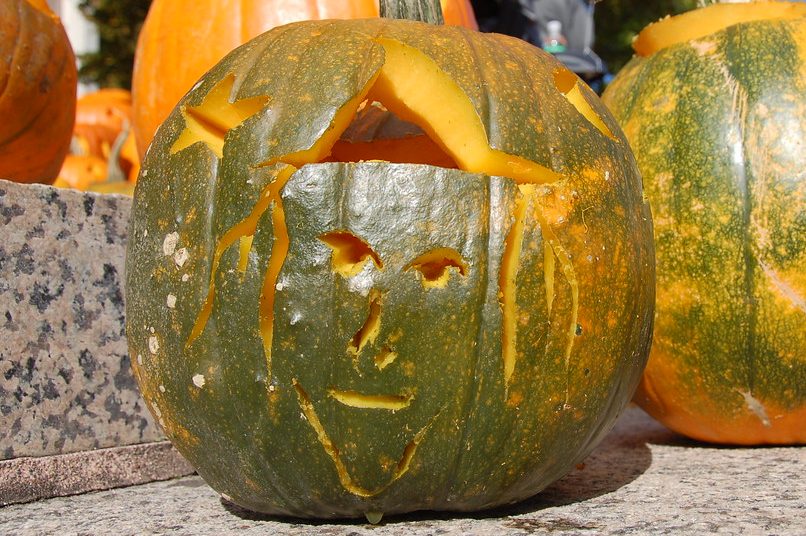
Eternal life is ever to be felt, For death, rebirth, are always intertwined In pious hopes, in science still unseen. The pagan in me – Viking, Druid, Celt – All celebrate when Life’s return’s divined. It’s Halloween, so I will dress in green.
*****
This sonnet with its Petrarchan rhyme scheme (ABBA ABBA CDE CDE) was originally published in The Lyric a couple of years ago. “Founded in 1921, The Lyric is the oldest magazine in North America in continuous publication devoted to traditional poetry.”
Two rows of heads puffed white for show are turned to watch the gurney go parade-like down the hall and through the double doors, and out of view.
They linger, as the swinging doors are gazed to stillness, and intercourse is but the mingling of silhouettes. Beyond the tumults of regret
and wonder, they are elsewhere, all their architecture of recall connecting lives to family plots, or maybe – further back – in what
may be a keepsake memory – light parade, perhaps – a child’s delight in clowns and cotton candy, high and wispy as puffed hair. Friends die
often, but not in violence – not here, where death comes to the sense in not-quite-joy, and not-quite-grief, but trembling, lightly, like a leaf
that might be blown, or not, or light as dandelion fields puffed white and wispy, wavering. In slow surmise they gaze on quiet with quiet eyes,
filling the hall with noiselessness, and dreaming but to acquiesce to dream, and but to linger some in thrall to stillness yet to come.
*****
Brian Gavin writes: “My poem sort of rips off (shamelessly!) the form and rhyme scheme of the famous A E Housman poem ‘To An Athlete Dying Young‘. It is, however, about a different kind of death – extreme old age – and the gentleness of it. It’s based on something I actually saw in a nursing home, when white heads once leaned out of their rooms to see a friend taken away on a gurney. The image of a parade struck me, and the heads of puffed white hair reminded me of cotton candy at the parades of my youth. Eventually the images of puffed hair and puffed candy morphed into a field of puffed white dandelions wavering in the wind. I almost left the title at ‘Death Watch‘ – which I kind of preferred for the double meaning – but opted to add the rest of it for the sake of clarity. This piece ran in my collection Burial Grounds.”
An ambulance howls like a hurt cat; parts traffic as Moses did the waves. Worms burrow in awaiting graves. A police car buzzes like a gnat.
Stuck in a jam of steaming cars, I contemplate how life transforms in moments. How they wait, those worms, so patiently, for us, for ours.
*****
Richard Fleming writes: “Ambulance sirens have been part of the soundtrack of my adult life, from the troubled years in Belfast to, more recently, my relatively tranquil life on the island of Guernsey. There’s something about the sound, like that of a modern-day banshee, that chills the blood like no other. In common with all those who love unreservedly, I live with a constant fear of loss and a keen awareness of the terrible fragility of those things that we hold dear. This short poem attempts to articulate that fear.”
Richard Fleming is an Irish-born poet currently living in Guernsey, a small island midway between Britain and France. His work has appeared in various magazines, most recently Snakeskin, Bewildering Stories, Lighten Up Online, the Taj Mahal Review and the Potcake Chapbook ‘Lost Love’, and has been broadcast on BBC radio. He has performed at several literary festivals and his latest collection of verse, Stone Witness, features the titular poem commissioned by the BBC for National Poetry Day. He writes in various genres and can be found at www.redhandwriter.blogspot.com or Facebook https://www.facebook.com/richard.fleming.92102564/
Demonic nurses, finding little sin, all leave my bedside. Doctor Death comes in. He looks around, “I’m only here To get a rough sense of the atmosphere. ” “Please, don’t get up…” He sits. “Not healing with your usual speed, Eh, you young pup? You’ve got a few years left still, don’t you worry. Take all the time you need. I’m in no hurry.”
*****
I wrote this in mid-2020; I think Doctor Death was in all our minds at that point, though I didn’t catch Covid myself for another couple of years. The poem was published in the current issue of Rat’s Ass Review – thanks, Rick Bates!
What do you want possessions for? You’ll die, then you’ll have nothing more. You lost your house in a fire? The fact is That was just for practice.
*****
We live (as always) in a time of existential threat to us as individuals and as a species. This short poem was recently published in The Asses of Parnassus – thanks, Brooke Clark! “Light verse”? I like to think so…
Photo, popularly known as ‘Disaster Girl‘. The young Zoë Roth had been taken by her parents to watch the controlled burning of a structure for training purposes when her father took this prize-winning picture of her. To her ongoing delight, the photo became a viral internet meme, and its NFT sold two years ago for close to $500,000.
Old Leonard said it straight: ‘Let’s not pretend That death is anything except the end. You die, you’re done; you’re fed to flames or worms.’ He’d make his point in no uncertain terms, And Jess recalls the loud and booming laughter With which he greeted talk of the hereafter. ‘The here and now is all that we have got; It’s real; the vicar’s fairytales are not.’ She thinks of how he’d neatly phrase a joke; She clearly hears the forceful way he spoke, And that ‘Oh but surely…’, with a dying fall Which clinched an argument once and for all His words come back to her today as clear As if the ancient atheist was here. It’s just as though he’s with her in the room Though he’s spent years now mouldering in his tomb.
She smiles to think of him, and smiles again To think how he’s a fixture in her brain. She even caught herself the other day Clinching her point in just old Leonard’s way, With ‘Oh but surely…’ Should she then infer A trace of him is still alive in her? Well — a man of such large humour and such drive — Why be surprised if something should survive?
Now, ten years on, Jess too is dead and gone, But some things have a way of lingering on. That ‘Oh but surely…’ with that intonation Has somehow reached another generation. Jane, Jess’s daughter, last week floored the board Of the college with it, and so neatly scored Her point that they in unison agreed To fund her project. Phrasing’s what you need, And Jane knows that, but what she doesn’t know, Is that trick came from Leonard long ago, And Leonard learned it many years before From his Latin teacher. So, how many more Homes will this little trick of speaking find As it nips cleverly from mind to mind?
Though death is death, and funerals are for tears, Some things can oddly echo through the years.
*****
George Simmers has written many poems “about people dealing with what life has given them, for better or for worse.” Fifteen of them are collected in his book ‘Old, Old’. His other recent and more diverse collection is ‘Old and Bookish’.
George Simmers used to be a teacher; now he spends much of his time researching literature written during and after the First World War. He has edited Snakeskin since 1995. It is probably the oldest-established poetry zine on the Internet. His work appears in several Potcake Chapbooks. https://greatwarfiction.wordpress.com/ http://www.snakeskinpoetry.co.uk/






 Form in Formless Times