Tag Archives: odd poem

Odd poem: Xi Jinping, ‘In Memory of Jiao Yulu’

Ten thousand miles away your soul has flown;
the rivers, mountains and land yearn for your return.
The people mourn the loss of a caring official,
tears flooding under the empress trees you planted.
Having dedicated your life to the desert,
to the betterment of people’s lives, your legacy lives on
no matter how many years come and go.

The moon shining bright as always,
I think of you and your life’s work.
You toiled long and hard, claiming no credit.
Serving and benefiting the people:
such was your ambition and is also mine.
Many a trickle will add a touch of green to the desert
and create a wellspring of hope.”

*****

Xi Jinping, born in 1953, has been the general secretary of the Chinese Communist Party and chairman of the Central Military Commission, and thus the paramount leader of China, since 2012. Since 2013, Xi has also served as the president of China.

Jiao Yulu was a Chinese politician, highly respected for his hard work even as he was dying of liver cancer in his early 40s.

From the Chinese Embassy in the US:
Xi Jinping has always held Jiao Yulu in high esteem and regarded him as a role model. At the time of writing this poem, Xi was the Party Secretary of Fuzhou. One night in July 1990, he read an article entitled “People Yearn for the Return of Jiao Yulu.” The poem was inspired as literary thoughts surrounding the deceased upright man welled up in Xi’s heart. When he inspected Lankao in 2014, Xi recalled emotionally how he learned from the example of Jiao Yulu more than 40 years ago. “On February 7, 1966, the People’s Daily carried a long article by Comrade Mu Qing and others entitled ‘Jiao Yulu: A Model County Party Secretary.’ Back then, I was a grade one student in junior high school. The teacher of political education choked with sobs while reading the article to us. I was deeply moved when I heard Comrade Jiao Yulu kept on working even in the late stage of liver cancer, pressing a stick against his liver to relieve the pain. The pressure from the stick wore a hole into the right side of his rattan chair over time.”

Jiao Yulu is no stranger to the Chinese people. After being appointed Party Secretary of Lankao County, he mobilized the local residents in a great struggle to tackle water-logging, sandstorm, and alkaline soil. Leading by example, he was always at the frontline at the height of sandstorms and in torrential rainfalls to identify the wind corridor, forecast quicksand and gauge flood waters. Amid blinding blizzards, he visited poor families to deliver food and financial relief to their homes. He was devoted entirely to all the people of his county but himself. Despite severe illness, he carried on work till the last moment of his life, and is revered as the “model county Party secretary.”

Odd poem: Sir Arthur Conan Doyle, ‘A Reminiscence of Cricket’

Once in my heyday of cricket,
One day I shall ever recall!
I captured that glorious wicket,
The greatest, the grandest of all.

Before me he stands like a vision,
Bearded and burly and brown,
A smile of good humoured derision
As he waits for the first to come down.

A statue from Thebes or from Knossos,
A Hercules shrouded in white,
Assyrian bull-like colossus,
He stands in his might.

With the beard of a Goth or a Vandal,
His bat hanging ready and free,
His great hairy hands on the handle,
And his menacing eyes upon me.

And I – I had tricks for the rabbits,
The feeble of mind or eye,
I could see all the duffer’s bad habits
And where his ruin might lie.

The capture of such might elate one,
But it seemed like one horrible jest
That I should serve tosh to the great one,
Who had broken the hearts of the best.

Well, here goes! Good Lord, what a rotter!
Such a sitter as never was dreamt;
It was clay in the hands of the potter,
But he tapped it with quiet contempt.

The second was better – a leetle;
It was low, but was nearly long-hop;
As the housemaid comes down on the beetle
So down came the bat with a chop.

He was sizing me up with some wonder,
My broken-kneed action and ways;
I could see the grim menace from under
The striped peak that shaded his gaze.

The third was a gift or it looked it-
A foot off the wicket or so;
His huge figure swooped as he hooked it,
His great body swung to the blow.

Still when my dreams are night-marish,
I picture that terrible smite,
It was meant for a neighboring parish,
Or any place out of sight.

But – yes, there’s a but to the story-
The blade swished a trifle too low;
Oh wonder, and vision of glory!
It was up like a shaft from a bow.

Up, up like a towering game bird,
Up, up to a speck in the blue,
And then coming down like the same bird,
Dead straight on the line that it flew.

Good Lord, it was mine! Such a soarer
Would call for a safe pair of hands;
None safer than Derbyshire Storer,
And there, face uplifted, he stands

Wicket keep Storer, the knowing,
Wary and steady of nerve,
Watching it falling and growing
Marking the pace and curve.

I stood with my two eyes fixed on it,
Paralysed, helpless, inert;
There was ‘plunk’ as the gloves shut upon it,
And he cuddled it up to his shirt.

Out – beyond question or wrangle!
Homeward he lurched to his lunch!
His bat was tucked up at an angle,
His great shoulders curved to a hunch.

Walking he rumbled and grumbled,
Scolding himself and not me;
One glove was off, and he fumbled,
Twisting the other hand free.

Did I give Storer the credit,spo
The thanks he so splendidly earned?
It was mere empty talk if I said it,
For Grace had already returned.

*****

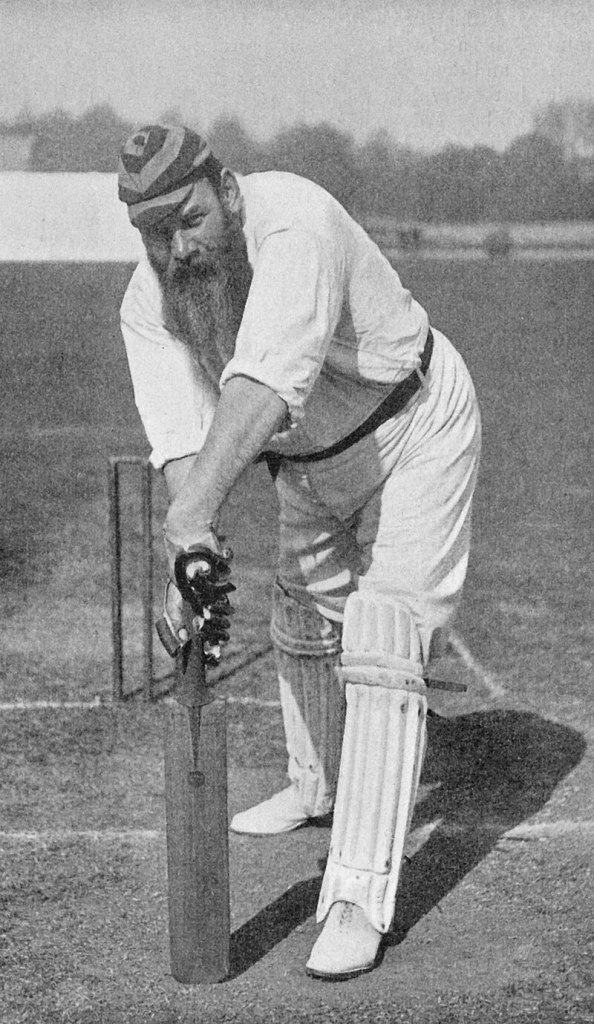
A Reminiscence of Cricket is a poem written by Arthur Conan Doyle. On 23-25 August 1900, Conan Doyle played in a first class cricket match against W.G. Grace where he scored 4, and took the wicket of Grace who had scored 110.

The creator of Sherlock Holmes, Sir Arthur Ignatius Conan Doyle played in ten first-class matches, mainly for the MCC, between 1900 and 1907. As a lower-order right-handed batsman and occasional slow bowler, he scored 231 runs, average 19.25, in 18 innings with a top score of 43. His only first-class wicket came against London County at Crystal Palace on 25 August 1900 when he had WG caught by the wicket-keeper off a skier for 110.

I found this poem with an extensive commentary by someone called Shamanth: “I’ve loved it primarily because of the allure of an amateur lifestyle that it portrays – an age where you could study medicine, play first class cricket, referee boxing bouts and marathons, and still produce brilliant literature, when you could live without sacrificing any dimension of your life, without putting your head down to specialize in any one field, when you did something simply because you loved it without having to forfeit other aspects of your life that you loved just as much. It makes you long for a lifestyle with such freedom.”

Credit: “From photo by E. Hawkins & Co., Brighton” – K. S. Ranjitsinhji, The Jubilee Book of Cricket Third Edition

Odd poem: Barack Obama, ‘Underground’

Under water grottos, caverns
Filled with apes
That eat figs.
Stepping on the figs
That the apes
Eat, they crunch.
The apes howl, bare
Their fangs, dance,
Tumble in the
Rushing water,
Musty, wet pelts
Glistening in the blue.

*****

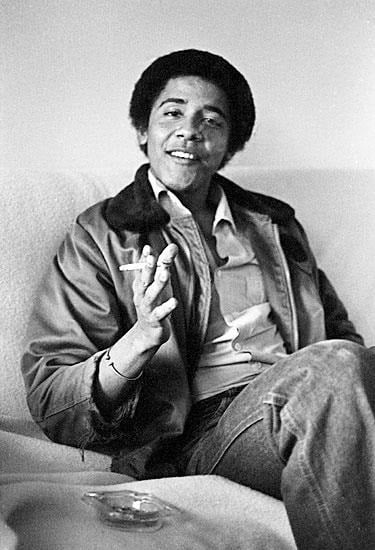
A 1981 poem by future President of the United States Barack Obama, originally published in the journal Feast and featured in The New Yorker in 2007. You can forgive a 19- or 20-year-old for a lot of what they wrote… and after all, it’s better than anything we’ve seen from Donald Trump.

Odd poem: Tchaikovsky, ‘Lilies of the Valley’

When at the end of spring I pick for the last time
My favourite flowers— a yearning fills my breast,
And to the future I urgently appeal:
Let me but once again look upon the lilies of the valley.

Now they have faded. Like an arrow the summer has flown by,
The days have grown shorter. The feathered choir is still,
The sun more charily grants us its warmth and light,
And already the wood has laid its leafy carpet.

Then when harsh winter comes
And the forests don their snowy cover,
Despondently I roam and wait with new yearning
For the skies to shine with the sun of spring.

I find no pleasure in books, or conversation,
Or swift-rushing sledges, or the ball’s noisy glitter,
Or Patti, or the theatre, or delicate cuisine,
Or the quiet crackling of smouldering logs on the fire

I wait for spring. And now the enchantress appears,
The wood has cast off its shroud and prepares for us shade,
And the rivers start to flow, and the grove is filled with sound,
And at last the long-looked-for day is here!

Quick to the woods!—I race along the familiar path.
Can my dreams have come true, my longings be fulfilled?—
There he is! Bending to the earth, with trembling hand
I pluck the wondrous gift of the enchantress Spring.

O lily of the valley, why do you so please the eye?
Other flowers there are more sumptuous and grand,
With brighter colours and livelier patterns,
Yet they have not your mysterious fascination.

Where lies the secret of your charms? What do you prophesy to the soul?
With what do you attract me, with what gladden my heart?
Is it that you revive the ghost of former pleasures,
Or is it future bliss that you promise us?

I know not. But your balmy fragrance,
Like flowing wine, warms and intoxicates me,
Like music, it takes my breath away,
And like a flame of love, it suffuses my burning cheeks.

And I am happy while you bloom, modest lily of the valley,
The tedium of winter days has passed without a trace,
And oppressive thoughts are gone, and in my heart in languid comfort
Welcomes, with you, forgetfulness of trouble and woe.

Yet now you fade. Again in monotonous succession
The days will begin to flow slowly, and stronger than before
Will I be tormented by importunate yearning,
By the agonizing dream of the happiness of days in May.

And then someday spring again will call
And raise the living world out of its fetters.
But the hour will strike. I shall be no more among the living,
I shall meet, like everyone, my fated turn.

And then what?—Where, at the winged hour of death,
Will my soul, heeding its command, soundlessly soar?
No answer! Be silent, my restless mind,
You cannot guess what eternity holds for us.

But like all of nature, drawn by our thirst to live,
We call to you and wait, beautiful Spring!
The joys of earth are so near to us, so familiar—
The yawning maw of the grave so dark!

*****

Lilies of the Valley (Ландыши) is a poem written by Pyotr Ilyich Tchaikovsky in December 1878 while he was in Florence.

“I am terribly proud of this poem”, he wrote when enclosing a copy to his brother Modest. “For the first time in my life I have managed to write a fairly good poem, which moreover is deeply heartfelt. I assure you that although it was very difficult, still I worked on it with the same pleasure as I do on music.”

Когда в конце весны последний раз срываю
Любимые цветы, – тоска мне давит грудь,
И к будущему я молитвенно взываю:
Хоть раз еще хочу на ландыши взглянуть.

Вот отцвели они. Стрелой промчалось лето,
Короче стали дни, умолк пернатый хор,
Скупее солнце нам дает тепла и света,
И разостлал уж лес свой лиственный ковер.

Потом, когда придет пора зимы суровой
И снежной пеленой оденутся леса,
Уныло я брожу и жду с тоскою новой,
Чтоб солнышком весны блеснули небеса.

Не радуют меня ни книга, нибеседа,
Ни быстрый бег саней, ни бала шумный блеск,
Ни Патти, ни театр, ни тонкости обеда,
Ни тлеющих полен в камине тихий треск.

Я жду весны. И вот волшебница явилась,
Свой саван сбросил лес и нам готовит тень,
И реки потекли, и роща огласилась,
И наконец настал давно желанный день!

Скорее в лес!.. Бегу знакомою тропою:
Ужель сбылись мечты, осуществились сны?..
Вот он! Склонясь к земле, я трепетной рукою
Срываю чудный дар волшебницы-весны.

О ландыш, отчего так радуешь ты взоры?
Другие есть цветы роскошней и пышней,
И ярче краски в них, и веселей узоры, —
Но прелести в них нет таинственной твоей.

В чём тайна чар твоих? Что ты душе вещаешь?
Чем манишь так к себе и сердце веселишь?
Иль радостей былых ты призрак воскрешаешь!
Или блаженство нам грядущее сулишь?

Не знаю. Но меня твоё благоуханье,
Как винная струя, и греет и пьянит,
Как музыка, оно стесняет мне дыханье
И, как огонь любви, питает жар ланит.

И счастлив я, пока цветешь ты, ландыш скромный,
От скуки зимних дней давно прошел и след,
И нет гнетущих дум, и сердце в неге томной
Приветствует с тобой забвенье зол и бед.

Но ты отцвел. Опять чредой однообразной
Дни тихо потекут, и прежнего сильней
Томиться буду я тоскою неотвязной,
Мучительной тоской о счастье майских дней.

И вот когда-нибудь весна опять разбудит
И от оков воздвигнет мир живой.
Но час пробьет. Меня – среди живых не будет,
Я встречу, как и все, черед свой роковой.

Что будет там?.. Куда, в час смерти окрыленный,
Мой дух, веленью вняв, беззвучно воспарит?
Ответа нет! Молчи, мой ум неугомонный,
Тебе не разгадать, чем вечность нас дарит.

Но, как природа вся, мы, жаждой жить влекомы,
Зовем тебя и ждем, красавица весна!
Нам радости земли так близки, так знакомы,-
Зияющая пасть могилы так темна!

English translation reproduced from Alexander Poznansky, Tchaikovsky. The quest for the inner man (1993), p. 336-337. https://creativecommons.org/licenses/by-nc-sa/4.0/

Photo: “lily of the valley” by Muffet is licensed under CC BY 2.0.

Odd poem: Marilyn Monroe, ‘Rhyme’

From time to time
I make it rhyme
but don’t hold that kind
of thing
against
me—
Oh well, what the hell,
so it won’t sell.
What I want to tell—
is what’s on my mind:
‘taint Dishes,
‘taint Wishes,
it’s thoughts
flinging by
before I die—
and to think
in ink.

*****

Marilyn Monroe read voraciously and wrote somewhat epigrammatically. She was friends with Dorothy Parker and Carson McCullers, and many other literary figures through her work as well as her marriage to Arthur Miller. Apart from movie scripts, she read widely: Thurber and Bemelmans, Dostoevsky and Camus, Yeats and Frost, Lewis Carroll and Harold Robbins and Rudolf Steiner and Sigmund Freud… In 1999 hundreds of her books were auctioned by Christie’s in New York. The whole list, together with more of her poems and epigrams and photos and mentions of literary friends can be found here in The HyperTexts.

Photo: Marilyn Monroe reading in the woods, from The HyperTexts.

Weekend read: Odd poem: Joseph Stalin, ‘The Outcast’

He knocked on strangers’ doors,
Going from house to house,
With an old oaken panduri
And that simple song of his.

But in his song, his song—
Pure as the sun’s own gleam—
Resounded a truth profound,
Resounded a lofty dream.

Hearts that had turned to stone
Were made to beat once more;
In many, he’d rouse a mind
That slumbered in deepest murk.

But instead of the laurels he’d earned,
The people of his land
Fed the outcast poison,
Placing a cup in his hand.

They told him: “Damned one, you must
Drink it, drain the cup dry…
Your song is foreign to us,
We prefer to live in a lie!”

*****

Ioseb Besarionis dze Jughashvili was a Georgian romantic poet who led a million-dollar heist that killed 40 people and funded the Bolshevik revolution. We know him as Joseph Stalin. His story is fascinating… and he is the model for the anti-hero Cassian Andor (Diego Luna) in the Star Wars spin-off TV series Andor.

The BBC has an excellent background article on him and the Andor connection: https://www.bbc.com/culture/article/20250417-how-a-young-joseph-stalin-inspired-star-wars-series-andor:
Yes, the troubled outlaw beloved by Star Wars fans everywhere is based in part on one of history’s most notorious mass murderers, as the series’ creator, Tony Gilroy, has acknowledged. “If you look at a picture of young Stalin, isn’t he glamorous,” Gilroy said in an interview in Rolling Stone in 2022. “He looks like Diego!”

The above poem and two others, all translated by David Shook, can be found here: https://molossusexperiment.tumblr.com/fall1/stalin. The link also contains Shook’s observations on Stalin’s qualities as a poet, and on his persecution of poets like Osip Mandelstam for the Stalin Epigram:
... the ten thick worms his fingers,
his words like measures of weight,

the huge laughing cockroaches on his top lip,
the glitter of his boot-rims.

Ringed with a scum of chicken-necked bosses
he toys with the tributes of half-men.
..

Not having found a title for Stalin’s poem, in this blog post I titled it ‘The Outcast’, though I considered ‘Panduri’.

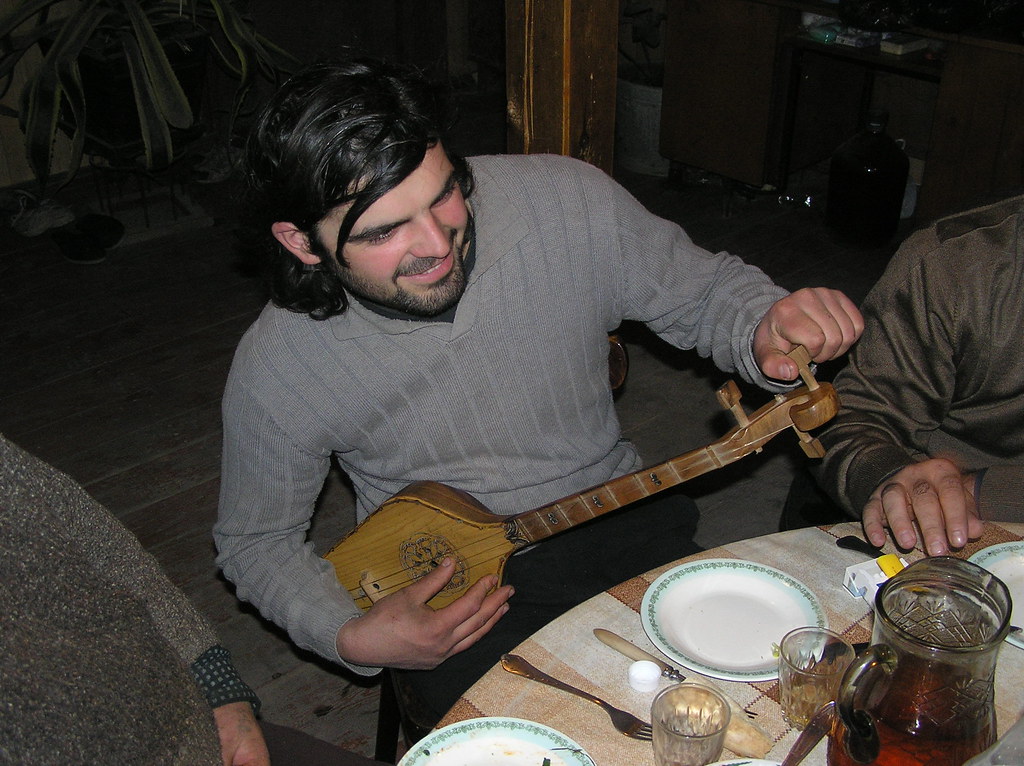
Photo: “David and Panduri” by sarah&patrick is licensed under CC BY-NC-SA 2.0.

Poems on poems: Ogden Nash, ‘The Collector’

I met a traveler from an antique show,
His pockets empty, but his eyes aglow.
Upon his back, and now his very own,
He bore two vast and trunkless legs of stone.
Amid the torrent of collector’s jargon
I gathered he had found himself a bargain,
A permanent conversation piece post-prandial,
Certified genuine early Ozymandial
And when I asked him how he could be sure,
He showed me P. B. Shelley’s signature.

*****

Ogden Nash‘s teasing take on Shelley’s Ozymandias is collected in ‘The Old Dog Barks Backwards’.

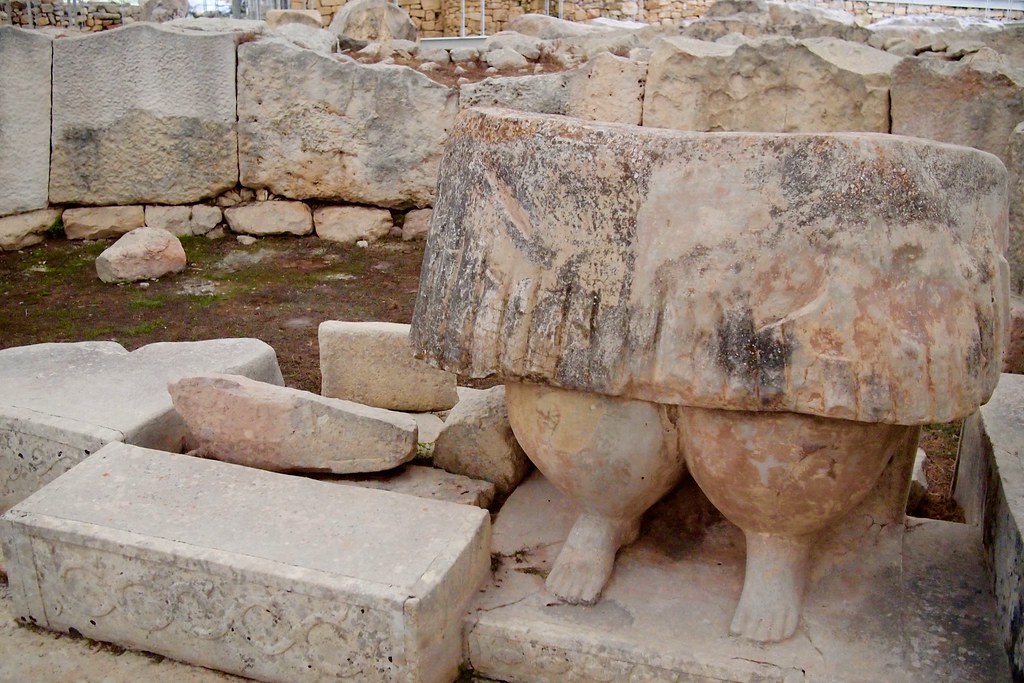
Photo: “Two vast and trunkless legs of stone” by skittledog is licensed under CC BY-NC-SA 2.0.

Weekend read: Odd poem: Benjamin Disraeli, ‘To A Beautiful Mute (The Eldest Child of Mr. Fairlie)’

Tell me the star from which she fell,
Oh! name the flower
From out whose wild and perfumed bell
At witching hour,
Sprang forth this fair and fairy maiden
Like a bee with honey laden.

They say that those sweet lips of thine
Breathe not to speak:
Thy very ears that seem so fine
No sound can seek,
And yet thy face beams with emotion,
Restless as the waves of the ocean.

‘Tis well. Thy face and form agree,
And both are fair.
I would not that this child should be
As others are:
I love to mark her indecision,
Smiling with seraphic vision

At our poor gifts of vulgar sense
That cannot stain
Nor mar her mystic innocence,
Nor cloud her brain
With all the dreams of worldly folly,
And its creature melancholy.

To thee I dedicate these lines,
Yet read them not.
Cursed be the art e’er refines
Thy natural lot:
Read the bright stars and read the flowers,
And hold converse with the bowers.

*****

This poem for a mute girl and another (‘To a Maiden Sleeping After her First Ball’) can be found in All Poetry; they each have an accurate but uninspiring AI-driven analysis after them; the subsequent comments are more engaging:
WolfSpirit – “keep writing, Benjamin. you may just be a known poet someday. 
Linda Marshall – “I know Disraeli as a novelist and (of course) as a politician.
This is the first poem of his I’ve ever read!
It has its moments and of course tastes were different in those days but there are rhythmical infelicities and some rhymes that verge on the comic.
I can see why he’s known for his prose rather than his poetry!”

Benjamin Disraeli was born into a Jewish family in 1804; his father quarrelled with the synagogue and renounced Judaism, and had all the children baptised into the Church of England when Disraeli was 12. After school, Disraeli was articled to a law firm at age 16, and his career went from there to stock market speculation, financial ruin, novel writing, and then politics. He was twice Prime Minister of the United Kindom, and was appointed Earl of Beaconsfield by Queen Victoria in 1876. He died in 1881, unmourned as a poet.

Photo: Earl of Beaconsfield, K.G. Photographed at Osborne by Command of H.M. The Queen, July 22, 1878. This file was derived from: Benjamin Disraeli CDV by Cornelius Jabez Hughes, 1878.jpg

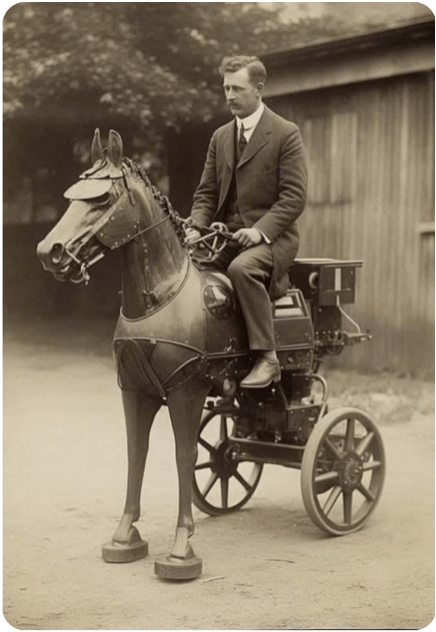
Odd poem: Light verse: Richard Fleming, ‘The Equestropede’

George, wishing to proceed at speed,
built the world’s first Equestropede.
This fusion of a horse and cart,
a tribute to the welder’s art,
had a strong engine, 12 hp,
which meant George travelled speedily.
It ran on oats and gasoline,
a strange concoction, unforeseen
by Elon Musk and the X folk
who would have seen it as a joke.
George, Michelangelo reborn,
treated the neigh-sayers with scorn.

*****

Richard Fleming writes: “The Equestropede, when it was first unveiled at the Exposition Universelle in 1901, proved to be the centaur of attraction. I post a rhyming poem every day on my Facebook page https://www.facebook.com/richard.fleming.92102564/ and accompany it with a quirky image that I’ve found online. Does the poem precede the image or vice versa? That depends. In the case of ‘The Equestropede’ the strange image definitely preceded the rhyme and fairly begged to be ‘poeticised’. The Equestropede name, however, is purely my invention as is its unveiling at the Exposition Universelle.”

Richard Fleming is an Irish-born poet (and humorist) currently living in Guernsey, a small island midway between Britain and France. His work has appeared in various magazines, most recently Snakeskin, Bewildering Stories, Lighten Up Online, the Taj Mahal Review and the Potcake Chapbook ‘Lost Love’, and has been broadcast on BBC radio. He has performed at several literary festivals and his latest collection of verse, Stone Witness, features the titular poem commissioned by the BBC for National Poetry Day. He writes in various genres and can be found at www.redhandwriter.blogspot.com or Facebook https://www.facebook.com/richard.fleming.92102564/

Odd poem: Couplet wordplay: Daniel Galef, ‘Letters to an Editor’

When I was in the printing biz,
in magazines (I worked at MS),
under my office door was slipped
a neatly-typed-out MS,
its cover letter curt and snippy,
return address in MS.
And what a scoop! New drug (its doses
prescribed for MS)
a fraud! The source, in bold defiance,
a chemist with a MS.
I showed my boss. “Yeah, right!” she reckoned,
and canned me in a MS.

*****

Daniel Galef provides this key to the various standard meanings of the abbreviation:
“Ms. Magazine; manuscript; Mississippi; multiple sclerosis; Master of Science degree; millisecond.”

Daniel Galef’s first book, Imaginary Sonnets, was published last year. ‘Letters to an Editor’ was published as part of his being the Featured Poet in Light Poetry Magazine. He is currently working on a book of comic poetry and wordplay, as well as on a PhD from the University of Cincinnati.

Photo: “Ms. magazine Cover – Winter 2015” by Liberty Media for Women, LLC is licensed under CC BY-SA 4.0.