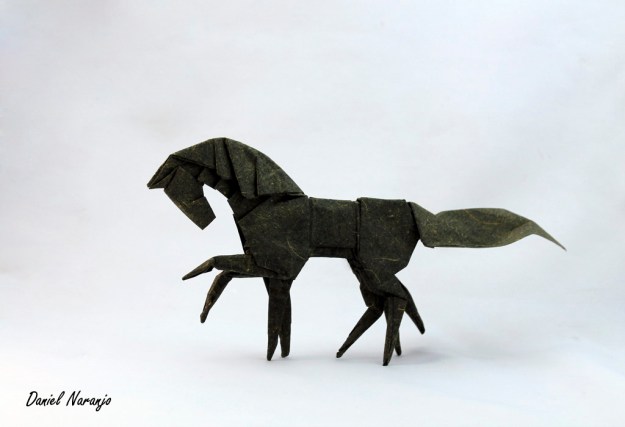
Eight Legs
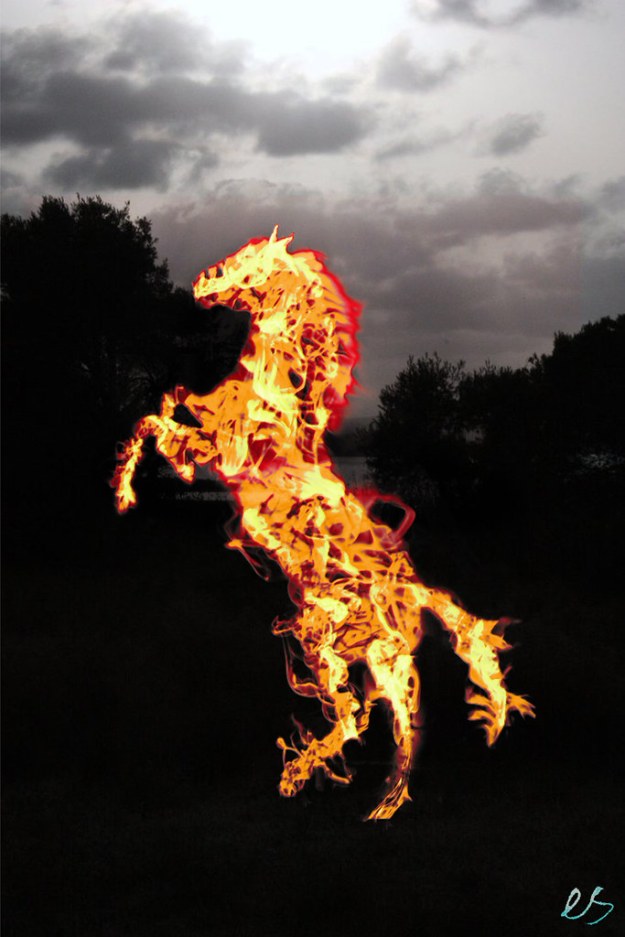
Odin had a spider
In a web above his throne.
“Out!” he said; it came to him.
“And up!” he said; it grew.
“Legs go this way, legs go that!”
The wind began to moan.
Odin touched a spur to Sleipnir,
Through the storm they flew.
This little poem was published in Anima, a magazine of “Poems of Soul and Spirit” which is now, as they say, quiescent (though it continues to publish books). Odin is very much a god of magic, transformation, journeys, knowledge and poetry – as well as of war and death.
To get hold of the Mead of Poetry, which was in three vats guarded in a mountain cave by a giant’s daughter, Odin changed into a snake to get inside the cave; changed into a handsome young man to persuade the giantess to give him three sips in exchange for sleeping with her for three nights; drank each vat in a single sip; and changed into an eagle to fly back to Asgard where the other gods had prepared a big cauldron for the mead. Chased by the angry giant (also in the form of an eagle) and slowed down by all the mead inside him, Odin was so scared that he shitted some of it out as he flew – but he made it to Asgard, and disgorged the bulk of the mead into the cauldron. This is the gift that the gods give when they want to make someone a good poet. And bad poetry? That’s when you’ve been consuming the stuff Odin shitted out.
Technically, you could discuss whether “Eight Legs” is in flawed trochaics, and whether the line break between the first two lines is in the right place, and so on… But if you read it aloud, I think you’ll find it has strong stresses, weak stresses, and unstressed syllables – or else consider it as quadrisyllabics (one stressed and three unstressed syllables). I would read it as:
Odin had a spider in a web above his throne. (pause)
“Out!” he said; it came to him. “And up!” he said; it grew. (pause)
“Legs go this way, legs go that!” The wind began to moan. (pause)
Odin touched a spur to Sleipnir, through the storm they flew.
Not too different from
I had a duck-billed platypus when I was up at Trinity
With whom I soon discovered a remarkable affinity
– Patrick Barrington, The Diplomatic Platypus
or
I am the very model of a modern major-general
– W.S. Gilbert, The Pirates of Penzance
or
Not always was the kangaroo as now we do behold him
– Rudyard Kipling, The Sing-Song of Old Man Kangaroo, in The Just So Stories
Poetry is very close to song; or, song is the bridge between poetry and music. Reading poetry aloud is very important for its appreciation, to bring out its rhythm (and sometimes even musical notes that flow into it naturally). That’s why poetry can be set to music, and why songs are invariably printed out in poem format.
In that context, even the line of spondees in Samuel Coleridge’s “Metrical Feet” has, like all the other lines, four stresses:
Trochee trips from long to short.
From long to long in solemn sort
Slow spondee stalks; strong foot yet ill able
Ever to run with the dactyl trisyllable.
Iambics march from short to long.
With a leap and a bound the swift anapests throng.
… because poetry in its origins (in the preliterate times of both the tribal fire and modern nursery) is designed to be memorised, so it can be chanted or sung or otherwise recited.

 publications where a poet can place material that some of the more delicate magazines would blush to read. Edited by Roderick (“Rick”) Bates since 2014, and by founder David M. Harris before that, it is defined by the editor as “an online poetry journal whose editorial fancies are no more arbitrary than any other; they are simply more overtly so. I publish what I like.”
 Founded over ten years ago by Martin Parker, it is now edited by Jerome Betts – both of them being accomplished formal poets, of course. They and the magazine are very English (reflected, to the bemusement of Americans, in some of the spelling, rhymes, slang and references) but contributors come from around the globe. Their front page states:
 Perfectly competent, and with interesting trivia and useful background notes by
