Tag Archives: Robin Helweg-Larsen

SF Poem: RHL, ‘Out Of Many…’

Two hundred million sperm
in one ejaculation;
and we are standing firm
and spouting with elation,
though but a single germ
survives to incarnation.

And much in nature throws
vast clouds into the ocean,
where myriad embryos
become a magic potion
consumed by all that goes
with food its only notion;

yet one or two survive
to adulthood and, later,
will make the species thrive
and serve up like a waiter
new young crowds that arrive
like cargo crammed on freighter.

This is how nature lives;
we should not think it foolish
eight billion of us gives
but forty fierce and mulish
posthuman narratives,
godlike as much as ghoulish,

in retrospect appearing nature’s plan
for how we cross to Nietzsche’s Superman.

*****

This poem was originally published in the Amsterdam Quarterly, although without the final couplet. I usually allow editors to make changes if they suggest them, and often the changes are an improvement that I retain. But in this case I’m afraid the science fiction speculation may be lost without those last lines: the idea that the present billions of us are on the point of being superseded by the first handful among us who achieve a godlike state of posthumanity… and that this ratio of 200,000,000 seeds being sacrificed to achieve one mature adult in the next generation is not unusual in nature.

Photo: “Stinging nettle stem with +/-15 billion seeds” by esagor is licensed under CC BY-NC 2.0.

RHL, ‘The Sun is Always Setting’

The sun is always setting, always setting on your day;
you sense the dark approaching, wish that it would stay away.
Do you want a life unchanging? Wish to still be a newborn?
Don’t you know life’s not a rosebud, but has root and leaf and thorn?

The sun is always setting and the black drapes are unfurled;
but notice that the sun sets on your world, not on the world:
it’s rolling into brightness in another’s happy land,
and the dark is evanescent and the brightening is grand.

The sun is always setting on the dinosaurs, but birds
are flocking into being, as are Serengeti herds;
and the sun that lights humanity? Of course it’s going to set,
and elsewhere light new tales of which we’ll just be a vignette.

The sun is always setting, but that view is just your choice;
I say the world is turning and evolving; I rejoice.

*****

Sometimes I’m told that my poetry is too bleak. But I think that’s only so if you want everything to stay as it is now. If, on the other hand, you expect change, and that change will ultimately provide more benefit than loss to the universe as a whole, then <shrug>… so it goes.

This poem has 14 lines but is hardly a sonnet. It was recently published in Pulsebeat Poetry Journal. Thanks, David Stephenson!

Photo: “Sunset Sadness” by BaboMike is licensed under CC BY-NC 2.0.

Using form: alliteration: RHL, ‘How Brashly Brave’

How brashly brave, embroiled in this brief life,
we chance our challenge to the unchanging gods!
Strike poses, strut the strident stage of strife,
take optimistic oaths against all odds.

Fearless of foes, false friends, futility,
we wrack our reason to reach, undestroyed—
though usually of no utility—
a burst of brightness bettering the void.

*****

Although I prefer to maintain an unobtrusive persona myself, I subscribe to this philosophy of bravado existentialism. The florid alliteration suits the message.

This poem is published in the current issue of Light – thanks, Melissa Balmain and all.

Photo: “Flamboyant Emperor of the United States” by PeterThoeny is licensed under CC BY-NC-SA 2.0.

Using form: SF sonnet: RHL, ‘On a Dead Spaceship’

On a dead spaceship drifting round a star,
the trapped inhabitants are born and die.
The engineers’ broad privileges lie
in engine room and solar panel power.
The fruit and vegetables and protein co-ops
are run by farmers with genetics skills:
the products of their dirt and careful kills
help service trade between the several groups.
Others — musicians, architects — can skip
along the paths of interlinking webs.
Beyond these gated pods that the rich carve
for their own selves (but still within the ship),
in useless parts, are born the lackluck plebs.
Heard but ignored, they just hunt rats or starve.

*****

This sonnet was republished in Bewildering Stories in April 2024 – original publication had been in Star*Line five years previously. I find something very satisfying about using a formal sonnet structure to express science fiction and speculative fiction ideas – the ideas are by nature open-ended, unconstrained, and it feels good to tie them down as in a neat package with a bow on top. Topiary.

As for what political comments can be read into the poem, read away!

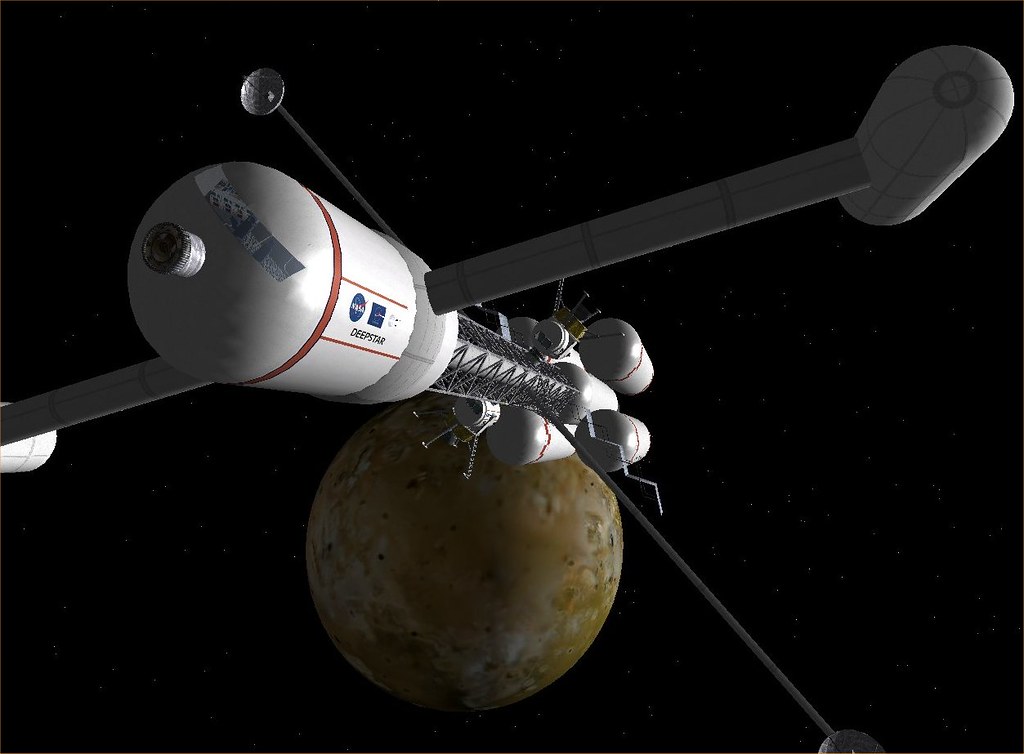
Photo: “Deepstar 2071 at Io” by FlyingSinger is licensed under CC BY 2.0.

Ekphrastic sonnet: RHL, ‘Ghosts of Dead Parents’

Her ashes spread on Skirrid that she loved;
and his bones buried by the Harbour bay…
Why choose views for the dead? Once in earth shoved,
dirt in the dark is all they’d see, not day,
even if they lived. And if cremated, well…
So is it for our own guilt’s absolution?
Or status, that their graves our standing tell?
Or rites for social change’s resolution?
Those who were always here are here no more –
Their alwaysness runs out when they decease,
and life will now sound different from before,
like insect shrills not heard until they cease.
Dead ghosts sleep twittering in our heads’ domed caves,
waking to fill night skies from dreams and graves.

*****

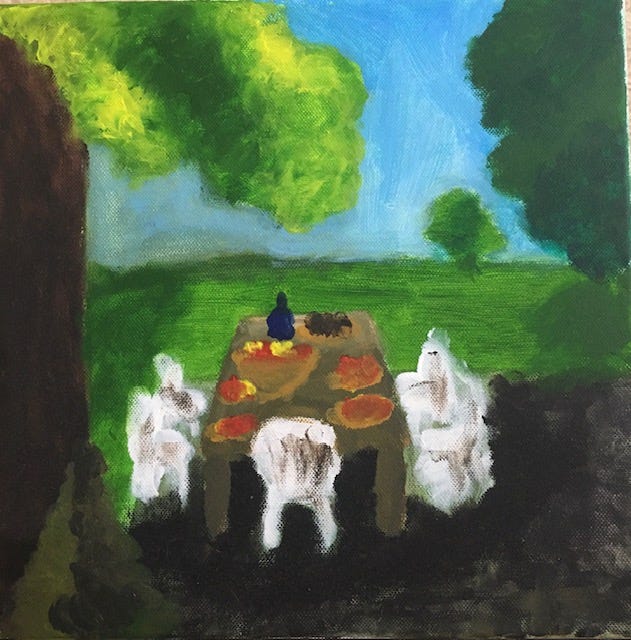
This sonnet was published by The Wee Sparrow Poetry Press as a response to their ekphrastic challenge for the illustration, a painting by Žofia Katriňáková. It was written for my parents who, although they died decades ago, are still a background to my thoughts. My father is buried by the bay of Governor’s Harbour, my mother’s ashes were scattered on Skirrid Fawr, the Welsh mountain she loved and lived within sight of in Abergavenny. And I have another short poem for them, published in the Amsterdam Quarterly:

In the night’s jam jar of my memory
my long-dead parents live as fireflies.
My thoughts of them worn by time’s emery,
their faint light still suggests where my path lies.

Is it reasonable to hope to be a firefly for your children and grandchildren?

Short poem: RHL, ‘Pithy’

His words are witty,
with a twist.
He says they’re “pithy”;
note the lisp.

*****

This is one of my three short poems published in the current Rat’s Ass Review – thanks, Roderick Bates – where the good and the rude, the mocking and shocking, all coexist harmoniously.

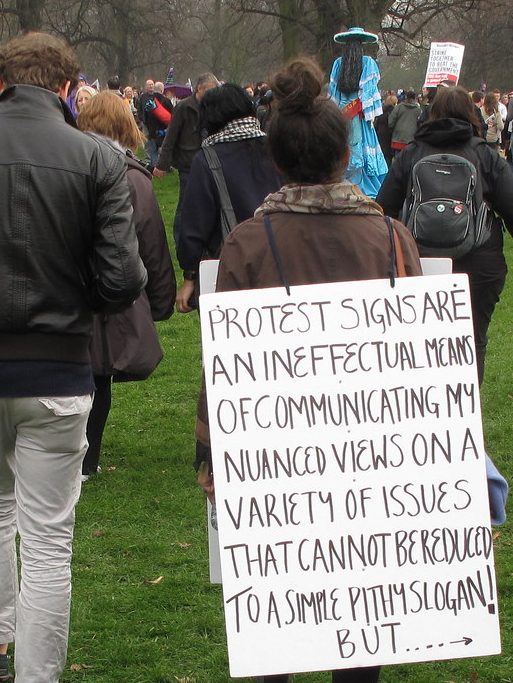
Photo: “Protest signs are an ineffectual means of communicating my nuanced views on a variety of issues that cannot be reduced to a simple pithy slogan!” by duncan is licensed under CC BY-NC 2.0.

Using form: Limericks: RHL, ‘Attitudes in the Holy Land’

Moses says God says: (Deuteronomy 20:16-18)

God’s ruthless. Just read Deuteronomy,
believers get zero autonomy:
“You must kill all non-Jews
in this land that I choose.”
Just back then? Or still now? (Love His bonhomie!)

Luke says Jesus says: (Luke 19:27)

Christ was often less peaceful than stormy,
with disciples both pushy and swarmy;
to the rest he made plain
if they’d not have him reign:
“Bring them hither and slay them before me.”

Muhammad says God says: (Qur’an 9:5)

“Polytheists, wherever you find them,
you should ambush and capture and bind them,
and only relax
if they pray and pay tax;
elsewise kill them, and in the dust grind them.”

*****

Given that Jews, Christians and Muslims all claim to be worshipping the same god, the only God, the God of Abraham, it’s somewhat surprising how much time they spend fighting each other. But then, factions within the same religion have been known to slaughter each other. It seems to be something inherent in religions, especially monotheistic ones – if you believe there is only one god, your god, then everyone else’s belief is blasphemy.

Somehow these tribal religions of preliterate herders have continued to the present. They are so illogical and – despite beautiful architecture etc – so frequently violent that the best response I can think of is the mockery of limericks and other forms of light verse. That, and mourning the dead children, and supporting efforts to impose peace.

These limericks were first published in The HyperTexts, Michael R. Burch’s enormous anthology which includes extensive poetry about both the Holocaust and the Nakba, the Palestinian Catastrophe.

Moses causes the Levites to kill the idolators” is marked with Public Domain Mark 1.0.

SF Sonnet: RHL, ‘Transhuman Evolution’

The humans crowd the riverbanks in cities
while you, would-be transhuman in your boat,
trust to your dreams and luck as on you float,
ignoring all the land’s static committees,
the buildings taller with their strident voices,
the citied banks ever more crammed and loud,
leaders and statues oversize and proud,
fixed in their views. But you see other choices.

And then there’s no more land. Only the sea.
You deso-, iso-, yet e-lated find
after the Desolation of the Years,
sailing and searching past humanity
in the vast oceans of the future mind,
a life within the music of the spheres.

*****

This sonnet has just been published in Space and Time #146, a magazine where fantasy, science fiction, horror and whatever else are presented in a variety of print, online and audio forms. The sonnet owes something to one of my favourite Matthew Arnold poems, ‘The Future‘, which begins

A wanderer is man from his birth.
He was born in a ship
On the breast of the river of time;
Brimming with wonder and joy
He spreads out his arms to the light,
Rivets his gaze on the banks of the stream.


and ends flowing out into the ocean:

As the pale waste widens around him,
As the banks fade dimmer away,
As the stars come out, and the night-wind
Brings up the stream
Murmurs and scents of the infinite sea.


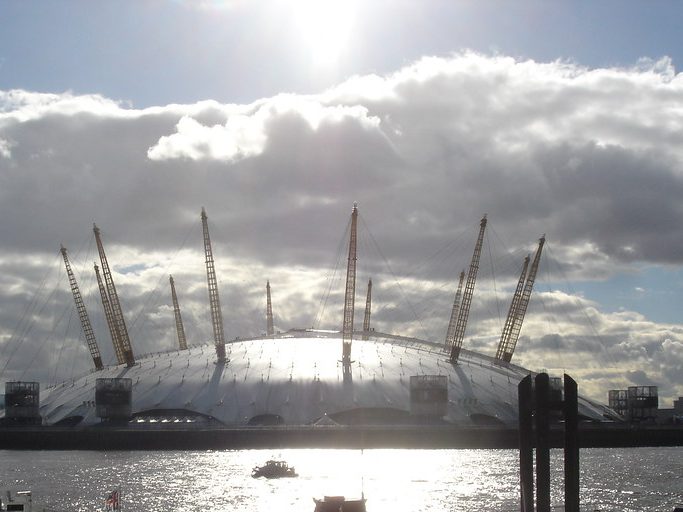
I assume Matthew Arnold limited this vision to the individual life, but I see it also as an image relevant to the progress of the human species into something vaster and unknowably different – not far removed from Nietzsche’s sense of Man as being a bridge between animal and… superman, or transhuman. Not the nasty small-minded punks of Nazi and neo-Nazi superman stupidity, but something far grander in a far larger development towards what life could become.

Photo: “Millennium Dome/O2 Arena from Trinity Buoy Wharf, Blackwall” by wirewiper is licensed under CC BY-NC-ND 2.0.

RHL, ‘Everyone’

Everyone’s naked under their clothes,
everyone’s bald under their hair;
hide if you like, everyone knows!
Everyone sees what you’re like under there.

Everyone’s meat under their skin,
everyone’s bones under their meat;
we know what your outside is hiding within:
hiding will always end in defeat.

So banish the words and censor the book,
draw little clothes on the cartoons for kids;
everyone knows where your dirty eyes look,
everyone sees that your life’s on the skids.

This poem was a response to the news out of Florida that elementary schools are being forced to draw clothing on cartoon characters in children’s books if the printed images show nakedness of either front or back. The right-wing nutcase group ‘Moms For Liberty’ is causing the trouble.
This link https://popular.info/p/pressed-by-moms-for-liberty-florida gives details and shows some of the results.
Incidentally, one co-founder of the Moms for Liberty group is Bridget Ziegler. Apparently she and her husband Christian Ziegler had sexual threesomes with another woman; and when Bridget backed out of a planned threesome event in October 2023, Christian went along anyway; the third party declined sex, saying she was in it more for Bridget; so Christian raped her. The woman then filed a complaint with the police.
Why is it that the hysterically over-moral types seem to be the ones causing most of the problems?

This poem was published in the March 2024 issue of Lighten Up Online (aka LUPO); thanks, Jerome Betts!

Photo: illustration from ‘No, David!‘, written and illustrated by David Shannon.

Very short poem: RHL, ‘The End is Nigh’

The end is an A.I.

*****

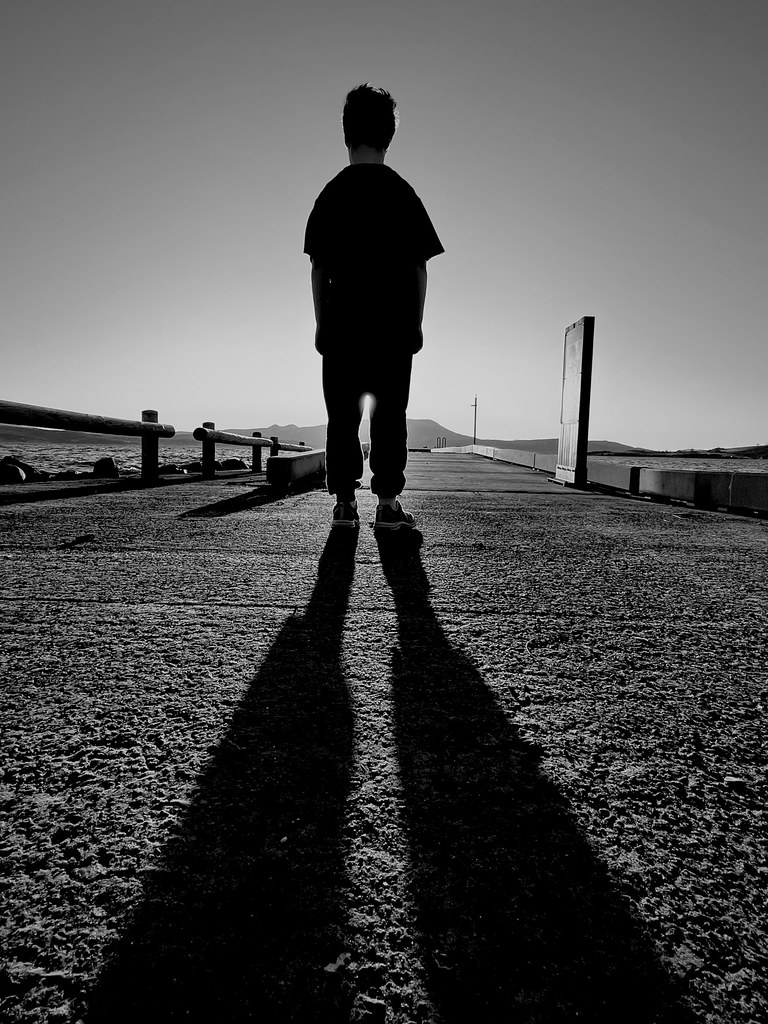
This very short (poem?) was just published in The Asses of Parnassus – thanks, Brooke Clark! I chose this post’s accompanying photo for its enigmatic mixture of futuristic construction and threatening natural conditions – the building is the Globe, or Avicii Arena, in Sweden but that is irrelevant.

An alternative photo I considered had a doomsday prophet holding a sign saying “The beginning is nigh”, which would be equally true: the end of homo sapiens being the beginning of some unguessable post-humanity. I read Ray Kurzweil and Yuval Noah Harari, and ponder. And then I look back at (others’) 2015 predictions of what the next ten years would bring, and, well, not so fast…

Photo: “the end is nigh” by dan.boss is licensed under CC BY-NC-SA 2.0.