Tag Archives: USA

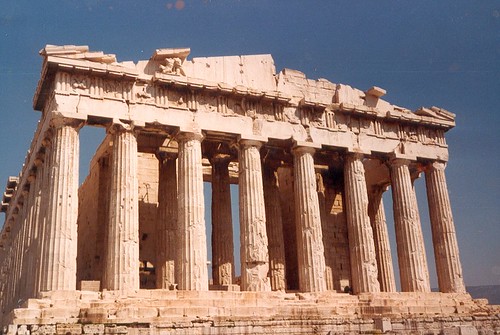
Political poem: A.E. Stallings, ‘An American Wakes Up in Athens, Greece After the 2024 Elections’

I wake up in the dark.
In dark I went to sleep.
There is a kind of stark
Accounting of lost sheep.

The day breaks with a dawn
So much like yesterday’s.
I turn the kettle on
And brew a dark malaise.

Things go from bad to worse,
Let’s call it entropy.
The blessing is a curse,
And treachery goes free

Or something. Never mind,
Here in the cradle of
Democracy I find
There’s history enough —

There on the shining rock
The entasis of state,
The subtle curves that lock
The crooked to the straight.

The centuries were slow
Where stood its solid scenes,
It took one night to blow
The roof to smithereens.

It boasts of Marathon,
It boasts of Salamis
Five generations on,
Of hemlock’s bitterness,

Between, the city nations
Of Greeks warred tribe with tribe
Why trouble with invasions?
It’s easier to bribe.

We still read Athens’ versions,
As though the Spartans lost,
As though the prudent Persians
Did not know what they cost.

Pericles died of plague,
And Phidias in prison.
Division’s sown, and vague
Suspicions have arisen.

It took nine years to build
Those columns in the air,
But half its marbles spilled,
Over fifty to repair.

It’s like a foundered ship,
That ruin on the hill.
It makes my heartbeat skip.
I’m afraid it always will.

*****

A.E. Stallings writes: “I [wrote this] poem the day after the elections. It was written on the fly, and has not been revised.”

‘An American Wakes Up in Athens, Greece After the 2024 Elections’ was originally published in Liberties Journal.

A.E. Stallings is the current Oxford Professor of Poetry. This Afterlife: Selected Poems was published in 2022. Her forthcoming book is Frieze Frame: How Poets, Painters, and their Friends Framed the Debate Around Elgin and the Marbles of the Parthenon

Photo: “Parthenon” by R~P~M is licensed under CC BY-NC-ND 2.0.
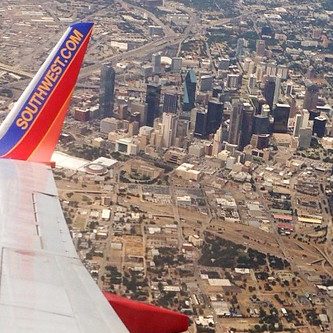
Evocative fragment: W.H. Auden, ‘On the Circuit’

Another morning comes: I see,
Dwindling below me on the plane,
The roofs of one more audience
I will not see again.

God bless the lot of them, although
I don’t remember which was which:
God bless the U.S.A., so large,
So friendly, and so rich.

*****

Auden emigrated from the UK to the US in 1939, and lived as an Anglo-American academic who lectured all over the country. A left-wing poet, his ‘On the Circuit’ shows his amusement at living well in the United States. His wry reflections are built on a simple ABCB rhyme scheme in iambic tetrameter, with the last line of each stanza shortened to a trimeter for the stanza’s punchline. I’ve quoted the last two of 16 stanzas.

Speaking as a foreigner who lived in the US for 25 years, teaching business seminars across the continent to corporate audiences, I confirm the resonance of Auden’s general attitude. Parenthetically I note that despite his approval of the US as a place to live and work, it’s not where he chose to vacation each year, or where he bought a house, or where he ended his days.

Photo: “From yesterday: @southwestair #flight 2500 #DAL-#SAT with #downtown #dallas behind the #winglet. I’m doing the opposite route later today heading back to #KC for the night before another trip. #latergram #swapic #city #texas #plane #airplane #instaplane #” by JL Johnson // User47.com is licensed under CC BY-SA 2.0.

Short poem: ‘Land of the Free’

Homicide, suicide, what’s it to me?
We all carry guns in the Land of the Free.
Free to be Christians and free to be whites –
The rest ain’t included in our Bill of Rights.
The rest want to come here (or blow us sky high),
They get smuggled in, so they cheat, steal and lie.
Servants and slaves since the US begun:
Tell ’em: Sit! and shut up! and don’t carry no gun!

*****

This short poem was published minutes ago in the Allegro Poetry Journal, put out by Sally Long in the UK. The spring edition is always unthemed, the autumn edition themed; and this time the theme is ‘Freedom’ – a word which means many things to many people.

Charlottesville ‘Unite the Right’ Rally” by Anthony Crider is licensed under CC BY 2.0.

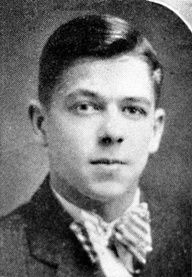
Odd poem: ‘Life’ by Ronald Reagan, age 17

I wonder what it’s all about, and why
We suffer so, when little things go wrong?
We make our life a struggle,
When life should be a song.

Our troubles break and drench us,
Like spray on the cleaving prow
Of some trim Gloucester schooner
As it dips in a graceful bow.

Our troubles break and drench us
But like that cleaving prow,
The wind will fan and dry us
And we’ll watch some other bow.

But why does sorrow drench us
When our fellow passes on?
He’s just exchanged life’s dreary dirge
For an eternal life of song

What is the inborn human trait
That frowns on a life of song?
That makes us weep at the journey’s end,
When the journey was oft-times wrong?

Weep when we reach the door
That opens to let us in,
And brings to us eternal peace
As it closes again on sin.

Millions have gone before us,
And millions will come behind
So why do we curse and fight
At a fate wise and kind

We hang onto a jaded life
A life of sorrow and pain
A life that warps and breaks us,
And we try to run through it again.

Let’s face it, it’s doggerel–the meter comes and goes, sometimes three and sometimes four stresses in a line; the second and fourth lines in each stanza rhyme, but there is a lot of repetition. However, kudos to a 17-year-old to put together a strong, optimistic view of life, part faith-filled, part commonsense, a view that he retained throughout his life. Ronald Reagan (as illustrated in The Hypertexts) was a charming, witty, self-deprecating person.

On the other hand, he was largely responsible for the destruction of the American middle class, the increasing inequality of American society, and the beginning of the breakdown of public services by defunding – now impacting public education, environmental protection, etc. His foreign policy was riddled with lies and law-breaking. And on the personal level, he was not a good parent.

But he did try writing poetry as a teenager…

Review: “The Autobiography of a Super-Tramp” by W.H. Davies

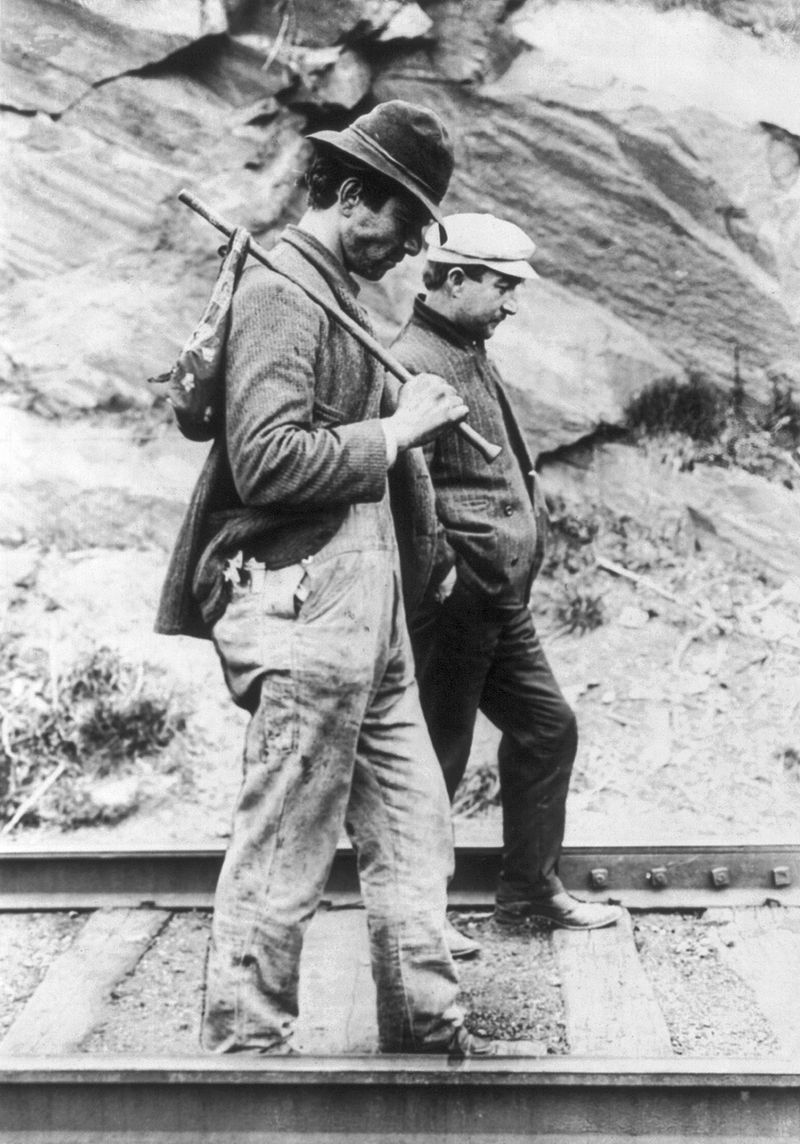
Hobos

Hobos, US Library of Congress. Unknown date. Likely 1880s – 1930s

W.H. Davies was a poet whose best-known piece begins

What is this life if, full of care,
We have no time to stand and stare.

Born in Newport, Wales, in 1871, he was raised by his grandparents. As a boy he fought a lot, and at 13 was the leader of gang, was arrested for stealing handbags, and got twelve strokes of the birch. He read enthusiastically, disliked being apprenticed to a maker of picture frames, and at 21 took passage to America. His years of wandering provide a fascinating view of the US over 100 years ago, with chapters on jails, thieves, cattlemen, race issues in the Mississippi area, and so on. He worked his way back and forth over the Atlantic, lost a leg hopping a train in Canada and thereafter limited himself to England where he began writing his poetry and memoirs in doss houses in between bouts of tramping and begging. Eventually he was noticed, published for his poetry first and then for his autobiography–with a preface by George Bernard Shaw–and became famous.

His autobiography is frank, amusing, informative, insightful and naive all at the same time. A unique book, and a good accompaniment to his poetry (the link is to an 11-slide deck) which is also insightful and naive and oriented to observing life outside, whether in city or countryside. This is from “The Sleepers”:

As I walked down the waterside
This silent morning, wet and dark;
Before the cocks in farmyards crowed,
Before the dogs began to bark;
Before the hour of five was struck
By old Westminster’s mighty clock:

As I walked down the waterside
This morning, in the cold damp air,
I saw a hundred women and men
Huddled in rags and sleeping there:
These people have no work, thought I,
And long before their time they die.

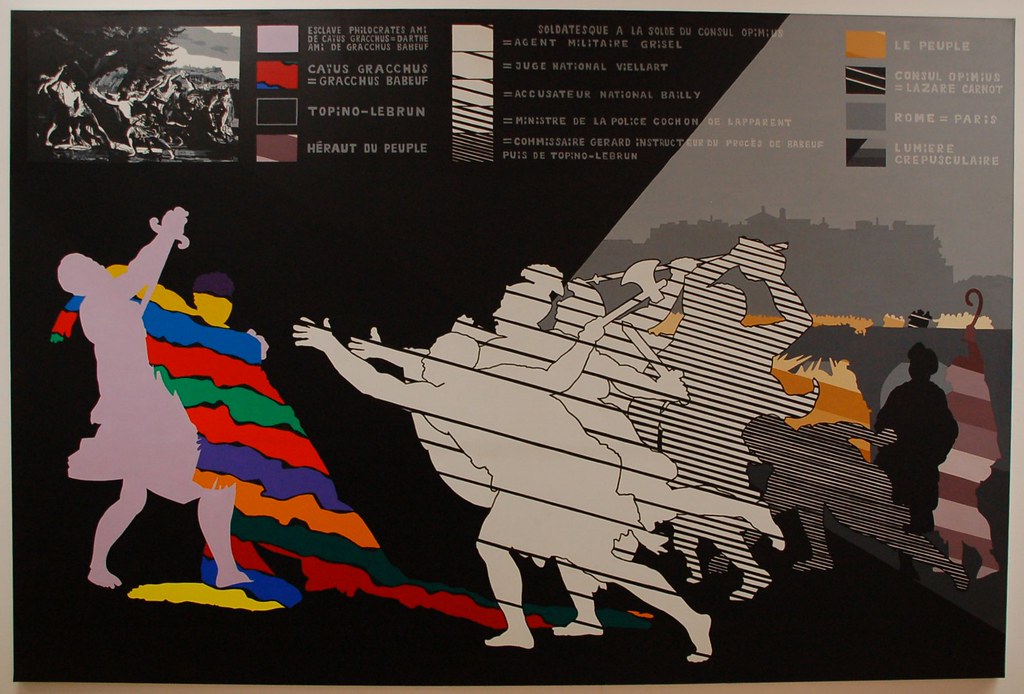
Double Dactyl: “Rome/New Rome”

Bippetty boppetty
Gracchus (Tiberius)
Tried to reform Rome and
Ended up dead.
Same with his brother; and
Coincidentally
JFK, RFK,
Pumped full of lead.

This Double Dactyl was published in the Asses of Parnassus, a Tumblr site managed by Brooke Clark that focuses on short snarky formal poems, preferably with a link to Latin and Greek themes.

American history shows high points once a century: the Presidencies of Washington, Lincoln and Franklin Roosevelt (with Eleanor, of course). After the Second World War, Eisenhower warned America about the “military-industrial complex”, which Kennedy started trying to rein in after a few missteps. But apparently the CIA’s assassination of democratically elected leaders isn’t restricted to “outside the US”. And the end result, after LBJ, Reagan/Bush, Bush/Cheney is… Trump.

We simply have to look forward to this century’s American history high point. But it’s not even on the horizon yet.

Sonnet: “Flags We Have Feared”

The Swastika, that ancient Vedic sign,
the lightning wheels with which the Aryan bands
in lightning war overrun other lands,
wheeled juggernauts that crush, self-claimed divine.
Hammer and Sickle, commoners’ work-tools;
weapons for rising up, and tearing down
the castle of the rich, the bourgeois town;
fake honour to the poor the Party rules.
A flag with Stripes, memorial for flogged slaves,
striped jail clothes for resulting underclass;
and Stars like bullets through the windshield’s glass
for leaders by the CIA shot down,
star earned for each election overthrown,
star for each land the flag invades, or ‘saves’.

This sonnet was originally and ironically published in Ambit in the UK. The irony being, of course, that the Union Jack is viewed by much of the world with as much fear and hostility as any of the other three flags. But you don’t learn that, or the reasons for it, in school in the UK–at least not in England. The British (at least the English) have a warm and fuzzy feeling toward their flag, and are innocent or puzzled that anyone else should find it negative. Similarly in the times of the other three flags, the Germans (at least the Aryans), the Soviets (at least the Russians) and the Americans (at least the whites) have been happy and proud of their flag, puzzled that anyone else should fear or dislike it.

Another irony: the jury is still out on to what extent one of the leaders shot down by the CIA was their own.

Technically it’s a sonnet with a non-standard rhyme scheme: ABBA CDDC EFFGGE. But the rhymes and the scansion are OK. As for the volta, the requisite turn of mood or argument between the octave and the sestet… well, after dealing with the two great enemies of western democracy, you weren’t expecting me to pick on the US, were you?

Sonnet: “Driving Rain”

We drive through West Virginia’s driving rain
And even I turn down the cruise control
And stay below the limit. At the toll
We count coins, ask how many tolls remain.
One sleeps, one drives, to get back home tonight.
Wendy’s is closed “because of rain”? That sucks.
The waterfalls look lovely on the rocks.
A bridge has lots of people, flashing lights.
We’ll reach home 1 a.m. if Google’s right.
The wipers go full speed; fog-free a/c.
You have to watch for mud – what’s that, a tree?
Oblivious to all but road, all night.
We make it home and fall into our bed.
And next day hear about the dozens dead.

This sonnet was originally published in Better Than Starbucks in the formal poetry section that Vera Ignatowitsch edits. I wrote it after Eliza and I drove from Toronto to Chapel Hill, NC, on 23 June 2016. It’s a 12-hour haul, a little under 800 miles, but doable in a day. The weather wasn’t great when we started out, and got worse as we came down the I-79 past Pittsburgh. By early evening in West Virginia it was really pouring, but we made it home that night. How dangerous and disastrous the night had been, we didn’t know at the time.

Technically, the sonnet is passable but not perfect. It rhymes abba cddc effe gg, which is neither Petrarchan nor Shakespearean but a hybrid. This structure is referred to as a Bowlesian or Australian sonnet, but giving it a name doesn’t elevate it to the level of the other two. However, as after the intro each line is a separate thought and a separate sentence (mimicking the bitty thought process when having to concentrate in difficult driving conditions), the structures of octet and sestet, or of three quatrains and a closing couplet, are irrelevant and the rhyming is sufficient. Even if one of the rhyme pairs is poor.