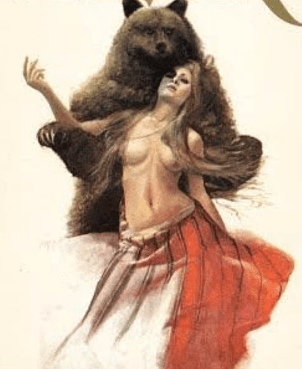
Bears are frustrated by their lack of speech, Their claws leave blackboards shrieking for repairs, And that’s why bears are seldom asked to teach And almost never get Distinguished Chairs Unless they come across one unawares Whose rich upholstery they quickly shred. Some of them have been known to have affairs With a man or woman lured into their bed— This often ends up badly with one dead, The other executed for the crime, Or given a life sentence in a zoo. Bears are familiar with existential dread, Bears put their pants on one leg at a time: The problems bears have are your problems too.
*****
Charles Martin writes: “The poem is written in a variation on the Spenserian Sonnet form, which I have been writing for several years now. In this case, I enjoy the contrast between the strictness of the form and the raucousness of its subject. As I recall, I began it on a morning walk, and I think finished it shortly after the walk ended.
“The poem will next appear in The Khayyam Suite this spring, published by The Johns Hopkin University Press, which has published my last two collections of poetry, Signs & Wonders and Future Perfect, both of which are still in print. (Future Perfect has a sonnet sequence written in the Spenserian form.) Poems have recently been published in Literary Matters, The Hudson Review, Classical Outlook, and in Best American Poetry, 2024.”
Charles Martinis a poet, translator of poetry, and essayist. The Khayyam Suite is the fifth of his eight books of poetry to appear in the Fiction and Poetry Series of the Johns Hopkins University Press. His poems have appeared in Poetry, The New Yorker, The Yale Review, The Hudson Review, Literary Matters, The Hopkins Review and, in numerous anthologies, including Best American Poetry, The Norton Anthology of Poetry, and War No More: Three Centuries of American Antiwar and Peace Writing. He has received an Academy Award in Literature from the American Academy of Arts and Letters, a Creative Writing Fellowship from the National Endowment for the Arts, an Ingram Merrill Grant, a Bess Hokin Award from Poetry magazine, and a Pushcart Prize. His residencies include the Djerassi Foundation and Ragdale, and he served as Poet in Residence for five years for the American Poets’ Corner at the Cathedral of Saint John the Divine. His translation of Ovid’s Metamorphoses received the 2004 Harold Morton Landon Award from the Academy of American Poets, and he has also translated The Poems of Catullus and the Medea of Euripides. He is the author of the critical introduction to Catullus in the Hermes Book series of Yale University Press and of numerous essays on, and reviews of, classical and contemporary poetry.
When our Quiz Bowl team of eighteen-year-olds snagged a berth in the finals, held in New York City,
my small-town Minnesotan brain cells dizzied— at last I’d be some place that mattered. Swag
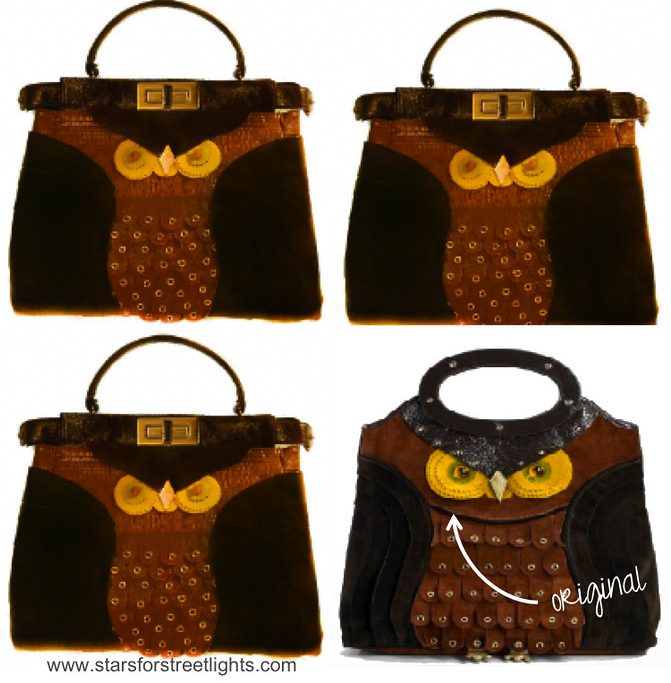
was my teammate Anne’s fixation: knockoff bags peddled in Chinatown, affixed with glitzy
Kate Spade labels. Anne bought a sack of six, then forgot it on the airport shuttle’s shag
seats; someone swiped it within minutes. Kate, I learned a fact of womanhood that year:
even we knockoff girls, cheap, desperate to look like someone else, to imitate
a finer woman, have our value; we’re wanted, wanted, until we disappear.
*****
Jenna Le writes: “The anecdote narrated in the first ten lines of the poem poured out of me easily and naturally enough. It was an anecdote that had been knocking around inside my brain for many years, but it wasn’t until I sat down to write the poem that the incident’s metaphorical meaning — that is, the epiphany contained in the poem’s last four lines — seemed to crystallize in the air in front of my eyes — and, to me, made the whole poem worthwhile. Honestly, until I sat down to write the poem, it had never even occurred to me that such a slight-seeming anecdote might have any metaphorical meaning at all. I sat down to write the poem more or less on a lark, and then the sonnet form just sort of took over and forced me to look deeper, to see more depth in my own material. This is one of the reasons I love the sonnet form.”
Jenna Le (jennalewriting.com) is the author of three full-length poetry collections, Six Rivers (NYQ Books, 2011), A History of the Cetacean American Diaspora (Indolent Books, 2017), and Manatee Lagoon (Acre Books, 2022), the last of which is the collection in which “Purses” appears and which can be purchased here: https://press.uchicago.edu/ucp/books/book/distributed/M/bo185843950.html
Poems used to rhyme. In time, the couplets were dispensed. Incensed, today’s poet rebels from rhyming schemes, It seems. The writer, newly shedding the shackles of quatrains, Refrains from even a modicum of lilt.
And built now from unpaired diphthongs, His songs have lost a measure of glue. It’s true. No longer does the ear delight In flight of fancy, in teeter-totter, Like water on the endless sand, the to-and-fro, And no, this tide will not abate.
Of late, I find that poems no longer draw me in. They’re thin.
*****
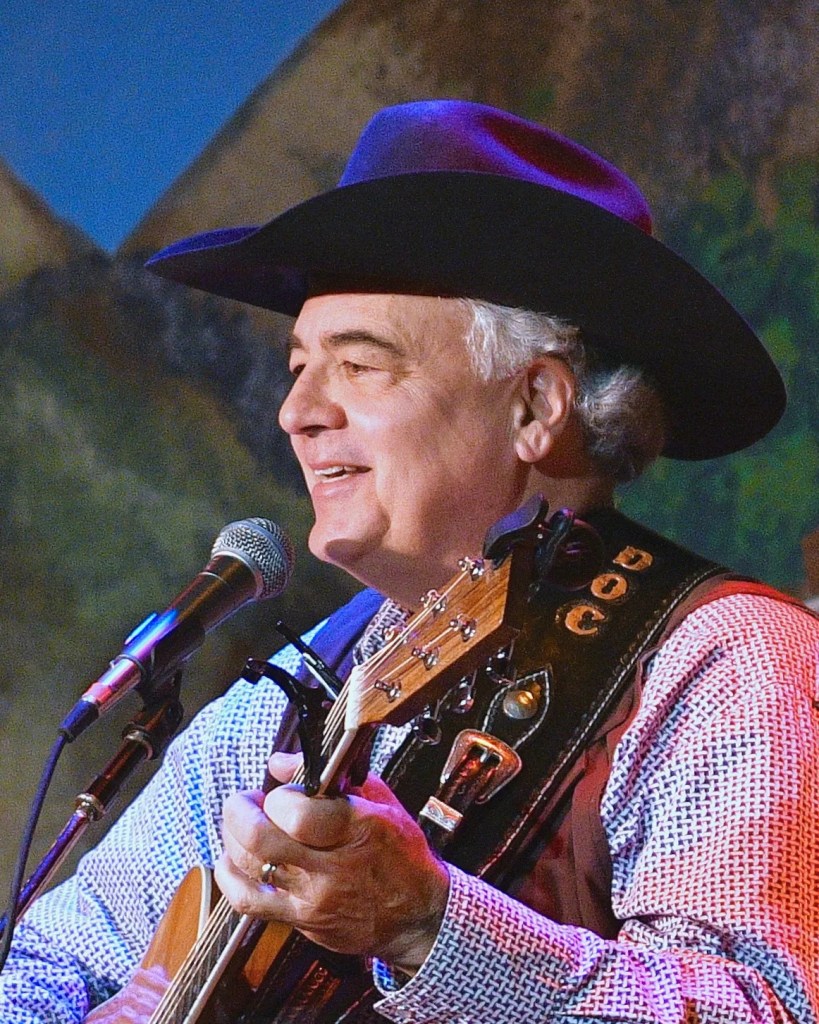
Doc Mehl writes: “For the last two decades I’ve written rhyming western poetry, and I’ve performed both the poetry and my original western-themed music at cowboy poetry events in the western U.S. and Canada. I’ve recorded two spoken-word CDs of my rhyming poetry, and several CDs of my original music. I’m not averse to free verse. (OK, I must pause momentarily to savor the rhyme in that sentence.) Still, the author of a free verse poem ought to be able to convincingly answer this question: “Why do you maintain that this work should be categorized as poetry rather than prose?” In this poem (“Poems Used To Rhyme”), I liked the gamesmanship of sneaking the rhyming word of each “couplet” into the beginning of the second line rather than at the end of the second line. The resulting poem might first appear to be a tongue-in-cheek free verse poem about why rhyme is important. Still, the magic of the closely juxtaposed rhyming words can’t help but rise from the ether.”
Newly transplanted from Colorado to Black Diamond, Alberta, Al “Doc” Mehl traces his family roots to central Kansas, where his grandfather raised six children on the family homestead. His debut music CD is titled “Asphalt Cowboy,” and his second music CD titled “I’d Rather Be…” was released in 2008. Doc Mehl has also published a CD of original poetry titled “Cowboy Pottery,” and a second spoken-word poetry CD titled “The Great Divide,’ named 2013 “Cowboy Poetry CD of the Year” by both the Western Music Association and the Academy of Western Artists. In 2020, Doc published his first collection of poetry, “Good Medicine: Read Two Poems and Call Me in the Morning.” And in 2022, Doc released two new CDs of music, “West of the 22” and “Tried and True. Doc’s poems and musical lyrics have been featured on the website http://www.CowboyPoetry.com, he has been published in the poetry journal “Rattle,” and he was a first-place silver buckle winner at the National Cowboy Poetry Rodeo in Montrose, Colorado in 2009.
I am the scam you go in for, the diamonds in the pavement, ecstatic evenings caught on traffic cam, rare toilets and consensual enslavement.
Scholars and brawlers are inside of me. What could I be?
I am the new New Amsterdam.
I am those glam high-rises and the derelicts’ despair, graffiti worthy of the Met, and sham Versace hawked to chumps in Union Square.
Purists and tourists are inside of me. What could I be?
I am the new New Amsterdam.
I am the ham ironist, the perverse poobah of shock, the firetruck stranded in a rush-hour jam while conflagration rages round the block.
Birders and murders are inside of me. What could I be?
I am the new New Amsterdam.
I am the slam Where Subway Ends, a scrum of mad musicians, Sunday phone calls with a far-off fam, Halal street food, and infinite ambitions.
Shoo-ins and ruins are inside of me. What could I be?
I am the new New Amsterdam.
*****
Aaron Poochigian writes: “Riddles go back to a time before ‘English’ was our English, before Shakespeare and Chaucer, the time of bards and Beowulf. The Anglo-Saxon riddles have the rhythms of poetry. They tell it slant like poetry does sometimes. The tantalizing, first-person self-description that defines the genre gave me a ‘way in’ to talk about a subject that would have been too vast otherwise—New York City.”
Aaron Poochigian earned a PhD in Classics from the University of Minnesota and an MFA in Poetry from Columbia University. His latest poetry collection, American Divine, the winner of the Richard Wilbur Award, came out in 2021. He has published numerous translations with Penguin Classics and W.W. Norton. His work has appeared in such publications as Best American Poetry, The Paris Review and Poetry. aaronpoochigian.com americandivine.net
Your flare of red turns Winter’s hoary head To gaze upon your blaze and feel the heat And fever of your beat. Your spice and sizzle catch his breath and spread Through icy sighs to melt the lick of frost That dusts the dawn With hints of chill intent. His plot is lost In honeyed-apple charm and plummy balm.
You temper smitten Winter’s bitter breeze. Your foxy bronze and lush rufescent blush; Your gold and ruby rush Ignite the leaves that shiver on the trees. You burn through thickest wisps of morning mist. Birds laud your glow. The granite skies grow blue as clouds are kissed By dreams so hot they thaw all thoughts of snow.
When it’s your time to go you’ll fade with grace As branches shed their tawny tears of grief – Each crisp and crinkled leaf Will pool and pile. As Winter shows his face Your fluffy, brush-tailed fans will slump and sleep. They’ll hit the sack Until they spy the coyest crocus peep – Spring’s message to the world that you’ll be back!
*****
Susan Jarvis Bryant writes: “My poem is a quirky nod to Keats’ timeless and beautiful ode with a much louder and sassier version of the fall with not a mellow trait in sight. There is no time for mourning loss in this poem. Autumn vows (in true Terminator style) she’ll be back! The form I chose is a nod to the traditional but with two short lines in each stanza – an act of rebellion in keeping with this fiery season.”
‘To Autumn’ was originally published in Snakeskin 321.
Susan Jarvis Bryant is originally from the U.K., but now lives on the coastal plains of Texas. Susan has poetry published on The Society of Classical Poets, Lighten Up Online, Snakeskin, Light, Sparks of Calliope, and Expansive Poetry Online. She also has poetry published in The Lyric, Trinacria, and Beth Houston’s Extreme Formal Poems and Extreme Sonnets II anthologies. Susan is the winner of the 2020 International SCP Poetry Competition and has been nominated for the 2024 Pushcart Prize. She has just published her first two books, Elephants UnleashedandFern Feathered Edges.
I know you have no use for them, poems with their sly quicksilver words that won’t just speak their minds, but carom through your head like startled birds. Is that despair or longing in their cries? Their dolors make no sense. They’ll never buy you larger-screened TVs or seats at sports events.
But someday, as you watch a pair hold hands and leap from a burning tower, as you wait for test results or hear your phone ring at an unaccustomed hour, what you feel will circle wordlessly— tense, accusing, gaunt. You’ll find that you are tested and found wanting, and these are what you’ll want.
*****
Susan McLean writes: “As a professor myself and a person who once worked on writing standardized tests, I am familiar with the complaint of teachers that they are often forced to “teach to the test,” i.e., teach only the sort of knowledge and skills that students need for passing that sort of test. But as a poet, I know that we are tested in life in all sorts of ways. Most people think that they can get through life just fine without poetry. They tend to find poetry annoying and impenetrable, something that needs to be decoded, that has no practical use. Yet in tragedies, when all hope and comfort are gone, there is some comfort in hearing that others who have been in similar situations were able to put into words the feelings that you can’t. And the most memorable and condensed of those responses are often poems. This poem is rhymed and metrical, but the lines are of different lengths in unpredictable patterns, a form called “heterometric,” and the rhymes occur only every other line. That unpredictability is meant to mirror life, in which the bad news always seems to come out of nowhere. The poem originally appeared in Able Muse and later in my second poetry collection, The Whetstone Misses the Knife.”
Susan McLean has two books of poetry, The Best Disguise and The Whetstone Misses the Knife, and one book of translations of Martial, Selected Epigrams. Her poems have appeared in Light, Lighten Up Online, Measure, Able Muse, and elsewhere. She lives in Iowa City, Iowa. https://www.pw.org/content/susan_mclean
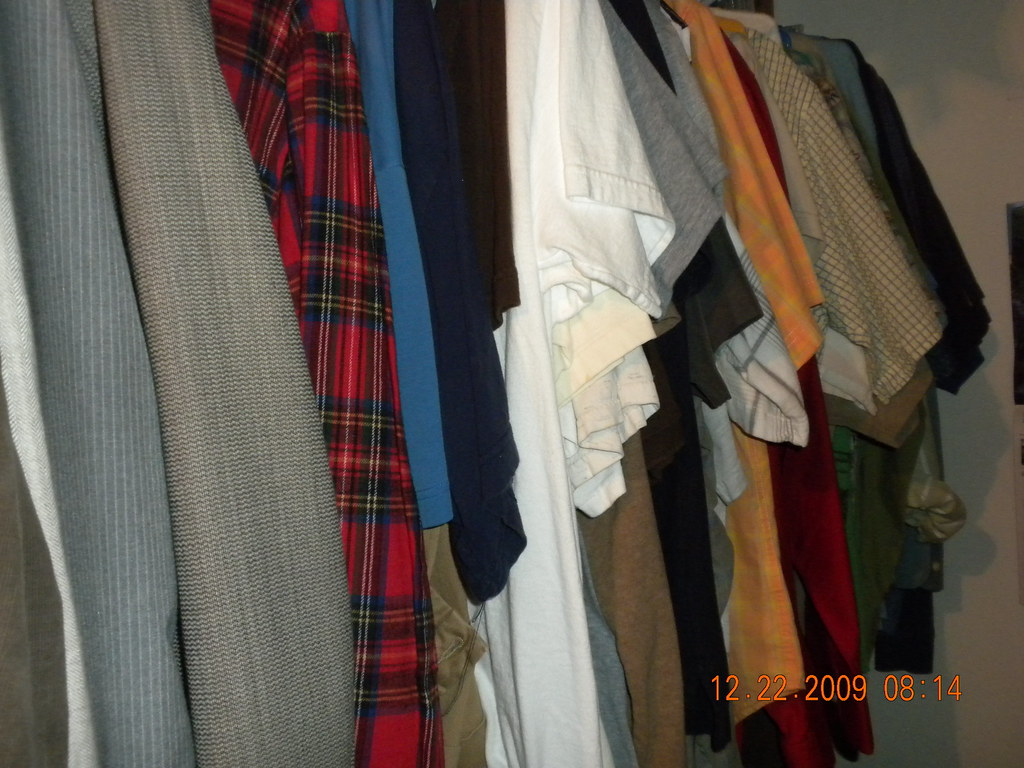
I remember you some mornings in the midst of getting dressed Surprised that I recall exactly when I wore you last
The paisley patterns spilling over sleeves The Nehru collars nobody believes … were popular The turtlenecks no turtle ever wore Those V-neck disco shirts that dance no more … Spectacular!
Are you lurking in the closet among other clothes I own? I gently touch your shoulder—a brief flash, then you’re gone
The concert souvenir shirts we outgrew The obligation gifts we always knew … were wrapped in haste Thick cotton plaids lost lumberjacks would covet That college T tossed out, but how we loved it … still, such a waste
You promised transformation, but what else did you require The full ensemble led us toward transcendence or desire (Attire of another age, accessories all the rage)
Bell-bottom flares that took flight as we walked Embroidered jeans so tight that people talked … of nothing else Those bomber jackets earthbound boomers froze in Those leather wristlets grunge guitar gods posed in … with death’s head belts
You folded in your fabric everyone I used to be Now that you’re gone, I realize I’m left with only me But if I run across you in some thrift shop bargain rack Or rummaging recycling bins, what else would you bring back? Who else will you bring back?
Some nights I see you in my dreams of places far away I’m wearing you as if I haven’t aged a single day Shirts of the distant past, shirts of the distant past
*****
Ned Balbo writes in Rattle #85, Fall 2024 (where you can hear the song performed): “I’ve played guitar since I was 5, keyboards since I was 13, and ukulele since I was 42, but my time as a ‘professional’ musician—someone paid to play—is scattershot and humble. Ice rinks, a Knights of Columbus Hall, a campers’ convention in Yaphank, a crowd of disco-loving retirees at Montauk’s Atlantic Terrace Motel, company picnics, school dances, private parties, and more—these were where I played guitar, sang, and devised versions of the Beatles, Bowie, et al. in two Long Island cover bands. The Crows’ Nest or Tiffany’s Wine-and-Cheese Café hosted noise-filled solo acoustic gigs, with more receptive listeners for original songs and covers of Elvis Costello or Eno at my undergrad college’s coffeehouse. More recently, I’ve written lyrics to Mark Osteen’s preexisting jazz scores (look for the Cold Spring Jazz Quartet on Spotify, Amazon, CDBaby, and elsewhere) and returned to solo songwriting and recording with ‘ned’s demos’ at Bandcamp. As a relic from the age when lyrics were sometimes scrutinized with poetry’s intensity, I listen closely to the sonics of language, whether sung or spoken, and look up to lyricists whose words come alive both aloud and on the page.”
Balbo: Robin, thanks for posting ‘Shirts from the Distant Past’, my little song-poem hybrid. I’ll be happy to answer any questions you have.
Editor: For myself, I see a continuum from womb heartbeat to dance to music to song to formal verse. I would love to have any additional comments on the subject in general, or on the creation of this poem in particular, related to these elements.
Balbo: I love what you’re saying about womb, heartbeat, and dance. A formative text for me is Donald Hall’s essay on poetic form’s psychic origins, ‘Goatfoot, Milktongue, Twinbird‘. You probably know it. Hall proposes three metaphors for poetry’s deepest sources: Goatfoot, the impulse toward dance, rhythm, movement; Milktongue, the pure pleasure of language, the texture of words when spoken; and Twinbird, our desire for form, symmetry, wholeness, which is complicated and energized by the contradictions it contains and reconciles. To me, Hall’s terms just sound like different ways of envisioning exactly what you’re talking about. They apply as much to song as they do to verse. The meter varies by stanza or section: iambic heptameter (seven iambs) in the couplet verses—not so different, after all, from the tetrameter to trimeter shifts we find in many ballads. The “shirts” title refrain, which doesn’t appear in print till the last line, are two trimeter phrases. It was fun to find surprising rhymes to hold the whole song together.
Editor: Regarding ‘Shirts’, quite apart from the charming idea, I like the work that has gone into the metre, rhyme, idiosyncratic structure.
Balbo: Thank you. I wrote and sung ‘Shirts’ as a poetic song lyric—one that could be read and enjoyed but, ideally, would be heard. I view its structure as that of a call-and-response song in traditional format. (In rock, for example, I think of George Harrison’s ‘Taxman’ with John and Paul harmonizing “Taxman, Mr. Wilson, Taxman, Mr. Heath” in answer George’s lead vocal.) In ‘Shirts’, the call-and-response comes from using the title as a refrain: it explains who the “you” is in each verse (when you hear it, anyway—I cut it from the visual text for fear it would seem repetitious without the music). Sometimes the title refrain answers a statement in the verse: “I gently touch your shoulder—a brief flash, then you’re gone” sounds like I might be talking (or singing) about a person, but it turns out to be those long-lost shirts—a playful fake-out.
Then there are the brief call-and-responses of the bridge sections which comment on the previous line or complete an unfinished thought: “Those V-neck disco shirts that dance no more…spectacular!” or “Embroidered jeans so tight that people talked…of nothing else.” They’re in iambic pentameter, with the second and fourth changing to heptameter if we count the two extra beats (set off on their own line) answering them.
The so-called “middle 8” (usually eight bars used to break up the verse-chorus/verse-chorus model) is delayed till just before the end: “You folded in your fabric everyone I used to be, etc.” That’s meant to set up the payoff: it’s not the shirts but our lost selves— along with loved ones, lost ones, everyone—we’re missing or mourning. But writing or singing about shirts—clothing that shapes and defines us—makes the lyric less depressing, leavens it with wit (I hope) so that what’s more poignant comes at the very end where more dramatic music can counterbalance the mood—the contradictions reconciled, as Donald Hall might have put it.
Of course, the very end is quieter – wistful again.
As I mentioned in Rattle (thanks again to Tim Green for giving both words and music a home), I grew up in the era when lyrics were often analyzed as seriously as poetry (and not just by undergraduates in long-ago dorm rooms under black light posters). Whether I’m writing poetry or songs, I listen closely to the different ways words sound—what works when sung doesn’t always work as well when spoken or encountered on the page—so when I do write lyrics, I try to make them both readable and singable.
Poems and song lyrics operate differently, but there’s lots of overlap between them. I wanted ‘Shirts’ to operate on both levels, even if it tilts more toward song lyric than poem.
*****
Ned Balbo’s six books include The Cylburn Touch-Me-Nots (New Criterion Prize), 3 Nights of the Perseids (Richard Wilbur Award), Lives of the Sleepers (Ernest Sandeen Prize), and The Trials of Edgar Poe and Other Poems (Donald Justice Prize and the Poets’ Prize). He’s received grants or fellowships from the National Endowment for the Arts (translation), the Maryland Arts Council, and the Mid Atlantic Arts Foundation. Balbo has taught at Iowa State University’s MFA program in creative writing and environment and, recently, the Frost Farm and West Chester University poetry conferences. His work appears in Contemporary Catholic Poetry (Paraclete Press), with new poems out or forthcoming in Able Muse, The Common, Interim, Notre Dame Review, and elsewhere. He is married to poet and essayist Jane Satterfield.
Good foot goes to heaven; bad foot goes to hell. When every step torments and pain is chronic, you can’t do as you did before you fell
and sprained your ankle. As the tendons swell, don’t make things even worse. Learn this mnemonic: good foot goes to heaven; bad foot goes to hell.
Take one step at a time. Do not rebel or grumble that restrictions are moronic. You can’t do as you did. Before you fell,
you bounded up the stairs like a gazelle, but now your gait is nearly catatonic: good foot goes to heaven; bad foot goes to hell.
You’ve always known it doesn’t help to dwell on loss. You should let go, but (how ironic!) you can’t. Do as you did before you fell,
but try to play it safe while getting well. The best advice is simple, yet Miltonic: good foot goes to heaven; bad foot goes to hell. You can’t do as you did before. You fell.
*****
Susan McLean writes: “I love villanelles. I like them partly because they are songlike and partly because they present interesting challenges for rhyming and for varying the repeating lines, known as repetends. I thought at first that I had set myself an impossible task with my “-onic” rhymes, but they kept surprising me and leading me in new directions. I was not planning to refer to Milton when I started, for example, but when I stumbled on “Miltonic,” it fit perfectly with the metaphors in the first line. When I started, I also didn’t realize how many ways the second repetend could be varied while still making literal sense. “The idea behind the poem came from real-life experiences. I had sprained my right ankle once, and after I wrote this poem, I broke it twice. However, the first line, which is literally the mnemonic device offered by a physical therapist as a reminder of which foot to step on when going up or down stairs, was one I heard secondhand. My partner John was told it by his therapist when he had a painful foot. The rest of the poem is in lines with five beats (iambic pentameter), but that line has six. I decided to use it, nevertheless, because the extra beat in that repetend slows the line down, mimicking the slow gait of the person with the sprain. It also makes the line itself seem to limp. The poem was originally published in First Things and later appeared in my second poetry book, The Whetstone Misses the Knife.”
Susan McLean has two books of poetry, The Best Disguise and The Whetstone Misses the Knife, and one book of translations of Martial, Selected Epigrams. Her poems have appeared in Light, Lighten Up Online, Measure, Able Muse, and elsewhere. She lives in Iowa City, Iowa. https://www.pw.org/content/susan_mclean
I started out alone, No numbers and no words. The people gave me food and clothes. I loved the sun and birds.
And when I reach the end Numbers and words all done, Have to be fed and dressed again, I’ll love the birds and sun.
*****
This is one of my favourite poems, for several reasons: First, it extols the combination of curiosity, enjoyment and acceptance that I believe is appropriate for this thing called life. Second, it is simple in expression: simple words, simple rhythm, in iambics with simple full and slant rhymes. And third (and perhaps most importantly) it is easy to memorise: it has lodged itself in my brain without any effort or even intent on my part and, as this blog frequently claims, that is the essence of poetry.
‘I Started Out Alone’ was originally published in Bewildering Stories in 2019. More recently it was included in a batch of my poems that Michael R. Burch spotlighted in The Hypertexts for August 2024.
What is she doing, the mad old bat, Down on her knees in the garden? In her busted boots and her happiness hat She doesn’t know and she wouldn’t care That the size of the arse sticking up in the air Is shading so much of the garden.
She pulls out a weed, the mad old bat, Out of the face of the garden. She tuts at the trauma and fusses it flat While the waste-not weed she will put to use By turning it into salubrious juice And giving it back to the garden.
What is she up to, the mad old bat As she struts, stiff-kneed in the garden With her doo-dah dog and her galloping cat? Spreading compost and scattering seed So one may sprout and the other may feed In the windmill world of the garden.
She’s a cruel cartoon, is the mad old bat As she talks to herself in the garden. What on earth is this? and Good Lord, look at that! And she squats and she mutters and giggles out loud And informs her potatoes they’re doing her proud As she creeps like a crone in the garden.
Where is she going, the mad old bat As the sunset blesses the garden? She is going nowhere, and that is that. She will dig in the dark till the dawn sky pales And the damp on her knees and the dirt in her nails Go singing the song of the garden.
*****
Ann Drysdale, who died unexpectedly on August 16th (apparently in her sleep) was a superb poet and self-aware, self-directed, life-rich eccentric lover of the natural world, of gardens, of animals and birds, of unpretentious people in all walks of life. I knew her only through her poetry and our correspondence – which is to say, well enough to deeply regret that I never got to meet her in person.
The poem above was collected in Miss Jekyll’s Gardening Boots, Shoestring Press, 2015; as was the poem that I put up on this blog earlier this month, ‘When Mister Nifty Plays the Bones‘. Here is the bio that she chose to represent herself with:
“Ann Drysdale still lives in South Wales. She has been a hill farmer, water-gypsy, newspaper columnist and single parent – not necessarily in that order. She has written all her life; stories, essays, memoir, and a newspaper column that spanned twenty years of an eventful life. Her eighth volume of poetry – Feeling Unusual – came together during the strange times of Coronavirus and celebrates, among other things, the companionship of a wise cat and an imaginary horse.”
She was a much-loved member of the world of (especially formalist) poetry. George Simmers posted her ‘Song of Wandering Annie’ in the Snakeskin blog, and there is a tribute (and an enormous selection of her verse) in The HyperTexts. She was a truly good person.