Category Archives: Robin Helweg-Larsen

Short poem: ‘Land of the Free’

Homicide, suicide, what’s it to me?
We all carry guns in the Land of the Free.
Free to be Christians and free to be whites –
The rest ain’t included in our Bill of Rights.
The rest want to come here (or blow us sky high),
They get smuggled in, so they cheat, steal and lie.
Servants and slaves since the US begun:
Tell ’em: Sit! and shut up! and don’t carry no gun!

*****

This short poem was published minutes ago in the Allegro Poetry Journal, put out by Sally Long in the UK. The spring edition is always unthemed, the autumn edition themed; and this time the theme is ‘Freedom’ – a word which means many things to many people.

Charlottesville ‘Unite the Right’ Rally” by Anthony Crider is licensed under CC BY 2.0.

Semi-formal poem: ‘Thin Thin Skin’

Life on the earth is thin as dust on an apple.
25,000 miles round the planet, and if we go 2 miles high
we struggle to breathe, claw at the air, fight it, grapple.
25,000 miles round the planet, mostly sea
and if sea levels rise a foot, whole communities are lost
and if a storm gives 10 foot waves, houses and lives are lost.
We live on the thin thin skin of the earth.
Is the soil three inches deep, or a foot, or five?
Can we grow enough to survive?
We live on that thin thin skin of dirt.
And people too are fragile, their bones, organs, held in
by their thin thin skin. A knife,
a bullet, even too much sun,
will break the thin thin skin and drain the life.
And society too is fragile, with too many knives and guns,
too little respect for sun, ocean, climate change;
too many people with a thin thin skin
leading their ignorant people into the razorwire of unpredicted change.

*****

This poem was originally published in Lighten-Up Online (or LUPO) last year – thanks, Jerome Betts! It’s not really a formal poem, though there are some rhymes. As for the subject matter, all I can say is: If you haven’t run across the delightful XKCD graphic of the past 12,000 years of temperature change, please click here!

Photo by Allison Shelley for EDUimages: A middle school science teacher explains a lesson on climate change using a SMART board. Copyright CC BY-NC 4.0

Clerihew: ‘Robert Bridges’

Robert Bridges
was way too religious.
He rhymed like mad for his God,
but his knowledge of Science was flawed.

*****

This clerihew was recently published in The Asses of Parnassus. Regarding the form, Wikipedia says it best: “A clerihew is a whimsical, four-line biographical poem of a type invented by Edmund Clerihew Bentley. The first line is the name of the poem’s subject, usually a famous person, and the remainder puts the subject in an absurd light or reveals something unknown or spurious about the subject. The rhyme scheme is AABB, and the rhymes are often forced. The line length and metre are irregular. Bentley invented the clerihew in school and then popularized it in books.”

As for the subject, Bridges had a lifelong drive for nature, religion and poetry; he produced hymns like “When morning fills the skies”, launched Gerard Manley Hopkins by bringing out a posthumous collection of his poems, and became Poet Laureate. But his poetic style was, like the phonetic alphabet he developed, idiosyncratic and anachronistic; definitely interesting, but not that successful.

It’s not surprising that he is little known. He’s an acquired taste, and even then you have to be in the right mood.

Short Poem: ‘Darkness’

I miss the dark.
Nights pitchblack as pitch in the seams of the planks of boats on a starlit sea
when you walk in a garden
with hands out in front in case you walk into a tree.
Moonless nights
where stars let you grope over rocks at the beach with blind eye –
and then the moon rises
like the sunlit reflecting rock that it is. Then you can see. Can see why.
Why I miss the dark.

*****

This poem was originally published in Snakeskin. It seems to have a structure, i.e. it isn’t completely formless. Perhaps it needs more work. But it’s very much like the rural moonless nights where I was brought up, and where I have returned. I stumble around happily in many aspects of life.

A Forest / At Night (The Cure photographic cover)” by Max Sat is licensed under CC BY-NC-ND 2.0.

Irregular Sonnet: ‘Where Do They Go?’

Where do they go, those children asleep?
Do they roost, or do angels put them on shelves?
Or do they go home, to some place they keep
locked far away from us and themselves,
Or an alternate universe? In, out, up, down?
Into a not-place, past care and past fear?
Past love and past tired, past smile, yawn and frown
into subtracted space, full of not here?

And where do they go, the dead?
We say we can’t know where they go,
just that they’re gone. But the crow
says, There is more to know that you don’t know –
says, Better ask instead
where do we go, when dead?

*****

This almost-regular sonnet was originally published in Bewildering Stories (thanks Don Webb). I thought it might be nice to emphasise (after some of irreligious poems) that I am not an atheist (except in the eyes of the organisedly religious). I am a Militant Agnostic: “I don’t know, and neither do you.”

Photo: “Good sleeping children in the morning” by michibanban is licensed under CC BY-NC-ND 2.0.

Short poem: ‘Ghost Tales’

Discounting tales of ghosts kids say appeared,
We teach them to be rational instead.

Jesus was scourged, then crucified, then speared…
You really think he came back from the dead?

*****

This poem was originally accepted for November 2016 publication in Quarterday, a Scottish quarterly that appeared in print and online for a few issues. There were some discrepancies with publication, and I never determined whether this poem made it into either format. The ambiguity is quite in keeping with all reports of ghosts, so I’m not complaining.

(But perhaps I should have blogged this at Easter.)

Photo: Ghosts by goldberg from Openverse

My own favourites: ‘No No Nse Nse’

No
No
Nse
Nse
And things like that
May look like nonsense
But there is
No
No
Nse
Nse

*****

I know, I know… it’s not formal verse, but it’s one of my favourite pieces.

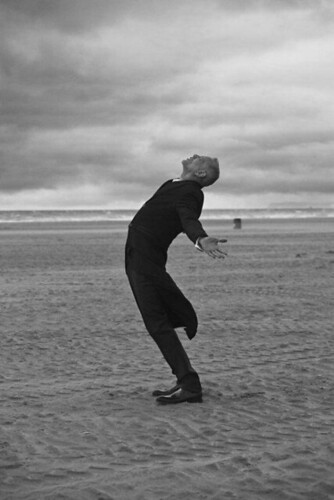
Ecstatic Posture” by Dreaming in the deep south is licensed under CC BY 2.0.

Short poem: ‘Loss’

Which is the worst –
Is it the loss, or memory of loss,
Or loss of memory? Who gives a toss
When the brain’s banks have burst
And all we valued yesterday
Is washed away?

*****

The above is a short poem, semi-formal (i.e. it’s in iambics, it rhymes, but it lacks formal structure) published in this month’s Snakeskin No. 298. I like semi-formal because it allows natural expression in a way that formal structure often prevents. Contrast these examples from Matthew Arnold of the formal (from The Scholar-Gipsy) and semi-formal (from A Summer Night):

Thee at the ferry Oxford riders blithe,
Returning home on summer-nights, have met
Crossing the stripling Thames at Bab-lock-hithe,
Trailing in the cool stream thy fingers wet…

The inversions of adjectives and phrases were used to fit rhyme and metre to line length. Drop the line length requirements and, even retaining the “thee”s and “thou”s, the expression is more naturally conversational:

And the rest, a few,
Escape their prison and depart
On the wide ocean of life anew.
There the freed prisoner, where’er his heart
Listeth will sail…

Poor Matthew Arnold! With his father a famous Headmaster and himself an Inspector of Schools, there is a sad irony in so much of his poetry being about escaping the tedium of regimented Victorian life.

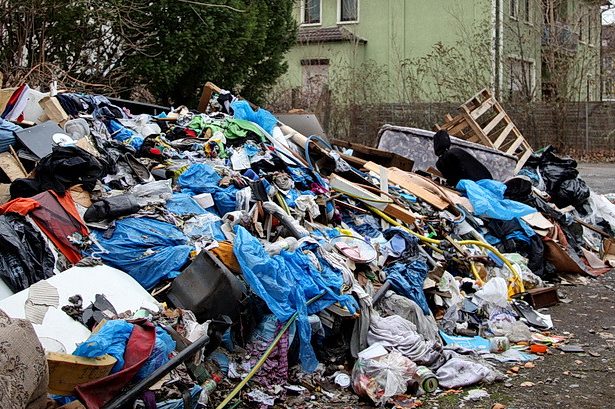
Photo: “Müllhaufen Villa V R s 1000 s” by rosalux-stiftung is licensed under CC BY 2.0.

Epigram: ‘Many Why’s’

Many “Why?”s
Make one wise.

*****

This epigram was recently published in The Asses of Parnassus. Thanks, Brooke Clark, for hosting “lots of poems for people with short attention spans.”

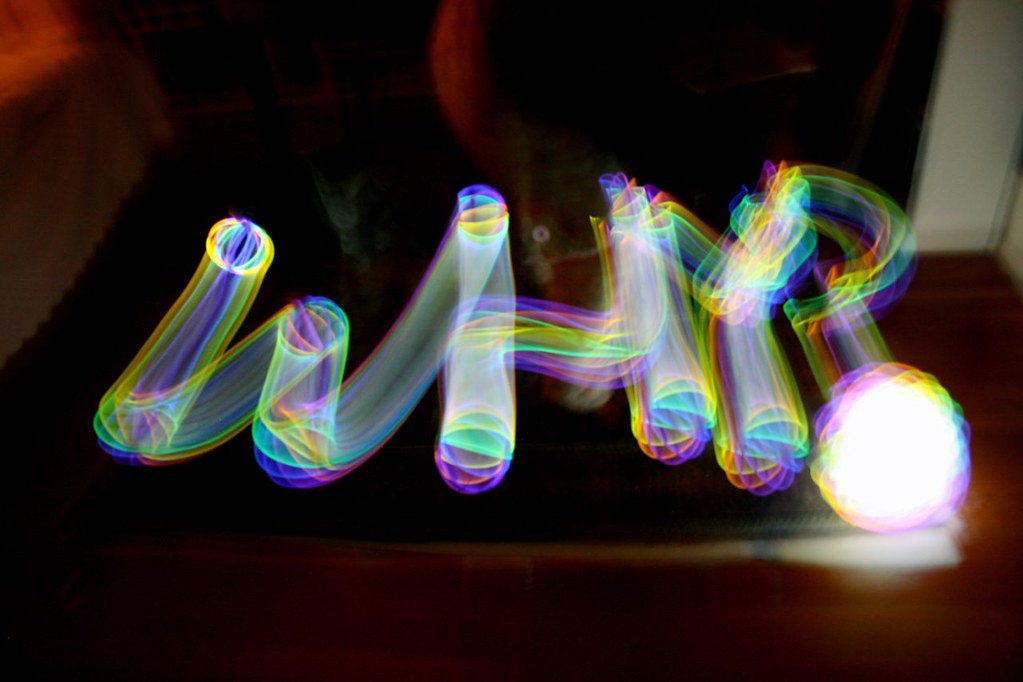
Photo: “WHY?” by annnna_ is licensed under CC BY-ND 2.0.

Calling the Poem: 15. ‘Coda’

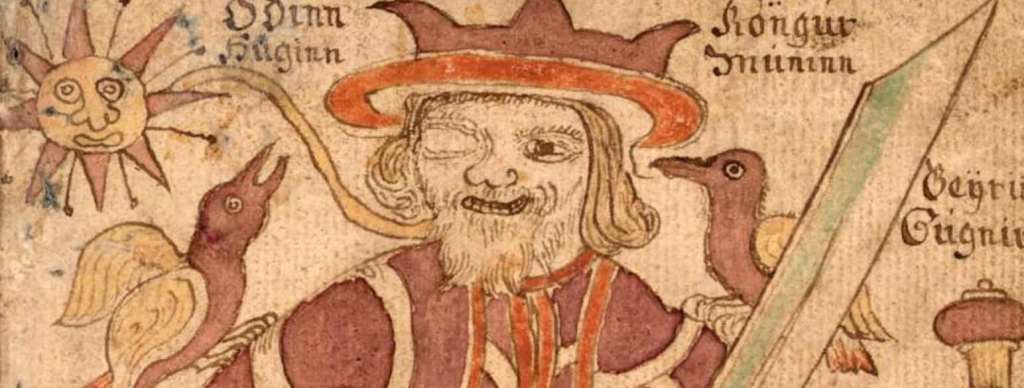
Odin
Send me your ravens
I’ll feed them.

*****

It is only appropriate to end this chapbook on summoning poems with gratitude that anything at all is achieved. We generate thoughts and ideas so constantly and easily that we don’t even wonder how we do it – just as we don’t think how it is that our legs are able to carry us forward when we decide to walk, let alone how our stomachs know whether to digest or reject the things we swallow. Thoughts and ideas come from somewhere and something, an internal process that is being constantly fed from the outside… but quite what that process involves we rarely consider.

This work is an attempt at describing the various stages of writing a poem: being aware of a creative mood, telling your subconscious that you want more ideas by making an effort to record and use the ideas you get, focusing your creativity by reading within the genre you want to write, developing your technical skills in the craft that that genre offers, and building your piece from author to audience with all necessary components and as much elegance as possible… and then recognising that it won’t always be successful, but that it is all a miracle that anything is achieved at all, and you can (and should) be grateful for that.

The opinions and their expression are of course personal and idiosyncratic. YMMV.

This series of poems was written and strung together over a few months in late 2016. I sent it to George Simmers, hoping for comments on such matters as whether the pieces were too disparate in style, whether the rudest of them was too offensive and so on – but his only response was that he would publish it as an e-chapbook, and so it appeared in Snakeskin 236 in January 2017. I’ve toned down the first four lines of Poem 10: ‘Inspiration 1’ for these posts, and I’ve continued to tinker with issues such as English vs American spelling, and whether or not every line should begin with a capital letter. Hopefully the Snakeskin Archive will be restored, and the original chapbook will be available again.

Thank you for reading this far. I hope you found some value in it? I welcome any comments you have.