Category Archives: Poetry

Review: ‘Archaic Smile’ by A.E. Stallings

‘Archaic Smile’ was the debut poetry collection by A.E. Stallings, an American who moved to Athens, Greece, a couple of decades ago. Published in 1999, it won that year’s Richard Wilbur Award and its opening poem, ‘A Postcard from Greece’, is perhaps my favourite of all her work. It is a sonnet with slant rhymes describing a car accident:
Hatched from sleep, as we slipped out of orbit
Round a clothespin curve new-watered with the rain,
I saw the sea, the sky, as bright as pain
That outer space through which we were to plummet.
Stallings lives in the modern world of cars and planes and thinks in terms of orbits and outer space; the Greece of this poem is not there yet – there is no guardrail on the cliff-sided road, the only warnings are the memorials to those who have died there, who
sliced the tedious sea once, like a knife.
Luckily, her car hits an olive tree on the edge of the cliff and they don’t go over.
We clung together, shade to pagan shade,
Surprised by sunlight, air, this afterlife.
And so the ancient world steps in to save her from rash modernity, and in this first poem she weaves the present and the past together, living as a pagan shade in a refreshed existence. And the rest of the book, and indeed all her work, carries on this integration of past and present.

The first section of the book is titled ‘Underworld’, appropriate for that near-death event, but mostly being poems such as ‘Hades Welcomes his Bride’ and ‘Persephone Writes a Letter to her Mother’ – there is a lot of Greek mythology in Stallings’ work, but filtered through a modern sensibility:
Death, the deportation officer,
Has seen your papers and has found them wanting.

In the second section, ‘A Bestiary’, she writes of her American experiences of animals and birds, in life and death and freedom and captivity, with her customary detached amusement. Take ‘Watching the Vulture at the Road Kill’:
We stopped the car to watch. Too close.
He bounced his moon-walk bounce and rose
With a shrug up to the kudzu sleeve
Of a pine, to wait for us to leave.
She observes that most other birds have to get in and out in a hurry, whether raptors or prey, and draws a lesson from it:
There is no peace but scavengers.

The third section, ‘Tour of the Labyrinth’, returns to Greek themes, but again weaving past and present, as in the reaction to an antique pot being broken. The final section is ‘For the Losers of Things’, echoing the sense of loss or near-loss in the rest of the book, but staying in the present – ‘Watching the News After the Tornados’ – or even the far future, with another of my personal favourites, ‘The Machines Mourn the Passing of People’:
The air now is silent of curses or praise.
Jilted, abandoned to hells of what weather,
Left to our own devices forever,
We watch the sun rust at the end of its days.

As can be seen from the excerpts quoted, Stallings is a formalist, and very comfortable with whatever form and metre is appropriate for the particular piece she is producing. ‘Archaic Smile’ is a superb collection, readable and rereadable, memorable, quotable. Her subsequent collections have been equally impressive. If there is a better poet currently writing in English, I haven’t run across them.

Photo of A.E. Stallings by Milos Bicanski

Sonnet: ‘Exiled Leader’ (from the series ‘Voices From The Future’)

I’ve few wants on my planet, fewer needs –
I like seas, trees, exploring what I’ve made,
Prospecting for the transgalactic trade,
Composing music while collecting seeds.
I like green islands, but won’t interfere
If eco climate needs a waste of ice
Or rock-filled deserts simply are the price
Of balancing the seas and atmosphere.
I’m rarely lonely, happy to create:
Atonal opera, atoning for
Those antisocial acts that led to war,
Jailed on the planet that I populate.
So I plant trees, make insects, have a swim,
Watch, read, compose… my life’s an endless whim.

This sonnet is one of four I wrote after Maryann Corbett commented on the bleakness of my future visions. I suppose this doesn’t really contradict that comment… we’ll have good news and bad news: the good news is, obnoxious leaders will still (occasionally) be deposed, jailed, or exiled to play golf; the bad news is, transgalactic warfare will be pretty awful. But to me, the future’s not bleak if humans keep on developing, changing, growing, exploring, discovering, creating. I think that’s the most likely scenario, that we move out into the galaxy as transhumans and then as post-humans. Though when I say “we” I don’t mean to suggest that includes me! Neither moon nor Mars excite me. I like woods and gardens by the sea.

This poem was published in Star*Line, the official print journal of the Science Fiction and Fantasy Poetry Association (thanks, Jean-Paul Garnier). Its poetry includes the full range of styles from formal to free. And the SFPA has another, online, journal called Eye To The Telescope. For reasons unknown my poems haven’t found lodging in ETTT yet.

“The Little Prince” by manfred majer is licensed under CC BY-SA 2.0

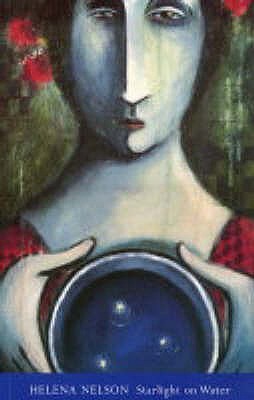
Review: Helena Nelson, ‘Starlight on Water’

Helena Nelson’s 2003 poetry collection ‘Starlight on Water‘ is quiet, reflective, beautiful and intensely intimate. Not necessarily personal – in some of the poems the poet has no children, in others a daughter or two, so there is no guarantee Nelson is writing of herself – but intimate with the senses and memories of existence. One of my favourite poems is ‘Ironing Day’:

I’ve never had an ironing board cover that fits
or a baby of my own.
None of the doors here properly shuts
and the garden wall’s come down.

But I shouldn’t ever want to lose my iron.
Pressing hard, I remember
grass between my toes
and the soft rain of September.

This speaks to several of my biases: going barefoot, enjoying rain, tolerating imperfection, triggering memories… and the music of casually rhythmical rhymed verse.

Not all of her verse is in the same style. Some poems are formally structured, some are free; the bulk of the book wanders all over internal and external landscapes, while the last third circles around and around Mr. and Mrs. Philpott, first one and then the other, a very caring couple of very distinct individuals in their mature second marriage. Here are some opening lines at random from the 19 Philpott Poems:

At the kitchen window
in his dressing gown,
Philpott stands alone
his sons have gone.
He’s on his own.

and

The sweetness of June, a summons conveyed
from strawberry fields, calls her to pick.
She drives to the farm, the car arrayed
with Tupperware tubs.

and

His father died at fifty-eight
and so he will die at fifty-eight.
He fetches a tumbler.
Two years to go.

and

Philpott’s anger lives in his shoes.
It tangles in the laces
and he wrestles like a lover

The first part of the book is about all manner of things – the spirit of a dead cat, say, or a night in an isolated Scottish cottage, or the teasing poem ‘Genderalisation’:

Women keep scales in their bedrooms;
Men keep weights.

The latter part of the book is just the Philpotts. What the whole book has in common is, without any sentimentality, the deep love that comes from respect, patience and close observation. It is all very intimate, and Nelson appropriately ends the Philpotts and the book with this short poem, ‘Love’:

He has tipped, he has spilled
his soul into her
and she carries it still
like starlight on water.

New magazine’s Call For Submissions – Pulsebeat Poetry Journal

Poet (and engineer) David Stephenson contacted me recently with the message “I am starting a new journal, Pulsebeat Poetry Journal, for poems with a strong musical element, especially poems in meter and rhyme. I don’t think there are enough venues for rhyming poetry.” He is putting out a general Call for Submissions on his web page https://pulsebeatpoetry.com/guidelines/

“Poems full of music, using meter and rhyme or other means, previously unpublished… Theme should be the human condition… Submissions by December 31, 2021, for the first issue to be posted in January, 2022.” More submission details are at that link above.

David Stephenson has published in The Formalist, The Lyric, etc. His ‘Rhythm and Blues‘ won the Richard Wilbur Award in 2007, which puts him in excellent company. On the Masthead page of his web site you can find links to more recent poems of his, published in Autumn Sky Poetry and Avatar Review.

I look forward to reading the Pulsebeat Poetry Journal, and wish David Stephenson good luck with the venture.

Review: ‘101 Sonnets’ edited by Don Paterson

This has to rank as one of the all-time great poetry anthologies. Yes, it contains only sonnets. Yes, several of them are dense in structure or in language (several are in Scots, with words and phrases translated in footnotes). Yes, there is only one sonnet per poet. It is very rich material, and took me a couple of weeks for a first read because there is a lot of absorb. And it has a fabulous Introduction by the British editor Don Paterson – a well-respected poet who avoided including any sonnet of his own.

The sonnets are not put into any formal grouping, but rather flow conversationally from one to the next, the themes often shifting through unexpected juxtaposition. So the first nine run through an amazing sequence of idealised love, woman as muse, kissing, sensual religiosity, obscenity, and charm. It starts with Robert Frost’s
She is as in a field a silken tent
and progresses to Robert Graves’ woman/muse
This they know well: the Goddess yet abides.
Though each new lovely woman whom She rides

to Jo Shapcott’s ‘Muse’
When I kiss you in all the folding places
to Alexander Montgomerie’s
So swete a kis yistrene fra thee I reft
to Wilfred Owen’s
Between the brown hands of a server-lad
The silver cross was offered to be kissed

John Donne’s
Batter my heart, three-personed God
William Alabaster’s ‘Upon the Crucifix’
Feed greedy eyes and from hence never rove,
Suck hungry soul of this eternal store,
Issue my heart from thy two-leaved door,
And let my lips from kissing not remove.

Craig Raine’s ‘Arsehole’
I dreamed your body was an instrument
and this was the worn mouthpiece
to which my breathing lips were bent.

to Robert Herrick
A sweet disorder in the dress
Kindles in clothes a wantonness

The 101 Sonnets provide a wild ride. The next in the book are Poe’s ‘An Enigma’, Wordsworth’s
The world is too much with us; late and soon,
Getting and spending, we lay waste our powers

(incidentally the first sonnet I learnt by heart, one that helped shape my life) and J.K. Stephens’ parody critique of Wordsworth
Two voices are there: one is of the deep (…)
And one is of the old half-witted sheep (…)
And, Wordsworth, both are thine
.

And so on through all aspects of life and death, English landscapes, Irish history, real parents, imaginary children, mythology, poetry, the seasons, the close observation of small everyday items… Wendy Cope paired with Edmund Spenser, Gwendolyn Brooks with John Milton… A very rich and rewarding collection.

And the 17-page Introduction is the single best essay on poetry that I’ve ever read. Naturally it is focused on the sonnet, covering its definition, its history, its structure; but in so doing it talks about wider issues such as the nature of iambic pentameter, and in a couple of places it goes into the nature of poetry itself: it mentions one of the advantages of the sonnet being that it is small enough
to be easily memorised, which is the whole point of the poem–that it should lodge itself permanently in our brains. We should never forget that of all the art forms, only the poem can be carried around in the brain perfectly intact. The poem is no more or less than a little machine for remembering itself: every device or trope, whether rhyme or metre, metaphor or anaphora, or any one of the thousand others, can be said to have a mnemonic function in addtion to its structural or musical one. Poetry is therefore primarily a commemorative act–one of committing worthwhile events and thoughts and stories to memory.

Later Paterson states
Poetic arguments appear to cohere simply because they rhyme. Rhyme always unifies sense, and can make sense out of nonsense; it can trick a logic from the shadows where one would not have otherwise existed. This is one of the great poetic mysteries.

All in all a brilliant book, and highly rereadable.

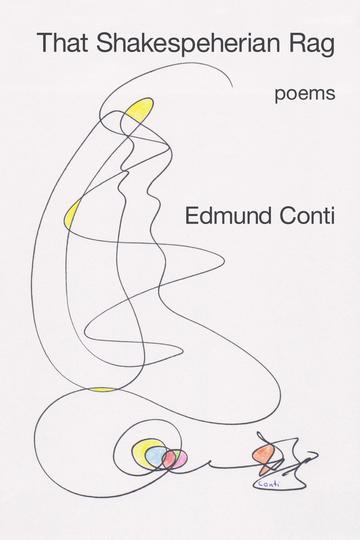
Review: ‘That Shakespeherian Rag’ by Edmund Conti

The problem of being
a 17-year
locust
is trying to stay
for 16 years
focused.

That poem is ‘Short Attention Span’ from Edmund Conti’s latest collection of verse. Originally the title was to be ‘O O O O’ in reference to T.S. Eliot’s lines from The Waste Land where the poet is being criticised by his wife:

“Are you alive, or not? Is there nothing in your head?”
But
O O O O that Shakespeherian rag—
It’s so elegant
So intelligent

It seems that the publishers sensibly preferred a title that would be more comprehensible, without the confusions of O and 0. So the next part of the quote was chosen–still idiosyncratic, but more useful. And, yes, Conti seems to have poetry singing rhythms in his head all the time, and he produces beautiful jazz-like drawings as in the book’s cover.

Both titles for the collection are pure Conti–he has a playful, Zen-like approach to life, highly literate, constantly referencing other writers (and other writers referencing other writers), expecting a level of knowledge and engagement from the reader, and often reducing his expositions to the shortest possible. So this latest volume is full of memories and meditations, jokes and puns, and threaded through with the words of others. Conti divides the book into 11 Shakespearean sections, starting with memories of childhood and youth, and then weaving through reading and writing, books and poetry, his neighbors and family (and their views of his verse), into a closer and closer look at mortality: the last four pieces having respectively four lines, two lines, one line, and nothing.

Conti writes both formal and free verse, depending what kind of playfulness he’s up to. When he parodies Emily Dickinson, of course it’s in her standard ‘The Yellow Rose of Texas’ meter and rhymes ABAB. But he’s a lot more free when he just wants some snide commens and a punchline. Here’s ‘Losing Battle’:

In a final desperate attempt
at survival, the sun sets
fire to the western sky.
Overblown, say my poet friends.
Cute, say my non-poet friends.
What does it mean? asks my neighbor.
How much will you get paid for it?
That’s from my wife.

My father’s an astronaut,
my son lies.

Engaging, amusing, thought-provoking, with many short passages that stay in the memory. A fun book for all poets. Just published this month by Kelsay Books.

Short poem: ‘Every Little Mammal’

Every little mammal
Likes a little cuddle.
Man or mouse or camel,
Life becomes a muddle
If there is no cuddle
For the simple mammal.

There’s nothing much to this little poem. Sometimes an awareness of a rhyme or near-rhyme sparks a thought, sometimes a random thought contains words that rhyme, or nearly… and if it’s not a large thought, it’s not a large poem. But it’s there all the same. And if you’re really lucky, you can find an appropriate illustration…

This short poem was originally published, like a hundred others of mine, in Snakeskin. Thanks for all of them, editor George Simmers!

“Illuminated Manuscript, Collection of poems (masnavi), A mouse, clutching the reins of a camel, at a stream of water, Walters Art Museum Ms. W.626, fol. 94b” by Walters Art Museum Illuminated Manuscripts is marked with CC0 1.0

Sonnet: ‘One True Religions’

No vision brings the whole world to its knees.
Jains, Hindus, Buddhists, Mithraists, Parsees,
Moses, Muhammad, Jesus or St. Paul,
One True Religions never conquer all.
Humans are simply too cantankerous
for any one belief to anchor us.

Success at once leads into sects and schisms:
the One Pure Ray of Light hits human prisms,
and egos, power grabs, love of dispute,
traditions, curiosity, all loot
the intellectual wealth of strong belief.
This year’s great guru’s merely last year’s thief.

Control’s maintained by sword and flame, not thought.
In failure, drink the Kool Aid or get shot.

Well, maybe 14 lines rhymed in pairs isn’t really a sonnet, even if it’s in iambic pentameter. But when you’ve got a structure that works for a poem, I don’t think it’s worth trying to hammer it into a different shape just to try to reach a “higher” standard. Anyway, sonnet or not this poem was published in Rat’s Ass Review – as you could guess from the journal’s name, editor Roderick Bates publishes whatever appeals to him, with no apologies for treading on other people’s sensibilities, religious, poetic or anything else. It’s a good place to submit a poem that other journals might be squeamish about, and a good place to read a wide range of outspoken poetry.

“Jonestown massacre” by johndavison883 is marked with CC PDM 1.0

Resources: Goodreads

Goodreads’ stated mission is to help people find and share books they love, and to improve the process of reading and learning throughout the world. (That was crafted before they were bought by Amazon, so their mission may have a somewhat more mercenary aspect these days.) Founder Otis Chandler got the idea when looking at a friend’s bookshelf, and wishing there was a way to share discoveries and opinions of books online. Launched in January of 2007, by December it had 650,000 members–clearly it was on to something! And by the end of 2019 (i.e. pre-Covid) it had 90 million members, a number that can only have grown since then.

It’s a place where you can spend your time in a variety of ways: making shelves of the books you’ve read, sorting them by topic, giving them 1 to 5 stars, writing reviews of them… Developing a list of friends to follow or to share reviews with, joining a group with topics that you like, using the site to find books you are likely to enjoy… Setting a goal of how many books to read in the coming year, and having Goodreads track your progress, praising you or nagging you depending on whether you’re ahead of schedule or behind.

More completely, “Goodreads,” says Wikipedia, “is an American social cataloging website that allows individuals to search its database of books, annotations, quotes, and reviews. Users can sign up and register books to generate library catalogs and reading lists. They can also create their own groups of book suggestions, surveys, polls, blogs, and discussions.”

Because my main reading these days is formal poetry (of course–though leavened with Simenon, Le Guin and thick works of history) I have been looking to see what kind of poetry groups operate in Goodreads. I only found one of formal verse, with half a dozen members, and dormant for over a year. So I have started a new one called ‘Formal Verse – Mostly’. If you, reading this, are interested in reading, writing or discussing formal poetry, old or new, your own or that of others, then consider joining us.

But even if you don’t want to be that active, don’t want to join a group, Goodreads still offers a range of benefits for all readers. I’ve been reading more each year for the last few years, largely thanks to the Reading Challenge and being nagged when (as now) I’m behind schedule.

Photo: “My Books” by Jennerally is licensed under CC BY-NC-ND 2.0

Evocative Fragments: from Arnold’s ‘A Summer Night’ (1)

For most men in a brazen prison live,
Where, in the sun’s hot eye,
With heads bent o’er their toil, they languidly
Their lives to some unmeaning taskwork give,
Dreaming of naught beyond their prison wall.
And as, year after year,
Fresh products of their barren labor fall
From their tired hands, and rest
Never yet comes more near,
Gloom settles slowly down over their breast.
And while they try to stem
The waves of mournful thought by which they are prest,
Death in their prison reaches them,
Unfreed, having seen nothing, still unblest.

I’m very grateful to my schooling for putting Matthew Arnold on the curriculum – this subversive little passage seems designed to undermine the office and factory culture which has flourished since his time, to undermine even the student writing endless essays. Arnold was an inspector of schools as well as a poet and social critic, so we can assume he knew what he was doing. But isn’t it suggesting that a dissatisfied person should just drop out? More on that in the next fragment.

The other thing I like about the piece is its easy, flowing style. Every line rhymes, but without pattern. The lines are iambic, mostly pentameter, but a scattering of them are shorter. It feels very conversational, and it is certainly very easy to learn by heart (which is one of the reasons that poetry evolved in the first place). The only hiccup to natural speech are the displacement of ‘live’ and ‘give’ to the ends of their lines for the sake of the rhyme and even that, though artificial, is done conventionally enough to read smoothly. The rest of it is in normal speech. When T.S. Eliot came out with ‘Prufrock’ some decades later, though it had a different, Imagist sensibility, the only real difference in style was in dropping the thou’s and thee’s that Arnold still clung to.

Photo: “Office workers in Executive Building Room No. 123 prior to alterations, Brisbane” by Queensland State Archives is marked with CC PDM 1.0