He played the game and loved its vicious tricks, deceit, despair, all power-politics; and made good progress, never in retreat, with no despair at politics’ deceit… and now still climbs that endless rain-slick stair of power-politics, deceit, despair.
If you search for photos of politicians, this is the kind of thing you get… There are (occasionally) really, really good people who devote their lives to trying to improve their part of the world; but… Anyway, it seems like a good time to blog this poem!
This short piece was originally published in Snakeskin. Couplets of iambic pentameter, with politics, deceit and despair in the second line of every couplet and providing the rhymes. But you could see that.
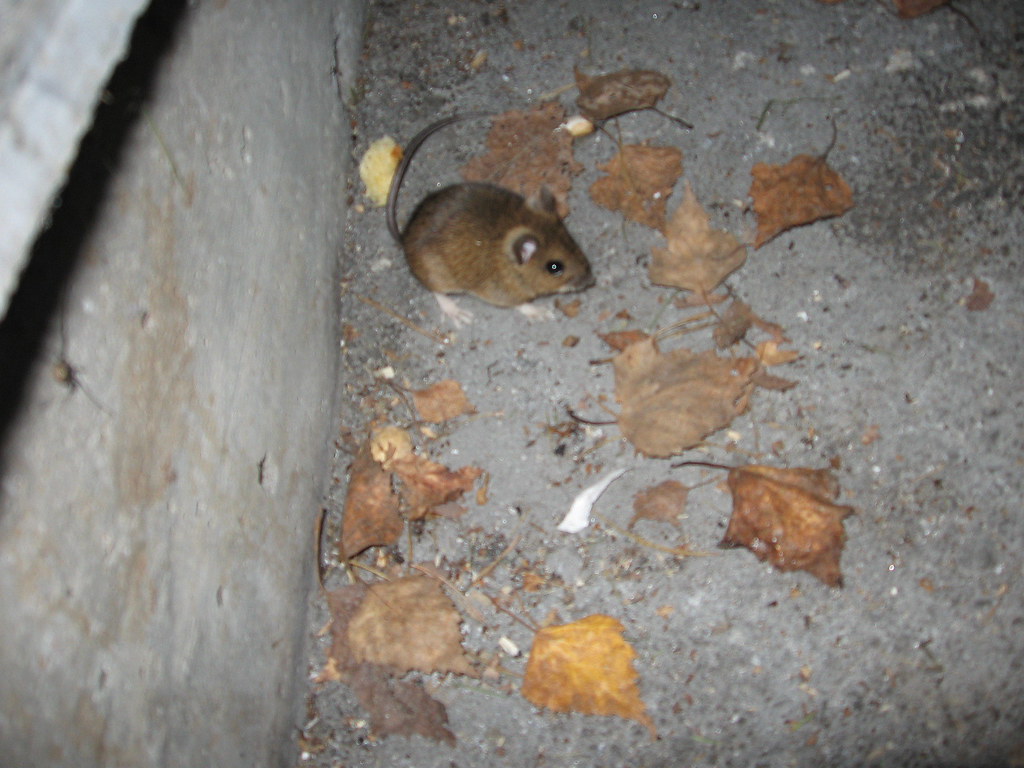
Poems should be concise: quick, small, like mice. Then one day you find they’ve made a nest in your mind.
I seem to be writing shorter, more epigrammatic verse recently. Probably influenced by reading too much FitzGerald/Khayyam.
This little poem was published in the December 2020 issue of Snakeskin–which celebrates 25 years as a monthly online poetry magazine, presumably the oldest (or rather “the most venerable”) such magazine in the world. Congratulations to its creator and sustainer, George Simmers!
FitzGerald’s version of Omar Khayyam’s Rubaiyat is one of the glories of English poetry. It has contributed more phrases and common quotations to the language, relative to its size, than any other piece of literature – including the Bible and Shakespeare. “A flask of wine, a book of verse, and thou”… “The Moving Finger writes; and having writ // Moves on”… and so on.
FitzGerald came out with five editions of the Rubaiyat (the fifth being posthumous), with 75 four-line stanzas in the first edition, then tinkering with it for the rest of his life: adding another 30 stanzas, subtracting again, and constantly modifying words, phrases and punctuation. The first edition has several things in its favour: succinctness, and the fire and integrity of the original effort.
Edward FitzGerald was a strange character. His personal life was a long search for friendship of two types: intellectuals with a passion for literature (Tennyson, Thackeray, Carlyle), and unintellectual men much younger than himself who were noted for their “manly” looks. His life and search were difficult, as Victorian England didn’t make life easy for homosexuals.
On the creative side, this search for friendship showed up as a need to be a co-creator: showed up in art, where he had a lifelong habit of buying paintings and cutting them down to a better composition and touching up the work to improve it; in music, where he arranged the works of others for his friends to sing; and in literature, where he found his genius in the works of others, translating Aeschylus, Calderon and Khayyam from the original Greek, Spanish and Persian, striving to identify with the original author and replicate in English not their exact words but the thrust of their thought and emotion. And with the Rubaiyat he appears to have been successful in every way. The five versions published between 1859 and 1889 constitute the single best-selling book of poetry in English.
Of the hundreds of editions that have been published since FitzGerald’s death, my two favourites are: for the lushness, the one illustrated by Edmund Dulac; and, for the background and insights, the one with an introduction by Dick Davis and published by Penguin in 1989.
In this particular Penguin edition (there have been several others), FitzGerald’s first edition and fifth edition are given in full, together with a complete listing of all the other variations found in the intervening versions. But – FitzGerald’s Rubaiyat only being 300 or 400 lines, depending on the version – all of that barely takes up 50 pages. Dick Davis’ introduction, almost as long, was presumably commissioned to make this a saleable book. And it is his introduction that gives it its full value.
Davis covers the life and what can be known of the personality of Omar Khayyam and – in conjunction with a review of FitzGerald’s life, personality, agnosticism and guarded homosexuality – the attraction, almost identity, that FitzGerald felt for him. He also investigates and approves the depth of FitzGerald’s translation skills, and analyses his use of rhyme scheme and meter. FitzGerald originally started translating Khayyam into paired couplets (aabb) before seeing the benefit of Khayyam’s rubaiyat (aaba) – given the epigrammatic nature of the verses, each quatrain is a stand-alone philosophic proposition and the return in the fourth line to the rhyme of the first two lines tends to heighten the sense of inevitability in each stanza.
Perhaps the most intriguing thought to come from Davis’ Introduction is that the sensual illustrations of half-naked women, so common in our collection of Rubaiyats, are all wrong. From linguistic and cultural clues in both the Persian and the English, it appears that the Saki, the young cup-bearer, the Thou of the flask of wine and book of verse, should be an attractive young male with his first moustache starting to grow in. In other words, and despite my preference for Dulac, FitzGerald’s version of the Rubaiyat of Omar Khayyam would perfectly support lush, ornate, gay illustrations; and that is likely what FitzGerald – and Khayyam himself – would have preferred.
As a legislator in my state I drew up my first vote to say that citizens could never vote again after they had passed away.
My fellow members faced the troubling issue bravely, locked in hard debate on whether, after someone’s death had come, three years should be adequate
to let the family, recollecting him, determine how a loved one may have cast a vote if he had only lived to see the later voting day.
My own neighbors warned me had gone too far in changing what we’d always done. I lost the net campaign, and failed to carry a single precinct with a cemetery.
Jimmy Carter’s collection of poems ‘Always a Reckoning’ is unexpectedly good for a politician, and it was a best seller when published in 1995. And this particular poem is not only amusing, but it resonates strangely with 2020 presidential election, and claims of fraud in the Georgia results. It would appear from the poem that Georgia politics is more honest than it was in the 1960s, anyway.
Jimmy Carter followed a bizarre and contradictory path in politics, always having been firmly committed to racial integration and equality, but having to constantly support people like Alabama segregationalist George Wallace in order to get elected. Then, once elected, trying to move the state’s politics in a direction that many of his backers did not like. Whether things played out the way they are presented in the poem is not something I can determine from a superficial review of his career. But it’s a fun poem, anyway.
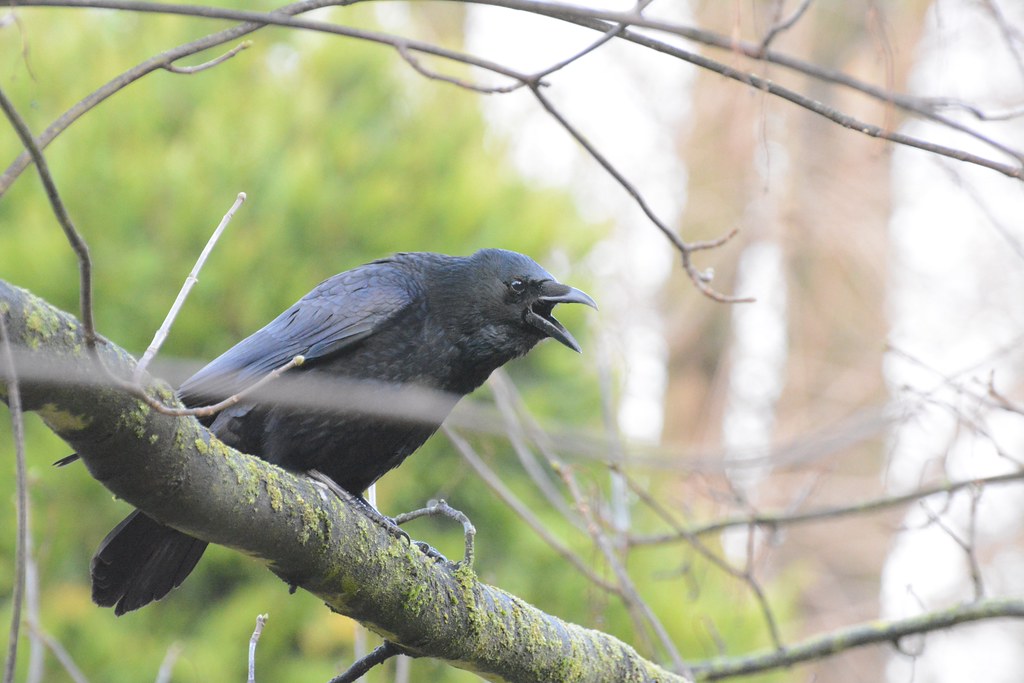
I’ve only once in my six decades– Years spent in many lands and islands– Had a crow fly to and caw at me… It flew ahead and cawed from a second tree… Then flew ahead to a fence post, Cawed a third time as we came close. Then flew away. This in the driveway Of a well-treed hotel outside Nairobi. Kenyans have no tradition of the crow As messenger of death… but we sure do. We checked the time: 1:05 pm. As it turns out, that was the moment when In the night in British Columbia My favourite in-law, my children’s grandmother, Died.
This is not exactly formal poetry… I can read it with four beats to a line, but only just; and as for rhyming couplets, yes, it has them, if you’re prepared to allow “rhymes” like driveway-Nairobi. Normally the needs of rhyme and meter will shape the finish of my poems, may alter its details, often add to its meaning in the process. But with this one, it was more important to me to stay as exact to the event as possible. I’ve short-changed the description by leaving out the presence of my wife Eliza, who was also close to my ex-mother-in-law; and a couple of other British Columbia-related coincidences that occurred in the previous hour in Kenya.
This poem was published appropriately enough in ‘Bewildering Stories‘. My suspicion is that everyone on very rare occasions experiences some woo-woo event that defies logic or probablility. In this case, say the event lasts a minute; to be generous to the gods of chance, let’s say it was accurate to within an hour on Molly’s death. Say I’ve been awake 16 hours a day for 60 years since childhood: that’s over 350,000 hours. Say that half a dozen people who I’ve felt really close to have died in that time. The chance that the one and only time a crow very deliberately comes up to me and caws three times is in one of the half-dozen hours that someone close has died, is therefore less than one in 50,000. That’s not impossible, of course. There are one-in-a-million lightning strikes and lottery wins. But crows have a reputation for doing exactly this.
I reject a mystical solution. I want to know the science of what happened. My purely speculative guess is that some quantum entanglement happens between people who are close (especially twins, or mother and child) and when there is a change of state in one, it registers with the other. Further speculation: that crows are so sensitive to the smell of death that they can register it in the changed state of a living but quantumly entangled person. Sorry, that’s admittedly unscientific, but at least it’s an attempt at a material rather than a spiritual answer.
If my valentine you won’t be, I’ll hang myself on your Christmas tree.
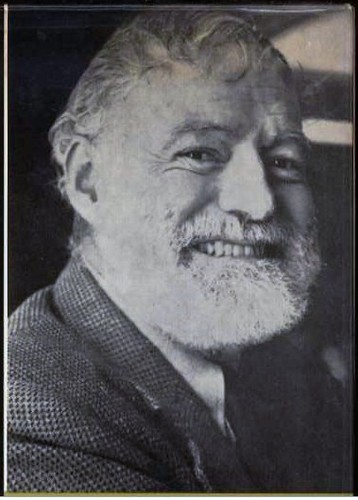
This is the 88th and last poem of the ‘Complete Poems’ of Ernest Hemingway (edited with introduction and notes by Nicholas Gerogiannis). Given that Hemingway ended his life by suicide, this might seem a worrying final poem; but he wrote it five years before his death, and it was truly light-hearted.
He was living with his fourth wife, Mary Welsh Hemingway, at “Finca Vigía” (“Lookout Farm”), a 15-acre property he bought and lived in for 22 years. She writes that he became so fond of the Christmas tree that he wouldn’t allow it to be removed for months after Christmas. This was his 1956 Valentine for her.
Hemingway’s poems are unremarkable at best (despite Eliot having apparently told him that he had promise as a poet). They are not what he won the Nobel Prize for in 1954. But if you like reading biographies, reading his poems is an interesting way of finding out about his thoughts and activities.
The future like an avalanche is roaring down the sky. If you’ve prepared no hiding place then be prepared to die. You never reason why.
The future like a question mark is scything humankind. If you can see, then handle it – you’ll be cut down if blind. The future doesn’t mind.
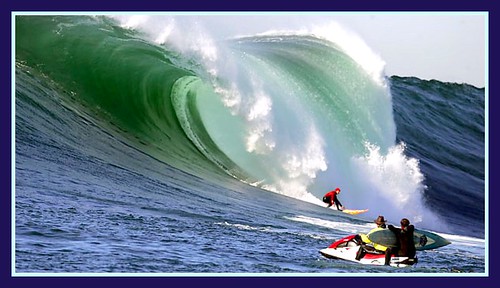
The future like a giant wave is heading for the shore. If you can ride that wall-like wave it’s no wall, but a door into forever more.
I was looking for one of my poems that might be appropriate for the aftermath of the 2020 US election, regardless of any of the possible outcomes. This is the best I could find: no matter who wins which election in any country in the next couple of decades, the world is going to be struggling to play catch-up with enormous changes happening in the climate, the sea, cyber warfare, space militarisation, A.I., genetic modifications… Trump, Biden, BoJo, Putin, Xi, they are all corks on an ocean with a hurricane coming.
‘The Future as Event’ was originally published in the much-lamented ‘Rotary Dial’, produced in Toronto by award-winning poets Pino Coluccio and Alexandra Oliver. A delightful monthly of formal verse, it ceased without warning. So it goes.
Louis MacNeice was born in 1907. By his early 30s he had published four volumes of verse (as well as other material), sufficiently good and well-received for him to publish this early selection in 1940. The tone is set with the opening lines of the first piece, ‘An Eclogue for Christmas’:
A:  I meet you in an evil time.
B:                                The evil bells
    Put out of our heads, I think, the thought of everything else.
A:  The jaded calendar revolves,
    Its nuts need oil, carbon chokes the valves,
    The excess sugar of a diabetic culture
    Rotting the nerve of life and literature.
Throughout the book we have the passage of time with the deterioration of society, culture and one’s own life, expressed in a blending of old and new images, in rhyme. They are poems of the 1930s, of the Great Depression and the imminent war, all from the same man, all on the same theme.
And yet one or two stand out: ‘The Sunlight on the Garden’ is one of the best poems in the English language, casting a spell with its dazzling intricate rhymes sustained over four stanzas, insightful, wistful, immediately memorable, endlessly anthologised. It relates specifically to his first wife having left him – he wrote this “love-song” for her after their divorce was finalised.
The sunlight on the garden
Hardens and grows cold,
We cannot cage the minute
Within its nets of gold,
When all is told
We cannot ask for pardon.
‘Bagpipe Music’ is also very commonly anthologised because of its bounce, cynicism and humour:
The Laird o' Phelps spent Hogmanay declaring he was sober,
Counted his feet to prove the fact and found he had one foot over.
Mrs. Carmichael had her fifth, looked at the job with repulsion,
Said to the midwife 'Take it away; I'm through with over-production'.
A good question, then, is why these two poems stand out against the rest in the book. What makes them so successful, with their very different moods? I think their common quality, largely lacking in all the other pieces, is that they are very easy to learn by heart and recite, they are almost singable even on a first reading. Pure poetry.
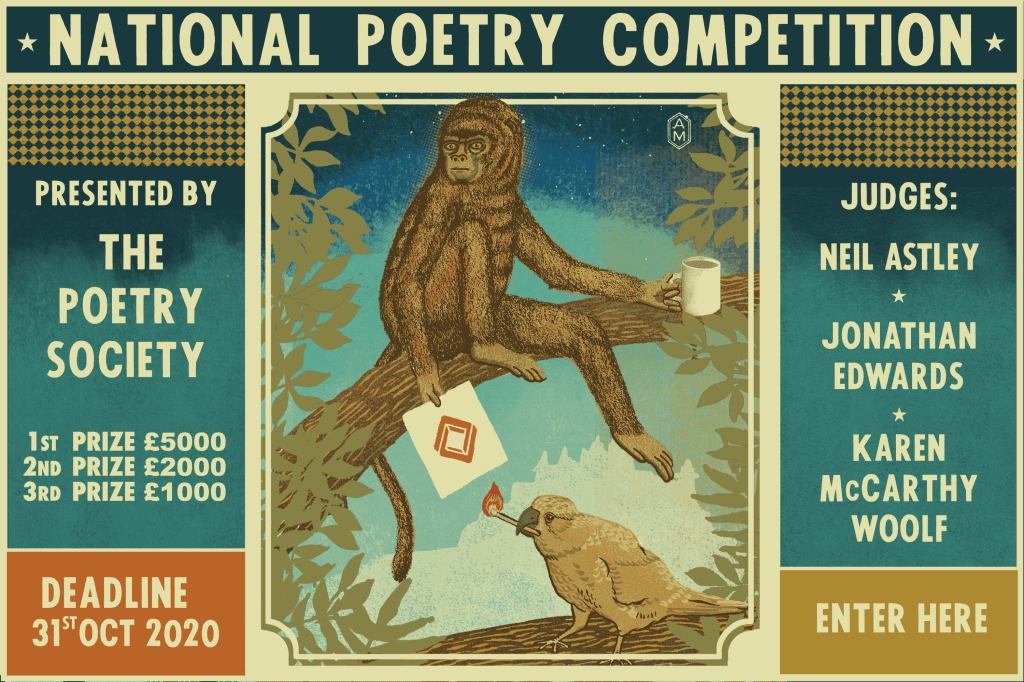
Run annually by The Poetry Society since 1978, this is one of the most prestigious poetry competitions for a single unpublished poem, up to 40 lines.
Open to all poets worldwide aged 18 or over.
Ten Prizes First Prize: £5000 Second Prize: £2000 Third Prize: £1000 Commendations: £200
The first poem submitted costs £7. Subsequent entries in the same submission cost £4 per poem. Poetry Society members (including those joining at time of submission) get one free second poem, with subsequent poems at £4.
Judges include Neil Astley, Karen McCarthy Woolf and Jonathan Edwards.
Entrants from NW England are also eligible for the Peggy Poole Award to win a year’s mentorship with Vona Groarke
You can read all ten of last year’s winners on the Competition site. Unfortunately only one of them has real form, Ann Pelletier-Topping’s sestina Granddaughter Moves In; it’s a good poem, but I’m not really fond of sestinas. The ten winners are all weighty, substantial, both in their subject matter and in their analysis. Most of them, therefore, are pushing the 40-line limit, though there is one that is only 13 lines long. Of course the judges will be different this year, but these past winners are all worth considering if you are choosing one of your own poems to submit.
Enter online by midnight on October 31 – but remember, that’s midnight UK time… earlier in the day in the Americas.
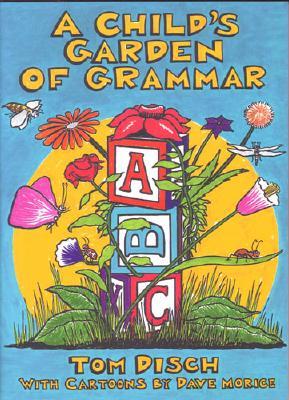
Thomas M. Disch (1940-2008) was a New Wave Science Fiction author, poet, theater critic, computer game designer, and much else. Not surprising, then, that his Grammar is a strange book. Sadly, it’s not really informative for either the grammar-beginner (it’s too obscure) or the grammar-expert (there’s nothing new). It has odd poems, some nice and simple like ‘Either/Or’:
Either and Or came to a door. Either would enter, but not before Or, So still they stand outside that door, But now their names are Neither and Nor.
Some playing little games, as in the explanation of ‘The Indirect Object’:
I have to hand it to you, dear: You’re the indirect object here– Along with Thelma, Hank and Hugh. I tip my hat to all of you. You’ve set a fine example to me– But I don’t get it, and I’m gloomy.
OK, so “to you” is the indirect object… and “I” can’t be an indirect object, it can only be a subject… Cute, but rather spoiled for me by the rhyme of “to me” (which I unthinkingly stress on the last syllable, as with all the previous lines of the poem) but then, having to rhyme it with the next line’s “gloomy”, have to go back and reread to get the rhyme…
And every poem is illustrated with simple cartoons by Dave Morice. If you’re addicted to strange, by all means buy it. To me it’s just an oddity, and without either the visual or verbal charm of other cartoon-illustrated short poetry collections such as Piet Hein’s Grooks. But after all, Disch is best-known for his SF, not his verse.




 Form in Formless Times