Category Archives: Resources

Poetry Resources: Rat’s Ass Review

Rat’s Ass Review, as you can guess from its name, is one of those in-your-face Rat's Ass Reviewpublications where a poet can place material that some of the more delicate magazines would blush to read. Edited by Roderick (“Rick”) Bates since 2014, and by founder David M. Harris before that, it is defined by the editor as “an online poetry journal whose editorial fancies are no more arbitrary than any other; they are simply more overtly so. I publish what I like.”
Rick, and David before him, are refreshingly open about their prejudices and preferences in the very long, useful and thought-provoking Submission Guidelines page. “There’s only one editor here, one person whose taste determines what gets into the RAR, and if you don’t like my taste, I don’t give a rat’s ass. Go someplace else for your poetry dose. (I don’t really think that makes me different from all the millions of others with online poetry zines, but I’m willing to admit it.) Send me your best poetry. I don’t particularly care whether it’s formal or informal, metrical or free verse, rhyming or not. I’ve written all those possibilities myself. A good poem isn’t one that gets the grades for following particular rules. And I’m sure I’ll reject plenty of good poems anyway. I’m not even sure I’m looking for good poems. I’m looking for my kind of poems.

So RAR is clearly formal-friendly… but formal isn’t good enough in itself, no matter how technically accomplished. The poem has both to be immediately accessible, and to provide deeper thoughts on rereading. It has to appeal the editor, whose idiosyncrasies you can only guess at. The best thing to do, of course, is to read through a couple of issues of the magazine. Apart from the two regular issues a year, there have been other unique ones: “Love and Ensuing Madness” and, given the current state of society and politics in the US, “Such an Ugly Time“. So there’s a clue to what the editor is looking for! The magazine boasts of its brash good humour and world-weary cynicism. And the word “fuck” appears as casually here as it does in British material like The Economist or John Oliver’s rants.

Detailed technical submission requests include “type your poems using Times or Times New Roman, font size 12, left justified, and don’t capitalize the first word of every line as though you were writing with a quill pen.

And the most helpful piece of advice for anyone unsure whether their material will be appreciated or accepted is simply this: “Go ahead and Submit.”


Poetry Resources: Lighten Up Online

Lighten Up Online appears four times a year, in the third month of each quarter. Lighten Up balloonFounded over ten years ago by Martin Parker, it is now edited by Jerome Betts – both of them being accomplished formal poets, of course. They and the magazine are very English (reflected, to the bemusement of Americans, in some of the spelling, rhymes, slang and references) but contributors come from around the globe. Their front page states:

“We believe that light verse is very far from being the poor relation of ‘proper’ poetry. On this site you will find work by light verse specialists as well as by some of the many ‘proper’ poets who enjoy it and write it and agree that light verse deserves a wider audience than it is normally given.” 

The technical standards are very high, and wordplay including puns is always welcome. Here is just such a piece by the editor himself in the current issue:

Stiff Upper Lip

When uncle slipped, near roadside tippings,
As light snow hid the ice beneath,
And fell face down in sharp-edged chippings,
Did foul words further blast the heath?
Ah no, despite the pain’s cruel nippings
He just said ‘Ouch!’, through gritted teeth.

Lighten Up Online is always open to submissions, but of course anyone sending work to it should read a couple of issues first to get a sense of what the magazine is all about. A lot of very short pieces are published, and every issue ends with the results of the previous issue’s competition and the announcement of the new one.

An extremely enjoyable read, and a good way to find new poets you might like.

Poetry Resources: “Best Remembered Poems”

578776Perfectly competent, and with interesting trivia and useful background notes by Martin Gardner, this selection of “Best Remembered Poems” is pedestrian almost by definition: these are the ones that are best remembered by Americans, so there will be very little that is new and exciting–and honestly, a lot of the poems best remembered from high school English lessons on the 19th and early 20th century… are downright boring.
But if you’re looking for a book that contains most poems that most non-poets vaguely remember… that contains both ‘The Charge of the Light Brigade’ and ‘Casey at the Bat’… then this is the one for you!

Poetry Resources: Light Verse Magazine (with Potcake review)

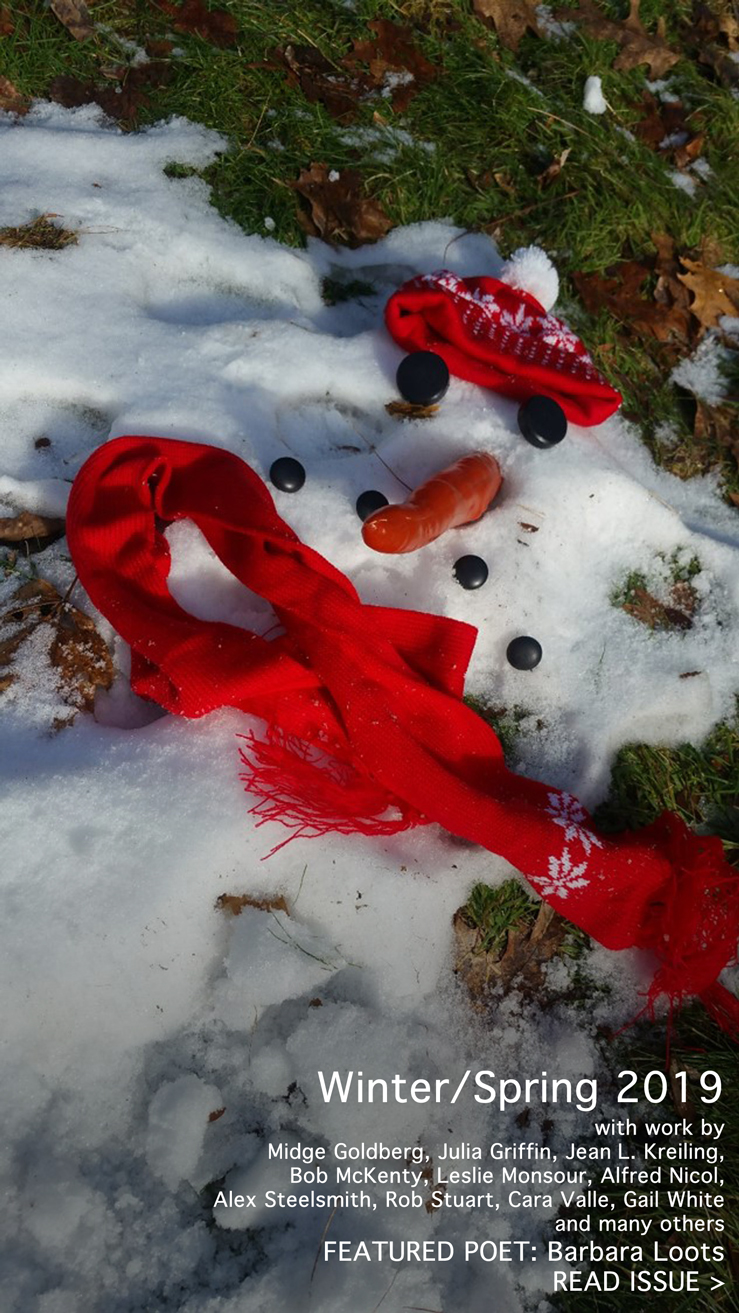
Light, the “journal of light verse since 1992”, has just published its Winter/Spring 2019 edition (online), with poems from over 40 light formal verse poets, and insightful book reviews of new books of formal verse (not all of it light verse). It is worth getting on Light’s email list, not only for the semiannual issues, but also for the half dozen poems on current topics that they publish every week – get a quick chuckle from a rhyme-rich twist on the week’s headlines.

This specific issue is of interest because of the book reviews: of the five reviews, two are of books by authors already published in our Potcake Chapbooks (Ed Conti and Alicia Stallings), and a third is a review of the chapbook series itself:

Potcake Chapbooks, edited by Robin Helweg-Larsen. Sampson Low Ltd.

A new source for pocket-sized light-verse collections just rode into town as well. The Potcake Chapbook series is a collection (three, so far) of pocket-sized anthologies smaller than many cell phones. These books appear to be made specifically for Light readers in that the series “subscribe[s] to the use of form, no matter how formless the times in which we live,” the poems are selected to achieve that lovely balance between wit and sweetness—and sometimes outright belly laughing—that is the hallmark of so much good light verse, and the poets in the first two volumes are nearly all road tested and approved by Light‘s editors. Rogues and Roses covers love and sex in a surprising number of variations for thirteen short pages, and Tourists and Cannibals ranges from local holiday spots (Terese Coe) to escaping the heat others come specifically to find (A. E. Stallings) to learning languages (Robin Helweg-Larsen) to a hat-tip to one’s homebound god when in a temple on the other side of the world (Gail White). Careers and Other Catastrophes just came out. I haven’t seen it yet, but if it matches its sisters, it’s worth getting the whole trio.

The Potcake books include lovely little three-color illustrations, and for less than the cost of a latte (plus postage from England) you can amuse yourself or give a truly unexpected gift. Either way, the mix of poems and the quality of the work will delight and surprise. This series should continue and thrive.”

Light is a non-profit organization, and signing up is free. Personally, I think it should be a mandatory part of English lessons in middle and high schools – we need more people reaching adulthood with the ability to enjoy the strengths of verse in the English language, and its integral part of our culture.


Poetry Resources: Bewildering Stories. Poem: “When at the End”

Bewildering Stories is a weekly magazine of sf and speculative fiction (mostly) and poetry (some), created and managed by Don Webb and half a dozen others. Because it does a Quarterly Review and an Annual Review of the editor’s choice, it produces about 47 issues a year of original material (or predominantly original – it allows previously published material). It is now coming up on issue number 800. I’ll leave it to you to figure out how long it has been in existence… for an online magazine, it is truly venerable.

I often have a poem in Bewildering Stories, and this week is no exception: “When at the End – Wishful Thinking“:

“When at the end of life we who by swords, axes, cleavers
go as heroes to Valhalla, the rest go to Hel.”

“When at the end of life we the true believers
go as saints to Heaven, the rest go to Hell.”

“Our memory is all that we are.
When at the end of life we are remembered,
we still exist for as long as our memory lasts.
Remember us! We are no more than memories of our pasts.”

When, at the end, the helmet of this life is lifted away,
the Virtual Reality of “human” fades to grey,
will you find yourself in a world fresh, rich and deep,
an environment more meaningful, truer, greater?
(And is it somewhere you go even now, in sleep?)
Surely behind the simulation must be a Simulator.

It accepts formal and informal verse, being more concerned with the speculative nature of the ideas than with an aesthetic preference. The poem above is pretty much a sonnet, though the scansion is uneven, the rhyme scheme unorthodox and the rhymes themselves iffy (beginning with rhyming Hel with Hell). So not a very aesthetic product, but full of speculation – which is the priority.

The editorial board is diverse, Don being based in Canada but drawing on others in the UK and US. Submissions of course can come from anywhere. And another nice thing that Don does is to include “Challenge questions” about a number of the pieces in each issue. The answers from readers are not typically shared, but it is a nice way of provoking more thought.

Altogether a worthwhile magazine for poets as well as fiction writers.


Poetry Resources: The Asses of Parnassus. Poem: “Success!”

The shortest, wittiest, most formal poetry publication that I know of is Brooke Clark’s Tumblr-based Asses of Parnassus. This is the place for pieces as short as a couplet or perhaps a couple of quatrains, whether you are submitting for publication or you simply like reading them.

The irreverence is illustrated with the Tumblr heading: a detail of a Goya etching from his series of caprichos, morbid, satirical and anti-establishment in outlook.

The Asses of Parnassus used to contain a lot of translations (in rhyme) from Greek and Latin authors – lots of rude, snide, scurrilous comments from Martial and Catullus – but is now dominated by more current material. The most recent item as this post is being written is a 24-line screed from Daniel Galef on being denied a Wikipedia entry. The one before is my own couplet, Success:

“Success!” he toasted. Though I wished him dead
I smiled and raised my glass: “Suck cess!” I said.


But though rude and snide are allowed, you are unlikely to find any bigotry or hatred. Brooke Clark retains tolerance and even compassion in The Asses of Parnassus. He is Canadian, after all.

Poetry Resources: The Norton Book of Light Verse

The single best anthology of light verse that I know. Over 500 poems selected by Pulitzer Prize winning commentator Russell Baker (and with an excellent introduction by him). Everything from ‘Summer is y-comen in’ and its modern parodies, to Shakespeare and Marlowe, Noel Coward and Cole Porter, Don Marquis and Phyllis McGinley, Allen Ginsberg and John Lennon.

126147

Light verse lends itself to the use of form, and most of the poems are formal. Rhyme and meter make it easier to remember verse word for word, but there are bits that I remember, have known since my school days, that don’t share those attributes. For example, Cummings’ ‘Nobody loses all the time’

(and down went
my Uncle
Sol

and started a worm farm).

But such pieces are the exception. By the far the majority of light verse is going to rhyme and scan, and that is part of its charm.

As most poets only get one or two poems in this anthology, there are a couple of hundred poets represented. The book is therefore an excellent way to broaden your awareness of English-language poets – though if there are any outside the British-Irish-American area, I’m not aware of it. This limitation, and the fact that the compilation dates from 1986, are the only negative things to say about a superb and memorable collection.


Poetry Resources: The Lyric

As its website says, “Founded in 1921, The Lyric is the oldest magazine in North America in continuous publication devoted to traditional poetry.” It provided one of the only outlets for serious formal verse on the continent throughout the decades in which formal verse seemed otherwise limited to pop songs, advertising jingles and Burma-Shave roadside signs.

The Lyric poetry magazine

The Lyric Foundation, established in the early 1950s, provides financial support for the magazine as well as for the university education of young poets and care for older ones. The magazine is currently edited by the daughters of formalist poet Leslie Mellichamp – he edited it himself until his death in 2000.

The magazine suffers from being somewhat behind the times. It is hard to imagine that it gets the same richness of submissions as other outlets, when it is resolutely old-fashioned in management as well as themes. “Email submissions are only accepted from out of country.”  The tone of the printed work is consequently less varied and dynamic than other formalist and formal-friendly magazines. Even the Foundation that supports it is hard to learn about and, as far as I can tell, has no website.

However The Lyric remains a good resource for new poets, as well as more established ones, to place their work in if it falls within the lyric tradition. And with almost a century of publication behind it, there is hope that it will survive and thrive indefinitely.

Poetry Resources: Snakeskin

Probably the oldest continuously published poetry zine on the web – possibly the oldest literary zine of any type – is Snakeskin, published monthly by George Simmers since December 1995.

George Simmers

George Simmers, editor of Snakeskin

There are many unique aspects to Snakeskin, including in the archives:

  • the pervasive wit and humour, tolerantly secular, expressed in the zine’s name from the first issue with Wayne Carvosso’s poem “Credo” – “we are the kindred of the snake.”
  • a long interview of George conducted by Helena Nelson, entirely in iambic pentameter (for George is a skilled and fluent poet, though he rarely publishes in Snakeskin these days)
  • projects and experiments, including various hypertexts
  • and a standard feature for the past several years, Bruce Bentzman’s blog-like soliloquies, or essays – a very sensitive and deeply emotional journey.

But what is particularly nice for poets is that George has no interest in names, reputations or bios – he just reads the poems, and chooses what takes his fancy. Very few of the issues are themed in advance, but they may reflect his mood or the time of year or whatever, and end up with a mood of their own.

And, despite what the Credo states —

“Nor shall we sit to lunch with those
Who moralise in semi-prose.
A poem should be rich as cake,
Say the kindred of the snake” —

George takes any form or lack of form, so long as the piece works for him. This may reflect the tolerance of someone who had a career as a teacher; or it may reflect the Yorkshireman’s well-known preference for the practical over mere theory. In either case, it presents a wonderful opportunity for a new poet to break into publication in an internationally recognised magazine.

Read an issue or two – there’s something for everyone!

Poetry Resources: Better Than Starbucks

BTS logoBetter Than Starbucks (BTS) is a literary magazine that all poets should be aware of because of its enormous and well-structured diversity. Apart from several types of poetry, it also has some short fiction and creative non-fiction.

It has (currently) eight separate poetry sections with a variety of editors, covering such areas as Free Verse, Haiku, African Poetry and, of most interest to me, Formal & Rhyming Poetry edited by Vera Ignatowitsch.

The poets who show up in the formal section vary from issue to issue, but the range of poetry is always impressive: you can expect to find a couple of lighthearted limericks, a couple of serious sonnets, and a few lyrical poems in nonce forms.

Of particular interest to active poets is that BTS will take previously published as well as fresh work. This allows the poet to republish their strongest individual pieces and gain a wider audience for them; and the magazine gets to publish the best of the poet’s work, not necessarily their most recent (or hardest to place). For the reader, too, it means that the standard of work is higher than usual.

My own work has been published or republished in BTS several times, and I was lucky enough with the current (November 2018) edition to have two poems in the Formal & Rhyming section, and one in Free Verse, and two in International Poetry. (I haven’t achieved such a trifecta before, and don’t expect to again. So now is obviously the right time for this blog post… even if I am confessing to writing Free Verse. Sort of.)

Better Than Starbucks is a very good-looking magazine. It now comes out every two months in both hard and soft copy. Strongly recommended.