Tag Archives: formal verse

Using form: Quatrains: Stephen Gold, ‘So Pseud Me’

My verse is of the humorous variety,
And does its best to brighten up society.
To spread a little joy’s a noble calling,
A life without a laugh would be appalling.

Yet still, of late, I’ve had a thought that niggles;
What worth is work that just produces giggles?
Should it be judged as slight and ineffectual,
Compared to art we label intellectual?

And so I did what “proper” poets do,
And signed up to The Scrivener’s Review,
“The connoisseur of poesy’s magazine”,
Where scribes will scratch your eyes out to be seen.

I found it was a terrifying place,
Where people were obsessed with lower case,
Allusions veered from cryptic to absurd,
And “meaning” seemed to be a dirty word.

Their poetry was like the peace of God,
That passeth understanding – truly odd.
Some claimed to write for womxn and for mxn,
Though none had come across the verb, “to scxn”.

With open mind, I asked, “Is it my fault
That there is nothing here I can exalt?”
But days of dredging through this awful rot
Confirmed beyond all doubt that it was not.

Each new excrescence served to reinforce
That I had veered disastrously off course.
I wheeled around and fled back to the light
Which shines upon the droll and erudite,

Bring on a world where rhyme and meter matters,
And isn’t full of folk as mad as hatters.
Adieu to “Scrivener’s Review”, I quit.
Do I need what you’re full of? Not one bit.

*****

Stephen Gold writes: “The idea for So Pseud Me came from wading through an august poetry periodical which had better remain nameless, and coming to the following conclusion: WTF?
There was some good, thoughtful work, but much of it was pretentious drivel, written by the deservedly obscure with their heads rammed firmly up that place where the Lord causeth not the sun to shine.
If you were to ask them, I guess most would place high verse on a pedestal, way above light. But on this, I am with Kingsley Amis, who wrote in the New Oxford Book of Light Verse:
“Light verse makes more stringent demands on the writer’s technique. A fault of scansion or rhyme, an awkwardness or obscurity that would damage only the immediate context of a piece of high verse endangers the whole structure of a light-verse poem. The expectations of the audience are different in the two cases, corresponding to the difference in the kind of performance offered. A concert pianist is allowed a wrong note here and there; a juggler is not allowed to drop a plate.”
‘So Pseud Me’ is a light-hearted attempt to speak up for jugglers.”

Stephen Gold was born in Glasgow, Scotland, and practiced law there for almost forty years, robustly challenging the notion that practice makes perfect. He and his wife, Ruth, now live in London, close by their disbelieving children and grandchildren. His special loves (at least, the ones he’s prepared to reveal) are the limerick and the parody. He has over 700 limericks published in OEDILF.com, the project to define by limerick every word in the Oxford English Dictionary, and is a regular contributor to Light and Lighten Up Online (where this poem was first published).

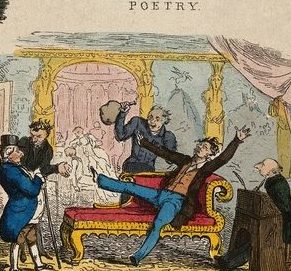
Illustration: “A group of poets carousing and composing verse under the influence of laughing gas. Coloured etching by R. Seymour after himself, 1829.” is licensed under CC BY 4.0.

Short verse: Susan McLean, ‘Jeopardy’

The first thing she requests post-surgery,
awake but drifting in the morphine glow,
is that my sister turn on the TV
so that the two can watch her favorite show.
Weak but alive, unsure if she has cancer,
my mother turns to questions she can answer.

*****

Susan McLean writes: “I wrote this poem while I was over a thousand miles away from the scene it describes, based on my sister’s phone account of what happened. The irony of the show’s title under the circumstances was the first stimulus for the poem, but also I almost laughed when I thought of how characteristic my mother’s action was. Given that she was in her eighties when she had major surgery, my mother’s jeopardy was very real, and I wrote the poem while we still didn’t know whether she had cancer. She did not. There is another irony, in that the game show Jeopardy! provides answers for which the contestants have to supply the appropriate questions. Yet, in context, those questions are answers.
The hardest challenge when writing about an emotional situation is to focus on the facts and let the emotions emerge by suggestion. A hint of humor acts as a counterweight to unspoken anxieties. The poem was first published in Measure and later appeared in my second poetry book, The Whetstone Misses the Knife.”

Susan McLean has two books of poetry, The Best Disguise and The Whetstone Misses the Knife, and one book of translations of Martial, Selected Epigrams. Her poems have appeared in Light, Lighten Up Online, Measure, Able Muse, and elsewhere. She lives in Iowa City, Iowa.

Susan McLean has two books of poetry, The Best Disguise and The Whetstone Misses the Knife, and one book of translations of Martial, Selected Epigrams. Her poems have appeared in Light, Lighten Up Online, Measure, Able Muse, and elsewhere. She lives in Iowa City, Iowa.
https://www.pw.org/content/susan_mclean

Photo: “Filming Jeopardy!” by jurvetson is licensed under CC BY 2.0.

Ann Drysdale, ‘Winter Song’

When blizzards blow under the tiles
and the dishcloth crisps on the draining board
and the snowscape stretches for miles and miles
and only the idiot ventures abroad.
When it’s early to bed, and thank heavens for that,
then coldly keens the cast-out cat:
Miaow! Miaow! – a doleful din –
and who will rise and let him in?

When slippery stones by the pond
make filling a bucket an effort of will
and you’re walled-up for weeks in the back of beyond
in a farm at the foot of a hell of a hill
then it’s early to bed, and thank heavens for that,
till coldly keens the cast-out cat:
Miaow! Miaow! – a doleful din –
and who will rise and let him in?

*****

Ann Drysdale writes: “It was published in my very first collection, The Turn of the Cucumber (Peterloo Poets 1995) and dates from a time when I was bringing up three children as a single mum on a hand-to-mouth smallholding on the North York Moors.”

Editor’s note: Ann Drysdale takes the structure, but not the precise metre, of Shakespeare’s ‘Winter Song’ from Love’s Labours Lost. Her rollicking metre allows her “and the snowscape stretches for miles and miles” and the wonderful “in a farm at the foot of a hell of a hill”, for a bigger wintry landscape than Shakespeare shows.

Ann Drysdale now lives in South Wales and has been a hill farmer, water-gypsy, newspaper columnist and single parent – not necessarily in that order. Her eighth volume of poetry, Feeling Unusual, has recently joined a mixed list of published writing, including memoir, essays and a gonzo guidebook to the City of Newport.
http://www.poetrypf.co.uk/anndrysdalepage.html
http://www.shoestring-press.com

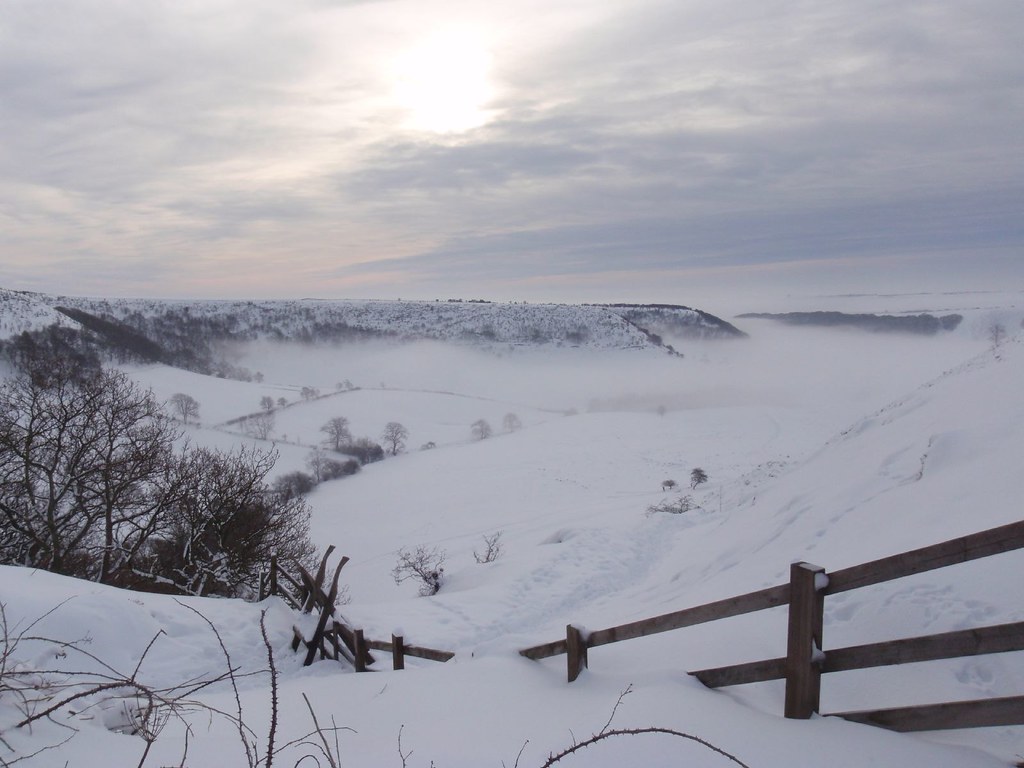
Photo: “Hole of Horkum, North York Moors” by reinholdbehringer is licensed under CC BY-NC-SA 2.0.

Joshua C. Frank, ‘The Adventures of Verb’

At six, I had a dictionary
Where I would meet a man named Verb,
Superb and quite extraordinary,
In every definition’s blurb,
Right at the finish, did while doing,
For example: “Verb chewed, chewing.”

In my mind, I saw Verb clearly,
With brown hair, mustache, thin, and tall.
“Verb smiled, smiling” sincerely
And “Verb told, telling” me of all
That “Verb did, doing” through his days
Within a sentence or a phrase.

“Verb ran, running,” “Verb swam, swimming,”
“Verb vaulted, vaulting,” “Verb gave, giving,”
“Verb bought, buying,” “Verb trimmed, trimming,”
“Verb flew, flying,” “Verb lived, living,”
One day I came real close to crying:
The day I read that “Verb died, dying.”

I looked up “verb,” and then I knew,
It’s not a man who lived and died;
It’s just a word that means to do.
Relieved, I put the book aside
And ran outside, where I “played, playing”
The things Verb did that still “stayed, staying.”

*****

Joshua C. Frank writes: “The poem was based on a children’s dictionary I remember from childhood.” It was first published in The Society of Classical Poets.

Joshua C. Frank works in the field of statistics and lives in the American Heartland.  His poetry has been published in The Society of Classical PoetsSnakeskinThe LyricSparks of CalliopeWestward QuarterlyNew English ReviewAtop the CliffsOur Day’s EncounterThe Creativity WebzineVerse VirtualMedusa’s KitchenThe Asahi Haikuist Network, and LEAF Journal, and his short fiction has been published in Nanoism and The Creativity Webzine.

https://www.newenglishreview.org/authors/joshua-c-frank/

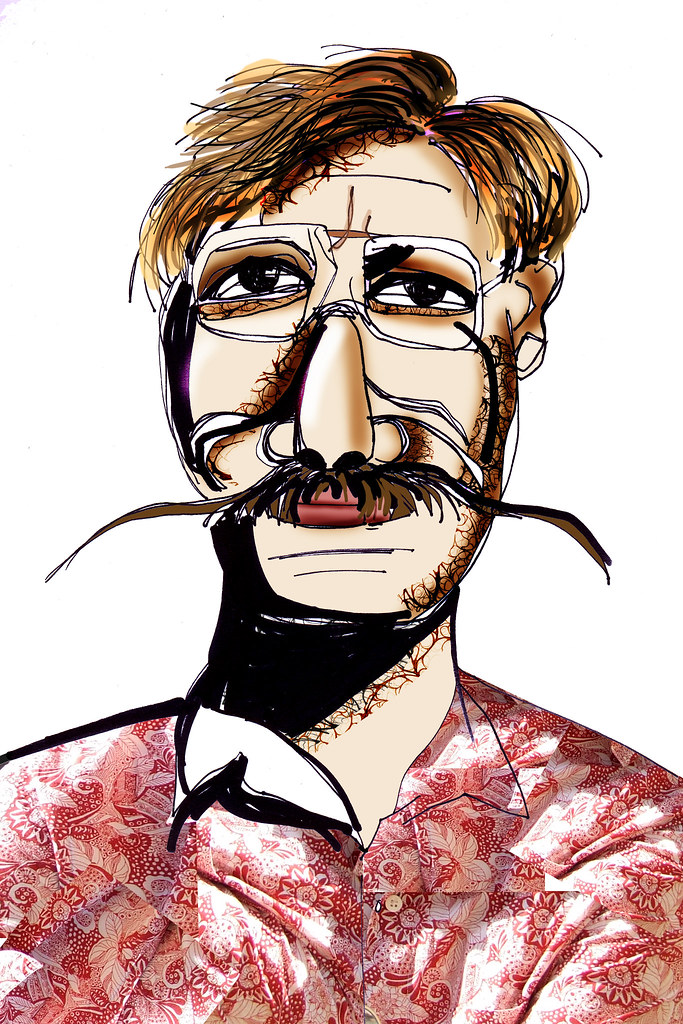
Graphic: “moustache man” by A_of_DooM is licensed under CC BY 2.0.

Ed Shacklee, ‘Burn’

I took the way of stone,
not water, air or fire:
one element alone
could complement desire.

Not to quickly flare,
nor to slyly flow –
no fickleness of air
could whisper where to go;

for I was each, in turn,
as years unearthed the soul,
yet found no way to burn
but dark and pressed as coal.

*****

Ed Shacklee writes: “I very seldom know what to say about a poem; the cage opens, and the bird flies away – often not quite finished.”

Ed Shacklee lives on a boat in the Potomac River. His first collection, “The Blind Loon: A Bestiary,” was published by Able Muse Press.

And for those who like odd information and representations of animals, The Blind Loon: A Bestiary Facebook group is worth joining.

Photo: “Glowing Coals” by chrisgintn is licensed under CC BY-NC-SA 2.0.

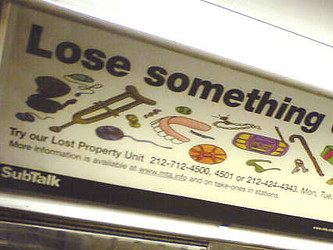
Barbara Loots, ‘Small Things’

Things have a tendency to lose themselves:
hammer, needle, the necessary spring,
a button, the keys–they disappear like elves,
like roses, wishes, the words for everything.

Dive in. Ransack a drawerful of debris.
Wrestle with irritation, grief, self-doubt.
One earring, that pen, eyesight, dignity:
small things we learn, in time, to do without.

*****
Barbara Loots writes: “The small losses and lapses of memory that happen to everyone seem more vivid and alarming as I grow older. I realize that it isn’t things but myself I must gradually, inevitably let go of. Even so, the vast, abundant universe brings perspective to the human situation, including mine.”

Barbara Loots resides with her husband, Bill Dickinson, and their boss Bob the Cat in the historic Hyde Park neighborhood of Kansas City, Missouri. Her poems have appeared in literary magazines, anthologies, and textbooks since the 1970s. She is a frequent contributor to lightpoetrymagazine.com. Her three collections are Road Trip (2014), Windshift (2018), and The Beekeeper and other love poems (2020), at Kelsay Books or amazon. More bio and blog at barbaraloots.com

Photo: “Things you might lose on the subway” by Hippolyte is licensed under CC BY 2.0.

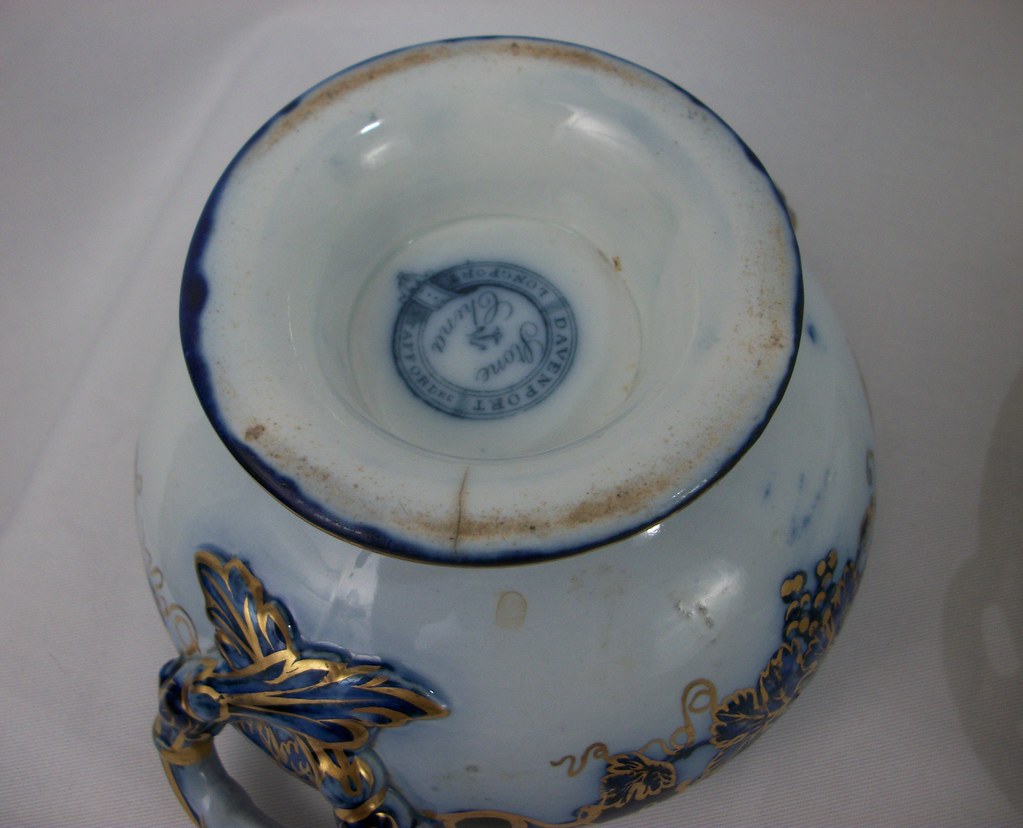
Susan McLean, ‘Received Wisdom’

Unpacking it, we wondered who had sent it
and why they felt we needed it. We thought
we’d managed fine without it. Had they meant it
as tribute or rebuke? We had been taught
to view unsought donations with suspicion.
Inspecting it, we found a hairline crack.
It doesn’t suit our taste or disposition.
In short, we must insist they take it back.

*****

Susan McLean writes: “Finding new meanings in old phrases is one of my favorite games. In the case of the poem’s title, I was thinking about how each generation wants to pass along advice to the next generation, which the next generation tends to reject. Advice always feels like criticism, however well intended it may be. Moreover, the world is changing so fast that advice that worked for one generation no longer fits the reality of the next generation.

“The alternating feminine and masculine rhymes in the poem are meant to mimic the interplay between two generations, or any two groups that have differing views. ‘Received Wisdom’ was originally published in Free Inquiry and later appeared in my second book of poems, The Whetstone Misses the Knife.”

Susan McLean has two books of poetry, The Best Disguise and The Whetstone Misses the Knife, and one book of translations of Martial, Selected Epigrams. Her poems have appeared in Light, Lighten Up Online, Measure, Able Muse, and elsewhere. She lives in Iowa City, Iowa.
https://www.pw.org/content/susan_mclean

Photo: “sauce tureen 2, hairline” by pgintx1128 is licensed under CC BY-SA 2.0.

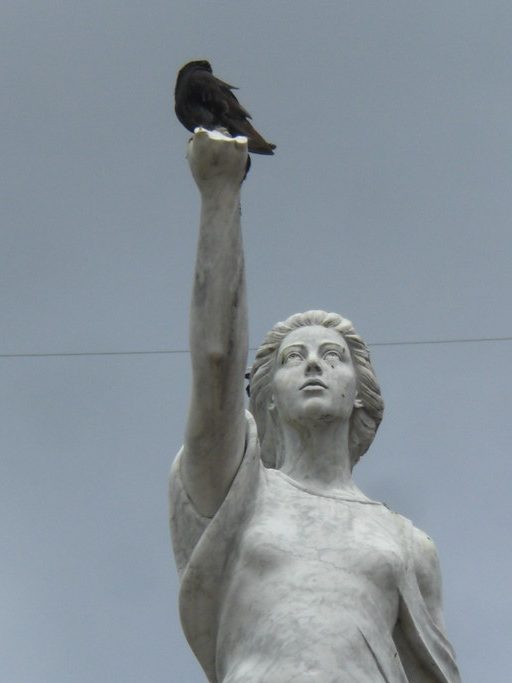
Melissa Balmain, ‘Bird in the Hand’

It doesn’t caw or hunt or fly.
It can’t peck anybody’s eye,
or even grow a single lousy feather.
One-clawed, no match for any tom,
it’s stranded on a leafless palm,
regardless of the season, time or weather.

Yet what’s the bird that, all alone,
sticks up for you when gibes have flown
and you don’t care to verbalize or linger;
when someone’s mocked you to your face
or cut you off or swiped your space –
what bird? The one that moonlights as a finger.

*****

Melissa Balmain writes: “I’m pretty sure this would have been the Sphinx’s riddle if she had guarded the Brooklyn Bridge.”

‘Bird in the Hand’ was first published in The Rotary Dial and is collected in Walking in on People © Melissa Balmain, 2014. Used by permission of Able Muse Press.

Melissa Balmain’s third poetry collection, Satan Talks to His Therapist, is available from Paul Dry Books (and from all the usual retail empires). Balmain is the editor-in-chief of Light, America’s longest-running journal of light verse, and has been a member of the University of Rochester’s English Department since 2010. She will teach a three-day workshop on comic poetry at the Poetry by the Sea conference in Madison, CT, in May 2024.

Photo: “A bird in hand” by Whatsername? is licensed under CC BY-SA 2.0.

Brian Allgar, ‘Genesis’

One sunny morning, strolling in my garden,
I stumbled, and my foot crushed something’s head.
“Me dammit!” I exclaimed, “I beg your pardon”,
Looked down, and saw my Serpent lying dead.
 
Now this was most vexatious, for I’d planned
That this poor snake would implement my scheme
To give my little friends a helping hand,
And lead them gently from their childish dream.
 
The Serpent was supposed to tempt the couple
With luscious fruit that Eden’s trees bedecks;
My chosen agent, sinuous and supple,
Would lead the pair to knowledge – and to sex.
 
Omniscience can have its limitations,
And even Godly schemes may gang agley.
I’d once envisaged teeming populations,
But this, perhaps, was better, in its way.
 
No Spanish Inquisition, no Crusades,
No slaves, and no Industrial Revolution,
No mining sites where once were leafy glades,
No factory chimneys belching out pollution.
 
No nation-states, no border wars to settle,
No Holocaust, no tribal genocide,
No Rap, no Hip-Hop, Punk or Heavy Metal,
No hamburgers with coleslaw on the side.
 
No guns, no bullets, no demented shooters,
Since nothing could be made, except of wood;
No mobile phones (thank Me!) and no computers …
I looked on all of this, and found it good.
 
Yet what of those who should have lived hereafter?
No Homer, Shakespeare, Mozart, Botticelli?
No P. G. Wodehouse? (I was fond of laughter,
Though, being God, I didn’t have a belly).
 
Descendants all, but only if they had ’em.
(No Michelangelo, no Sistine Chapel?)
My mind made up, I called to Eve and Adam:
“I wondered if you’d care to try an apple?”

*****

Brian Allgar writes: “As a devout atheist, I felt it my duty to shed some light on the truth behind the Creation myth.”

Brian Allgar was born a mere 22 months before Adolf Hitler committed suicide, although no causal connection between the two events has ever been firmly established. Despite having lived in Paris since 1982, he remains immutably English. He started entering humorous competitions in 1967, but took a 35-year break, finally re-emerging in 2011 as a kind of Rip Van Winkle of the literary competition world. He also drinks malt whisky and writes music, which may explain his fondness for Mendelssohn’s Scottish Symphony.

He is the author of “The Ayterzedd: A Bestiary of (mostly) Alien Beings” and “An Answer from the Past, being the story of Rasselas and Figaro”, both available from Kelsay Books and Amazon.

Photo: “Mary’s Feet” by elycefeliz is licensed under CC BY-NC-ND 2.0.

Non-traditional sonnet: RHL, ‘The Range of Change’

In times of no change, the advantage lies
with those who are receptive to being taught.
Parents and teachers may seem truly wise,
avoiding dangers with which life is fraught;
the stories of the old none would despise
when they hold all the answers that are sought.

In times of constant change, advantage shifts
to those who, hating school, go and explore.
Old answers fail. Fresh questions cause great rifts
with parents who are seen as wise no more;
questions now turn up unexpected gifts
in crossing unknown seas to virgin shores.

Remain alert that there’s a range of change
from none, to gradual, to fast, to strange.

*****

A sonnet, or not? 14 lines of iambic pentameter, rhyming regularly and with a final couplet. Though not in either of the standard English forms, it has the organised, compressed, reflective sense of the sonnet. Recently published in Shot Glass Journal, Online Journal of Short Poetry. Thanks, Mary-Jane Grandinetti!

Climate change icon” by Tommaso.sansone91 is marked with CC0 1.0.