Tag Archives: inspiration

Calling the Poem: 4. ‘Of Gods’

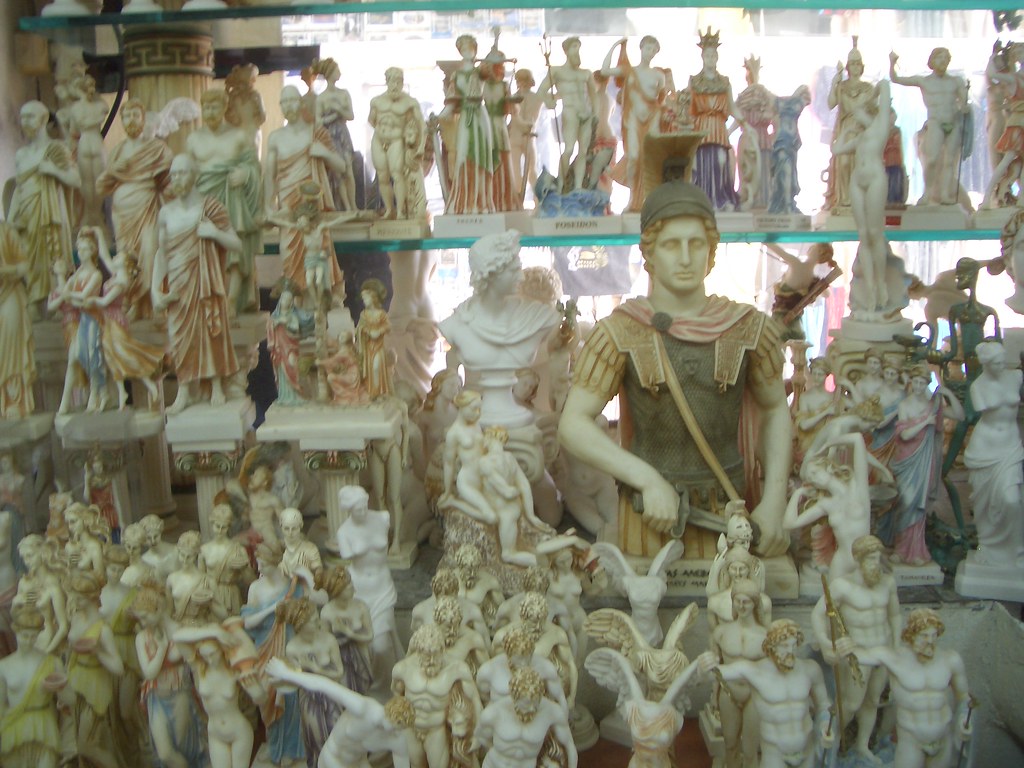
What are the gods? Are they true? Fake? Wild? Tame?
They are in you, and/or you are in them.
They are the joy that apes feel in the storm –
They are the hearth that keeps the caveman warm –
Societies the shaman’s dreams create –
They are Fertility, Love, Hunting, War,
And tools, pots, crops that clutch the god-robe hem,
And Trickster’s tales and lies, the Path, the Door…
Conflicting aspects flesh the human frame,
Demand obedience to some inner Law
To which no individual can conform.
Changing and arguing, they made Rome great
Before the MonoFossilizers came.

*****

It’s difficult for me to express the comfortable balance I have between belief and disbelief. On the one hand, something is the Creator and Sustainer of All the Worlds – in rough numbers, a billion galaxies of a billion stars each, and who knows how many planets with billions of life forms. On the other hand, all the stories of Heaven and Hell, of Odin and Hel, are such simplistic preliterate nonsense that I have to be an atheist. On the third hand, that preliterate sensibility is who we are, how we evolved, and is the key to a holistic understanding of oneself. Therefore I try to pay respectful attention to the simplistic preliterate nonsense that wanders into my consciousness. “Primitive” religion is more useful than “advanced” religion because it is inchoate, formless, shifting, full of alternatives, ambiguous – and that appears closer to the forces that underlie Material Reality than rigid “advanced” religion can manage… and it is also closer to the unconscious that communicates with you through dream and intuition.

But as for exactly what the gods are, and what their relationship to the underlying Creator of the Universe… who knows!

This semi-formal poem is the 4th of 15 in the ‘Calling the Poem’ chapbook from Snakeskin.

Photo: “Greek Gods, take your pick” by dullhunk is licensed under CC BY 2.0.
Calling the Poem: 2. ‘Awareness of the Mood’

The possibility before the poem, the mood,
Is premonition more than vision: loath
To admit, like the repressed and skewed
Response on seeing god-like demon, or young witch…
Not even genitals’ light twitch,
But mere awareness of that energy, potential thrust,
That tightness in the chest,
A heart-tight feeling of both loss and lust.
Then don’t ignore that feeling, for you’re blessed:
A poem is lurking in your undergrowth.

*****

This series of poems, ‘Calling the Poem’, is about the process of writing poetry – an art for which some people appear to have an affinity, an intangible ability. My sense is that such creativity is available to all humans, but requires a certain mindset, an openness to the unconscious, an interest in unplanned internal upwellings and dreams and fortuitous images; in other words, it is not available to those who plan and schedule their lives rigorously, who meticulously follow the teachings imposed from the outside by others.

The process starts before the poem begins to appear. I find it starts with a mood that feels like… like a mixture of curiosity (whether filled with hope or despair), and of awareness of the vastness of the world (whether manifested in a sunset or an ant), and of some small but significant personal power even in the presence of the forces of the universe, and of that formless twitch of yearning desire when glimpsing an unconnected but desirable object for the first time.

My sense is that when you find yourself in this mood – and I trust you’re aware of having experienced it – you are entering a state of receptivity to the messages that your unconscious wishes to share with the conscious you; and those messages will come as creative images, or dreams, or ideas, or words and phrases. But they will only come if you are receptive to them. So honour the mood: relax, listen, observe, and be prepared to express in rough draft whatever occurs to you. The mood is not the creativity; but if you accept the mood, the creative communication of the unconscious can occur.

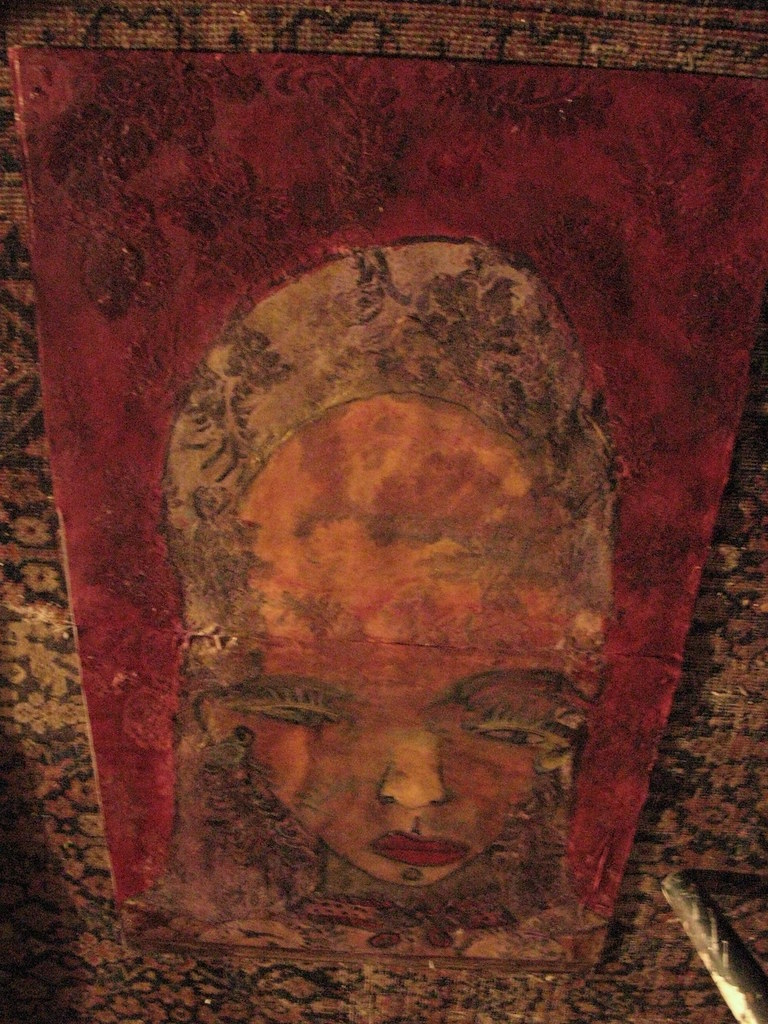
Photo: “14. Premonition of Concusia 2009” by Anne Marie Grgich is licensed under CC BY-NC-ND 2.0.

Calling the Poem: 1. ‘Invocation’

O Odin,
Living outside me or within,
Share your mead of poetry you earned in night’s delight,
Spare me from the mead you shitted out in flight and fright.
By Thought and Memory, I swear
A poem needs your care,
For poems… magic poems… are nothing,
and come from your nowhere…

A poem comes in flurries:
A phrase that catches, sticks,
A rhyme that matches
With some thought that dog-worries,
And a verse that clicks.

*****

Just to be clear, I’m no more a believer in the Norse gods than I am in Yoruba, Hindu or Christian deities. Also, I’m not a white nationalist. But mythology has a couple of uses for me: pure enjoyment of the tangled tales; a way of looking at historical mindsets; and a tool for trying to communicate with the unconscious, i.e. to let the creative unconscious funnel ideas and images to the conscious mind.

What I do believe is that invoking the Muse, or a god, is a way of telling your unconscious that you are receptive to its comments… it is a fishing expedition, and you never know what you’re going to get. But I believe it is a system that works (sometimes), and I don’t practise another. (Various drugs are alleged to get results, too.)

So a few years ago I set out to describe the process that I follow to try to bring poetry to me. The result was a series of 15 poems, published by Snakeskin as an e-chapbook in January 2017. It was available as a free download from Snakeskin No. 236, and it should be again, when the Snakeskin archives are again operational. I named it ‘Calling the Poem’.

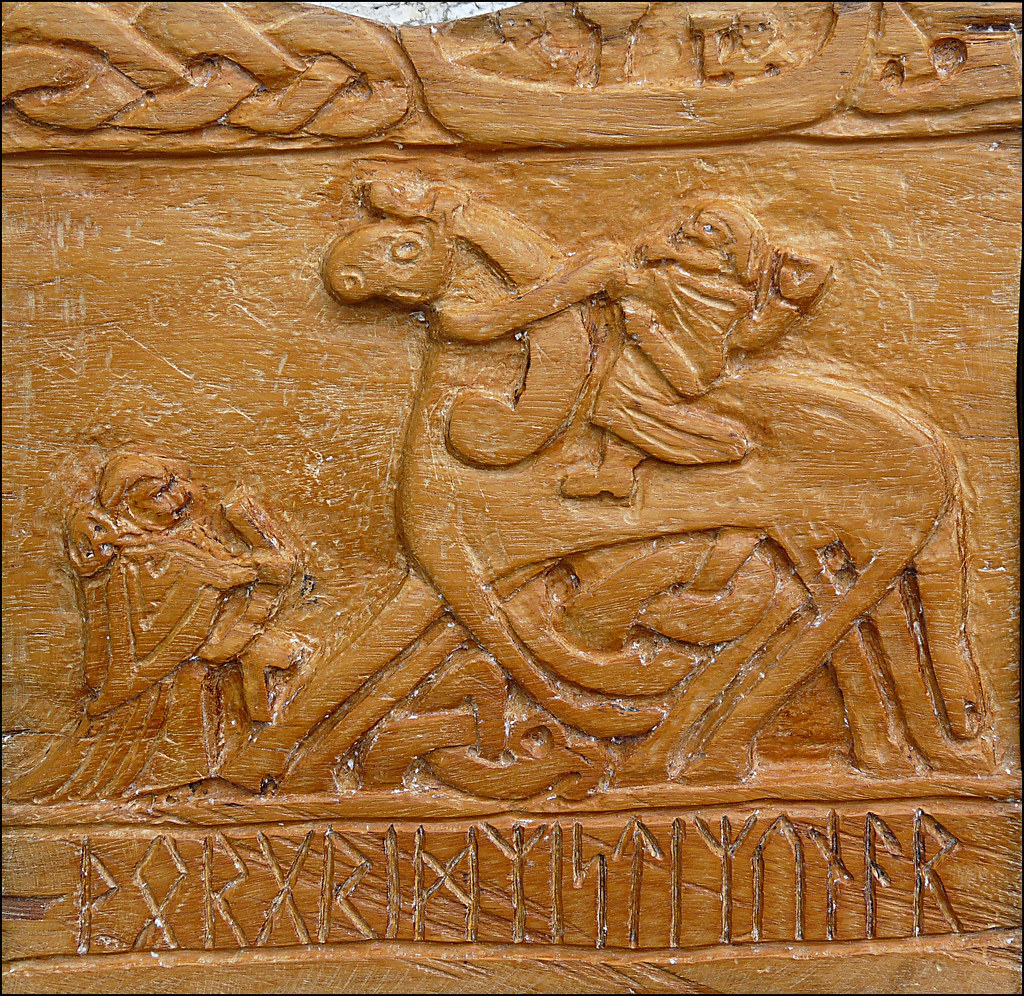
‘Calling the Poem’ starts by invoking the Muse – male, female, human, animal, I think the Muse can be however you choose to imagine it. But the Muse should be a dream-image, for the Muse, the unconscious, is as likely to communicate through dream as anywhere. Odin is a good figure, with his ravens of Thought and Memory who give him the news of the world, his eight-legged horse Sleipnir who can carry him through all the worlds, his ability to shapeshift and prophesy, the sacrifices he made to obtain wisdom such as gouging out an eye to put in Mimir’s well, and of course the mead of poetry that he stole and disburses as he feels.

And so the first poem – somewhat rough-hewn, semi-formal – is the invocation addressed to Odin.

Photo: “Odin on Sleipnir” by Hornbeam Arts is licensed under CC BY-NC 2.0.

Poem: ‘Body Surfing’

Standing hip deep in the sea
Is nice in itself, but the reason for being there
Is the wait for a big wave.

A wave rising, a sudden tower
Smooth with devouring power
But one you can launch yourself forward in tune with – and
Hurtle ecstatic, unseeing and breathless
For as long as breath can hold
Through the water and up along over and onto the sand,
Sand thick in your hair, jammed in every fold,
Scraped, battered and rolled,
Triumphant, beached, deathless.

For this the saint prays,
For this the artist stares open-eyed,
For this the poet lets wounds bleed unstanched,
For this: this hope of being launched,
Controlled and uncontrolled
By what can’t be withstood or denied.

(Or else you could duck under the wall,
Let it pass over while you count three,
Hear the boom of its crested fall,
Yourself unbroken, inactive, safe, free.)

The sea is always there
Whether or not you are in it
Standing hip deep in it
Waiting for the next big wave.

Another of my “Is it formal?” poems. How much rhyme, rhythm and consistent structure do you need in order to consider it formal? Where is the cut-off between form and free? I don’t know. But I felt the alternation – between quiet waiting sections and the breathless rush of a good wave – was an appropriate expression in itself.

The poem was originally published in Snakeskin. Thanks, George Simmers!

“Superman body position while body surfing” by benaston is licensed under CC BY 2.0

Fantasy Analysis: Auden’s ‘Jumbled in the common box’

Jumbled in the common box
Of their dark stupidity,
Orchid, swan, and Caesar lie;
Time that tires of everyone
Has corroded all the locks,
Thrown away the key for fun.

In its cleft the torrent mocks
Prophets who in days gone by
Made a profit on each cry,
Persona grata now with none;
And a jackass language shocks
Poets who can only pun.

Silence settles on the clocks;
Nursing mothers point a sly
Index finger at the sky,
Crimson with the setting sun;
In the valley of the fox
Gleams the barrel of a gun.

Once we could have made the docks,
Now it is too late to fly;
Once too often you and I
Did what we should not have done;
Round the rampant rugged rocks
Rude and ragged rascals run.

In January 1941, W.H. Auden had been living in New York for nearly two years. The Second World War had started, but not yet in the US. Auden had fallen in love with Chester Kallman who was now turning 20 and was too young to want to be sexually faithful; Auden had also returned from atheism to the existential Christianity that is common in the Anglican/Episcopalian church. It was a period of change, backgrounded by the widening war.

Regarding the poem from this time, I choose to imagine Auden rambling, reminiscing, muttering to himself: “Around the rugged rocks the ragged rascal ran… Nice metre as well as alliteration and, for people with difficulty pronouncing their Rs, a twuly tewwible tongue-twister. Rhythmic, memorable. Nonsense; not meaningful, but not meaningless; nonsense and nursery rhymes are right on the border. And it splits in two, you could easily rhyme it: rocks, box, blocks, brocks, cocks, cox, clocks, crocks… ran, Ann, ban, bran, can, clan, cran… or easy to change to run, or runs. A lot of rhymes, anyway. Run them out, see what transpires.

Once we could have made the docks, / Now it is too late to fly; that adds another rhyme, not a problem, maybe a 6-line stanza. Once too often you and I / Did what we should not have done; and into the last two lines, have to fill them out a bit to maintain the metre, keep the alliteration of course: Round the rampant rugged rocks / Rude and ragged rascals run… So that’s all right, that would make an ending.

“Then of course we can have more stanzas leading up to it. Flick a bit of paint at the canvas, see what sort of patterns we can find to elaborate on. Time, decay, trepidation, warnings… out come the words and images around the rhymes, and suddenly it’s all as evocative and semi-coherent as a reading of tarot or yarrow or horoscope. Hm, tarot or yarrow, I hadn’t noticed that before, wonder if I can use that somewhere else…”

(Remember, this is a fantasy analysis, presupposing the poem to have been written with full skill to capture both rhymes and a mood, but without any serious intent beyond that. For a completely different intellectual analysis, you can always try this…)

Photo: “Jumble Box” by .daydreamer. is licensed under CC BY-NC-ND 2.0

Poem: “Prose and Poetry”

I long for Prose – but darkly, distantly,
She looks at far-off lands.
It’s Poetry who brings persistently
Small gifts in small white hands.

I confess that I have always wanted to be a novelist rather than a poet… but when, over the years, several novels remain as unpublished manuscripts but the poetry contributes to bubble up and find a home, what can you do? Smile ruefully and accept the gifts you are offered, and be grateful.

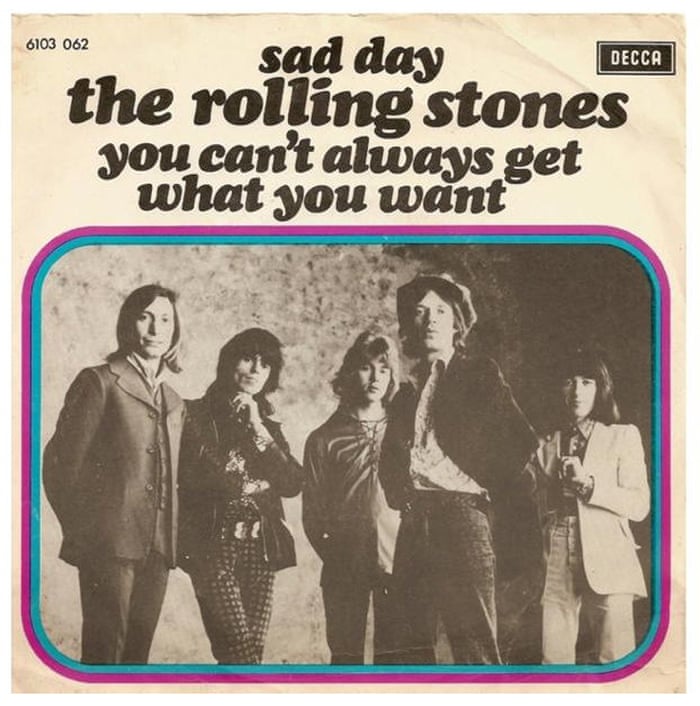
This poem was originally published in Lighten Up Online. And my only published novel is The Gospel According to the Romans… self-published, of course. The publishing score so far: Poetry, 300 – Prose, 1. “You can’t always get what you want… but…

How You Can't Always Get What You Want became Donald Trump's ...

you get what you need.”


Poetry Resources: A.Word.A.Day

One of the greatest resources for any lover of words is the (free) email subscription to A.Word.A.Day from wordsmith.org, founded by Anu Garg in 1994. Of course, you may well be getting this already as one of the 400,000 subscribers in 170 countries, enjoying the definition, pronunciation, etymology, usage and visual illustration of a not-quite-random word five days a week. Added bonuses include a quotation from a writer on their birthday, and limericks, anagrams and puns in the readers’ comments on the weekend.

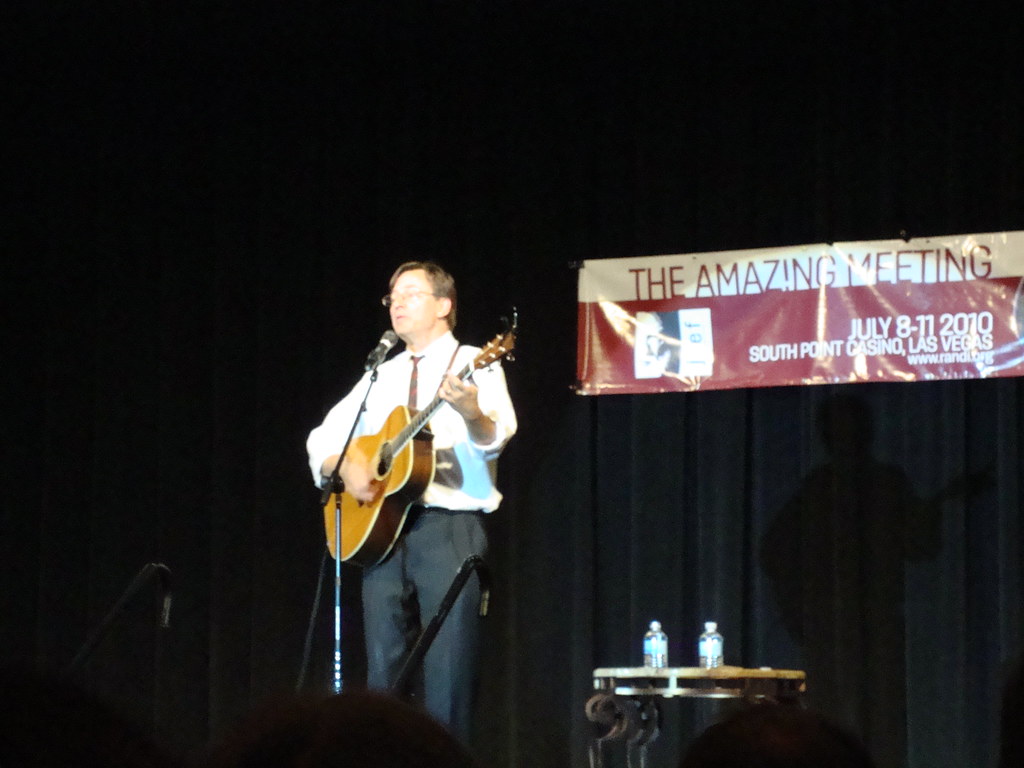
This week’s theme is words used by singer-songwriter Roy Zimmerman, and is the trigger for my posting about A.Word.A.Day. Roy Zimmerman, as guest editor for A.Word.A.Day, writes:

“When my wife Melanie and I write a song, the Idea is out in front. People often ask which comes first, the melody or the lyrics. We say the Idea, with a capital I. The Idea takes shape as a hook — a little snatch of lyrics and melody — and the hook gives birth to a tune, a meter scheme, and a rhyme scheme.

We both love words. We’re both aware that words do real work in the world, especially words that rhyme and meter well. That’s what we’re trying to do with these songs — provide context, history, laughter, and encouragement for the work of social justice.

The description of the sequence for songwriting is virtually identical to that for writing poetry – and although poetry doesn’t necessarily have a tune, poetry definitely has a tone, a mood, that forms in the same place. Songs and poetry are very close siblings. Sometimes songs are forgiven weak lyrics because of a strong melody; sometimes poems are forgiven their lack of rhythm and rhyme because of their strongly expressed ideas and images. But at their most memorable they fuse as catchy songs that can also be fully enjoyed as poems without the music.

In either case, they are completely dependent on words. And to prod your word awareness, there is nothing simpler than the daily email from Anu Garg.

Using form for fun: “Old Sailors”

This poem was written purely for fun–and the use of form was essential.

Lantern Slide - Two Sailors Having a Cigarette

Two old tars

OLD SAILORS

Two tars talked of sealing and sailing; one said with a sigh
“Remember gulls wheeling and wailing, we wondering why,
“And noting bells pealing, sun paling — it vanished like pie!
“And then the boat heeling, sky hailing, the wind getting high,
“And that drunken Yank reeling to railing and retching his rye,
“John missing his Darjeeling jailing, and calling for chai?
“While we battened, all kneeling and nailing, the hurricane nigh,
“And me longing for Ealing, and ailing?” His mate said “Aye-aye;
“I could stand the odd stealing, food staling, not fit for a sty,
“And forget any feeling of failing, too vast to defy –
“Home-leaving your peeling-paint paling too far to espy –
“All because of the healing friend-hailing, the hello! and hi!
“And, with the gulls squealing, quick-scaling the mast to the sky.”

The poem started as an exploration of rhymes for both sealing and sailing, which seemed like interestingly paired words. Many of the rhymes (and the third one, “sigh”) fell easily into a nautical mood. The metre flowed on from “sealing and sailing”. Add in alliteration wherever possible, and look for a coherent story and resolution… and there is the poem.

It was originally published in George Simmers’ online poetry journal, Snakeskin–a highly eclectic journal–and it made for what one reader called a “good nautical rhythm”, and another comment was “finely composed wordy-whirlwind of images”. Both those strengths of the poem come from the use of form: the nautical rhythm from the choice of metre, the whirlwind of images from the requirement to compress everything into the rhyme scheme.

It isn’t a deep, meaningful poem; but form can be used purely for enjoyment.

Encouraging the Muse to visit

You may not be able to decide to write a poem, but there are a variety of things that you can do to increase the chance of being in a poem-writing state of mind.

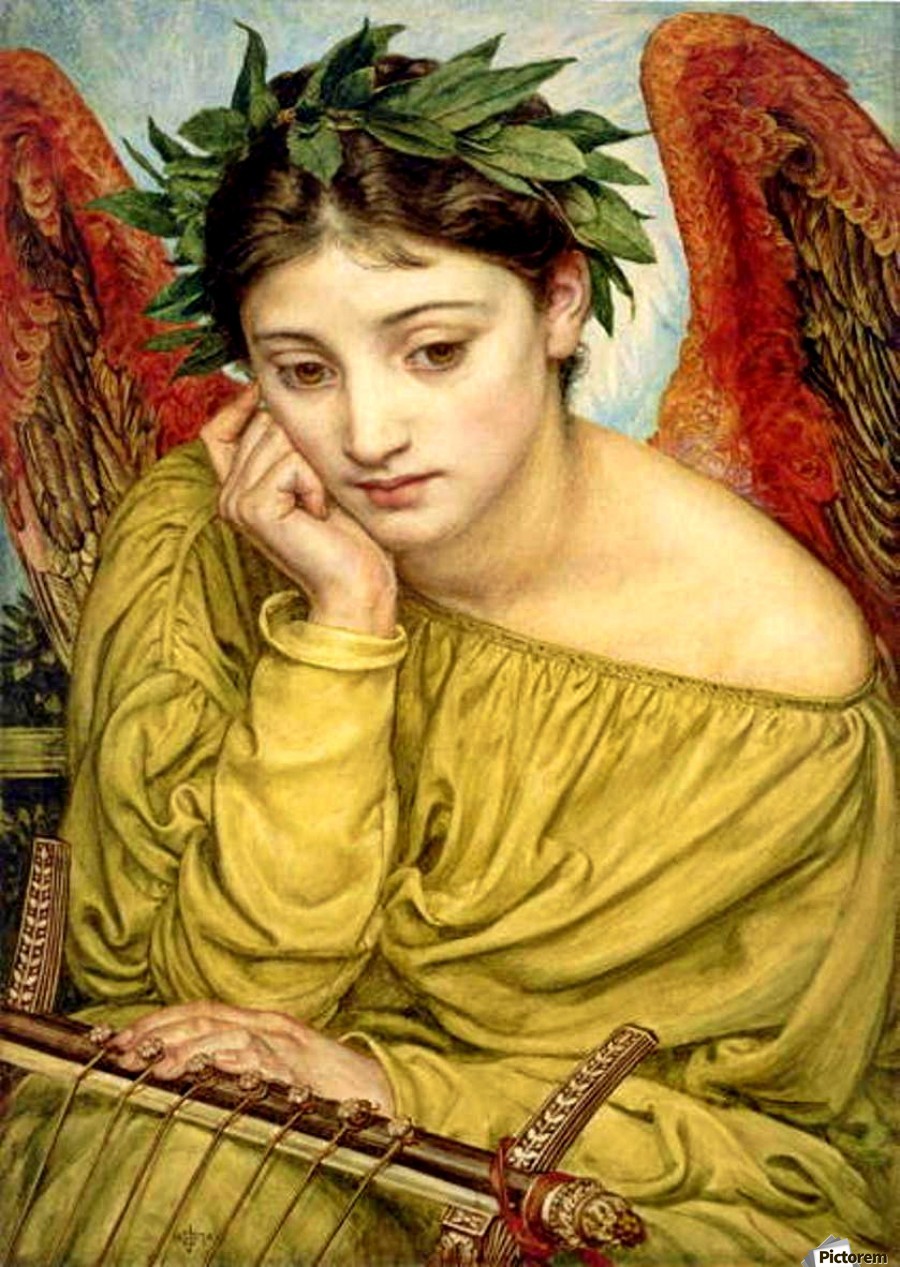
Erato, Muse of Poetry, by Edward Poynter Toile

Erato, Muse of Poetry, by Sir Edward John Poynter 1870

The first, of course, is to read poetry. We are all influenced by what we are seeing and hearing. Our voices and accents shift towards those we’re talking with, the tunes we hum or whistle are influenced by what we’ve been listening to, and how we write is influenced by what we’ve been reading. Read poetry, especially rhymed and metered, and you’ll be more likely to find your unstructured thoughts expressing themselves in verse.

And that word “unstructured” is also one of the keys. Poetry can come from a chance phrase in your head, from a random rhyme opportunity that you run across that intrigues you for whatever reason, or from an unexpected image or similarity that carries an idea or a metaphor into your thoughts.

So the second thing you can do is, whenever some tiny fragment like this occurs to you, write it down! It is a gift to your conscious poetry-writing mind from your unconscious poetry-dreaming mind.

If it happens in a restaurant, write it down on anything you can take out. If it happens just when you’re going to sleep, sit up, get up, write it down. If it is only a phrase or an idea, write it down. If anything else occurs to you while writing, write it down too. If what you have seems structured, but some other unstructured thoughts are hovering around, write them down too. It doesn’t have to be perfect. You can always come back to it later. But if you don’t grab it when it appears, you are unlikely ever to find it again, or even to remember that there was ever anything there.

The third is to worship the Muse. Really? No, not really, but there’s no other simple way to describe it. There are forces in your subconscious of which you are unaware. They speak to you in dreams when something is really important. You have probably experienced the difference between what can be called “big dreams” and “little dreams”–messages from the unconscious mind, vs tidy-up-and-defrag dreams.

Somewhere inside your mind a creative engine is at work. You can ignore it, and then not only will you never write poetry, but you are likely to screw up your life. Or you can listen to it, let it sing to you, let it give you little gifts of wordplay or insight, and it will help you stay grounded in what is important. So writing down everything interesting that occurs to you out of the blue is a way of honouring that creative engine, that we can call your Muse. Be grateful to it. Accept that your unconscious may know things about you that you have no clue about, everything from how to keep your heart beating, to how to remember the name of someone from 20 years ago, to how to count time and wake you up at a certain time without an alarm clock. Poetry is the tiniest tip of the iceberg of all the unconscious mind can do. Honour it! And it will reward you.

You can find a guide to “Calling the Poem”–how to identify the poetic mood, how to encourage it, how to deal with it–in a chapbook of mine published by Snakeskin, and downloadable for free at http://www.snakeskinpoetry.co.uk/snake236.html

How to write the poem, when you’re in the right mood… More thoughts on that in the next post.

Can you *decide* to write a poem? 

Can you decide to write a poem?

Image result for write a poem

Hmmm…

In an odd but interesting book called “Poet’s Choice” that came out in 1962, editors Paul Engle and Joseph Langland asked 100 poets from Robert Frost to Leonard Cohen to name a favourite poem, and provide some insight into their choice. (Some wrote three lines, some three pages.) One of the most extensive answers came from John Wain. Here is an excerpt:

If I write a novel, or a story, or a critical essay, I soon make up my mind as to its merits; I can read it, more or less, as if it had been written by someone else. But I cannot do this with my poems because they are more instinctual; they arrive, from some deep place in my being where forces are at work which I cannot command, though I can thwart and deny them. After a poem has arrived, and been born, I look at it much as one looks at a natural object: I didn’t write it–it happened to me. As a professional writer, I can say, “Today I will write a story,” or some criticism, or a scene for a play, or whatever it may be: but I cannot say, and no one has ever been able to say, “Today I will write poetry.”

Poems, in this understanding, are the closest form of writing to dreams. We may have some control, but not a lot. As Wain points out, we can thwart or deny them when they are available or (if they are part of our will separate from our conscious mind) when they are trying to come. But we cannot consciously create them if they are not available. They are absolutely mood-dependent. In the right mood, Coleridge could knock out the 54 lines of “Kubla Khan” as fast as he could pen them. In the wrong mood, Oscar Wilde could say “I was working on the proof of one of my poems all the morning, and took out a comma. In the afternoon I put it back again.”

So the difference is between deciding to write a poem, and knowing when you can write one. But how and when would you know you could? And can you enhance the chances of it happening? This will be the subject of the next post.