Tag Archives: Robin Helweg-Larsen

Short poem: ‘Yogis’

Though mystified why yogis walk
Across the burning coals,
We know they stand upon their heads
To elevate their soles.

This was first published in Metverse Muse, an Indian magazine put out by Dr. Tulsi Hanumanthu that champions structured verse in English. The poem’s pun seems so obvious to me that I’m still surprised I haven’t seen it anywhere else. Be that as it may, I’m a proponent of the health benefits of five-minute headstands, which I have been doing irregularly since I wrote the poem nearly 50 years ago, after spending a month in the Sivananda Vedanta Yogashram in Val Morin, Quebec.

As for timing five minutes while in a headstand, I do it by mentally reciting the first 18 verses of Matthew Arnold’s ‘The Scholar Gypsy’. After years of those 180 lines, I keep thinking I could replace it with 45 quatrains of ‘The Rubaiyat of Omar Khayyam’… but somehow I always get stuck pondering which edition of the Rubaiyat I prefer…

Photo: taken by Eliza.

Poem: ‘Body Surfing’

Standing hip deep in the sea
Is nice in itself, but the reason for being there
Is the wait for a big wave.

A wave rising, a sudden tower
Smooth with devouring power
But one you can launch yourself forward in tune with – and
Hurtle ecstatic, unseeing and breathless
For as long as breath can hold
Through the water and up along over and onto the sand,
Sand thick in your hair, jammed in every fold,
Scraped, battered and rolled,
Triumphant, beached, deathless.

For this the saint prays,
For this the artist stares open-eyed,
For this the poet lets wounds bleed unstanched,
For this: this hope of being launched,
Controlled and uncontrolled
By what can’t be withstood or denied.

(Or else you could duck under the wall,
Let it pass over while you count three,
Hear the boom of its crested fall,
Yourself unbroken, inactive, safe, free.)

The sea is always there
Whether or not you are in it
Standing hip deep in it
Waiting for the next big wave.

Another of my “Is it formal?” poems. How much rhyme, rhythm and consistent structure do you need in order to consider it formal? Where is the cut-off between form and free? I don’t know. But I felt the alternation – between quiet waiting sections and the breathless rush of a good wave – was an appropriate expression in itself.

The poem was originally published in Snakeskin. Thanks, George Simmers!

“Superman body position while body surfing” by benaston is licensed under CC BY 2.0

Poem: ‘Warfare’

The mother’s nightmare
The child’s terror
The rapist’s freedom
The girl’s death.
The killer’s ecstasy
The band’s brotherhood
The youth’s excitement
The dying breath.

The glory of the lucky
The scream of the unlucky
The lost limbs, blindness, madness
The lifelong PTSD, homeless in the streets.
The poet’s puzzle
The politician’s porn
The aphrodisiac
The power-soaked sheets.

The demagogue’s cause
The demagogue’s solution
The warmonger’s profits
The fearmonger’s skill.
The blacksmith’s trade
The scientist’s incentive
The human fascination
The tribe’s need to kill.

The acceptance by the boys
The eagerness of teens
The avoidance by the men
The manipulation by the old.
The girl’s adoration
The woman’s greed
The widow’s grief
The body cold.

The king’s invocation
The priest’s sanctification
The scared population
The desolation.

The peasant’s loss
The trader’s loss
The teacher’s loss
The city’s loss.

The mortician’s gain
The tombstone maker’s gain
The coffin maker’s gain
The graveyard’s gain.

The medal maker’s gain.

And over it all God sits in His rocking chair
On His front porch in the sky
Saying, A crop, a very fine crop, an excellent crop this year.

Sits in His deck chair to look at the warfare waves
In the shade of a cloud in the sky
Watching the sandcastles washing away.

Sits in the night coming down on the battlefield
Watching crows, ravens, hyenas, stray dogs
Men and women pulling gold teeth from the dead.

Sits in His laboratory, looking at His guinea pigs
Sits in His concert hall, listening to the music
Thinking, All this is so interesting
All this is so tragic
All so inspiring
How far will they get till they blow themselves up?
Will these ones escape? Will they figure it out?
Can they conquer themselves and discover the universe?

Maybe it’s out of line to put this poem into a ‘formal verse’ blog… But there are two points to consider. First, there is a lot of form in the outraged chant of the beginning half–rhyme, rhythm, balance, some alliteration. Second, transitioning from that form to a less structured meditation in itself a use of form; it transitions the entire poem from one viewpoint to another by making the two halves so different. That’s my argument, anyway. Is it reasonable?

The poem originally appeared in Bewildering Stories. Thanks Don Webb and John Stocks!

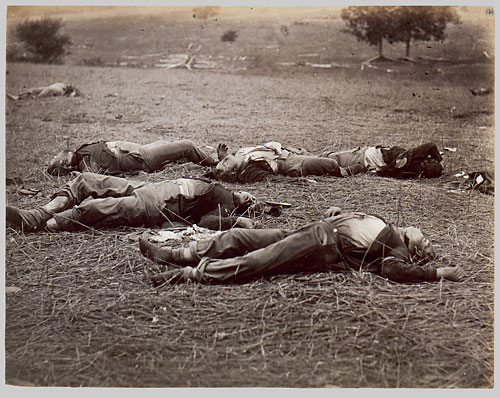
Photo: “Battlefield Dead After the Battle of Gettysburg” by elycefeliz is licensed under CC BY-NC-ND 2.0

Poem: ‘Zippori Story’

Context, people, context! Remember that
Herod was building his new royal city
Zippori some four miles from Nazareth
when Jesus was a child. And Joseph would
have walked there, worked there, daily; Jesus too.

When Judas of Galilee raised his revolt,
captured and burned it–Roman legions came,
defeated him, cast him in the Sea
of Galilee, a millstone round his neck,
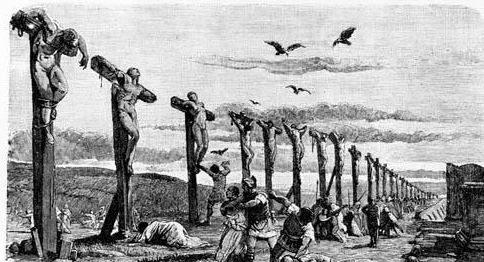
and crucified two thousand rebel Jews.

This was the year that Joseph disappears
from Gospel narratives, all unexplained.
When Jesus chased two thousand Legion pigs
over a cliff into that selfsame sea,
think retribution; think guerrilla strike.

The lack of stories and legends about Jesus’ step-father is one of the great Christian mysteries. He simply disappears from the narrative in the year of Judas of Galilee’s revolt, and is never mentioned again in polite society. Nor is Zippori ever mentioned in the Bible, either by that name or the Romanized Sepphoris, although it was the local capital of Galilee. I have laid out what seem to me obvious suspicions in The Gospel According to the Romans, and blogged about it here and there.

This poem was just published in The Road Not Taken, a Journal of Formal Poetry, in the section themed on ‘Replies’. My thanks to Dr. Kathryn Jacobs.

Poem: ‘He Wanted a Writer’

He wanted a writer – she had to have money.
He wanted a writer – she had to be funny.
He wanted a writer to laugh with and drink.
He wanted a writer… but not one who’d THINK!!!

The suits of this world, whether moguls or morticians, pastors or politicians, tend to think of creative types as frivolous playthings. That’s their loss.

This little poem (whose genders switched back and forth in fluid fashion before settling down) was originally and suitably published in The Asses of Parnassus. Thanks, Brooke Clark. (Yes, That Brooke Clark!)

“Woman drinking wine while working on her laptop.” by shixart1985 is licensed under CC BY 2.0

Updated Call for Submissions: Potcake Chapbooks

I am always keen to read and consider rhymed and metered verse that has already been published. There are several chapbooks that are jostling in the queue for completion and publication:

Travels and Travails (travel)
City! O city! (urban life)
Just a Little Naughty
Portraits Unpleasant
Various Heresies (religion)
Lost Loves
The Horror of Spring! (seasons)

and there are more; but the last one, Rockets and Robots, wasn’t part of my original plans: I just ran across a bunch of Science Fiction poems that I liked, and they filled a chapbook nicely. So I’m an unashamed opportunist. I’ll modify my plans if I think something better is available. All the chapbooks listed above are nearly full already but, as with all of them, if I run across another poem I really like, I’ll include it. And if I receive enough good poems on an unplanned theme, that theme will get slotted in.

When there is enough good material on a single theme to fill 13 pages of a chapbook (still leaving room for Alban’s artwork, of course), then it may become the next project. But until a chapbook actually goes to print everything is subject to change. An even better poem may show up and displace one tentatively placed. A slew (or slough) of poems on a new theme may cause a reprioritisation of planned chapbooks.

This is one of the reasons that I prefer to consider only poems that have already been published–so that I don’t feel guilty about having a bunch of poems that will sit with me for months, years, and may or may not be included in the Potcake series. I have flagged a thousand poems that interest me; but I can only publish a dozen in a chapbook, and only a few chapbooks will get produced in a year.

Poems in the chapbooks run from two or three lines to some 40 lines in length–obviously, with space at a premium, poems over 20 lines and running over one page are less likely to be included… but it does happen. Other criteria: I’m looking for wit, elegance, a variety of traditional and nonce forms, a variety of voices and moods: happy, sad, angry, sardonic, meditative… anything interesting I can scrounge. If you have something you think I might like, on any topic, please send it along to robinhelweglarsen@gmail.com

I can’t promise to use it, but I will read it and reply!

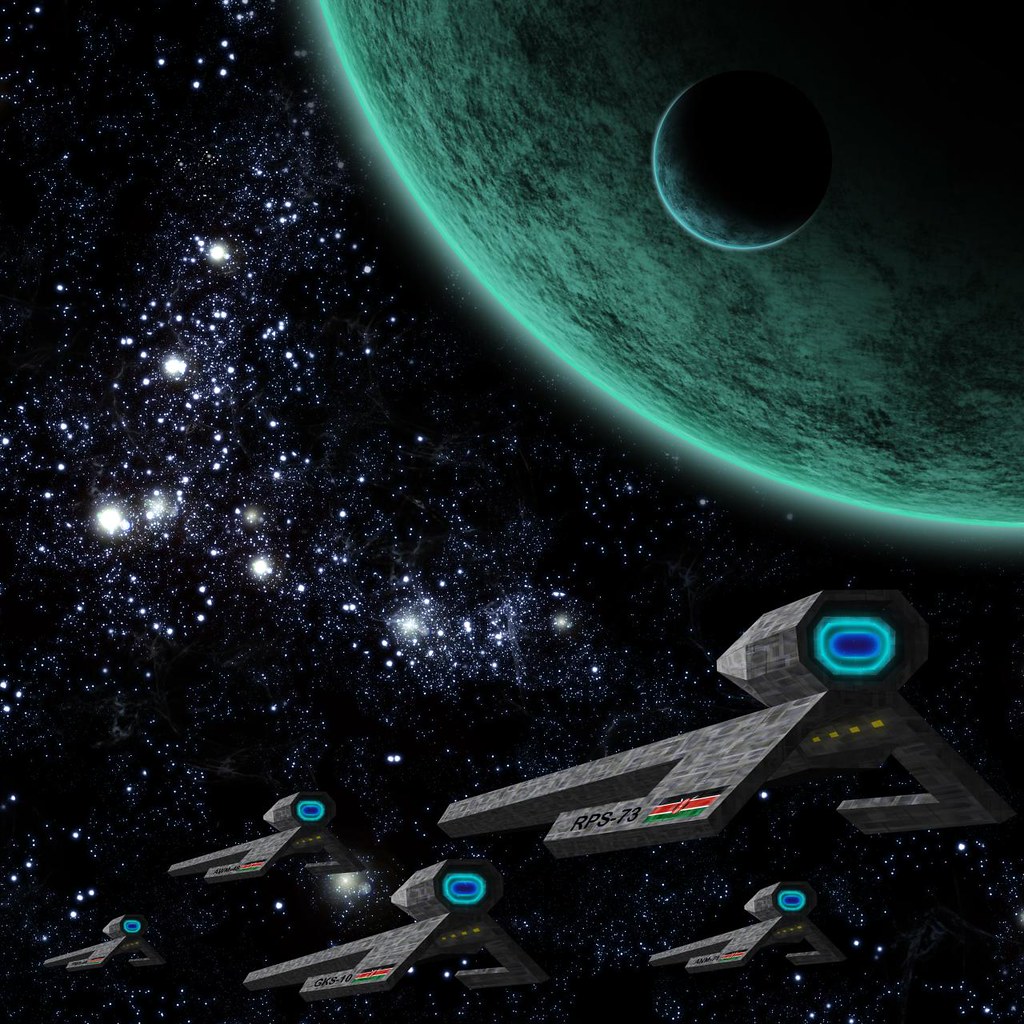
Poem: Space Colonization

The purity of space
Is like an egg, a young child’s face,
Unsullied piece of paper’s grace;
And, as the child must age and wizen,
As paper’s made for thought’s expression,
The egg to break and unimprison,
So space was made for human decompression.

Keeping with our recent theme of SF poetry, this is one of mine first published in Bewildering Stories #740.

“Underway” by Robbert van der Steeg is licensed under CC BY-SA 2.0

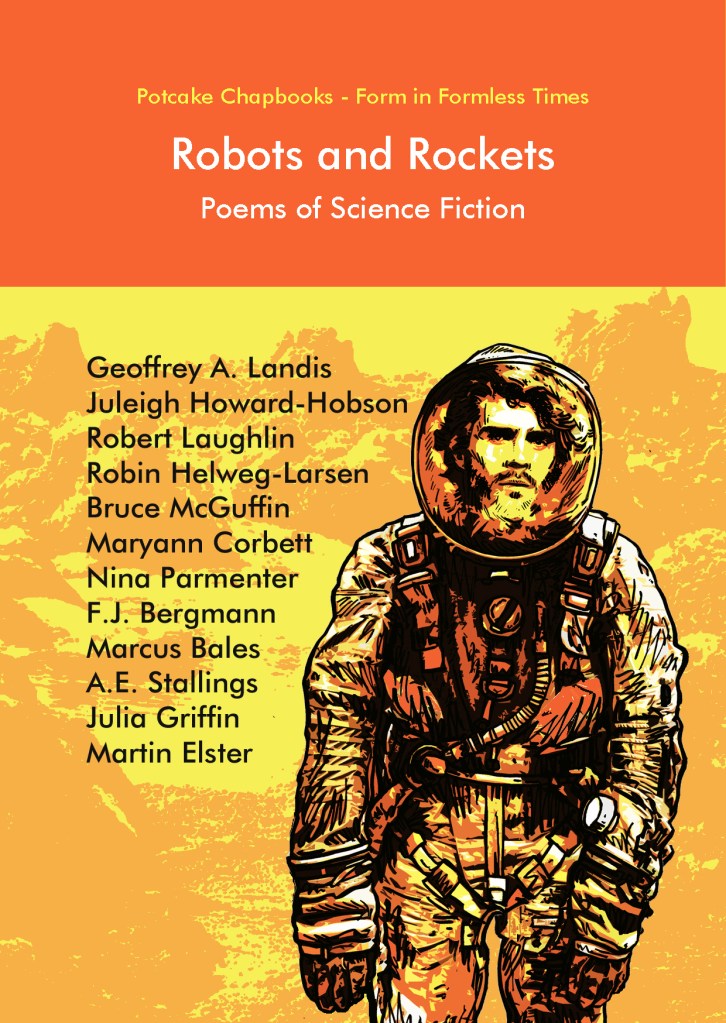
Launch: Potcake Chapbook 9, ‘Robots and Rockets’

I’m very happy to announce that the ninth in the series of Potcake Chapbooks has been launched into orbit: ‘Robots and Rockets’ is an SF issue (could you guess?) and has poems by five newcomers to the series: Bruce McGuffin, Juleigh Howard-Hobson, F.J. Bergmann, Julia Griffin and Geoffrey A. Landis – many already known outside SF through Light poetry magazine and other places. Returning poets are Maryann Corbett, Nina Parmenter, Marcus Bales, A.E. Stallings, Martin Elster and myself.

Copies can be ordered from Sampson Low for four or five Pounds or Dollars, including postage worldwide. Enjoy it! It is, of course, a blast(-off)!

Short poem: ‘Subduction’

All human nature, conflicts, nations, and all races
will be washed as by tides on beaches, all loves and lusts
will with Time disappear, all human traces
washed under as all plates are washed
by the subduction of Earth’s crusts.

This poem was published this month in Lighten Up Online – an excellent place to read light verse on subjects both light and heavy. Every issue has a mixture of longer and shorter poems, and a competition. This March 2021 edition concludes with the results of the eco-crisis competition, headed ‘The Airing of the Green’; ‘Subduction’ was one of the winners. Other sections of the magazine were also focused on the environment. Pollution and climate change are twin disasters, and you can express outrage, despair, or (more usefully) proposals for action. The million-year view of my poem isn’t useful but it’s low-hanging fruit, there to be taken.

I’m delighted to be in a magazine along with poems by fellow Potcake Poets Martin Elster, Michael R. Burch, D.A. Prince, George Simmers, Nina Parmenter, Gail White, Chris O’Carroll, Tom Vaughan, Jane Blanchard, Jerome Betts, Martin Parker and Melissa Balmain, as well as two poets who will be appearing in the next Potcake Chapbook, Bruce McGuffin and Julia Griffin, and the ever-anomalous Max Gutmann. Several of us have more than one poem in this issue.

“File:Tectonic-plates-subduction-zone-17280738.jpg” by Benjilrm is licensed under CC BY-SA 4.0

Sonnet: ‘Irritated Muse’

My muse is angered by my Covid cares –
“You worry if the shops have food and beer,
and what a Zoom attendee rightly wears!
You’re just as mortal as you were last year,
and wrote of life and death, sickness and health.
Well, now’s an actual existential crisis!
Think family and friends, the world, your self…
forget the shopping and the product prices!
You’ll die; the question’s When. The only tool
for immortality is me, that clear?
You should be writing poetry, you fool!
This is your chance. Focus on me.” (Yes, dear.)
“Respect me as your muse: I’m not your shill.
If you can’t write a poem, write your will.”

This sonnet has just been published in Allegro in the UK, edited by Sally Long. The magazine comes out twice a year, one issue themed and the other open. It focuses on formal verse, but on a long continuum between fully formal and free.

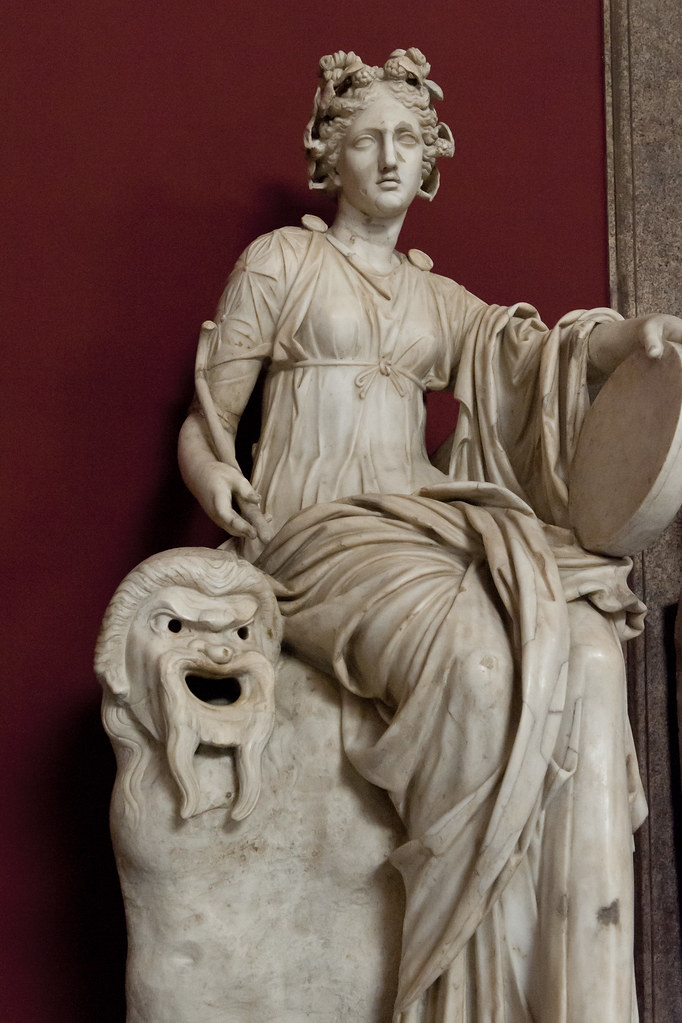
Photo: “Thalia, Muse of comedy.” by Egisto Sani is licensed under CC BY-NC-SA 2.0