The Earth’s a pot of water on the range, and nothing happens for a billion years; then as the water heats, things start to change and movement – formless, unaware – appears. Next the first tiny bubbles start to form, brains self-assembling, they form, collapse, form and collapse in water barely warm, minds that start yearning for some Great Perhaps. They grow, they start to rise, still fade away while dreaming of a life that will not fail; and this is humans as we are today, starting to boil up from this mortal jail to break into the vastly bigger air… unknowing where steam goes, what happens there.
*****
This is as close to religious belief as I can get. Somewhere at the intersection of Nietzsche and Vonnegut, of reincarnation and “It’s all a simulation”, with Musk aiming for Mars and wondering aloud if he’s an NPC, is a place of absolute and unknowable change. And that’s where we are.
Dzit count as a productive day if all I wrotes a sonnet? Whyz anyone complaining ‘Hey, youshd put more polish on it!’ So frinstance it may be you’ve heard that I’m known as a cheater for shortning the occazhnal word for thstrengthning of the metre.
‘Musk is known by its smell, not the shopkeeper’s words’
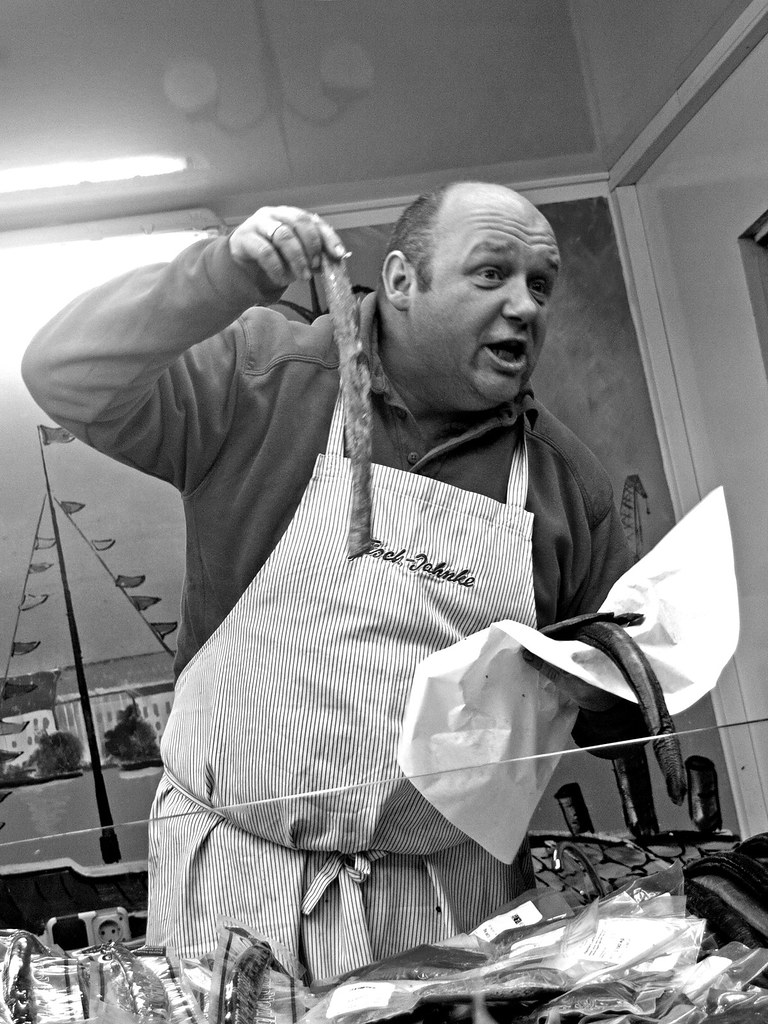
‘As smooth as a sheet and as sweet as a sweet; nutritious, delicious, delightful and sprightful and dreamy as silk; as fat as a sausage in sassafras, creamy as milk; a Quazi of Fishes, a Mogul of Dishes; capricious, lubricious, the Sultan of Mambo, the Queen of the Deep; scrumptious with camel’s milk, aubergines, pickles and beans; with anchovies, lovage-leaves, lentils and lashings of greens; as cool as a cucumber, fragrant and filling and cheap; unequalled, unsequelled, the Whacker, the Whopper, the Winner, the One; stuff it or steak it or bake it or boil it or roast it or toast it or roux it or stew it or broil it or fry it but BUY IT! I give you THE NUMBER ONE DINNER!‘ ‘That one, please.’ He winked: ‘You like my spiel?’ ‘I would have bought it anyway.’ An eel.
*****
John Gallas writes: “a little meditation on selling techniques vs the buyer who knows what s/he wants anyway. I once heard a fruit-seller in Amman singing for half an hour about their wares, while the customers, unimpressed but smiling, just bought what they needed. So the song was a kind of merry soundtrack to shopping, and everyone liked it: I’ve tried to reproduce this in the sonnet. And I’ve added a plonking ‘eel’ bathos.”
The one hundred sonnets collected in The Coalville Divan (part of John Gallas’ ‘Star City’ from Carcanet) use as their beginnings Persian Proverbs from the Wisdom of the East series by L.P. Elwell-Sutton.
John Gallas, Aotearoa/NZ poet, published mostly by Carcanet. Saxonship Poet (see www.saxonship.org), Fellow of the English Association, St Magnus Festival Orkney Poet, librettist, translator and biker. 2025 Midlands Writing Prize winner. Presently living in Markfield, Leicestershire. Website is www.johngallaspoetry.co.uk which has a featured Poem of the Month, complete book list, links and news.
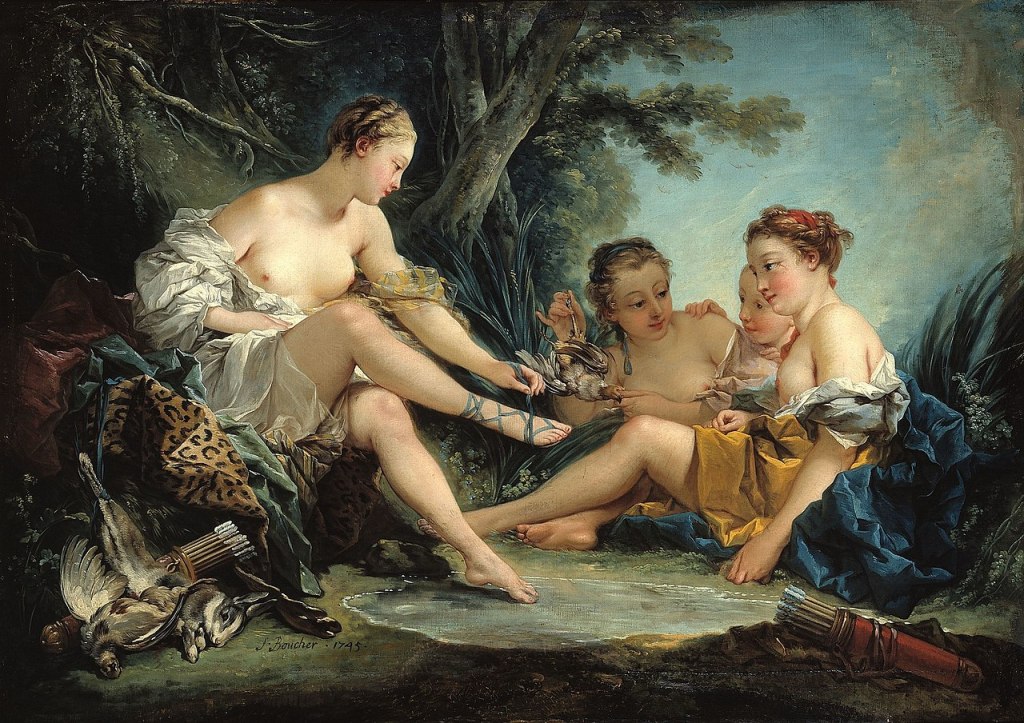
In centuries past, women seldom moved fast, preferring to spend hours on end staring at pools, stretching on stools, or sitting on swings. Now and then, they had flings and were equally stirred by a man or large bird. If they did need to race – to hunt deer or outpace vicious hordes – they took care that their clothing and hair would cover, at best, one perky breast.
II.
For generations, men were super jacked, no doubt because they wanted to distract observers from the fact that nearly all their nether parts were vanishingly small.
III
Kids used to be mini adults, with often impressive results – even fresh from the womb they could light up a room and preside over sizeable cults.
Other children (nude, not a bit shy) were great archers. I wish we knew why they would soon have their fill of that valuable skill and, sadly, forget how to fly.
*****
Melissa Balmain writes: “Obviously, the museums and exhibits referenced in this poem are a specific breed—several of which I visited last summer during a heat wave in Paris. (Travel tip: if you’re looking for Louvre-quality art, but you’re running low on Euros, check out the Petit Palais. Not only is it free, it’s air-conditioned.)”
Melissa Balmain edits Light, North America’s longest-running journal of comic verse, and teaches writing at the University of Rochester. Her poems and/or prose have appeared in Crab Orchard Review, Ecotone, The Hopkins Review, Literary Matters, McSweeney’s, The New Yorker, The New York Times, Nimrod, Poetry Daily, and Rattle. Her latest book of poetry is Satan Talks to His Therapist (Paul Dry Books).
Illustration: Boucher, François – Le Repos des nymphes au retour de la chasse, dit Le Retour de chasse de Diane – J 10 – Musée Cognacq-Jay
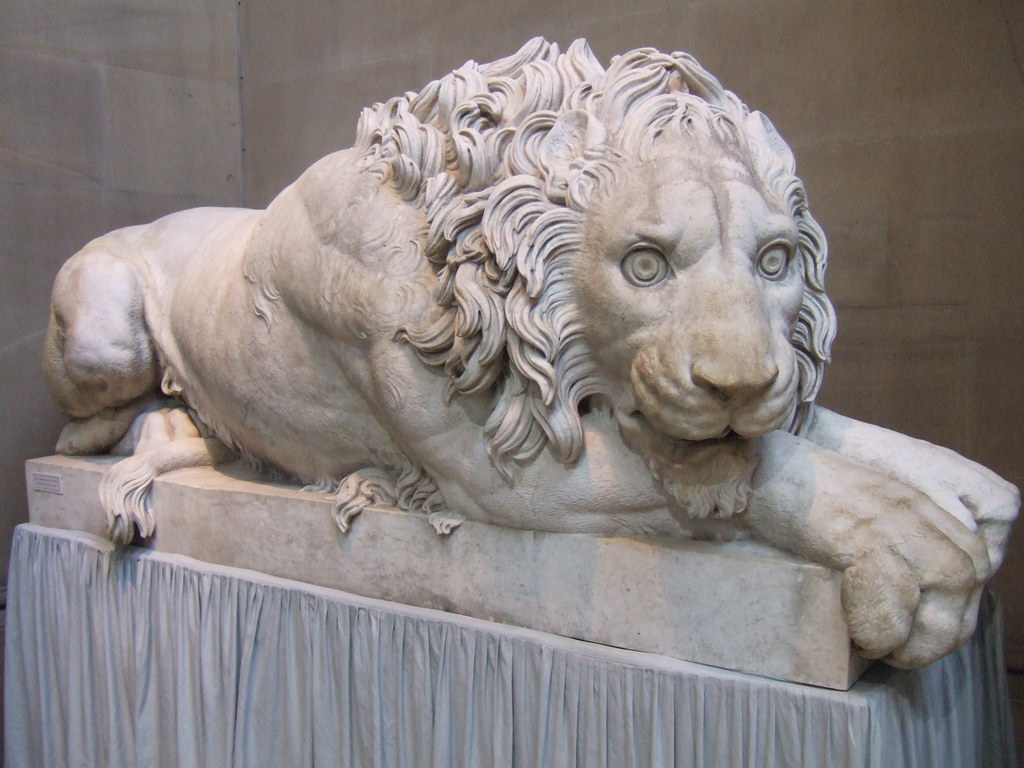
Lion-Eating Poet in the Stone Den is crafted entirely from the syllable “shi,” distinguished only by tonal variation, yet it still conveys a complete and coherent story in Chinese. The poem was originally written by Hu Mingfu (胡明复) and published by linguist Yuen Ren Chao in Volume 11 of The Chinese Students’s Monthly in 1916.[2][3] It was then refined by Yuen Ren Chao in the 1930s for demonstrative purposes in his lectures.
In Chinese:
“Shi Shì shí shĩ shĩ”
Shíshì shishì Shi Shì, shì shi, shì shí shí shĩ. Shì shíshí shì shì shì shĩ. Shí shí, shì shí shi shì shì. Shì shí, shì Shi Shì shì shì. Shì shì shì shí shĩ, shì shĩ shì, shĩ shì shí shĩ shìshì. Shì shí shì shí shi shi, shì shíshì. Shíshì shĩ, Shì shĩ shì shì shíshì. Shíshì shì, Shì shĩ shì shí shì shí shĩ. Shí shí, shĩ shí shì shí shĩ shĩ, shí shí shí shĩ shĩ. Shì shì shì shì.
English Translation:
In a stone den lived a poet named Shi, who loved lions and had resolved to eat 10 lions. He often went to the market to look for lions. At 10 o’clock, 10 lions had just arrived at the market. At that moment, Shi also arrived at the market. He saw those 10 lions and, using his arrows, slayed them. He brought the bodies of the 10 lions back to the stone den. The stone den was damp, so he asked his servants to wipe it clean. After it was cleaned, he tried to eat the 10 lions. When he began eating, he realized that those 10 lions were actually 10 stone lion statues. Try to explain this matter.
*****
If you chase this odd poem down in more detail, you will find arguments about the original poet’s intent, and the subsequent modifications by Yuen Ren Chao (who apparently claimed full ownership), and which language is appropriate for it, and more, in Wikipedia and elsewhere. I leave you with a long excerpt from pinyin.info:
“Yuen Ren Chao was the leader of the group that designed National Romanization. He knew that National Romanization (Guóyǔ Luómǎzì) could only write “modern vernacular Chinese,” and not Classical Chinese. In order to demonstrate this point he playfully wrote a classical essay consisting entirely of “homophones” entitled “Record of Mr. Shi Eating Lions.” The whole essay is copied as follows:
Shi2 shi4 shi1shi4 Shi1 shi4 shi4 shi1, shi4 shi2 shi2 shi1. Shi4 shi2shi2 shi4 shi4 shi4 shi1. Shi2 shi2, shi4 shi4 shi4, shi4 shi2 shi* shi1 shi4 shi4. Shi4 shi2, shi4 shi4 shi4 shi2 shi1, shi3 shi2 shi2 shi3 shi4, shi3 shi4 shi2 shi1 shi4shi4. Shi4 shi2 shi4 shi2 shi1 shi1 shi4 shi2 shi4. Shi2 shi4 shi1, shi3 shi4 shi4 shi3 shi2 shi4. Shi2 shi4 shi4. Shi4 shi3 shi4 shi2 shi4 shi2 shi1 shi1. Shi2 shi2, shi3 shi4 shi4 shi2 shi* shi1 shi1 shi2 shi2 shi* shi2 shi1 shi1. Shi4 shi2, shi4 shi3 shi4 shi4 shi4shi2. Shi4 shi4 shi4 shi4.” (The original article had no punctuation.) (* The character 硕 shuò, meaning huge, was pronounced as shí in the past.)
The vernacular translation of this essay is:
Shítou wūzi lǐ xìng Shī de shīrén xǐhuan chī shīzi, tā juéxīn yào chīdiào 10 tóu shīzi. Tā shíshí dào shìchǎng shàngqu kàn shīzi. Shí diǎn zhōng, tā dào shìchǎng, gānghǎo 10 tóu zhuàngdà de shīzi láidào shìchǎng. Zhè shíhou, tā kàn le zhè 10 tóu shīzi, yīkào 10 zhī shítou zuò de jiàn, bǎ zhè 10 tóu shīzi shāsǐ. Tā jiǎn qǐ zhè 10 tóu shīzi de shītǐ, huídào shítou wūzi lǐ qù. Shítou wūzi cháoshī. Tā jiào shìzhě mǒgān shítou wūzi. Shítou wūzi mǒgān le, tā kāishǐ chángshì chī zhè 10 tóu shīzi de shītǐ. Chī de shíhou, cái zhīdào zhè 10 tóu zhuàngdà de shīzi de shītǐ, shíjì shì 10 tóu zhuàngdà de shítou shīzi de shītǐ. Zhè shíhou, tā cái míngbai zhè jiàn shì de zhēnxiàng. Qǐng nǐ jiěshì, zhè shì zěnme huíshì?
The English translation of the essay is:
Mr. Shi, a poet who lived in a stone house, liked to eat lions. He vowed to eat ten lions. He often went to the market to look at lions. At ten o’clock, he went to the market, (and) just then ten large lions (also) came to the market. At that time, he saw these ten lions. Relying on the power of ten arrows with stone tips, he caused the ten lions to pass away. He picked up the bodies of the ten lions and went back to his stone house. The stone house was damp, so he told his servant to try and wipe it (dry). After the house had been wiped (dry), he began to try to eat the bodies of the ten lions. As he was eating, he realized that the bodies of the ten large lions were actually bodies of ten large stone lions. Only then did he understand the real situation. Can (you) explain what happened? (Translated by Victor H. Mair)
The point is that, if Chao’s classical essay were written in Hanyu Pinyin, everything would be shi and naturally no one could read and understand it. In other words, it is a kind of tour de force tongue twister. Even if it were written in characters, people still would not be able to understand it when it is read aloud. There are people who use this (playful) piece (that is forced and unnatural even in Classical Chinese) to oppose Hanyu Pinyin. They have completely misunderstood Yuen Ren Chao’s original intention!”
When hitchhiking, inevitably tasked with answers to ‘Where from?’ and ‘Origin?’ I lie to simplify the tales I’d spin if my odd background really were unmasked. (The childhood travels, seas in which I’ve basked; prep school: Jamaica. Teen years schooling in a former English palace, slept where Queen Victoria stayed…) because then I’d be asked: ‘Why hitchhike? Spoiled kid! Don’t lie! Get out!’
Therefore of course I have to cut some slack for other people with their bogus tales: big boasters may have nothing to boast about, while quiet ones may not want to go back, whether to jobs or spouses, wars or jails.
*****
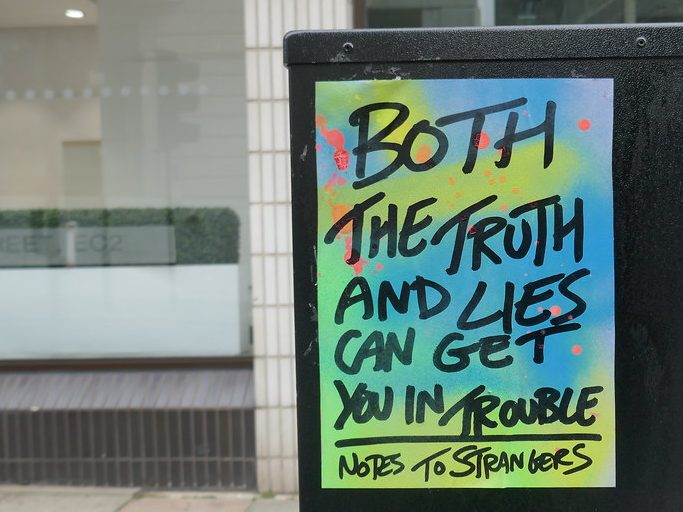
I thought I’d pair this with Marion Shore’s reflection on lies, which I republished here in the previous post. The issue of deliberate lies is unresolved for me, along with so many other things. But at least I (rarely) lie about my confused background any longer – I just mention bits that seem relevant in the context.
‘Why I Lie’ was first published in the Sonnet Scroll of the Poetry Porch.
The lies I tell you, little ones, I hope may be be forgiven: Of course there is a Santa, hon, Yes, Tiger’s up in heaven.
When lies forsake you, as they must, And leave you lost, alone, Will you forgive the broken trust? Perhaps when you are grown,
And try to shield your children from The darkness and the cold, You’ll find that you are telling them The lies your mother told.
*****
Marion Shore is the author of For Love of Laura: Poetry of Petrarch, a collecion of Petrarch’s poetry in translation published by the University of Arkansas Press in 1987. Her work has also appeared in Poems from Italy; Petrarch in English; 150 Contemporary Sonnets; and Rhyming Poems: A Contemporary Anthology. Her poems and translations have been published in numerous journals including The Formalist, Light Quarterly, Iambs and Trochees, First Things, and Measure. Recipient of the 2010 Richard Wilbur Award for Sand Castle(from which this poem is taken) and two-time winner of the Howard Nemerov Sonnet Award, she lives in Springfield, MA.