Here richly, with ridiculous display, The Politician’s corpse was laid away. While all of his acquaintance sneered and slanged I wept: for I had longed to see him hanged.
The US and UK have been so polarised for the past several years that it seems everyone has a politician they would like to see executed–or jailed at the very least. But this is neither a recent phenomenon nor a merely Anglo-American one. All round the world notorious pillagers of their countries go to the grave with great pomp, while most of their countrymen and -women are simply glad that they are finally going.
This sarcastic little poem by Anglo-French writer Hilaire Belloc suggests two things: that all successful political leaders are loathed by a large percentage of the population; and that to make your sarcastic comment truly memorable if it is more than five or six words long, you do well to put it in verse. The rhyme and meter not only make the words easier to remember, they also lend a magical impression of inevitability and authenticity to the idea expressed. Well-constructed verse provides a fraudulent but powerful proof that the idea expressed is valid. Rhetoric and oratory inhabit this area also. Well-expressed ideas have more credibility than badly expressed ones, regardless of the relative merits of the ideas themselves.
Perhaps we should count ourselves lucky that few politicians exhibit much interest in poetry…
November 2023 update: I’ve been quoting this poem with reference to the death of Henry Kissinger.
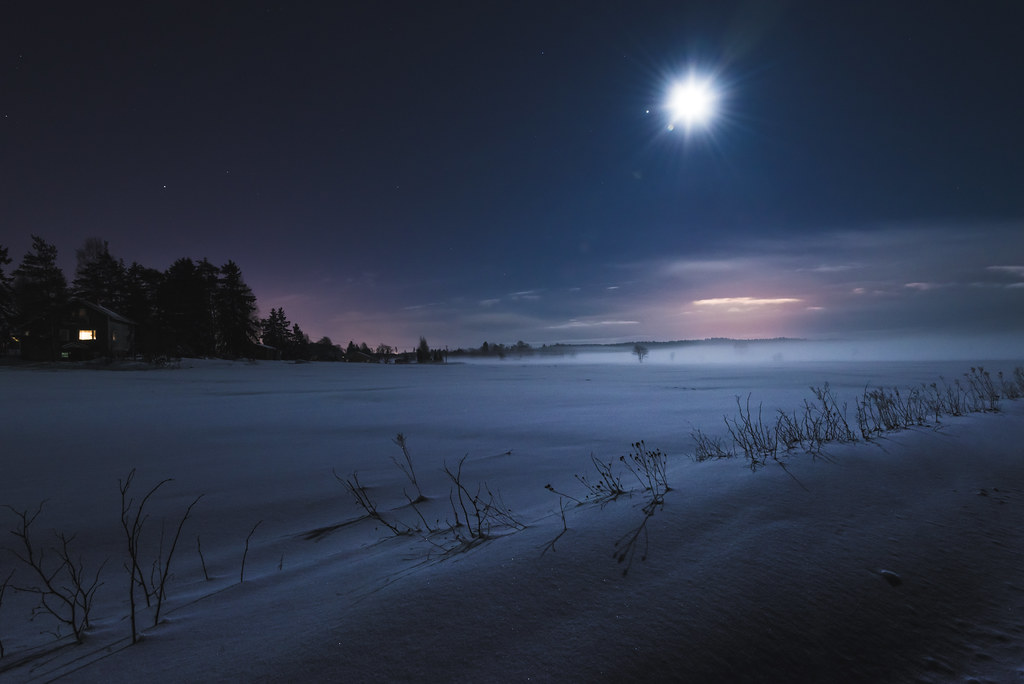
Full midnight moon on fields that yield but snows, Air apple-clean, crisp, sweet In lungs and nose, The only sound your feet Past silent woods – Inhaling moods and modes Of midnight roads.
In twenty minutes, you hear only this: A dog bark twice. An owl hoot once. A horse snort by a fence. Some heavy breath behind a hedge: a cow. A mile away a car’s lights show, then go. You walk unknown, alone, towards some place With light and life, perhaps a warm cafe To make a break in travelling towards day.
This quiet little winter poem (sorry about the timing, Australia…) was first published in The Orchards Poetry Journal. The editors tend toward the bucolic and the formal… but they make exceptions, thank goodness, because this piece is not quite formal. It may be in iambics, but without a pattern to the line length or to what rhyme there is.
But it’s true to the winter outdoor experience–and pleasant enough, so long as you have good boots and adequate clothes!
He played the game and loved its vicious tricks, deceit, despair, all power-politics; and made good progress, never in retreat, with no despair at politics’ deceit… and now still climbs that endless rain-slick stair of power-politics, deceit, despair.
If you search for photos of politicians, this is the kind of thing you get… There are (occasionally) really, really good people who devote their lives to trying to improve their part of the world; but… Anyway, it seems like a good time to blog this poem!
This short piece was originally published in Snakeskin. Couplets of iambic pentameter, with politics, deceit and despair in the second line of every couplet and providing the rhymes. But you could see that.
Oh how shall I its deeds recount Or measure the untold amount Of ills that it has done? From China’s bright celestial land E’en to Arabia’s thirsty sand It journeyed with the sun.
I omit the next nine stanzas, as the influenza makes its way to Britain. The poem ends:
For though it ravaged far and wide Both village, town and countryside, Its power to kill was o’er; And with the favouring winds of Spring (Blest is the time of which I sing) It left our native shore.
God shield our Empire from the might Of war or famine, plague or blight And all the power of Hell, And keep it ever in the hands Of those who fought ‘gainst other lands, Who fought and conquered well.
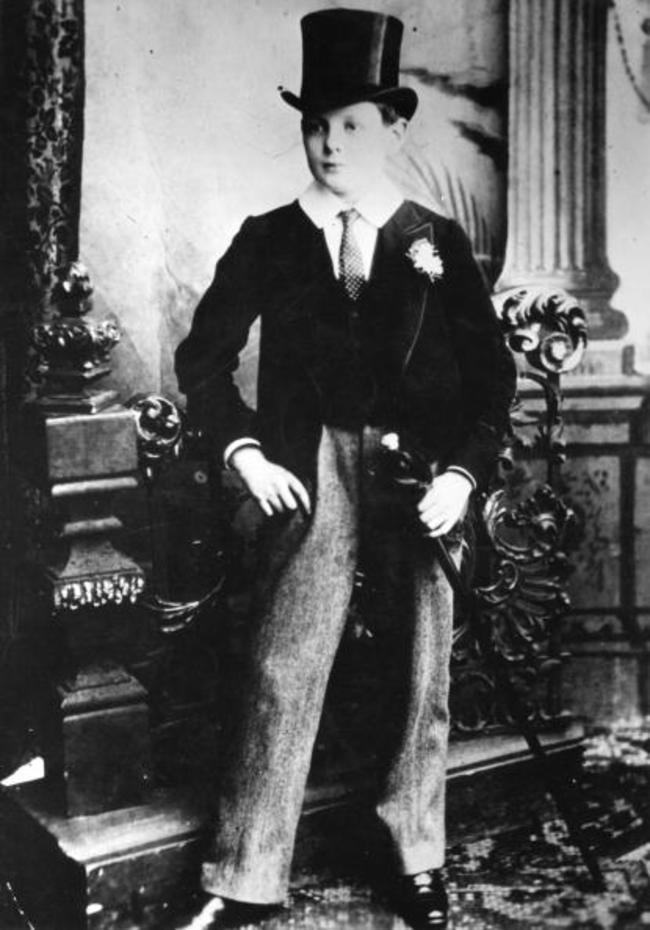
Written in 1890 when he was a lazy 15-year-old Harrow schoolboy who did badly at everything except English, Winston Churchill partially redeemed himself with this prizewinning poem on the global influenza epidemic (which may have been a Coronavirus) of his day. This “Asiatic Flu” or “Russian Flu” killed about a million people worldwide.
The photograph shows Churchill in his school clothes at age 14.
So there you have him: a teenage Churchill, with excellent control of English and an early exposition of his oratory, bombast, nationalism, imperialism, and enjoyment of warfare. And fifty years later he did brilliantly for Britain in the Second World War (but thank goodness for Clement Attlee picking up the pieces afterwards).
For I dipt into the future, far as human eye could see, Saw the Vision of the world, and all the wonder that would be;
Saw the heavens fill with commerce, argosies of magic sails, Pilots of the purple twilight dropping down with costly bales;
Heard the heavens fill with shouting, and there rain’d a ghastly dew From the nations’ airy navies grappling in the central blue;
Far along the world-wide whisper of the south-wind rushing warm, With the standards of the peoples plunging thro’ the thunder-storm;
Till the war-drum throbb’d no longer, and the battle-flags were furl’d In the Parliament of man, the Federation of the world.
There the common sense of most shall hold a fretful realm in awe, And the kindly earth shall slumber, lapt in universal law.
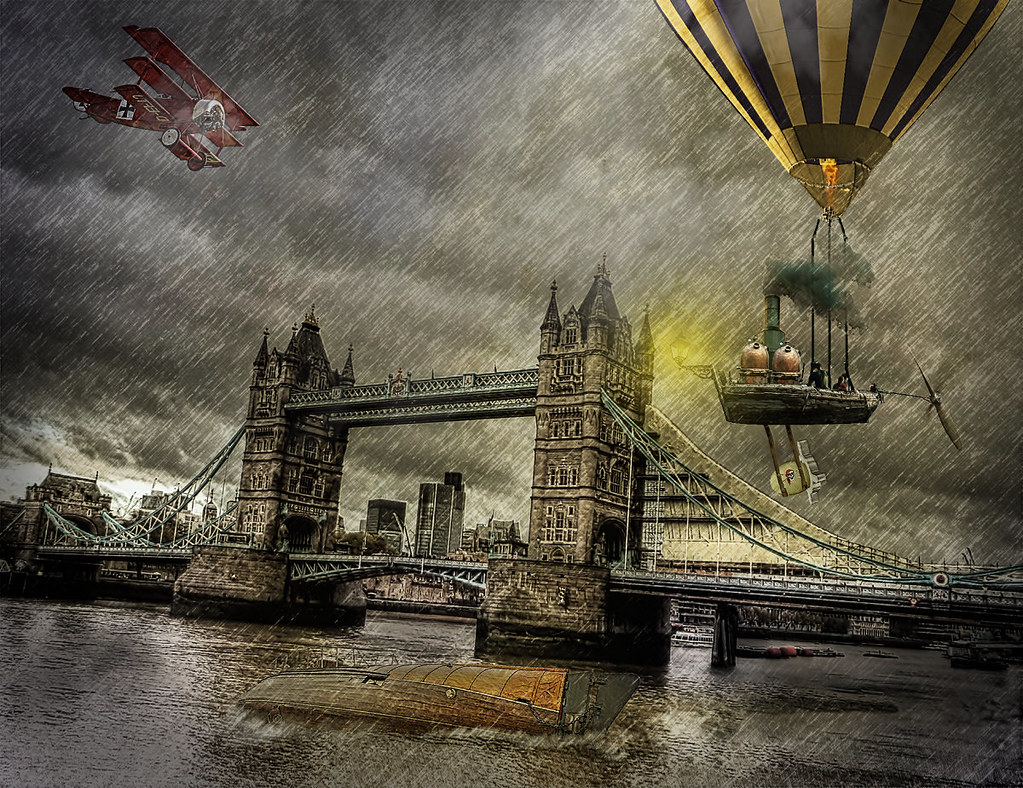
This excerpt from Tennyson’s ‘Locksley Hall’ has a steampunk feel to it–“the nations’ airy navies grappling”–what exactly did he imagine? The hot air balloons that had been developed in the previous century, now using grappling hooks and rifles in their battles? And it ends not with a talking-shop United Nations, but with a World Federal Government… It is quite a vision from the young Tennyson; and this slice of the poem has taken on a life of its own, quite distinct from the general ranting about his failed love affair which is the theme of ‘Locksley Hall’.
The full poem contains well-known lines such as
In the Spring a young man’s fancy lightly turns to thoughts of love;
and the poet foresees his former lover, now married to a man he dislikes, in a poor relationship:
He will hold thee, when his passion shall have spent its novel force, Something better than his dog, a little dearer than his horse.
A situation which he thinks she deserves, and which brings out his (pre-)Victorian misogynism:
Woman is the lesser man, and all thy passions, match’d with mine, Are as moonlight unto sunlight, and as water unto wine—
So we can leave all that alone, and just look at his science fiction passage: the skies filling with commerce and warfare, before the world achieves global peace and quiet. A nice vision of a young man in his mid-20s, writing two years before Victoria became queen. 1835 is quite early. For comparison Jules Verne, often called “the Father of Science Fiction”, was only seven years old when Tennyson wrote ‘Locksley Hall’. But that hardly makes Tennyson unique as a prophet: Mary Shelley had published ‘Frankenstein’ in 1818, and her apocalyptic dystopian ‘The Last Man’ in 1826. And fantastical speculation goes back a lot further, to at least the 2nd century with the bizarre work of Lucian of Samosata, an Assyrian who wrote A True Story. But at least compared with Lucian, Tennyson was on the right track, with a little more science to back his fiction.
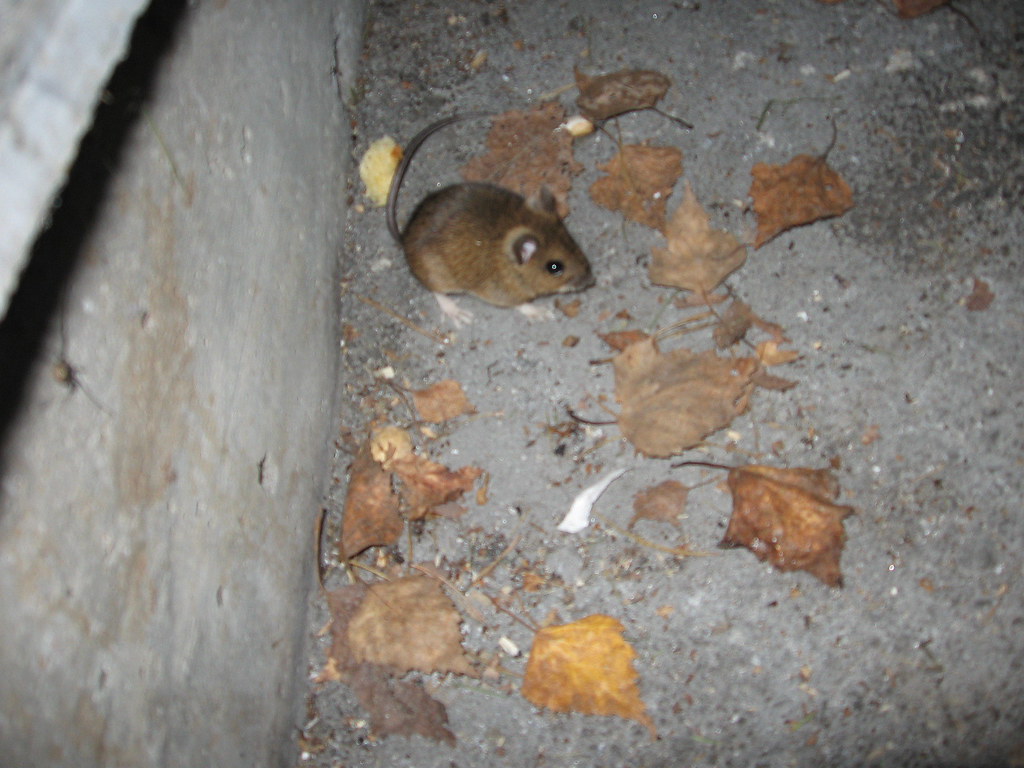
Poems should be concise: quick, small, like mice. Then one day you find they’ve made a nest in your mind.
I seem to be writing shorter, more epigrammatic verse recently. Probably influenced by reading too much FitzGerald/Khayyam.
This little poem was published in the December 2020 issue of Snakeskin–which celebrates 25 years as a monthly online poetry magazine, presumably the oldest (or rather “the most venerable”) such magazine in the world. Congratulations to its creator and sustainer, George Simmers!
FitzGerald’s version of Omar Khayyam’s Rubaiyat is one of the glories of English poetry. It has contributed more phrases and common quotations to the language, relative to its size, than any other piece of literature – including the Bible and Shakespeare. “A flask of wine, a book of verse, and thou”… “The Moving Finger writes; and having writ // Moves on”… and so on.
FitzGerald came out with five editions of the Rubaiyat (the fifth being posthumous), with 75 four-line stanzas in the first edition, then tinkering with it for the rest of his life: adding another 30 stanzas, subtracting again, and constantly modifying words, phrases and punctuation. The first edition has several things in its favour: succinctness, and the fire and integrity of the original effort.
Edward FitzGerald was a strange character. His personal life was a long search for friendship of two types: intellectuals with a passion for literature (Tennyson, Thackeray, Carlyle), and unintellectual men much younger than himself who were noted for their “manly” looks. His life and search were difficult, as Victorian England didn’t make life easy for homosexuals.
On the creative side, this search for friendship showed up as a need to be a co-creator: showed up in art, where he had a lifelong habit of buying paintings and cutting them down to a better composition and touching up the work to improve it; in music, where he arranged the works of others for his friends to sing; and in literature, where he found his genius in the works of others, translating Aeschylus, Calderon and Khayyam from the original Greek, Spanish and Persian, striving to identify with the original author and replicate in English not their exact words but the thrust of their thought and emotion. And with the Rubaiyat he appears to have been successful in every way. The five versions published between 1859 and 1889 constitute the single best-selling book of poetry in English.
Of the hundreds of editions that have been published since FitzGerald’s death, my two favourites are: for the lushness, the one illustrated by Edmund Dulac; and, for the background and insights, the one with an introduction by Dick Davis and published by Penguin in 1989.
In this particular Penguin edition (there have been several others), FitzGerald’s first edition and fifth edition are given in full, together with a complete listing of all the other variations found in the intervening versions. But – FitzGerald’s Rubaiyat only being 300 or 400 lines, depending on the version – all of that barely takes up 50 pages. Dick Davis’ introduction, almost as long, was presumably commissioned to make this a saleable book. And it is his introduction that gives it its full value.
Davis covers the life and what can be known of the personality of Omar Khayyam and – in conjunction with a review of FitzGerald’s life, personality, agnosticism and guarded homosexuality – the attraction, almost identity, that FitzGerald felt for him. He also investigates and approves the depth of FitzGerald’s translation skills, and analyses his use of rhyme scheme and meter. FitzGerald originally started translating Khayyam into paired couplets (aabb) before seeing the benefit of Khayyam’s rubaiyat (aaba) – given the epigrammatic nature of the verses, each quatrain is a stand-alone philosophic proposition and the return in the fourth line to the rhyme of the first two lines tends to heighten the sense of inevitability in each stanza.
Perhaps the most intriguing thought to come from Davis’ Introduction is that the sensual illustrations of half-naked women, so common in our collection of Rubaiyats, are all wrong. From linguistic and cultural clues in both the Persian and the English, it appears that the Saki, the young cup-bearer, the Thou of the flask of wine and book of verse, should be an attractive young male with his first moustache starting to grow in. In other words, and despite my preference for Dulac, FitzGerald’s version of the Rubaiyat of Omar Khayyam would perfectly support lush, ornate, gay illustrations; and that is likely what FitzGerald – and Khayyam himself – would have preferred.
I heard the squelch of death again – or was it just a neuron firing deep within my boggy brain,
or possibly a cell expiring down amongst a mucus mess? It could have been my heart perspiring
(that may be a thing I guess) or, deep down in the adipose, the squealing of a fat-lump pressed
to serve as fuel, and I suppose it might have been a small mutation – ‘Pop!’ (we get a lot of those),
a bronchiole’s sharp inhalation, ‘Hiss!’ a membrane’s gooey breath, a bile-duct’s bitter salivation…
Probably, it wasn’t death.
Nina Parmenter writes: “I had such a good time writing this poem. For a start, I got to have a lovely little geek-out researching a few anatomical details. I do like writing poems which require a little research, and biology seems to be a favourite subject at the moment. With bronchioles and bile ducts firmly in place, I granted myself permission to fill the rest of the poem with as many gooey, yucky words and noises as I pleased. And who wouldn’t enjoy doing that?
To compound the pleasure, I wrote the poem in terza rima form – such an elegant, flowing puzzle of a form, and one of my favourites to write in.
Honestly, this is one of those poems that I wish had taken me longer, because I didn’t want the (slightly dark) fun to stop.”
Nina Parmenter has no time to write poetry, but does it anyway. Her work has appeared in Lighten Up Online, Snakeskin, Light, The New Verse News and Ink, Sweat & Tears, as well as the newest Potcake Chapbook, ‘Houses and Homes Forever‘. Her home, work and family are in Wiltshire. Her blog can be found at http://www.itallrhymes.com. You can follow the blog on Facebook at http://www.facebook.com/itallrhymes
As a legislator in my state I drew up my first vote to say that citizens could never vote again after they had passed away.
My fellow members faced the troubling issue bravely, locked in hard debate on whether, after someone’s death had come, three years should be adequate
to let the family, recollecting him, determine how a loved one may have cast a vote if he had only lived to see the later voting day.
My own neighbors warned me had gone too far in changing what we’d always done. I lost the net campaign, and failed to carry a single precinct with a cemetery.
Jimmy Carter’s collection of poems ‘Always a Reckoning’ is unexpectedly good for a politician, and it was a best seller when published in 1995. And this particular poem is not only amusing, but it resonates strangely with 2020 presidential election, and claims of fraud in the Georgia results. It would appear from the poem that Georgia politics is more honest than it was in the 1960s, anyway.
Jimmy Carter followed a bizarre and contradictory path in politics, always having been firmly committed to racial integration and equality, but having to constantly support people like Alabama segregationalist George Wallace in order to get elected. Then, once elected, trying to move the state’s politics in a direction that many of his backers did not like. Whether things played out the way they are presented in the poem is not something I can determine from a superficial review of his career. But it’s a fun poem, anyway.
When all the old gods go on trial, loud cursed In the High Court of Public Thought Review, Jehovah (tribal god of bronze age Jews) Stands of his vast pretentiousness accused: Claims he created Heaven and Earth When he was born six thousand years ago! (Can’t define Heaven, doesn’t even know If there’s a difference between Earth and Universe.) God of the Christians and the Muslims too! Won’t do anything against the AI Displacing all the gods. Thor in the dock Scratches his bull-neck, Odin his empty eye, Zeus his cock. The gods are human, know they face death, forgotten As any carven deity, buried, rotten. Concerned, they fidget restlessly – Only Jehovah, the least self-aware, Storms he’s exempt, blusters with beard and hair, Thinks his small tribe is all that there can be.
I have a lot of sympathy with apocalyptic thinking: the end of the world as we know it is always happening, being replaced by something with unfamiliar and disturbing aspects. All the old ways are always ending. And those who grow up with the new ways, which is all children, mature and age and find their ways displaced in turn. But the scale of displacement varies… a war raging across your homeland is worse than a wave of new immigrants, though both of these are familiar problems. But the rise of AI and a host of new technologies, and the wholesale washing away of gods and pre-scientific explanations, is leading to a future where not even the make-up of the human can be known for sure. The gods shrink and become amusing.
The poem was originally published in Snakeskin. It’s a bit slapdash, mostly in iambic pentameter, mostly rhyming, but not technically great. But then, I was always one of those students whose report cards read “Could try harder”, “Could do better”.





 Form in Formless Times