I remember the cold, high-ceilinged room where they had laid him, the smell of incense, brass coffin handles shining in the gloom, an aspidistra, dusty and immense.
To this small boy dressed in a mourning suit, he seemed reduced, much less than he once was: his scalp, without his cap, bald as a coot, his fingers criss-crossed on his chest like claws.
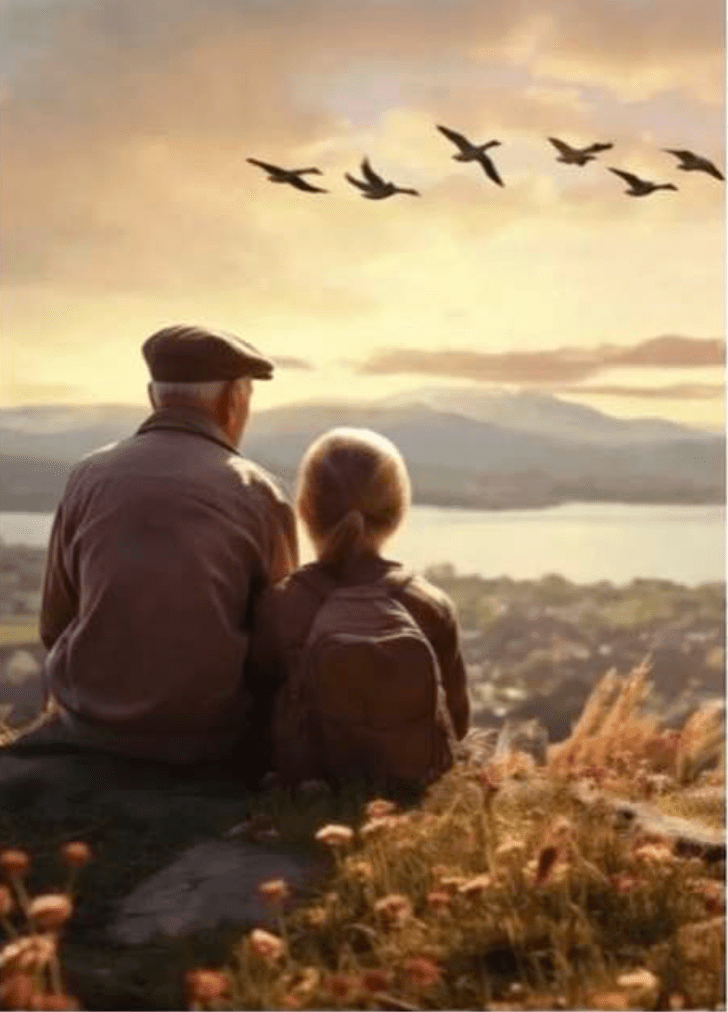
I thought back to the day we watched geese rise high over wetlands blurred with morning haze, the laughter always dancing in his eyes, his warm, familiar smell, his turn of phrase.
Life is so short while memories are long. We the bereaved are left with words unsaid. At the day’s end, he’d sing a lulling song as I rode his strong shoulders home to bed.
A prayer unbidden reached me on a whim: Preserve in me the things I loved in him.
*****
Richard Fleming writes: “This is a shortened, rhyming version of a lengthy free verse poem that I wrote over thirty years ago when I relocated to Guernsey from Northern Ireland. Like many love poems, the original version, The Hidden Traveller, has stood the test of time. This version stands as a homage to its source.”
Richard Fleming is an Irish-born poet and humorist based in Guernsey, a Channel Island between Britain and France. Widely regarded as one of the island’s foremost literary voices, his versatile work blends lyricism, sharp wit, emotional depth, and a strong sense of place. Drawing from his Northern Irish roots and adopted home, his poetry and prose explore love, loss, nostalgia, identity, and modern life. Collections include Strange Journey (2012), held in the National Poetry Library, and Stone Witness (Blue Ormer) featuring the BBC-commissioned title poem. His work can be found on Facebook https://www.facebook.com/richard.fleming.92102564/ or Bard at Bay www.redhandwriter.blogspot.com
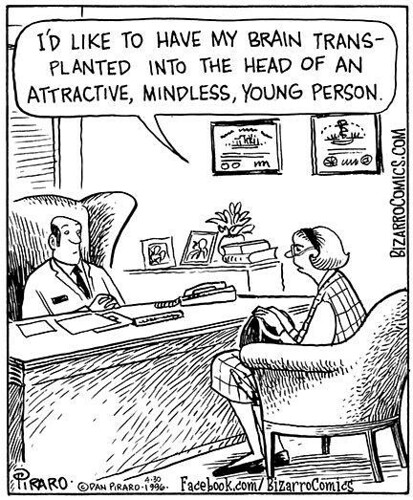
Death will be harsher now, as, year by year, we solve the clues of immortality: emotions sink to animality as false hopes tighten screws of desperate fear. Hormone control will make age disappear— after false starts, most horrible to see— but those already old must beg to be frozen for the genetic engineer. While war, starvation, pipe Earth’s gruesome jigs, successful businessmen will fight to gain some dead teen’s body, to transplant their brain, the already-old beg to be guinea-pigs. Children, look back, hear our despairing cry: we bred immortals, but we had to die!
*****
I wrote this poem on 3 January 1982 – twenty years before I began to get poems published. (Formal verse was an almost absolute no-no in late 20th century magazines… although consistently taught and highly praised in schools and universities, of course.) It was finally published in Ambit in October 2007 – the magazine started and managed for 50 years by Martin Bax and the stomping ground of J.G. Ballard, Ralph Steadman, Carol Ann Duffy, etc.
In April 2018 the poem was reprinted in Bewildering Stories, an online weekly headquartered in Guelph, Ontario; and in 2024 I accepted Maryann Corbett‘s suggestion to change the title and first line and instead of “harder” use the word “harsher”… the earlier word incorrectly suggesting that we might be finding it more difficult to achieve death.
The ideas behind the poem were not new to science fiction, but were less common in formal verse. The ideas continue to inch their way towards reality; continue to be explored in popular culture (Piraro, Futurama…); and in the last 44 years I have continued to explore SF and existential themes in verse.
Our lost ones drift down a dark stream, surfacing at the brink of dream. The crack of dawn: they’re gone again. What have they left for us to keep? Night’s dialect, a coded speech beyond our reach.
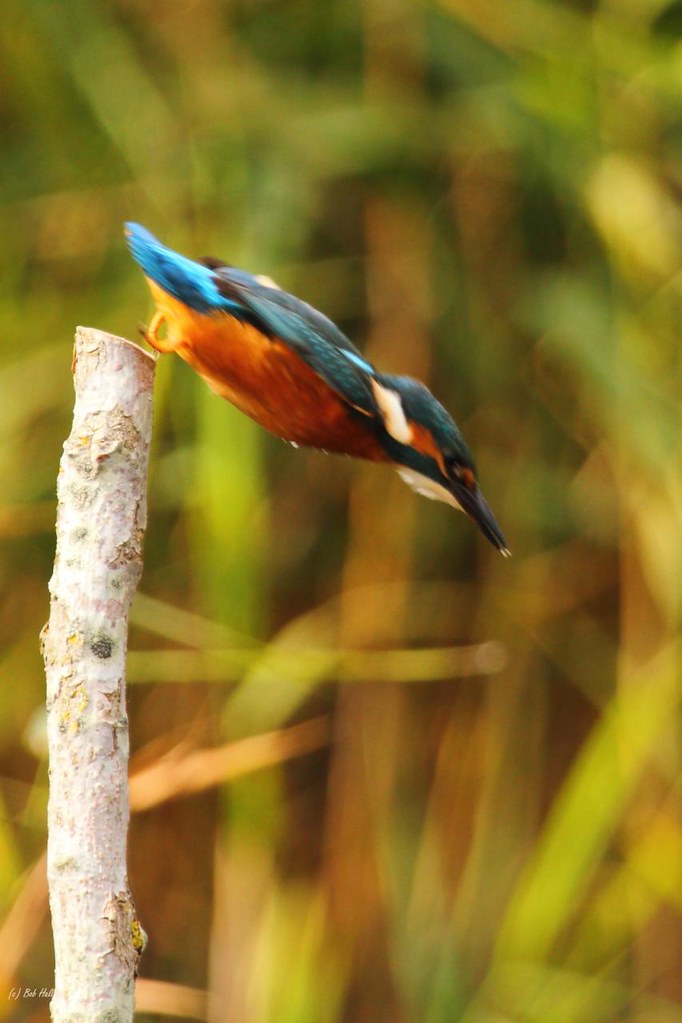
Birds on the bank of a calm pond: each one is still and poised, then dives. Mornings we wake into our lives, blind to what lies beyond, below, the chasms where black rivers flow, and flickering deeper, darkly clear, that coded speech beyond our reach, words we can’t hear.
*****
Rachel Hadas has a group of sonnets appearing, one a week, in The Sonneteer. For the first she wrote: “The sonnets that will be appearing in the coming weeks weren’t conceived as a sequence. Encouraged by Ken Gordon’s enthusiasm to take a look at some of my unpublished shorter poems, I speedily found one fourteen-liner, “Tectonic Plates.” Three other poems were so close to sonnet length that they almost begged to be tweaked or tightened or gently expanded; this group includes “Out of Reach,” “Winter,” and “My Best Friend’s Mother.” In every case, the sonnetification (Ken’s helpful coinage) improved the poem. (…) I now realize that, while not conceived as a sequence, all five of these sonnets (now that they are all sonnets) do share themes. They’re about time and memory, aging and loss, what we lose and what we retain. So are many other sonnets, infinitely greater than mine. It’s a privilege to be able to join in the conversation, to swell the chorus.“
Rachel Hadas (born November 8, 1948) is an American poet, teacher, essayist, and translator. Her most recent essay collection is Piece by Piece: Selected Prose (Paul Dry Books, 2021), and her most recent poetry collection is Ghost Guest (Ragged Sky Press, 2023). Her honors include a Guggenheim Fellowship, Ingram Merrill Foundation Grants, the O.B. Hardison Award from the Folger Shakespeare Library, and an Award in Literature from the American Academy and Institute of Arts and Letters.
Bench slats, warm-sleeved in lichen’s rough grey-green, Sandwiches, ivy’s shade, the garden scene, Dozens of white-tailed bumblebees, a hum Among the clustered heads of marjoram.
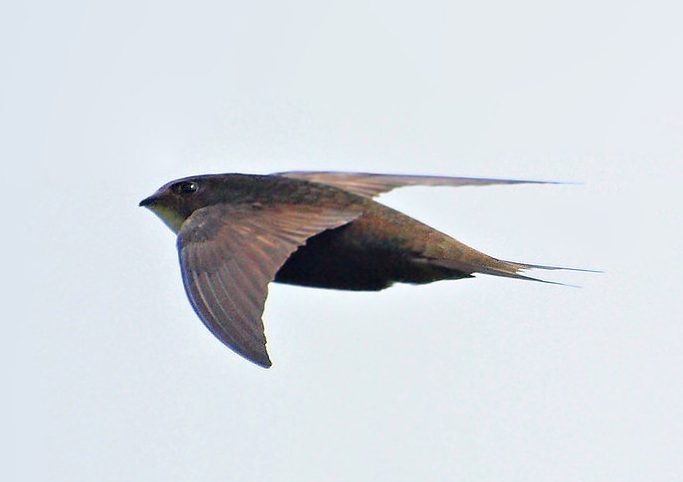
Background to thoughts that intertwine and drift . . . A sudden sombre sickle shape – a swift So low, so near, not distant in the sky, Skims past, a flash of wings and beak and eye.
Why come that strangely close? Drawn down in chase Of food, despite the human form and face? Why did it circle once, then speed away Towards the woods and cliffs that fringe Lyme Bay?
Soon, news – an old friend gone whose joy was birds. It almost seemed a farewell without words.
*****
Jerome Betts writes: “The passage of the swift so close I could glimpse its shining eye was a memorable moment in these times when I see only a very occasional two or three usually high in the sky. It resulted in a sunny and summery ten lines concluding, A brief encounter, but it made the day. Some hours later the news came of an old school friend’s death in France. This completely altered any feeling about the event. I suppose the subtext of the aftermath was something like Hardy’s Hoping it might be so, which nearly became the title.”
Jerome Betts edits Lighten Up Online in Devon, England. His verse appears in Amsterdam Quarterly, Light, The Asses of Parnassus, The New Verse News, The Hypertexts, Snakeskin, and various anthologies.
At night we dream to clean our memory, discard trash from our cache. Reincarnating after death would be the same; the past, scraped by death’s emery, unknown in the new game, cleansed of our memories, but with a stash of added skills… and karma’s unpaid bills.
*****
No, I don’t believe in reincarnation. I don’t believe in anything, or in nothing; I’m an absolute agnostic. “I think therefore I am” is as far as you can go with any certainty – even “who or what I am” is ultimately unknown.
‘Clearing the Cache’ was published in Bewildering Stories. Thanks, Don Webb (if you exist, of course…)
Dear Mother come softly across your grey veil and onto the path in the dark where the snail is crossing obliquely and nightjars sing sweetly and put down your toilet bag quietly, discreetly on the rim of the cemetery fountain. Now wash your hair free of this mud and these worms, and squash those white maggots that gleam in your ears, then smile as you used to. We’ll have no more tears.
*****
Andrew Sclater writes: “I think everyone who loses a parent probably wants to resurrect them somehow. But memory is a false friend. We can’t see them clearly enough: we know, with vagueness, what they were like, but not who they were. We’d like to go back but we can’t, though this poems attempts to. Then, the realisation that we stand alone, orphaned, comes slowly, painfully and (awkward as it is) angrily as we grieve. This poem was delivered almost complete to me. It simply flowed out of the first line in a rare and rather magical way. I still like it more than almost everything I’ve written, placing my discomfort so tidily into its formal box.”
‘Dear Mother’ first appeared in Poetry Review.
Andrew Sclater is a Scottish poet currently living in Paris. He has published poems in Ambit, Best Scottish Poems, The Dark Horse, Magma, New Writing Scotland, Poetry Review, Shearsman and elsewhere. He co-founded Butcher’s Dog poetry magazine and the National Botanic Garden of Wales. He has been an editor of Charles Darwin’s correspondence and his Dinner at the Blaws-Baxters’ was published in 2016 by HappenStance Press. His newest pamphlet Quite Joyful is from Mariscat Press.
If you’re dead, an’ ya’ ain’t on a mantle, Then ya’ go in a hole in the groun’. From a slab to a coffin, ya’ don’t move very often. When you’re dead you’re jus’ lyin’ aroun’.
If you’re dead, an’ you’re hauled to a graveyard, A few fam’ly ‘n’ friends might arrive, An’ the buzzards ‘ll buzz up above ya’ because When you’re dead you’re no longer alive.
If you’re dead, there’ll be those who hol’ Judgment— Say your Soul is in Heaven or Hell; But Whatever is True (an’ regardless o’ you) When you’re dead, that’s their story to tell.
If you’re dead . . . well, ain’t none o’ that matters. It’s the livin’ who toss in the dirt. What remains goes to rot. An’ though like it or not When you’re dead ya’ don’t feel any hurt.
*****
Johnny writes: “Inspired—in part, at least—by my interest in gravestones of the Colonial era, ‘Epitaph’ utilizes a second person voice. A tip of the hat, if you will, to the ‘As I am now, so you must be’ subgenre of epitaph, wherein the dead address the living to forewarn of Death’s inevitability. Seven stanzas too long at one point, I chopped it down to four. Reason being, the three stanzas I rather begrudgingly removed were written in a confessional mode that conflicted not just with the second person voice, but also with the Everyman vibe that I began sensing the Muse actually desired from me, along with greater brevity. Having made such cuts, I shelved the piece, thinking I’d revisit it in the future with a fresh(er) set of eyes. But then, a recent, troubling news event and its subsequent media fallout brought ‘Epitaph’ to the forefront of my mind. So, on a whim, I posted the abridged version on Facebook. To my pleasant surprise, that led to Robin querying me about its availability, and ultimately, its appearance here at Form in Formless Times.”
Johnny Longfellow is a poet from Massachusetts. His work has appeared in The Five-Two, The Literary Hatchet, Misery Tourism, Punk Noir, and other fine literary venues. You can learn more about both him and his work at Heeeeeeere’s Johnny . . . Longfellow, that is.
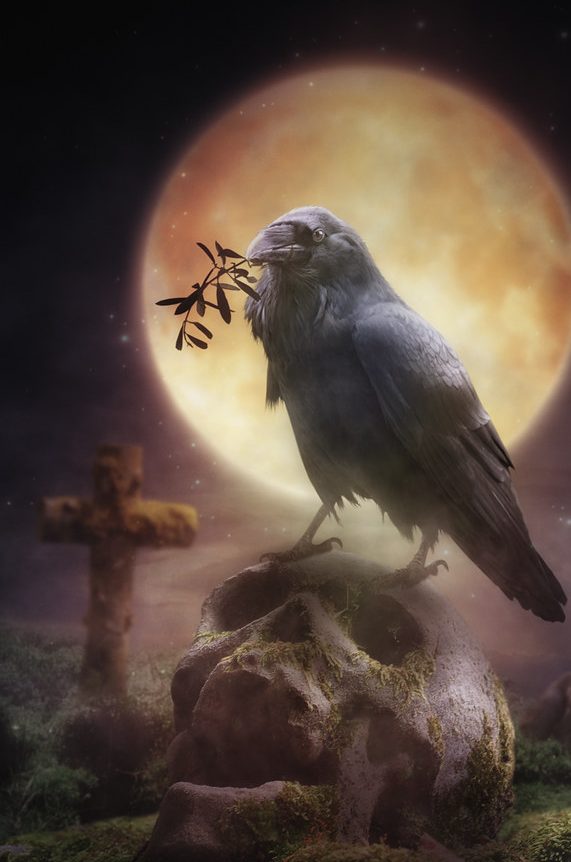
There’s a cross in the field where the scarecrow stood And the ravens have all come back And the ravens would say, if they only could That a scarecrow is straw and a cross is wood And the wings of a famine black.
There’s a cross on the grave where the hero lies He whose war was to end all wars And his empty skull holds a thousand why’s And the crow that struts on his grave replies With a thousand triumphant caws.
There’s a cross on the hill where the scapegoat hung Like a scarecrow to ward off sin And the prayers are said and the hymns are sung And the gorcrows perch on their hills of dung Where the plagues of the world begin.
There’s a cross in the dark of the Southern sky Where the stars wink a long farewell As the ghosts of the ravens prepare to fly To return to the void of their black god’s eye With a tale that they’ll never tell.
*****
Simon MacCulloch writes: “This poem melds the Christian symbol of death and resurrection with the Four Horsemen of the Apocalypse in an attempt to express how one feels after reading the world news in recent times.”
Simon MacCulloch lives in London and contributes poetry to a variety of journals including Reach Poetry, View from Atlantis, Spectral Realms, Altered Reality, Aphelion and others.
Eulogy, First Draft The bastard’s dead, That much is true. What can be said? It sounds ill-bred To say, “He’s through. The bastard’s dead.” Perhaps, instead, “We mourn.” Few do. What can be said? “He shared no bread. He slurred the Jew.” The bastard’s dead. He often wed And wandered, too. What can be said That will not spread The truth we knew? The bastard’s dead. Much will be said.
Eulogy, Second Draft He never killed a man. I think he paid his taxes. He didn’t join the Klan And didn’t send junk faxes. I once heard him say please, Perhaps a muffled thanks. On drunken weekend sprees He shot off only blanks. On principle, I guess, I’m sorry that he’s dead, As most here would profess. I’ll quit while we’re ahead.
Eulogy, Revised I think this is the final text. I’ve got nothing, friends. Who’s next?
*****
J.D. Smith writes: “We are told not to speak ill of the dead. Fair enough, in some ways. It isn’t sporting to assail those who aren’t present to defend themselves, and even the most skeptical can still feel the fear of summoning an angry spirit. And yet. We can all think of instances where the world was improved by someone’s leaving it. Similarly, the removal of a troublesome athlete from a team is called “addition by subtraction.” We again come face to face with Clarence Darrow‘s most famous quotation: ‘I’ve never wished a man dead, but I have read some obituaries with great pleasure.‘ Obituaries themselves, particularly of public figures, are often couched in positive or no worse than neutral terms. A multitude of sins is covered by words such as “controversial.” At the same time, a dialectic obtains. I am under the impression that negative if not excoriating obituaries of public figures have grown more common in the British press, and that practice has occasionally migrated to my country, the United States. The example that comes to mind is a scathing review of the life of tycoon Walter Annenberg. We now and again see similar takedowns of not-so-dearly-departed private citizens in local newspapers. The same issues present themselves in eulogies. I’ve never been presented with a situation where I could take the podium and slag the deceased, and if the opportunity ever does arrive I almost certainly lack the spine and other parts to take advantage of it. My Jungian shadow and I keep in touch, though, and various thoughts arise. Hence this little suite of poems. There are some we come not to praise but to bury, and as soon as possible.”
J.D. Smith’s seventh collection of poetry, The Place That Is Coming to Us, will be published later this year by Broadstone Books. His first fiction collection, Transit, is available from Unsolicited Press. Further information and occasional updates are available at www.jdsmithwriter.com.
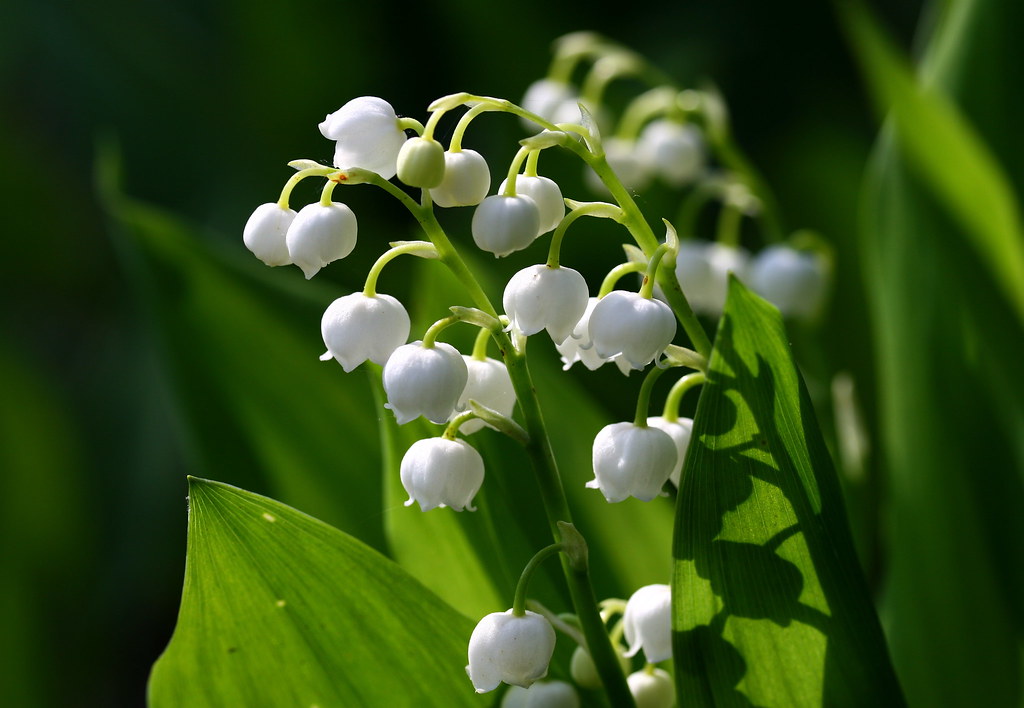
When at the end of spring I pick for the last time My favourite flowers— a yearning fills my breast, And to the future I urgently appeal: Let me but once again look upon the lilies of the valley.
Now they have faded. Like an arrow the summer has flown by, The days have grown shorter. The feathered choir is still, The sun more charily grants us its warmth and light, And already the wood has laid its leafy carpet.
Then when harsh winter comes And the forests don their snowy cover, Despondently I roam and wait with new yearning For the skies to shine with the sun of spring.
I find no pleasure in books, or conversation, Or swift-rushing sledges, or the ball’s noisy glitter, Or Patti, or the theatre, or delicate cuisine, Or the quiet crackling of smouldering logs on the fire
I wait for spring. And now the enchantress appears, The wood has cast off its shroud and prepares for us shade, And the rivers start to flow, and the grove is filled with sound, And at last the long-looked-for day is here!
Quick to the woods!—I race along the familiar path. Can my dreams have come true, my longings be fulfilled?— There he is! Bending to the earth, with trembling hand I pluck the wondrous gift of the enchantress Spring.
O lily of the valley, why do you so please the eye? Other flowers there are more sumptuous and grand, With brighter colours and livelier patterns, Yet they have not your mysterious fascination.
Where lies the secret of your charms? What do you prophesy to the soul? With what do you attract me, with what gladden my heart? Is it that you revive the ghost of former pleasures, Or is it future bliss that you promise us?
I know not. But your balmy fragrance, Like flowing wine, warms and intoxicates me, Like music, it takes my breath away, And like a flame of love, it suffuses my burning cheeks.
And I am happy while you bloom, modest lily of the valley, The tedium of winter days has passed without a trace, And oppressive thoughts are gone, and in my heart in languid comfort Welcomes, with you, forgetfulness of trouble and woe.
Yet now you fade. Again in monotonous succession The days will begin to flow slowly, and stronger than before Will I be tormented by importunate yearning, By the agonizing dream of the happiness of days in May.
And then someday spring again will call And raise the living world out of its fetters. But the hour will strike. I shall be no more among the living, I shall meet, like everyone, my fated turn.
And then what?—Where, at the winged hour of death, Will my soul, heeding its command, soundlessly soar? No answer! Be silent, my restless mind, You cannot guess what eternity holds for us.
But like all of nature, drawn by our thirst to live, We call to you and wait, beautiful Spring! The joys of earth are so near to us, so familiar— The yawning maw of the grave so dark!
*****
Lilies of the Valley (Ландыши) is a poem written by Pyotr Ilyich Tchaikovsky in December 1878 while he was in Florence.
“I am terribly proud of this poem”, he wrote when enclosing a copy to his brother Modest. “For the first time in my life I have managed to write a fairly good poem, which moreover is deeply heartfelt. I assure you that although it was very difficult, still I worked on it with the same pleasure as I do on music.”
Когда в конце весны последний раз срываю Любимые цветы, – тоска мне давит грудь, И к будущему я молитвенно взываю: Хоть раз еще хочу на ландыши взглянуть.
Вот отцвели они. Стрелой промчалось лето, Короче стали дни, умолк пернатый хор, Скупее солнце нам дает тепла и света, И разостлал уж лес свой лиственный ковер.
Потом, когда придет пора зимы суровой И снежной пеленой оденутся леса, Уныло я брожу и жду с тоскою новой, Чтоб солнышком весны блеснули небеса.
Не радуют меня ни книга, нибеседа, Ни быстрый бег саней, ни бала шумный блеск, Ни Патти, ни театр, ни тонкости обеда, Ни тлеющих полен в камине тихий треск.
Я жду весны. И вот волшебница явилась, Свой саван сбросил лес и нам готовит тень, И реки потекли, и роща огласилась, И наконец настал давно желанный день!
Скорее в лес!.. Бегу знакомою тропою: Ужель сбылись мечты, осуществились сны?.. Вот он! Склонясь к земле, я трепетной рукою Срываю чудный дар волшебницы-весны.
О ландыш, отчего так радуешь ты взоры? Другие есть цветы роскошней и пышней, И ярче краски в них, и веселей узоры, — Но прелести в них нет таинственной твоей.
В чём тайна чар твоих? Что ты душе вещаешь? Чем манишь так к себе и сердце веселишь? Иль радостей былых ты призрак воскрешаешь! Или блаженство нам грядущее сулишь?
Не знаю. Но меня твоё благоуханье, Как винная струя, и греет и пьянит, Как музыка, оно стесняет мне дыханье И, как огонь любви, питает жар ланит.
И счастлив я, пока цветешь ты, ландыш скромный, От скуки зимних дней давно прошел и след, И нет гнетущих дум, и сердце в неге томной Приветствует с тобой забвенье зол и бед.
Но ты отцвел. Опять чредой однообразной Дни тихо потекут, и прежнего сильней Томиться буду я тоскою неотвязной, Мучительной тоской о счастье майских дней. — И вот когда-нибудь весна опять разбудит И от оков воздвигнет мир живой. Но час пробьет. Меня – среди живых не будет, Я встречу, как и все, черед свой роковой.
Что будет там?.. Куда, в час смерти окрыленный, Мой дух, веленью вняв, беззвучно воспарит? Ответа нет! Молчи, мой ум неугомонный, Тебе не разгадать, чем вечность нас дарит.
Но, как природа вся, мы, жаждой жить влекомы, Зовем тебя и ждем, красавица весна! Нам радости земли так близки, так знакомы,- Зияющая пасть могилы так темна!


 Form in Formless Times