Tag Archives: death

Poem: ‘Leadership Transition’

Julius Caesar, Antony, King Lear,
Hamlet, Macbeth – corrupted, vain, impure,
Irrational, bombastic, insecure –
He’s no more clarity or veritas
Than the deceptions of a covert war,
All morals blurred.

That tyrant rant, Tyrannosaurus roar,
Forecasts he’ll suffer a dictator’s fate:
His proud obsessed confusion first seems great,
Then grates, unravels at the seams, slips gear,
Loses its moral metaphors, grows crass;
He dies absurd.

Octavius, Malcolm, Edgar, Fortinbras,
Comes from the wings and strides to centre stage –
Competent, measured, reasonable, sane –
To rule the wreckage of the tragic reign;
Restores some structure, closes out the age,
Speaks the last word.

This archetypal character’s strong thump
Will get his nation out of the morass;
The raucous self-styled hero being dead,
A truer leader takes the throne instead.
(How Shakespeare’d end the Tragedy of Trump
Can be inferred.)

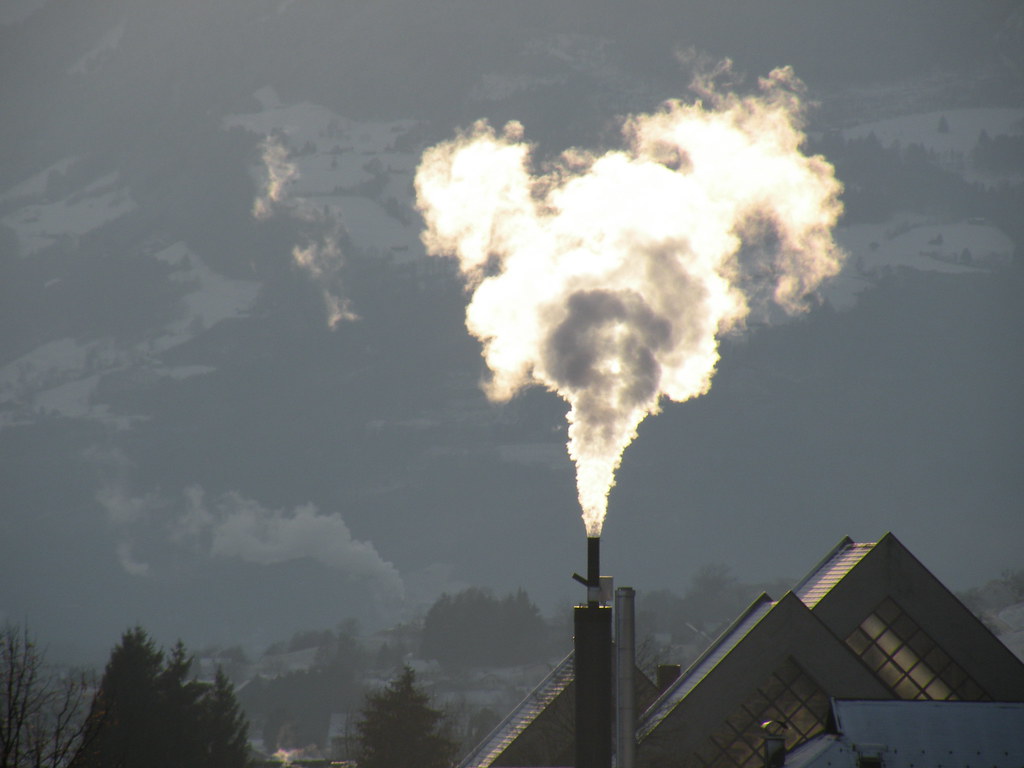
The common fate of Shakespeare’s flawed protagonists–death, and replacement by a more worthy ruler–is a story that humans enjoy and wish applied in their own times and countries… although they may naturally disagree on which ruler is disgraceful and which would be more worthy. Speaking for myself, I don’t need to see a death–I’d be happy for Putin and Trump to avoid assassination or jail by going into comfortable exile at a golf hotel in southern Russia. (You read it first here.) But Shakespeare would deal with them more definitively.

This poem is the third of the five poems published this month in The Brazen Head. Its four stanzas are in iambic pentameter with a short 6th line. The rhymes largely carry over between stanzas–the 6th lines only rhyme with each other. The rhymes and the stanza structure are designed to create a sense of satisfactory achievement–exactly what I feel with Biden taking over from Trump. (Similarly I would love to see Navalny take over from Putin, and almost anyone replace Boris Johnson.)

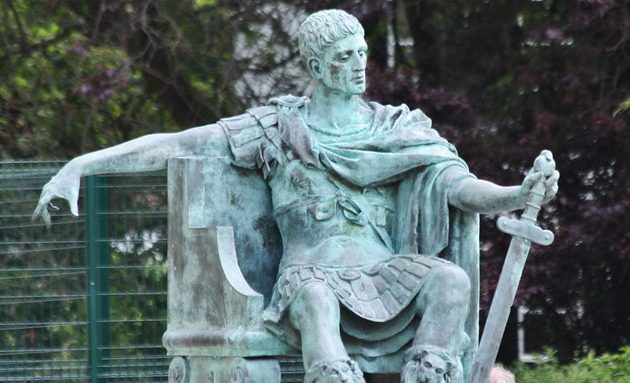
York Minster – June 2013 – Emperor Constantine – One Cool Dude” by Gareth1953 All Right Now is marked with CC BY 2.0.

Sonnet: ‘We Know We Will Be Dead’

We know we will be dead, who are alive.
But should some element of us survive –
fragment of consciousness or memory –
what value could it have? What should it be
that the whole universe might benefit?
The atom matters – what’s not made of it?
And we’re not large – not like a conscious star
(if time will let us all evolve that far).
You’re not much different in real magnitude
from an ant crushed for going for your food,
a gnat rubbed out, its tiny consciousness
a dot… but does it build the universe?
If that gnat can’t, I don’t see how you can:
there’s not much difference between gnat and man.

Does a poem of 14 lines, rhymed in pairs, count as a sonnet? Perhaps, but it doesn’t feel quite right. Petrarchan and Shakespearian sonnet structures, with more complex structures of rhyme, produce a much greater impact with the final line–a sense of revelation, inevitability, an impression of absolute truth–purely by the successful rounding out of the pattern. I like this poem’s ending couplet… but it would be stronger if the previous 12 lines were better structured.

‘We Know We Will Be Dead’ was published in the most recent Allegro, edited by British poet Sally Long.

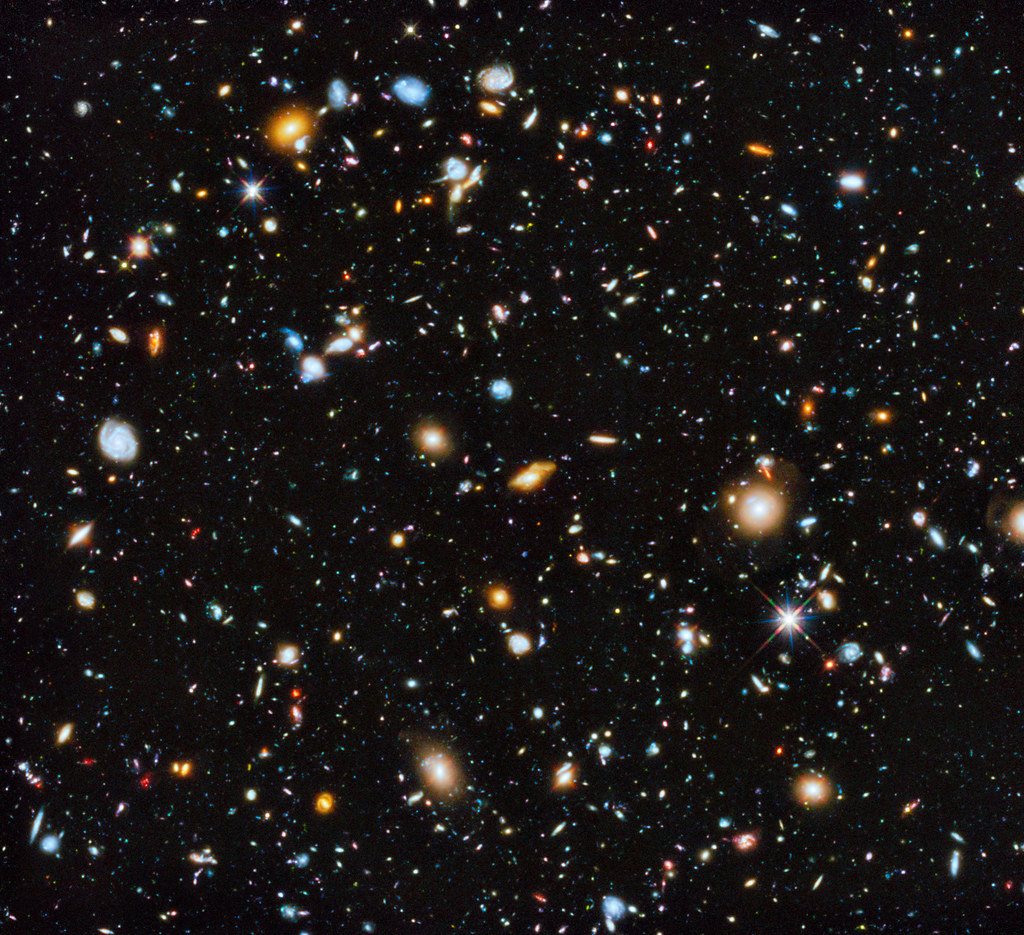
Hubble’s colourful view of the Universe” by Hubble Space Telescope / ESA is marked with CC BY 2.0.

Sonnet: ‘Voyage’

Some watch the widening, receding wake
On life’s long voyage. Others at the bow
Scan ahead, wondering what route we take.
(But Past and Future point to one end, Now.)
When disembarked, what will your story be?
“I looked back, couldn’t tell where we’d begun…”
“I tried to look ahead, but couldn’t see…”
“I read lots.” “Slept.” “I made friends.” “I made none.”
“Sunsets were nice.” “The food was just so-so.”
“I helped someone.” “I tried, but got in fights.”
What’s next?
Aboard Earth round the sun all go,
Each spinning whirl hundreds of days and nights,
Through scores of rounds. How’d we get here? Don’t know.
Then each, some unknown -day and -where, alights.

This poem was originally accepted for Contemporary Sonnet but, as far as I understand, when Charlie Southerland took over from the previous editor all the online passwords had been lost, and the magazine folded. So the poem went to Verse-Virtual instead. Given that its subject matter is the unpredictability of life, such changes for the poem’s own voyage are quite in keeping.

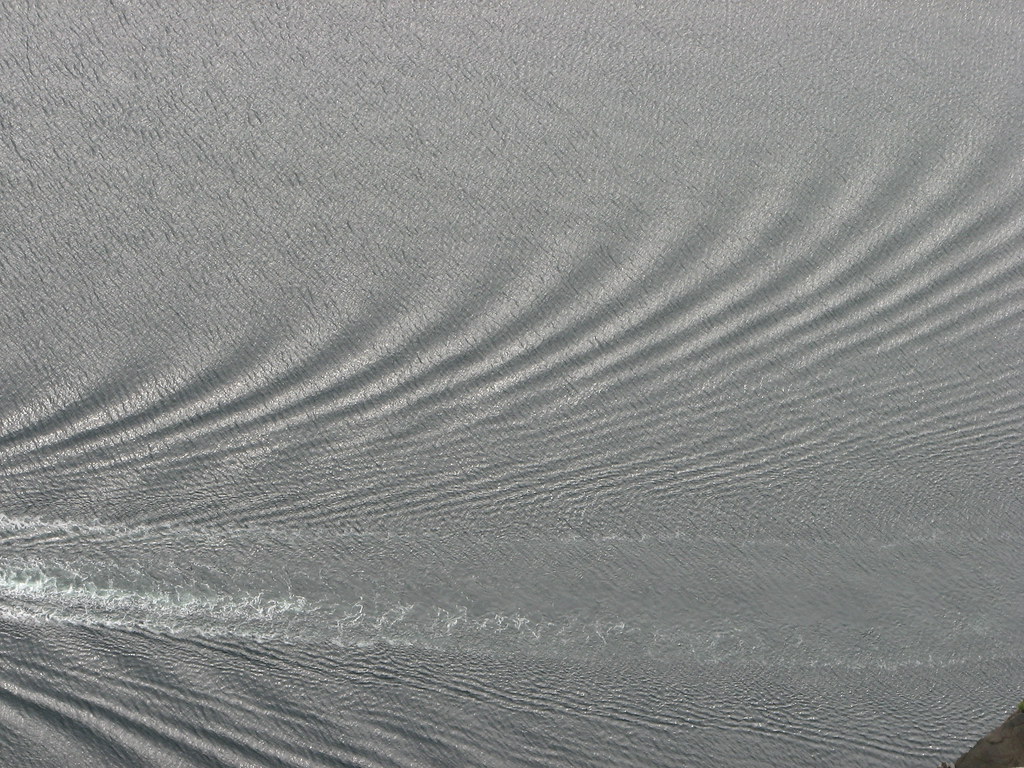
Ship’s wake” by Dany_Sternfeld is marked with CC BY-NC-ND 2.0.

Odd poem: Robert Frost, ‘The Draft Horse’

With a lantern that wouldn’t burn
In too frail a buggy we drove
Behind too heavy a horse
Through a pitch-dark limitless grove.

And a man came out of the trees
And took our horse by the head
And reaching back to his ribs
Deliberately stabbed him dead.

The ponderous beast went down
With a crack of a broken shaft.
And the night drew through the trees
In one long invidious draft.

The most unquestioning pair
That ever accepted fate
And the least disposed to ascribe
Any more than we had to to hate,

We assumed that the man himself
Or someone he had to obey
Wanted us to get down
And walk the rest of the way.

At a poetry reading in the Library of Congress, Robert Frost apparently described “The Draft Horse” as a poem “that nobody knows how to take“. That’s one way to look at it. Another way is that everyone who reads it seems to quite confidently take it in a different direction.

It has been called an allegory of the atom bomb–but, though first published in 1962, it was actually written in the 1920s, long before the bomb.

It’s been called an allegory of American expansionism.

It has been suggested as “a metaphor for the lives of ordinary citizens in totalitarian states, such as Nazi Germany, Soviet Russia and West Germany.” (West Germany. Really.) “Then the man could be an agent of the government, who does what he deems necessary and then disappears again.

Again, “In many cultures, the horse is traditionally a symbol for power. The horse has played a large role in American history. Robert Frost’s The Draft Horse may be a reflection of the power struggles he saw around him and the senseless actions he perceived in the conflicts.

How about “One analysis of the poem is that fate is unavoidable. Why struggle to stop or question fate when by its very definition it cannot be stopped?

Here’s the complete commentary from one blogger: “I’m on a bit of a poetry moment right now. The Draft Horse by Robert Frost is possibly one of the best poems ever written and well worth sharing with anyone willing to read writing at it’s highest art form.” (“it’s”, sic. Also, he miscopied one of the lines as “Any more than we had to hate,” thereby losing the meaning.) A more extensive commentary is in a comment posted to that blog:

I love this poem ! i think it is a great description of postlapsarian life. Laterns wont burn buggies are frail, the horse is too heavy.the night is so dark …
amidst all that a fellow deliberately stabs your horse.

People of good will are always hesitant to blame problems on hate.
and any way walking is a fine way to get there

And then there’s this thesis towards an M.A.:
WHY I KILLED THE DRAFT HORSE:
THE GOLDEN BOUGH, ROBERT FROST, AND “PROGRESS”
by Eugene Charles McGregor Boyle III

August 2013
The absence of criticism on Robert Frost’s “The Draft Horse” suggests that it is a challenge to Frost scholarship. This reading views Frost’s strange and neglected poem as a return to a monomyth offered by James Frazer’s hugely influential The Golden Bough. In “The Draft Horse,” Frost reconsiders the concept of ceremonial sacrifice that undergirds Frazer’s encyclopedic study of world culture and, by performing ceremony as a kind of modem poesis, Frost complicates the hero/sacrificial object role and critiques the progressive ideology that grounds Frazer’s account to fashion a troubling epic for modern America that implicates its national readers in a kind of savagery.

(Supported with references not just to Frazer’s “Golden Bough” and Eliot’s “Wasteland”, but also Dante’s “Inferno” and Lovecraft’s “Call of Cthulhu”, among others.)

Here is another take on it: “This is a very simple, straightforward story, but the reader cannot just leave it like that. Why would Frost have written this poem if he had only wanted to say “a stranger killed a horse”? The reader is therefore faced with the fact that “The Draft Horse” is a symbolic poem that must be read at another level, otherwise it has no purpose.

Well, why does it have to have a “purpose”? It’s a poem, for god’s sake. Maybe the poem “means” exactly what one or other of the above-quoted commenters thinks… but maybe Frost just had a strange dream. Or maybe someone had told him of an incident. Maybe the rhymes and images just floated around in his head. Who knows? Who cares? It’s a poem and, for some reason, it resonates (differently) with a lot of people. It’s an odd poem. Enjoy!

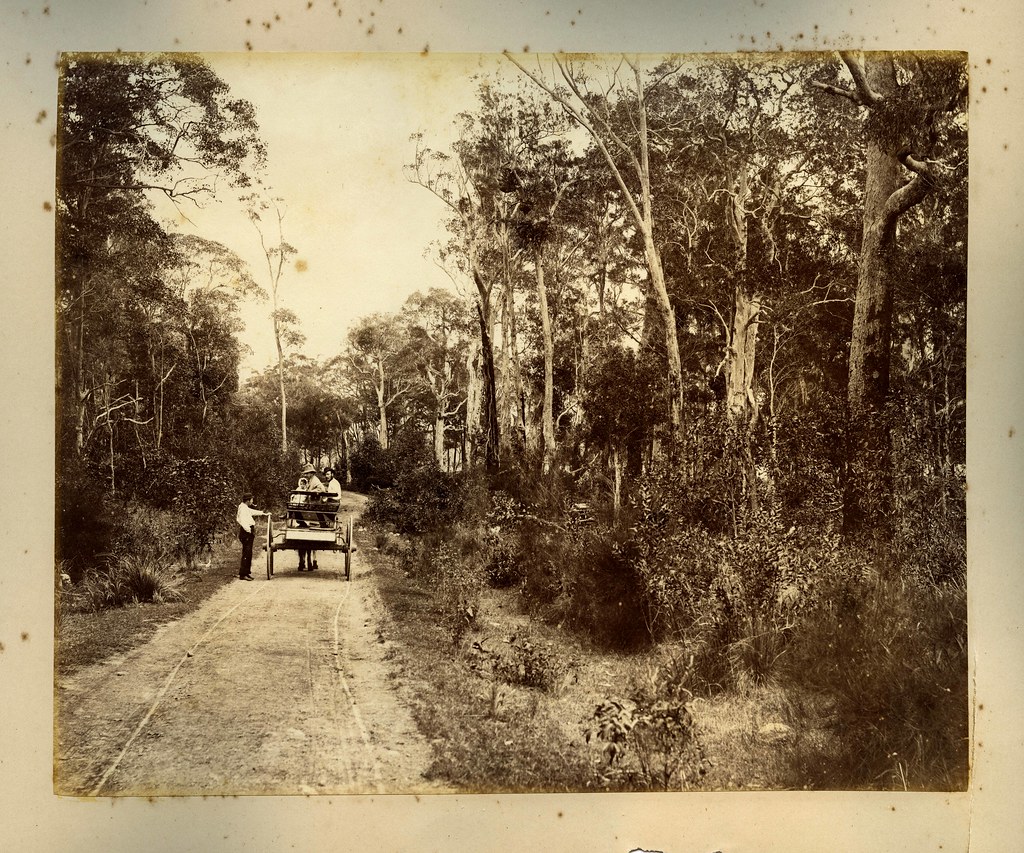
“Horse and Buggy on a Bush Track” by Blue Mountains Library, Local Studies is licensed under openverse from WordPress.org
Potcake Poet’s Choice: Michael R. Burch, ‘Epitaph for a Palestinian Child’

I lived as best I could, and then I died.
Be careful where you step: the grave is wide.

Michael R. Burch writes: “This original epigram once returned over 90,000 results for its second line and still returned over 4,200 results the last time I checked. The epigram began as “Epitaph for a Child of the Holocaust” and was set to music by Sloane Simon after the Pittsburgh synagogue shooting.

It has been published by Romantics Quarterly, Poetry Super Highway, Mindful of Poetry, Poets for Humanity, The New Formalist, Angle, Daily Kos, Katutura English (Namibia), Genocide Awareness, Darfur Awareness Shabbat, Viewing Genocide in Sudan, Setu (India), Brief Poems, Better Than Starbucks and ArtVilla; also translated into Romanian by Petru Dimofte, into Turkish by Nurgül Yayman, into Czech by Z J Pinkava, into Indonesian by A. J. Anwar.”

Michael R. Burch has over 6,000 publications, including poems that have gone viral. His poems have been translated into fourteen languages, incorporated into three plays and two operas, and set to music by seventeen composers. He also edits TheHyperTexts.

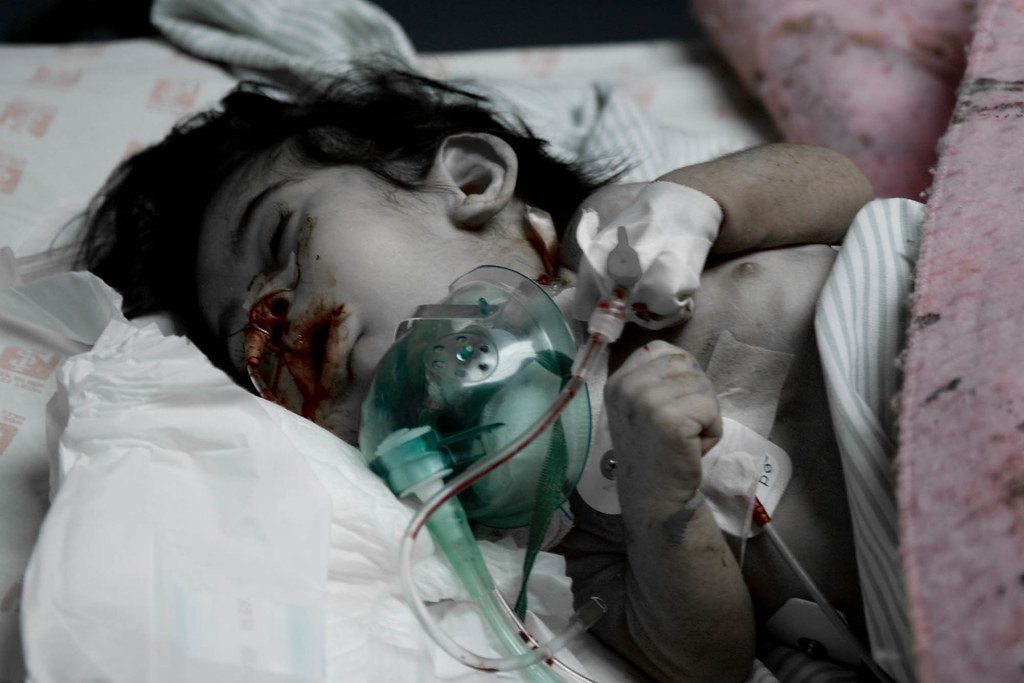
“ICU child Shifa hospital, Gaza” by Kashklick is licensed under CC BY-NC 2.0

Poem: ‘God Modernises’

We sealed Joe’s body in its envelope
for dropping in the mail slot in the ground,
addressed to God. But the Recording Angel
coughed, said, “God has an online work-around,
so doesn’t take them like that any more.”
How email Joe to God, to bless or damn?
Cremation goes to Heaven… but, knowing Him,
souls just end up in limbo, marked as spam.

Another strange little poem; who knows where they come from, or why? Where they go is more knowable: to whoever is most likely to accept them! In this case, The Road Not Taken–a journal of formal poetry. Thank you for tolerating my morbid flippancy, Dr. Kathryn Jacobs!

I think we have all lost friends and family during the pandemic. The good news now is that vaccines are so widely available. We still have a “pandemic of the unvaccinated”, and the sooner those people come to their senses, the sooner everyone can focus on the other major issues: climate catastrophe and corrupt demagoguery. (But it’s still a beautiful world!)

“capper or beginning? (crematorium Zuerich/Schweiz)” by SphotoE is licensed under CC BY 2.0

Short poem: ‘Life Extension’

Religion leers
“Join me, or you face death”
And History jeers
“Inevitable death”,
But Science still adheres
To schemes to postpone death…
The path of a 1000 years
Starts with a single breath.

It’s interesting to speculate how long it will take before humans can start regenerating enough key pieces of our ageing and failing bodies that we can uncap our lifespan. A matter of decades rather than centuries, I think–but not soon enough for me, I fear.

The last sentence of the poem riffs on the Chinese saying attributed to Lao Tzu (also rendered as Laozi and Lao-Tze) that “The journey of a thousand miles starts with a single step.”

The poem was originally published in Bewildering Stories, a weekly of speculative writing of all types, edited by a multinational team but headquartered in Guelph, Ontario.

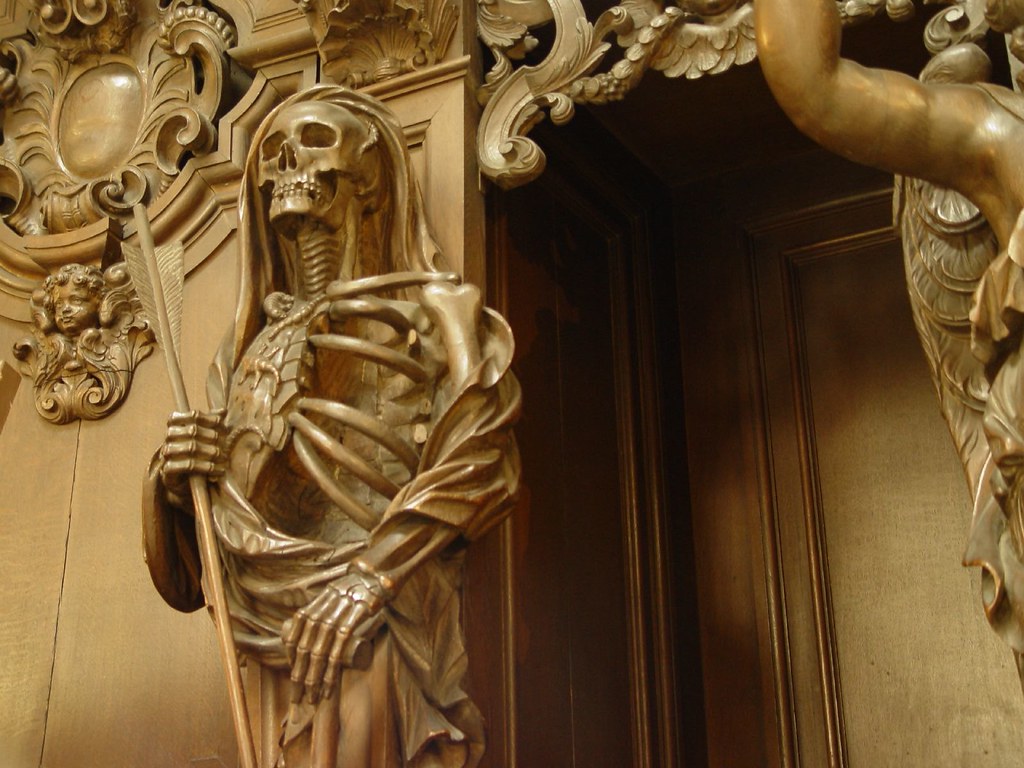
Photo: “Death” by Andrea Kirkby is licensed under CC BY-NC 2.0

Poem: ‘Ex-Rover’

I was a rover, footloose treasure-trover,
Bahamian, Brit, Dane, Aussie, Canadian,
Easily settling, never for very long,
Followed the sun and the moon with a song.

Now roving is over, Death’s raving and raging,
The threatening madman, waving a knife.
Even my babies have babies, are ageing –
Aren’t there any more decades left in my life?

I was a rover – no grass
Grew under my feet as I’d pass.
Now grass grows and I cut it.
And it grows, and I cut it.
I was wired, now I’m tired;
Fired up, now I’m mired.
And the grass grows again… I give up.

Let me sleep in the sun, and sleep slow.
Let me sleep deep.
When was that rover me?
Let the grass grow.
Let the moon be the stone over me.

This poem has just been published in The Orchards Poetry Journal, where it immediately follows the poem I posted here a couple of days ago, ‘Roughing It In Europe‘. It makes a nice, somewhat sardonic, pairing. Appropriately, this one was written several years after the more enthusiastic earlier one. (From the Orchards link above you can download the Journal as a pdf for free, or buy the very lovely finished product.)

‘Ex-Rover’ is one of those poems that stretches the meaning of the word “formal”. But it has enough rhythm and rhyme to make it relatively easy to learn word for word, and that is a lot of the point of poetry in any language. I feel barely any shame in putting it into the world in this ragged form. The ragged form suits the mood of the piece, after all.

“wanderer” by Cornelia Kopp is licensed under CC BY 2.0

Short Poem: ‘Chronosynclastic’

In the chronosynclastic infundibulum
That is God’s fantastic waiting room,
You’re always barely on the score,
One show away from being shown the door.

“God’s waiting room” normally applies to places considered to have a large population of retirees, like Eastbourne in the UK, or Victoria, BC, or the state of Florida. But we are all mortal, and all facing an end at an unknown time. So Kurt Vonnegut’s dark existential humour seems universally applicable. He created the term ‘chrono-synclastic infundibulum’ in ‘The Sirens of Titan’ as a label for a place, or a moment, where all the different kinds of truths fit together, and where there are many different ways to be absolutely right about everything.

Take the concept of ‘God’. Though we can all agree on the meaning and validity of “God’s waiting room”, we may disagree vehemently on the meaning and validity of the word “God”. Can there be a place in which all the understandings of that word are simultaneously correct? Perhaps. We are only tiny-brained creatures in an obscure solar system in an unimportant galaxy, and can hardly presume to know all the answers, any more than any of our stone age ancestors did when they thought they knew everything.

Anyway, my poem (first published in Lighten-Up Online) pays homage to the author of ‘The Sirens of Titan’, ‘Cat’s Cradle’, ‘Slaughterhouse Five’… I put Kurt Vonnegut right up there with Tolstoy in the ranking of People Who Should Have Won A Nobel Prize But Didn’t.

So it goes.

Photo: “The Chronosynclastic Infundibulum – Front Elevation” by Fulla T is licensed under CC BY-NC 2.0

Potcake Poet’s Choice: Kate Bernadette Benedict, ‘The Sureties’

Some things you can still rely on.
Forsythia hedges contribute their usual yellow;
Callery pears exhibit their annual white.
The vernal light is cast as it was cast last year—
Cimmerian, then milky, then bright.
Tulips accrue, woodpeckers adhere
to their nourishing boles, a piccolo.
sounds in the park. Lovers have new grass to lie on.

Some things you can still depend on.
I buried my mother today in the family plot.
Her ashes were housed inside a simple casket—
an easy-to-carry container with little heft,
light as an already plundered Easter basket
when only a couple of elegant eggs are left.
I’d been there before; I’d stood on the very spot.
I’m accustomed to the conditions that lives end on.

Kate Bernadette Benedict writes: “Sureties are few in life yet I feel sure that many of us today are going through our daily motions in an elegiac mood—because of the pandemic, of course, and the illness and deaths we learn of on the news and experience in our lives. Last spring (2020), we were all in a panic and this spring we are, perhaps, inured to loss, at least to some degree. So I feel this poem about spring and death fits my mood perfectly, and perhaps the mood of you, the reader, too.”

Kate Bernadette Benedict may have lost a portion of herself when she took on her pen name; still, she has grown accustomed to its saintly qualities which represent, she well knows, an unattainable goal. She is the author of three full-length collections, the most recent being Earthly Use: New and Selected Poems. Kate has been holed up for a year in her apartment in Riverdale, the Bronx, but is now twice-jabbed and hopes to be re-materializing very soon. Her website suffered a crash but some content is still readable at katebenedict.com, where links to three formal-friendly publications may be found: Umbrella, Bumbershoot, and Tilt-a-Whirl.