Tag Archives: dreams

Short poem: RHL, ‘Clearing the Cache’

At night we dream to clean our memory,
discard trash from our cache.
Reincarnating after death would be the same;
the past, scraped by death’s emery,
unknown in the new game,
cleansed of our memories, but with a stash
of added skills…
and karma’s unpaid bills.

*****

No, I don’t believe in reincarnation. I don’t believe in anything, or in nothing; I’m an absolute agnostic. “I think therefore I am” is as far as you can go with any certainty – even “who or what I am” is ultimately unknown.

‘Clearing the Cache’ was published in Bewildering Stories. Thanks, Don Webb (if you exist, of course…)

Glitch 183” by mikrosopht [deleted] is licensed under CC BY 2.0.

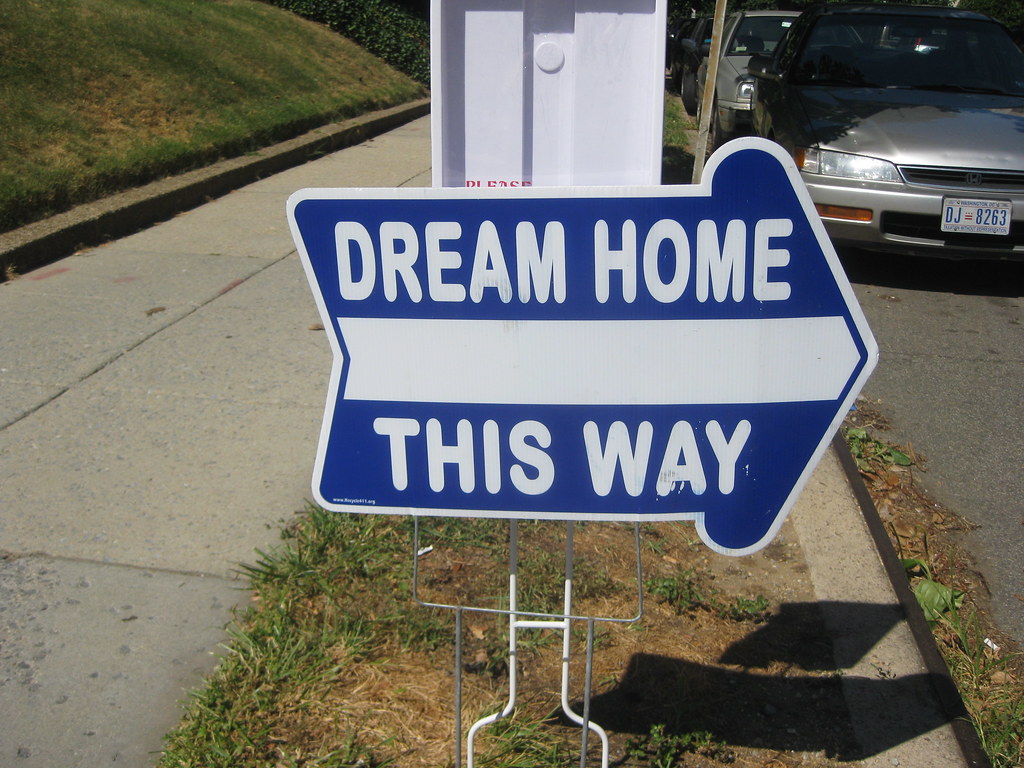
Using form: Rondeau: Jean L. Kreiling, ‘At the Realtor’s Office’

dream home sign

They’re selling dreams, they like to say;
their storefront photographs display
the pricey, well-staged fantasies
they call rare opportunities
and gems. They hope you’ll overpay

for your townhouse, ranch, or chalet,
your great investment, your doorway
to debt. You’re lured in by degrees:
they’re selling dreams

of closet space, kitchens (gourmet!),
and pride. Why shouldn’t wants outweigh
misgivings and realities?
The realtors ply their expertise,
and you’re an easy mark to sway—
they’re selling dreams.

*****

Jean L. Kreiling writes: “The rondeau form seemed appropriate for suggesting a realtor’s technique—that insistent commitment to your purchase, both nerve-wrackingly relentless and, somehow, appealing.”

‘At the Realtor’s Office’ was first published in the Crab Orchard Review, and collected in her new book, Home and Away  (Kelsay Books, 2025)

Jean L. Kreiling is the author of three collections of poems, with another forthcoming soon from Able Muse Press. Her work has been awarded the Kim Bridgford Memorial Sonnet Prize, the Rhina Espaillat Poetry Prize, and the Frost Farm Prize, among other honors. An Associate Poetry Editor for Able Muse: A Review of Poetry, Prose & Art, she lives on the coast of Massachusetts.

Photo: “Dream home” by futureatlas.com is licensed under CC BY 2.0.

Ballade variant: Johnny Longfellow, ‘Like Normal People Do’


Ya’ ever wanna go someplace?
I mean…jus’ disappear.
Leave ev’rythin’. But, leave no trace.
Git your ass out o’ here
To somewhere – could be far or near –
Where you’re no longer you.
Where you can dwell, year after year,
Like normal people do.

Ya’ ever stare at your own face
But still can’t see it clear? –
Ya’ struggle hard jus’ keepin’ pace,
While neighbors, they all steer
‘Tween college, marriage, an’ career,
‘Til – somehow coastin’ through –
They barbeque, an’ drink col’ beer
Like normal people do…

Ya’ ever think they won that race,
But still, fall prey to fear
Them dreams ‘n’ rainbows they all chase,
Once gone, won’t reappear?
Or, do they jus’ choke back each tear
As one beer turns to two,
Findin’ it’s Hell to persevere
Like normal people do?

Ya’ see? You ain’t the first to veer
Off course. That much is true.
Or, last to lose all you hol’ dear
Like normal people do.

*****

First published in The Rotary Dial, Issue 34, December 2015 – best dial poems of 2015

Johnny Longfellow writes: “I’ve discussed the personal circumstances that partially inspired this poem in interviews at the Talk with Me podcast and at the now defunct Sonnetarium, both of which can be linked to in the bio below. So, I’ll just note here, the poem was written roughly six months after a heavy bout of depression. During said bout, I inadvertently stumbled upon The Geographies of Missing People website, hosted by Glasgow University, wherein I took special interest in their Stories of Missing Experience page. Listening to those mashed-up accounts of people who’d elected to go voluntarily missing was profoundly helpful to me during a dark period in my life. With that, I can only recommend to anyone going through a similar period in their own lives that they consider listening to those accounts. For, I can confidently say they helped inspire in me more than just a poem.”

Johnny Longfellow is a poet from Massachusetts. His work has appeared in The Five-Two, The Literary Hatchet, Misery Tourism, Punk Noir, and other fine literary venues, with more work forthcoming in Form in Formless Times. You can learn more about both him and his poetry at Heeeeeeere’s Johnny . . . Longfellow, that is.   

Photo: “Missing Persons” by ChiralJon is licensed under CC BY 2.0.

Stephen Kampa, ‘Someone Else’s Gift’

Always to long for someone else’s gift—
To blow that blistering alto sax, to lift
Into the flash-bulbed air

For a reverse slam dunk while stunned guards gawk,
To have a punster’s cheek or porn star’s cock,
To capture, share by share,

Gold-plated Wall Street fame, to meditate
Beyond nirvanic depths or radiate
Beatitudes of prayer

Like any frescoed saint, even to make
A perfect triple-decker dark-fudge cake
Or master the éclair—

Means answering a roguish shout we follow
Down some smashed-bottle alley to a hollow
Recess, a doorway, where

If luck has tailed us on that lonely walk,
When we knock, because we have to knock,
No one will be there.

*****

‘Someone Else’s Gift’ was first published in Literary Matters, and then in Best American Poetry 2024. As I was unable to capture the original indentation, I have taken the liberty of introducing line spaces as an alternative way of clarifying the structure; it will sound the same when read aloud… – RHL

Stephen Kampa has three books of poems: Cracks in the Invisible (Ohio University Press, 2011), Bachelor Pad (Waywiser Press, 2014), Articulate as Rain (Waywiser Press, 2018), and World Too Loud to Hear (Able Muse Press, 2023). He teaches at Flagler College in St. Augustine, FL and works as a musician.

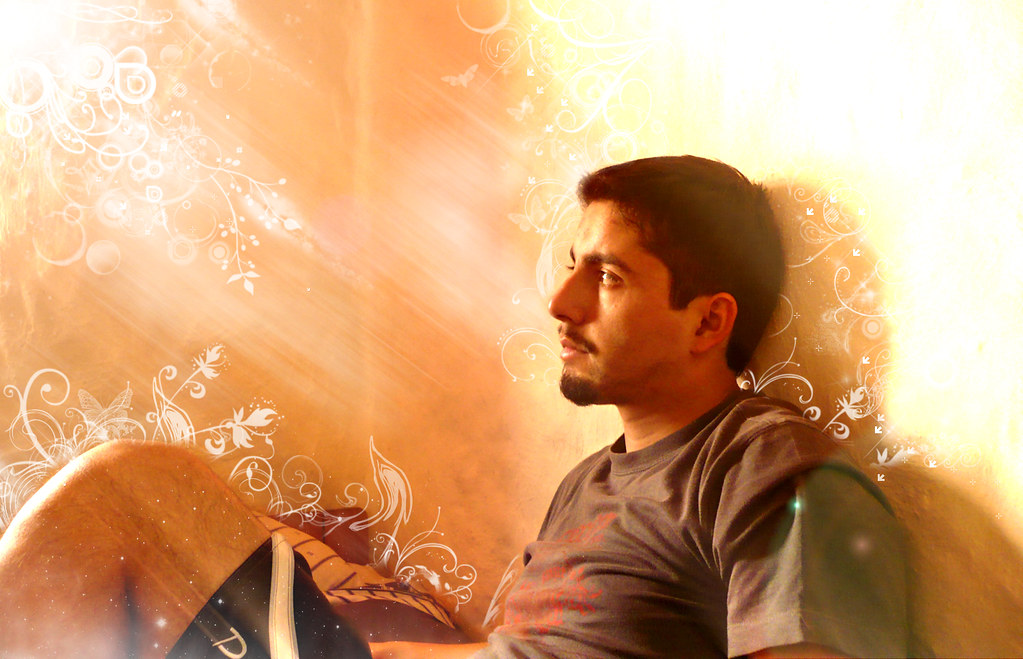
Photos: “Dreams” by яғ ★ design is licensed under CC BY-NC 2.0.
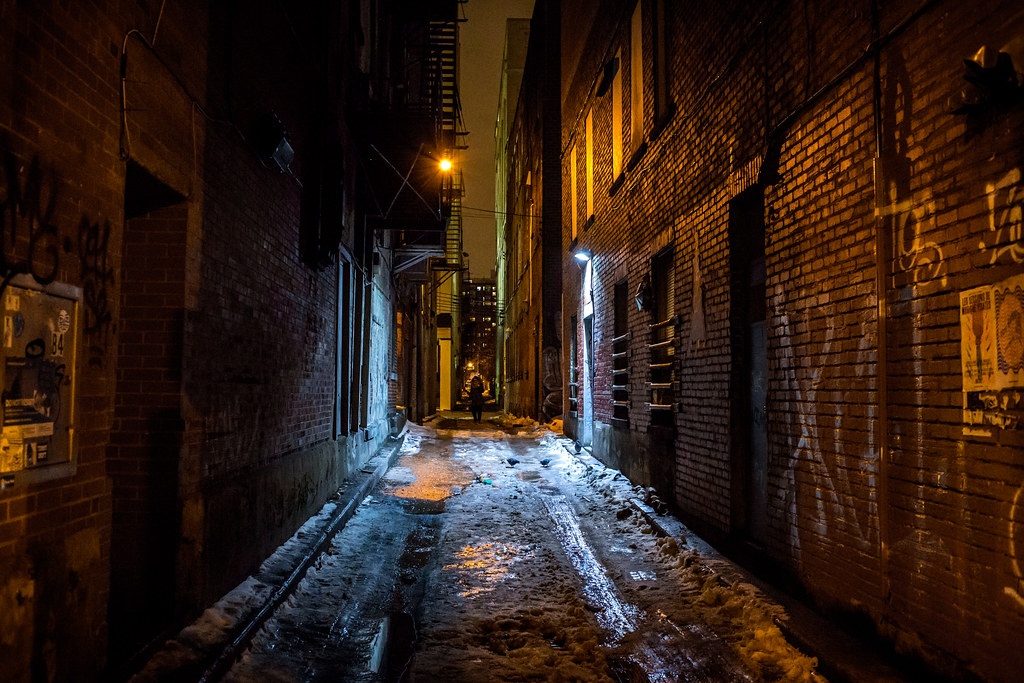
Dark Alley #2 [Explored]” by _Franck Michel_ is licensed under CC BY 2.0.

Sonnet: Richard Fleming, ‘Sunny Afternoon’

Book discarded, like excess baggage shed
by someone who has rapidly pushed on
into uncharted regions far ahead,
he sleeps in an old deck chair on the lawn.
Gulls circle, skaters on an ice-blue lake,
while he dreams on, oblivious, his face
unshaded by a hat which, when awake,
he wears with equanimity and grace.
What does he dream? Is the unreal more real
than those pale gulls that spiral high above?
In sleep, has youth returned? No longer frail,
does he relive time when impatient love
was everything and all his heart desired,
before life tricked him, left him old and tired?

*****

Richard Fleming writes: “I suppose Sunny Afternoon reflects my own station in life, that is, drifting steadily towards the end, with the usual collection of regrets that most of us have.”

Richard Fleming is an Irish-born poet (and humorist) currently living in Guernsey, a small island midway between Britain and France. His work has appeared in various magazines, most recently Snakeskin, Bewildering Stories, Lighten Up Online, the Taj Mahal Review and the Potcake Chapbook ‘Lost Love’, and has been broadcast on BBC radio. He has performed at several literary festivals and his latest collection of verse, Stone Witness, features the titular poem commissioned by the BBC for National Poetry Day. He writes in various genres and can be found at www.redhandwriter.blogspot.com or Facebook https://www.facebook.com/richard.fleming.92102564/

Photo: posted by Richard Fleming

Weekend read: Maryann Corbett, ‘An Orientation’

If, in the midst of this elated day,
someone took him aside with the stern warning,
Most of your life will not be like this morning,
he’d never hear it. How–while fountains play
beside clipped lawns and walkways arched with green
maples that move to stipple white and gold
on paths he and his harried parents have strolled
laden for move-in–how could he hear? He’s seen
Arcadia now, where classical facades
put a straight face on tanglements of thought,
and edgy spears of light and color, wrought
in steel and glass, look daggers at the gods.

The whole week’s strewn with glittering temptations
and parti-colored parties for the eyes:
gown-sleeves aflap like tropical butterflies,
professors float along in convocations.
Some one of them, someday, and over a drink,
will show him grittier visions: Rumor. Snark.
Administrative bloat. Nowhere to park.
How only summers bless you with time to think.
How even the mind’s beauties fester, vexed
by deadlines, balky software, budget hassle.
How research builds its turreted air-castle,
gorgeous for one day, rubble on the next.

But here, today, does anybody give
a bleep for realness? Let us cleave to form,
leaving him to his roommate and his dorm
and whispering, Here’s the poison. Drink and live.

*****

Maryann Corbett writes: “A few years ago, I happened to be on the campus of a nearby university on move-in day during freshman orientation week. It was an experience that gave me poem-provoking nostalgia.
“Orientation week is an institution I know well; I’ve lived my own college orientation and each of my children’s, and I’ve worked as a university staffer conducting such events. Freshman orientations usually take place in the week before classes begin in the fall and before other students return to campus. They’re meant to give new students everything they need to settle in and become part of the university community.
“But in addition to practicalities like moving young people into their dormitories — and dealing with parents’ emotional goodbyes — orientations will always involve hype and hoopla. Beautiful campuses are part of that hoopla, part of the seduction of academe. There will also be welcoming events that overpraise what students have achieved just by being admitted, tours that overpraise the campus’s buildings and amenities, and academic convocations with professors in full regalia delivering speeches that overpraise everything about the academic world.
“How true is all this as a picture of the scholarly life? I’ve been close enough to the facts of that life to know that the picture needs some correcting pessimism. The poem offers that but says it can wait. Let’s let the students fall in love with the vision before we tell them the truth.”

Maryann Corbett earned a doctorate in English from the University of Minnesota in 1981 and expected to be teaching Beowulf and Chaucer and the history of the English language. Instead, she spent almost thirty-five years working for the Office of the Revisor of Statutes of the Minnesota Legislature, helping attorneys to write in plain English and coordinating the creation of finding aids for the law. She returned to writing poetry after thirty years away from the craft in 2005 and is now the author of two chapbooks and six full-length collections, most recently The O in the Air (Franciscan U. Press, 2023). Her work has won the Willis Barnstone Translation Prize and the Richard Wilbur Award, has appeared in many journals on both sides of the Atlantic, and is included in anthologies like Measure for Measure: An Anthology of Poetic Meters and The Best American Poetry. ‘An Orientation’ is from her collection In Code.

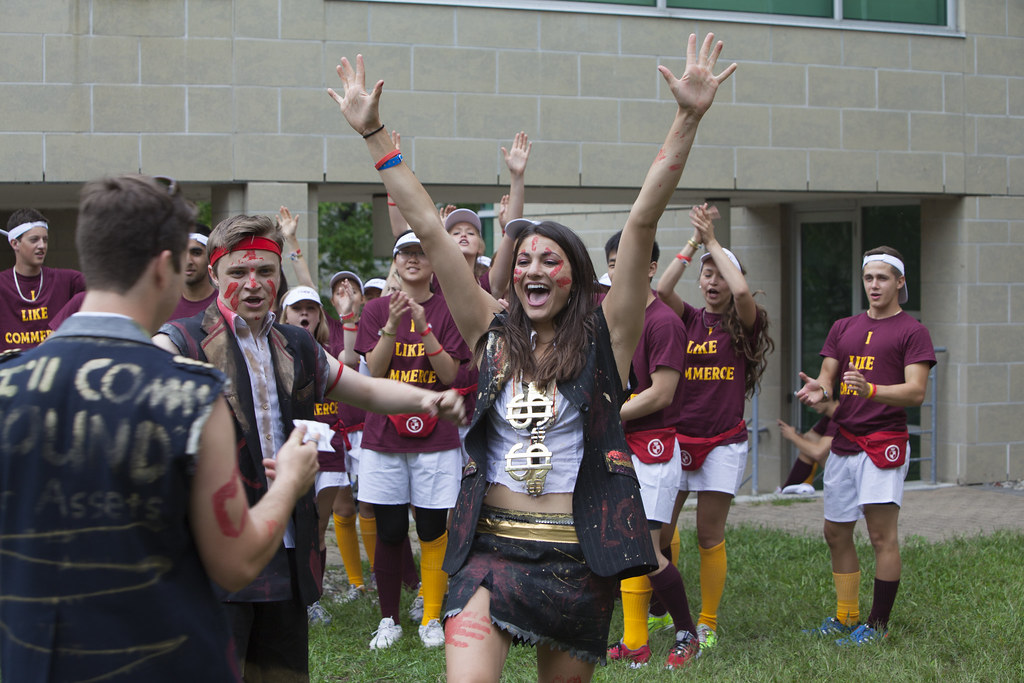
Photo: “Orientation week” by queensu is licensed under CC BY-NC-ND 2.0.

Amit Majmudar, ‘Nocturne’

“A healthy man can expect to get hard three to five times per night….Doctors call these erections while you sleep “nocturnal penile tumescence.” — Men’s Health

Why do they happen at all, much less
five times a futile night—
nested, within the circadian, their
sprung rhythm of delight?

Unless delight misreads the message.
Unless they choke and strain
against their loneliness like starved
Rottweilers on a chain.

Who visits in the witching hour
as REM begins
and slides her darkling mouth around
his hardening and grins?

Lascivious sylph or cocktease yakshi
or ex from some past life,
coaxing a husband into sin
at arm’s length from his wife.

Or else someone that when awake
he would not dare to daydream,
verboten body, evanescent
pelvis figure-eighting,

or maybe all his fantasies
since age twelve coalesce,
voluptuous ghosts that flash him their
aurora borealis.

A hundred mayflies in his blood
take wing at once above
the hushed and shingled houses, seeking
the ones they shied to love,

desperately swooping down and left,
back up, around, and right,
a minute to mate, then drift and fade
on a humid summer’s night.

*****

Editor’s note: I see this poem, which was first published in Only Poems, as existing where one’s various worlds overlap: the body, the mind, work (Amit Majmudar is a medical doctor), family… Amit Majmudar wisely provides no comment on his poem.

Amit Majmudar is a poet, novelist, essayist, translator, and the former first Poet Laureate of Ohio. He works as a diagnostic and nuclear radiologist and lives in Westerville, Ohio, with his wife and three children. He is the author of twenty books so far in a variety of categories, with different bodies of work published in the United States and in India.
His poetry collections include 0’, 0’ (Northwestern, 2009), shortlisted for the Norma Faber First Book Award, and Heaven and Earth (2011, Storyline Press), which won the Donald Justice Prize. These volumes were followed by Dothead (Knopf, 2016) and What He Did in Solitary (Knopf, 2020). His poems have won the Pushcart Prize and have appeared in the Norton Introduction to LiteratureThe New Yorker, and numerous Best American Poetry anthologies as well as journals and magazines across the United States, UK, India, and Australia. Majmudar also edited, at Knopf’s invitation, a political poetry anthology entitled Resistance, Rebellion, Life: 50 Poems Now.
One of Majmudar’s forthcoming volumes is a hybrid of prose, drama, and poetry, entitled Three Metamorphoses (Orison Books, 2024). A new poetry collection is forthcoming from Knopf in 2026.

For links to Majmudar’s Nonfiction, Fiction, Mythology and Translations, please see his website.

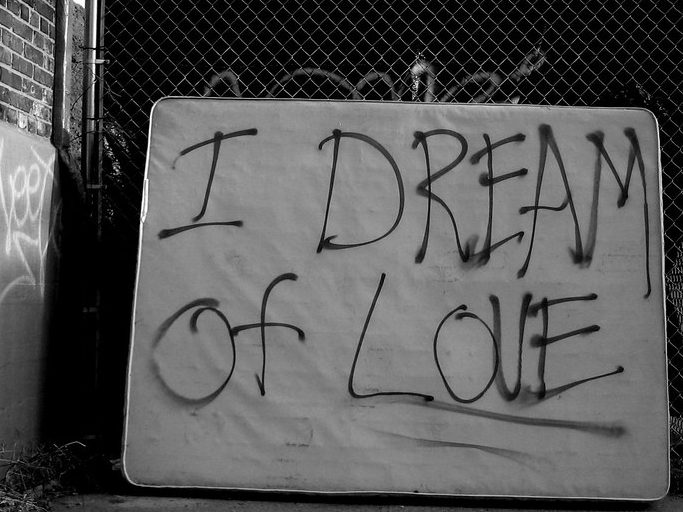
Photo: “I Dream Of Love” by toddwshaffer is licensed under CC BY-NC-ND 2.0.
Short poem: ‘Avalanche’

I wandered nowhere special in my past,
just drifted, looking, lonelyish, half-arsed.
Nor in my present is there brilliant light–
I drift, doze, dream, enjoy the day and night.
What then will help me through a magic door?
Sensing the future’s avalanche downroar.

*****

This was published a couple of months ago in Snakeskin. Thanks, George Simmers!

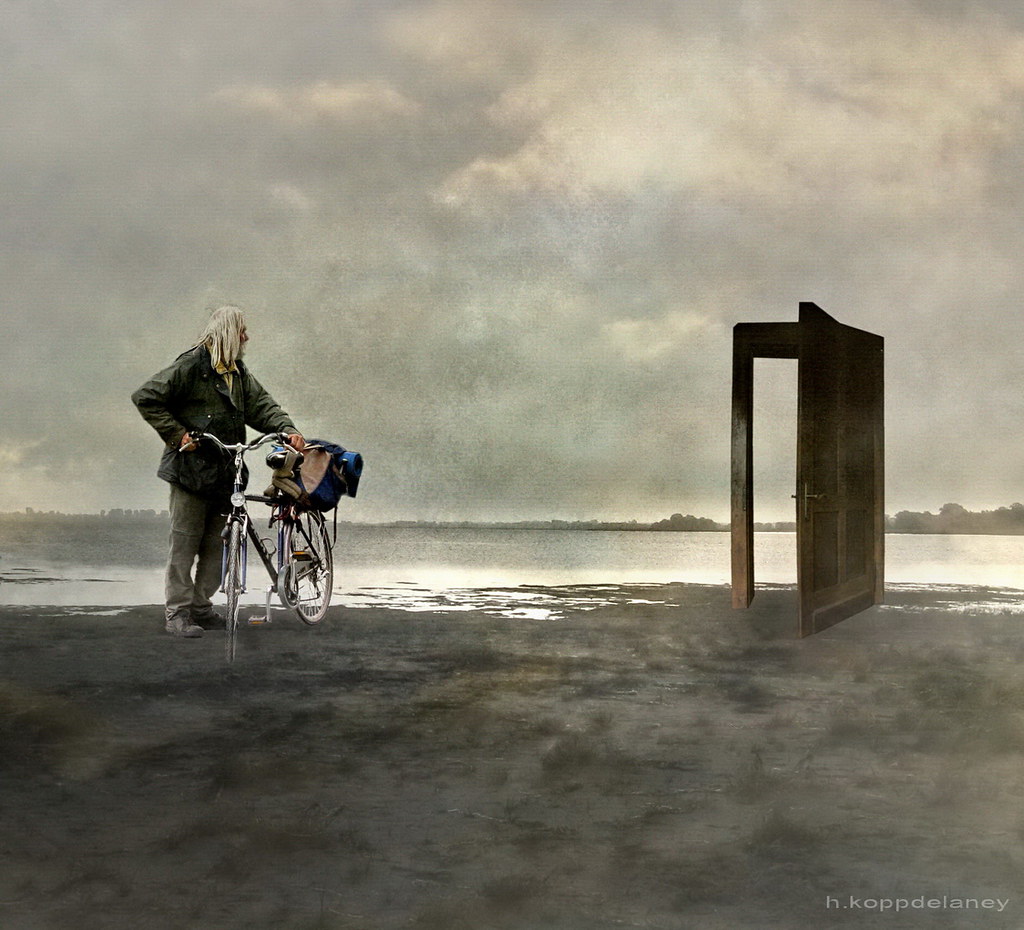
The Magic Door” by h.koppdelaney is licensed under CC BY-ND 2.0.

Sonnet: ‘The Arrogance of Youth’

How fortunate the arrogance of youth—
the optimism and innumeracy,
lack of experience, perspective, truth—
giving hopes, visions that they’d never see
if they but knew the small chance of success
in major league politics, business, sports.
Most fail, adopt some wage-slave form of dress
that not dreams, but a family, supports.

Without those early dreams, with a clear view
of stats on making it in the Big Time,
they’d all give up, seeing how very few
truly succeed. Then we’d miss those sublime
insane few dreamers who can win their race,
make the discoveries, blast into space.

*****

This Shakespearean sonnet has just been published in Shot Glass Journal – thanks, Mary-Jane Grandinetti!

Photo: “Arrogance” by De kleine rode kater is licensed under CC BY-NC-ND 2.0.

Odd poem: ‘We Dance For Laughter’ by Albert Einstein

We dance for laughter,
we dance for tears,
we dance for madness,
we dance for fears,
we dance for hopes,
we dance for screams,
we are the dancers,
we create the dreams.

*****

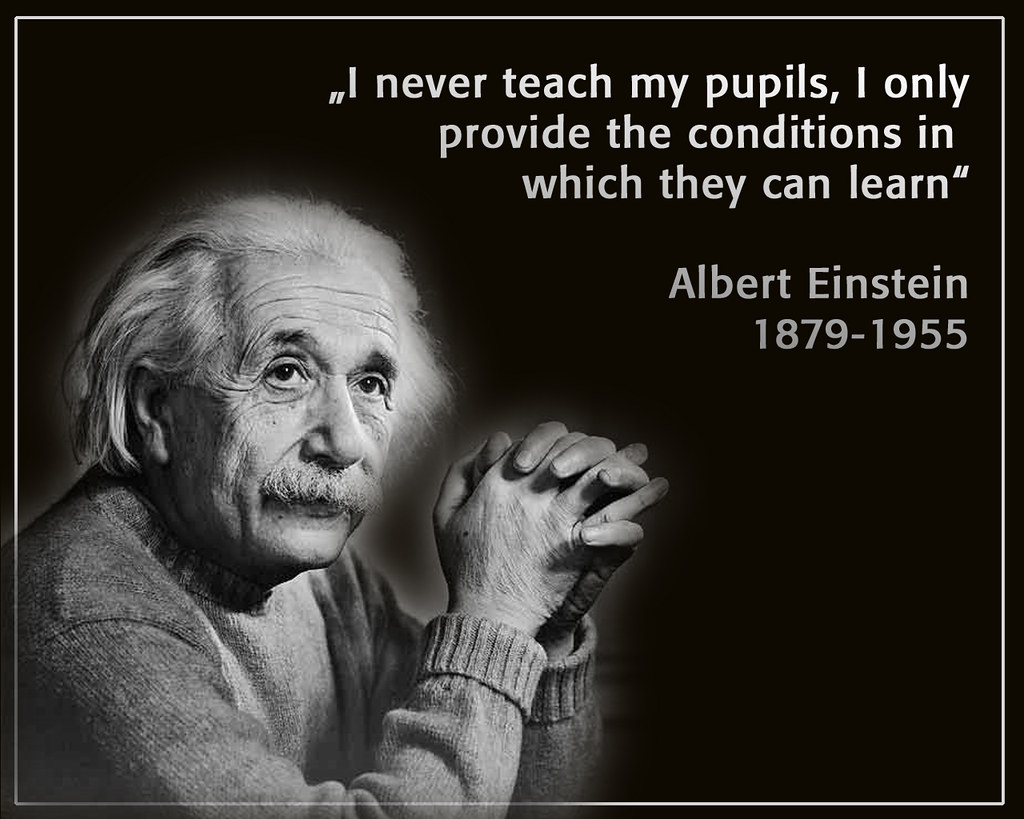
I can’t find anyone other than Einstein credited with this verse, but I also can’t find the source for it. Regardless, Einstein had an appropriate attitude for studying the universe: look at it and ourselves in the spirit of dance, learning, dreaming and creativity.

Photo: “Aðstæður til náms” by sfjalar is licensed under CC BY 2.0.