Tag Archives: formal verse

Review: “Aniara” by Harry Martinson

Aniara has fascinated me for a long time because it combines three of my favourite literary interests: science fiction, poetry, and the works of Nobel Prizewinners.

Harry Martinson wrote the book in the 1950s, a decade after the bombing of Hiroshima and Nagasaki but before Sputnik launched the Space Age. It is the story of mass migration to Mars from the destroyed Earth, centred on a miles-long spaceship with thousands of emigrants that is knocked off course and is headed out of the solar system on a hopeless journey.

The existentialism of the situation – living lives of no destination in an inescapable vessel – is in practical terms no different from our own endless circling of the Sun… The issues of whether this feels different, and whether it should feel different, are never addressed but resonated with me nevertheless.

The characters are diverse and interesting. With the book having been written by a male, and with the narrator having a variety of sexual relationships with women, I was surprised to find that the recent film version has a female protagonist. Well, why not make it into a lesbian sf movie, though?

The book is divided into 103 ‘songs’ of half a page to seven pages in length – only 102 in the English translation by Hugh MacDiarmid and Elspeth Harley Schubert, as they and the author agreed that Song 42 is untranslatable.

This raises the question of what the verse is like in the original Swedish. A mixture of formal and free verse, apparently, but with much more rhyme and structure than in the translation. (That the translation is weaker is natural enough, but unfortunate). While I wait to find a full copy in Swedish (which I will be able to work my through, with the English translation in my other hand), I am glad to have found a Swede’s Goodreads review in English which gives samples of the poetry in both languages. (Thank you, Lisa!) For example:

“Försök till räddning genom tankeflykt
och överglidningar från dröm till dröm
blev ofta vår metod.
Med ena benet dränkt i känslosvall
det andra med sitt stöd i känslodöd
vi ofta stod.
Jag frågade mig själv men glömde svara.
Jag drömde mig ett liv men glömde vara.
Jag reste alltet runt men glömde fara. –
Ty jag satt fånge här i Aniara.”

In the MacDiarmid/Schubert translation:

“Attempts at respite through the flight of thought
and constant transference from dream to dream
was often our method of seeking relief.
With one leg steeped in a flood of feeling
and one supported by a lack of feeling
we often stood.
I questioned myself but quite forgot to answer.
I dreamt of life but quite forgot to live.
I ranged the universe–but could not travel farther
for I was imprisoned here, in Aniara.”

The MacDiarmid/Schubert translation is not great, as shown in this excerpt. Not only is there a general lack of rhyme, but the second-to-last line would translate correctly as “I traveled all around but forgot about danger”. The only justification for changing the meaning is to make the (very weak) rhyme of “farther” with “Aniara”.

But then again, translating poetry into a different language’s poetry is at least as difficult as translating a written story into a film… so, as for this translation: I’ll give it five (out of ten, for the try). But the original? From what I can see and guess, ten out of ten!

Poem: “Head of the Table”

Your grandparents die
And your children are born;
Then your parents die
Then grandchildren are born;
And you move one more seat
Round the mad table
To the head of the table,
At which point you’re expected to go.

As when the crow came
Wild, not tame – all the same
It cawed you the news
That confirmed death and time;
So when your time comes
And you feel in your bones
That the body is over
Where will you, the guest, go?

Then bring food and drink!
Glasses clink! Glance and wink
As you move to the brink
Of eternity.
Who knows what follows next?
“Afterlife” is absurd –
But then all life’s absurd –
We just know, when it’s time, that we go.

This is about as religious as I’ve found myself in the past 30 or 40 years – in other words, I waver between mild atheism (“None of this God stuff makes sense”) and militant agnosticism (“I don’t know, and neither do you.”) But at least you have a seat at the table! Enjoy the party while you can (preferably while being pleasant to others).

Originally published in Snakeskin No. 232 (or #232).

Poem: “Post-literacy”

Yes, I know it seems unlikely
but I simply can’t help feeling
there’s an urgency to writing:
and in verse, and fluently.

We’ve our cultural traditions
that have coevolved with language
and each language has its verse forms
that are aids to memory.

It’s all fine that we are moving
to post-literate existence
where the things all talk and tell you
everything you need, you must

when the neon signs and fridges
can discuss with you their content,
you don’t need to read or count, if
their integrity you trust.

But embedded in our braincells
are the patterns of our language
and our need to think in patterns
drives our songs, makes us a folk,

it gives dub and rap and hip hop,
it drives rhetoric in speeches,
and the false anticipation
of the punchline of a joke.

With our cultures integrating
with AI and with each other,
we risk losing all our history,
all our culture and, what’s worse,

Our minds! So sing to babies,
have kids memorise long poems,
learn the maths of songs and music –
learn and read and write in verse!

This poem, recently published in Bewildering Stories, speaks to the heart of the matters that this blog deals with. Songs and music, rhyme and rhythm, dance, melodies, alliteration and assonance, structures and patterns and verses and choruses, are all part of something that is deeply human. It starts for us with the heartbeat in the womb, is nurtured with lullabyes and rocking, carries on through the songs and music and dance that are important to every generation of teenagers. It is such a fundamental part of our humanity that educational systems that ignore it are ignoring a powerful natural teaching tool.

The issue is larger than the fact that learning verse by heart is easier than learning prose by heart. Larger than the benefits of developing the ability to remember and memorise accurately. It is about recognising and nurturing those inner forces that make us human. It is about not letting our humanity be eroded by a culture that doesn’t acknowledge the rhythms that permeate our lives.

This blog is about the value of formal verse. Part of that value is poetry’s contribution to the sanity that comes from being a complete human being.

Technically this poem’s lines could be described as iambic tetrameter, which each fourth line being truncated and rhymed. But I prefer to read it almost as a patter song with each line composed of two tertius paeons, Short-foot-meter.svg Short-foot-meter.svg Long-foot-meter.svg Short-foot-meter.svg (each fourth line still being truncated and rhymed). In other words, it is designed to have the third and seventh syllables in each line be the ones with the greatest stress or emphasis. And that includes the rhymes, naturally.

Poem: “Rubble Faced”


Because my mind and life’s so active
my face has been reduced to rubble.
I’m glad I think I’m unattractive –
it helps to keep me from worse trouble.

The Asses of Parnassus published this as their Valentine’s Day post in 2018. Thanks, Brooke Clark!

As for the truth of the poem, who knows. Maybe it applies to all of us to some extent, as we age?

Poem: “Seasonal”

When Mr. Warm-as-winter-under-the-covers
Meets Cool-as-summer-in-the-evening-breeze
He’ll spring to leave ideas they could be lovers –
But her thoughts fall away like leaves from trees.

First published in Lighten-Up Online.

Poem: “Post-Adult”

Adults — earthworn, careweary,
grave, gravid and gravity-constrained —
take it all so seriously, furiously, fearsome and wearisome,
spuriously furious over the small stuff,
incessantly never having enough,
insensibly insatiable, insensate,
irrational, irascible,
driven by status, riven by expense,
dismissive of all greater age and experience.

How fortunate to age into osteoporosis,
bones lightening like a bird’s as you get older,
the wearying weights lifting off the shoulder,
and you drift up into the sky with your levity,
leaving behind adult cares and gravity,
unattached, detached,
careful but careless, unlatched.

This poem was recently published in Bewildering Stories. But what is it, technically? Does it have any form? It has elements of form–alliteration, assonance, scattered rhyme, the kind of rhythm (in parts) that you find in rap with emphasis on stresses, not on syllables–but none of it is organized, structured, codified, repeated…

I think it could be improved. If I come up with a significant improvement, I’ll switch it out. But there’s always the danger that the later “improvement” loses primal energy for the sake of trying to achieve an intellectual outcome. As with Auden’s poetic progress. But a little more formal structure would be good, I think.

Review: “Selected Poems” by W.H. Auden

Auden

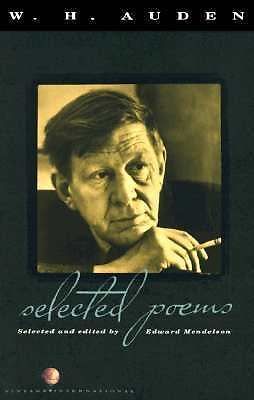
The best of Auden’s poems are so many, so varied, so technically accomplished and so witty that he stands with the greatest poets of the 20th century. My list of favourites includes:

“O where are you going?” said reader to rider
O what is that sound that so thrills the ear
A shilling life will give you all the facts
Look, stranger, at this island now
Miss Gee
As I walked out one evening
In Time of War
Musee des Beaux Arts
In Memory of W.B. Yeats
Law, say the gardeners, is the sun

and what many consider the greatest love-poem of the last 100 years:
“Lay your sleeping head, my love,
Human on my faithless arm”.
There is a universality about Auden’s depiction of relationships, an indeterminate quality that allows his thoughts to be applied to all people. This is in keeping with the fact that he was gay, and writing in a time when homosexuality was illegal. It provides an unexpected strength for his verse.

And yet, and yet… all of those poems listed above were written before he turned 33. He lived to age 66, writing longer and longer works, moving further and further away from traditional verse, and with less of the memorable genius of his youth.

It is therefore somewhat depressing to read these “Selected Poems” because they are set out chronologically, and the writing gets less interesting the further you read. Halfway through the book you run into the poem sequence “The Sea and the Mirror – a commentary on Shakespeare’s The Tempest”, which includes 25 pages of prose crammed with dense imagery and argument. Apparently Auden preferred this prose section, “Caliban to the Audience”, over all his other work. This preference was expressed at the time that he was rewriting the excellent poems of his youth to reflect his newer American, Christian, self-important academic personality. I found it unreadable.

The first edition of “Selected Poems” (selected and edited by Edward Mendelson) contains 100 poems. A more recent edition adds another 20 poems, “broadening its focus to better reflect the enormous wealth of form, rhetoric, tone, and content in Auden’s work. Newly included are such favorites as “Funeral Blues” and other works that represent Auden’s lighter, comic side”.

Unfortunately I only have the 100-poem version. If you buy a copy of this book, make sure it has the 120 poems!

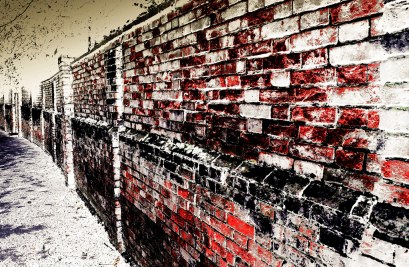
Sonnet: “The Walls of Planet Three”

On this wild planet, in its seas and sand,
forests and ice, lie ruins of perverse
attempts to overrun the universe:
the crumbling walls of failed human command–
Hadrian’s, China’s, Texas, Jerusalem…
fallen, decayed, functionless, desolate,
with scribbled mentions of their fears and hate:
Rivera… Pyramus… Pink Floyd… Berlin…
their stones – cut, mined and blasted – left land bare,
leave plants still struggling over gouge and groove.
Planet-fall’s made, but no one dares remove
their helmet in this dangerous atmosphere.
Infections lurk in water, air and ground–
walls’ poisoned Keep Out signs are all around.

Another of my sonnets that has been first published by Bewildering Stories. Maybe I just write bewildering verse…

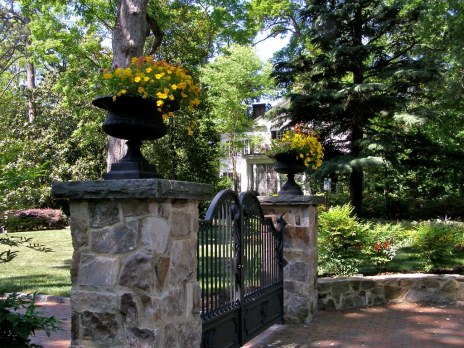
I love walls when they are decorative, walkable, climbable or otherwise friendly. I’ve always loved the low garden walls along Franklin Street in Chapel Hill, North Carolina:

But I dislike the use of walls to destroy the lives of other people, whether Palestinians, refugees or any other unfortunates who are struggling to survive. This poem, of course, is about the destructive walls–not the charming ones. In the far future, which ones will Old Earth be known for?

Sonnet: “Windsor and Oakes, 1943”

Oakes and Windsor

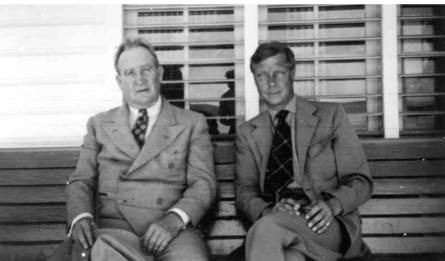
Sir Harry Oakes and the Duke of Windsor in Nassau

Edward, ex-king, pro-Nazi, was sent out
to the Bahamas for the War’s duration.
As Governor of our well-mixed-race nation
he joked with blacks but liked white rule and clout.
The wealthy Bay Street Boys, all white, agreed.
But one combative multimillionaire
felt equal pay for non-whites would be fair.
Canadian Harry Oakes disliked white greed.
Oakes pumped in cash for land, built an airport,
bought a hotel, hired coloured management,
then fought the U.S. Mob’s gambling intent.
Still, Bay Street had the Governor’s support.
Oakes wouldn’t change his mind, and he got killed.
Edward prevented justice. Whites were thrilled.

The 1943 murder in the Bahamas of Sir Harry Oakes–perhaps the richest man in the British Empire–was never legally solved. Having been found bludgeoned to death in his bed, with an attempt having been made to set the bed on fire, foul play might have been suspected immediately. But the top realtor in the Bahamas, Harold Christie (subsequently knighted) who had been sleeping in a guest bedroom two doors down from his host, hadn’t heard a thing and, discovering the body in the morning, tried to revive Oakes by getting him to drink some water.

Harold Christie first called his brother, and next the Duke of Windsor, rather than the police. The Duke of Windsor, being the Governor of the Bahamas, could have called the local police, or local British military forces, or brought in the CID, Britain’s Criminal Investigation Department. Instead he called two Miami detectives he knew (and who in later years were found to have Mafia connections), telling them “he wished to confirm the details of a suicide”. The Americans came, screwed up the crime scene, planted false clues, and then arranged for Oakes’ son-in-law to be charged.

But the evidence against the son-in-law, Alfred de Marigny, was so clearly fraudulent and the evidence against Christie and his brother was so strong that the Police Commissioner at the time refused to charge de Marigny. So the Duke of Windsor had the Police Commissioner transferred to Trinidad until the trial was completed, in order to prevent him from testifying.

One of the mysteries unresolved at the trial was matter of the four triangular holes in Oakes’ skull. Some form of local voodoo was suggested, but no one could think of anything specific that might have caused it. No one suggested it might have been a tool found on every boat in Nassau Harbour…

Oil drum bung wrench

Oil drum plug wrench

After one of the greatest legal defences of the 20th century de Marigny was acquitted and, although innocent and a British citizen, ordered deported. Unsuccessful attempts were made on his life in the next couple of years, as he detailed in his book A Conspiracy of Crowns.

Other books on the murder, two of which were called Who Killed Sir Harry Oakes?, initially failed to point a finger of blame. This was probably wise, as a couple of people who might have discovered unpleasant facts came to violent ends.

In 1950 American lawyer Betty Renner–a former Department of Justice lawyer who had done war crimes work in Japan–came to Nassau to gather evidence about the Oakes murder and speak to a potential informer. She was hit over the head, stripped half-naked, dragged over coral rocks and thrown head-first down a narrow well where she suffocated to death. Tree branches were cut and placed over the well. The autopsy concluded “there was no positive evidence of criminal attack but the possibility was still being investigated.”

In 1962 Dorothy Macksey, a 60-year-old white Bahamian secretary, was raped and murdered in her apartment some months after she told her employer she knew who had killed Oakes and was starting to write a book about it. Although it turned out she had been Harold Christie’s secretary in 1943, the Nassau police quickly determined there was no connection.

Books continue to be written about the Oakes murder. Perhaps the most complete and authoritative so far is John Marquis’ Blood and Fire, but the story is still dribbling out from those (apparently many) people who know the truth.

Oh, and by the way, my sonnet at the top was just published in Bewildering Stories, which I think is appropriate!

The Best Short Poem Ever: “Jenny kiss’d Me” by Leigh Hunt

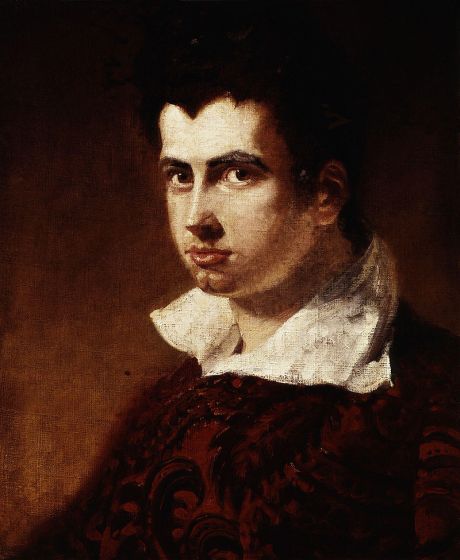
Leigh Hunt, young

Leigh Hunt when young

Jenny kiss’d me when we met,
Jumping from the chair she sat in;
Time, you thief, who love to get
Sweets into your list, put that in!
Say I’m weary, say I’m sad,
Say that health and wealth have miss’d me,
Say I’m growing old, but add
Jenny kiss’d me.

I love the sentiment, the versification, the tightness, the back story, everything. If you erased everything else Leigh Hunt ever wrote, this poem should still be in every anthology of English poetry.

As the Poetry Foundation says, Hunt was “a central figure of the Romantic movement in England, but he was not, as he wished to be and knew he was not, one of its great poets.” But he was the author of Abou Ben Adhem (often taught in schools for its quietly uplifting morality); The Glove and the Lions (ditto, for its more boisterous morality); and the Song of Fairies Robbing an Orchard (taught less often, as schoolchildren hardly need encouragement in the heightened pleasures of theft).

Jenny kiss’d Me was originally entitled Rondeau, but the poem doesn’t really meet any of the various definitions of the form. It rhymes ababcdcd instead of holding to the rondeau’s tighter requirements of rhyme and repetition, but the alternating feminine and masculine rhymes give it a strong rhythm that is tightly adhered to. It has four feet to each line, but only two in the last, and the effect of the poem is heightened by the fact that, when reading the poem aloud, you can’t help creating a longer pause than usual before the last line – it is as though Hunt has dropped the first two feet, not the last two in that line. That last line repeats the first words of the poem (which is common in a rondeau), but does it as a fresh punch line. It is a remarkably effective piece of versification.

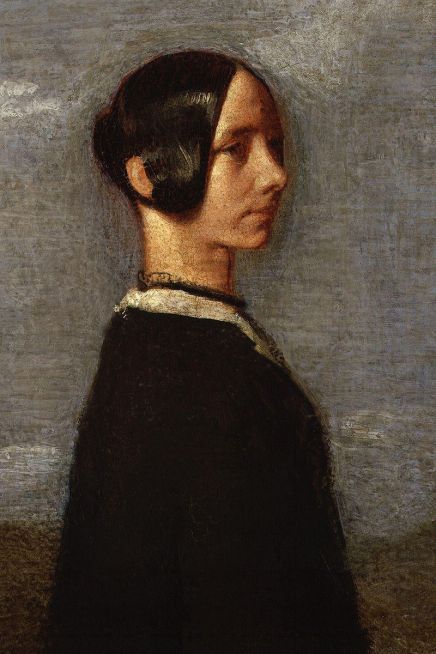
Jenny Carlyle

Jenny: Jane Baillie Carlyle, née Welsh

The back story is that Hunt had been severely ill during a flu epidemic, but, recovering, paid an unexpected visit to Thomas and Jane Carlyle, Jane being “Jenny”. The Carlyles had a difficult relationship to each other and the world in general. Samuel Butler once remarked “It was very good of God to let Carlyle and Mrs Carlyle marry one another, and so make only two people miserable and not four”. But clearly Jane Carlyle was capable of showing affection and making an impression. Hunt at that time was no longer young.

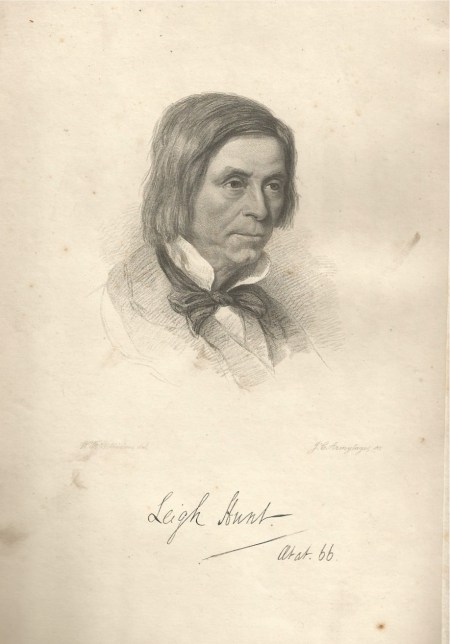
Leigh Hunt

Leigh Hunt at about 66

The poem manages in its eight brief lines to touch on themes of time, age, mortality and failure; also on affection, love, spontaneity and success; and to combine them all into a single image. I cannot think of a more perfect short poem in English.