Tag Archives: formal verse

Potcake Poet’s Choice: Michael R. Burch, “Poetry”

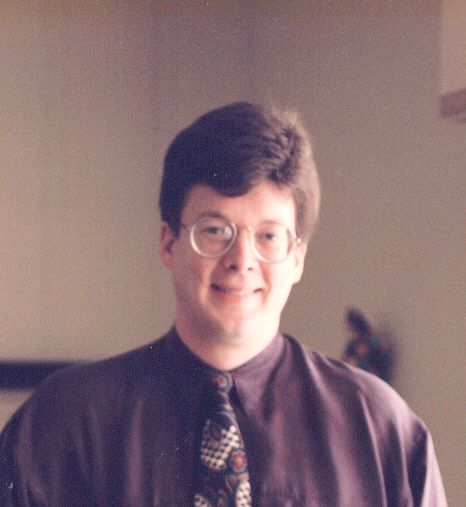
Michael Burch

Michael R. Burch

Michael R. Burch’s chosen poem Poetry, and the story behind his choice, and are so interwoven that his entire essay Making of a Poet is reproduced here with the poem at the very end:

While I don’t consider “Poetry” to be my best poem—I wrote the first version in my teens—it’s a poem that holds special meaning for me. I call it my ars poetica. Here’s how it came about …

When I was eleven years old, my father, a staff sergeant in the US Air Force, was stationed in Wiesbaden, Germany. We were forced to live off-base for two years, in a tiny German village where there were no other American children to play with, and no English radio or TV stations. To avoid complete boredom, I began going to the base library, checking out eight books at a time (the limit), reading them in a few days, then continually repeating the process. I quickly exhausted the library’s children’s fare and began devouring its adult novels along with a plethora of books about history, science and nature.

In the fifth grade, I tested at the reading level of a college sophomore and was put in a reading group of one. I was an incredibly fast reader: I flew through books like crazy. I was reading Austen, Dickens, Hardy, et al, while my classmates were reading whatever one normally reads in grade school. My grades shot through the roof and from that day forward I was always the top scholar in my age group, wherever I went.

But being bright and ultra-self-educated does not invariably lead to happiness. I was tall, scrawny, introverted and socially awkward. I had trouble making friends. I began to dabble in poetry around age thirteen, but then we finally were granted base housing and for two years I was able to focus on things like marbles, quarters, comic books, baseball, basketball and football. And, from an incomprehensible distance, girls.

When I was fifteen my father retired from the Air Force and we moved back to his hometown of Nashville. While my parents were looking for a house, we lived with my grandfather and his third wife. They didn’t have air-conditioning and didn’t seem to believe in hot food—even the peas and beans were served cold!—so I was sweaty, hungry, lonely, friendless and miserable. It was at this point that I began to write poetry seriously. I’m not sure why. Perhaps because my options were so limited and the world seemed so impossibly grim and unfair.

Writing poetry helped me cope with my loneliness and depression. I had feelings of deep alienation and inadequacy, but suddenly I had found something I could do better than anyone around me. (Perhaps because no one else was doing it at all?)

However, I was a perfectionist and poetry can be very tough on perfectionists. I remember becoming incredibly frustrated and angry with myself. Why wasn’t I writing poetry like Shelley and Keats at age fifteen? I destroyed all my poems in a fit of pique. Fortunately, I was able to reproduce most of the better poems from memory, but two in particular were lost forever and still haunt me.

In the tenth grade, at age sixteen, I had a major breakthrough. My English teacher gave us a poetry assignment. We were instructed to create a poetry booklet with five chapters of our choosing. I still have my booklet, a treasured memento, banged out on a Corona typewriter with cursive script, which gave it a sort of elegance, a cachet. My chosen chapters were: Rock Songs, English Poems, Animal Poems, Biblical Poems, and ta-da, My Poems! Audaciously, alongside the poems of Shakespeare, Burns and Tennyson, I would self-publish my fledgling work! My teacher wrote “This poem is beautiful” beside one my earliest compositions, “Playmates.” Her comment was like rocket fuel to my stellar aspirations. Surely I was next Keats, the next Shelley! Surely immediate and incontrovertible success was now fait accompli, guaranteed!

Of course I had no idea what I was getting into. How many fifteen-year-old poets can compete with the immortal bards? I was in for some very tough sledding because I had good taste in poetry and could tell the difference between merely adequate verse and the real thing. I continued to find poetry vexing. Why the hell wouldn’t it cooperate and anoint me its next Shakespeare, pronto?

Then I had another breakthrough. I remember it vividly. I working at a McDonald’s at age seventeen, salting away money for college because my parents had informed me they didn’t have enough money to pay my tuition. Fortunately, I was able to earn a full academic scholarship, but I still needed to make money for clothes, dating (hah!), etc. I was sitting in the McDonald’s break room when I wrote a poem, “Reckoning” (later re-titled “Observance”), that sorta made me catch my breath. Did I really write that? For the first time, I felt like a “real poet.”

Observance

Here the hills are old, and rolling
casually in their old age;
on the horizon youthful mountains
bathe themselves in windblown fountains . . .

By dying leaves and falling raindrops,
I have traced time’s starts and stops,
and I have known the years to pass
almost unnoticed, whispering through treetops . . .

For here the valleys fill with sunlight
to the brim, then empty again,
and it seems that only I notice
how the years flood out, and in . . .

Another poem, “Infinity,” written around age eighteen, again made me feel like a real poet.

Infinity

Have you tasted the bitterness of tears of despair?
Have you watched the sun sink through such pale, balmless air
that your soul sought its shell like a crab on a beach,
then scuttled inside to be safe, out of reach?

Might I lift you tonight from earth’s wreckage and damage
on these waves gently rising to pay the moon homage?
Or better, perhaps, let me say that I, too,
have dreamed of infinity . . . windswept and blue.

Now, two “real poems” in two years may not seem like a big deal to non-poets. But they were very big deals to me. I would go off to college feeling that I was, really, a real poet, with two real poems under my belt. I felt like someone, at last. I had, at least, potential.

But I was in for another rude shock. Being a good reader of poetry—good enough to know when my own poems were falling far short of the mark—I was absolutely floored when I learned that imposters were controlling Poetry’s fate! These imposters were claiming that meter and rhyme were passé, that honest human sentiment was something to be ridiculed and dismissed, that poetry should be nothing more than concrete imagery, etc.

At first I was devastated, but then I quickly became enraged. I knew the difference between good poetry and bad. I could feel it in my flesh, in my bones. Who were these imposters to say that bad poetry was good, and good was bad? How dare they? I was incensed! I loved Poetry. I saw her as my savior because she had rescued me from depression and feelings of inadequacy. So I made a poetic pledge to save my Savior from the imposters:

Poetry

Poetry, I found you where at last they chained and bound you;
with devices all around you to torture and confound you,
I found you—shivering, bare.

They had shorn your raven hair and taken both your eyes
which, once cerulean as Gogh’s skies, had leapt with dawn to wild surmise
of what was waiting there.

Your back was bent with untold care; there savage brands had left cruel scars
as though the wounds of countless wars; your bones were broken with the force
with which they’d lashed your flesh so fair.

You once were loveliest of all. So many nights you held in thrall
a scrawny lad who heard your call from where dawn’s milling showers fall—
pale meteors through sapphire air.

I learned the eagerness of youth to temper for a lover’s touch;
I felt you, tremulant, reprove each time I fumbled over-much.
Your merest word became my prayer.

You took me gently by the hand and led my steps from boy to man;
now I look back, remember when—you shone, and cannot understand
why here, tonight, you bear their brand.

I will take and cradle you in my arms, remindful of the gentle charms
you showed me once, of yore;
and I will lead you from your cell tonight—back into that incandescent light
which flows out of the core of a sun whose robes you wore.
And I will wash your feet with tears for all those blissful years . . .
my love, whom I adore.

Originally published by The Lyric

Michael R. Burch has been published more than 3,500 times, including in the Potcake Chapbook Families and Other Fiascoes. His poems have been translated into eleven languages and set to music by three composers. He also edits TheHyperTexts–a massive and always-growing anthology of poetry past and present. Whether you want John Donne, or Pablo Neruda, or Ronald Reagan, or poems of the Palestinian resistance, or any of the best current poets, this is a good place to start.
http://www.thehypertexts.com/Michael_R_Burch_Poet_Poetry_Picture_Bio.html
Epigram: “Obituary”

“Regarded”, “distinguished”?
Regardless, extinguished.

This is one of two short poems that I have in this month’s Snakeskin.

The Greatest Early 21st c. Poet? M.A. Griffiths

M.A. Griffiths

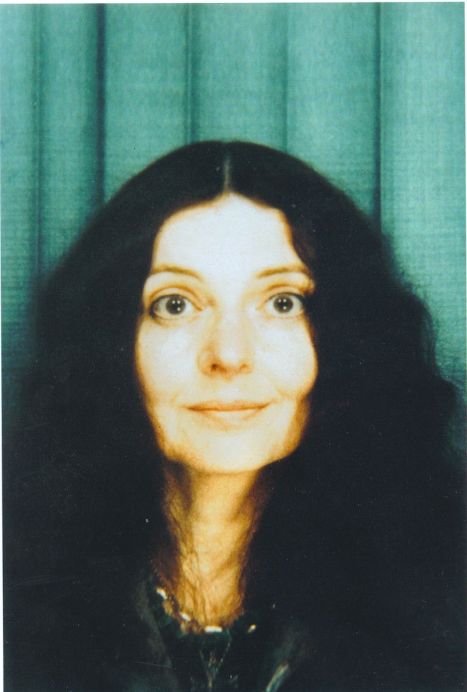
Margaret Ann Griffiths–scanned photo provided by David Adkins

Ruthless, witty, iconoclastic poetry–much of it formal, much of it free–by a lighthearted woman with much to be serious about. Just coming into international prominence as an internet-oriented poet as she turned 60, Margaret Ann Griffiths was dying of an incurable stomach ailment. She posted poems online under her own name and as “Maz” and “Grasshopper” from 2001 until her death in 2009. Her only book, Grasshopper, was assembled posthumously from her writings in print and on line around the globe; it has 352 pages of poems, plus an extensive preface by Alan Wickes.

Probably her best-known poem is the Eratosphere prize-winning Opening a Jar of Dead Sea Mud:

The smell of mud and brine. I’m six, awash
with grey and beached by winter scenery,
pinched by the Peckham girl who calls me posh,
and boys who pull live crabs apart to see
me cry. And I am lost in that grim place
again, coat buttoned up as tight as grief.
Sea scours my nostrils, strict winds sand my face,
the clouds pile steel on steel with no relief.

Sent there to convalesce – my turnkeys, Sisters
of Rome, stone-faced as Colosseum arches –
I served a month in Stalag Kent, nursed blisters
in beetle shoes on two-by-two mute marches.
I close the jar, but nose and throat retain
an after-tang, the salt of swallowed pain.

She was a brilliant sonneteer (which seems to be a less exalted compliment in the US than in the UK), but also irreverent in light verse as in Clogs which begins:

The Queen Mum’s gorn and popped her clogs;
the telly’s stuffed with Royal progs.
I’ve heard a thousand epilogues
now the old Queen Mum has popped her clogs…

skillful with dialect verse, as in Fer Blossom:

Tha’s not allowed ta bury pigs, tha knows.
I blinks et Blossom’s bulk stratched awt on
a bad of bettercups end pink-tinged deisies,
aye closed es ef ha nipped off en a nep…

skillful with unstructured verse, as in Falling:

In the library,
you fell over me.
You said, So sorry.
I said, Ouch.
Later you fell over me
on the couch…

parody, as in Cutlet, Mince of Denmark, whose Act 1 is:

What fowl noisette’s abroad this night? I walk
the battlements. Porked lightning! Next appears
my father’s goose. O Veni, son, he says. We talk
of offal oxtails – poussin in his ears!

And the rolling, sonorous Sholey, beginning

Sholey brings the summer in a shiny old tin bucket
every year. He walks head high across the mountains
carrying the flowers. In the brim of his wide hat
nestle songbird eggs in pastel clutches…

I find it impossible to quote a full range of her poetry, there is too much, too diverse. But my favourites are her sonnets, circling around her themes of pets and poets, nature and history, war, women and sex… and illness and death.

Born and raised in London, an archaeology student at Cardiff, she lived in Poole on England’s south coast for the last decades of her life. Online she worked with poets around the world; offline she lived alone and unknown, her death not discovered for a month.

Google her, read whatever shows up, and then buy Grasshopper. I would recommend it to anyone who reads or writes poetry, anyone. I dip into it periodically, and read it right through every two or three years.

M.A. Griffiths–Maz–with her technical skill, insight, imagery, empathy and vast range… might just be the early 21st century’s greatest poet.

Potcake Poet’s Choice: Ann Drysdale, “Perfect Binding”

Ann Drysdale

Ann Drysdale

The poet addresses an occasional lover
on a brief assignation in a twin-bedded room

Dearest, since we can do no other,
Here on the bed that fate decrees
Let us lie side by side together,
Heads and shoulders, hips and knees
Aligned along a central fissure
Like pages in a paperback;
Conjoined by heat and sticky pressure,
Divided by a constant crack.

And thus, though circumstance divide,
We lie together, if bereft,
Like vellum swelling either side
Of this, our necessary cleft.
So let us live, and let us love,
Proximity is written in
Although we may not always have
The bliss of lying skin to skin.

So let us love, and let us live
As we are simply bound to do;
Our numbers are consecutive,
Our sense and syntax follow through.
If anyone should ever look
We two will be forever found,
Pages in one another’s book;
Not stitched, my love, but perfect bound.

Ann Drysdale writes: “An occasional poem born during a long and lovely relationship. The publishing metaphor pleases me; it grew wings as I crafted the poem which, for once, said everything I wanted to say.”

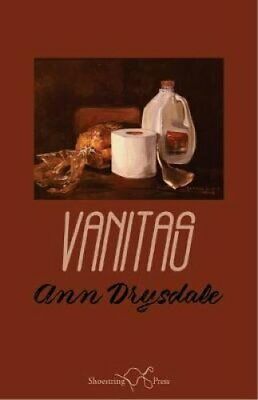
Ann Drysdale now lives in South Wales and has been a hill farmer, water-gypsy, newspaper columnist and single parent – not necessarily in that order. Her poems have been published in several of the Potcake ChapbooksHer seventh volume of poetry, Vanitas, has recently joined a mixed list of published writing, including memoir, essays and a gonzo guidebook to the City of Newport. 

Annie's Vanitas

http://www.poetrypf.co.uk/anndrysdalepage.html
http://www.shoestring-press.com/2019/03/vanitas/


Poem: “Dark Fedora”


“You look like a musician-poet in that dark fedora.”
I think of the young Dylan, and it takes away my breath,
And for her easy flattery I all the more adore her…
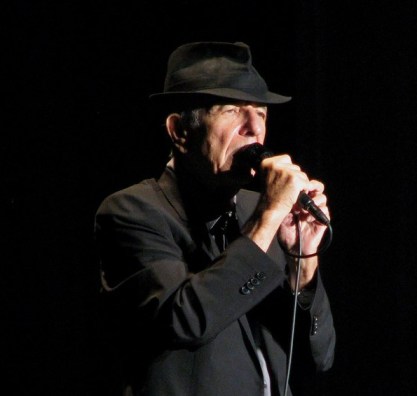
But she meant Leonard Cohen in the days before his death.


First published in Light Magazine, Summer/Fall 2017.

Poem: “Never Believe”

Never believe the lies of war, and the orders
that seem to make sense –
whether Hitler or Bush, no one storms over borders
“in self defence”.

“Leading the Free World” by having the biggest gun
has always chilled
those on whom the guns are turned, on everyone
free to be killed.

This is another of my anti-imperialist or anti-war poems, first published in Ambit’s 200th quarterly issue in the UK. Despite the tone of the poem, I should clarify that I don’t dislike guns in themselves. One way or another they were in my life for decades: capguns as a kid, then BB gun and speargun, four years of .303s at school in England (and a submachine gun on school exercises in Denmark), earning my Marksman badge in training in Canada, letting my own kids try skeet shooting, Nerf guns and super-soakers… 

But I don’t see any reason for anyone to own any firearm other than a single-shot hunting rifle.

And as for military forces, given that invaders need several times the firepower of defenders to be successful, I don’t see the need for any military force to be more than a third the size of its biggest competitor. Anything more than that would be best channeled into (a reformed, effective, efficient) United Nations. And never believe anyone who says they need to strike first, in self-defence. They are the bad guys, by definition.

Technically the poem is a little loose. The rhymes are OK, but the scansion is erratic, relying on the reader to find five beats in the longer and two beats in the shorter lines for a rhythmic read. Iambic pentameters it ain’t. But the short lines are the cleanest and the punchiest: that’s where the action is. My hope is always that a strong last line absolves a lot of earlier sins.

Sonnet: “Flags We Have Feared”

The Swastika, that ancient Vedic sign,
the lightning wheels with which the Aryan bands
in lightning war overrun other lands,
wheeled juggernauts that crush, self-claimed divine.
Hammer and Sickle, commoners’ work-tools;
weapons for rising up, and tearing down
the castle of the rich, the bourgeois town;
fake honour to the poor the Party rules.
A flag with Stripes, memorial for flogged slaves,
striped jail clothes for resulting underclass;
and Stars like bullets through the windshield’s glass
for leaders by the CIA shot down,
star earned for each election overthrown,
star for each land the flag invades, or ‘saves’.

This sonnet was originally and ironically published in Ambit in the UK. The irony being, of course, that the Union Jack is viewed by much of the world with as much fear and hostility as any of the other three flags. But you don’t learn that, or the reasons for it, in school in the UK–at least not in England. The British (at least the English) have a warm and fuzzy feeling toward their flag, and are innocent or puzzled that anyone else should find it negative. Similarly in the times of the other three flags, the Germans (at least the Aryans), the Soviets (at least the Russians) and the Americans (at least the whites) have been happy and proud of their flag, puzzled that anyone else should fear or dislike it.

Another irony: the jury is still out on to what extent one of the leaders shot down by the CIA was their own.

Technically it’s a sonnet with a non-standard rhyme scheme: ABBA CDDC EFFGGE. But the rhymes and the scansion are OK. As for the volta, the requisite turn of mood or argument between the octave and the sestet… well, after dealing with the two great enemies of western democracy, you weren’t expecting me to pick on the US, were you?

Sonnet: “Last Will and Testament”

I, Robin, being of sound mind, declare
the Cryonics Institute shall have my corpse.
That’s where I’ll rest, if I can get shipped there,
no matter how friends stare, family gawps.
“I”, “corpse” and “rest” are contradictory, true,
because we’re into science frontier realms
where problem-solving causes problems anew,
where human thought both helps and overwhelms.
Limitless lifespan, or apocalypse?
Both feasible as we reach out through space.
Cryonics is a ticket for both trips…
or none at all, if humans lose our race.
Enjoy this puzzle-path, solve it and thrive.
Drive to arrive alive. Strive to survive.

Another of my existential sonnets, this one just published in Star*Line, the quarterly publication of SFPA, the Science Fiction & Fantasy Poetry Association, now in its 43rd year. Star*Line is one of those tolerant poetry magazines which will publish anything that appeals to editor Vince Gotera, from formal verse to experimental poetry–so long as it deals with space ships or time travel, dragons or golems and so on, of course.

Technically this is a Shakespearean sonnet, i.e. it’s in iambic pentameter and rhymes ABAB CDCD EFEF GG. Each of the 4-line blocks is a complete thought, describing the existential situation being faced. There is a volta or turn (but it’s weak) before the final couplet which moves from description to prescription: the couplet is a call to action.

By the way, I am changing the poem’s title with this blog post–it appears in Star*Line with the first line as the title.

Poem: “The Train Will Stop”

“The train will stop for ten minutes at the next station.
If you wish to make this your annual vacation,
please reboard in nine minutes.” The travellers gaze
at the countryside slowing past, consider ways
to take more than nine minutes for a break
but, looking down a slight curve in the track,
see no way to get out and back
nor a real reason they should take
the risk. The train will go…
and what else do they know?
They’ll stay till dropped
at some end stop.
Descend.
The end.

This little piece of existential angst appears in the current Bewildering Stories. It was written, submitted and accepted long before the current Covid-19 crisis came along, which it in no way relates to. In fact, in the awareness that we are all mortal and that everyone’s journey will have an end stop regardless, you might even say this suggests that in the Grand Scheme of Things the Covid-19 situation is trivial. The bigger issue is: eventually we all die. A solution to that would be far more dramatic than a successful Coronavirus vaccine.

Technically? Not a tightly formed poem – the initial lines are straggly, but as they shorten they tighten into iambics. The rhymes too are erratic, mostly in couplets but not quite. Not a perfect poem. Flippantly you could ask, In the Grand Scheme of Things and in the present circumstances, why should this matter? And the answer is, The level of artistic quality always matters; ultimately, it’s the most you can hope to achieve and be remembered by.

Sonnet: “We’ve Reached Earth’s Edge”

The Earth’s explored, and flat. And I know this
despite Earth’s shadow in lunar eclipse,
and how horizons hide the hulls of ships.
We’ve reached Earth’s edge, stare into the abyss
with Branson, Musk, NASA and the Chinese,
toppling into blackness, falling prey
with Kurzweil, CRISPR, Google, Bostrom, de Grey,
businesslike scientists battling disease,
entrepreneurs with dark unearthly schemes:
the outer darkness space’s endlessness,
the inner darkness immortality.
Pushing and leaning into stellar space,
the event horizon of our thoughts and dreams,
the black hole of our post-humanity.

Published in the Formal & Rhyming Poetry section of this month’s Better Than Starbucks, the “Earth’s edge” idea is just another way of trying to express my ongoing fascination with the end of humanity-as-we-know-it, and the beginning of something that we can’t even visualize yet, let alone make confident predictions about. Close to the idea of the “posthuman god” at the bottom of the Wikipedia page.

Technically, this is a poorly-structured sonnet (ABBA CDDC EFG FEG), with a really weak rhyme of endlessness / space. Sorry about that. But I hope you can enjoy it for the ideas, anyway!