Tag Archives: Philip Larkin

R.S. (Sam) Gwynn, ‘Mr Heaney’

“This was Mr Heaney’s room. The peat’s
From off his boots. It got into the rug
And won’t be Hoovered out. Likewise the sheets
And pillow case.” Solemn, I nod and shrug,

Expecting little better, as I note
The sad brace of dried heads, the shards of flint,
The coprolites and drafts that Heaney wrote
Lying untidied here. “He liked his pint,

Did Mr Heaney, but you know the Irish.
That and a roasted spud. He didn’t pay
The last two weeks and more. You know the Irish.”
And so it is I lie where Heaney lay

And watch the twilight dripping with the murk
Lurking beyond short curtains. Left alone,
I ponder what she’d said: “He’d often work
My bit of bogland like it was his own–

He liked the muck and suck. But then one day
He got some kind of letter from the Swedes,
Got all excited and he went away.
Now the whole plot is given over to weeds.”

Such cause for wonderment: Did Heaney ask
No better than a spade or pen or hoe
To kill his time? Nothing to ease the task–
Girls, say? Or hurling pools? I just don’t know.

*****

R.S. (Sam) Gwynn writes: “It just came out of the similarity between the two names. With Heaney I always think of him out digging in a peat bog, etc.”

*****

The poem plays off Philip Larkin‘s description of himself moving into a boarding house, renting a room formerly lived in by ‘Mr Bleaney‘:

‘This was Mr Bleaney’s room. He stayed
The whole time he was at the Bodies, till
They moved him.’ Flowered curtains, thin and frayed,
Fall to within five inches of the sill,

Whose window shows a strip of building land,
Tussocky, littered. ‘Mr Bleaney took
My bit of garden properly in hand.’
(…)

(But if) at his age having no more to show
Than one hired box should make him pretty sure
He warranted no better, I don’t know.

What happened to Bleaney? He stayed there “till they moved him”. As for Heaney, he got that letter from the Swedes and went off to collect his Nobel Prize. – Editor

*****

R. S. (Sam) Gwynn was born in Leaksville (now Eden), North Carolina, in 1948. After attending Davidson College, he entered the graduate program at the University of Arkansas, where he earned his M. F. A. From 1976, he taught at Lamar University, where he was Poet-in-Residence and University Professor of English. He retired in 2016. His first two collections were chapbooks, Bearing & Distance (1977) and The Narcissiad (1980). These were followed by The Drive-In (1986) and No Word of Farewell: New and Selected Poems 1970-2000. His latest collection is Dogwatch (2014) from Measure Press (which includes this poem). His criticism appeared regularly in the Hudson Review and other publications, and he was editor of the Pocket Anthology Series from Pearson-Longman. He lives in Beaumont, Texas, with his wife, Donna. They have three sons and seven grandchildren.

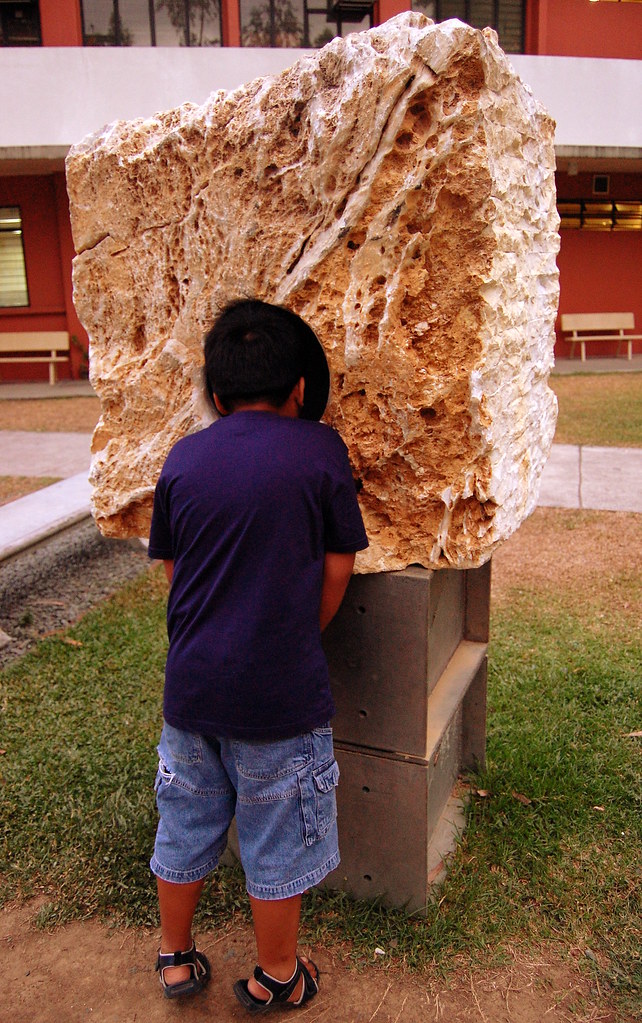
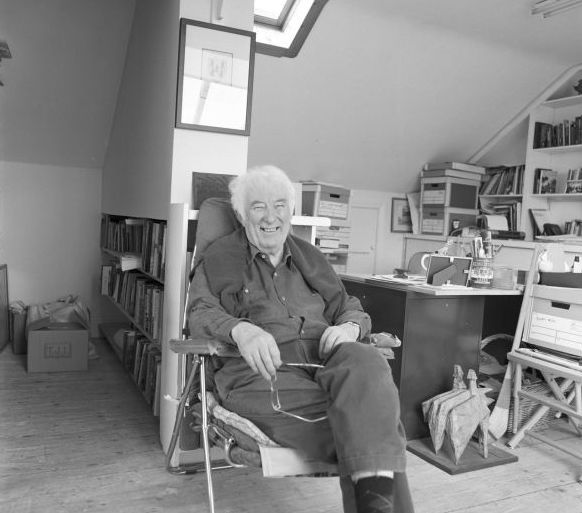
Photo with thanks to the Bobbie Hanvey Photographic Archive/Boston College.

Tom Vaughan, ‘Safe’

We hurried back, struggling to comprehend
the scale of devastation and what journey’s end
would mean – wondering indeed whether
we still had a home to go to. Aghast, we scanned
fields the dead had sown and reaped forever

transformed to lakes, then villages where cars
had been tossed aside like toys, and scooped-out bars,
churches, schools, where dark lines marked
the height reached by the water, left as scars.
There’d been no warning signs, no Noah’s ark

though those of us who’d been on higher ground
could now inherit the world the tempest drowned
though too few to repopulate
that morning’s massive, muddy funeral mound,
reminding us what might have been our fate.

The radio was silent, even if the word
on the street was help would come – soon enough we heard
helicopters. But the broken men
who landed only muttered something blurred
about how this was it till God knows when.

A black market opened – which only the rich could afford.
The rest of us survived on what we’d stored
in better days, skimping until
re-learning the ancient ways, we could once more
live off the land with long-forgotten skills.

Sometimes I look back, yet I know the past
has gone for good, that no one can forecast
when the day will come we’ll dare to hope
the storm which killed so many was the last,
and trust again illusion’s horoscope.

*****

Tom Vaughan writes: ” ‘Safe‘s working title was Sanctuary, and the poem was inspired – if that’s the word – by the sense that there is none. The form reflects the fact that it was written during one of my regular bouts of reading Larkin. I was lucky enough to visit his office in the library at Hull University in July, with a copy of The Whitsun Weddings in my backpack for the train trip back to London . . . “

Tom Vaughan is not the real name of a poet whose previous publications include a novel and three poetry pamphlets (A Sampler, 2010, and Envoy, 2013, both published by HappenStance; and Just a Minute, 2024, from Cyberwit). His poems have been published in a range of poetry magazines, including several of the Potcake Chapbooks and frequently (as with ‘Safe‘) in Snakeskin.
He currently lives in Brittany.
https://tomvaughan.website

Photo: “Search-and-Rescue Workers Arrive in Ofunato [Image 1 of 23]” by DVIDSHUB is licensed under CC BY 2.0.

Marcus Bales, ‘This Be The Verse’

Post this, post that, post-modernists –
   Denying narrative’s cabal.
The story that they tell insists
   It’s not a story after all.

New Criticism made them see
   That reading closely what was said
Meant cutting off biography,  
   And authors might as well be dead.

Like raisin oatmeal cookies, picked
   In hopes of chocolate chip, they bust
Your faith in how things seem. You’re tricked
   To only trust in doubting trust.

Without the person or the text,
   No human mind, no human heart,
I guess we know what’s coming next:
   Let the AIs do the art.

*****

Marcus Bales writes: “This is one of what I call my habitual poems. I have a perfectly good stand-alone idea, and start to work on it, but the parody turntable in my head takes over and the needle slides down into the groove and instead of stealing only the world-weary and faintly snarky Larkin tone it turns out I steal the whole poem. 

I have a file of these to be revised away from parody and into something that is less parodic, or at least less immediately noticeable as theft. 

The problem is I’m lazy about this stuff. There is a straightforward tradition of doing these kinds of parodicish things in song, called ‘filks’, and I’ve done some of them. It’s carried over into the same sort of thing in poems. The groove is there, the tonality is familiar, the original is familiar, and like the soap coming out of your hand in the shower, clunk, it hits the floor. 

So, since Robin asked me to write this, I’ve got a revised version for you. It loses some of the immediacy of Larkin’s opening, of course, but I’ll bet if you hadn’t got that in your head associated with this one first, this second version would only have marked a faint echo — and you might not of noticed how Larkinesque it is at all.”

Editor’s note: Bales revised the first and fifth lines; the originals read:
They fuck you up, post-modernists,
(…)
But others fucked them up to see

Hence his Larkin references.

Not much is known about Marcus Bales except that he lives and works in Cleveland, Ohio, and that his work has not been published in Poetry or The New Yorker. However his ‘51 Poems‘ is available from Amazon. He has been published in several of the Potcake Chapbooks (‘Form in Formless Times’).

Photo: “Post-Modern Urinal” by ~MVI~ (warped) is licensed under CC BY 2.0.

J.D.Smith, ‘Proposal’

Resign yourself, my heart’s delight,
To me before a better offer
Comes along with hair and height,
A sea-deep chest, a bulging coffer.

Don’t wait for him: if love’s a song,
I am the toad’s primeval croak.
If love’s a wheel, then I belong
Among its rusty, broken spokes.

If I mean nothing in the world
To you, that nothing could be all,
A version of transcendence, curled
And primed to blossom from your soul.

Who else is equal to this test,
This cup of gall? You’ve had a sip–
In our shared life you’ll taste the rest.
Come join me on this sinking ship.

*****

J.D. Smith writes: “This poem explains, if nothing else, why I didn’t go into sales. It was not written for a specific person, but it does capture a time earlier in my adulthood when I was frustrated on all fronts. The poem also partakes of self-parody. If Philip Larkin had proposed in writing, it might have gone something like what I did.”

J.D. Smith has published six books of poetry, most recently the light verse collection Catalogs for Food Loversand he has received a Fellowship in Poetry from the United States National Endowment for the Arts. This poem is from The Killing Tree (Finishing Line Press, 2016). Smith’s first fiction collection, Transit, was published in December 2022. His other books include the essay collection Dowsing and Science. Smith works in Washington, DC, where he lives with his wife Paula Van Lare and their rescue animals.
X: @Smitroverse

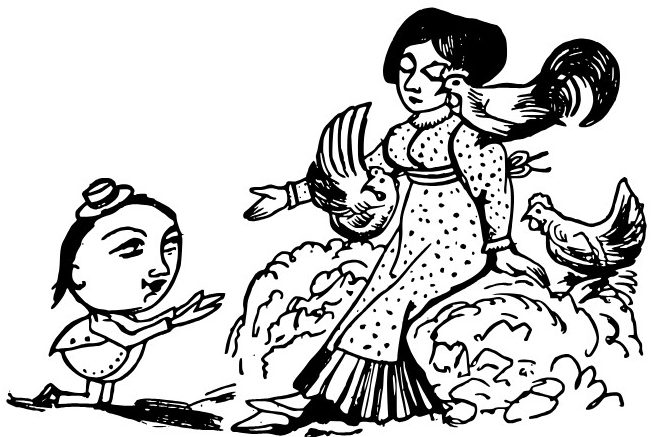
Illustration: by Edward Lear for his poem ‘The Courtship of the Yonghy-Bonghy-Bo’.

Marcus Bales, ‘Lighthouse’

She needed constant, searching light
And some firm continent
From which to dive into the night
To find what darkness meant.

She fought the horses of the tides
And they her urgency.
She caught their lunar reins and rides
Triumphant out to sea.

And now she knows the powers of
The dark sea’s character,
And scorns the note her former love
Moans out, moans out to her.

*****

Marcus Bales writes: “Probably poets ought not tell this sort of story about their work. I found a stash of very old poems, carefully typed out on now-yellowed paper in a metal file box amid 5” Tandy floppy discs, and printed on a dot-matrix printer, a little faded, some months ago, and have started the often painful task of retyping them into my little electronic library of my work. Many of them are obviously student stuff, but this one seemed a little less studious than the rest. It brought back its context in my mind pretty clearly.
This is a very early poem, maybe sophomore year. I’d read someone’s comment that Yeats wrote about his friends as if they were characters in a Greek myth, and it had struck me as a sudden truth — to me, anyway. Nothing would do, of course, except to try the thing on my friends. Then a woman I knew gave me a copy of Adrienne Rich’s ‘Transformations’, which tells the stories of ancient myths about women, mostly, as if they had much more contemporary attitudes, and that seemed like a much better model than the Yeats tone and manner — and besides, Yeats had already done that tone and manner. So though the idea originated in Yeats, it is really Rich’s idea that I tried to follow, trying for the tone of metaphor in a contemporary voice. And Larkin was in there somewhere too, as I recall, having discovered him when asked to write a paper contrasting and comparing one of his poems to one of Wilbur’s. The Larkin was the one starting:
Sometimes you hear, fifth-hand,
As epitaph:
He chucked up everything
And just cleared off,

And that led me to many others, notably ‘The Trees’, with its amazingly unlarkinish  repetition at the end.
Steal from the best has long been my motto.”

Not much is known about Marcus Bales except that he lives and works in Cleveland, Ohio, and that his work has not been published in Poetry or The New Yorker. However his ’51 Poems’ is available from Amazon. He has been published in several of the Potcake Chapbooks (‘Form in Formless Times’).

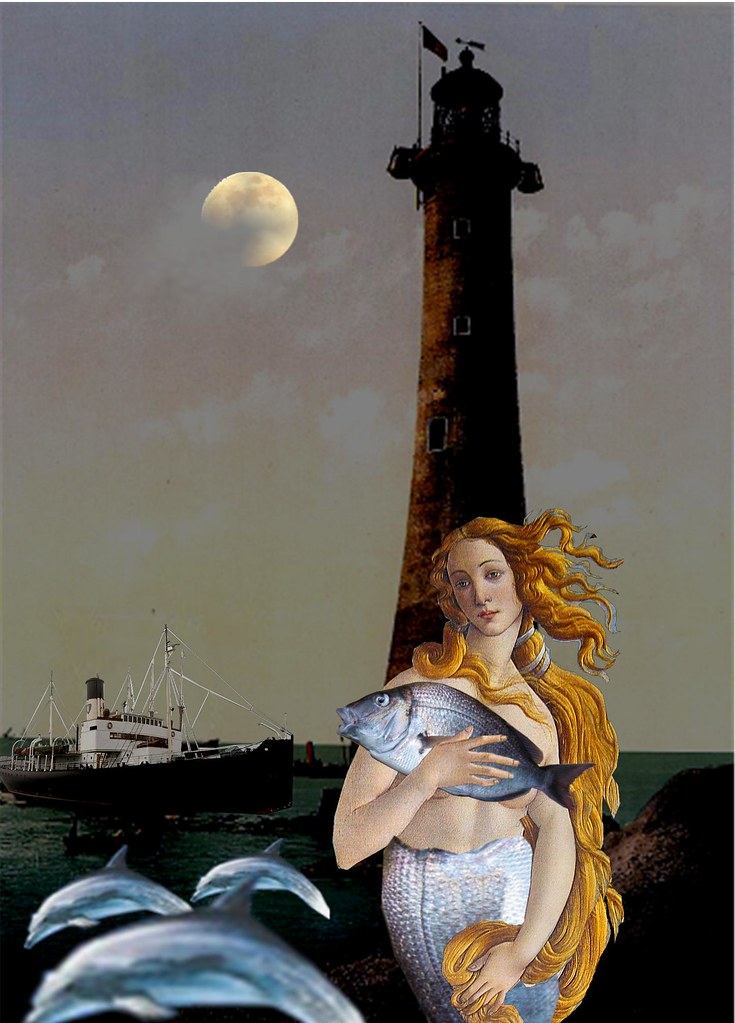
Photo: “my father was the keeper of the eddystone light” by sammydavisdog is licensed under CC BY 2.0.

Poems on poets: A.M. Juster, ‘Houseguests’

There’s shouting by the stove (it’s Plath & Hughes)
as Wystan wanders off without his shoes
and Whitman picks the Cheetos off his beard.
The Larkin-Ginsberg chat is getting weird,
for after countless hours they have found
bizarre pornography is common ground.
Old Emily is not
As prim as billed—
When Dylan finds her bra-hooks—
She is thrilled.
Poe strokes his bird; Pound yawps that it’s a pity
Eliot can’t sleep without his kitty.
Rimbaud’s on eBay searching for a zebra
while sneering, “Oui, a cheemp can write vers libre!”
The Doctor’s soggy chickens start to smell
and Stevens has insurance he must sell.
The readings are spectacular, I know,
but is there any way to make them go?

*****

A.M. Juster writes: “This was first published in The Barefoot Muse. It looks like I wrote it in late 2008, it was a fairly prolific period for me and I was a little distracted because I was running the Social Security Administration. (Under his unpoetic name, Michael J. Astrue. – Editor). I don’t remember now the impetus for writing it, but I did enjoy taking these poetry idols off their pedestals and making them more human for a few laughs. This was about the time that I finished my translation of Horace’s Satires in something like 1850 heroic couplets, so I was much more comfortable with the form than I would have been five years before. I think the imitation of Emily Dickinson’s form is an amusing touch for the reader, although it is undetected when I read it because it remains in rhymed iambic pentameter.”

A.M. Juster’s poems and translations have appeared in Poetry, The Paris Review, The Hudson Review and other journals. His tenth book is Wonder and Wrath (Paul Dry Books 2020) and his next book will be a translation of Petrarch’s Canzoniere, which W.W. Norton will release in early 2024. He also overtweets about formal poetry @amjuster.

Photo: “me drunk & chris’_MMVI” by andronicusmax is licensed under CC BY 2.0.

Calling the Poem: 11. ‘Inspiration 2’

The poem enters your head as a litter of kittens
brought in by a cat from somewhere hidden,
place of birth unknown.
A word, image, rhyme,
an idea, a tone,
they are brought one at a time
In no order, no preference, no ruling or schooling,
they just need to come in, like refugees at the border.
And they have no order,
they crawl over each other, blind and mewling,
and here comes another, and then here comes another.
So the thoughts enter your head like kittens. Give thanks to the Mother.

*****

Where do ideas come from? No idea. (An oxymoronic observation that is not so different from saying that all the Universe comes from nothing, or that there was no time before the beginning of time.) But simply having ideas is nothing in itself – you can have ideas and ignore them (and generally irritate the Muse that is offering you ideas), and so you will have nothing to show for them. Canadian poet Pino Coluccio recently pointed me at an old piece by British poet Philip Larkin, which begins:

“It is sometimes useful to remind ourselves of the simpler aspects or things normally regarded as complicated. Take, for instance, the writing of a poem. It consists of three stages: the first is when a man becomes obsessed with an emotional concept to such a degree that he is compelled to do something about it. What he does is the second stage, namely, construct a verbal device that will reproduce this emotional concept in anyone who cares to read it, anywhere, any time. The third stage is the recurrent situation of people in different times and places setting off the device and re-creating in themselves what the poet felt when he wrote it. The stages are interdependent and all necessary. If there has been no preliminary feeling, the device has nothing to reproduce and the reader will experience nothing. If the second stage has not been well done, the device will not deliver the goods, or will deliver only a few goods to a few people, or will stop delivering them after an absurdly short while. And if there is no third stage, no successful reading, the poem can hardly be said to exist in a practical sense at all.”

So, 1) become obsessed; 2) construct a verbal device that captures the obsessiveness; 3) have it read by people who thereby experience your obsession.

This series of poems in the ‘Calling the Poem’ chapbook focuses on how to be open to the internal wellspring of ideas, obsessions, emotions, words and images to reach Larkin’s first stage (these first 11 poems); and some thoughts about the construction of the “verbal device” of his second stage (the remaining four poems that are coming up). As for the third stage… well, if the poem is strong enough, it will resonate appropriately with those who read it; but how to get it read–that is a different problem entirely.

Photo: “Newborn kittens” by In dust we trust is licensed under CC BY-NC-SA 2.0.

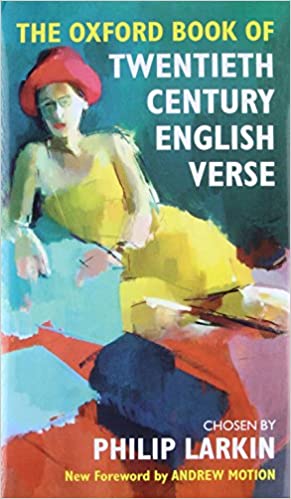
Review: ‘The Oxford Book of Twentieth Century English Verse’, ed. Philip Larkin

This anthology edited by Philip Larkin (which, despite its title, only goes up to the early 1970s) is the most comprehensive, diverse and inspiring collection of formal and semi-formal poetry that I have ever come across. It has, naturally, some free verse… but even that is entertaining in this selection.

The book has no one born before 1840 (Blunt and Hardy), no Matthew Arnold, no Gerard Manley Hopkins (died 1889), so there are almost no Thee’s and Thou’s… except from Robert Bridges.

It has no one born after 1946 (Brian Patten); poets of today are not in this book.

Larkin chose to exclude writers not “born in these islands (or resident here for an appreciable time)”, which lets him include Kipling and Eliot as well as any Scots, Welsh or Irish that he chooses, but cuts out E.E. Cummings, Gwendolyn Brooks, Robert Frost… And Larkin makes no explanation or apology for including Derek Walcott who, born in St. Lucia, lived his life between the Caribbean and the US.

So the anthology is not as complete as could be hoped; but, with 584 poems by 207 poets in 625 pages, it is enormously wide-ranging and full of not just the best of Yeats, Eliot, Auden, but also unexpected treasures by authors barely known today. Here is T.E. Hulme’s ‘The Embankment’, subtitled ‘(The fantasia of a fallen gentleman on a cold, bitter night)’:

Once, in finesse of fiddles found I ecstasy,
In a flash of gold heels on the hard pavement.
Now see I
That warmth’s the very stuff of poesy.
Oh, God, make small
The old star-eaten blanket of the sky,
That I may fold it round me and in comfort lie.

And in completely contrasting mood, here is ‘An Epitaph’ by Colin Ellis:

He worshipped at the altar of Romance
(Tried to seduce a woman half his age)
And dared to stake his fortune on a chance
(Gambled away his children’s heritage).

He valued only what the world held cheap
(Refused to work, from laziness and pride):
Dreams were his refuge and he welcomed sleep
(He failed at business, took to drink and died).

All types of (“English”) 20th century verse are in the anthology. It is the most wonderful, wonderful read.

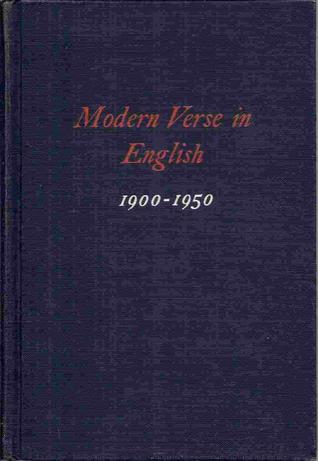
Review: “Modern Verse in English, 1900-1950”

Modern Verse in English

I’m reading ‘Modern Verse in English, 1900-1950‘, ed. David Cecil and Allen Tate, published in 1958. It provides a good look at a large number of poets from that time period–some have lasted, some haven’t. It is an extensive and useful volume, but it raises some concerns:

1. Lord David Cecil‘s introduction (to the English poems) includes “though during the twenties there was a fashion for free and rhymeless verse, it has passed. Most young poets today write in strictly regular forms.” This was published in 1958, remember. Not really prescient, unfortunately, so you question his insight. He regrets omitting “the work of writers who have made their reputation since 1950, for example, Miss Audrey Beecham, Mr. Philip Larkin and Mr. Thom Gunn.” Well, two out of three’s not bad.

2. The ‘1900-1950′ seems a bit misleading, given that the poets include Emily Dickinson and Gerard Manley Hopkins who both died in the 1880s. True, Hopkins’ poetry wasn’t published until the 1930s–but would we consider an unknown Shakespeare poem 21st century if it was only discovered and published today? And as for Dickinson, three Series of her poems were published in the 1890s.

3. Although a couple of poets born in Ireland and South Africa, and Kipling, are included, the volume contains nothing by Canadians (Bliss Carman, Robert Service and F.R. Scott would fit the time line), Australians, West Indians, etc; and nothing by any people of colour such as Langston Hughes or Gwendolyn Brooks (one of my absolute favourites). Any of these would be far more worthy of inclusion than, for example, Donald Davidson whose chief merit for the editor of the American poems, Allen Tate, must have been their shared support for racial segregation. The volume would be better titled ‘Modern White English and American Verse, from Emily Dickinson to Richard Wilbur‘. Still not perfectly accurate, but so it goes.

It is a useful book. But it is less complete than its title suggests, and it is tainted.