Tag Archives: SF

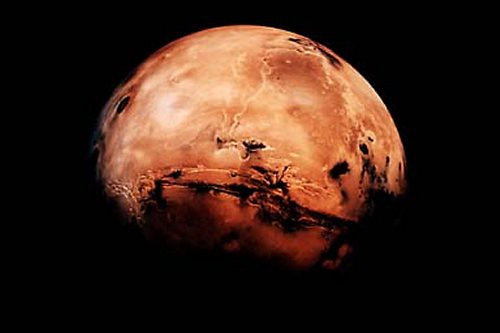
SF poem: Don Webb, ‘Mars Draws Near’

Do you know where now or in what lands
Are the voices that sang of vibrant Mars?
Of slender spires on iron-red sands
And canals, night-necklaces with stars?
They sang of visions that once seemed clear.
Who sings of the Mars of yesteryear?

Does sadness tinge new Eden’s rainbows
Or the sin-abrading void of space?
Close now, does Mars now close
Its alien, inviting face?
Today we hear triumphant fear.
Who hears the Mars of yesteryear?

Man, covet not the power of stones
Nor jails, nor ruins. Mars draws near.
It once gave flesh to now-dry bones:
Return to the Mars of yesteryear.

*****

Don Webb writes: “I wrote this poem in 2003. That happened to be a special time in astronomy, when Mars was closest to Earth. The ‘yesteryear’ reference was prompted by fond memories of the literature of Ray Bradbury and C.S. Lewis, among others.  The poem’s relevance to today’s world is explained in Bewildering Stories’ series of review articles: ‘Cassandra’s Voices: Warnings to the Modern Age‘  ( https://www.bewilderingstories.com/includes/toc/cassandra_toc.html). All of the works discussed shine important light on 21st-century civilization and continue to be of immediate interest in U.S. and world politics. The nostalgia of Mars invading Earth seems preferable to Trusk & Mump’s earthly imperialism and dreams of an Invasion of Mars.”

Don Webb is a teacher of French language and literature. B.A., Dartmouth College; Ph. D., University of Wisconsin. Major: French; minor: German. Thesis: Jean Jacques Rousseau’s La Nouvelle Héloïse. Most of his career was spent at California State University, Sacramento. Ten years moonlighting as a professional translator of French and Italian. He is currently retired and has taught an on-line course in French for Reading Comprehension for several years and, occasionally, French for Listening Comprehension at the University of Guelph, in Ontario.

For a more complete (and highly amusing) bio with reflections on the various people he has been mistaken for – and the doppelgänger who has been mistaken for him – visit www.bewilderingstories.com/bios/donbio.html

Photo: “Mars the Mysterious (NASA, 1997)” by NASA’s Marshall Space Flight Center is licensed under CC BY-NC-ND 2.0.
RHL, ‘Walking then Running’

Like ants searching randomly across a table
like water dribbling across uneven ground
and pooling here, running to the side,
filling and flowing to the next dip,
so we have walked out of Africa
for a hundred, two hundred thousand years,
over the hills, around the coasts,
seeking the greener grass, the next best land,
glad of a tree, glad of a cave,
catching the lightning for our own hearth,
settling, pooling, then spilling out
over the next hill, round the next headland,
following bird flight, following game herds,
exploring then leading then fetching our families,
finding and fighting with those who were there before,
killing or trading, absorbing or raping,
loving, despising the different, the ogres and trolls,
like a stain spreading out round the world,
and walking then running up as though to take a free kick,
walking then running up as though to bowl,
walking then running as along a diving board to
bounce once, twice in the air and launch into space…
Here comes, there goes the human race.

*****

The future is unknowable beyond the point where AI becomes more intelligent than humans, and autonomous. Enjoy what you have now, you will be nostalgic for it soon enough…

I wrote this piece as a long rambling exploratory sentence which picks up speed and purpose towards the end and a concluding rhyme. This (not exactly formal) poem was first published in Bewildering Stories a few years ago.

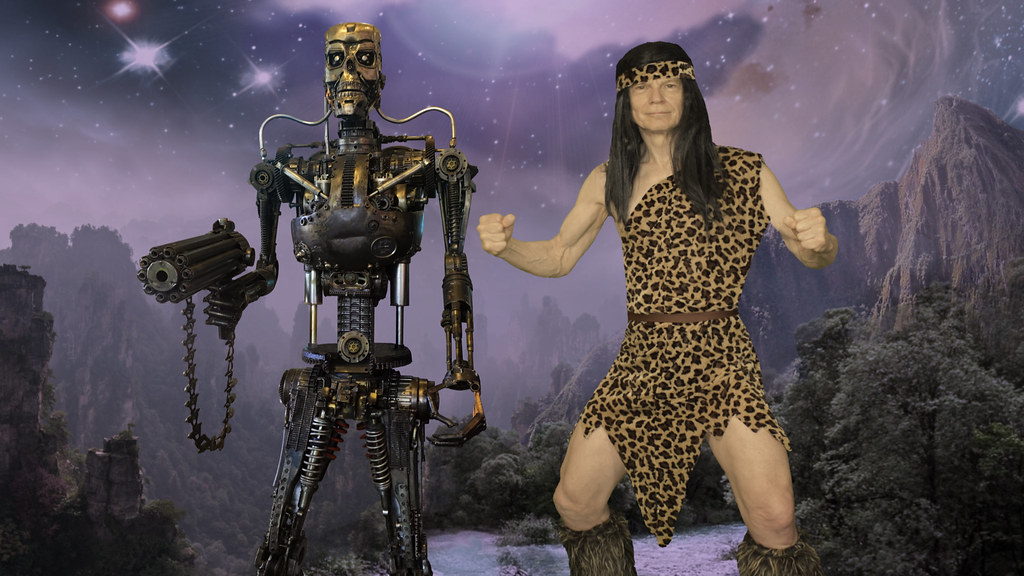
Aboard Starship Hedonian – The Terminators [809]” by TimWB2020 is marked with CC0 1.0.

NSFW Sonnet: ‘Restaveks’

Illegals, both of us; married last year,
now she cleans houses, I cut grass, sweep decks,
for superrich who see us as mere specks
while their big spaceship exit they prepare.
Earth will be fishless, treeless, plastic, bare.
They’ve offered us both jobs as restaveks,
but I said No, they just want us for sex.
She said Then suck them off, why should you care?
I said, We’ll stay. She said, I said I’d go.
I said, You’d leave me? She said, Stay, be dead.
I said, That makes you nothing but a whore.
She said, I fucked him for your job, you know;
I go to space, I’ll live, have food, have bed,
and, if I’m good, oh maybe so much more…

*****

“Restavek” is normally a term for a child of an impoverished Haitian family, sent to live as a domestic servant for a wealthier (or less poor) family. There are an estimated 300,000 in Haiti, mostly girls; and an unknown number in the Haitian communities in the US.

This sonnet (Petrarchan, rhyming ABBA ABBA CDE CDE) was recently published in the frequently NSFW Rat’s Ass Review – thanks, Roderick Bates!

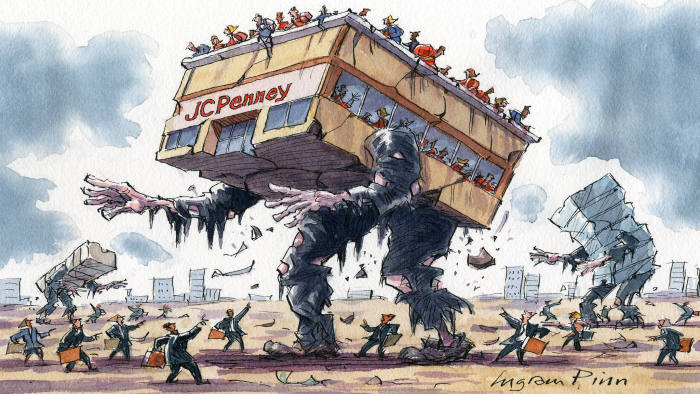
Illustration: “Tiny Empires 3000” by Daniel Voyager is licensed under CC BY 2.0.

Short poem: ‘First Contact’

And when we leave this planet, even leave
corporeal necessity behind,
launch in new realms of space, new states of matter,
encapsuled and encoded, searching blind,
who will we find, as we have always found,
those others there before us, unconfined?
How will we meet them, how will we relate,
them settled formlessly, we coming late?

*****

Perhaps I owe an explanation to non-readers of science fiction. The premise of the poem is that we humans will continue to tinker with not just our bodies but our DNA, as we have always experimented with everything. We will produce ever more bizarre manifestations as posthumans, especially useful in off-planet environments (I recommend the short stories of John Varley), ultimately finding ways to exist with intelligence and control without being tied to physical bodies. (Try Vernor Vinge.) But as always, wherever and however we voyage in exploration, we will always find someone (some thing) is there before us. And then there will be all the usual situations that occur with first contact… confusion, lack of communication, miscommunication, trust and distrust, treachery, violence, accommodation, mutual benefit, all the things that social species engage in.

Appropriately this short poem was first published in Bewildering Stories (thanks, Don Webb!), an excellent weekly magazine of speculative stories both short and serialized, and speculative poetry and art. This eight-line poem is structurally pretty basic: it’s in iambic pentameter with the second, fourth and sixth lines rhyming and with a final couplet.

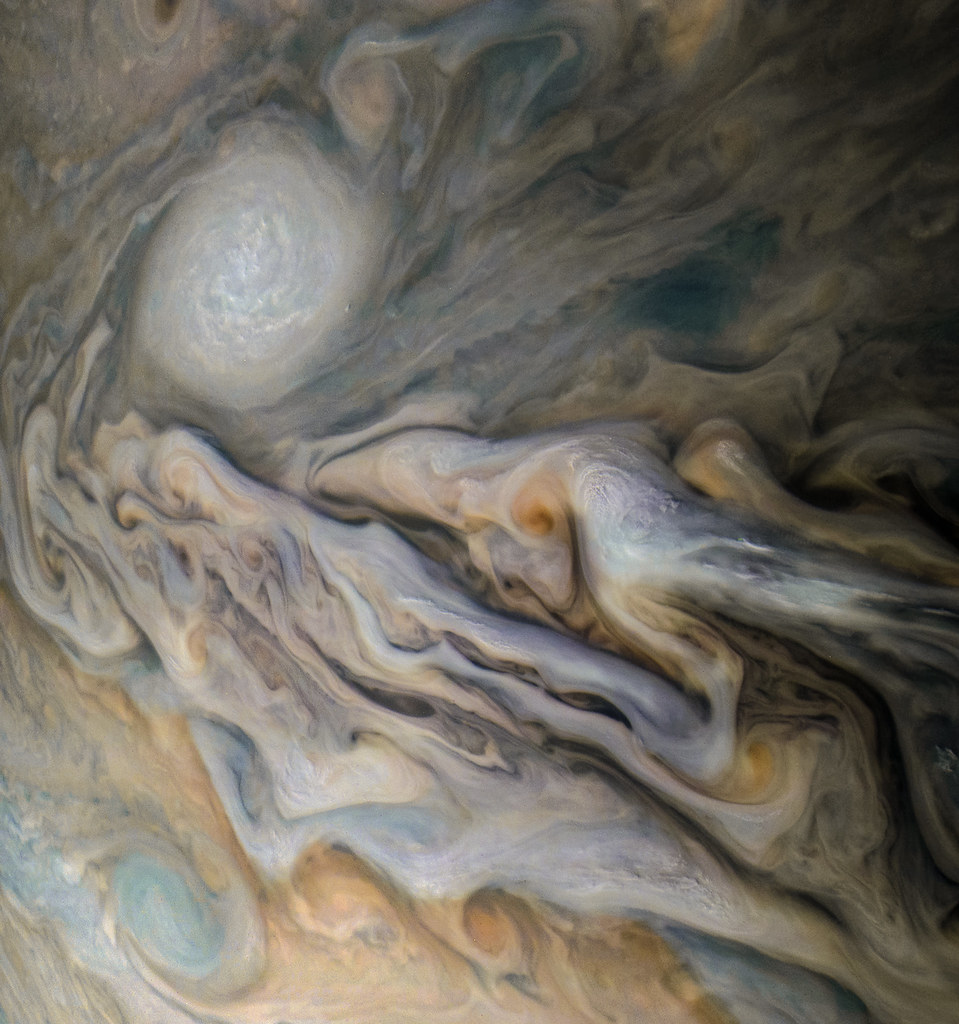
Jupiter – PJ16-13” by Kevin M. Gill is licensed under CC BY 2.0.

Sonnet: ‘Exiled Leader’ (from the series ‘Voices From The Future’)

I’ve few wants on my planet, fewer needs –
I like seas, trees, exploring what I’ve made,
Prospecting for the transgalactic trade,
Composing music while collecting seeds.
I like green islands, but won’t interfere
If eco climate needs a waste of ice
Or rock-filled deserts simply are the price
Of balancing the seas and atmosphere.
I’m rarely lonely, happy to create:
Atonal opera, atoning for
Those antisocial acts that led to war,
Jailed on the planet that I populate.
So I plant trees, make insects, have a swim,
Watch, read, compose… my life’s an endless whim.

This sonnet is one of four I wrote after Maryann Corbett commented on the bleakness of my future visions. I suppose this doesn’t really contradict that comment… we’ll have good news and bad news: the good news is, obnoxious leaders will still (occasionally) be deposed, jailed, or exiled to play golf; the bad news is, transgalactic warfare will be pretty awful. But to me, the future’s not bleak if humans keep on developing, changing, growing, exploring, discovering, creating. I think that’s the most likely scenario, that we move out into the galaxy as transhumans and then as post-humans. Though when I say “we” I don’t mean to suggest that includes me! Neither moon nor Mars excite me. I like woods and gardens by the sea.

This poem was published in Star*Line, the official print journal of the Science Fiction and Fantasy Poetry Association (thanks, Jean-Paul Garnier). Its poetry includes the full range of styles from formal to free. And the SFPA has another, online, journal called Eye To The Telescope. For reasons unknown my poems haven’t found lodging in ETTT yet.

“The Little Prince” by manfred majer is licensed under CC BY-SA 2.0

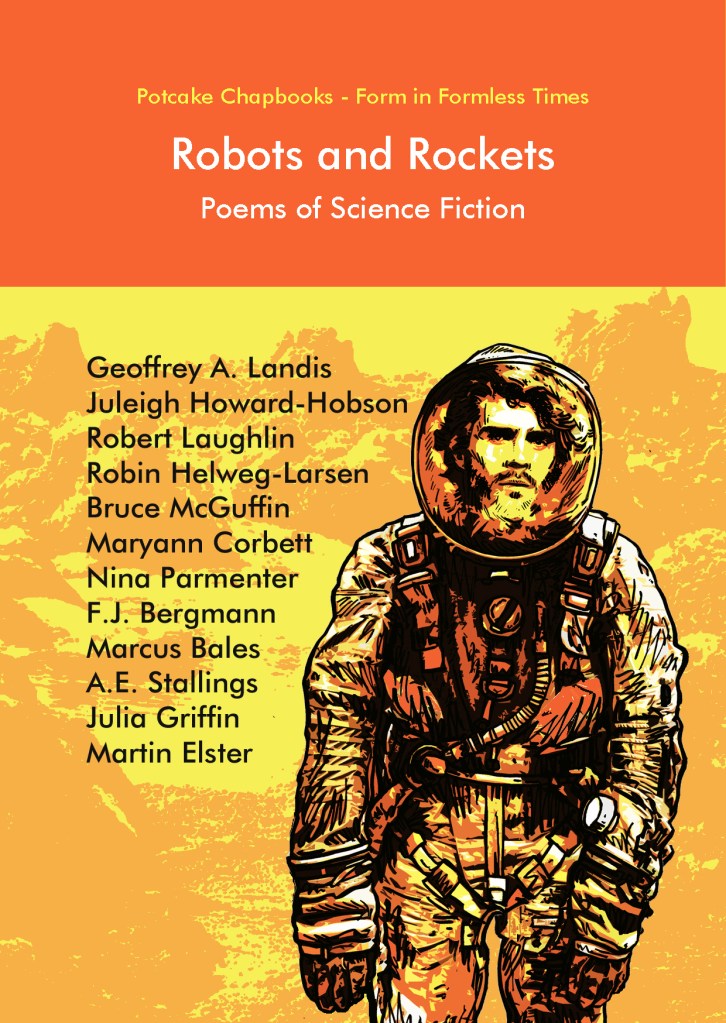
Launch: Potcake Chapbook 9, ‘Robots and Rockets’

I’m very happy to announce that the ninth in the series of Potcake Chapbooks has been launched into orbit: ‘Robots and Rockets’ is an SF issue (could you guess?) and has poems by five newcomers to the series: Bruce McGuffin, Juleigh Howard-Hobson, F.J. Bergmann, Julia Griffin and Geoffrey A. Landis – many already known outside SF through Light poetry magazine and other places. Returning poets are Maryann Corbett, Nina Parmenter, Marcus Bales, A.E. Stallings, Martin Elster and myself.

Copies can be ordered from Sampson Low for four or five Pounds or Dollars, including postage worldwide. Enjoy it! It is, of course, a blast(-off)!

Potcake Chapbooks: Updated Call for Submissions

The “Potcake Chapbook” series is named for the dogs of the Bahamas and the Caribbean – strays that live off the burnt scrapings of cooking pots. The poems in the series are a mixed bunch – but the potcake of our logo wears a bow tie to show that he and all the poems are formal. These poems are memorable in part because they rhyme and scan, as all truly memorable (i.e. easily memorisable) poetry does. We subscribe to the use of form, no matter how formless the times in which we live.

Potcakes hunt around the back streets and beaches, looking for something unguarded to eat. Like a potcake, I’m always looking to see if there is some good poem to carry off. The plans for the chapbooks are a bit sketchy, always changing–everything depends on what I run across and what Alban Low would like to illustrate. Perhaps half the poems we have published have come from my poking around back issues of online poetry magazines; and the other half have come from material that has been sent for me to look at.

When there is enough good material on a single theme to fill 13 pages of a chapbook (still leaving room for Alban’s work, of course), then it may become the next project. But until a chapbook actually goes to print everything is subject to change. An even better poem may show up and displace one tentatively placed. A slew (or slough) of poems on a new theme may cause a reprioritisation of planned chapbooks.

This is one of the reasons that I prefer to consider only poems that have already been published–so that I don’t feel guilty about having a bunch of poems that will sit with me for months, years, and may or may not be included in the Potcake series. I have flagged a thousand poems that interest me; but I can only publish a dozen in a chapbook, and only a few chapbooks will get produced in a year.

However I am always keen to read and consider rhymed and metered verse that has already been published. There are several chapbooks that are jostling in the queue for completion and publication:

Travels and Travails (travel)
City! O city! (urban life)
Just a Little Naughty
Portraits Unpleasant
Various Heresies (religion)
Lost Loves
The Horror of Spring! (seasons)

and there are more; but the next one in the series, to come out early in 2021, will be one of science fiction, tentatively ‘Rockets and Robots’. Like all the chapbooks listed above, it is nearly full already. As with all of them, if I run across another poem I really like, I’ll include it.

Poems in the chapbooks run from two or three lines to some 40 lines in length–obviously, with space at a premium, poems over 20 lines and running over one page are less likely to be included… but it does happen. Other criteria: I’m looking for wit, elegance, a variety of traditional and nonce forms, a variety of voices and moods: happy, sad, angry, sardonic, meditative… anything interesting I can scrounge. If you have something you think I might like, on any topic, please send it along to robinhelweglarsen@gmail.com

I can’t promise to use it, but I will read it and reply!

Sonnet: “The Four Evangelists of the Apocalypse”


Apocalypse

Corporate Apocalypse

The evangelists of the apocalypse,
our old friends Murder, Murk, Lucre and Grab,
advance, all slinging guns and swinging hips–
valkyries, horsemen, ravens – rend and stab,
corporate-coloured red, blue, yellow, green–
give opiate online lives, plant-meat kebabs,
while sucking out the everything between
to flesh and farm their diabolic labs
where rats, replaced by chimps, replaced by us
are harvested, dissected and thrown out.
The Evangelists, a giant octopus,
seize and build all that maximizes clout
till A.I., comet-like (think Yucatan)
wipes homo sapiens out, grows Superman.

This apocalyptic SF sonnet was published in Star*Line, now edited by F. J. (Jeannie) Bergmann of Wisconsin. Think of it as pure optimism: the evil corporate giants were sucking humanity dry, but then A.I. takes over and, yes, wipes us out altogether, but at least replaces us with something better! The optimism being that we may not be actually eliminated, more like upgraded…

Do I believe that? No. But I also don’t think we can even guess at what the world will be like by the end of this century. Humans will be transforming themselves unpredictably by then. So hopefully the planet will still have some form of us around, and not just postnuclear cockroaches.

Poem: “The Trendy”

In the future when your bioluminescent pet
Provides controllable lighting to your house from mine
In the Zero Light Pollution of night’s jet,
The Trendy flip on inefficient retro lights and pay their fine…

In the future when the media’s fight
Is over whether you should spray on clothes
Or blowing them on instead’s more right,
The Trendy grow them overnight from scalp to toes…

In the future when the Parking lots
Reserve the easiest, convenient spots
For Normals, called the Unenhanced (or Dead),
The Trendy disassemble their aircars instead,
Grow new wings to get home…

In the future when a thought
Will activate your airjets, wings and wheels
(Charged while you sat in sun)
To move a mile or two to friends or meals,
The Trendy paleolocomote, they “walk”,
Even relearn to “run”…

In the future when direct mind-linking 
Lets your band of friends share feeling, thinking,
“Anyone with telekinesis, raise my hand”
Becomes a daily battle for control of prey;
A Natural Leader manages subordinates –
Whole groups of Zombies which one man coordinates –
The Trendy dare to live offlinked, un-band,
As though alone as in the Olden Days…

In the future when Earth’s overcrowded
And you turn on AI, AR, AV
And instead of crowds and concrete, see a tree,
And follow a manipulated path, alone as Truman,
And mole-like tunnel, blind, controlled, enshrouded,
The Trendy leave the Earth for Mars and stars,
Wrapped in themselves and their AIs, ARs,
Sublimate selves into the posthuman,
Are never seen again alive…
But they see all. They are become the Hive.

“The Trendy” is yet another SF poem, this one first published in Bewildering Stories. The editor, Don Webb, commented that “The syntax in ‘Trendy’ is hair-raising at times, but I figure it goes with the humour. And I am fond of humour!” Very tolerant of him. But then, he’s Canadian, eh?

The formality of the poetry is also somewhat questionable, but for the most part it’s in iambics and rhymes. No different from some of Matthew Arnold’s work:

And the rest, a few,
Escape their prison, and depart
On the wide ocean of life anew.
There the freed prisoner, where’er his heart
Listeth, will sail;
Nor doth he know how there prevail,
Despotic on that sea,
Trade-winds which cross it from eternity.
Awhile he holds some false way, undebarred
By thwarting signs, and braves
The freshening wind and blackening waves.
And then the tempest strikes him…

From ‘A Summer Night’, which I learnt by heart in school and have been inspired by ever after. That’s my excuse, anyway.

Sonnet: “When the A.I. Hit”

When the AI hit, Diamandis, Thiel,
Branson, Page, Brin, some Russians and Chinese
became the gods of Earth, of skies and seas,
by grappling it to themselves with hoops of steel;
appeared as giants, credit cards, or scotch
to screw with mortals, rape them just for play;
fought, and destroyed the Earth, blasted away…
taking along, as fleas on arms, legs, crotch,
musician, writer, politician, whore,
derelict, linguist, murderer, the insane…
some samples of the human heart and brain
as being interesting distractions for
the gaps of interstellar time and space.
Aspire to fleadom, folks, or leave no trace.

This sonnet was originally published in Snakeskin a couple of years ago. Like the previous sonnet I put up here, it reflects my concerns about the near future. The list of people who might take advantage of the possibilities offered by the ongoing revolutions in genetics, robotics, A.I. and Nanotechnology should today include Elon Musk–but the candidates for practical godhood change every few years.

And what the vast majority of left-behind humans can do about it is anyone’s guess.