Tag Archives: The Road Not Taken

Short poem: RHL, ‘The Self-Aware’

Most insecure are those, the self-aware:
for all their acts are pointless and they know it,
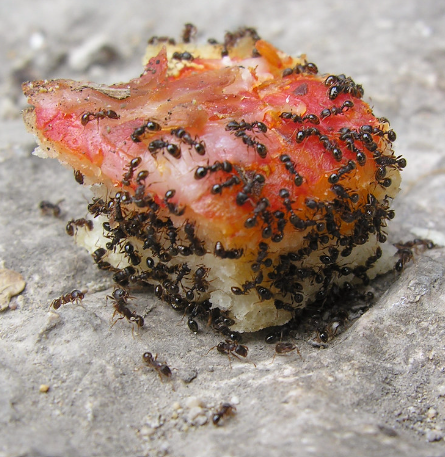
scurrying like ants on an eclair…
the universe, indifferent, looks askance.

This insecure mode breeds defensiveness
and therefore arrogance, not least in poets
who know their work especially valueless…
even to other ants.

*****

I think we poets, who can be so rude about other people, need to be rude about ourselves occasionally. Not that the universe cares one way or the other.

This poem was originally published in The Road Not Taken – A Journal of Formal Poetry – in Fall 2016. Thanks, Dr. Kathryn Jacobs!

Photo: “Ant picnic” by dmcneil is licensed under CC BY-NC-ND 2.0.

Susan McLean, ‘The Only Feminist in High School’

Two roads diverged in high school when a student
chose to study women’s liberation
to write her senior paper. Though imprudent,
that choice provided her an education

in bias, inequality, derision,
The Second Sex, The Feminine Mystique,
historical erasure, long division,
and talent gagged and shackled by physique.

She swore off make-up, wanted a career
but maybe not a family. She read
Kate Millett, Gloria Steinem, Germaine Greer,
and gave a speech on beauty, which, she said,

turned women into objects and betrayed
their goals. She didn’t want to be a mom
or movie star. When she went out, she paid.
Though never asked, she boycotted the prom.

The boys were baffled and the girls disdainful,
for who would want to talk to, much less date her?
And what she lost was obvious and painful,
while what she gained was only clear years later.

*****

Susan McLean writes: “This poem starts with the opening phrase from Robert Frost’s ‘The Road Not Taken‘ and it records a turning point in my own life of the sort that his poem describes. Though I hope that feminists are not such a rarity among high school students anymore, the term “feminist” is still so loaded that I tend to think of it as “the new F-word.” At one level, it still mystifies me that looking for equal opportunity and equitable treatment remains so controversial, but at another level, every society has been built on unequal opportunity and inequitable treatment since recorded history began, so it is not surprising that each step away from that system has made some people feel that the world was ending.

“I learned long ago that what a poem doesn’t say is as important as what it does say, so the ending of this one does not specify what was lost or what was gained. I want the readers to think about those things, so I don’t want to tell them what to think. As for why I wrote this in the third person, these events happened so long ago that it almost feels as though they happened to someone else. I am and am not that girl.

“The poem first appeared in my second poetry book, The Whetstone Misses the Knife.”

Susan McLean has two books of poetry, The Best Disguise and The Whetstone Misses the Knife, and one book of translations of Martial, Selected Epigrams. Her poems have appeared in Light, Lighten Up Online, Measure, Able Muse, and elsewhere. She lives in Iowa City, Iowa.
https://www.pw.org/content/susan_mclean

Photo: “Two Road Diverged…” by wackybadger is licensed under CC BY-SA 2.0.
Sonnet: RHL, ‘The Days Have Come Unhooked’

The days have come unhooked from passing time,
its little Brio trucks are off their tracks;
the past and future mix to make their rhyme,
with pieces placed at random in fresh stacks.
Clear memories blend their present, future, past.
The days stretch out, and yet the months fly by –
you turn in circles, facing first, not last.
As childhood deepens, old age pools go dry.
Behind its smoke and mirrors, whores and pimps,
its harshly lovely playful attitude,
reality is thinning – you now glimpse
an indescribable infinitude.
The game is won – your enemies are no more,
yet you don’t end it while you max your score.

*****

Published in the Spring 2024 issue of The Road Not Taken.

Photo: “Brio freight train set” by Ben Sutherland is licensed under CC BY 2.0.

Sonnet: ‘Wanderer, or Odin/Merlin in the 21st Century’

It isn’t money, power, or (really) sex;
it’s wisdom, knowledge, understanding, truth,
the motivation from my earliest youth.
So now I watch as all our dreams turn wrecks,
as statesmen bluster, muscles bulge and flex,
economists forecast but can’t say sooth,
and life extension folks are thought uncouth–
they hoard possessions, but can’t save their necks.
I wandered, ragged, with a missing eye,
patched so none knew my implant’s extra sight,
seeking her who’d save from oblivion
the things I’ve found; for I see I must die,
and I’m now summoning the acolyte
who’ll carry knowledge on. Come, Vivien.

*****

The child wandering, the youth hitchhiking, the middle-aged tramp, the old hobo… in my view, they all have the spirit of Odin, Merlin, Hermes, Papa Legba, searching for knowledge, intermediary between the human and the divine/posthuman.

This sonnet was recently published in The Road Not Taken – a Journal of Formal Poetry. Thanks, Dr. Kathryn Jacobs!

Illustration: DALL-E

Poem: ‘The Entertainer’s Servant’

See the violinist
blocking, enchanting passing crowds with his bowing
and watch some ragged child, the very thinnest,
with held-out cap through those crowds coming and going.

Or the organ grinder
haunting the emotions and memories of all,
his songs life’s bittersweetness’s reminder….
but it’s his well-dressed monkey makes the coins fall.

And more: the child’s home work handed in
though mostly done by mummy;
and more: the wisecracks bandied in,
seemingly by the ventriloquist’s dummy…

This is the poet’s story:
somewhere some unseen Maker
wrings from a wild wand
magnificence, sadness, glory…
while the mere poet capers,
postures, and holds out a hand.

All of which is merely a complicated rumination on not knowing where poetry comes from. It feels like the initial impulse and the key words come from outside, from some muse or god of poetry… and the poet is merely a puppet: observed, apparently autonomous, but not the true artist.

This poem was published in The Road Not Taken: The Journal of Formal Poetry. It may not be as formal as you would expect, but it has a steady structure complete with rhymes. I make no apologies for its inadequacies – the poem itself allows me to blame the unknown puppeteer.

Sonnet: ‘Fat-shaming’

Gorging on food, an atavistic trait
useful, essential, in the paleolithic–
like a man’s lust for teenage girl as mate–
is one not needed now, shamed as horrific.
It’s healthy, though, to recognise such drives,
note where they came from, why they once were good:
these traits in which the primitive survives,
inbuilt components of our personhood.

It’s acting on them, though, that we deplore:
those who fuck teens and those who overfeed,
like those who steal, or lie, or start a war,
aren’t shamed for primitive desire, but deed–
like those who pray to gods, follow religions,
or skry the future from entrails of pigeons.

It’s not PC these days to even mention various issues, and I seem to have covered a lot of them in this sonnet. But it’s a decent enough Shakespearean sonnet (iambic pentameter, ABAB CDCD EFEF GG, volta between the octave and sestet) and also a good enough expression of an opinion, so what is there to complain about? Originally published in that not-always-comfortable but always formal ‘The Road Not Taken – A Journal of Formal Poetry’. Thanks, Dr. Kathryn Jacobs!

“Young and Fat” by Tobyotter is licensed under CC BY 2.0

Poem: ‘God Modernises’

We sealed Joe’s body in its envelope
for dropping in the mail slot in the ground,
addressed to God. But the Recording Angel
coughed, said, “God has an online work-around,
so doesn’t take them like that any more.”
How email Joe to God, to bless or damn?
Cremation goes to Heaven… but, knowing Him,
souls just end up in limbo, marked as spam.

Another strange little poem; who knows where they come from, or why? Where they go is more knowable: to whoever is most likely to accept them! In this case, The Road Not Taken–a journal of formal poetry. Thank you for tolerating my morbid flippancy, Dr. Kathryn Jacobs!

I think we have all lost friends and family during the pandemic. The good news now is that vaccines are so widely available. We still have a “pandemic of the unvaccinated”, and the sooner those people come to their senses, the sooner everyone can focus on the other major issues: climate catastrophe and corrupt demagoguery. (But it’s still a beautiful world!)

“capper or beginning? (crematorium Zuerich/Schweiz)” by SphotoE is licensed under CC BY 2.0

Potcake Poet’s Choice: Kathryn Jacobs, ‘The Innocent’

They trust us, and they shouldn’t: butterflies
and earnestly pursuing preschoolers
careen among us, prone to accidents,
disasters in the making. Both of them

incapable of short-cuts, see-sawing
oblivious among the negligent,
convinced that we know best, who disregard
how short their legs and lives are.

Some of them
(the lucky and unswatted) mobilize
their stubby forces to stay out of reach,

But most of them launch headlong, more afraid
of being left behind or swallowed, than

of damaged wings and feelings, wedged against
rude curb-stops or cupped hands –

Kathryn Jacobs writes: “I am choosing The Innocent because it reminds me of what I’ve lost: of my son Raymond in particular (though he is not in the poem overtly). Ray died at 18. I am sending a photo of Ray with his twin: it’s a photo that reminds me of more Innocent days.”

Kathryn Jacobs is a professor at Texas A&M-C and editor of The Road Not Taken. Her fifth book of poetry (Wedged Elephant) appeared in Kelsay Books. Her poems have appeared in Measure, The New Formalist, Southern Poetry Anthology, Mezzo Cammin, etc. Currently she is working on a book of Dan.
http://journalformalpoetry.com/

Poem: ‘Zippori Story’

Context, people, context! Remember that
Herod was building his new royal city
Zippori some four miles from Nazareth
when Jesus was a child. And Joseph would
have walked there, worked there, daily; Jesus too.

When Judas of Galilee raised his revolt,
captured and burned it–Roman legions came,
defeated him, cast him in the Sea
of Galilee, a millstone round his neck,
and crucified two thousand rebel Jews.

This was the year that Joseph disappears
from Gospel narratives, all unexplained.
When Jesus chased two thousand Legion pigs
over a cliff into that selfsame sea,
think retribution; think guerrilla strike.

The lack of stories and legends about Jesus’ step-father is one of the great Christian mysteries. He simply disappears from the narrative in the year of Judas of Galilee’s revolt, and is never mentioned again in polite society. Nor is Zippori ever mentioned in the Bible, either by that name or the Romanized Sepphoris, although it was the local capital of Galilee. I have laid out what seem to me obvious suspicions in The Gospel According to the Romans, and blogged about it here and there.

This poem was just published in The Road Not Taken, a Journal of Formal Poetry, in the section themed on ‘Replies’. My thanks to Dr. Kathryn Jacobs.

Poem: ‘We Dreamed’

We dreamed we could fly to the moon
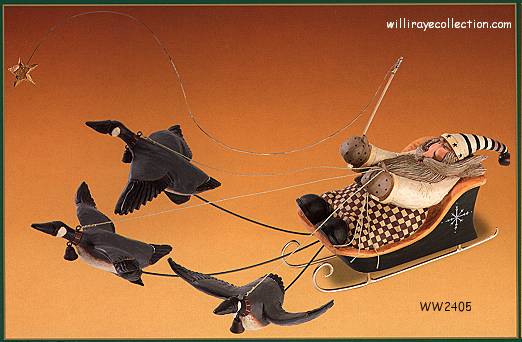
With six grey geese pulling our sleigh.
We dreamed we could fly to the moon –
We can, but not in that way.

We dreamed we could see round the world
With a magical mirror display.
We dreamed we could see round the world –
We can, but not in that way.

We dreamed we could live forever
By doing whatever gods say.
We dreamed we could live forever –
We can, but not in that way.

It seems to me that anything that humans can imagine, some of them will try to achieve. Further, that the fairytale and fantasy dreams of preliterate days still continue, and they are indeed being achieved–though not necessarily as was originally imagined. Can we (or our descendants) attain indefinite lifespans? I think so, but probably not as the kind of human that we are today. After all, if you could halt ageing, if you could rejuvenate the body, what else would you think of tinkering with?

This poem was originally published in The Road Not Taken – the Journal of Formal Verse.

Photo: Southern Flight, Williraye Studio