Tag Archives: using form

Weekend read: Songs as poems: Ned Balbo, ‘Shirts of the Distant Past’

I remember you some mornings in the midst of getting dressed
Surprised that I recall exactly when I wore you last

The paisley patterns spilling over sleeves
The Nehru collars nobody believes
… were popular
The turtlenecks no turtle ever wore
Those V-neck disco shirts that dance no more
… Spectacular!

Are you lurking in the closet among other clothes I own?
I gently touch your shoulder—a brief flash, then you’re gone

The concert souvenir shirts we outgrew
The obligation gifts we always knew
… were wrapped in haste
Thick cotton plaids lost lumberjacks would covet
That college T tossed out, but how we loved it
… still, such a waste

You promised transformation, but what else did you require
The full ensemble led us toward transcendence or desire
(Attire of another age, accessories all the rage)

Bell-bottom flares that took flight as we walked
Embroidered jeans so tight that people talked
… of nothing else
Those bomber jackets earthbound boomers froze in
Those leather wristlets grunge guitar gods posed in
… with death’s head belts

You folded in your fabric everyone I used to be
Now that you’re gone, I realize I’m left with only me
But if I run across you in some thrift shop bargain rack
Or rummaging recycling bins, what else would you bring back?
Who else will you bring back?

Some nights I see you in my dreams of places far away
I’m wearing you as if I haven’t aged a single day
Shirts of the distant past, shirts of the distant past

*****

Ned Balbo writes in Rattle #85, Fall 2024 (where you can hear the song performed): “I’ve played guitar since I was 5, keyboards since I was 13, and ukulele since I was 42, but my time as a ‘professional’ musician—someone paid to play—is scattershot and humble. Ice rinks, a Knights of Columbus Hall, a campers’ convention in Yaphank, a crowd of disco-loving retirees at Montauk’s Atlantic Terrace Motel, company picnics, school dances, private parties, and more—these were where I played guitar, sang, and devised versions of the Beatles, Bowie, et al. in two Long Island cover bands. The Crows’ Nest or Tiffany’s Wine-and-Cheese Café hosted noise-filled solo acoustic gigs, with more receptive listeners for original songs and covers of Elvis Costello or Eno at my undergrad college’s coffeehouse. More recently, I’ve written lyrics to Mark Osteen’s preexisting jazz scores (look for the Cold Spring Jazz Quartet on Spotify, Amazon, CDBaby, and elsewhere) and returned to solo songwriting and recording with ‘ned’s demos’ at Bandcamp. As a relic from the age when lyrics were sometimes scrutinized with poetry’s intensity, I listen closely to the sonics of language, whether sung or spoken, and look up to lyricists whose words come alive both aloud and on the page.”

Balbo: Robin, thanks for posting ‘Shirts from the Distant Past’, my little song-poem hybrid. I’ll be happy to answer any questions you have. 

Editor: For myself, I see a continuum from womb heartbeat to dance to music to song to formal verse.  I would love to have any additional comments on the subject in general, or on the creation of this poem in particular, related to these elements.

Balbo: I love what you’re saying about womb, heartbeat, and dance. A formative text for me is Donald Hall’s essay on poetic form’s psychic origins, ‘Goatfoot, Milktongue, Twinbird‘. You probably know it. Hall proposes three metaphors for poetry’s deepest sources: Goatfoot, the impulse toward dance, rhythm, movement; Milktongue, the pure pleasure of language, the texture of words when spoken; and Twinbird, our desire for form, symmetry, wholeness, which is complicated and energized by the contradictions it contains and reconciles. To me, Hall’s terms just sound like different ways of envisioning exactly what you’re talking about. They apply as much to song as they do to verse. The meter varies by stanza or section: iambic heptameter (seven iambs) in the couplet verses—not so different, after all, from the tetrameter to trimeter shifts we find in many ballads. The “shirts” title refrain, which doesn’t appear in print till the last line, are two trimeter phrases. It was fun to find surprising rhymes to hold the whole song together. 

Editor:  Regarding ‘Shirts’, quite apart from the charming idea, I like the work that has gone into the metre, rhyme, idiosyncratic structure.

Balbo: Thank you. I wrote and sung ‘Shirts’ as a poetic song lyric—one that could be read and enjoyed but, ideally, would be heard. I view its structure as that of a call-and-response song in traditional format.  (In rock, for example, I think of George Harrison’s ‘Taxman’ with John and Paul harmonizing “Taxman, Mr. Wilson, Taxman, Mr. Heath” in answer George’s lead vocal.) In ‘Shirts’, the call-and-response comes from using the title as a refrain: it explains who the “you” is in each verse (when you hear it, anyway—I cut it from the visual text for fear it would seem repetitious without the music). Sometimes the title refrain answers a statement in the verse: “I gently touch your shoulder—a brief flash, then you’re gone” sounds like I might be talking (or singing) about a person, but it turns out to be those long-lost shirts—a playful fake-out.

Then there are the brief call-and-responses of the bridge sections which comment on the previous line or complete an unfinished thought: “Those V-neck disco shirts that dance no more…spectacular!” or “Embroidered jeans so tight that people talked…of nothing else.” They’re in iambic pentameter, with the second and fourth changing to heptameter if we count the two extra beats (set off on their own line) answering them.

The so-called “middle 8” (usually eight bars used to break up the verse-chorus/verse-chorus model) is delayed till just before the end: “You folded in your fabric everyone I used to be, etc.”  That’s meant to set up the payoff: it’s not the shirts but our lost selves— along with loved ones, lost ones, everyone—we’re missing or mourning. But writing or singing about shirts—clothing that shapes and defines us—makes the lyric less depressing, leavens it with wit (I hope) so that what’s more poignant comes at the very end where more dramatic music can counterbalance the mood—the contradictions reconciled, as Donald Hall might have put it.  

Of course, the very end is quieter – wistful again.

As I mentioned in Rattle (thanks again to Tim Green for giving both words and music a home), I grew up in the era when lyrics were often analyzed as seriously as poetry (and not just by undergraduates in long-ago dorm rooms under black light posters). Whether I’m writing poetry or songs, I listen closely to the different ways words sound—what works when sung doesn’t always work as well when spoken or encountered on the page—so when I do write lyrics, I try to make them both readable and singable. 

Poems and song lyrics operate differently, but there’s lots of overlap between them. I wanted ‘Shirts’ to operate on both levels, even if it tilts more toward song lyric than poem. 

*****

Ned Balbo’s six books include The Cylburn Touch-Me-Nots (New Criterion Prize), 3 Nights of the Perseids (Richard Wilbur Award), Lives of the Sleepers (Ernest Sandeen Prize), and The Trials of Edgar Poe and Other Poems (Donald Justice Prize and the Poets’ Prize). He’s received grants or fellowships from the National Endowment for the Arts (translation), the Maryland Arts Council, and the Mid Atlantic Arts Foundation. Balbo has taught at Iowa State University’s MFA program in creative writing and environment and, recently, the Frost Farm and West Chester University poetry conferences. His work appears in Contemporary Catholic Poetry (Paraclete Press), with new poems out or forthcoming in Able Muse, The Common, Interim, Notre Dame Review, and elsewhere. He is married to poet and essayist Jane Satterfield.

Literary: https://nedbalbo.com
Music: https://nedsdemos.bandcamp.com
‘Fluent Phrases in a Silver Chain: on finding poetry in song and song in poetry’ (essay in Literary Matters): https://www.literarymatters.org/14-2-fluent-phrases-in-a-silver-chain-on-finding-poetry-in-song-and-song-in-poetry/

Latest book: The Cylburn Touch-Me-Nots (Criterion Books): https://www.amazon.com/exec/obidos/ASIN/1641770821/thenewcriterio

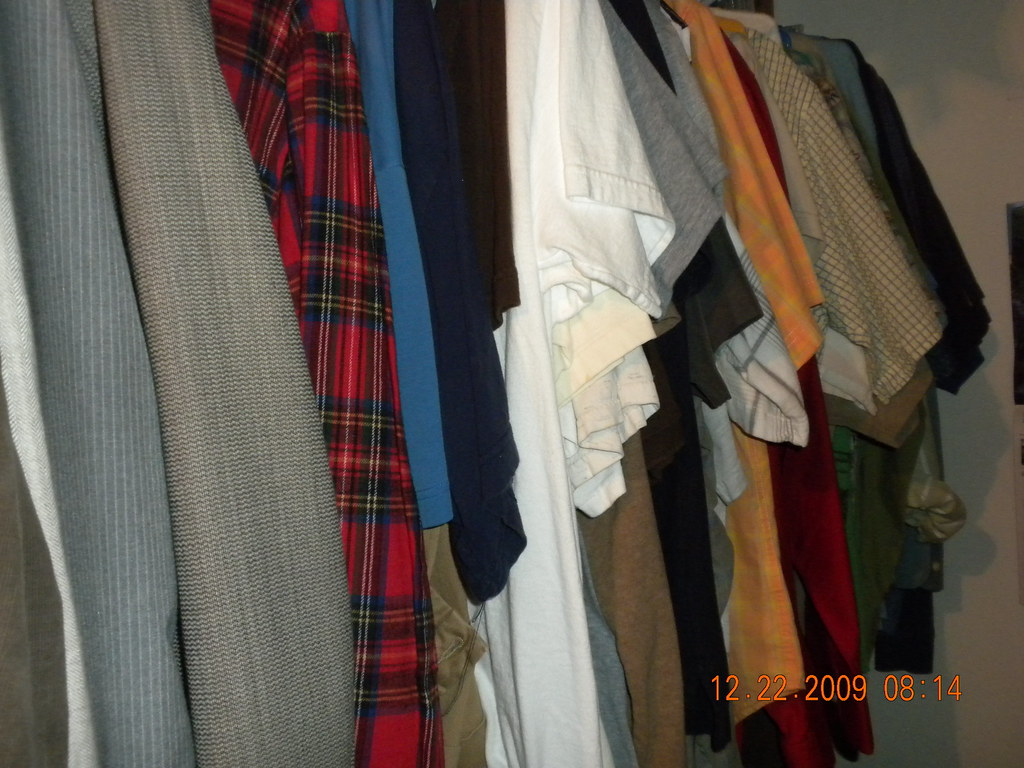
Photo: “December 22-31, 2009” by osseous is licensed under CC BY 2.0.

Using form: Villanelle with a limp: Susan McLean, ‘Instructions for Climbing and Descending’

Good foot goes to heaven; bad foot goes to hell.
When every step torments and pain is chronic,
you can’t do as you did before you fell

and sprained your ankle. As the tendons swell,
don’t make things even worse. Learn this mnemonic:
good foot goes to heaven; bad foot goes to hell.

Take one step at a time. Do not rebel
or grumble that restrictions are moronic.
You can’t do as you did. Before you fell,

you bounded up the stairs like a gazelle,
but now your gait is nearly catatonic:
good foot goes to heaven; bad foot goes to hell.

You’ve always known it doesn’t help to dwell
on loss. You should let go, but (how ironic!)
you can’t. Do as you did before you fell,

but try to play it safe while getting well.
The best advice is simple, yet Miltonic:
good foot goes to heaven; bad foot goes to hell.
You can’t do as you did before. You fell.

*****

Susan McLean writes: “I love villanelles. I like them partly because they are songlike and partly because they present interesting challenges for rhyming and for varying the repeating lines, known as repetends. I thought at first that I had set myself an impossible task with my “-onic” rhymes, but they kept surprising me and leading me in new directions. I was not planning to refer to Milton when I started, for example, but when I stumbled on “Miltonic,” it fit perfectly with the metaphors in the first line. When I started, I also didn’t realize how many ways the second repetend could be varied while still making literal sense.
“The idea behind the poem came from real-life experiences. I had sprained my right ankle once, and after I wrote this poem, I broke it twice. However, the first line, which is literally the mnemonic device offered by a physical therapist as a reminder of which foot to step on when going up or down stairs, was one I heard secondhand. My partner John was told it by his therapist when he had a painful foot. The rest of the poem is in lines with five beats (iambic pentameter), but that line has six. I decided to use it, nevertheless, because the extra beat in that repetend slows the line down, mimicking the slow gait of the person with the sprain. It also makes the line itself seem to limp.
The poem was originally published in First Things and later appeared in my second poetry book, The Whetstone Misses the Knife.”

Susan McLean has two books of poetry, The Best Disguise and The Whetstone Misses the Knife, and one book of translations of Martial, Selected Epigrams. Her poems have appeared in Light, Lighten Up Online, Measure, Able Muse, and elsewhere. She lives in Iowa City, Iowa.
https://www.pw.org/content/susan_mclean

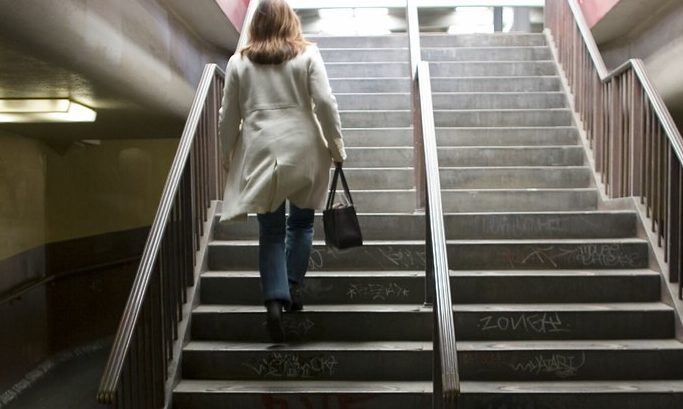
Photo: “How Many Times Do You Have to Fall Before You End Up Walking” by Thomas Hawk is licensed under CC BY-NC 2.0.

Short poem: RHL, ‘I Started Out Alone’

I started out alone,
No numbers and no words.
The people gave me food and clothes.
I loved the sun and birds.

And when I reach the end
Numbers and words all done,
Have to be fed and dressed again,
I’ll love the birds and sun.

*****

This is one of my favourite poems, for several reasons:
First, it extols the combination of curiosity, enjoyment and acceptance that I believe is appropriate for this thing called life.
Second, it is simple in expression: simple words, simple rhythm, in iambics with simple full and slant rhymes.
And third (and perhaps most importantly) it is easy to memorise: it has lodged itself in my brain without any effort or even intent on my part and, as this blog frequently claims, that is the essence of poetry.

‘I Started Out Alone’ was originally published in Bewildering Stories in 2019. More recently it was included in a batch of my poems that Michael R. Burch spotlighted in The Hypertexts for August 2024.

Photo: “Baby face” by matsuyuki is licensed under CC BY-SA 2.0.

R.I.P. Ann Drysdale… ‘Weirdness Observed’

What is she doing, the mad old bat,
Down on her knees in the garden?
In her busted boots and her happiness hat
She doesn’t know and she wouldn’t care
That the size of the arse sticking up in the air
Is shading so much of the garden.

She pulls out a weed, the mad old bat,
Out of the face of the garden.
She tuts at the trauma and fusses it flat
While the waste-not weed she will put to use
By turning it into salubrious juice
And giving it back to the garden.

What is she up to, the mad old bat
As she struts, stiff-kneed in the garden
With her doo-dah dog and her galloping cat?
Spreading compost and scattering seed
So one may sprout and the other may feed
In the windmill world of the garden.

She’s a cruel cartoon, is the mad old bat
As she talks to herself in the garden.
What on earth is this? and Good Lord, look at that!
And she squats and she mutters and giggles out loud
And informs her potatoes they’re doing her proud
As she creeps like a crone in the garden.

Where is she going, the mad old bat
As the sunset blesses the garden?
She is going nowhere, and that is that.
She will dig in the dark till the dawn sky pales
And the damp on her knees and the dirt in her nails
Go singing the song of the garden.

*****

Ann Drysdale, who died unexpectedly on August 16th (apparently in her sleep) was a superb poet and self-aware, self-directed, life-rich eccentric lover of the natural world, of gardens, of animals and birds, of unpretentious people in all walks of life. I knew her only through her poetry and our correspondence – which is to say, well enough to deeply regret that I never got to meet her in person.

The poem above was collected in Miss Jekyll’s Gardening Boots, Shoestring Press, 2015; as was the poem that I put up on this blog earlier this month, ‘When Mister Nifty Plays the Bones‘. Here is the bio that she chose to represent herself with:

Ann Drysdale still lives in South Wales. She has been a hill farmer, water-gypsy, newspaper columnist and single parent – not necessarily in that order. She has written all her life; stories, essays, memoir, and a newspaper column that spanned twenty years of an eventful life. Her eighth volume of poetry – Feeling Unusual – came together during the strange times of Coronavirus and celebrates, among other things, the companionship of a wise cat and an imaginary horse.”

She was a much-loved member of the world of (especially formalist) poetry. George Simmers posted her ‘Song of Wandering Annie’ in the Snakeskin blog, and there is a tribute (and an enormous selection of her verse) in The HyperTexts. She was a truly good person.

Weekend read: long poem: ‘Catullus LXIII’ translated by George Simmers

Across the sea goes Attis in his ship of sleek rapidity,
To Phrygia, and its forest, which he rushes into eagerly,
The great goddess’s territory, her tree-dark sanctuary.
There he grabs a flint; he jabs and savages his genitals,
Stabs until he’s sure he’s lost the burden of virility;
His blood spills its darkness on the sacred ground surrounding him.
SHE now, never he, SHE reaches for a tambourine,
The tympanum, Cybele, that is used by your initiates,
She beats out her message on the leather of the instrument;
Up she rises, and calls out to all her followers:

        My she-priests hurry, to these woods of our divinity.
        Hurry all you wanderers, all great Cybele’s worshippers,
        You searchers for an otherwise, you riskers and adventurers
        You voyagers who’ve dared the seas that match you in your truculence,
        You like me whose dream has been self-immolated genitals,
        Like me detesting Venus with the utmost of ferocity,
        Set free your minds with the liberty of ecstasy.
        Gladden our goddess, hurry here to worship her,
        Hurry to this Phrygian domain of femininity,
        Hurry to the cymbals, to the gentle flute’s seductiveness,
        Towards the fevered drums and the Maenads’ ululations
        There we must hurry for the celebration ritual.

Attis thus addressed them; she had all the look of womanhood;
Tongues lisped lovingly and cymbals clashed resoundingly.
Attis led on frenziedly, her wild breath labouring
Free as a heifer who’s escaped the yoke of drudgery,
Weary in her lungs, she through the woods leads rhythmically
The Gallae, who are following behind her storming leadership.

They reach the home of Cybele, wearied out and staggering,
Hungry, over-stretched, exhausted by excessiveness.
Sleep commands their eyelids to slide down sluggishly
Excitement leaves their bodies; rage gives way to drowsiness.

Dawn comes. Sunlight. The golden face that radiates
Alike above the firm soil and the great sea’s turbulence,
Which drives away darkness and banishes the weariness
Even from Attis, who is gradually awakening.
(For the goddess Pasithea’s taking Somnus to her bosom now.)
Attis, pseudo-woman, is freed now from delirium
Remembers what she did before, and sees herself now lucidly,
And knows what she has lost, and now her heart weighs heavily.
It labours in her body as she turns and walks back steadfastly,
Steadfastly and sadly, heading back towards her landing-place.
Her tearful eyes look out to sea; she renders this soliloquy
Remembering her birthplace despairingly, lamentingly.

        My motherland, my origin, the one place that created me,
        I must shun you like a thief now, like some dishonest runaway.
        Deserting you for Ida, for a bleak and chilly wilderness,
        Where brute beasts lurk, fired by hunger and rapacity.
        Freed now from my madness by the shock of the reality,
        My eyes weep with a longing for the home that was my nourisher.
        Must life be now this wilderness, with only fading memories
        Of when I was a man – but I have severed that identity –
        A young man, supple, and the flower of the gymnasium,
        A champion of champions among the oily combatants
        Who wrestled for the glory – one who won the admiration
        And the friendship of so many – how my home was garlanded!
        But nevermore now I’ve become Cybele’s mere serving-wench,
        Now that I’m a Maenad, a half-man, whose sterility
        Must sentence me to exile, to a life of pointless wandering,
        Neighbour to the boar and the wild deer in its solitude.
        On these wild slopes of Ida, shadowed by the peaks of Phrygia.
        How I hate my rashness; my regret becomes an agony,

Her words flying upward reached the ears of a deity,
They reached the ears of Cybele, who unleashed from their harnesses
The lions of her anger, with instructions to the left-hand one:
‘Go seek out Attis, be my agent of ferocity,
Pursue him till he’s overtaken by insanity,
Make him regret attempting to escape from my supremacy,
Lash your flanks with your tail, whip up your aggressiveness
Let the place re-echo with untamed outlandish bellowing,
Toss your long red mane in anger,’ so ordered Cybele,
Loosening the brute, who charged away unstoppably,
Raging, careering, crashing through the undergrowth,
Till it reached the white shore, where the sea was opalescent,
And that is where it saw him, Attis, solitary, delicate.
The lion charged and Attis, in a terrified delirium,
Fled towards the forest, to a destiny of hopelessness,
To existence as a slave there, the property of Cybele.

Great Goddess Cybele, Lady of Dindymus,
Vent your anger, I beseech you, far from my place of residence.
May only others feel your goad to madness and to ecstasy.

*****

George Simmers writes: “I’m not normally one for explaining poems, but my Englished version of Catullus’s poem LXIII in the current Snakeskin might be fairly mystifying to anyone coming to it unprepared.

“This is a poem that is over two thousand years old, and a remarkable one. The Victorian critic W.Y. Sellar described the ‘Attis’ as the most original of all Catullus’s poems: ‘As a work of pure imagination, it is the most remarkable poetical creation in the Latin language.’

“First – to deal with a possible misconception; the Attis of this poem is not the god of that name, but a young Greek man who sails to Phrygia, the home of the Great Mother, the goddess Cybele (pronounce the C hard, like a K). In homage to her he castrates himself, to become like one of her Galli, or attendant priests. Attis celebrates jubilantly, but next morning wakes up and registers the finality of what he has done, and the irrecoverable loss of his previous identity. The poem ends with Cybele setting her lions onto him, to drive him into the forest of madness.

“Summarising the story bluntly makes it sound like a simple fable of self-harm and regret, but Catullus is not a simple poet. The poem is made more complex by the intensity of his identification both with the exultant castrated Attis, and with his later regret. Another way of looking at the poem is as a tragedy – Attis’s desire to reshape himself is a hubris that leads to his destruction. Yet although Attis is labelled a pseudo-woman (‘notha mulier’) the reality of his desire to become a woman, and the intensity of his joy when he has liberated himself from maleness, are never in doubt. Significantly, when he later expresses regret, it is not for the loss of his sexual identity, but for his social one. It is possible to see the poem as an expression of the conflict within the poet himself, between his wayward hedonistic urges and his strict Roman ethic; he imagines an extreme case of abandoning a Roman (upright male) identity and discovering the consequences.

“The poem’s intensity is in part created by the metre – galliambic. There may be Greek precedents – scholars disagree, I think – but this poem has no known fore-runner in Latin verse. It seems to be based on the rhythms of the Galli’s ceremonial music (at the Roman Megalesian festivals, presumably, where the Great Mother was celebrated, by priests carrying tambourines and castrating-knives). It is an insistent, forward-driving metre, with a unique line ending, a pattering of three short syllables. English versification is different from Roman, and direct imitation of the galliambic metre in English does not work (although Tennyson had a go in his poem Boadicea). I have tried to find an equivalent that produces a similar forward-driving rhythm. It is based on a line of two halves; before the caesura I have allowed myself some freedom, to avoid predictability, but the second half of every line hammers with dactyls, always ending with a three-syllable word or phrase. This is the best solution I’ve found to the poem’s challenge. I’ve looked at various free-verse translations, but they all seem rather slack, lacking the energy of the original. Translations into blank verse or heroic couplets make the poem too staid. The prosody of the original was unique, controlled, purposeful, and a translation needs to be equally unexpected and distinctive.

“I suspect that my version may work better spoken aloud than on the page – but then I’m attracted to T.J. Wiseman’s theory that the original poem was originally written for performance (perhaps as accompaniment to a dance, perhaps at a Megalesian festival). Elena Theodorakopoulos agrees, and in a rather good essay available on the Internet, has written:

I am convinced that the poem must have been written with performance at or around the Megalesia in mind. My suggestion is that it was written for one of the gatherings patrician families held at their homes during the Megalesia [….] It makes sense to imagine the poem performed at such an event: the thrill of the violence and the orgiastic frenzy, the mystery of who exactly Attis was, and the sexual ambivalence of the performance, would all have provided the perfect ambience for such a gathering. And when the final lines are spoken, asking the great goddess to visit others with her fury and to keep away from the speaker’s house (domus), they are spoken by the poet himself, whose identification with Attis’ frenzy during the reading must help to appease the goddess and to keep the noble domus in which the performance has taken place safe from harm.

“Catullus LXIII is a poem full of subtleties and mysteries (I keep on finding new things in it, and new ways to tweak my version,and you can expect the translation in Snakeskin to be updated from time to time). Like most readers I was first attracted to Catullus by his short poems of love and hate. I am gradually discovering that there was so much more to him. I’m now looking at poem 64…”

*****

George Simmers used to be a teacher; now he spends much of his time researching literature written during and after the First World War. He has edited Snakeskin since 1995. It is probably the oldest-established poetry zine on the Internet. His work appears in several Potcake Chapbooks, and his recent diverse collection is ‘Old and Bookish’. ‘Catullus LXIII’ is from Snakeskin 320, and the explanation is from the Snakeskin blog.

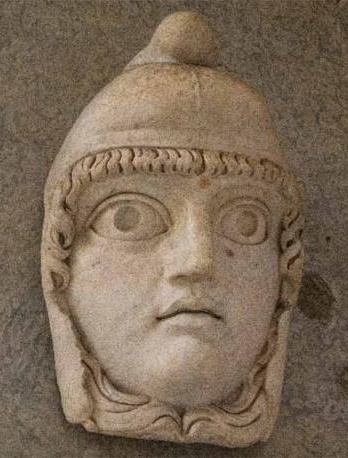
Photo: from Snakeskin 320 (August/September 2024)

Using form: Experimenting: Ann Drysdale, ‘When Mister Nifty Plays the Bones’

With things like tongs in the palm of his hand
Tongue-depressors or langues-de-chat
He tappets the rhythm of his one-man-band
As he struts in the gutter with a tra-la-la.

He twinkles his fingers and he flicks his wrist
Hey-diddle-diddle and fiddle-de-dee
And his two tame twiddlesticks jump and twist
With a click-click-clackety, one-two-three

For Nifty’s bones are made of wood
And they click like sticks with a restless chatter
His brass as he passes is loud and good
But his rattling bones are a different matter

His drum tum-tums and his trombone groans
And his hi-hat cymbal softly sighs
But all I can hear is the homely bones
That sing out the song in his small sad eyes

He dances a foxtrot, quick-quick-slow
And the hi-hat hisses with a whispered yes
But the bones, bones, bones with their no-no-no
Tick-tock to the tune of uselessness

When Mister Nifty dances by
His fingers flicker and his brass bells shine
But a part of my heart feels cold and dry
As his lonely bones call out to mine.

*****

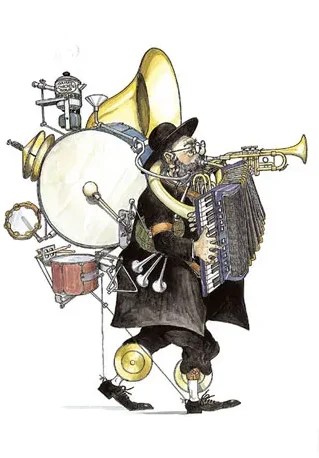
Ann Drysdale writes “I made this poem because I wanted to see if I could turn words into music, with assonance and dissonance, chiming and clashing like the components of Mr. Nifty’s one man marching band. Laying aside conventional metre and putting boom, boom, boom alongside tum titty tum titty tum. I wanted it to sing and to dance to itself, and for the reader to dance along with it.”

The poem was collected in Miss Jekyll’s Gardening Boots, Shoestring Press, 2015.

Ann Drysdale still lives in South Wales. She has been a hill farmer, water-gypsy, newspaper columnist and single parent – not necessarily in that order. She has written all her life; stories, essays, memoir, and a newspaper column that spanned twenty years of an eventful life. Her eighth volume of poetry – Feeling Unusual – came together during the strange times of Coronavirus and celebrates, among other things, the companionship of a wise cat and an imaginary horse.

Illustration – supplied by Ann Drysdale

Using form: Ruba’i: RHL, ‘Ancient Tales of Love and War’

The pipes and women wail and skirl,
deaths following the flowering girl.
Ancient tales of love and war
show costs of dimple or a curl.

Tamil spear tips illustrate
intent before the towering gate;
bangles slide on her young wrists;
kings make war when made to wait.

Gods and goddesses choose sides:
a Trojan steals a youthful bride.
Who Trojans were we’ll never know –
Greeks burn the city, once inside.

A lovely face, a swelling bust –
and treasure, fame – inspired by lust
kings storm the ramparts, steal the girl,
before, like all, they turn to dust.

*****

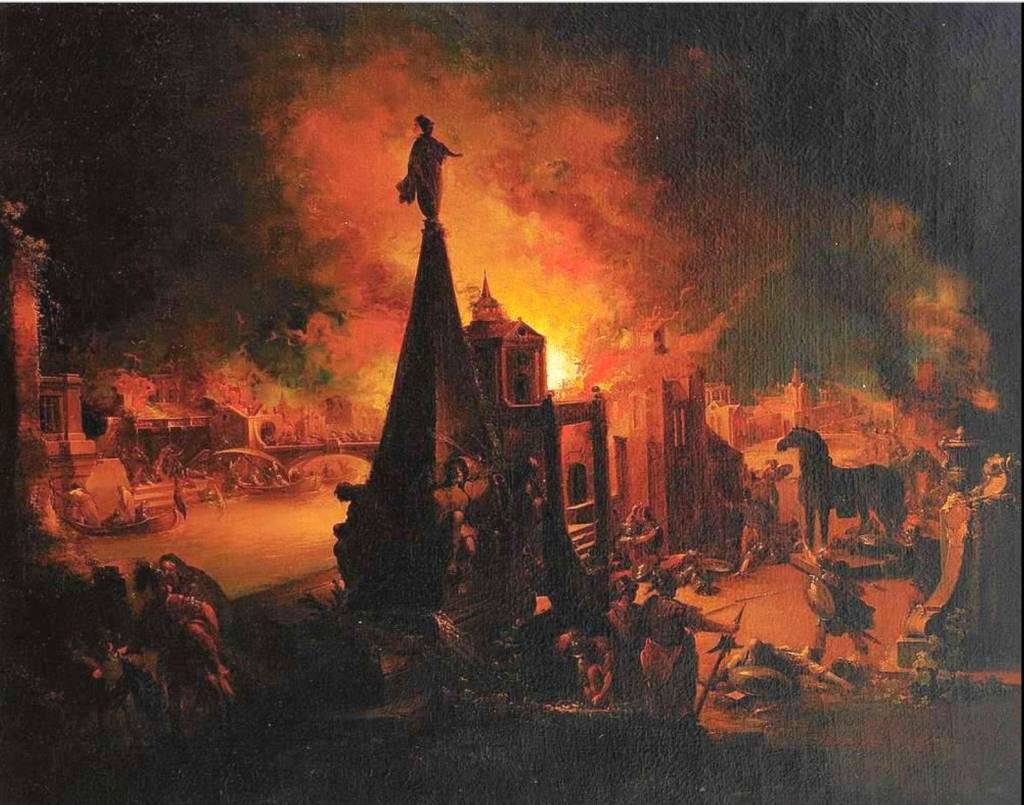
This poem was inspired by a blog post in ‘Horace & friends’ on ‘Doing without consolation – Tamil poetry, Yeats and Simone Weil‘. The author, Victoria, touches on a lot more topics than my small piece does; visit her blog to see how Yeats’ “Like a long-legged fly upon the stream / Her mind moves upon silence” connects to ancient Tamil as well as ancient Greek poetry…

My poem here is in iambic tetrameter (with some liberties taken), rhyming AABA in English ruba’i form. It was published in the current (August 2024) Snakeskin, issue 320.

Illustration: The Fall of Troy by Johann Georg Trautmann (1713–1769)

Using form: unrefrained Villanelle: Alexis Sears, ‘On Turning Twenty’

One afternoon, my father chose to die.
He was like, See ya later, guys. I think
I understand, since I don’t know if I

can hang, myself. But hang myself? (Don’t try,
they whisper, spooked.) Too young to buy a drink,
but old enough to snatch one from a guy

who says, “I’m married, but–” His twinkling eye
is trained, you know, to tell me with a wink
I’ve made the cut. One hand explores my thigh,

the other fingering a Miller. Why
are men so callous? Nowadays, I sink
beneath the comforter. I’ll never cry

because my lover’s lover’s lovely–Thai,
with toned and skinny limbs, her cheekbones pink
and angular. Ohio girl, a Buckeye.

I’m from a land where bleach blond angels fly.
Beneath the moonlight, friends and I will clink
our cups; my wondrous-child eyes defy
adulthood, till I sip. It’s bitter, dry.

*****

Editor: The poem was originally prefaced with “There are those who suffer in plain sight. – Randall Mann”

Alexis Sears writes: “I wrote this poem on the eve of my 20th birthday; nearly a decade later, I still hold it dear. ‘On Turning 20’ made me realize that what I had to say may have been more meaningful than I’d thought.”

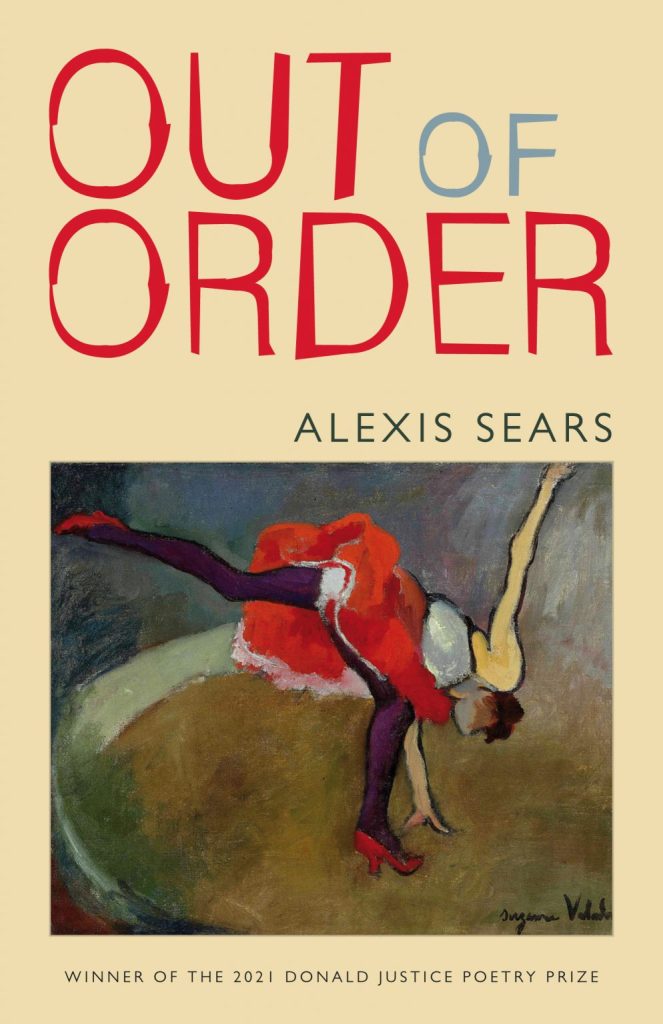
Alexis Sears is the author of Out of Order (in which this poem appears), winner of the 2021 Donald Justice Poetry Prize and the Poetry by the Sea Book Award: Best Book of 2022. Her work appears in Best American Poetry, Poet Lore, Cortland Review, Cimarron Review, Rattle, and elsewhere. She earned her MFA in poetry from the University of Wisconsin-Madison and her BA in Writing Seminars from Johns Hopkins University. Editor-at-Large of the Northwest Review and Contributing Editor of Literary Matters, she lives in Los Angeles.
https://www.alexissears.com/

Using form: Double Dactyl: Alex Steelsmith, ‘Clairevoyance’

Claire Ferchaud (fer-SHO) was a young French shepherdess and mystic who became a modern-day Joan of Arc during World War I, campaigning to add the image of the Sacred Heart to the French flag. Though her proposal was ultimately rejected as a merely symbolic gesture, it was taken seriously and honored by the distinguished General Ferdinand Foch, who became Supreme Commander of Allied Forces.

Fearlessly, peerlessly,
Claire the clairvoyant one
pushed a proposal that
fizzled, although

Foch the preeminent
generalissimo
said, “Let’s all try it—and  
not just Ferchaud.”

*****

Alex Steelsmith writes: “I tend to read widely and randomly, but ‘Clairevoyance’ didn’t come about in the usual way. Another double dactyl I had written, about the French mystic Marthe Robin, appeared in the previous issue of Snakeskin. In an email exchange I had with Snakeskin editor George Simmers about that poem, he happened to mention Claire Ferchaud, another fascinating Frenchwoman that Marthe brought to mind. I thought it would be a fun challenge to see if I could come up with one about Claire. That’s when I looked into her story and the pun leaped out for the last line of the poem. It felt a bit irreverent to be lightly punning on the name of someone who presumably was very serious and wouldn’t have been especially amused. In any case, I have George to thank for giving me the idea for the subject of the poem.” 

Alex Steelsmith’s writing has appeared in USA TodayThe Washington PostThe Spectator, LightSnakeskinLighten Up Online, and other venues. He has been a Light featured poet, and a Pushcart Prize and Best of the Net nominee. More of his writing – and his artwork – is at http://www.alexsteelsmith.com/

Photo from Snakeskin

Using form: Songs as poems: Duncan Gillies MacLaurin, ‘But At Least I Had A Ball’

I’ve always loved to sing an’ dance.
I’m better at the first.
An’ given even half a chance,
I’m bound to do my worst.
I’ve struggled sometimes with romance,
succumbed to alcohol,
but at least I had a ball.

I liked to smoke a lot of weed
an’ hash while in my prime.
I’d barely write an’ hardly read,
just wasted space an’ time.
I didn’t think that I’d succeed
with anything at all,
but at least I had a ball.

I did some LSD an’ coke,
but didn’t dare touch smack.
The people on it weren’t a joke.
I’ve never sampled crack.
I still enjoy a drink an’ smoke.
Like everyone, I’ll fall,
but at least I had a ball.

I wasn’t any good at jazz.
I tried it on trombone.
I’ve stayed away from razzmatazz.
I’d rather be alone.
I’ll never be as famous as
that guy from Montreal,
but at least I had a ball.

I found myself in poetry,
then turned it into song.
I see it as my destiny.
It’s here that I belong.
I may end up in poverty
with nobody to call,
but at least I had a ball.

*****

Duncan Gillies MacLaurin writes: “I’ve been wanting to do songs like Cohen and Dylan for years – ones that have a repetend at the end, and I’ve finally achieved that.” This poem was published in the current edition of Snakeskin.

Duncan Gillies MacLaurin is a Scottish poet who was born in Glasgow in 1962. He studied Classics at Oxford, left without a degree, and spent two years busking in the streets of Europe. He met a Danish writer, Ann Bilde, in Italy in 1986 and went to live in Denmark, where he teaches English and Latin. His collection of 51 sonnets, I Sing the Sonnet (2017), is online at Snakeskin. He blogs here. His experiences as an ex-pat poet are described in the first issue of the e-zine, The Chimaera.

Photo: “We Had Some Wild Parties” by lyndawaybi3 is marked with CC0 1.0.