Tag Archives: using form

Using form: alliteration: RHL, ‘How Brashly Brave’

How brashly brave, embroiled in this brief life,
we chance our challenge to the unchanging gods!
Strike poses, strut the strident stage of strife,
take optimistic oaths against all odds.

Fearless of foes, false friends, futility,
we wrack our reason to reach, undestroyed—
though usually of no utility—
a burst of brightness bettering the void.

*****

Although I prefer to maintain an unobtrusive persona myself, I subscribe to this philosophy of bravado existentialism. The florid alliteration suits the message.

This poem is published in the current issue of Light – thanks, Melissa Balmain and all.

Photo: “Flamboyant Emperor of the United States” by PeterThoeny is licensed under CC BY-NC-SA 2.0.

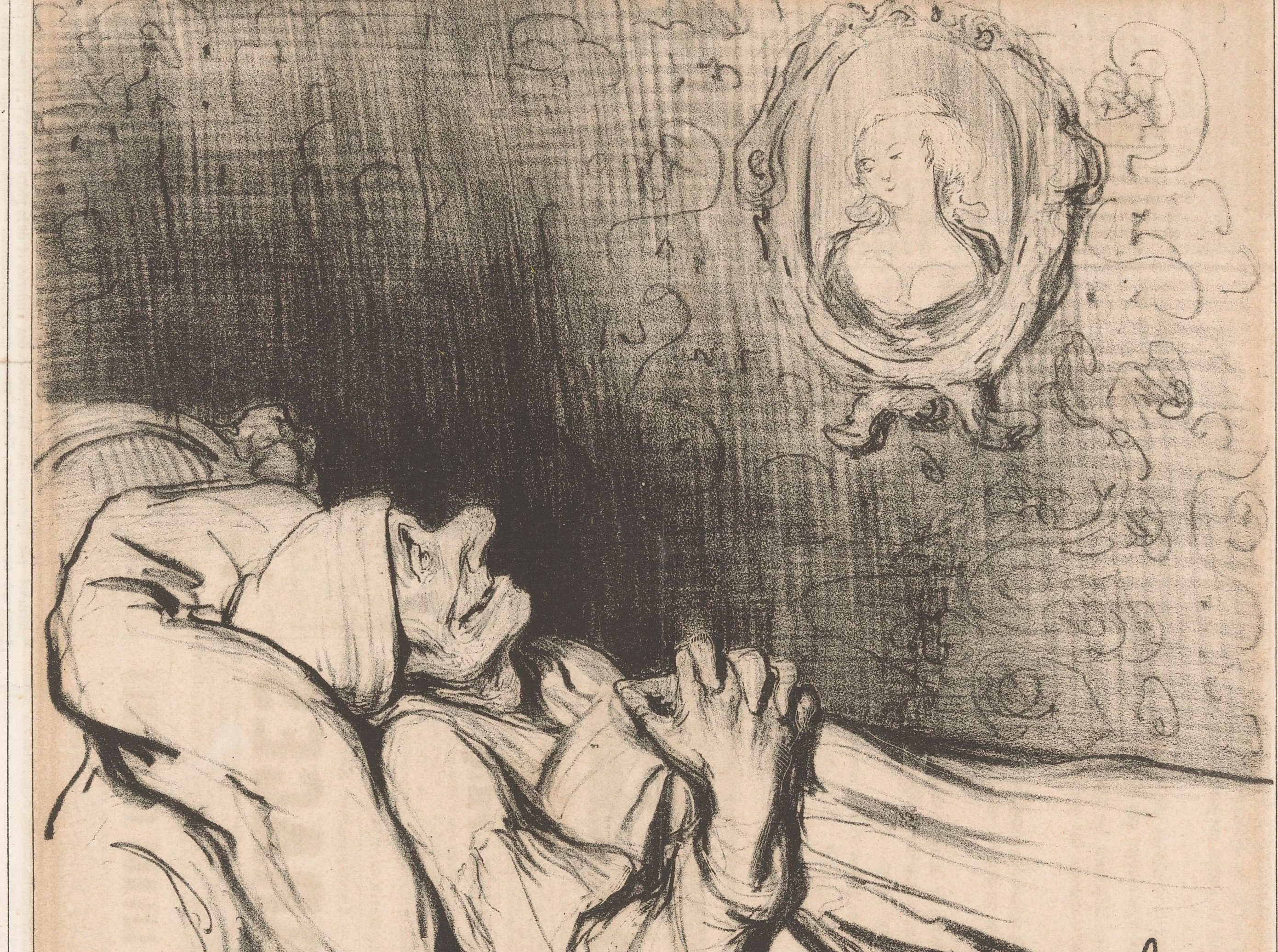
Sonnet: Helena Nelson, ‘Dream’

I found myself in bed with an old man.
His beard was silvery, his scrawny chest
a rack of ribs, his loose-lipped mouth open
and toothless as a baby. There he was,
there in our bed, as if he owned the place.
He snored and grunted like some ancient king
asleep after a banquet. But what feast
had led, dear heart, to this? What partying?
He turned his head to me. I saw his face—
a travesty. Some metamorphosis
had happened in our sleep, my love replaced
by a bag of windy bones. I need a piss,
he muttered, and got up. O then I knew
what age had done to us, and who was who.

*****

Helena Nelson writes: “Everyone experiences it eventually. You glance at your own reflection in the mirror and get a shock at how old you look. So that’s one of inspirations for this poem. The other spur to write this was a dream I had one night, though in the poem it’s intentionally unclear whether the experience is or isn’t real. I started with near rhymes in the octet and moved towards perfect rhyme at the end to convey the shock. I do hope the reader feels that shock at the end.” 

‘Dream’ was originally published in The Dark Horse.

Helena Nelson runs HappenStance Press (now winding down) and also writes poems, one of which appears in the Potcake Chapbook, ‘Lost Love’. Her most recent collection is Pearls (The Complete Mr and Mrs Philpott Poems). She reviews widely and is Consulting Editor for The Friday Poem.

Using form: SF sonnet: RHL, ‘On a Dead Spaceship’

On a dead spaceship drifting round a star,
the trapped inhabitants are born and die.
The engineers’ broad privileges lie
in engine room and solar panel power.
The fruit and vegetables and protein co-ops
are run by farmers with genetics skills:
the products of their dirt and careful kills
help service trade between the several groups.
Others — musicians, architects — can skip
along the paths of interlinking webs.
Beyond these gated pods that the rich carve
for their own selves (but still within the ship),
in useless parts, are born the lackluck plebs.
Heard but ignored, they just hunt rats or starve.

*****

This sonnet was republished in Bewildering Stories in April 2024 – original publication had been in Star*Line five years previously. I find something very satisfying about using a formal sonnet structure to express science fiction and speculative fiction ideas – the ideas are by nature open-ended, unconstrained, and it feels good to tie them down as in a neat package with a bow on top. Topiary.

As for what political comments can be read into the poem, read away!

Photo: “Deepstar 2071 at Io” by FlyingSinger is licensed under CC BY 2.0.

Using form: Sonnet: Max Gutmann, ‘How to Inspire a Sonnet – advice from the pros’

Inspire amore first, but molto forte
If in sonetti dolci you’d be sung.
Then see that you stay bella. You’ll support a
Passione deep and long by dying young.
— Laura

If thou upon his stage the Muse’s part
Wouldst play, each act thou study’st must prolong
Thy Poet’s pain. ‘Tis pain shall prompt great Art.
Then con thy lines with style, and do him wrong.
— The Dark Lady

Stay always by her. Never for a day
Be from her cherished side. ‘Tis paramount
To share the highest love. (And, by the way,
It helps to choose a lover who can count.)
— Robert Browning

‘Tis mystery that fires the crucial spark,
So make him wait–and keep him in the dark.
— Milton’s blindness

*****

Max Gutmann writes: “A reader of Light Quarterly (the marvellous Light back in its days as a print journal) was so offended by a poem of mine ridiculing a lousy president that he cancelled his subscription. Beloved editor John Mella forwarded a copy of the note to me. It was a sonnet! I’d never thought I could inspire a sonnet. I had a ways to go before rivaling Laura or the Dark Lady, but I’d taken the first step. That inspired this poem.

“John declined the poem, so it first appeared in a journal that didn’t specialize in light verse, one highly thought of. (Digging it out now, I see that contributors to the issue the poem appeared in included, among others I admire, Updike, Espaillat, Turner, Gioia, and Hadas.) But the journal goofed. They changed sonnetti dolci to sonnetti dolce (plural noun, singular adjective). This must have been a typo, I imagined, but when I asked, the chief editor not only admitted the change had been intentional, but defended the decision. Dolce being the more familiar form, he argued, it was reasonable to make the change without consulting the writer. I never sent them anything again

“This story calls for a shout-out to Jerome Betts, who reprinted ‘How to Inspire a Sonnet’ in Lighten Up Online (LUPO). (To avoid the impression that Jerome is less than meticulous about acknowledgements–or about anything–I should make clear that I asked him not to acknowledge the earlier journal, and I didn’t name it for him.) Jerome, like most editors I’ve worked with, always asks before making changes–and his proposed changes are usually improvements, often big ones!”

Editor’s note: This poem suggests what might be appropriate ways to inspire sonnets, according to the subjects of sonnets: Petrarch’s Laura, Shakespeare’s Dark Lady, Elizabeth Barrett Browning’s Robert and Milton’s blindness. Self-referentially, the poem is itself a Shakespearean sonnet, written in response to being the subject of a sonnet. Gutmann is therefore both sonneteer and sonnetee, and has the credentials to write a “How to –“

Max Gutmann has worked as, among other things, a stage manager, a journalist, a teacher, an editor, a clerk, a factory worker, a community service officer, the business manager of an improv troupe, and a performer in a Daffy Duck costume. Occasionally, he has even earned money writing plays and poems.

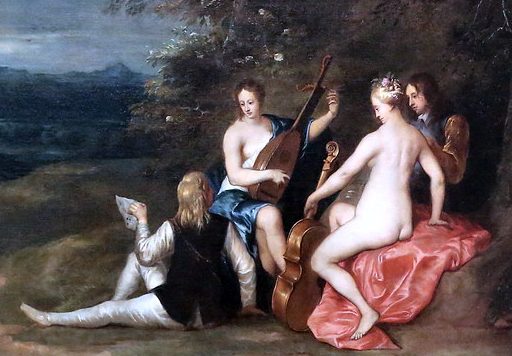
Photo: “IMG_0323C Frans Wouters. 1612-1659. Antwerp. The rural concert. 1654. Dole” by jean louis mazieres is licensed under CC BY-NC-SA 2.0.

Using form: simple, classical: Sara Teasdale, ‘May Day’

A delicate fabric of bird song
Floats in the air,
The smell of wet wild earth
Is everywhere.

Red small leaves of the maple
Are clenched like a hand,
Like girls at their first communion
The pear trees stand.

Oh I must pass nothing by
Without loving it much,
The raindrop try with my lips,
The grass with my touch;

For how can I be sure
I shall see again
The world on the first of May
Shining after the rain?

*****

Sometimes clean and simple is best for capturing the uncomplicated emotion of appreciating nature. Sara Teasdale in her element. As Louis Untermeyer commented on her verse: its “beauty is in the restraint” of its “ever-present though never elaborated theme.”

Photo: “Leonardslee Lakes and Gardens May 2022 18” by Timelapsed is licensed under CC BY-NC 2.0.

Using form: Limericks: RHL, ‘Attitudes in the Holy Land’

Moses says God says: (Deuteronomy 20:16-18)

God’s ruthless. Just read Deuteronomy,
believers get zero autonomy:
“You must kill all non-Jews
in this land that I choose.”
Just back then? Or still now? (Love His bonhomie!)

Luke says Jesus says: (Luke 19:27)

Christ was often less peaceful than stormy,
with disciples both pushy and swarmy;
to the rest he made plain
if they’d not have him reign:
“Bring them hither and slay them before me.”

Muhammad says God says: (Qur’an 9:5)

“Polytheists, wherever you find them,
you should ambush and capture and bind them,
and only relax
if they pray and pay tax;
elsewise kill them, and in the dust grind them.”

*****

Given that Jews, Christians and Muslims all claim to be worshipping the same god, the only God, the God of Abraham, it’s somewhat surprising how much time they spend fighting each other. But then, factions within the same religion have been known to slaughter each other. It seems to be something inherent in religions, especially monotheistic ones – if you believe there is only one god, your god, then everyone else’s belief is blasphemy.

Somehow these tribal religions of preliterate herders have continued to the present. They are so illogical and – despite beautiful architecture etc – so frequently violent that the best response I can think of is the mockery of limericks and other forms of light verse. That, and mourning the dead children, and supporting efforts to impose peace.

These limericks were first published in The HyperTexts, Michael R. Burch’s enormous anthology which includes extensive poetry about both the Holocaust and the Nakba, the Palestinian Catastrophe.

Moses causes the Levites to kill the idolators” is marked with Public Domain Mark 1.0.

Using form: Villanelle: Discoveria, ‘October 7’

Your actions have unleashed a living hell.
Each day Israelis, Palestinians die;
Netanyahu, Hamas: go fuck yourselves.

October 7: gunfire and the smell
of death in the kibbutzim testify:
your actions have unleashed a living hell.

The siege of Gaza, ground invasion, tell
the UN of the “risk of genocide”.
Netanyahu, Hamas: go fuck yourselves.

And when the hospitals are bombed as well,
and there’s no water, food, or power supply,
your actions have unleashed a living hell.

Across the world the rage and hatred swell
and everyone feels forced to pick a side.
Netanyahu, Hamas: go fuck yourselves.

This one cannot be silent, for the bells,
they toll for everybody; none shall hide.
Your actions have unleashed a living hell;
Netanyahu, Hamas: go fuck yourselves.

*****

Discoveria writes: “I wrote this piece as a response to what was, at the time, a perception that people were being demanded to pick a side in the conflict between Hamas and the Israeli government, leaving no room for legitimate criticism of both. I wanted to express my anger and frustration at the situation, in which both sides have chosen the path of death and cyclical violence. The repeated refrains in the villanelle form emphasise these emotions. The piece was written overnight and posted in the early hours of Remembrance Day, 11/11/2023, after a little doomscrolling. I cannot pretend that there is much subtlety to the poem; it is what it is.”

Discoveria publishes much of their work at AllPoetry, saying “Due to the politically sensitive topic of the poem I would prefer to be credited under my username.”

Photo: “17 year old boy killed by Israeli army during demonstration in solidarity with Gaza” by ISM Palestine is licensed under CC BY-SA 2.0.

Using form: Iambic tetrameter: Brooke Clark, ‘Celebrities’

They’re insecure black holes of need
and here they come to clog your feed
with photos and confessionals
shaped by PR professionals—
a pool glows blue in the backyard
next to a pull quote: “It was hard
to fight those demons of self-doubt”—
How brave you are for speaking out!
(“Dinner? Umm…the rainbow trout?”)
Some glossy shots show off the house
where, on a massive sun-splashed couch
the boyfriend lounges with a grin—
familiar…what’s that show he’s in?
“Yes, I’ve found love—I’m over the moon!
My memoir’s coming out in June.”
 
But now hushed tones, dropped eyes reveal
we’re ready for the big reveal—
speaking to us as to a friend
she grabs onto the latest trend
and tries to humanize herself
with references to mental health:
“Depression and anxiety—
none of the meds would work for me
but a friend introduced me to
this yogi, or—more like—guru?
He teaches tantric meditation
to reach this cosmic—like—vibration?—
where all your energies align—
Oh yeah, hey, my new makeup line
is rolling out in every state—
I promise the concealer’s great!”
How nice for you. The problem is
for those without advantages
like wealth and fame, the proper cure
for suffering is not so sure,
and wasn’t there some news report
about—“That settled out of court,
so let’s move on,” smoothly insists
the always-hovering publicist.
 
The only cure for their disease?
Awards, red carpets, galaxies
of flashbulbs dazzling their eyes,
the swarms of fans, their ardent cries—
the roar of being glorified
drowns out the whispering voice inside
that tells them that their fame won’t last
but crumble into dust and ash
leaving them lost and destitute—
quick—schedule a new photo shoot!

*****

Brooke Clarke writes: “Celebrities was triggered by scrolling through the news app on my phone and being bombarded with coverage of famous people, which ranged from the adoring to the outright hagiographic. I resisted writing the poem at first, since celebrities seemed like a bit of an obvious target, but in the end I decided to give in & go with it.
In terms of the form, I went back and forth a bit between tetrameter and pentameter couplets, but in the end I settled on the tetrameter. They always strike me as suited to a “lighter” satirical approach, and a slightly more throwaway, less sculpted feel — more Swift than Pope, if that makes sense — and I thought that worked for the subject matter in this one. 
One other point that might be of interest: the poem as I submitted it ended with one final couplet:
Reality gets hard to take
when everything about you’s fake.

I thought it worked as a way to pull back from the specific content and give a final summary to tie things together. The editor who published it in Rat’s Ass Review felt it was heavy-handed and obvious, and belaboured the same points that had already been made, so we agreed to cut it. It might be interesting to know what readers think.”

Brooke Clark is the author of the poetry collection Urbanities and the editor of the online epigrams journal The Asses of Parnassus. He’s still (occasionally, hesitantly) on Twitter at @thatbrookeclark.

Other writing:
A recent poem about the jazz guitarist Johnny Smith, in the journal Syncopation
Another poem in couplets, freely adapted from Catullus 63: https://the-agonist.github.io/poetry/2019/07/01/poetry-clark.html
A recent epigram, from Light 
An article about narcissism in contemporary poetry: https://thewalrus.ca/the-narcissism-of-contemporary-poetry/
A review of Frederick Seidel and Rachel Hadas in Able Muse
An article about Donna Tartt’s novel The Secret History:  https://lareviewofbooks.org/short-takes/donna-tartts-the-secret-history-as-revenge-fantasy/

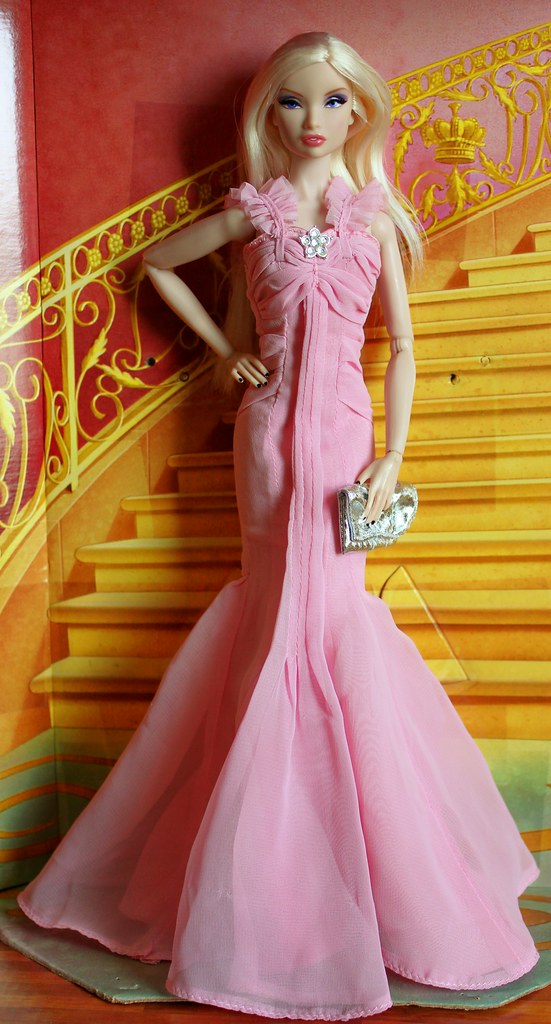
Photo: “Tag Game: Red Carpet Ready for the OSCARS” by napudollworld is licensed under CC BY-NC-ND 2.0.

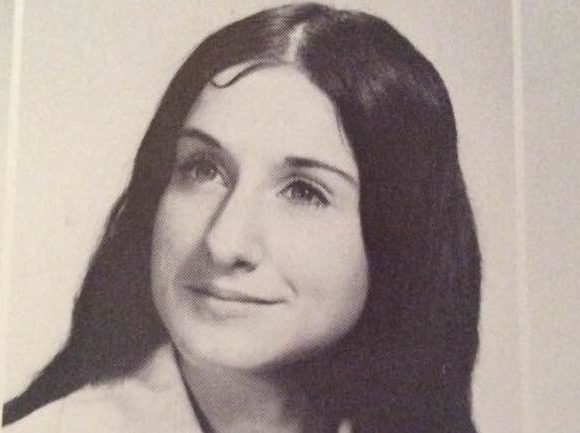
Using form: Stretch Villanelle: Maryann Corbett, ‘Pictures of Ourselves at 21’

a meditation on the current Facebook meme

Those were the days we had amazing hair.
And bodies. And ambitions. Chutzpah, too.
“Look on our manes, ye mighty, and despair!”

we cry, smirking disdain like Baudelaire
from yearbook-picture ranks and files. We grew
it lush, that long-ago amazing hair,

while choruses wailed Gimme down to there
hair! Though in our hippie hearts we knew
we’d have to tame it someday soon, despair

spared us. In shoulder pads, Dynasty flair,
the Farrah Fawcett shag, the Rachel do,
we offered up our still-abundant hair

to workdays. To quotidian wear and tear,
crimpers and curling irons, styling goo.
And then one day the mirror sighed: Despair.

Are these our offspring, whose inventions blare
from TikTok posts in floof and curlicue,
strange new explosions of amazing hair

half-shaved, half rainbow striped? (Try not to stare,
though they return your gawk, peering straight through
your brow lines, fashion failures, gray despair …)

Who were we? Do we remember? Do we care,
you with your naked pate, I with my two-
toned thatch? Is time the low road to despair?
Look at us, though: we had amazing hair.

*****

Maryann Corbett writes: “Every week, the magazine Rattle publishes a ‘Poets Respond’ feature, a poem that reacts to one of the previous week’s news items. For several days at the start of February, I’d been seeing posts by Facebook friends of photos of themselves at the age of 21; it was clearly “something happening” even though it didn’t seem to be a news item. I decided I’d try a poem rather than a picture and I’d aim it at Poets Respond. Over and over, I’d see replies to the posts that exclaimed about the hair, its style or its sheer abundance, so a refrain suggested itself. I went for a villanelle (on the model of Bishop’s ‘One Art’) but found I needed extra space to fit in all the allusions I wanted to the pop culture of the past several decades. We can call it a stretch villanelle, a term Susan McLean gave me. I found out after the fact that there had been a news story about the meme, but the poem prevailed at Poets Respond even without one.”

Maryann Corbett earned a doctorate in English from the University of Minnesota in 1981 and expected to be teaching Beowulf and Chaucer and the history of the English language. Instead, she spent almost thirty-five years working for the Office of the Revisor of Statutes of the Minnesota Legislature, helping attorneys to write in plain English and coordinating the creation of finding aids for the law. She returned to writing poetry after thirty years away from the craft in 2005 and is now the author of two chapbooks and six full-length collections, most recently The O in the Air (Franciscan U. Press, 2023). Her work has won the Willis Barnstone Translation Prize and the Richard Wilbur Award, has appeared in many journals on both sides of the Atlantic, and is included in anthologies like Measure for Measure: An Anthology of Poetic Meters and The Best American Poetry.

Using form: Villanelle: Barbara Loots, ‘Docent’

The art museum behind the big bronze door.
The yellow buses lining up outside.
The little children eager to explore.

The chirpy docent: Who’s been here before?
Please pay attention. I will be your guide.
At this museum, behind that big bronze door,

there’s nudity, depravity, and gore
to take your little psyches for a ride.
You children will be able to explore

the beauty born of fear, of faith, of war,
of ancient ritual and genocide
that cannot hide behind a brazen door.

Beheadings hardly happen anymore.
Most artists have avoided suicide.
You children are encouraged to explore

the human drama we cannot ignore,
the shape of visions and the forms of pride
collected here behind the big bronze door.

You’ll find despair, anxiety, and more.
Your eyes will bleed. Your skulls crack open wide.
Have fun. Enjoy yourselves as you explore
the art museum behind the big bronze door.

*****

Barbara Loots writes: “I have served fourteen years as a volunteer Docent at the renowned Nelson-Atkins Museum of Art in Kansas City. For our school-age visitors, the methods we use to encourage looking and thinking are prescribed, professional, and age appropriate. However, often on my mind are the dark, unspoken underpinnings of art. The repetitive nature of museum tours suggested a villanelle.”

Barbara Loots resides with her husband, Bill Dickinson, and their boss Bob the Cat
in the historic Hyde Park neighborhood of Kansas City, Missouri. Her poems have
appeared in literary magazines, anthologies, and textbooks since the 1970s. She is a
frequent contributor to lightpoetrymagazine.com. Her three collections are Road Trip
(2014), Windshift (2018), and The Beekeeper and other love poems (2020), at Kelsay
Books or Amazon. More bio and blog at barbaraloots.com

Photo: “Nelson-Atkins Museum of Art, Kansas City, Missouri, USA” by ernie_nh7l is marked with Public Domain Mark 1.0.