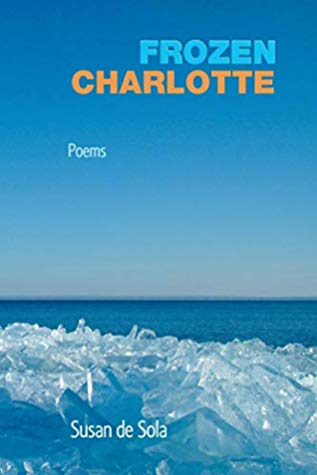
Susan de Sola’s ‘Frozen Charlotte’ is a book of strong poetry, both formal and free verse, collected after prior publication in 30 publications as diverse as Able Muse, Ambit, American Arts Quarterly, Amsterdam Quarterly… and The Dark Horse, and Light, and Measure. One of the pieces in this collection, ‘Twins’, has already been reprinted in the Potcake Chapbook ‘Families and Other Fiascoes’.
Her casual comfort with verse forms is shown in the last poem of the book, ‘Bounty’:
The fruit flies find our fruit, they slip
beneath the lid, a silver dome.
The dark fruit scent has drawn them in,
no other lures them out again.
They settle on apples, puckered figs,
they gorge in perpetuity,
may never fly back to their home,
(if they have ever had a home).
An allegory of choice? Well, yes–
in that we have no choice.
The fruit is fine, the day is long.
Let us feed, buzz, rejoice.
The poem divides into two pieces: the first eight lines describe the scene, and are in iambic tetrameter with mere hints of rhyme. The last four lines step back and philosophise, and alternate tetrameter and trimeter, the trimeters rhyming.
Personally, though I like the whole poem, I find the last four lines far more satisfying. The change of rhythm is good, but I don’t see any reason not to embed more formal rhyme in the first part. She is capable of sustained rhyme, as in another of my favourites, ‘Holistic Practice’. Here a middle-aged holistic therapist who has failed to create a whole life for herself – living in a one-room flat and with no family – is depicted in ten 5-line stanzas as she comes for a visit and shares pictures of her cat. The last stanza is:
But no, her Boop, he was her treasure;
her angel and her source of pleasure.
“Oh , look, how cute!”–a cat bow tie!
I grin and nod, divided by
a deep, holistic urge to cry.
I will admit that her free verse can be very engaging as well, as in her ‘ATM’:
Somehow, it’s sexual,
the rim crotch-high,
the shuffling buttocks,
the hands fumbling in secret.
Gone the dainty dialogue,
the date stamp in a little leathery
book of records, at set times. Now,
an onanism of cash, walls with mouths.
This is an example of a poem that I would hesitate to modify into a formal structure for fear of losing the way that each short line is a punchline in itself. But for the most part the less formal poems, though they often have rich ideas, are not as memorable as the well-structured ones. Blank verse in itself has no merit for me – Milton’s ‘Paradise Lost’ rambles tediously, without the need for concision imposed by rhyme. Chaucer’s ‘Canterbury Tales’ may be long but it is packed with many more stories. It rhymes, and that leaves no room for waffle. No surprise then that with Susan de Sola’s work the longest poems are unrhymed and the least tight.
As for ‘Frozen Charlotte’, the title of the book and of one of its poems, I can only say I am grateful that a page of notes at the end gives the explanation that this was a common, naked, 19th century German doll that acquired its nickname in the US in relation to some ballads. I was unfamiliar with Frozen Charlottes. As a book title it seems memorable but disconnected, as Susan de Sola’s poems are, above all, full of warmth and life.
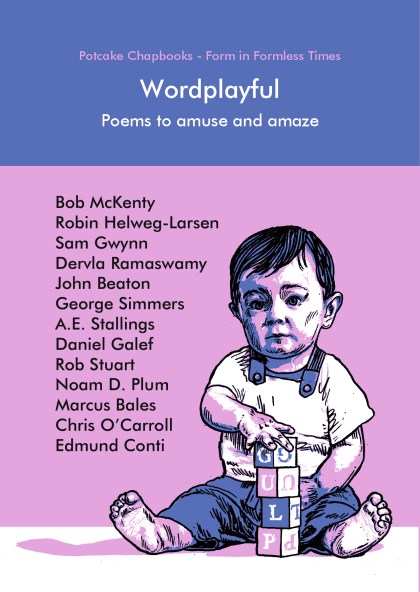
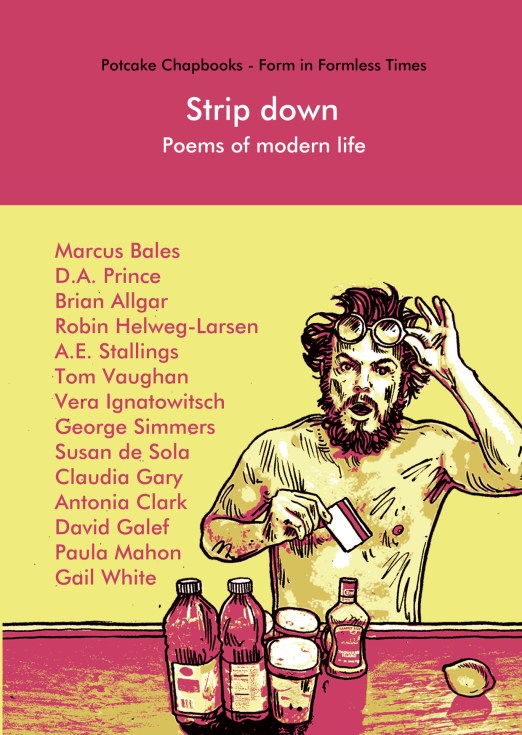

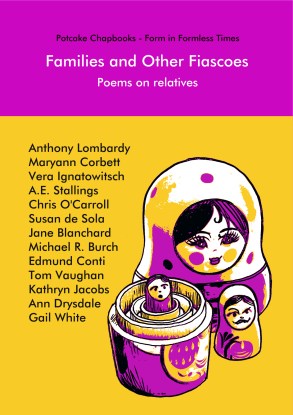 Poets new to this series are, in order of appearance, Maryann Corbett, Vera Ignatowitsch, Kathryn Jacobs, Anthony Lombardy, Susan de Sola, Jane Blanchard and Michael R. Burch. A glance at their profiles in Sampson Low’s
  Light, the “journal of light verse since 1992”, has just published its
  Careers! We’ve all had one or several of them, for better or worse. Marcus Bales and Daniel Galef review the frustrations of shopfloor sales and professions, while Annie Drysdale gives an exhilarating view of farmwork. From the newcomers (Gerry Cambridge, Martin Elster, Brian Gavin, Susan McLean, Rob Stuart, Tom Vaughan and Mindy Watson) we have everything from office workers and cafe proprietors to a madame ageing out of her profession and a hangman lamenting his obsolescence.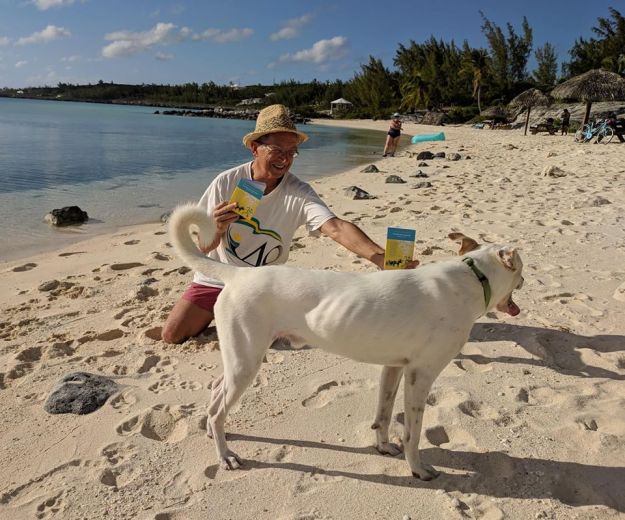
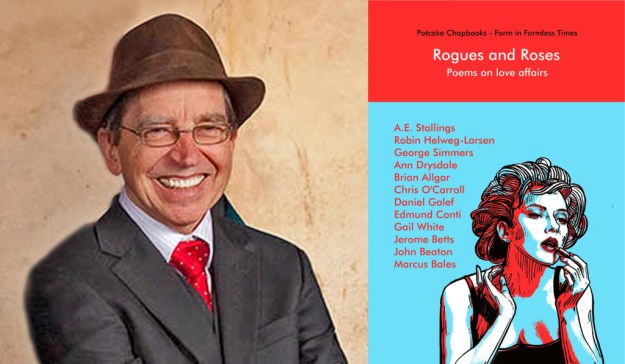
 Form in Formless Times