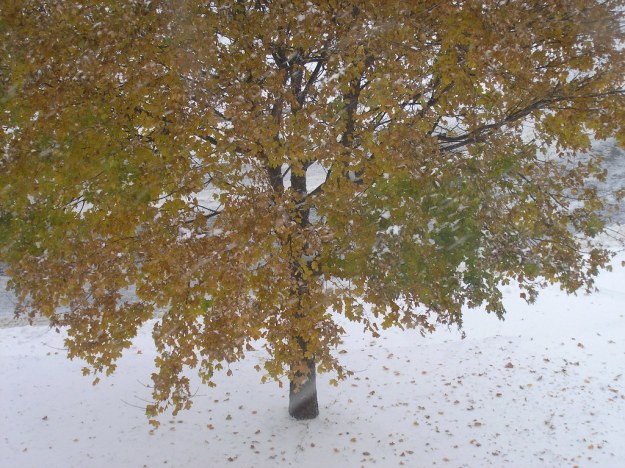
When Mr. Warm-as-winter-under-the-covers
Meets Cool-as-summer-in-the-evening-breeze
He’ll spring to leave ideas they could be lovers –
But her thoughts fall away like leaves from trees.
First published in Lighten-Up Online.
When Mr. Warm-as-winter-under-the-covers
Meets Cool-as-summer-in-the-evening-breeze
He’ll spring to leave ideas they could be lovers –
But her thoughts fall away like leaves from trees.
First published in Lighten-Up Online.
Adults — earthworn, careweary,
grave, gravid and gravity-constrained —
take it all so seriously, furiously, fearsome and wearisome,
spuriously furious over the small stuff,
incessantly never having enough,
insensibly insatiable, insensate,
irrational, irascible,
driven by status, riven by expense,
dismissive of all greater age and experience.
How fortunate to age into osteoporosis,
bones lightening like a bird’s as you get older,
the wearying weights lifting off the shoulder,
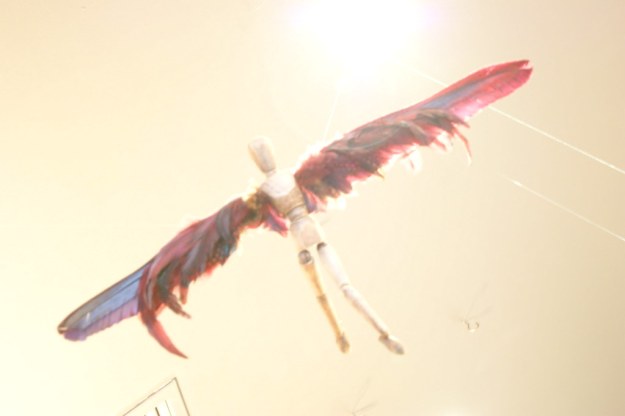
and you drift up into the sky with your levity,
leaving behind adult cares and gravity,
unattached, detached,
careful but careless, unlatched.
This poem was recently published in Bewildering Stories. But what is it, technically? Does it have any form? It has elements of form–alliteration, assonance, scattered rhyme, the kind of rhythm (in parts) that you find in rap with emphasis on stresses, not on syllables–but none of it is organized, structured, codified, repeated…
I think it could be improved. If I come up with a significant improvement, I’ll switch it out. But there’s always the danger that the later “improvement” loses primal energy for the sake of trying to achieve an intellectual outcome. As with Auden’s poetic progress. But a little more formal structure would be good, I think.
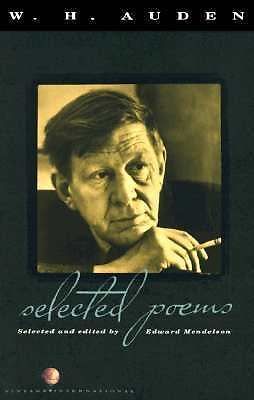
The best of Auden’s poems are so many, so varied, so technically accomplished and so witty that he stands with the greatest poets of the 20th century. My list of favourites includes:
“O where are you going?” said reader to rider
O what is that sound that so thrills the ear
A shilling life will give you all the facts
Look, stranger, at this island now
Miss Gee
As I walked out one evening
In Time of War
Musee des Beaux Arts
In Memory of W.B. Yeats
Law, say the gardeners, is the sun
and what many consider the greatest love-poem of the last 100 years:
“Lay your sleeping head, my love,
Human on my faithless arm”.
There is a universality about Auden’s depiction of relationships, an indeterminate quality that allows his thoughts to be applied to all people. This is in keeping with the fact that he was gay, and writing in a time when homosexuality was illegal. It provides an unexpected strength for his verse.
And yet, and yet… all of those poems listed above were written before he turned 33. He lived to age 66, writing longer and longer works, moving further and further away from traditional verse, and with less of the memorable genius of his youth.
It is therefore somewhat depressing to read these “Selected Poems” because they are set out chronologically, and the writing gets less interesting the further you read. Halfway through the book you run into the poem sequence “The Sea and the Mirror – a commentary on Shakespeare’s The Tempest”, which includes 25 pages of prose crammed with dense imagery and argument. Apparently Auden preferred this prose section, “Caliban to the Audience”, over all his other work. This preference was expressed at the time that he was rewriting the excellent poems of his youth to reflect his newer American, Christian, self-important academic personality. I found it unreadable.
The first edition of “Selected Poems” (selected and edited by Edward Mendelson) contains 100 poems. A more recent edition adds another 20 poems, “broadening its focus to better reflect the enormous wealth of form, rhetoric, tone, and content in Auden’s work. Newly included are such favorites as “Funeral Blues” and other works that represent Auden’s lighter, comic side”.
Unfortunately I only have the 100-poem version. If you buy a copy of this book, make sure it has the 120 poems!
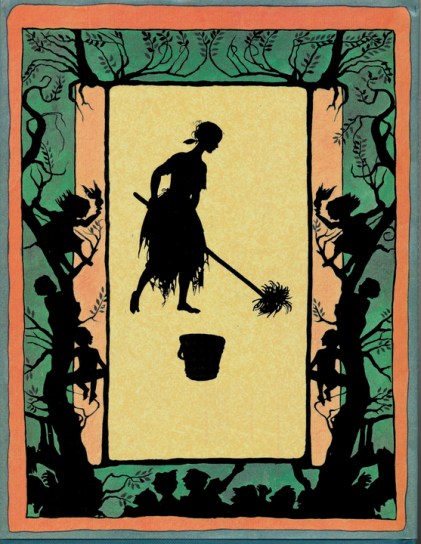
Cinderella, by Arthur Rackham
Every youngest daughter’s
Always Cinderella:
Never at the party,
Always in the cellar;
Tired of washing dishes,
Tired of sweeping dirt;
Wants to be a lady,
A scientist, a flirt;
Wants to travel world-wide,
Read till reading’s done;
Wants to be a mother,
Playing in the sun;
Wants to be the princess,
Beauty of the Ball –
Fairytales happen –
Watch, she’ll have it all!
First published in Lighten-Up Online (“LUPO”), the quarterly edited by Jerome Betts in the UK; republished in The HyperTexts, the massive anthology of poetry curated by Michael R. Burch. Good poets, both of them.
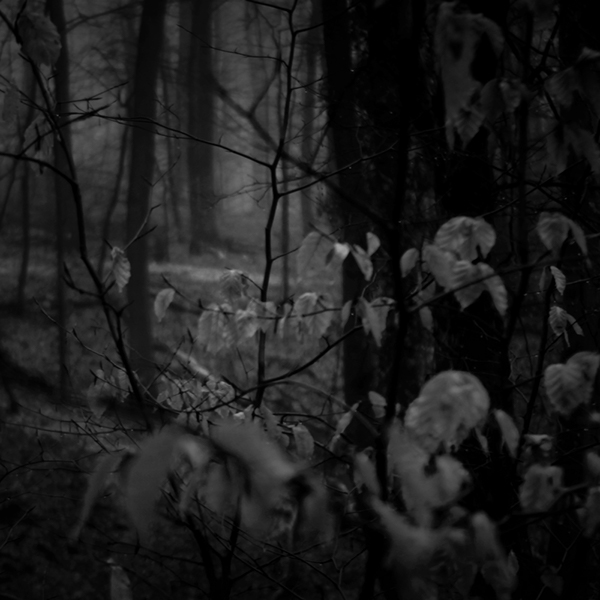
“Dark Trees” by MonoStep
The knife of night
Spreads swirls of black and white
Over the slice of here.
The taste is bold:
A pinch of cold,
Spiced with primeval fear.
This little poem was first published in Candelabrum, a British print magazine that ran twice yearly from 1970 for some 40 years. Its editor, Leonard McCarthy, was a lone voice dedicated to keeping traditional poetic sensibilities of metrical and rhymed
verse alive.
The poem itself came from a nighttime ramble in the forests that cut through the residential areas of Chapel Hill, North Carolina. Hundreds of acres in town are undevelopable because of steep slopes, creeks and ravines. Where the night woods are unlit except by moon and stars, there are deer, possums, foxes, flying squirrels, owls… copperheads… poison ivy… The night is beautiful, but you can’t help moving through its darkness in a different state of being, compared with daylight.
Zombie Apocalypse –
humans have always had
end-times fear: Ragnarok,
Judgement Day, World War III,
comet strike, Y2K,
supervolcano – well,
you get my drift.
Zombie Apocalypse –
there’s a pandemic and
AI has run amuck –
this is no practice round,
this is for real!
Zombie Apocalypse –
head for a tropic isle,
live on fish, coconuts –
solar will last a few
years, then corrode.
Zombie Apocalypse –
walls can be built without
concrete or plastering,
fight infestations of
zombies and dogs.
As the world splits in two
all the Enhanced are gone,
gone to the Cloud and space;
only the Left Behind
scrabble, deteriorate,
left in the dirt and ash,
left on the Earth.
I, the last poet am
here on Earth’s farthest beach,
toweled, not panicking,
waiting for Branson and
Musk in their ships.
Yes, humans love the threat of the end of the world, the collapse of civilisation, all apocalyptic disasters. We don’t want the disasters to be inflicted on us… but we love thinking about them. Perhaps it’s a way of thinking about our own mortality, without actually thinking that it is we who will die one day.
The Zombie Apocalypse is wonderful because it is both a complete fantasy (as in the photo) and an image for the kind of catastrophic real-world disaster that an out-of-control plague can inflict–a medieval Black Death killing a third of the population… an early 20th century Spanish Flu infecting a third of the world’s population (but “only” killing maybe 50 million)… or, of course, a coronavirus leaping out of a food market in Wuhan and spreading around the world before anyone can get a proper handle on it. Death is real. Around the world, 150,000 people die every day. What can you do but work to minimize death–and laugh at it?
And then there’s the fantasy of being one of the lucky few survivors, faced with the difficulties of a post-apocalyptic world, a post-nuclear Wasteland, a flooded Waterworld, a Biblical Left Behind, reminiscent of Nevil Shute’s On The Beach, John Christopher’s The Death of Grass (No Blade Of Grass in the US), even Ursula Le Guin’s post-alien-invasion City of Illusions. Carrying a towel like Ford Prefect to hitchhike through the galaxy, away from doomed Earth. Dramatically, heroically, surviving the destruction of the world as we know it. As though you can dramatically, heroically, survive the time-driven destruction of your body…
The poem itself (yet another one published in Bewildering Stories) is unrhymed, but written in a form inspired by double dactyls. Technically double dactyls are eight-line poems with a few additional requirements–the form was created by Anthony Hecht, Paul Pascal and Naomi Pascal in 1951, and popularized by Hecht’s and John Hollander’s collection Jiggery Pokery… the name of the book being a double dactyl, naturally. So this poem is only “inspired by” double dactyls. But, as with limericks, the bouncy rhythm adds to a mood of flippancy, frivolity, which is always suitable (in my mind) when discussing existential catastrophe. I tip my hat to Country Joe and the Fish for the I Feel Like I’m Fixin To Die Rag, and to all political cartoonists everywhere.
Life is short; enjoy each day.
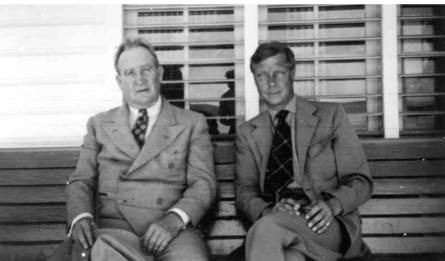
Sir Harry Oakes and the Duke of Windsor in Nassau
Edward, ex-king, pro-Nazi, was sent out
to the Bahamas for the War’s duration.
As Governor of our well-mixed-race nation
he joked with blacks but liked white rule and clout.
The wealthy Bay Street Boys, all white, agreed.
But one combative multimillionaire
felt equal pay for non-whites would be fair.
Canadian Harry Oakes disliked white greed.
Oakes pumped in cash for land, built an airport,
bought a hotel, hired coloured management,
then fought the U.S. Mob’s gambling intent.
Still, Bay Street had the Governor’s support.
Oakes wouldn’t change his mind, and he got killed.
Edward prevented justice. Whites were thrilled.
The 1943 murder in the Bahamas of Sir Harry Oakes–perhaps the richest man in the British Empire–was never legally solved. Having been found bludgeoned to death in his bed, with an attempt having been made to set the bed on fire, foul play might have been suspected immediately. But the top realtor in the Bahamas, Harold Christie (subsequently knighted) who had been sleeping in a guest bedroom two doors down from his host, hadn’t heard a thing and, discovering the body in the morning, tried to revive Oakes by getting him to drink some water.
Harold Christie first called his brother, and next the Duke of Windsor, rather than the police. The Duke of Windsor, being the Governor of the Bahamas, could have called the local police, or local British military forces, or brought in the CID, Britain’s Criminal Investigation Department. Instead he called two Miami detectives he knew (and who in later years were found to have Mafia connections), telling them “he wished to confirm the details of a suicide”. The Americans came, screwed up the crime scene, planted false clues, and then arranged for Oakes’ son-in-law to be charged.
But the evidence against the son-in-law, Alfred de Marigny, was so clearly fraudulent and the evidence against Christie and his brother was so strong that the Police Commissioner at the time refused to charge de Marigny. So the Duke of Windsor had the Police Commissioner transferred to Trinidad until the trial was completed, in order to prevent him from testifying.
One of the mysteries unresolved at the trial was matter of the four triangular holes in Oakes’ skull. Some form of local voodoo was suggested, but no one could think of anything specific that might have caused it. No one suggested it might have been a tool found on every boat in Nassau Harbour…

Oil drum plug wrench
After one of the greatest legal defences of the 20th century de Marigny was acquitted and, although innocent and a British citizen, ordered deported. Unsuccessful attempts were made on his life in the next couple of years, as he detailed in his book A Conspiracy of Crowns.
Other books on the murder, two of which were called Who Killed Sir Harry Oakes?, initially failed to point a finger of blame. This was probably wise, as a couple of people who might have discovered unpleasant facts came to violent ends.
In 1950 American lawyer Betty Renner–a former Department of Justice lawyer who had done war crimes work in Japan–came to Nassau to gather evidence about the Oakes murder and speak to a potential informer. She was hit over the head, stripped half-naked, dragged over coral rocks and thrown head-first down a narrow well where she suffocated to death. Tree branches were cut and placed over the well. The autopsy concluded “there was no positive evidence of criminal attack but the possibility was still being investigated.”
In 1962 Dorothy Macksey, a 60-year-old white Bahamian secretary, was raped and murdered in her apartment some months after she told her employer she knew who had killed Oakes and was starting to write a book about it. Although it turned out she had been Harold Christie’s secretary in 1943, the Nassau police quickly determined there was no connection.
Books continue to be written about the Oakes murder. Perhaps the most complete and authoritative so far is John Marquis’ Blood and Fire, but the story is still dribbling out from those (apparently many) people who know the truth.
Oh, and by the way, my sonnet at the top was just published in Bewildering Stories, which I think is appropriate!
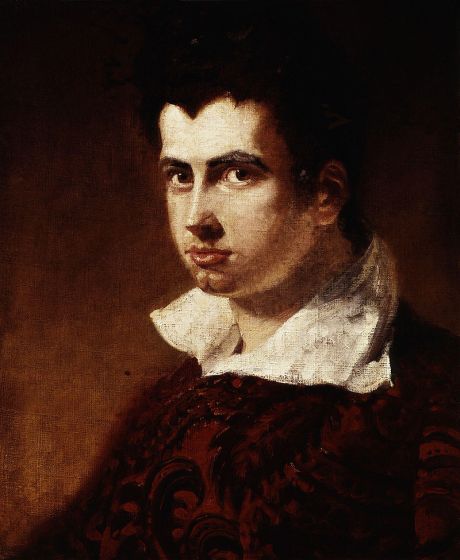
Leigh Hunt when young
Jenny kiss’d me when we met,
Jumping from the chair she sat in;
Time, you thief, who love to get
Sweets into your list, put that in!
Say I’m weary, say I’m sad,
Say that health and wealth have miss’d me,
Say I’m growing old, but add
Jenny kiss’d me.
I love the sentiment, the versification, the tightness, the back story, everything. If you erased everything else Leigh Hunt ever wrote, this poem should still be in every anthology of English poetry.
As the Poetry Foundation says, Hunt was “a central figure of the Romantic movement in England, but he was not, as he wished to be and knew he was not, one of its great poets.” But he was the author of Abou Ben Adhem (often taught in schools for its quietly uplifting morality); The Glove and the Lions (ditto, for its more boisterous morality); and the Song of Fairies Robbing an Orchard (taught less often, as schoolchildren hardly need encouragement in the heightened pleasures of theft).
Jenny kiss’d Me was originally entitled Rondeau, but the poem doesn’t really meet any of the various definitions of the form. It rhymes ababcdcd instead of holding to the rondeau’s tighter requirements of rhyme and repetition, but the alternating feminine and masculine rhymes give it a strong rhythm that is tightly adhered to. It has four feet to each line, but only two in the last, and the effect of the poem is heightened by the fact that, when reading the poem aloud, you can’t help creating a longer pause than usual before the last line – it is as though Hunt has dropped the first two feet, not the last two in that line. That last line repeats the first words of the poem (which is common in a rondeau), but does it as a fresh punch line. It is a remarkably effective piece of versification.
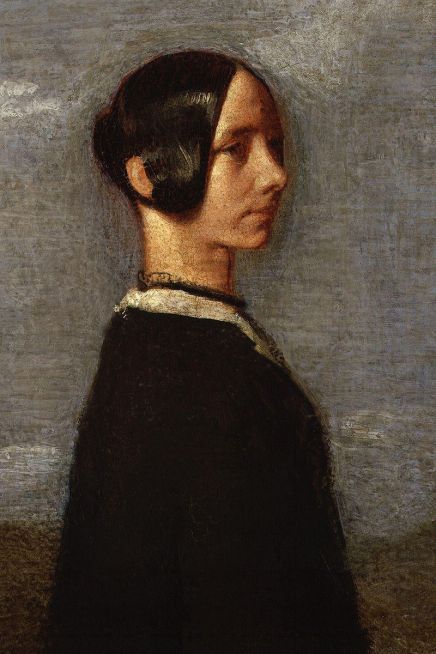
Jenny: Jane Baillie Carlyle, née Welsh
The back story is that Hunt had been severely ill during a flu epidemic, but, recovering, paid an unexpected visit to Thomas and Jane Carlyle, Jane being “Jenny”. The Carlyles had a difficult relationship to each other and the world in general. Samuel Butler once remarked “It was very good of God to let Carlyle and Mrs Carlyle marry one another, and so make only two people miserable and not four”. But clearly Jane Carlyle was capable of showing affection and making an impression. Hunt at that time was no longer young.
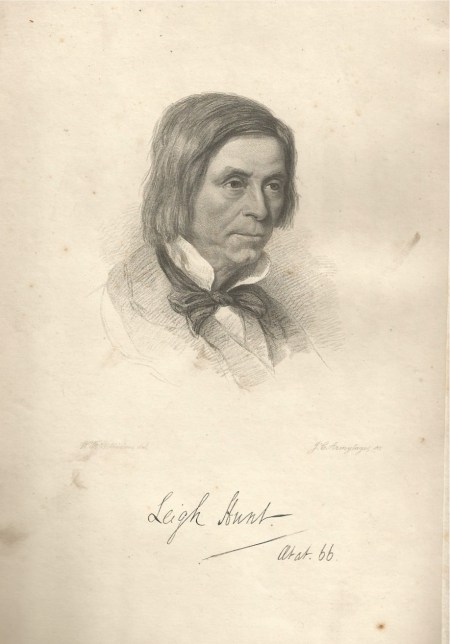
Leigh Hunt at about 66
The poem manages in its eight brief lines to touch on themes of time, age, mortality and failure; also on affection, love, spontaneity and success; and to combine them all into a single image. I cannot think of a more perfect short poem in English.
These are the scarecrow years
When frost tears glisten
On moulded and painted cheeks, beside ears
That no longer listen
Being more deaf than dead
And hearing only
Through implants and inputs into the head
Bonily, stonily.
Fears come while certainties lapse:
Fears of the dark,
Of abandonment, monsters, uncertainty. Now (perhaps)
Some Schrödinger’s shark
Divides cosmonaut, cryonaut, chrononaut
From those who can’t trust
The unknown, are ill-taught, or die without thought.
Thrive on change, or be dust.
This was first published in The Rotary Dial, an excellent online monthly of a dozen formal poems that was put out by two of Canada’s best poets, Pino Coluccio and Alexandra Oliver. Unfortunately The Rotary Dial folded in 2017 and Pino, after winning Ontario’s Trillium Book Award for ‘Class Clown’, disappeared off the radar.
The poem subsequently appeared in the fifth Potcake Chapbook: ‘Strip Down – poems of modern life’, where it has a page facing A.E. Stallings’ far gentler and more positive view of modern medicine, ‘Ultrasound’.
Smoke on the wind
And ice on the glass,
Leaves off the trees
And green off the grass;
Deer in the yard
And wood in the shed;
The end of the old
And a new year ahead.
This was published in The Orchards Poetry Journal, edited by Karen Kelsay Davies. The journal typically appears in June and December, and focuses on previously unpublished formal verse – though it accepts “finely wrought free verse”, and will also republish something that hasn’t appeared online in the past three years.
“Inspired by the small plot of apple trees near Cambridge, England, where writers have gathered for years with their books and pens,” Orchards naturally attracts the bucolic. I find something engaging about the idea of traditional verse in an online format… perhaps “apple” is the link… Anyway, as we bridge the past and the future: Happy New Year!



 Form in Formless Times