Using form: Sonnet: Josh Geffin, ‘A Guide to Renting in London’

So, when it says delightful take it as
a word for small. Make sure to steer away
from cosy – that just means it likely has
no place to put your things or even pray.

A huge and gorgeous room is medium size
while well-maintained denotes a certain lack
of charm and won’t be winning Best Home prize.
A friendly house is code for watch your back.

And please avoid affordable single room
you’ll have to fall or jump from door to bed
(no space to walk around the side). Assume
your rent will cost no less than half your bread.

For something nice you’ll need a partner to live with.
That or move to Hull – or Aberystwyth.

*****

Josh Geffin writes: “A Guide to Renting in London was inspired by my own experience living in London and my frustration at trying to find reasonable rental accommodation. It was also a response to a writing exercise that was part of a video course by Billy Collins on masterclass.com. The writing exercise was to write a strictly rhyming sonnet with a strong metre! I enjoy working with fixed forms, and with humour.”

Josh Geffin is a folk musician and writer from Dorset, based in London. He works as a guitar teacher, composer and performer and his music has appeared on Netflix, BBC, and Sky. Josh’s often playful poems explore themes of mindfulness, memory and belonging. His poems have been published in The Rialto, Acumen (where this poem was first published), Allegro and The Friday Poem‘Shronedarragh, Co. Kerry’ won second prize in the Jack Clemo Poetry Competition 2023. He has also been commissioned to write poetry for Montcalm Hotels.
Follow or buy his music at his Bandcamp page: https://joshgeffin.bandcamp.com/music
Contact: joshgeffin@gmail.com
Instagram: @joshgeffin

Tiny Room” by Peter Kaminski is licensed under CC BY 2.0.

Using form: Stretch Villanelle: Maryann Corbett, ‘Pictures of Ourselves at 21’

a meditation on the current Facebook meme

Those were the days we had amazing hair.
And bodies. And ambitions. Chutzpah, too.
“Look on our manes, ye mighty, and despair!”

we cry, smirking disdain like Baudelaire
from yearbook-picture ranks and files. We grew
it lush, that long-ago amazing hair,

while choruses wailed Gimme down to there
hair! Though in our hippie hearts we knew
we’d have to tame it someday soon, despair

spared us. In shoulder pads, Dynasty flair,
the Farrah Fawcett shag, the Rachel do,
we offered up our still-abundant hair

to workdays. To quotidian wear and tear,
crimpers and curling irons, styling goo.
And then one day the mirror sighed: Despair.

Are these our offspring, whose inventions blare
from TikTok posts in floof and curlicue,
strange new explosions of amazing hair

half-shaved, half rainbow striped? (Try not to stare,
though they return your gawk, peering straight through
your brow lines, fashion failures, gray despair …)

Who were we? Do we remember? Do we care,
you with your naked pate, I with my two-
toned thatch? Is time the low road to despair?
Look at us, though: we had amazing hair.

*****

Maryann Corbett writes: “Every week, the magazine Rattle publishes a ‘Poets Respond’ feature, a poem that reacts to one of the previous week’s news items. For several days at the start of February, I’d been seeing posts by Facebook friends of photos of themselves at the age of 21; it was clearly “something happening” even though it didn’t seem to be a news item. I decided I’d try a poem rather than a picture and I’d aim it at Poets Respond. Over and over, I’d see replies to the posts that exclaimed about the hair, its style or its sheer abundance, so a refrain suggested itself. I went for a villanelle (on the model of Bishop’s ‘One Art’) but found I needed extra space to fit in all the allusions I wanted to the pop culture of the past several decades. We can call it a stretch villanelle, a term Susan McLean gave me. I found out after the fact that there had been a news story about the meme, but the poem prevailed at Poets Respond even without one.”

Maryann Corbett earned a doctorate in English from the University of Minnesota in 1981 and expected to be teaching Beowulf and Chaucer and the history of the English language. Instead, she spent almost thirty-five years working for the Office of the Revisor of Statutes of the Minnesota Legislature, helping attorneys to write in plain English and coordinating the creation of finding aids for the law. She returned to writing poetry after thirty years away from the craft in 2005 and is now the author of two chapbooks and six full-length collections, most recently The O in the Air (Franciscan U. Press, 2023). Her work has won the Willis Barnstone Translation Prize and the Richard Wilbur Award, has appeared in many journals on both sides of the Atlantic, and is included in anthologies like Measure for Measure: An Anthology of Poetic Meters and The Best American Poetry.

Louise Walker, ‘Octave/Sestet’

With each deep breath, the flute will utter prayer,
its voice vibrating with the purest note
of G in the first octave. Then you can float
up to the next because you know it’s there.
The painter knows how to balance sea and air,
concealing rules that have been learned by rote;
the same that give the poet secret hope
that all will be in order, nothing spare.

But look – the sunflower makes a perfect turn
with each new seed; at heart it knows the code
which gives each one sufficient space to grow,
facing the light. It never had to learn
to ask the question Fibonacci posed
of eight and six, the golden ratio.

*****

Louise Walker writes: “After 35 years of teaching English to 11–18-year-olds, I retired to have more time for writing,but I also started flute lessons. Learning my first instrument is fascinating, exhilarating and frustrating by turns; the experience has found its way into my poetry in unexpected ways.
In ‘Octave/Sestet’ I’m exploring the idea that there is a beauty in the proportions of the natural world, which finds its way into painting, architecture, the musical scale and the sonnet. I love the idea that we respond to this beauty instinctively, without conscious recognition of the maths – not my strongest subject, by any means!
Don Paterson’s introduction to his anthology ‘101 Sonnets’ was the final push to get me started on this poem. I often write sonnets, sometimes unrhymed, sometimes with slant rhyme, because I find the division into eight and six really helpful in developing my ideas. But here, I was faithful to the rhyme scheme and iambic pentameters of the Petrarchan sonnet. Recently, I’ve been trying forms such as triolets and terza rima, inspired perhaps by A.E. Stallings who I saw read in London last Spring.”

Louise Walker’s poems have appeared in anthologies by the Sycamore Press and Emma Press, as well as journals such as South, Oxford Magazine, Acumen, and Prole. She was Highly Commended in the Frosted Fire Firsts Award in 2022; in 2023 she was long-listed by The Alchemy Spoon Pamphlet Competition and won 3rd prize in the Ironbridge Poetry Competition. Commissions include Bampton Classical Opera and Gill Wing Jewellery for their showcase ‘Poetry in Ocean’. She is working on her first collection; at its core is her journey onwards from the sudden death of her brother in his/her twenties.
Instagram @louise_walker_poetry; direct message if you would like one of the last few
copies of her pamphlet ‘An Ordinary Miracle’.
‘Octave/Sestet’ was first published in Acumen; you can read a couple more sonnets here:
https://foxglovejournal.wordpress.com/2023/02/14/longwood-louise-walker/
https://acumen-poetry.co.uk/louise-walker/
and a prize-winning psalm:
https://pandemonialists.co.uk/ironbridge-poetry-competition-2023/

Photo: “Sunflower” by auntiepauline is licensed under CC BY-NC 2.0.

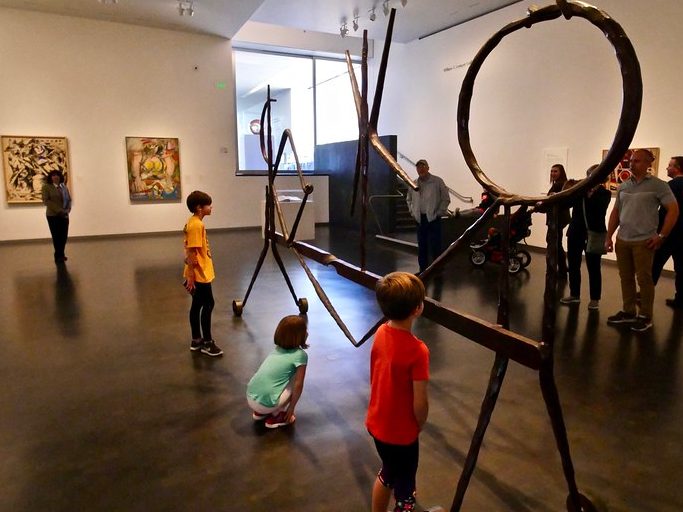
Using form: Villanelle: Barbara Loots, ‘Docent’

The art museum behind the big bronze door.
The yellow buses lining up outside.
The little children eager to explore.

The chirpy docent: Who’s been here before?
Please pay attention. I will be your guide.
At this museum, behind that big bronze door,

there’s nudity, depravity, and gore
to take your little psyches for a ride.
You children will be able to explore

the beauty born of fear, of faith, of war,
of ancient ritual and genocide
that cannot hide behind a brazen door.

Beheadings hardly happen anymore.
Most artists have avoided suicide.
You children are encouraged to explore

the human drama we cannot ignore,
the shape of visions and the forms of pride
collected here behind the big bronze door.

You’ll find despair, anxiety, and more.
Your eyes will bleed. Your skulls crack open wide.
Have fun. Enjoy yourselves as you explore
the art museum behind the big bronze door.

*****

Barbara Loots writes: “I have served fourteen years as a volunteer Docent at the renowned Nelson-Atkins Museum of Art in Kansas City. For our school-age visitors, the methods we use to encourage looking and thinking are prescribed, professional, and age appropriate. However, often on my mind are the dark, unspoken underpinnings of art. The repetitive nature of museum tours suggested a villanelle.”

Barbara Loots resides with her husband, Bill Dickinson, and their boss Bob the Cat
in the historic Hyde Park neighborhood of Kansas City, Missouri. Her poems have
appeared in literary magazines, anthologies, and textbooks since the 1970s. She is a
frequent contributor to lightpoetrymagazine.com. Her three collections are Road Trip
(2014), Windshift (2018), and The Beekeeper and other love poems (2020), at Kelsay
Books or Amazon. More bio and blog at barbaraloots.com

Photo: “Nelson-Atkins Museum of Art, Kansas City, Missouri, USA” by ernie_nh7l is marked with Public Domain Mark 1.0.

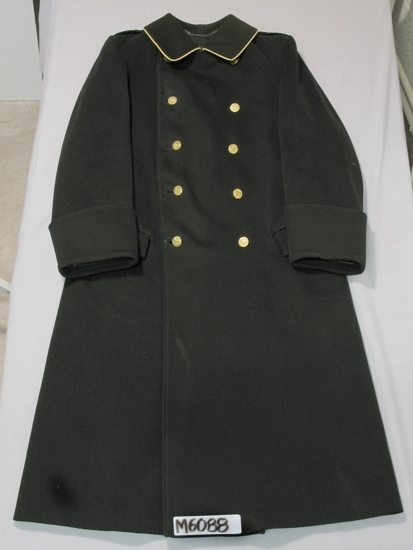
D.A. Prince, ‘The Coat’

It should have gone to Oxfam years ago
yet it clings on—through house moves, clearings-out,
declutterings—while fashion’s dictats show
just how unwearable it is. No doubt
of that. It’s heavy: woollen cloth
you’d never find these days, its tailoring
too buttoned-up, too stiff. Even the moth
finds food in something with more flavouring.

I haven’t worn it since the funeral,
that time when death demanded decency
of sober colours, darkness integral
to paying one’s respects. The legacy
hangs here, as though in waiting for some end
I can’t foresee. Then someone else will face
the final clearing, wondering where to send
this coat, and why it takes up so much space.

*****

D.A. Prince writes: “This was my coat and very much as described in the poem. It had followed me around from house to house for over fifty years. It was bought for my father’s funeral, had been worn for a couple of winters afterwards and then consigned to the wardrobe. I imagine most people have some sort of item — not necessarily clothing, just something freighted with the past — that they hesitate to part with.” The poem was published in the February 2024 Snakeskin (issue 314).

D.A. Prince lives in Leicestershire and London. Her first appearances in print were in the weekly competitions in The Spectator and New Statesman (which ceased its competitions in 2016) along with other outlets that hosted light verse. Something closer to ‘proper’ poetry followed (but running in parallel), with three pamphlets, followed by a full-length collection, Nearly the Happy Hour, from HappenStance Press in 2008. A second collection, Common Ground, (from the same publisher) followed in 2014 and this won the East Midlands Book Award in 2015. HappenStance subsequently published her pamphlet Bookmarks in 2018, with a further full-length collection, The Bigger Picture, published in 2022.

Photo: “Rock” is licensed under CC BY 4.0.

Isabel Chenot, ‘Echoes of Love’

The house is creaking like a rocking chair.
I’m small again,
comforted by the sway of matter in a shift of air,
cosseted by wind.

Undulate earth, how do you slip your hum
around our roar
of concrete, needles, neon, wadded gum,
demented hungers, war,

discarded children? Your lap is full of us
and of our wrong.
How can you simplify the noise
to cradle our first song?

*****

First published in Shot Glass Journal.

Isabel Chenot has loved and practiced poetry for as long as she can remember. Her poems have been published in Shotglass and other places, and some of them are collected in The Joseph Tree, available from Wiseblood books.

Man, woman and child on verandah of weatherboard house” by State Library Victoria Collections is licensed under CC BY-NC 2.0.

Jerome Betts, ‘Overexposure On A Station Bookstall’

I

Magazines courting raised circulation
    Decked with models they think most appealing
Merely generate mild irritation
    When it’s clear what it is they’re revealing.

Whether languorous, muscular, ditzy,
     Strong and silent, demure, sentimental,
Or suggestive, i.e. bum ‘n’ titsy,
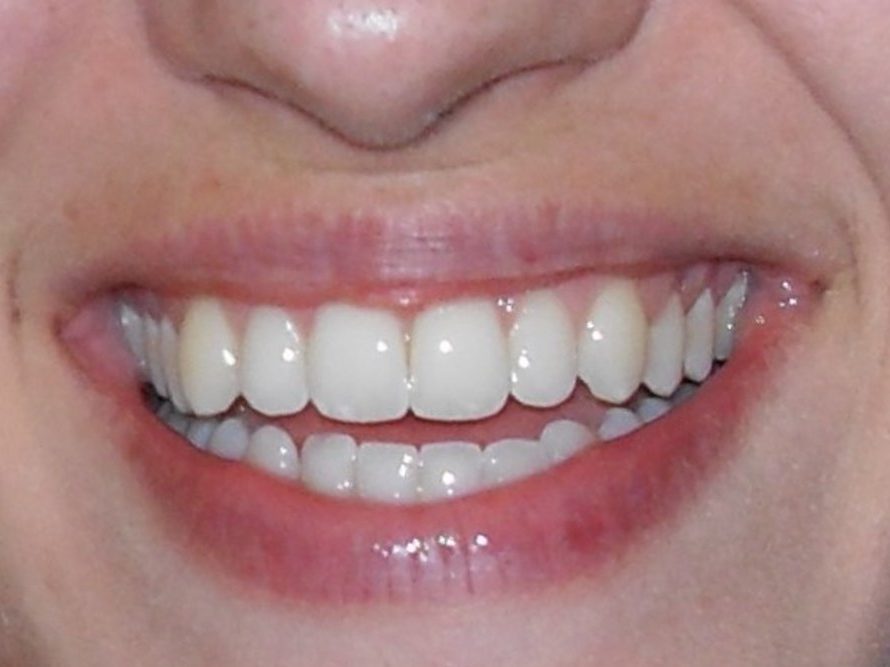
     They display far too much that is dental.

Why this boom in bared teeth, all Macleany?
     Why the photo-shopped grins that afflict us?
Why must faces, both time-touched and teeny,
      Get reduced to a glistening rictus?

Can it be that the image-controllers
     Assume none of us buy printed paper
Without first seeing canines and molars
     Being flashed by some gloss-coated gaper?

On a panel the world flocks to honour,
     Who charms with her tight-lipped composure?
Yes, it’s L. da V.’s Louvre-hung donna
     Those cover-mouths too deserve closure.

*****

Jerome Betts writes: “I can’t remember whether anything particular sparked off this slowly evolving piece apart from my becoming increasingly aware of the displays of dazzling female dentition on consumer magazine covers, sometimes a dozen or so different titles in a row to bizarre effect. My impression was that the apparently mandatory flashing smile became the focus, drawing the attention away from the rest of the face.”

Jerome Betts lives in Devon, England, where he edits the quarterly Lighten Up Online. Pushcart-nominated twice, his verse has appeared in a wide variety of UK publications and in anthologies such as Love Affairs At The Villa NelleLimerick Nation, The Potcake Chapbooks 1, 2 and 12, and Beth Houston’s three Extreme collections. British, European, and North American web venues include Amsterdam QuarterlyBetter Than StarbucksLightThe Asses of ParnassusThe HypertextsThe New Verse News, and  Snakeskin (where this poem was first published).

Photo: “Big Beautiful Smile 4” by Smiles7676 is marked with CC0 1.0.

Using form: Hybrid sonnet: Susan McLean, ‘Your Other Women’

Your secretaries, eager to assist you;
your colleagues, protégées, even your dean;
the shopgirls who, you joke, cannot resist you;
my own best friends; the maid who comes to clean;
the women whom you’ve charmed in conversation;
the students who adore you from afar—
how can I resent their admiration,
knowing, better than they, how good you are?

So pick your favorite starlets for your spree,
and rent each film they’ve been in from the start—
I won’t complain. How can I say you’re wrong
to ogle blondes you swear all look like me?
For when our jobs require long weeks apart,
we both know what it takes to get along.

*****

Susan McLean writes: “I was surprised to discover the range of interpretations this poem has received. I had meant to subvert the title with the poem’s content, but I have learned in the past that readers are more likely to twist the content to fit the title than to suspect that the title might be ironically meant. A poem can have many different interpretations, depending on what the reader brings to it, so I have accepted that what a reader sees in it may not be what I intended. This poem was originally written in response to Alfred Nicol’s poem ‘Your Other Men’, a much edgier poem. But mine was intended as a humorous love poem to my partner, a man who likes women and whom women tend to like.
The sonnet is a hybrid, with the first eight lines conforming to the Shakespearean model and the last six lines to the Petrarchan model. That dichotomy felt right for decribing an often-long-distance relationship in which our similarities and differences have learned to work together in harmony.”

‘Your Other Women’ was originally published in Hot Sonnets: An Anthology. Eds. Moira
Egan and Clarinda Harriss. Washington, DC: Entasis, 2011. It later appeared in her second poetry book, The Whetstone Misses the Knife.

Susan McLean has two books of poetry, The Best Disguise and The Whetstone Misses the Knife, and one book of translations of Martial, Selected Epigrams. Her poems have appeared in Light, Lighten Up Online, Measure, Able Muse, and elsewhere. She lives in Iowa City, Iowa.
https://www.pw.org/content/susan_mclean

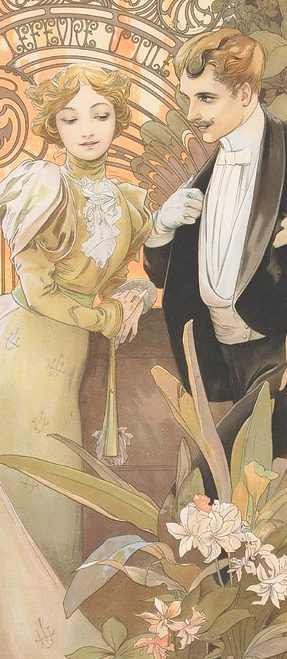
Photo: “Alphonse Mucha – Flirt Biscuits” by sofi01 is licensed under CC BY-NC 2.0.

Using form: Sonnet: David Stephenson, ‘Hold My Beer’

One day a great idea just comes you,
like using some old stuff stored in your shed
for some pyrotechnic derring-do,
and you can’t get the thought out of your head,
and you’re excited but a little scared,
since carrying the stunt out would require
some tricky timing. You feel unprepared
and think of all the ways it could backfire…

And yet key elements are on the scene—
the tires and lumber, and most critically
a full two-gallon can of gasoline—
as if assembled there by destiny.
You know you won’t rest till this thing gets done.
Carpe diem. Light the fuse and run.

*****

David Stephenson writes: “On the background for the poem (just published in Rat’s Ass Review), I thought of the title first, as sometimes happens, and was trying to think up some verse that would go with it.  I have habitually written sonnets for years, but hadn’t written one in a while when I was working on this, and I thought it had potential for a good sonnet, since most things do.  One thing I like about the form, in addition to the technical challenge, is its endless flexibility.   Some of the details comes from bonfire videos that I’ve seen on Youtube, in which somebody pours a couple of gallons of gas on a woodpile and lights a match, resulting in an explosion.  I find these videos fascinating and always wonder what they were thinking.  I was also thinking of one of my favorite quotes, from the Kurt Vonnegut novel Galápagos:
That, in my opinion, was the most diabolical aspect of those old-time big brains: They would tell their owners, in effect, ‘Here is a crazy thing we could actually do, probably, but we would never do it, of course. It’s just fun to think about.’ And then, as though in trances, the people would really do it…

David Stephenson is a retired engineer.  He writes: “I worked in the automotive business and have lived in Detroit for many years, although I am originally from the same part of rural Illinois as Carl Sandburg, my favorite poet.  I was a technical expert in machining operations, first at General Motors and later at Ford.  My mother was a school teacher and my father was a skilled craftsman who worked in various factories for John Deere, mostly the big ones along the Mississippi River in Moline.  I write poetry out of a desire to make music; if I could play an instrument and was more presentable, I would have formed a band instead.  I have two collections out, Rhythm and Blues, which won the 2007 Richard Wilbur Award, and Wall of Sound, which was published by Kelsay Books in 2022.  Both are available on Amazon.  And as you know, I am also editor of Pulsebeat Poetry Journal.”

Photo: “Fire man!” by redeye^ is licensed under CC BY-ND 2.0.

Using form: Amphibrachic tetrameter: John Beaton, ‘Regeneration’

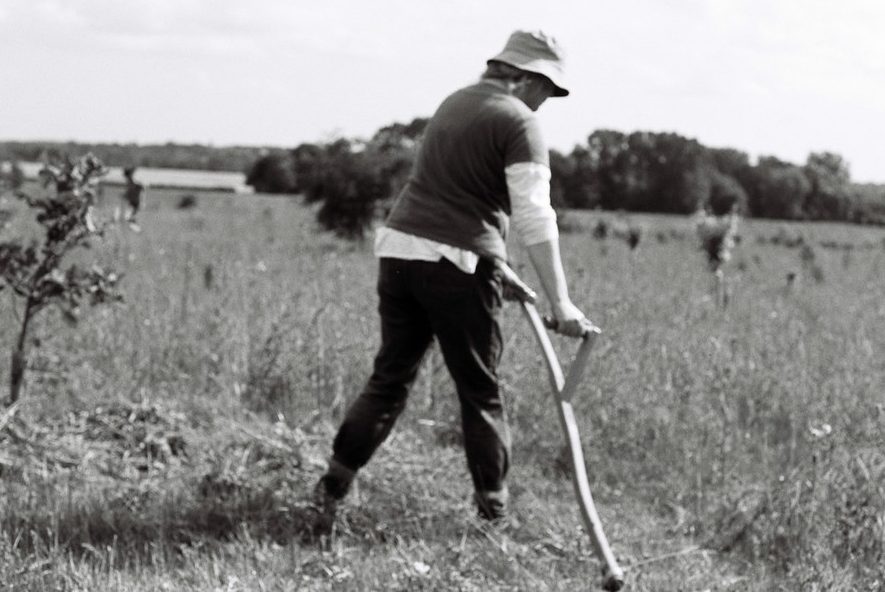
Hay ripens. I sharpen my tapering scythe blade
and chamfer its wafer of paper-thin steel
with stone swoops; it’s hooked like a peregrine’s talon.
The snaking shaft sweeps and the first swathe is side-laid
beside me, clean slain. As I swing I can feel
the gravid field yielding. Sheaves kneel and then fall in
the breeze in formation. Their early seeds dance there
like next April’s rain-showers shining in air.
The cocksfoot and rye-grass and fescue are falling,
the rogue oats, the sedges—I harvest the field where
they shaded the clover; and none do I spare.
The sun sets on stubble where hay-stalks lie sprawling;
my father stood here in the old days like one
of the stalks that made hay as they fell in the sun.

*****

John Beaton writes: “My father grew up in a croft on Skye and he’d scythe hay crops. As a boy, I saw him do it and, as a young man, I did it myself. I never forgot the rhythmic ease of his cutting. He’d been born to it. Anyone can scythe but there’s a skill in being able to do it effortlessly for whole days. It’s all in the rhythm and the precision of the swing.
One day, when I was scything dry hay and watching seeds scatter then fall, reseeding the ground, I thought of how I was succeeding my father. And I wrote this poem.
To capture the rhythm of the scythe, I used amphibrachic tetrameter lines with a mixture of masculine and feminine endings. For instance, the first two lines go:
da DA da da DA da da DA da da DA da
da DA da da DA da da DA da da DA
The other lines follow these patterns in varying order. The rhymes are abcabcdd effegg and the overall pattern is a modified sonnet. Strong internal rhyme and alliteration keep the lines swinging. I hope the reader sweeps and sways through it.”

John Beaton’s metrical poetry has been widely published and has won numerous awards. He recites from memory as a spoken word performer and is author of Leaving Camustianavaig published by Word Galaxy Press. Raised in the Scottish Highlands, John lives in Qualicum Beach on Vancouver Island.
https://www.john-beaton.com/

Scything” by London Permaculture is licensed under CC BY-NC-SA 2.0.