Tag Archives: families

David Stephenson, ‘Payday’

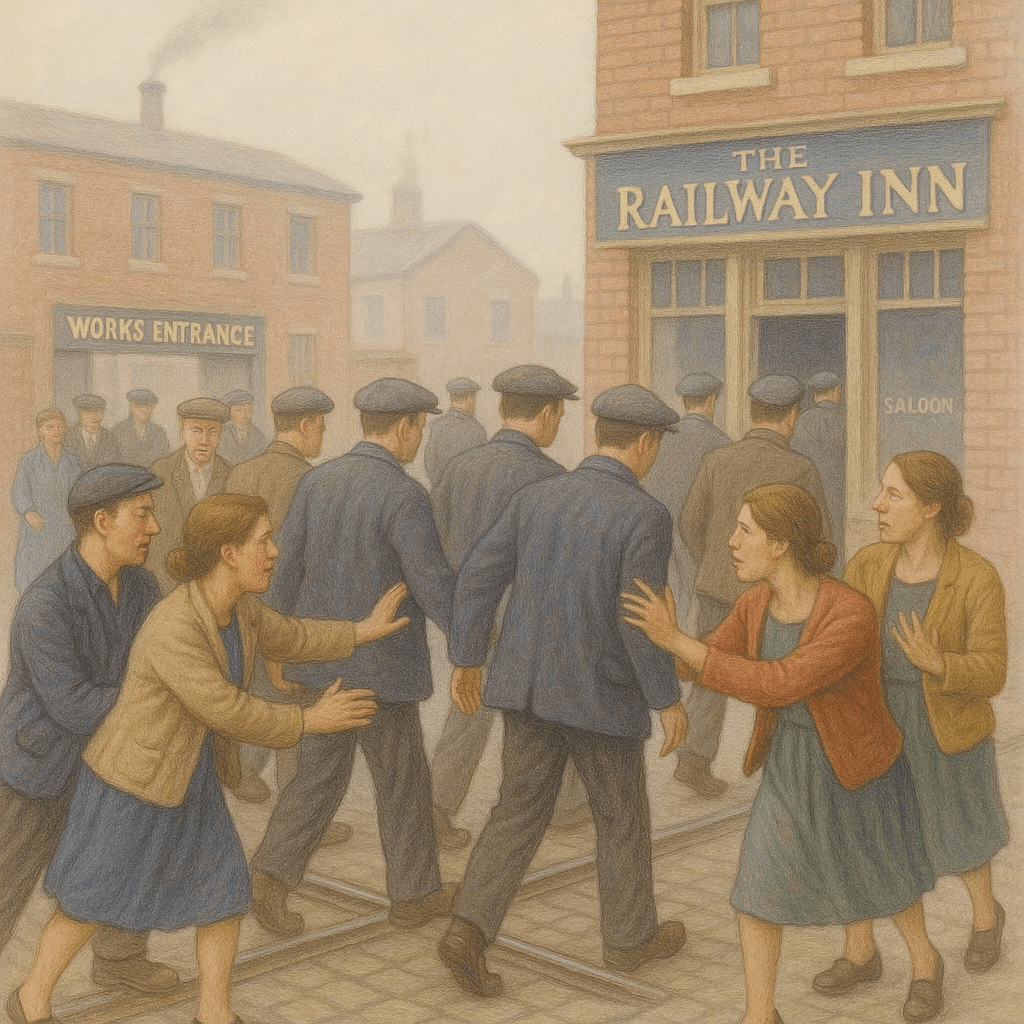
My dad’s plant was across the railroad tracks
from half a dozen shot and chaser bars,
and on paydays the bars were visited
and stocked with stacks of bills by armored cars,
 
and women waited at the gates and tracks
at shift changes, to try to intercept
their thirsty husbands in the passing throng
before they cashed and drank up half their check.
 
At the time, I didn’t think about
how desperate those women must have been
to go out on a crowded public street
and chase after their irresponsible men;
 
I guess I found it droll.  But if I’d been
more aware, what could I have done or said?
When people’s lives are going off the rails
strangers only frown and shake their heads.

*****

David Stephenson writes: “When I was in high school, my dad worked at John Deere Plow-Planter—now called Seeding and Cylinder—in Moline, Illinois.   This was before direct deposit, so the workers got paper paychecks.  As with many factories, there were several taverns nearby, any of which would happily cash a paycheck.  If I borrowed Dad’s car, I would have to pick him up and drop him off, so I was sometimes there during shift changes.  On paydays you would see armored cars outside the bars, and at the end of the afternoon shift you would see women waiting on the railroad tracks, as described in the poem.  It didn’t really register with me at the time, but later on I realized it was quite sad.  I wrote the first two stanzas of the poem four or five years ago, but was stuck as to how to proceed, since I didn’t know what to say about the scene.  What can you say?  I finally came up with the current ending, which says there isn’t anything to say, but says it well.”

‘Payday’ was first published in Snakeskin.

David Stephenson is a retired manufacturing engineer from Detroit, and the editor of Pulsebeat Poetry Journal.  His most recent collection is Wall of Sound (Kelsay Books, 2022).

Illustration: RHL and ChatGPT

Maryann Corbett, ‘To the Anti-Librarian’

Small vandal, parked on your padded bum
on a cheerful rug in the Children’s Section
next to a bottom shelf,
yanking the volumes one by one
till they strew the aisle in every direction,
loudly pleased with yourself
at the way your brightly patterned havoc
obstructs the traffic,

keep to your task. Disrupting order
is evolution’s eternal purpose.
Surely it’s been your goal
from the hour two gametes burst their border
and two tame selves went wild as a circus.
Systems that once felt whole
eyeballed each other, laughed, and gambled,
and lives got scrambled.

Do your worst, then, with giggles, rage,
and all the smackdown-loud rebellion
grown-ups are now too tired for.
These sleepless two, in a golden age,
were a black-clad goth and a hard-rock hellion.
Change is the charge we’re wired for.
small changer, blessings. Though elders frown,
pull the world down.

*****

Maryann Corbett writes: “Like many poems, this one (first published in LIGHT) is part memory and part pure fiction. “Anti-librarian” was our joke term for our daughter as an infant when (long years ago) she sat on her tush next to the bookshelves and pulled the books off just because she could. The image of young parents as reformed characters is imaginary. The hope that the young will change the world seems to be eternal.”

Maryann Corbett earned a doctorate in English from the University of Minnesota in 1981 and expected to be teaching Beowulf and Chaucer and the history of the English language. Instead, she spent almost thirty-five years working for the Office of the Revisor of Statutes of the Minnesota Legislature, helping attorneys to write in plain English and coordinating the creation of finding aids for the law. She returned to writing poetry after thirty years away from the craft in 2005 and is now the author of two chapbooks and six full-length collections, most recently The O in the Air (Franciscan U. Press, 2023). Her work has won the Willis Barnstone Translation Prize and the Richard Wilbur Award, has appeared in many journals on both sides of the Atlantic, and is included in anthologies like Measure for Measure: An Anthology of Poetic Meters and The Best American Poetry.

Picture: ‘Anti-Librarian’ by RHL and ChatGPT.

Sonnet series: Jean L. Kreiling, ‘My Brother’s Last Year’

  1. What My Brother Says

He says I’m not myself, but in my eyes
and in my arms, he is. I hug him, feeling
that he’s lost weight, but brother-warmth defies
that deficit. Disease and “cure” both stealing
small pieces of him, he has had to quit
his role as family cook, and he can’t drive.
But he retains his reason and his wit,
so much so that it seems clear he’ll survive;
they say he won’t. He says his life’s been great,
though certainly too short. He still stands tall
and truthful: he unblinkingly looks straight
ahead, says what he sees, and leads us all.
He looks thin, but he always has been slim.
He says I’m okay, mostly. He’s still him.

  1. What Looms

It’s always there: a cloud—no, more than that,
a monstrous weight, insistent, ugly—no,
invisible, but foul. Its habitat
is everywhere; there’s no place he can go
to break away from its unfailing grip
and find a self not poisoned by his own
insidious insight, where he can strip
his days of its unnerving undertone.
His daughter’s funny story makes him chuckle,
he briefly cares about a football game,
but you can almost see his psyche buckle
again as deathless facts and fears reclaim
their sure dominion, making him aware
again of all that looms. It’s always there.

  1. Walking with My Brother and His Wife

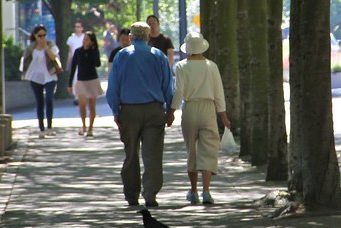
They’re holding hands, as they so often do,
as we three walk a path in woods behind
their house, our sneakers swishing through
mid-fall’s crisp russet leaves. This path will wind
predictably through acres of old trees
and end at their backyard. Along the way,
we talk of plans, the weather, memories;
most of their plans are now in disarray,
like scattered leaves in autumn’s chill. They stroll
as easily as if they could predict
more than this path, own more than land, control
the odds that he’ll grow old. What fears afflict
them, they defer; they face the chill unbowed.
They’ll hold hands for as long as they’re allowed.

  1. Therapy

I write these sonnets as if that might ease
my mind; it doesn’t, and these lines can’t do
a thing for him. Like stopgap therapies
that promise him another month, a few
neat poems only shuffle deck chairs, shaping
elaborations on the theme that dulls
his days with brain fog. He won’t be escaping;
he knows he’s sinking. As my brother mulls
his measureless calamity, I count
out syllables, choose metaphors, debate
rhyme schemes, and watch the icy water mount
in seas that he cannot long navigate.
I write as if I’d find breath in a word,
as if safe passage might yet be secured.

  1. Progress

It’s not the kind of progress we would hope
for; it’s the damned disease that’s making strides.
My brother’s gaining only ways to cope
with each new deficit as it divides
him further from the life that he once led—
a life he’d thoughtfully constructed, made
of love, ideas, and work. Inside his head,
the enemy destroys the cells that weighed
the sense of printed words, and so he learns
to listen to the Post; when his synapses
don’t fire at numbers anymore, he turns
the checkbook over to his wife. The lapses
disturb but don’t defeat him; he finesses
each injury as the assault progresses.

  1. Nothing

I visit him again, this time by train.
(The ten-hour drive gets tougher as I age,
but then, what right do I have to complain?
To grow old is a gift.) This may assuage
my sense there’s nothing I can do, although
a visit’s nearly nothing. Yes, I care;
that’s what my presence demonstrates, I know,
but it will make him strain for things now rare
or difficult: the teasing repartee,
a walk outdoors, shared meals and memories.
He reassures me that he feels okay,
though I watch him declining, by degrees.
I bring his favorite chocolates, as if sweets
could mask the bitter taste nothing defeats.

  1. Want

Not long before the end, he made it clear:
there was so little that he wanted—just
to stay with those he loved, not disappear
into the latter part of dust to dust.
So many of us want so much: we crave
the shiny toy, the extra buck, and more
when less would do—stuff that will never save
our souls or bodies. I knew that before
my brother’s diagnosis, and today
I can’t claim to have unlearned pointless greed.
I find, though, that it’s easier to weigh
the worth of things desired, to measure need,
to understand there isn’t much I lack.
He wanted only time. I want him back.

*****

Jean L. Kreiling writes: “My brother Bill was wise and witty and loving, and deserved a far longer life; I miss him every day. He was teased and adored by his three older sisters, he made our parents proud, and he created a beautiful family of his own.  His magnificent wife and his three devoted grown children took good care of him in the year between his brain cancer diagnosis and his death, but it was a very difficult year for Bill and all who loved him.”

This tribute to him as a series of shakespearean sonnets was originally published in Pulsebeat Poetry 11.

Jean L. Kreiling is the author of four collections of poetry; her work has been awarded the Frost Farm Prize, the Rhina Espaillat Poetry Prize, the Kim Bridgford Memorial Sonnet Prize, and three New England Poetry Club prizes, among other honors.  A Professor Emeritus of Music at Bridgewater State University, she has published articles on the intersections between music and literature in numerous academic journals.  She lives on the coast of Massachusetts.

Photo: “Holding Hands on the Hornby Separated Bike Lane” by Paul Krueger is licensed under CC BY 2.0.

Shamik Banerjee, ‘In a Family Gathering’

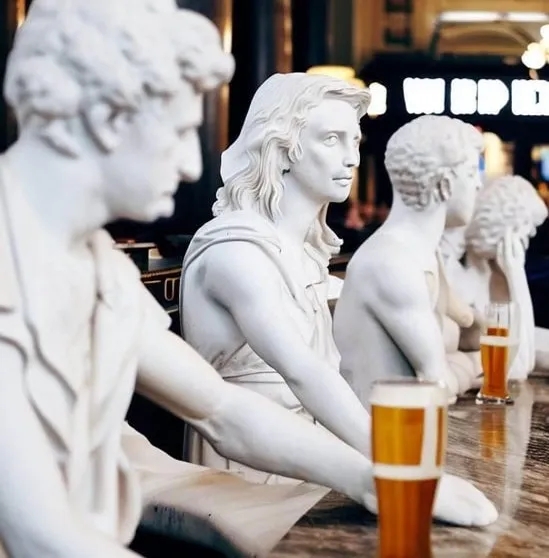
Before the booze-up session, all are statues.
Their prior falling-outs lodge doggedly
Upon their mouths like pillars of a building.
The visit’s just a plain formality.
But when the drinks are served, all lips begin
To open slow like rusty dungeon doors.
A glow of cheer unfolds upon their cheeks
Like dawn illuminates night-darkened shores.
Once they have reached the point of being swacked,
Then one by one they clear the awful air
Infected with self-pride, distaste, and spite.
The daftest cousin turns into Voltaire.
The silent uncle starts to sing his praises
Of how he’d saved three bullocks in a flood.
The two-faced aunt becomes a freedom fighter:
I’ll kill and die for us! We are one blood!
And I, the teetotaller, sit and weigh
If they’ll return to stone the coming day.

*****

Shamik Banerjee writes: “The absurd, ridiculous, and perennial drama between my relatives’ families inspired me to write this poem.”

Shamik Banerjee is a poet from India. He resides in Assam with his parents. Some of his recent works will appear in York Literary Review, Willow Review, Thimble Lit, and Modern Reformation, to name a few.

Photo: from original publication of the poem in Dear Booze: https://dearbooze.com/cocktales/f/in-a-family-gathering

Using form: Susan McLean, ‘Cul-de-Sac’

The man who had a perfect lawn
forced his three kids to toil outside
till every dandelion was gone.

His wife, gentle and put-upon,
dusted the trophies of his pride
(for tennis, not his perfect lawn).

His son, advancing like a pawn
to keep his father satisfied,
chose, when his girl and job were gone,

to hit a bridge (or gun) head-on.
The neighbors whispered “suicide”
while walking past that perfect lawn.

The youngest, timid and withdrawn,
lived with her parents till she died
of cancer, but the oldest, gone

for decades, had skipped town one dawn.
When she died too, her parents lied
that she was fine. Their perfect lawn
remains. But all the kids are gone.

*****

Susan McLean writes: “From the ages of six to sixteen, I lived on a suburban cul-de-sac, a more elegant term for a dead end. The neighbors I knew best, whose three children were around the same ages as the oldest three children in my family, came to symbolize for me the dark side of suburbia, the disturbing realities that lie behind the manicured exteriors and are never spoken of. Not until the father of that family died did we learn, from his obituary, that his oldest daughter, the one who was my age, had died several years earlier, of undisclosed causes. The mother, who played bridge weekly with my mother, had always said when asked about that daughter that she was ‘fine’.

I chose to tell this story in a variant on a villanelle in which only the last words of the repeating lines reappear: ‘perfect lawn’ and ‘gone’. That loosening of the form allowed more narrative to fill the lines, but the tolling repetitions of those words encapsulate, for me, the irony and tragedy of keeping up appearances in suburbia. The villanelle itself can be a straitjacket of a form, and the short tetrameter lines tighten it further, till it feels as though there is no way out.”

Susan McLean has two books of poetry, The Best Disguise and The Whetstone Misses the Knife, and one book of translations of Martial, Selected Epigrams. Her poems have appeared in Light, Lighten Up Online, Measure, Able Muse, and elsewhere. She lives in Iowa City, Iowa.
https://www.pw.org/content/susan_mclean

An 8 Bedroom Vacation Rental” by Discount Vacation Rentals Online is licensed under CC BY 2.0.

Poem: ‘Family Reunion’

Once we were all one tribe, our branch that broke
from those who now are bonobos and chimps;
but wandered off when restlessness awoke,
went poking into any land we’d glimpse,
new seas, new clime.
Now: family reunion time!

We’ve found each other, these last centuries,
gone to each other’s homes for ill or good,
marrying cousins from across those seas
in worlds of travel, music, football, food:
sing! ring! chant! chime!
It’s family reunion time!

Aggressive individuals still fight,
still work to drag their group into a brawl,
but no one any longer has the might
to be successful when confronting all.
War’s now a crime.
It’s family reunion time!

We merge by TV, plane and internet,
we dye and body-mod against the flow
of currents mixing us to one fixed set,
and build a culture of both yes and no,
crass and sublime.
It’s family reunion time!

Once more we’re all a family; once more
some will roam out across the galaxy,
and we will grow apart, till on some shore
of spiral arms we’ll meet, first disagree…
shift paradigm…
then… family reunion time!

*****

Ancient history and far-future science fiction are all part of the same story, the same continuum, of equal interest to me. This poem was published in Snakeskin 303, i.e. February 2023 – thanks, George Simmers! (And the good news is that the Snakeskin Archive – decades of good poetry – is now functioning again!)

Photos: “Notting Hill Carnival 2008” by Lplatebigcheese is licensed under CC BY 2.0.

Potcake Poet’s Choice: Tom Vaughan, ‘Happiness’

It’s easy to forget they’d fought a war:
his father drowned, half-brother bayoneted;
her kilted sibling captured at Dunkirk,
locked up for five long years. But yes they met

in uniform, lost half their friends, before
the normal world re-started when they wed:
mortgage; children; grinding office work –
all I suppose they wanted when they set

out as a couple. We must have been a shock:
busting their rulebook; scornful of sacrifice;
mocking their past and their belief in ‘progress’;

too young, too smashed, too angry to unlock
their silence, or to understand the price
they’d paid for what they’d still call happiness.

Tom Vaughan writes: “I chose Happiness it because I hope it gets right not just my own retrospective feelings about my parents, but also something more general about the generational shift between those who went through WW2 in their youth, and their less-tested offspring.

Secondly, because it’s a sonnet (a favourite form of mine), but in what I call a ‘roller’ rhyming (not always full rhymes) pattern, which tries to pull the reader down to the final line with a lurch which I hope is also of the emotions.

It was published in Dream Catcher in 2016, but has been picked up a couple of times elsewhere since then, including in your Families and Other Fiascoes chapbook.”

Tom Vaughan is not the real name of a poet whose previous publications include a novel and two poetry pamphlets (A Sampler, 2010, and Envoy, 2013, both published by HappenStance). His poems have been published in a range of poetry magazines, including several of the Potcake Chapbooks:
Careers and Other Catastrophes
Familes and Other Fiascoes
Strip Down
Houses and Homes Forever
Travels and Travails.
He currently lives and works in London.
https://tomvaughan.website

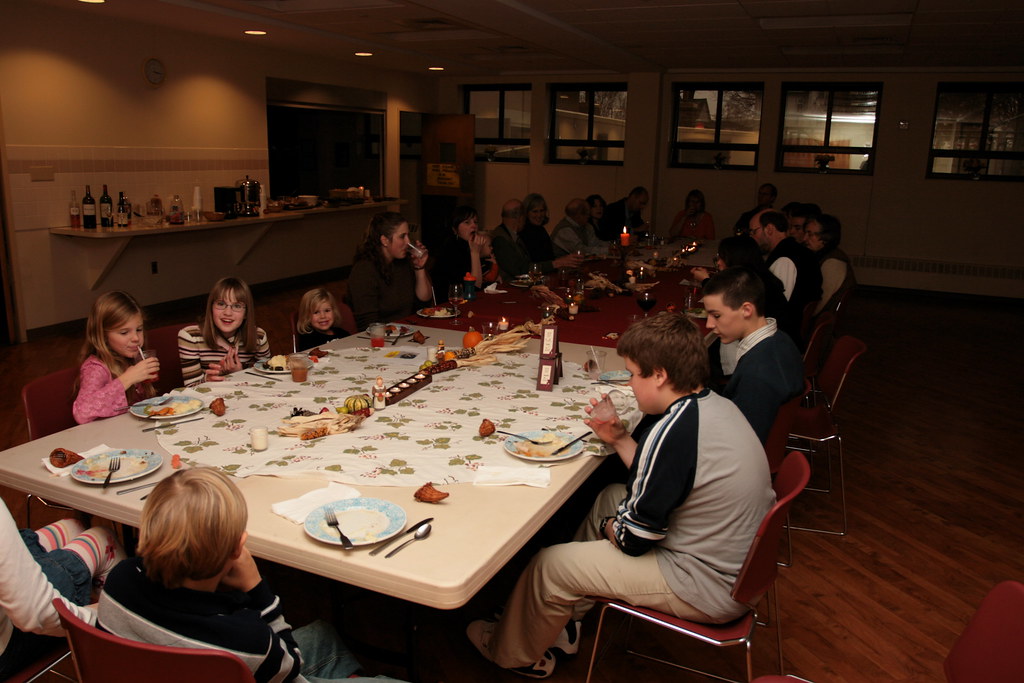
Poem: “Head of the Table”

Your grandparents die
And your children are born;
Then your parents die
Then grandchildren are born;
And you move one more seat
Round the mad table
To the head of the table,
At which point you’re expected to go.

As when the crow came
Wild, not tame – all the same
It cawed you the news
That confirmed death and time;
So when your time comes
And you feel in your bones
That the body is over
Where will you, the guest, go?

Then bring food and drink!
Glasses clink! Glance and wink
As you move to the brink
Of eternity.
Who knows what follows next?
“Afterlife” is absurd –
But then all life’s absurd –
We just know, when it’s time, that we go.

This is about as religious as I’ve found myself in the past 30 or 40 years – in other words, I waver between mild atheism (“None of this God stuff makes sense”) and militant agnosticism (“I don’t know, and neither do you.”) But at least you have a seat at the table! Enjoy the party while you can (preferably while being pleasant to others).

Originally published in Snakeskin No. 232 (or #232).

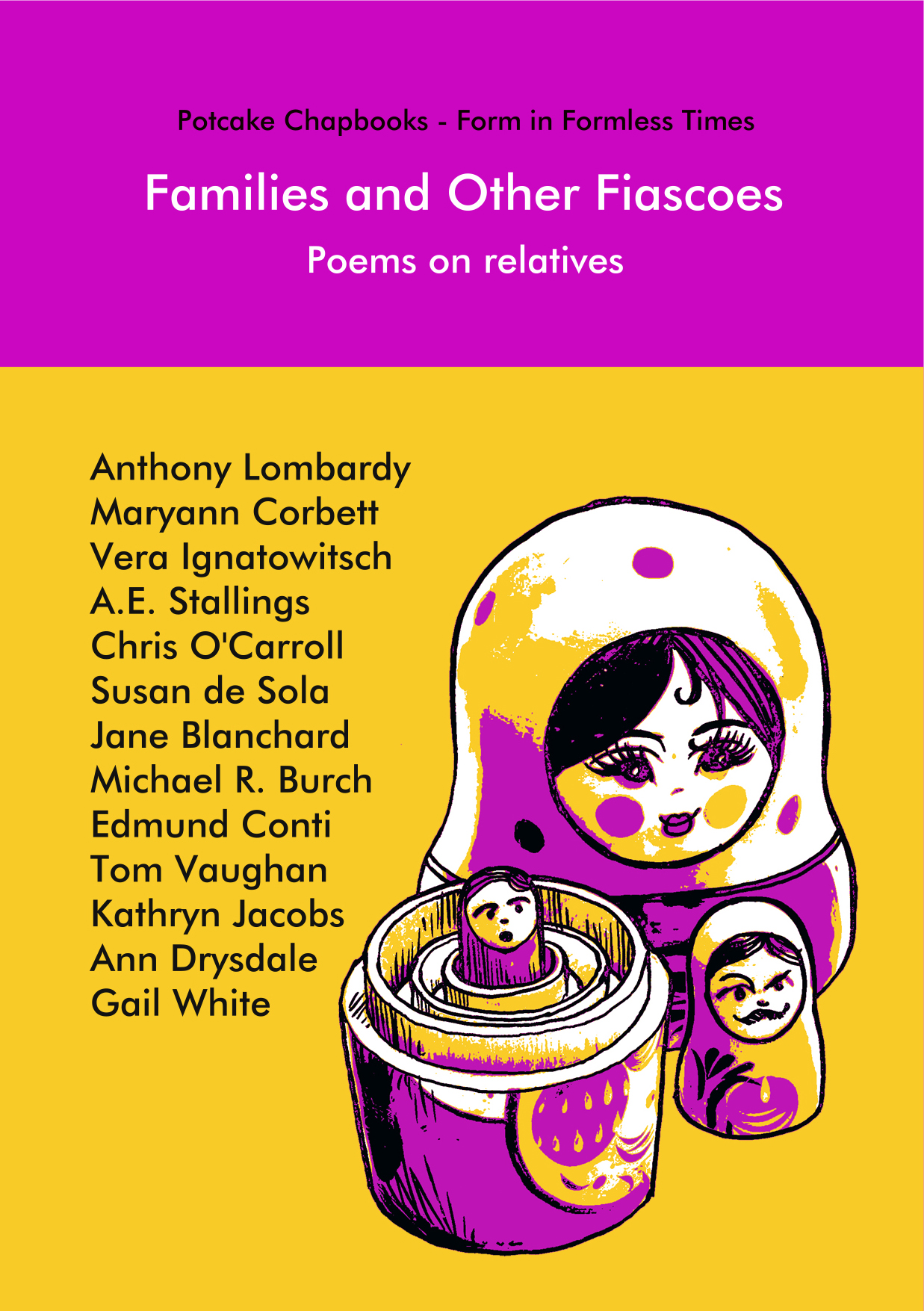
Formal Launch: Potcake Chapbook 4 – Families and Other Fiascoes

The fourth Potcake Chapbook is now launched into the wide world, with its contributors coming from England, Wales, Greece, the Netherlands, Canada, and coast to coast in the US.

04 Families and Other FiascoesPoets new to this series are, in order of appearance, Maryann Corbett, Vera Ignatowitsch, Kathryn Jacobs, Anthony Lombardy, Susan de Sola, Jane Blanchard and Michael R. Burch.  A glance at their profiles in Sampson Low’s Potcake Poets page will show you they include editors at Able Muse, Better Than Starbucks, The Hypertexts and The Road Not Taken, as well as various prizewinners.

Returning contributors are A.E. Stallings, Ed Conti, Tom Vaughan, Ann Drysdale, Gail White and Chris O’Carroll, who of course can boast their own editing and prizewinning. And returning as well is the artwork of Alban Low.

It’s hard to do justice to families in a mere chapbook. Not only are there dozens of possible family relationships (and the number is actively increasing thanks to both social changes and biotech developments), but each of those relationships can close or distant, sweet or bitter, simple or complex, present or merely remembered. It requires science fiction to describe an individual entirely without a family.

This chapbook touches on a great deal, but by no means all, of what “family” means. Send a copy to someone who appreciates the bittersweetness that accompanies family love, up and down the generations.

Call for Submissions: Careers, Families

The next titles in the Potcake Chapbooks series are tentatively named “Careers and Other Catastrophes” and “Families and Other Fiascoes”. This is a call for submissions to them.

Potcake Chapbooks

Poems should be in formal verse, from 2 to 24 lines in length preferred but up to 50 lines possible, witty, vivid, elegant, and previously published.  Contributors receive five copies, and a discounted rate on additional purchases.

By submitting you acknowledge you are the sole author and give us the right to publish your poem; you retain copyright. Please identify the place of prior publication so that we can acknowledge it. Simultaneous submissions are fine. The chapbooks are scheduled for publication in January/February 2019.

Email in a doc file to robinhelweglarsen -at- gmail.com