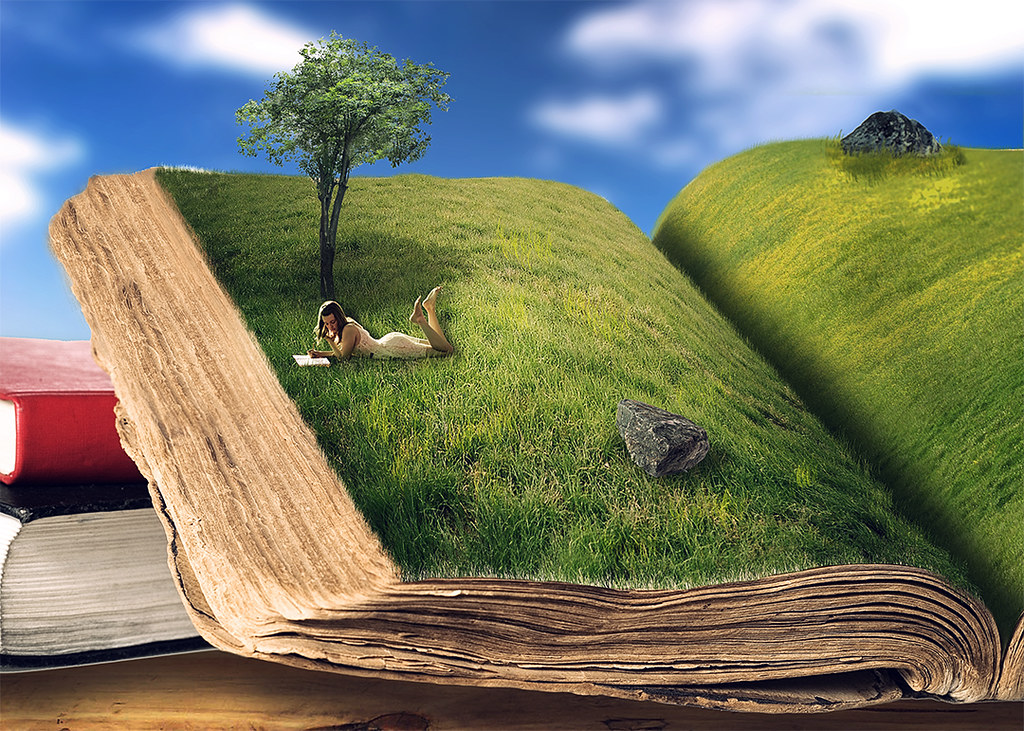
It’s fallen half apart, a derelict. The gatherings have sprung, the boards detached, The spine perished, folding maps cut out. The title page is splotched with ink and nicked At the edge, the author’s homely portrait scratched— A splash of beer, faint thumbmarks all about— Discarded once, but now it’s yours. It lives, Like you, diminished now by age and loss. And so, it brings the breeze, the autumn sun, The creaking door that with a push still gives The afternoon, the birds and clouds, grass, moss, The world still new, the journey not begun, The path curling from sight in the soft glow Of a fading day—and you, prepared to go.
*****
Ernest Hilbert writes: “I am a rare book dealer, so I spend my days surrounded by books. I love all kinds of books, and I have a particular affection for books no one seems to want but which are, nonetheless, worthwhile. There are, after all, far more books than there are readers. When a book is taken home, adopted, as it were, it finds a new life. Each book one acquires is, in its way, a hedge against the future, a small hope one might some day find the time to read it. When a book is read for the first time, however old it is, however many times it has been read before, it becomes a new book. The structure of the poem is designed to express this sense of renewal and hope, the litany of degradation and wear, the sense of hopelessness, one finds in the octave redeemed, after the volta, in the sestet.
“I intended to communicate that sense of excitement I still feel when I first open a book, but I likely also had in mind Benjamin Franklin’s mock epitaph, written when he was 22, which begins “The Body of B. Franklin Printer / Like the Cover of an old Book / Its Contents torn out . . .” Finally, I must admit that there are few places I find myself happier than at a promising friends of the library book sale.”
*****
‘Friends of the Library Sale’ was originally published in The Sonneteer.
Ernest Hilbert was born in 1970 in the city of Philadelphia and educated at Rutgers and Oxford Universities. He is the author of the poetry collections Sixty Sonnets, All of You on the Good Earth, Caligulan—selected as winner of the 2017 Poets’ Prize—Last One Out, and Storm Swimmer, winner of the 2022 Vassar Miller Prize. He works as a rare book dealer in Philadelphia. Visit him at www.ernesthilbert.com
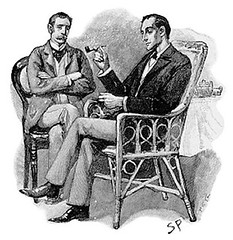
“Have you ever thought, Holmes, all we are Is one long tube around which are attached As very mixed a cluster of bizarre Accessories as ever were mis-matched To move about to gain the wherewithal To hunt and gather what it needs to eat From things that grow or swim or fly or crawl, And change them into matter to excrete?” “Certainly, dear Watson — that’s a trope That humankind has puzzled over, now, And through the eons we’ve had love and hope, And all philosophy’s no more than how, Through grasping and digesting, we can cope With nature’s discontents and discontentery. You’ve heard me say it, Watson — it’s alimentary.”
*****
Marcus Bales writes: The Human Alloy
I’ve heard a lot of other poets say “This poem took me many years to write,” And never understood, until today, What that was like, but now I think I might.
I heard the joke in second grade, or third, And didn’t get it. Nothing there for me Who’d never heard of Sherlock Holmes, absurd As classmates made my ignorance out to be.
I read the books and stories then of course And hated Holmes’s bullying and sneers At poor old Dr. Watson, so the source Of humor there eluded me for years.
Bit by bit, I finally came around To see superiority as fine And feel such arrogance was something sound. You never heard such sneers and snarks as mine.
There’s nothing I would not pretend to know Nothing I had no opinion on No lacerating length I would not go To show that all were ducks but I, a swan.
Until at length I came to read Ayn Rand Whose heroes do and say such nasty scat That even I could finally understand The breach of faith it is to be like that.
And flawed, addicted Holmes no longer seems The snarling height of genius on its throne Pursuing all the best of human dreams, But just another man almost alone.
And it’s by Watson’s decency we gauge Cooperation making common sense Without which Holmes’s self-destructive rage Would flail against the world without defense.
My view of Holmes and Watson rounds at last To my acceptance of the central hoax Of life: it’s only teamwork that can cast The human alloy. That and silly jokes.
*****
Not much is known about Marcus Bales, except he lives and works in Cleveland, Ohio, USA, and his work has not appeared in Poetry or The New Yorker. His latest book is 51 Poems; reviews and information at http://tinyurl.com/jo8ek3r
In the middle of their movie each arrives Smiling in this gutter, still the stars Of broad moments in their narrow lives. They tell of other people, other bars, Other husbands, lovers, friends, and wives, Re-writing both their pleasures and their scars; How one thing given up another strives To get; how what one shines another tars With one of the varieties of hate. But here the villain is a dead-end job Or marriage, or failing kids; it would be great If Yankees, Nazis, drug lords, or The Blob Were why we’re lost, or losing, or alone – But here the tales and failures are our own.
*****
Marcus Bales writes: “The bar culture was a mystery to me. For much of the western developed world, though, it seems central to the human experience. The only reason I went to bars for a long time was to see a performer, and then only for that. The genes for enjoying intoxication and for enjoying the taste of alcohol seem to have missed me. I’d have a soft drink, enjoy the show, and go home. I thought bars were noisy theaters full of fairly rude people who were missing the point of the entertainment. Yeah, well.
“As usual in these sorts of tales, it was a woman who showed me I had mistaken the whole thing.
“When I met Linda ‘going out’ for me meant a poetry reading. Linda’s idea of a good time was a fried baloney sandwich and a few glasses of wine at a bar. After a couple poetry readings we went to bars. And while everyone at a poetry reading has a story, they are there to tell those stories, often in the kind of detail, physical, mental, and emotional, that can be pretty harrowing. A poetry reading is more like therapy than a lot of therapy.
“The stars of the show, the featured readers, do not, for the most part, mix with the common folk of the open mic. Most of the time the feature readers come late, perform, and leave, giving no one a chance to chat with them or get to know them. There is a distinct class system, and if the performer is known more than locally, those exalted folks prefer to be kept separate from the audience, deigning to meet only a selection of the organizer’s favored few friends in a private room beforehand. You can judge your status in the local hierarchy by whether you are never, sometimes, or often invited to be in that room.
“In bars, though, you can talk to anyone and everyone, if you’re willing. Well, middle-class bars, anyway. Dive bars are a whole other phenomenon. But in middle-class bars people talk to the people around them, and listen to one another, and drink. And talk some more. And drink. The point is the social drinking, the freeing-up, the letting-down. And for a collector of stories it’s a gold mine.
“I still have a soft drink, but if you tip well you can get it served to look like it’s alcoholic. And you can remember what people said, afterwards.”
Not much is known about Marcus Bales, except he lives and works in Cleveland, Ohio, USA, and his work has not appeared in Poetry or The New Yorker. His latest book is 51 Poems (which includes ‘This Bar’); reviews and information at http://tinyurl.com/jo8ek3r
There’s just so many nows in forever if we’re apart or together as one, we’d better cherish them all if we’re clever make the most of our time in the sun,
‘coz it’s where we are led whether up or in bed there’s one funeral we all must attend, because somewhere ahead the sea kisses the sky and the name of that place is the end.
*****
Lindsay McLeod writes: “‘Harvest’ was made as an end piece for the second book I wrote for my daughter.” It was originally published in Grand Little Things.
Lindsay McLeod currently lives by the sea on the Southern edge of the world, where he trips over the offing every morning. He has been published here and there in the past and won a few awards. He has started messing about with words again lately after a few necessary years away. You might expect him to know better by now, but oh no.
I have begun to narrow down desire. As though tracing a river to its source I climb, charting the change higher and higher from placid meander to the turbulent course where it began. I have loved much, not well, collecting worlds to carry on my back. What shall I leave? The spirits that compel this climb demand a spare and steady pack. Leave beauty, wonder. They are everywhere. Leave hope, and drink from the relentless stream. Leave knowledge, learn trust in the nimble air until, suspended by a slender dream, you seek only to climb, and not to know where you came from, where you have to go.
*****
Barbara Loots writes: “Climbing is one of my earliest successful sonnets. Over the decades, I have turned to it again and again as life bears out its wisdom.”
After decades of publishing her poems, Barbara Loots has laurels to rest on, but keeps climbing. The recent gathering at Poetry by the Sea in Connecticut inspired fresh enthusiasm. Residing in Kansas City, Missouri, Barbara and her husband Bill Dickinson are pleased to welcome into the household a charming tuxedo kitty named Miss Jane Austen, in honor of the 250th birthday year of that immortal. She has new work coming in The Lyric, in the anthology The Shining Years II, and elsewhere. She serves as the Review editor for Light Poetry Magazine.
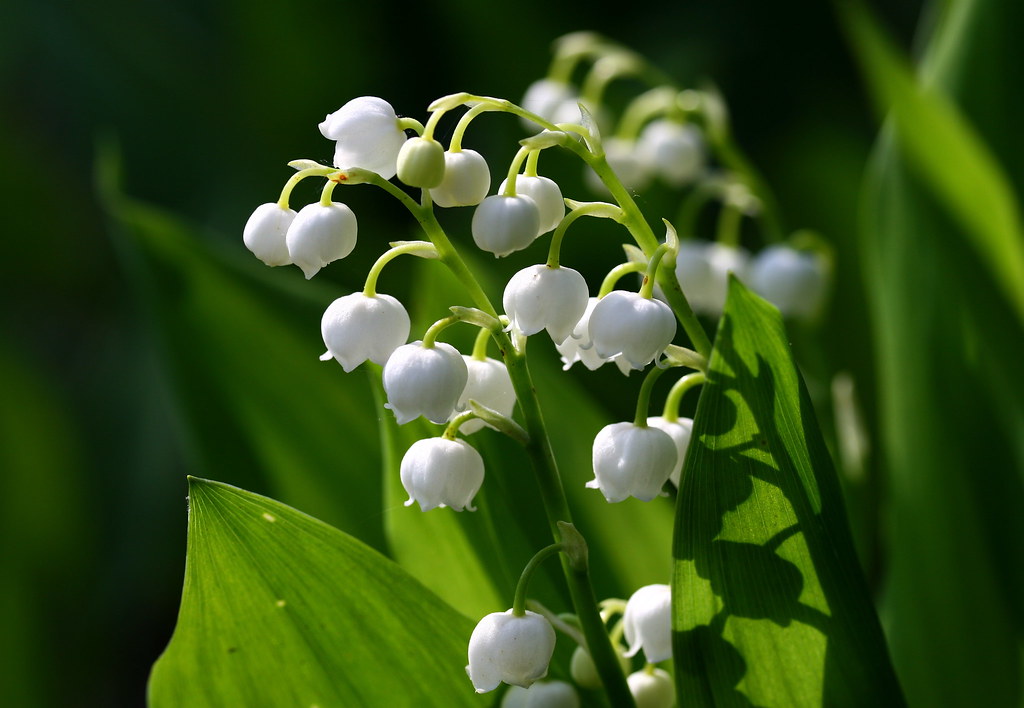
When at the end of spring I pick for the last time My favourite flowers— a yearning fills my breast, And to the future I urgently appeal: Let me but once again look upon the lilies of the valley.
Now they have faded. Like an arrow the summer has flown by, The days have grown shorter. The feathered choir is still, The sun more charily grants us its warmth and light, And already the wood has laid its leafy carpet.
Then when harsh winter comes And the forests don their snowy cover, Despondently I roam and wait with new yearning For the skies to shine with the sun of spring.
I find no pleasure in books, or conversation, Or swift-rushing sledges, or the ball’s noisy glitter, Or Patti, or the theatre, or delicate cuisine, Or the quiet crackling of smouldering logs on the fire
I wait for spring. And now the enchantress appears, The wood has cast off its shroud and prepares for us shade, And the rivers start to flow, and the grove is filled with sound, And at last the long-looked-for day is here!
Quick to the woods!—I race along the familiar path. Can my dreams have come true, my longings be fulfilled?— There he is! Bending to the earth, with trembling hand I pluck the wondrous gift of the enchantress Spring.
O lily of the valley, why do you so please the eye? Other flowers there are more sumptuous and grand, With brighter colours and livelier patterns, Yet they have not your mysterious fascination.
Where lies the secret of your charms? What do you prophesy to the soul? With what do you attract me, with what gladden my heart? Is it that you revive the ghost of former pleasures, Or is it future bliss that you promise us?
I know not. But your balmy fragrance, Like flowing wine, warms and intoxicates me, Like music, it takes my breath away, And like a flame of love, it suffuses my burning cheeks.
And I am happy while you bloom, modest lily of the valley, The tedium of winter days has passed without a trace, And oppressive thoughts are gone, and in my heart in languid comfort Welcomes, with you, forgetfulness of trouble and woe.
Yet now you fade. Again in monotonous succession The days will begin to flow slowly, and stronger than before Will I be tormented by importunate yearning, By the agonizing dream of the happiness of days in May.
And then someday spring again will call And raise the living world out of its fetters. But the hour will strike. I shall be no more among the living, I shall meet, like everyone, my fated turn.
And then what?—Where, at the winged hour of death, Will my soul, heeding its command, soundlessly soar? No answer! Be silent, my restless mind, You cannot guess what eternity holds for us.
But like all of nature, drawn by our thirst to live, We call to you and wait, beautiful Spring! The joys of earth are so near to us, so familiar— The yawning maw of the grave so dark!
*****
Lilies of the Valley (Ландыши) is a poem written by Pyotr Ilyich Tchaikovsky in December 1878 while he was in Florence.
“I am terribly proud of this poem”, he wrote when enclosing a copy to his brother Modest. “For the first time in my life I have managed to write a fairly good poem, which moreover is deeply heartfelt. I assure you that although it was very difficult, still I worked on it with the same pleasure as I do on music.”
Когда в конце весны последний раз срываю Любимые цветы, – тоска мне давит грудь, И к будущему я молитвенно взываю: Хоть раз еще хочу на ландыши взглянуть.
Вот отцвели они. Стрелой промчалось лето, Короче стали дни, умолк пернатый хор, Скупее солнце нам дает тепла и света, И разостлал уж лес свой лиственный ковер.
Потом, когда придет пора зимы суровой И снежной пеленой оденутся леса, Уныло я брожу и жду с тоскою новой, Чтоб солнышком весны блеснули небеса.
Не радуют меня ни книга, нибеседа, Ни быстрый бег саней, ни бала шумный блеск, Ни Патти, ни театр, ни тонкости обеда, Ни тлеющих полен в камине тихий треск.
Я жду весны. И вот волшебница явилась, Свой саван сбросил лес и нам готовит тень, И реки потекли, и роща огласилась, И наконец настал давно желанный день!
Скорее в лес!.. Бегу знакомою тропою: Ужель сбылись мечты, осуществились сны?.. Вот он! Склонясь к земле, я трепетной рукою Срываю чудный дар волшебницы-весны.
О ландыш, отчего так радуешь ты взоры? Другие есть цветы роскошней и пышней, И ярче краски в них, и веселей узоры, — Но прелести в них нет таинственной твоей.
В чём тайна чар твоих? Что ты душе вещаешь? Чем манишь так к себе и сердце веселишь? Иль радостей былых ты призрак воскрешаешь! Или блаженство нам грядущее сулишь?
Не знаю. Но меня твоё благоуханье, Как винная струя, и греет и пьянит, Как музыка, оно стесняет мне дыханье И, как огонь любви, питает жар ланит.
И счастлив я, пока цветешь ты, ландыш скромный, От скуки зимних дней давно прошел и след, И нет гнетущих дум, и сердце в неге томной Приветствует с тобой забвенье зол и бед.
Но ты отцвел. Опять чредой однообразной Дни тихо потекут, и прежнего сильней Томиться буду я тоскою неотвязной, Мучительной тоской о счастье майских дней. — И вот когда-нибудь весна опять разбудит И от оков воздвигнет мир живой. Но час пробьет. Меня – среди живых не будет, Я встречу, как и все, черед свой роковой.
Что будет там?.. Куда, в час смерти окрыленный, Мой дух, веленью вняв, беззвучно воспарит? Ответа нет! Молчи, мой ум неугомонный, Тебе не разгадать, чем вечность нас дарит.
Но, как природа вся, мы, жаждой жить влекомы, Зовем тебя и ждем, красавица весна! Нам радости земли так близки, так знакомы,- Зияющая пасть могилы так темна!
It’s quite a ride. We took off in a cloud of dust and noise and, while it might look steady, silent, from afar above the clouds I’m feeling more and more a rattle in the cabin and my joints as though the bolts are shaking loose; you trust the plane will land safe, smooth, three points . . . but one way or another, all flights end.
*****
‘Vibration’ was recently published in Blue Unicorn.
Well if it is, and this is it then what will be will be and time will toil and time will tell if there’s a guarantee
that at the least and at the last the daily here and now which now and here are thick as thieves will be transformed, somehow
and either way, here’s my advice – lie back and think of all the ups which came between the downs before your curtain call.
*****
Tom Vaughan writes: “There was no particular trigger for this poem, apart from my fitful attempts to be Stoical about the state – and weirdness – of the world. But just at the moment the anger occasioned by the former keeps breaking through.”
Tom Vaughan is not the real name of a poet whose previous publications include a novel and three poetry pamphlets (A Sampler, 2010, and Envoy, 2013, both published by HappenStance; and Just a Minute, 2024, from Cyberwit). His poems have been published in a range of poetry magazines, including several of the Potcake Chapbooks and frequently in Snakeskin and Lighten Up Online. He currently lives in Brittany. https://tomvaughan.website
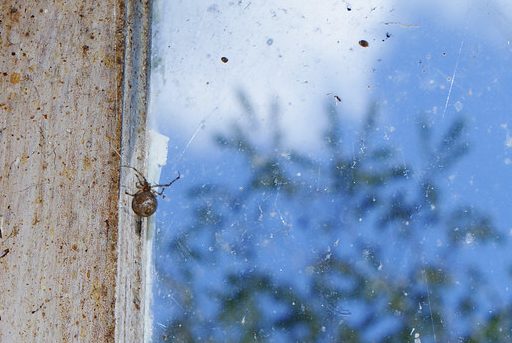
Across a sun-lit pane, deft, unconcerned, a spider struts the steps of an old dance, a set design, in no part happenstance: and I again to sun and rune returned. Stumbling along, half blind, half deaf, half-learned, in yet a day of quarrel and circumstance, I turn from cluttered web to view askance night’s daughter, she who never can be turned.
Sleek spider dame with one plan, to consume, to suck the juice from each unwary fly, with no grand need to query or presume if there was meaning in your quarry’s sigh. Here, in the corner of my fog-filled room, Atropos grins, her scissors lifted high.
*****
Janice D. Soderling writes: “I don’t write much these days, preferring to use the shortening days to read. But I woke up this morning with the last two lines in my head, and knowing it was an ending to a sonnet, I proceeded to write the rest. Perhaps it asks too much of the reader. Perhaps it is a pretentious piece, of interest only to me. Never mind, I shall keep it, having poured three hours into it.”
Janice D. Soderling has published poems, fiction and translations in hundreds of print and online journals and anthologies over the years. Her most recent poetry collection is ‘Rooms and Closets‘ available at all online bookshops.
I started out alone, No numbers and no words. The people gave me food and clothes. I loved the sun and birds.
And when I reach the end Numbers and words all done, Have to be fed and dressed again, I’ll love the birds and sun.
*****
This is one of my favourite poems, for several reasons: First, it extols the combination of curiosity, enjoyment and acceptance that I believe is appropriate for this thing called life. Second, it is simple in expression: simple words, simple rhythm, in iambics with simple full and slant rhymes. And third (and perhaps most importantly) it is easy to memorise: it has lodged itself in my brain without any effort or even intent on my part and, as this blog frequently claims, that is the essence of poetry.
‘I Started Out Alone’ was originally published in Bewildering Stories in 2019. More recently it was included in a batch of my poems that Michael R. Burch spotlighted in The Hypertexts for August 2024.



 Form in Formless Times