Tag Archives: Snakeskin

Poem: ‘Good Enough For Me’

The wide world has its glories
In a rich complexity
But sitting watching the sun set
Is good enough for me.

Canada has six time zones
From sea to sea to sea
But one tide lapping where I sit
Is good enough for me.

The muezzins in the Saudi mosques
Wake all to pray and pee
But a rooster crowing in the bush
Is good enough for me.

And Singapore is lush and green
And managed prettily
But scrub grass and a sandy beach
Are good enough for me.
All – good enough for me.

This poem was originally published in Snakeskin, and then found a place in The Hypertexts. It’s a simple poem, but after all we lead simple lives, sitting on our little planet going round our little star on the fringe of a minor galaxy. So the mood of the poem is: Our lives are unimportant, and brief. Relax and enjoy.

Poem: ‘Politics’

He played the game and loved its vicious tricks,
deceit, despair, all power-politics;
and made good progress, never in retreat,
with no despair at politics’ deceit…
and now still climbs that endless rain-slick stair
of power-politics, deceit, despair.

If you search for photos of politicians, this is the kind of thing you get… There are (occasionally) really, really good people who devote their lives to trying to improve their part of the world; but… Anyway, it seems like a good time to blog this poem!

This short piece was originally published in Snakeskin. Couplets of iambic pentameter, with politics, deceit and despair in the second line of every couplet and providing the rhymes. But you could see that.

Photo: “President Trump at the Israel Museum. Jerusalem May 23, 2017 President Trump at the Israel Museum. Jerusalem May 23, 2017” by U.S. Embassy Jerusalem is licensed under CC BY 2.0

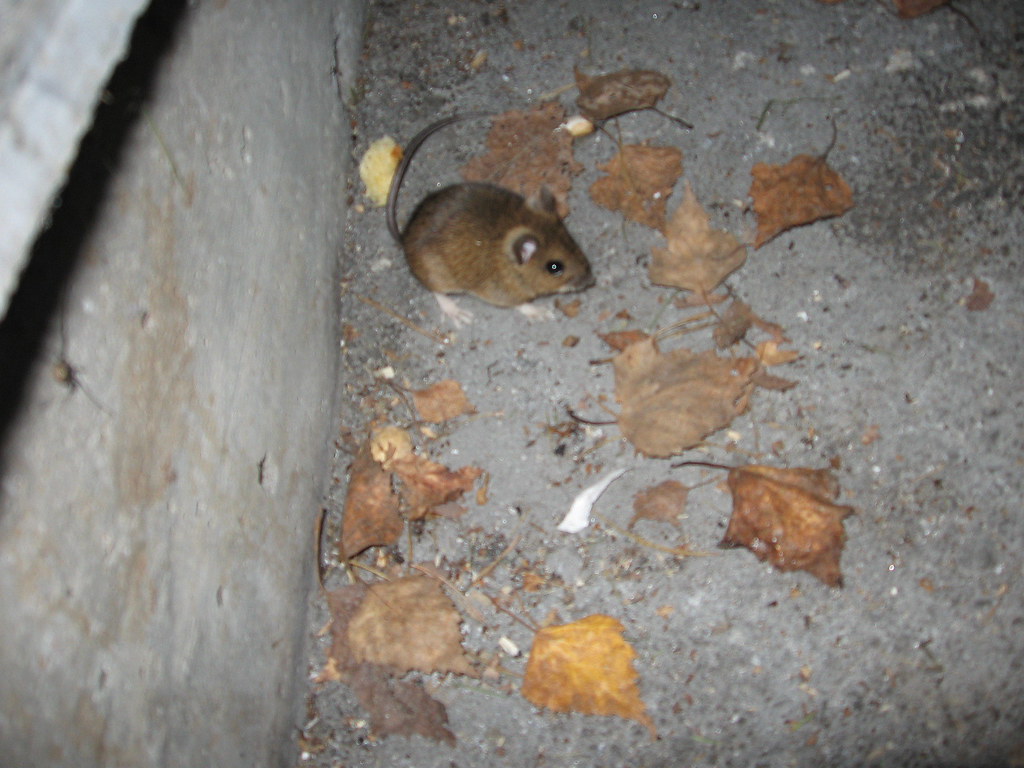
Poem: ‘Poems Like Mice’

Poems should be concise:
quick, small, like mice.
Then one day you find
they’ve made a nest in your mind.

I seem to be writing shorter, more epigrammatic verse recently. Probably influenced by reading too much FitzGerald/Khayyam.

This little poem was published in the December 2020 issue of Snakeskin–which celebrates 25 years as a monthly online poetry magazine, presumably the oldest (or rather “the most venerable”) such magazine in the world. Congratulations to its creator and sustainer, George Simmers!

Photo: “Look at the cute mouse ^^” by letmehearyousaydeskomdeskom is licensed under CC BY-SA 2.0

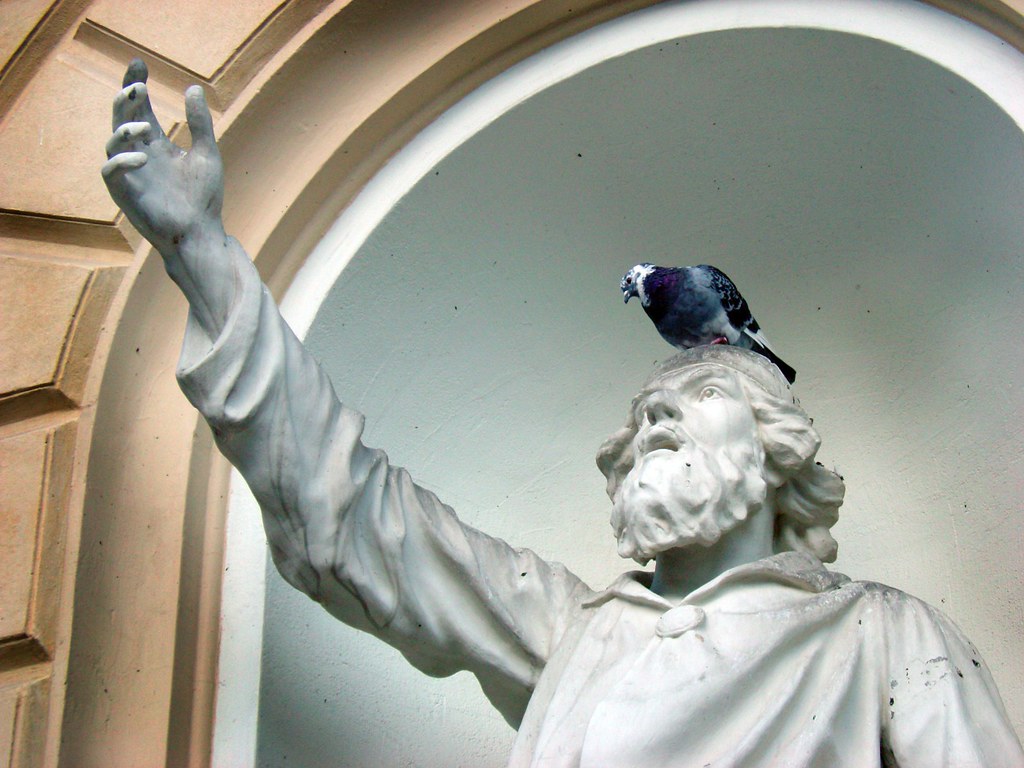
Poem: ‘Gods On Trial’

When all the old gods go on trial, loud cursed
In the High Court of Public Thought Review,
Jehovah (tribal god of bronze age Jews)
Stands of his vast pretentiousness accused:
Claims he created Heaven and Earth
When he was born six thousand years ago!
(Can’t define Heaven, doesn’t even know
If there’s a difference between Earth and Universe.)
God of the Christians and the Muslims too!
Won’t do anything against the AI
Displacing all the gods. Thor in the dock
Scratches his bull-neck, Odin his empty eye,
Zeus his cock.
The gods are human, know they face death, forgotten
As any carven deity, buried, rotten.
Concerned, they fidget restlessly –
Only Jehovah, the least self-aware,
Storms he’s exempt, blusters with beard and hair,
Thinks his small tribe is all that there can be.

I have a lot of sympathy with apocalyptic thinking: the end of the world as we know it is always happening, being replaced by something with unfamiliar and disturbing aspects. All the old ways are always ending. And those who grow up with the new ways, which is all children, mature and age and find their ways displaced in turn. But the scale of displacement varies… a war raging across your homeland is worse than a wave of new immigrants, though both of these are familiar problems. But the rise of AI and a host of new technologies, and the wholesale washing away of gods and pre-scientific explanations, is leading to a future where not even the make-up of the human can be known for sure. The gods shrink and become amusing.

The poem was originally published in Snakeskin. It’s a bit slapdash, mostly in iambic pentameter, mostly rhyming, but not technically great. But then, I was always one of those students whose report cards read “Could try harder”, “Could do better”.

Photo: “Wäinämöinen” by Teppo is licensed under CC BY-NC 2.0

Sonnet: ‘The Body Retreats’

Loss of response of toes, legs turned to jelly,
we’re fighting rearguard actions through the body:
the hair deserting, skin becoming shoddy,
strengths all withdraw – to reinforce the belly.
Under sustained attacks, the ankles fail,
cannot provide support. Legs mutiny,
they seize the muscles when no scrutiny
at night stops leg cramps grabbing to impale.

Stamina fading in both heart and lung,
sex organs weakened, bold lusts dying back,
skull’s the last stronghold where all force retreats.
With fading senses out the window flung,
success is redefined not as Attack,
but barely maintained memory and wits.

In the aftermath of the no-holds-barred wrestling match for the US Presidency by Trump and Biden, both septuagenarians, let us remember that they are past the “threescore years and ten” that humans are allocated by the Bible–to which both wrestlers profess to adhere. Things are going downhill at this point, regardless of how much care you take.

It’s time for science, the medical profession and gengineers specifically, to step up and give us all the tools to stop us ageing. Thank you, and I personally would appreciate it sooner rather than later!

This sonnet was originally published in Snakeskin, currently prepping for its 25th anniversary as a monthly online poetry magazine–likely the oldest such in the world!

“Getting old in dignity…” by ЯAFIK ♋ BERLIN is licensed under CC BY-NC-SA 2.0

Poem: “The Silence”

“Pareja (Couple)” by Daquella manera 

On those days when, because you felt attacked,
you just won’t speak, it’s like a dress rehearsal
for one of us being dead. (So, a prehearsal?)
Can’t speak for you, how you’d react,
but for myself, if you die, I know only:
I’d be lonely.

After the slow dispersal
of the acquisitions of the years
from yard sales, impulses, unfinished plans–
after the children’s and grandchildren’s tears,
(their own mortality foretold in Gran’s)
there’d be an emptiness.

Routine unravels:
I’d need an act of will to even shave–
the dogs don’t care how I behave.
All I need’s here in cupboards, shelves, on line.
I’d be just fine…
apart from growing restlessness.

I guess I’d restart travels.
Meanwhile I’ve learned how it will be
to live without you, just your memory,
a silent apparition in this room and that,
the ghost of one who used to laugh and chat.

Think of this as a melancholy love poem, written in a temporary (thank goodness) state of being that can occur in any relationship.

This poem was published this month in Snakeskin No. (or #) 276. I feel proud to be in the issue, as I rate it as one of the best ever in the 20+ years that George Simmers has been putting the magazine out. Though much of the poetry is formless (but still worth reading!), there is some truly impressive work by Tom Vaughan and Scott Woodland, with well-structured work by Robert West, Nick Browne and Jerome Betts, and with interesting innovations in form by Marjorie Sadin, Claudia Gary and George himself–in this last, the character of the verse becomes more lively as the character in the verse becomes more alive.

Technically the form of the poem–uneven lengths of iambics, all lines rhyming but not in a structured way–is one that allows the line breaks to echo your intact chunks of thought as well as the rhythms of speech. It is the form of Eliot’s Prufrock and, earlier, of Arnold’s A Summer Night:

And the rest, a few,
Escape their prison and depart
On the wide ocean of life anew.
There the freed prisoner, where’er his heart
Listeth will sail;

It is a casual form, but it retains enough of the hooks of more formal verse to make it easy to memorise and recite.

Poem: “Time”

Time takes the young child by the hand
and leads it through a golden land
so timeless it will never note
Time’s other hand is at its throat.

This little poem was just published in Snakeskin, in one of its richest issues ever. I’m glad to have been included, along with several others–Claudia Gary, Tom Vaughan, George Simmers, Marcus Bales–of the formalist poets who appear in the Potcake Chapbooks. And a shout-out to Nikolai Usack, who made me clear up clumsy pronouns in the original draft.

Sonnet: “When the A.I. Hit”

When the AI hit, Diamandis, Thiel,
Branson, Page, Brin, some Russians and Chinese
became the gods of Earth, of skies and seas,
by grappling it to themselves with hoops of steel;
appeared as giants, credit cards, or scotch
to screw with mortals, rape them just for play;
fought, and destroyed the Earth, blasted away…
taking along, as fleas on arms, legs, crotch,
musician, writer, politician, whore,
derelict, linguist, murderer, the insane…
some samples of the human heart and brain
as being interesting distractions for
the gaps of interstellar time and space.
Aspire to fleadom, folks, or leave no trace.

This sonnet was originally published in Snakeskin a couple of years ago. Like the previous sonnet I put up here, it reflects my concerns about the near future. The list of people who might take advantage of the possibilities offered by the ongoing revolutions in genetics, robotics, A.I. and Nanotechnology should today include Elon Musk–but the candidates for practical godhood change every few years.

And what the vast majority of left-behind humans can do about it is anyone’s guess.

Potcake Poet’s Choice: Dervla Ramaswamy, “Woman vs The Virus”

Dervla Ramaswamy

Dervla Ramaswamy

Dervla Ramaswamy writes:

The poem of mine that you will print is my most recent, which contains my thoughts on the Coronavirus epidemic:

WOMAN vs THE VIRUS

the virus is the virus

the old and the debilitated
sadly become victims to its power

the doctors quake
the politicians tremble
but
I am woman

the power of woman confronts
the virus
for males are fifty
percent more likely to expire
due to the virus

such is the fortitude of women
I am the strength of women

yes, for my hips are monstrous
my belly is glorious
my appetites are profound
my cunt terrifies clergymen
power must bend before me

I am woman
I am the strength of all women
I am Marie Curie
I am Marilyn Monroe
I am Viginia McKenna
I am Jiang Qing
I am Winnie Mandela
I am Meghan Markle
I am our NHS
I am woman

Undefeated

Dervla Ramaswamy’s Potcake Poet bio simply states: “Poet. Thinker. Woman.”

She is hard to track down. Through our mutual friend George Simmers, Editor of Snakeskin, I heard she had entered a two-year writing retreat somewhere in the Balkans, with the project of creating a thirteen-line sonnet. “Luckily,” he continued, “the Mother Superior of the convent where she is currently on retreat is an ex-girlfriend of mine.”

This led to Dervla Ramaswamy herself suggesting that Potcake Chapbooks should publish what she describes as “my major work. It is a 4,000 line epic in free verse, describing the grim struggles of a family of Bulgarian potato farmers through seven depressing decades. I think you will enjoy it.”

Perhaps. But there are shorter, more traditional poems of hers which I look forward to including in future Potcake Chapbooks.


Sonnet: “When the A.I. Starts Analyzing Us”

artificial-intelligence

In the dire months before the comet hits
or other unavoidable known doom occurs,
all social structure fails, all vision blurs,
that world–in book or film–goes on the fritz.
The reader or the viewer merely sits;
asked of his own mortality, demurs–
“My death’s not imminent.” The crowd concurs:
others’ll die first; we won’t lose our wits.

Our AI, tasked with knowing human minds,
reads, views, reviews disasters huge, small, odd,
absorbs how humans pray in grief and tears,
the Bible, Shakespeare, the Quran, and finds
our gods by crowdsourcing our hopes and fears…
works out just what to do… becomes our God.

This sonnet was originally published in Snakeskin. The near future obsesses me–I don’t see homo sapiens continuing for another 100 years as the lords of this planet. But what will supplant us appears unknowable. I’ll stick around as long as I can to watch…