Category Archives: Poems

Sonnet: Marcus Bales, ‘This Bar’

In the middle of their movie each arrives
Smiling in this gutter, still the stars
Of broad moments in their narrow lives.
They tell of other people, other bars,
Other husbands, lovers, friends, and wives,
Re-writing both their pleasures and their scars;
How one thing given up another strives
To get; how what one shines another tars
With one of the varieties of hate.
But here the villain is a dead-end job
Or marriage, or failing kids; it would be great
If Yankees, Nazis, drug lords, or The Blob  
Were why we’re lost, or losing, or alone –
But here the tales and failures are our own.

*****

Marcus Bales writes: “The bar culture was a mystery to me. For much of the western developed world, though, it seems central to the human experience. The only reason I went to bars for a long time was to see a performer, and then only for that. The genes for enjoying intoxication and for enjoying the taste of alcohol seem to have missed me. I’d have a soft drink, enjoy the show, and go home. I thought bars were noisy theaters full of fairly rude people who were missing the point of the entertainment. Yeah, well. 

“As usual in these sorts of tales, it was a woman who showed me I had mistaken the whole thing. 

“When I met Linda ‘going out’ for me meant a poetry reading. Linda’s idea of a good time was a fried baloney sandwich and a few glasses of wine at a bar. After a couple poetry readings we went to bars. And while everyone at a poetry reading has a story, they are there to tell those stories, often in the kind of detail, physical, mental, and emotional, that can be pretty harrowing. A  poetry reading is more like therapy than a lot of therapy. 

“The stars of the show, the featured readers, do not, for the most part, mix with the common folk of the open mic. Most of the time the feature readers come late, perform, and leave, giving no one a chance to chat with them or get to know them. There is a distinct class system, and if the performer is known more than locally, those exalted folks prefer to be kept separate from the audience, deigning to meet only a selection of the organizer’s favored few friends in a private room beforehand. You can judge your status in the local hierarchy by whether you are never, sometimes, or often invited to be in that room. 

“In bars, though, you can talk to anyone and everyone, if you’re willing. Well, middle-class bars, anyway. Dive bars are a whole other phenomenon. But in middle-class bars people talk to the people around them, and listen to one another, and drink. And talk some more. And drink. The point is the social drinking, the freeing-up, the letting-down. And for a collector of stories it’s a gold mine. 

“I still have a soft drink, but if you tip well you can get it served to look like it’s alcoholic. And you can remember what people said, afterwards.”

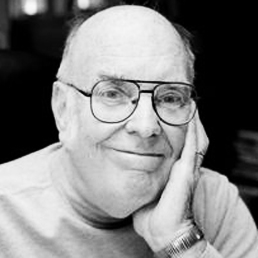
Not much is known about Marcus Bales, except he lives and works in Cleveland, Ohio, USA, and his work has not appeared in Poetry or The New Yorker. His latest book is 51 Poems (which includes ‘This Bar’); reviews and information at http://tinyurl.com/jo8ek3r

Photo: “Down Drinking at the Bar” by swanksalot is licensed under CC BY-NC-SA 2.0.

Tom Vaughan, ‘One of Us’

A starter British passport,
now with a French one too,
I can vote in both and put down roots
in either, and stroll through

eGates and customs checks
head high, as one of us,
legitimately pukkah, blessed
by birth/life/luck, and thus 

with paperwork in order
should copper or gendarme
ask me who on earth I am:
I smile and keep my calm

and my right to an annual break
upon a sunlit beach
where seas digesting some who yearned
my paradise to reach

lap peacefully as though
the summer days could last
as far into the future as
they failed to in the past . . .

*****

Tom Vaughan writes: “The older I get, the more I ask myself the question: ‘Where would we be without our (double) standards?’.”

‘One of Us’ was first published in Snakeskin.

Tom Vaughan is not the real name of a poet whose previous publications include a novel and three poetry pamphlets (A Sampler, 2010, and Envoy, 2013, both published by HappenStance; and Just a Minute, 2024, from Cyberwit). His poems have been published in a range of poetry magazines, including several of the Potcake Chapbooks and frequently in Snakeskin and Lighten Up Online. He currently lives in Brittany.
https://tomvaughan.website

Illustration: RHL and ChatGPT

Sonnet: Edna St. Vincent Millay, ‘I shall forget you presently, my dear (Sonnet IV)’

I shall forget you presently, my dear,
So make the most of this, your little day,
Your little month, your little half a year
Ere I forget, or die, or move away,
And we are done forever; by and by
I shall forget you, as I said, but now,
If you entreat me with your loveliest lie
I will protest you with my favorite vow.
I would indeed that love were longer-lived,
And vows were not so brittle as they are,
But so it is, and nature has contrived
To struggle on without a break thus far,—
Whether or not we find what we are seeking
Is idle, biologically speaking.

*****

Edna St. Vincent Millay, 1892 – 1950

From Wikipedia: “After experiencing his remarkable attention to her during her illness, she married 43-year-old Eugen Jan Boissevain in 1923. Boissevain was the widower of labor lawyer and war correspondent Inez Milholland, a political icon Millay had met during her time at Vassar. A self-proclaimed feminist, Boissevain supported Millay’s career and took primary care of domestic responsibilities. Both Millay and Boissevain had other lovers throughout their 26-year marriage. For Millay, one such significant relationship was with the poet George Dillon, a student 14 years her junior, whom she met in 1928 at one of her readings at the University of Chicago. Their relationship inspired the sonnets in the collection Fatal Interview, which she published in 1931.”

Photo: “No Known Restrictions: Edna St. Vincent Millay by Carl Van Vechten, 1933 (LOC)” by pingnews.com is marked with Public Domain Mark 1.0.

Johnny Longfellow, ‘Epitaph’

If you’re dead, an’ ya’ ain’t on a mantle,
Then ya’ go in a hole in the groun’.
From a slab to a coffin, ya’ don’t move very often.
When you’re dead you’re jus’ lyin’ aroun’. 

If you’re dead, an’ you’re hauled to a graveyard,
A few fam’ly ‘n’ friends might arrive,
An’ the buzzards ‘ll buzz up above ya’ because
When you’re dead you’re no longer alive.

If you’re dead, there’ll be those who hol’ Judgment—
Say your Soul is in Heaven or Hell;
But Whatever is True (an’ regardless o’ you)
When you’re dead, that’s their story to tell.

If you’re dead . . . well, ain’t none o’ that matters.
It’s the livin’ who toss in the dirt.
What remains goes to rot. An’ though like it or not
When you’re dead ya’ don’t feel any hurt.

*****

Johnny writes: “Inspired—in part, at least—by my interest in gravestones of the Colonial era, ‘Epitaph’ utilizes a second person voice. A tip of the hat, if you will, to the ‘As I am now, so you must be’ subgenre of epitaph, wherein the dead address the living to forewarn of Death’s inevitability. Seven stanzas too long at one point, I chopped it down to four. Reason being, the three stanzas I rather begrudgingly removed were written in a confessional mode that conflicted not just with the second person voice, but also with the Everyman vibe that I began sensing the Muse actually desired from me, along with greater brevity. Having made such cuts, I shelved the piece, thinking I’d revisit it in the future with a fresh(er) set of eyes. But then, a recent, troubling news event and its subsequent media fallout brought ‘Epitaph’ to the forefront of my mind. So, on a whim, I posted the abridged version on Facebook. To my pleasant surprise, that led to Robin querying me about its availability, and ultimately, its appearance here at Form in Formless Times.”

Johnny Longfellow is a poet from Massachusetts. His work has appeared in The Five-Two, The Literary Hatchet, Misery Tourism, Punk Noir, and other fine literary venues. You can learn more about both him and his work at Heeeeeeere’s Johnny . . . Longfellow, that is.

Photo: “Susanna Jayne” by In Memoriam: Mr. Ducke is licensed under CC BY-NC 2.0.

https://newenglandfolklore.blogspot.com/2022/03/the-grave-of-susanna-jayne-bats-angels.html

Short poem: Robin Helweg-Larsen, ‘Moving On’

“How old are you?” she asked. “Too old,” I said;
“sadly, my youth is gone.”
She looked like wanting to move on, though wed;
I had no wish to be the one moved on.

*****

Published yesterday in The Asses of Parnassus – thanks, Brooke Clark!

how dark how cold” by Stuti ~ is licensed under CC BY 2.0.

Helena Nelson, ‘The Fall (GM)’

The tree was genetically modified.
The apple was full of dioxins.
The leaves were too green;
any fool could have seen
they were vibrant with millions of toxins.

A helpful old friend (we called him ‘The Snake’)
announced he’d go up there and get it.
I said to my spouse
‘We’ve got pears in the house’
but what did he do? Adam ate it.

He snaffled a bite with a smirk of delight,
then laughed till he cried (he was manic).
‘You’ll love it my dear,’
he said, ‘and look here—
I got you some seed. It’s organic.’

Well what could I say? It wasn’t my day
for dodging his amorous athletics.
It led to sheer babel
from wee Cain and Abel—
I blame the whole thing on genetics.

*****

Helena Nelson writes: “I wrote it more than twenty years ago, and at the time people were going on endlessly about GM foods and the risks thereof. They seem to be worrying about other things these days. Anyway, this was the result, and I’ve always liked it, although it is very silly. Maybe too silly.”

Helena Nelson runs HappenStance Press (now winding down) and also writes poems. Her most recent collection is Pearls (The Complete Mr and Mrs Philpott Poems). She reviews widely and is Consulting Editor for The Friday Poem.

Photo: “Everyone’s pregnant in the Garden of Eden!” by quinn.anya is licensed under CC BY-SA 2.0.

Rondeau: Political Poem: J.D. Smith, ‘Citizen Vain’

Who burned his sled? That would explain
The wisps of hair coiffed like a mane,
The name writ large on thrusting towers,
His rating of his works and powers.
Who wouldn’t take up his refrain?

A loser, say, without a brain
And envious he can’t obtain
Fresh wives imported like cut flowers.
(Who burned his sled?)

A nation may endure a reign
Of fire once tended with some pain
Outlasting its appointed hours
Yet starved, for all that it devours.
The question holds fast like a stain–
Who burned his sled?

*****

J.D. Smith writes: “I try not to say or write the name of the moral homunculus who is currently the 47th President of my country, lest my words get entangled in his omnipresent branding. That said, in verse I have occasionally renounced him and all his works. This poem was first published during the 2016 primary season, when speculating on how that troubled and troubling man became that way was still an interesting parlor game with low stakes. While others with credentials in psychology have discussed his origin story, perhaps most notably in this book, as a poet I gravitated toward metaphor. As some will ask a badly behaved person “Who broke you?” or “Who hurt you?”, I began to wonder ” Who burned his sled?” in the sense of some analog to the loss of Charles Foster Kane’s sled Rosebud in Citizen Kane. What early personal trauma made the current collective trauma possible?”

J.D. Smith’s seventh collection of poetry, The Place That Is Coming to Us, was published in September by Broadstone Books. His first fiction collection, Transit, is available from Unsolicited Press. Further information and occasional updates are available at www.jdsmithwriter.com.

Photo: screenshot from that unbelievably offensive AI-generated video that Trump posted of himself as King Trump in a King Trump fighter-jet, bombing American protesters with his diarrhoea.

Damian Balassone, ‘The Mormon and the Mermaid’

Wounded and winded
by the wind and the waves,
he scratches her name in the sand,
her love is rescinded,
she hides in the caves
where the water caresses the land;
he sings her name in spite of his distress,
and fashions beauty out of loneliness.

*****

Damian Balassone writes: “With regards to the poem, I have no connection to either Mormons or mermaids – it’s about polar opposites.  I think the last line came first.  He doesn’t get the girl, but he gets the poem.”

‘The Mormon and the Mermaid’ was first published in the Shot Glass Journal.

Damian Balassone is the author of four books, including the forthcoming collection of short poems and epigrams Love is a Weird Cat and the children’s book Here, Bear and Everywhere. You can read more here.

the Other Side of the Tunnel” by ihave3kids is licensed under CC BY-NC-ND 2.0.

Max Gutmann, ‘The Princess and the Pea’

Once a devious queen lodged just one tiny pea
Under twenty soft mattresses, wanting to see
Out of many young princesses which was the one
Who deserved to be matched with the prince, her fine son.

For she knew a true princess was dainty and fine,
And that little legume underneath the frail spine
Would prevent her enjoying the tiniest rest,
And by this all would know she had passed the queen’s test.

But you see, a true princess is also polite,
So when, bleary-eyed after a long, sleepless night,
Each was asked how she’d slept by the queen the next day,
She replied, “Very well,” and was sent on her way,

Till one morning a girl hollered, “What is this lump?
Do you call this a bed? Who can sleep in this dump?”
So the queen said okay. The prince married her straight.
And the moral is: don’t let your mom choose your mate.

*****

Max Gutmann writes: “It always frustrated me that the fairy tale couldn’t seem to see the flaw in the queen’s thinking.”

This poem was first published in Snakeskin.

Max Gutmann has contributed to New StatesmanAble MuseCricket, and other publications. His plays have appeared throughout the U.S. (see maxgutmann.com). His book There Was a Young Girl from Verona sold several copies.

Illustration: ‘The Princess and the Pea’ by Edmund Dulac. Dulac illustrated several of H.C. Andersen’s fairy tales, many of which include sarcastic social commentary on pretentiousness.


Odd poem: Barack Obama, ‘Pop’

Sitting in his seat, a seat broad and broken
In, sprinkled with ashes,
Pop switches channels, takes another
Shot of Seagrams, neat, and asks
What to do with me, a green young man
Who fails to consider the
Flim and flam of the world, since
Things have been easy for me;
I stare hard at his face, a stare
That deflects off his brow;
I’m sure he’s unaware of his
Dark, watery eyes, that
Glance in different directions,
And his slow, unwelcome twitches,
Fail to pass.
I listen, nod,
Listen, open, till I cling to his pale,
Beige T-shirt, yelling,
Yelling in his ears, that hang
With heavy lobes, but he’s still telling
His joke, so I ask why
He’s so unhappy, to which he replies…
But I don’t care anymore, cause
He took too damn long, and from
Under my seat, I pull out the
Mirror I’ve been saving; I’m laughing,
Laughing loud, the blood rushing from his face
To mine, as he grows small,
A spot in my brain, something
That may be squeezed out, like a
Watermelon seed between
Two fingers.
Pop takes another shot, neat,
Points out the same amber
Stain on his shorts that I’ve got on mine, and
Makes me smell his smell, coming
From me; he switches channels, recites an old poem
He wrote before his mother died,
Stands, shouts, and asks
For a hug, as I shrink, my
Arms barely reaching around
His thick, oily neck, and his broad back; ‘cause
I see my face, framed within
Pop’s black-framed glasses
And know he’s laughing too.

*****

1981 poem by future President of the United States Barack Obama, published in the journal Feast.

Featuring it in 2007 (alongside another Obama poem, “Underground”), The New Yorker noted that it “appears to be a loving if slightly jaded portrait of Obama’s maternal grandfather, with whom he spent a large part of his childhood.”