Category Archives: Poems

Potcake Poet’s Choice: Gail White, ‘Snails’

This morning, at my garbage can,
just underneath the lid,
two snails in the embrace of love
connubially hid.

Who knows what dangers they had passed,
how high they had to climb,
in order to achieve at last
this interchange of slime?

I left you unmolested, snails,
beneath your plastic shelf,
because on Friday nights I look
ridiculous myself.

Gail White writes: “This is a favorite light verse of mine, first published in Light. Our sexual nature gives us something in common with even the lowliest life forms, a fact which caused me to spare the snails from eviction.”

Gail White is the resident poet and cat lady of Breaux Bridge, Louisiana. Her books ASPERITY STREET and CATECHISM are available on Amazon. She is a contributing editor to Light Poetry Magazine (lightpoetrymagazine.com). “Tourist in India” won the Howard Nemerov Sonnet Award for 2013. Her poems have appeared in the Potcake Chapbooks ‘Tourists and Cannibals’, ‘Rogues and Roses’, ‘Families and Other Fiascoes’ and ‘Strip Down’.
https://www.amazon.com/Asperity-Street-Gail-White/dp/1927409543

“snails mating” by tonrulkens is licensed under Openverse from WordPress.org

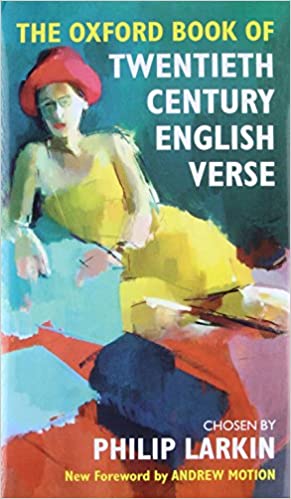
Review: ‘The Oxford Book of Twentieth Century English Verse’, ed. Philip Larkin

This anthology edited by Philip Larkin (which, despite its title, only goes up to the early 1970s) is the most comprehensive, diverse and inspiring collection of formal and semi-formal poetry that I have ever come across. It has, naturally, some free verse… but even that is entertaining in this selection.

The book has no one born before 1840 (Blunt and Hardy), no Matthew Arnold, no Gerard Manley Hopkins (died 1889), so there are almost no Thee’s and Thou’s… except from Robert Bridges.

It has no one born after 1946 (Brian Patten); poets of today are not in this book.

Larkin chose to exclude writers not “born in these islands (or resident here for an appreciable time)”, which lets him include Kipling and Eliot as well as any Scots, Welsh or Irish that he chooses, but cuts out E.E. Cummings, Gwendolyn Brooks, Robert Frost… And Larkin makes no explanation or apology for including Derek Walcott who, born in St. Lucia, lived his life between the Caribbean and the US.

So the anthology is not as complete as could be hoped; but, with 584 poems by 207 poets in 625 pages, it is enormously wide-ranging and full of not just the best of Yeats, Eliot, Auden, but also unexpected treasures by authors barely known today. Here is T.E. Hulme’s ‘The Embankment’, subtitled ‘(The fantasia of a fallen gentleman on a cold, bitter night)’:

Once, in finesse of fiddles found I ecstasy,
In a flash of gold heels on the hard pavement.
Now see I
That warmth’s the very stuff of poesy.
Oh, God, make small
The old star-eaten blanket of the sky,
That I may fold it round me and in comfort lie.

And in completely contrasting mood, here is ‘An Epitaph’ by Colin Ellis:

He worshipped at the altar of Romance
(Tried to seduce a woman half his age)
And dared to stake his fortune on a chance
(Gambled away his children’s heritage).

He valued only what the world held cheap
(Refused to work, from laziness and pride):
Dreams were his refuge and he welcomed sleep
(He failed at business, took to drink and died).

All types of (“English”) 20th century verse are in the anthology. It is the most wonderful, wonderful read.

Potcake Poet’s Choice: Mindy Watson, ‘The Three’

Young Clotho spins new Thread of Life,
She holds Fate’s spindle taut. Precise
Lachesis measures life’s strand’s length,
Thus governs lifetime’s span and lot.
And Atropos, death’s agent, cuts
The mortal thread that Clotho wrought.

When I first burst from mother’s womb,
Three Fates were watching o’er my room.
Lachesis doled me ample thread,
And so, in time, I grew to be
The mother of my own young Three.

Upon my bosom all three drank;
They slept and flourished there. Across
Ten years, four jobs, three homes – I nursed
Away their sorrows, hurts, and scares.

And now I know our nursing age
(Which one year past, met poignant end)
Was in itself a life, a thread,
Spun, drawn, and sheared by three small Fates.

My eldest son precisely spun
That nursing thread with infant’s cord.
His warm-breathed suckling sutured closed
The wound my late son’s loss exposed.

My younger boy, for four years straight,
Was nursing life’s allotting Fate.
He lengthened thread, bridged start and end –
Became his sister’s nursing mate.

My Three’s sole girl, at three years old,
Adroitly sheared our tender twine
When, blonde crown bowed, she deftly swore,
“I don’t need boo-boo anymore.”

And from these Fates I deem my Three,
I’ve learned the joys of genesis –
I’ve learned there’s silent eloquence
In birth, in growth – in severance.
From newborn’s threaded cry all Three
Ascend—beginning, middle, end.

Mindy Watson writes: “The Three is an internally/intermittently rhymed poem in (mostly) iambic tetrameter, equating my three children to three Greek Fates who taught me, via our respective breastfeeding “threads,” to cherish all beginnings, middles, and ends.  I’m enduringly sentimental about this one, which represents not only my first published poem (originally appearing in the Quarterday Review’s October 2016 Samhaim issue) and my first creative post-grad school venture (although I’d majored in nonfiction/science writing rather than poetry)—but also my first attempt at articulating (and externalizing) my children’s and my seemingly endless nursing journey… a year after its bittersweet conclusion.”

Mindy Watson is a formal verse poet and federal writer who holds an MA in Nonfiction Writing from Johns Hopkins University. Her poetry has appeared in venues including Snakeskin, Think Journal, the Poetry Porch, Orchards Poetry Journal, Better Than Starbucks, Eastern Structures, the Quarterday Review, and Star*Line. She’s also appeared in Sampson Low’s Potcake Poets: Form in Formless Times chapbook series and the Science Fiction and Fantasy Association’s 2019 Dwarf Stars Anthology. You may read her work at: 
https://mindywatson.wixsite.com/poetryprosesite.

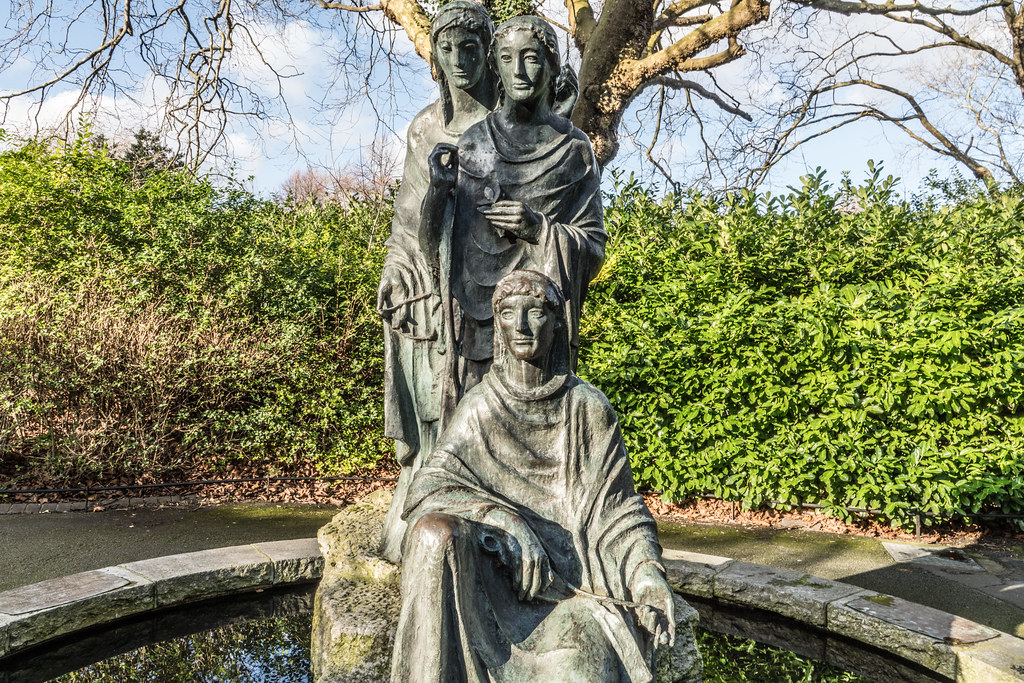
“THE THREE FATES MEMORIAL FOUNTAIN [A GIFT FROM THE GERMAN FEDRAL REPUBLIC]-136831” by infomatique is licensed under Openverse from WordPress.org

Potcake Poet’s Choice: David Galef, ‘Nohow’

I do what I don’t
If I can’t and then could.
I wouldn’t say won’t
When I mustn’t but should.

Do I never need not
Any time that’s all now?
Should I get what I’ve got
Nowhere here but not how?

When the whos turn to whom
As I do till I die,
I will rumor the room
And stop asking why.

David Galef writes: “Nohow, besides being a homage to Cummings, is the kind of celebration of sound and sense that people always seem to enjoy. First published in Blue Unicorn.”

David Galef has published over two hundred poems in magazines ranging from Light and Measure to The Yale Review. He’s also published two poetry volumes, Flaws and Kanji Poems, as well as two chapbooks, Lists and Apocalypses. In real life, he directs the creative writing program at Montclair State University.
www.davidgalef.com

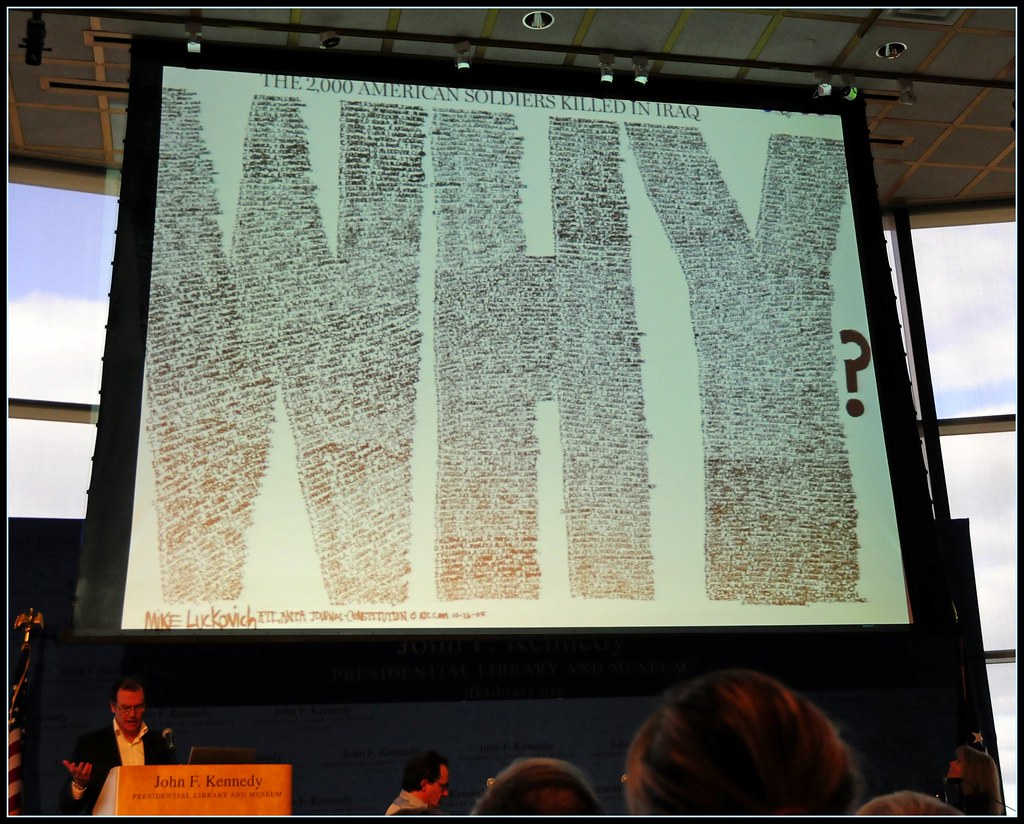
“‘Why?’, Mike Luckovich, Pulitzer-Winning Political Cartoonist (1 of 4)” by Tony Fischer Photography is licensed under CC BY-NC-SA 2.0

Short poem: ‘The Inevitable Future’

Now that I’ve got Windows 10,
11 comes; and then, and then…
Next: self-driving flying cars,
Trump in jail and Musk on Mars.

Certain things appear inevitable in the businessman’s crystal ball… Well, we’ll see. This short poem was published in the ever-succinct Asses of Parnassus – thanks, Brooke Clark!

Odd poem: D.H. Lawrence dialect verse, ‘The Collier’s Wife’

Somebody’s knockin’ at th’ door
Mother, come down an’ see!
–I’s think it’s nobbut a beggar;
Say I’m busy.


It’s not a beggar, mother; hark
How ‘ard ‘e knocks!
–Eh, tha’rt a mard-arsed kid,
‘E’ll gie thee socks!

Shout an’ ax what ‘e wants,
I canna come down..

–‘E says, is it Arthur Holliday’s?
–Say Yes, tha clown.

‘E says: Tell your mother as ‘er mester’s
Got hurt i’ th’ pit–
What? Oh my Sirs, ‘e never says that.
That’s not it!

Come out o’ th’ way an’ let me see!
Eh, there’s no peace!
An’ stop thy scraightin’, childt,
Do shut thy face!


‘Your mester’s ‘ad a accident
An’ they ta’ein’ ‘im ‘i th’ ambulance
Ter Nottingham.’–Eh dear o’ me,
If ‘e’s not a man for mischance!

Wheer’s ‘e hurt this time, lad?

–I dunna know,
They on’y towd me it wor bad–
It would be so!

Out o’ my way, childt! dear o’ me, wheer
‘Ave I put ‘is clean stockin’s an’ shirt?
Goodness knows if they’ll be able
To take off ‘is pit-dirt!

An’ what a moan ‘e’ll make! there niver
Was such a man for fuss
If anything ailed ‘im; at any rate
I shan’t ‘ave ‘im to nuss.

I do ‘ope as it’s not very bad!
Eh, what a shame it seems
As some would ha’e hardly a smite o’ trouble
An’ others ‘as reams!

It’s a shame as ‘e should be knocked about
Like this, I’m sure it is!
‘E’s ‘ad twenty accidents, if ‘e’s ‘ad one;
Owt bad, an’ it’s his!

There’s one thing, we s’ll ‘ave a peaceful ‘ouse f’r a bit,
Thank heaven for a peaceful house!
An’ there’s compensation, sin’ it’s accident,
An’ club-money–I won’t growse.

An’ a fork an’ a spoon ‘e’ll want–an’ what else?
I s’ll never catch that train!
What a traipse it is, if a man gets hurt!
I sh’d think ‘e’ll get right again.

D.H. Larence was the son a a barely literate coal-miner at Brinsley Colliery in Nottinghamshire. This poem is from the environment of his childhood, in the dialect he grew up in. To make the three-way conversation a little easier to navigate, I’ve italicised the wife’s words.

As for the dialect, it’s not difficult, more of an accent than anything. “Scraighting” isn’t a word I know, but it’s obvious from the context. Other words: “nuss” is “nurse”. “Owt bad” doesn’t mean “knocked out badly”, it means “aught bad”, “anything bad”.

Potcake Poet’s Choice: Michael R. Burch, ‘Ordinary Love’

Indescribable—our love—and still we say
with eyes averted, turning out the light,
“I love you,” in the ordinary way

and tug the coverlet where once we lay,
all suntanned limbs entangled, shivering, white…
indescribably in love. Or so we say.

Your hair’s blonde thicket now is tangle-gray;
you turn your back; you murmur to the night,
“I love you,” in the ordinary way.

Beneath the sheets our hands and feet would stray
to warm ourselves. We do not touch despite
a love so indescribable. We say

we’re older now, that “love” has had its day.
But that which Love once countenanced, delight,
still makes you indescribable. I say,
“I love you,” in the ordinary way.

Michael R. Burch writes: “These are some tidbits about the poem:
This was my first villanelle and it’s missing a tercet. The missing tercet was pointed out to me by the formalist poet Richard Moore, who said he still liked the poem. I didn’t feel that I had anything to add, so I left the poem as it was. I’ve never been a stickler for the rules, anyway.
‘Ordinary Love’ was originally published by The Lyric. It later won the 2001 Algernon Charles Swinburne Poetry Award, was published by Romantics Quarterly, which had sponsored the contest, and RQ nominated it for the Pushcart Prize.
The poem has been translated into Hungarian, as noted below.
That’s not too shabby for my first villanelle!
Here is the complete publication history:
Published by The Lyric, Romantics Quarterly, Amerikai költok a második (in a Hungarian translation by István Bagi), Mandrake Poetry Review, Carnelian, the Net Poetry and Art Competition, Famous Poets & Poems, FreeXpression (Australia), PW Review, Poetic Voices, Poetry Renewal, Poem Kingdom and Poetry Life & Times; also winner of the 2001 Algernon Charles Swinburne Poetry Award sponsored by Romantics Quarterly and nominated for the Pushcart Prize. The last time I checked online, it returned nearly 10,000 results for the first line.”

Michael R. Burch is an American poet, editor and translator who lives in Nashville, Tennessee with his wife Beth, two outrageously spoiled puppies, and the ghost of a hamster, Olive, murdered by a former canine family member. For an expanded bio, circum vitae, career timeline, reviews, interviews and other information of interest to scholars, please click here: Michael R. Burch Expanded Bio. To read the best poems of Mike Burch in his own opinion, with his comments, please click here: Michael R. Burch Best Poems.

“Ordinary LOVE” by InfoMofo is licensed under Openverse from WordPress.org

Odd poem: Robert Frost, ‘The Draft Horse’

With a lantern that wouldn’t burn
In too frail a buggy we drove
Behind too heavy a horse
Through a pitch-dark limitless grove.

And a man came out of the trees
And took our horse by the head
And reaching back to his ribs
Deliberately stabbed him dead.

The ponderous beast went down
With a crack of a broken shaft.
And the night drew through the trees
In one long invidious draft.

The most unquestioning pair
That ever accepted fate
And the least disposed to ascribe
Any more than we had to to hate,

We assumed that the man himself
Or someone he had to obey
Wanted us to get down
And walk the rest of the way.

At a poetry reading in the Library of Congress, Robert Frost apparently described “The Draft Horse” as a poem “that nobody knows how to take“. That’s one way to look at it. Another way is that everyone who reads it seems to quite confidently take it in a different direction.

It has been called an allegory of the atom bomb–but, though first published in 1962, it was actually written in the 1920s, long before the bomb.

It’s been called an allegory of American expansionism.

It has been suggested as “a metaphor for the lives of ordinary citizens in totalitarian states, such as Nazi Germany, Soviet Russia and West Germany.” (West Germany. Really.) “Then the man could be an agent of the government, who does what he deems necessary and then disappears again.

Again, “In many cultures, the horse is traditionally a symbol for power. The horse has played a large role in American history. Robert Frost’s The Draft Horse may be a reflection of the power struggles he saw around him and the senseless actions he perceived in the conflicts.

How about “One analysis of the poem is that fate is unavoidable. Why struggle to stop or question fate when by its very definition it cannot be stopped?

Here’s the complete commentary from one blogger: “I’m on a bit of a poetry moment right now. The Draft Horse by Robert Frost is possibly one of the best poems ever written and well worth sharing with anyone willing to read writing at it’s highest art form.” (“it’s”, sic. Also, he miscopied one of the lines as “Any more than we had to hate,” thereby losing the meaning.) A more extensive commentary is in a comment posted to that blog:

I love this poem ! i think it is a great description of postlapsarian life. Laterns wont burn buggies are frail, the horse is too heavy.the night is so dark …
amidst all that a fellow deliberately stabs your horse.

People of good will are always hesitant to blame problems on hate.
and any way walking is a fine way to get there

And then there’s this thesis towards an M.A.:
WHY I KILLED THE DRAFT HORSE:
THE GOLDEN BOUGH, ROBERT FROST, AND “PROGRESS”
by Eugene Charles McGregor Boyle III

August 2013
The absence of criticism on Robert Frost’s “The Draft Horse” suggests that it is a challenge to Frost scholarship. This reading views Frost’s strange and neglected poem as a return to a monomyth offered by James Frazer’s hugely influential The Golden Bough. In “The Draft Horse,” Frost reconsiders the concept of ceremonial sacrifice that undergirds Frazer’s encyclopedic study of world culture and, by performing ceremony as a kind of modem poesis, Frost complicates the hero/sacrificial object role and critiques the progressive ideology that grounds Frazer’s account to fashion a troubling epic for modern America that implicates its national readers in a kind of savagery.

(Supported with references not just to Frazer’s “Golden Bough” and Eliot’s “Wasteland”, but also Dante’s “Inferno” and Lovecraft’s “Call of Cthulhu”, among others.)

Here is another take on it: “This is a very simple, straightforward story, but the reader cannot just leave it like that. Why would Frost have written this poem if he had only wanted to say “a stranger killed a horse”? The reader is therefore faced with the fact that “The Draft Horse” is a symbolic poem that must be read at another level, otherwise it has no purpose.

Well, why does it have to have a “purpose”? It’s a poem, for god’s sake. Maybe the poem “means” exactly what one or other of the above-quoted commenters thinks… but maybe Frost just had a strange dream. Or maybe someone had told him of an incident. Maybe the rhymes and images just floated around in his head. Who knows? Who cares? It’s a poem and, for some reason, it resonates (differently) with a lot of people. It’s an odd poem. Enjoy!

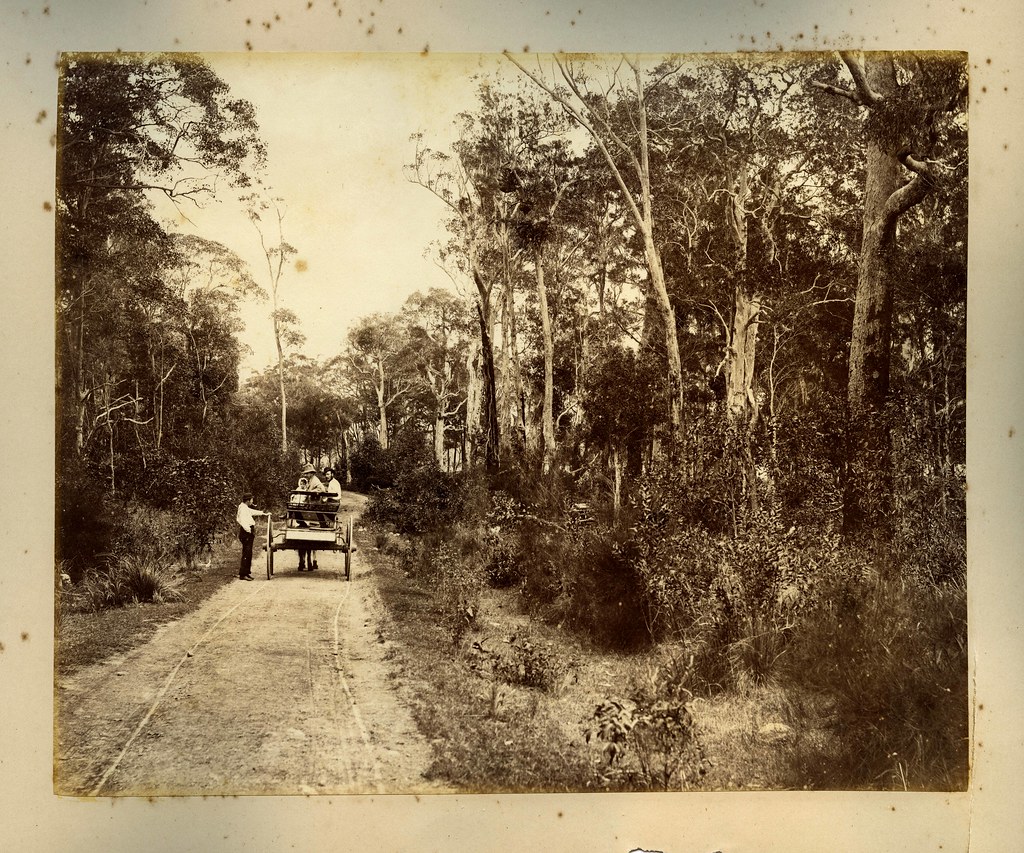
“Horse and Buggy on a Bush Track” by Blue Mountains Library, Local Studies is licensed under openverse from WordPress.org

Potcake Poet’s Choice: David Galef, ‘Justification’

And malt does more than Milton can
To justify God’s ways to man.
—A. E. Housman

When I am beaten down by work and love,
And others head for local dives to drink,
I clench my soul and strive to rise above,
For stimulating words to make me think.
O show me Milton’s paradisial route,
Far airier than the foamiest of stout.
Of man’s first disobedience and the fruit
Are all I need and all I care about.
A bottled brew’s sufficient for the poor
In spirits, not for spirituality.
How can a tankard filled with beer quench more
Than slaking drafts of a theodicy?
I’d bring it to the bar, but I get looks
When I enact the fall from all twelve books.

David Galef writes: “Justification is both an appreciation and dig at Milton, an attitude older than Samuel Johnson’s comment about Paradise Lost, ‘None ever wished it longer than it is.’ It came out in Light.”

David Galef has published over two hundred poems in magazines ranging from Light and Measure to The Yale Review. He’s also published two poetry volumes, Flaws and Kanji Poems, as well as two chapbooks, Lists and Apocalypses. In real life, he directs the creative writing program at Montclair State University.
www.davidgalef.com

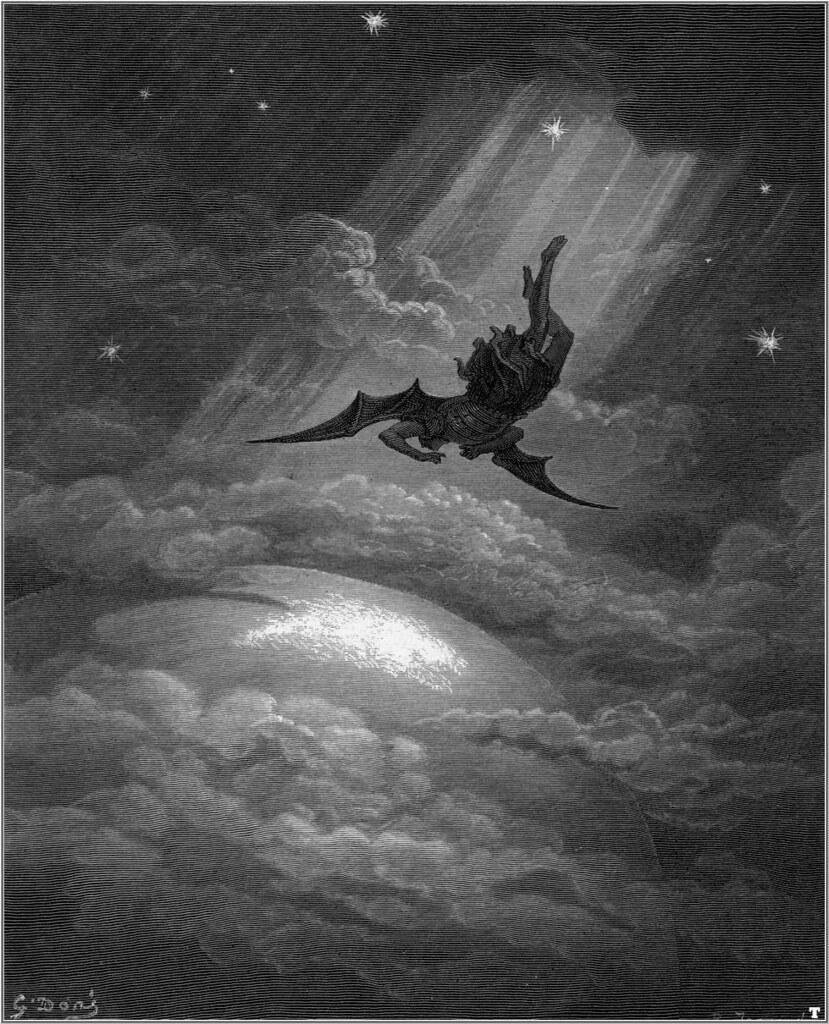
“DORÉ, Gustave Illustration for John Milton’s Paradise Lost 1866” by carulmare is licensed under CC BY 2.0

Potcake Poet’s Choice: Michael R. Burch, ‘Epitaph for a Palestinian Child’

I lived as best I could, and then I died.
Be careful where you step: the grave is wide.

Michael R. Burch writes: “This original epigram once returned over 90,000 results for its second line and still returned over 4,200 results the last time I checked. The epigram began as “Epitaph for a Child of the Holocaust” and was set to music by Sloane Simon after the Pittsburgh synagogue shooting.

It has been published by Romantics Quarterly, Poetry Super Highway, Mindful of Poetry, Poets for Humanity, The New Formalist, Angle, Daily Kos, Katutura English (Namibia), Genocide Awareness, Darfur Awareness Shabbat, Viewing Genocide in Sudan, Setu (India), Brief Poems, Better Than Starbucks and ArtVilla; also translated into Romanian by Petru Dimofte, into Turkish by Nurgül Yayman, into Czech by Z J Pinkava, into Indonesian by A. J. Anwar.”

Michael R. Burch has over 6,000 publications, including poems that have gone viral. His poems have been translated into fourteen languages, incorporated into three plays and two operas, and set to music by seventeen composers. He also edits TheHyperTexts.

“ICU child Shifa hospital, Gaza” by Kashklick is licensed under CC BY-NC 2.0